


Most advice about dental cleaning sticks starts with the wrong promise: give your dog one every day and you can forget about brushing. That's marketing, not sound oral care. A chew may reduce plaque, calculus, and bad breath, but its results depend on the exact product, the way it's shaped, how firmly it resists chewing, and whether your dog works it with the teeth that need attention.
The evidence supports a narrower, more useful conclusion. A properly designed dental chew can be a practical adjunct to brushing, especially for dogs that resist a toothbrush. It can't reliably replace brushing, remove established periodontal disease, or make every “dental” treat effective by association. Choose the product by its tested design and ingredient list, then use it as one part of a routine that includes veterinary assessment.
Table of Contents
- The Reality Behind the Dental Label
- Measuring Real Plaque and Calculus Reduction
- Evaluating Texture Geometry and Clean Ingredients
- Comparing Sticks to Brushes and Professional Care
- Managing Treat Calories and Safe Daily Usage
- Anatomy Limits and Species Specific Considerations
- Building a Sustainable Pet Oral Health Routine
The Reality Behind the Dental Label
A “dental” label isn't a clinical result. It's a category description, and the category is too broad to tell you whether a particular stick will do meaningful work.
One product may have ridges or a textured matrix that creates friction as a dog chews. Another may be soft enough to disappear quickly, with little contact against the tooth surface. Both can sit beside each other on a shelf under the same broad dental language. Their ingredients, hardness, shape, chew duration, and contact pattern can be completely different.
Veterinary research has tested dental chews since at least the 1990s, with a 1998 study cited in a later white paper on dental stick development. Work that continued through the 2010s examined whether daily chews could affect plaque, calculus, gingivitis, and halitosis. The useful point isn't that every dental stick works. It's that some tested products produced measurable changes, while reviews caution that outcomes can vary sharply between chew formats. See the veterinary white paper on dental stick development for the product-specific nature of that evidence.
Why the front of the package misleads
A dental claim tells you what the manufacturer wants you to notice. It doesn't tell you:
- Where the chew contacts the mouth: A design may favor the carnassial teeth while barely touching the incisors.
- How long the dog chews: A stick swallowed quickly can't provide the same mechanical action as one worked across multiple tooth surfaces.
- How the texture behaves: Some materials flex, some crumble, and some resist enough to create abrasion.
- What the formula contains: A dental purpose doesn't excuse unnecessary artificial colors, preservatives, flavorings, or filler-heavy construction.
- Whether the exact product was tested: Results from one chew shouldn't be transferred automatically to another.
Many owners get misled. Evidence applies to the tested product under the tested conditions, not to every item carrying a similar label. A review cited in the veterinary literature makes that distinction clearly, and it's the most important filter for shopping.
Practical rule: Treat “dental” as an invitation to inspect the product, not as proof that the product works.
Clean ingredients matter because a daily chew is still part of your dog's diet. But ingredient quality alone won't scrub a tooth. A beautifully simple formula with no meaningful resistance may be nutritionally tidy and mechanically weak. Conversely, a highly textured chew may create friction but bring an ingredient list you wouldn't want to feed routinely.
The right question is not, “Does this say dental?” Ask, “What physical action does this exact stick create, and is there evidence that this exact design changes oral-health measures?”
Measuring Real Plaque and Calculus Reduction
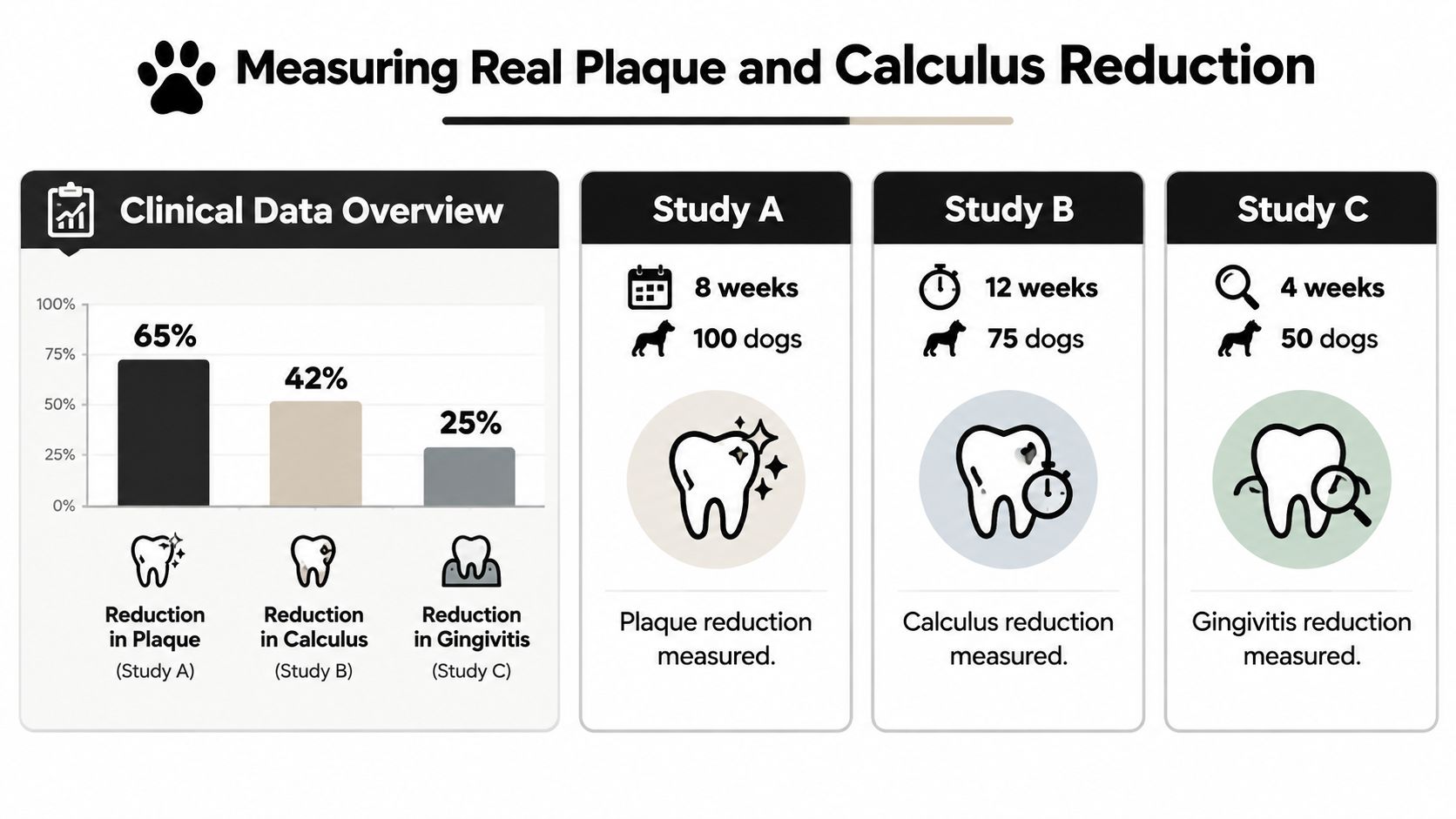
Dental cleaning sticks can produce real improvements, but the effect is narrower than the packaging often suggests. Controlled studies have measured reductions in plaque, calculus, gingivitis, and oral malodor when dogs receive a daily chew. The size of the benefit varies with the product, the dog, the starting condition of the mouth, and the length of use.
One clinical benchmark found that 29 days of use produced approximately 37.63% less plaque, 37.61% less calculus, and an 81.08% reduction in breath volatile sulfur compounds in beagles, compared with controls, as reported in the PubMed record for the study. That's meaningful, but it doesn't mean every stick will deliver those results. The study evaluated a particular chew, not the entire market.
Other independent clinical work reported narrower reductions. One study found plaque reductions of 12.3% to 13.3% and plaque-thickness reductions of 15.5% to 17.4%. Another reported reductions in toy breeds of 20% for gingivitis, 15% for plaque, 35% for calculus, and 19% for volatile sulfur compounds. These figures come from the veterinary clinical evidence summarized in the Journal of Small Animal Practice paper.
What those measurements mean at home
Plaque is a soft bacterial film. Calculus, often called tartar, is hardened mineralized material. Once plaque becomes calculus, a chew isn't a dependable substitute for professional removal. For a plain-language explanation of the difference, this Mouthology guide to plaque and tartar is useful.
The practical benchmark is repeatable improvement over several weeks, not fresher breath for a day or a satisfying chewing session. The research summarized above supports evaluating plaque, calculus, and malodor after sustained daily use, ideally against a no-chew control.
Brushing still wins
The most important comparison is tooth brushing. In a blinded canine trial, brushing controlled plaque more than three times as effectively as a daily dental chew or dental diet. The chew and dental diet groups weren't significantly different from each other, which reinforces the point: chewing can help, but it doesn't equal direct brushing.
Use how to choose dog dental treats to assess products more critically, especially if you're comparing texture, size, and ingredients. If your broader wellness routine includes a non-dental item such as Happy Guts Duo for Pups, remember that its stated role is digestive and microbiome support, not mechanical tooth cleaning.
The honest verdict is straightforward. A quality daily chew may lower oral deposits and odor. It's useful maintenance, not a cure and not a toothbrush replacement.
Evaluating Texture Geometry and Clean Ingredients
A dental stick earns its place through physical design first. The dog has to chew it in a way that creates contact and resistance across tooth surfaces. A treat that breaks apart instantly may provide enrichment and calories, but it has limited opportunity to create meaningful mechanical abrasion.
Look for a shape that encourages the teeth to press into the material rather than slide along a smooth cylinder. Ridges, grooves, angles, and an appropriate diameter can increase contact as the dog bites. Geometry matters because chewing force isn't distributed evenly across the mouth. A stick that sits between the back teeth may do more there than one that gets crushed by the front teeth and swallowed.
Five checks before you buy
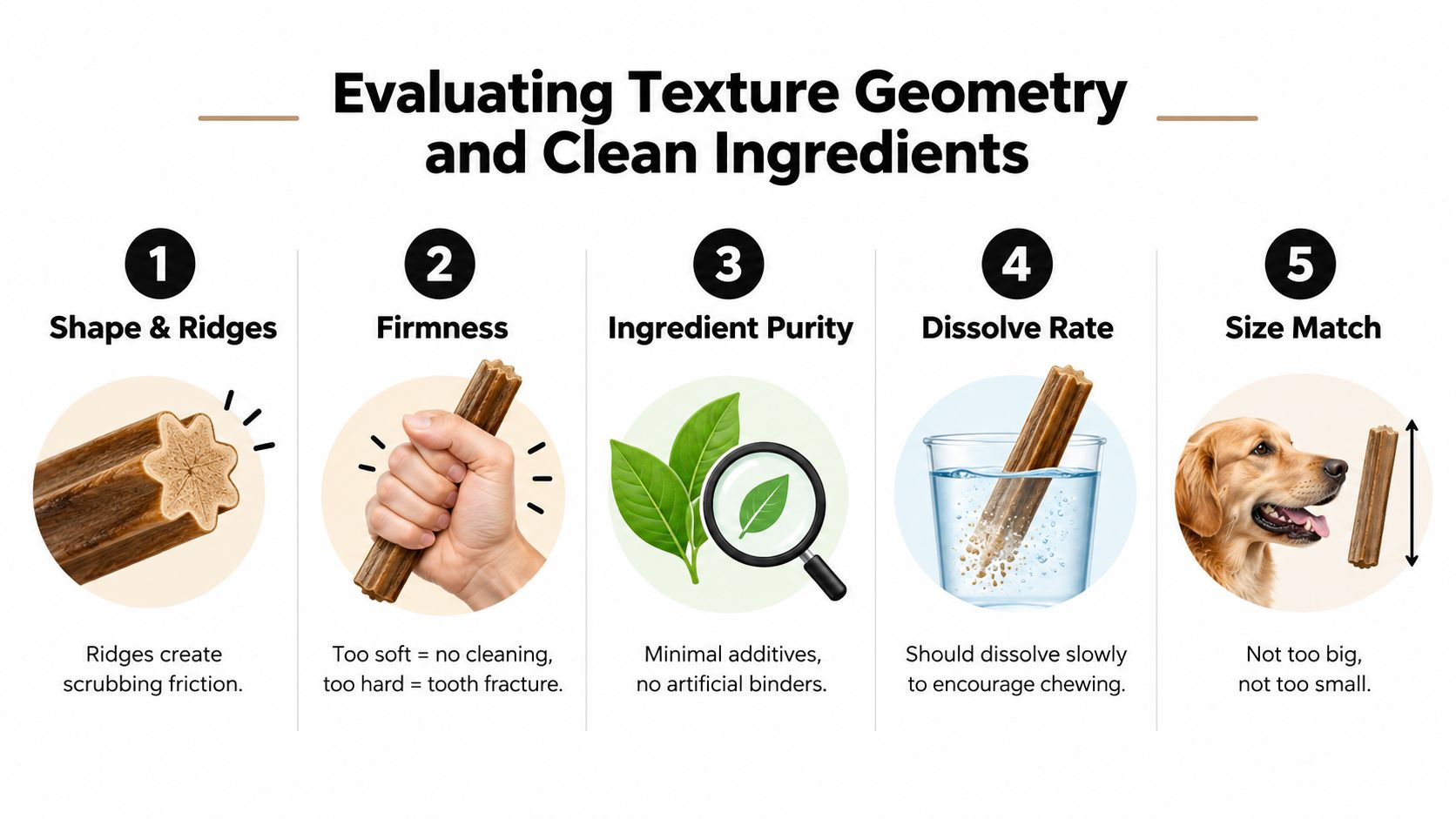
- Inspect the shape. Ridges and textured surfaces can create more friction than a smooth, uniform stick. The shape should make your dog chew, not just carry the treat away.
- Judge firmness carefully. Too soft may offer little resistance. Too hard can create a tooth-fracture concern, particularly for aggressive chewers or dogs with compromised teeth. You want controlled resistance, not a rock-like object.
- Watch the dissolve and break pattern. A stick should last long enough to encourage chewing, but it shouldn't produce large sharp fragments. Supervise the first uses and stop if your dog tries to swallow chunks.
- Match the size. A small dog needs a stick it can manage safely, while a large dog may dispatch a tiny chew before it has much contact time. Size isn't cosmetic. It changes how the dog holds, bites, and processes the product.
- Read the ingredient panel. Choose a formula with identifiable ingredients and avoid treating artificial colors, preservatives, and flavorings as harmless decoration in a daily product.
A clean formula is necessary for a responsible daily treat, but it isn't evidence of dental efficacy. The chew still needs a credible mechanical design.
The research supports this product-specific approach. Controlled studies have found that geometry, hardness, formulation, and daily use pattern all influence outcomes. Don't assume a clever ingredient, herbal flavor, or “enzymatic” claim can compensate for a shape your dog swallows whole.
Ingredients should fit the whole diet
A dental stick is still food. Look for high-quality protein and a formulation that doesn't rely on unnecessary additives. If you're building a broader ingredient-screening habit, Joyfull's guide to clean label ingredients for pets offers a practical way to think about ingredient transparency beyond dental products.
The best choice balances mechanical usefulness, safe texture, suitable size, and clean formulation. If one of those fails, the front-label claim shouldn't rescue it.
Comparing Sticks to Brushes and Professional Care
No single oral-care tool handles every job. Dental sticks are convenient and can encourage daily participation, but brushing reaches the tooth surface directly. Professional veterinary care addresses problems that home products can't safely remove.
| Method | Primary Benefit | Convenience Level | Best Used For |
|---|---|---|---|
| Dental cleaning sticks | Chewing-based mechanical action and routine maintenance | High | Dogs that tolerate chewing better than brushing |
| Tooth brushing | Direct plaque disruption at accessible tooth surfaces | Moderate | Regular plaque control and gumline care |
| Water additives | Supports a broader daily hygiene routine | High | Owners seeking an easy supplementary measure |
| Enzymatic wipes | Direct wiping of selected tooth surfaces | Moderate | Pets that won't accept a brush but tolerate handling |
| Professional veterinary scaling | Removal and assessment of established deposits and disease | Low at home, essential clinically | Calculus, periodontal concerns, and dental treatment |
Brushing remains the strongest home option in the controlled comparison cited earlier. It gives you direct contact with the teeth and gumline, while a chew depends on how your dog grips and processes the stick. It also gives you a chance to notice redness, bleeding, swelling, loose teeth, or painful reactions.
Dental sticks fill a different role. They're realistic for owners who can't brush consistently and for dogs that reject a toothbrush. They can also make a routine easier to maintain, but convenience doesn't change their limits. They won't reliably reach every surface, and they shouldn't be used to scrape hard calculus from a tooth.
When professional care comes first
If your dog has persistent bad breath, bleeding gums, visible heavy calculus, difficulty eating, facial swelling, or a sudden change in chewing, skip the experiment with treats and call a veterinarian. Home care is most useful for prevention and maintenance, not for managing established oral disease.
Professional treatment can involve examination, cleaning, imaging, and targeted care. Costs vary by patient and practice, so owners who need help understanding payment options can review this Veterinary Practice Loans financing guide. Financing information doesn't replace a veterinary recommendation, but it may help families plan for necessary care rather than postponing it.
Build the routine around your dog's tolerance. Brush when possible, use a suitable chew when brushing isn't practical, and keep veterinary assessment in the plan.
Managing Treat Calories and Safe Daily Usage
Dental sticks aren't nutritionally invisible. A 2024 review reported an average of 55.4 ± 27.1 kilocalories per stick, as described in the Frontiers review of pet treats and dental products. That range is wide enough to matter, particularly for small dogs, dogs that gain weight easily, or households that offer several treats each day.
The same review discussed feeding guidance across treat categories. Dental-stick guidance was the only category that remained below 10% of maintenance energy requirement across every dog size in that analysis. That supports their positioning as a controlled daily item, but it doesn't give every dog a free pass. Your dog's total intake still matters.
Make the chew part of the ration
Read the package feeding guidance and count the stick with every other treat, topper, training reward, and snack. If the stick contributes meaningful calories, reduce the main meal enough to keep the daily diet appropriate. Don't add it on top of a full ration and then blame metabolism when body condition changes.
Use Joyfull's healthy treat tips to think through the broader treat budget. If you're also using Prebiotic Chicken Squeeze Treats for Dogs, 24 Packets, count those servings too. They're made with real cage-free chicken, include prebiotics, and are free of artificial colors, preservatives, and flavors, but they still belong in the dog's overall intake.
Safety is more than calories
Supervise chewing, especially the first time. Choose a size appropriate for the dog's mouth and chewing style, and remove the product if it becomes small enough to swallow whole or breaks into large pieces. Dogs that gulp treats need a different strategy from dogs that methodically work a chew.
Avoid giving a hard chew to a dog with known dental fragility without veterinary guidance. Stop if chewing causes pain, bleeding, gagging, vomiting, or unusual reluctance to eat. A product can be well designed and still be wrong for an individual dog.
Anatomy Limits and Species Specific Considerations
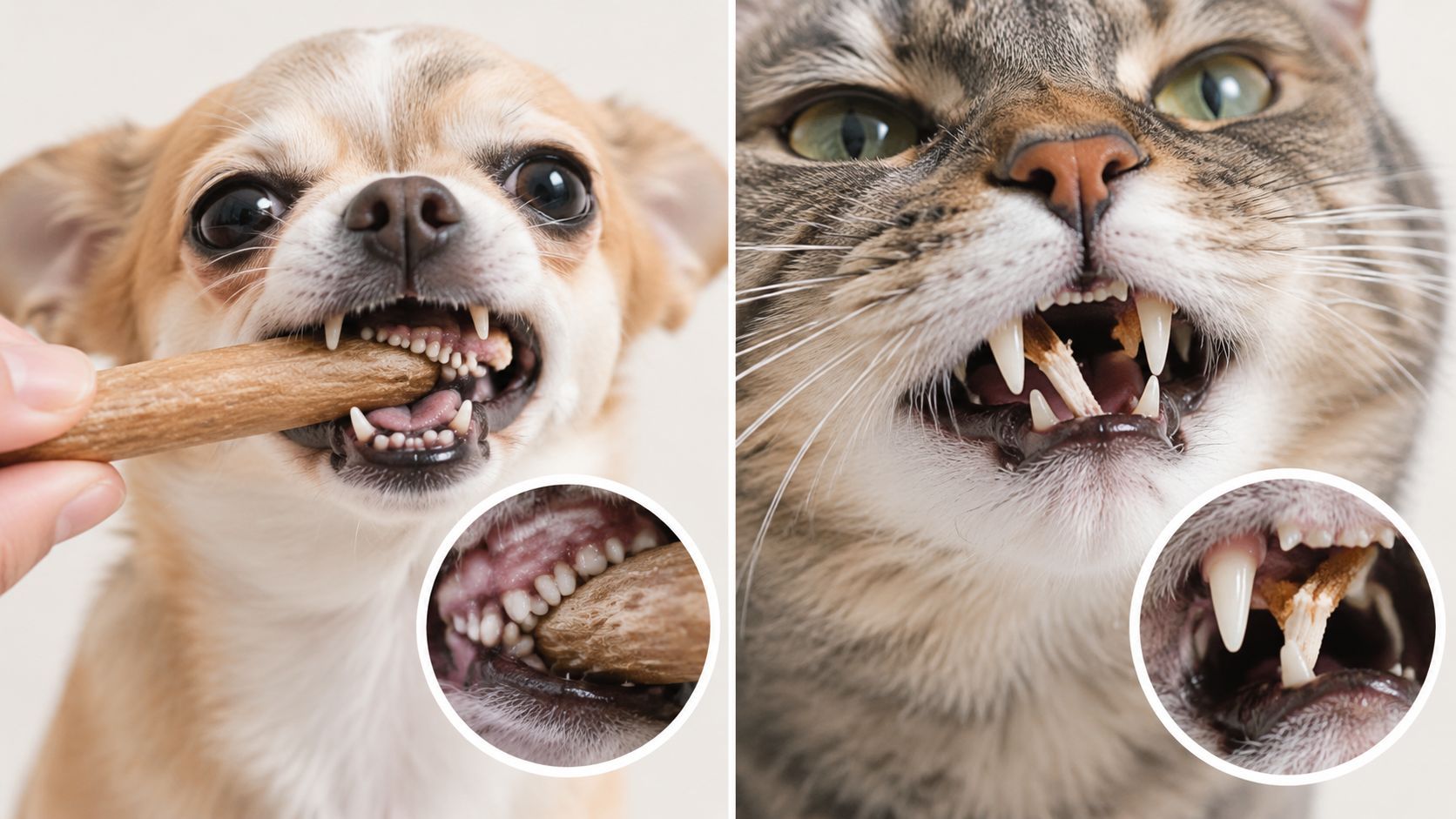
A dental stick doesn't clean the mouth evenly. Dogs often use their carnassial teeth for forceful chewing, so a textured product may create more action there than around the incisors or canine teeth. That uneven contact explains why a dog can receive a daily chew and still develop deposits in areas the chew rarely reaches.
Research in toy dogs found that enzymatic chewing strips significantly reduced plaque, calculus, and gingivitis only on the carnassial teeth. The same veterinary review concluded that there are no absolute preventive measures for periodontitis. That finding should change how owners inspect the mouth. Don't look only at the teeth that appear clean after chewing. Check the gumline and the less-used surfaces too.
Small dogs need closer supervision
Toy breeds may have crowded mouths, smaller tooth surfaces, and different chewing patterns from larger dogs. A stick that's too large can be awkward or unsafe, while a small chew may be swallowed rapidly. The appropriate product must match the dog's mouth and behavior, not just the weight range printed on a package.
Dogs with existing periodontal disease need veterinary evaluation rather than a stronger treat. Studies mainly examine prevention or maintenance, including use after professional cleaning, so you shouldn't assume a dental stick can reverse established disease.
Cats aren't small dogs
The evidence base for dental sticks is much stronger in dogs than in cats. Cats also have different tooth anatomy, chewing behavior, and acceptance of chew products. Don't transfer canine results to a feline product without species-specific testing.
For cats, focus on products and routines they can safely tolerate, and ask a veterinarian to assess oral health. A cat that refuses a stick isn't missing a magic treatment. It may need brushing, a veterinary dental diet, a wipe, or clinical care instead.
Building a Sustainable Pet Oral Health Routine
The best routine is the one you can repeat without pretending a single product solves everything. Make brushing the direct plaque-control tool when your dog or cat accepts it. Use a properly sized, appropriately textured dental stick as an adjunct, not as permission to abandon brushing.
A workable routine looks like this:
- Daily maintenance: Offer the selected chew according to label guidance, supervise it, and count its calories.
- Regular inspection: Lift the lips and look for gum redness, bleeding, swelling, unusual odor, broken teeth, or changes in chewing behavior.
- Brushing practice: Keep sessions brief and build tolerance gradually. Direct contact matters more than buying another product.
- Veterinary oversight: Ask for an oral examination and follow the care plan if your veterinarian identifies disease or painful teeth.
- Product review: Reassess the stick if your dog swallows it quickly, refuses it, gains weight, or develops mouth discomfort.
Consistency beats an elaborate routine that collapses after a few days. But consistency also requires honest expectations. Dental cleaning sticks can support daily maintenance, especially when their geometry and texture encourage real chewing. They can't clean every surface, remove established calculus reliably, or match brushing.
The no-nonsense recommendation is simple. Choose a product with a defensible physical design, a transparent ingredient list, and a size your pet can manage. Use it alongside brushing and veterinary care, then judge the outcome by your pet's mouth, body condition, and comfort, not by the word “dental” on the package.
Joyfull offers clean-ingredient pet wellness products, including lickable treats and supplements formulated with veterinary input, but these products aren't substitutes for dental cleaning sticks or professional oral care. Visit Joyfull to explore practical options for supporting your pet's everyday nutrition while you build a more complete oral-health routine.
0 comments