


Have you ever chosen a pet food with a short, reassuring ingredient list, then wondered whether “clean” tells you anything about contaminants that never appear on the panel? That question exposes the biggest gap in conventional label advice. A simple ingredient list can improve transparency, but it can't prove that a product is free from environmental or industrial pollutants.
For dogs and cats, evaluating clean label ingredients means looking at two layers. The first is what the recipe contains, such as named proteins, grains, fats, fibers, colors, preservatives, and flavorings. The second is what testing may reveal about residues carried through soil, water, crops, animal tissues, processing equipment, or packaging.
Table of Contents
- What Clean Label Ingredients Actually Mean for Your Pet
- The Growing Demand for Transparency in Pet Food
- Clean vs Questionable Pet Food Ingredients
- How to Read Pet Product Labels Like a Pro
- The Hidden Risks in Pet Food You Cannot See
- Trusted Certifications and JoyFull's Ingredient Standards
What Clean Label Ingredients Actually Mean for Your Pet
You're standing in the pet aisle, comparing two bags. One lists chicken, oats, peas, chicken fat, and vitamins. The other uses a longer list with terms that sound technical and unfamiliar. The first bag may feel like the obvious choice, but the key question isn't whether every word sounds natural. It's whether the label gives you enough information to understand the formula, its purpose, and its quality controls.
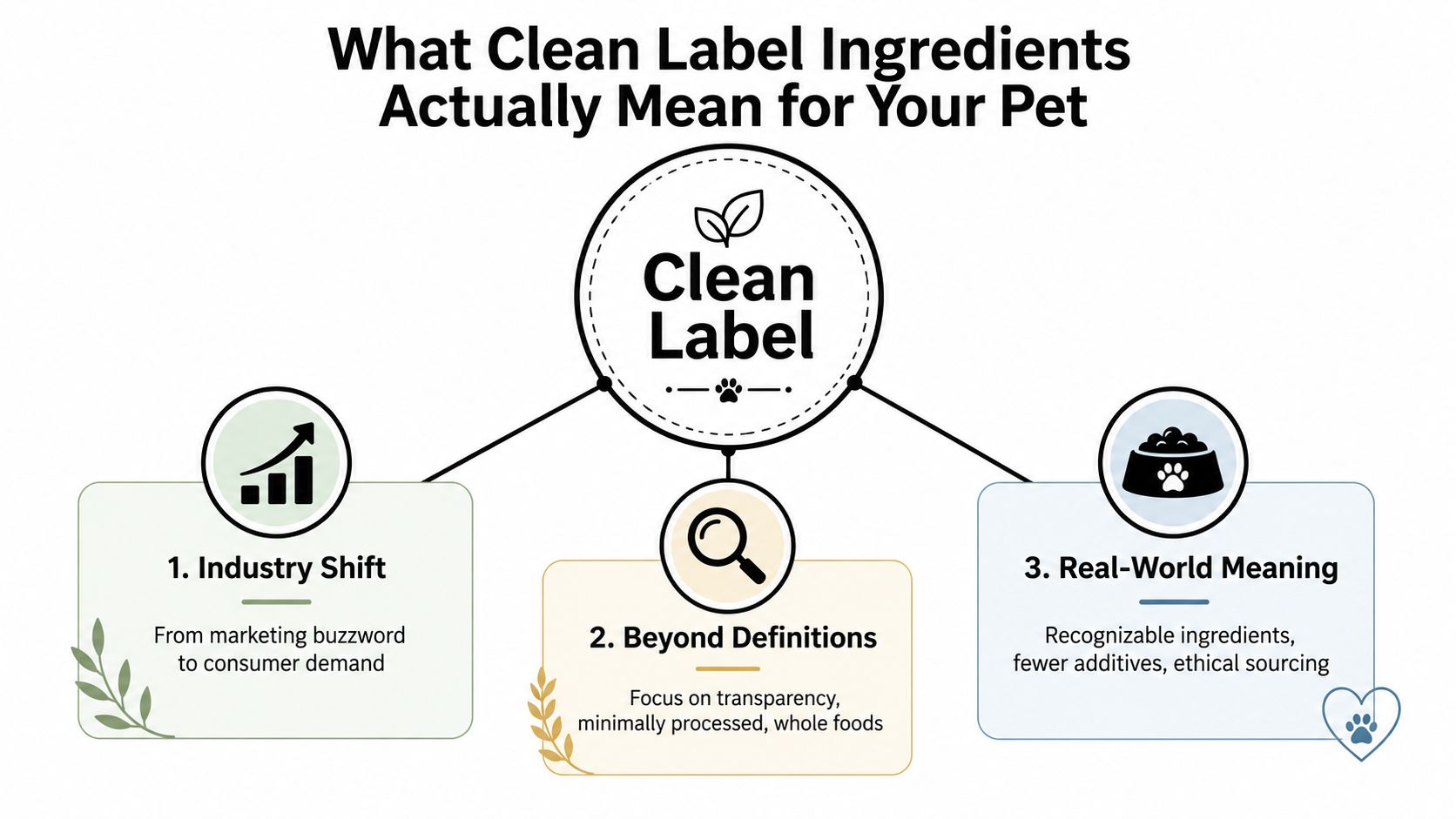
There's no universal regulatory definition of “clean label.” In practice, the phrase describes a consumer-driven preference for recognizable ingredients, minimal processing, transparency, and fewer artificial additives. The interpretation can vary by region and certifying body, so “clean” shouldn't be treated as a guaranteed safety category. Precon Group explains why clean label claims require attention to nomenclature, processing, and documentation.
Natural and clean label aren't identical
“Natural” generally points to the source or production approach of an ingredient. “Clean label” focuses more broadly on how easily a buyer can understand the product and whether the formulation avoids ingredients perceived as artificial or unnecessarily complex. A natural ingredient can still be heavily processed, and a technical-sounding ingredient can have a legitimate function in preserving freshness, supporting texture, or supplying a required nutrient.
That distinction matters because removing every technical term could create a product that spoils faster, loses texture, or fails to deliver complete nutrition. Technical reviews from the Institute of Food Technologists describe processing and formulation tools that support safety and quality while reducing reliance on conventional additives.
For practical ideas about recognizable foods and simpler formulations, pet parents can also explore Barefoot Organics clean eating foods. The useful takeaway isn't that short labels automatically equal better nutrition. It's that a clean label should make the food easier to question, understand, and compare, including whether the product supports dog gut health.
The Growing Demand for Transparency in Pet Food
Clean label ingredients have moved far beyond a niche preference. One estimate placed the global clean label ingredients market at USD 120.03 billion in 2022, with projected growth to USD 168.3 billion by 2030, implying a 4.3% CAGR from 2023 to 2030. A separate outlook estimated the market at USD 48.23 billion in 2025, rising to USD 70.36 billion by 2031, with a 6.45% CAGR during 2026 to 2031. These estimates use different market definitions, but both point to a large commercial category rather than a passing slogan. Grand View Research provides the market estimates and regional outlook.
The demand is tied to a simple purchasing behavior. People want to recognize what they're buying, understand why an ingredient is present, and feel confident that the brand isn't hiding behind vague wording. Ingredion reported that 56% of consumers would pay more for recognizable ingredients, while clean label claims appeared on 38% of new food and beverage launches in the United States and Canada and 30% of global launches. Ingredion connects these figures with consumer expectations around transparency and recognizable ingredients.
Why pet owners bring human-food expectations to the bowl
Pet owners shop with the same instincts they use for their own groceries. They read for named proteins, familiar plants, and fewer artificial colors or flavors. They also expect brands to explain sourcing and quality checks instead of asking buyers to accept a front-of-package promise without supporting detail.
The pet sector follows this direction because food is part of everyday care. Owners do not just purchase calories. They choose products for pets with different ages, activity levels, digestive sensitivities, and medical needs. Transparency helps them decide whether a product fits that individual context.
The strongest label question is therefore not “Does this look clean?” It's “What does this claim cover, and what evidence supports it?” That shift turns clean label shopping from a visual reaction into a quality conversation.
Clean vs Questionable Pet Food Ingredients
A useful comparison starts with function. Ingredients aren't automatically good because they sound familiar, and they aren't automatically harmful because they have a scientific name. The better test is whether you can identify the ingredient, understand its role, and see how it fits the animal's nutritional needs.
| What a transparent formula may show | What deserves closer questioning |
|---|---|
| A named animal protein, such as chicken, turkey, or salmon | An animal source described only with broad or ambiguous wording |
| Clearly identified fats, grains, vegetables, or fibers | Vague “flavoring,” unclear color sources, or unexplained blends |
| A stated purpose for a functional ingredient | Additives that appear to exist mainly for appearance or palatability |
| Processing and quality information from the manufacturer | A clean front label with no accessible testing or sourcing detail |
Ingredients that make the recipe easier to understand
Named proteins help you identify the primary animal source. Recognizable carbohydrates, fats, fibers, and botanicals can make the recipe easier to evaluate, especially when the label explains their purpose. A fiber may support stool quality, a fat may provide energy and palatability, and a botanical may contribute flavor or antioxidant compounds. None should be treated as a cure or a substitute for veterinary care.
A shorter list can also help pets with suspected food sensitivities because it may make dietary changes easier to track. That doesn't mean every limited-ingredient diet is nutritionally complete, or that every pet benefits from restricting ingredients. Life stage, health status, digestibility, and feeding instructions still matter.
Ingredients that deserve context, not automatic panic
Artificial colors often contribute little nutritional value in pet food because the animal, rather than the owner, is the intended eater. Synthetic preservatives and flavor systems may have a technological purpose, but a buyer can reasonably ask why they're needed and what alternatives the manufacturer considered. “By-product” also isn't enough information by itself. Animal tissues can supply valuable nutrients, but clear sourcing and quality specifications provide more useful context than a broad category name.
For a more detailed checklist of dog food ingredients to avoid, focus on patterns rather than fear. Don't discard a product solely because one term sounds unfamiliar. Ask whether the ingredient is identified clearly, whether its function is reasonable, and whether the complete recipe supports adequate nutrition.
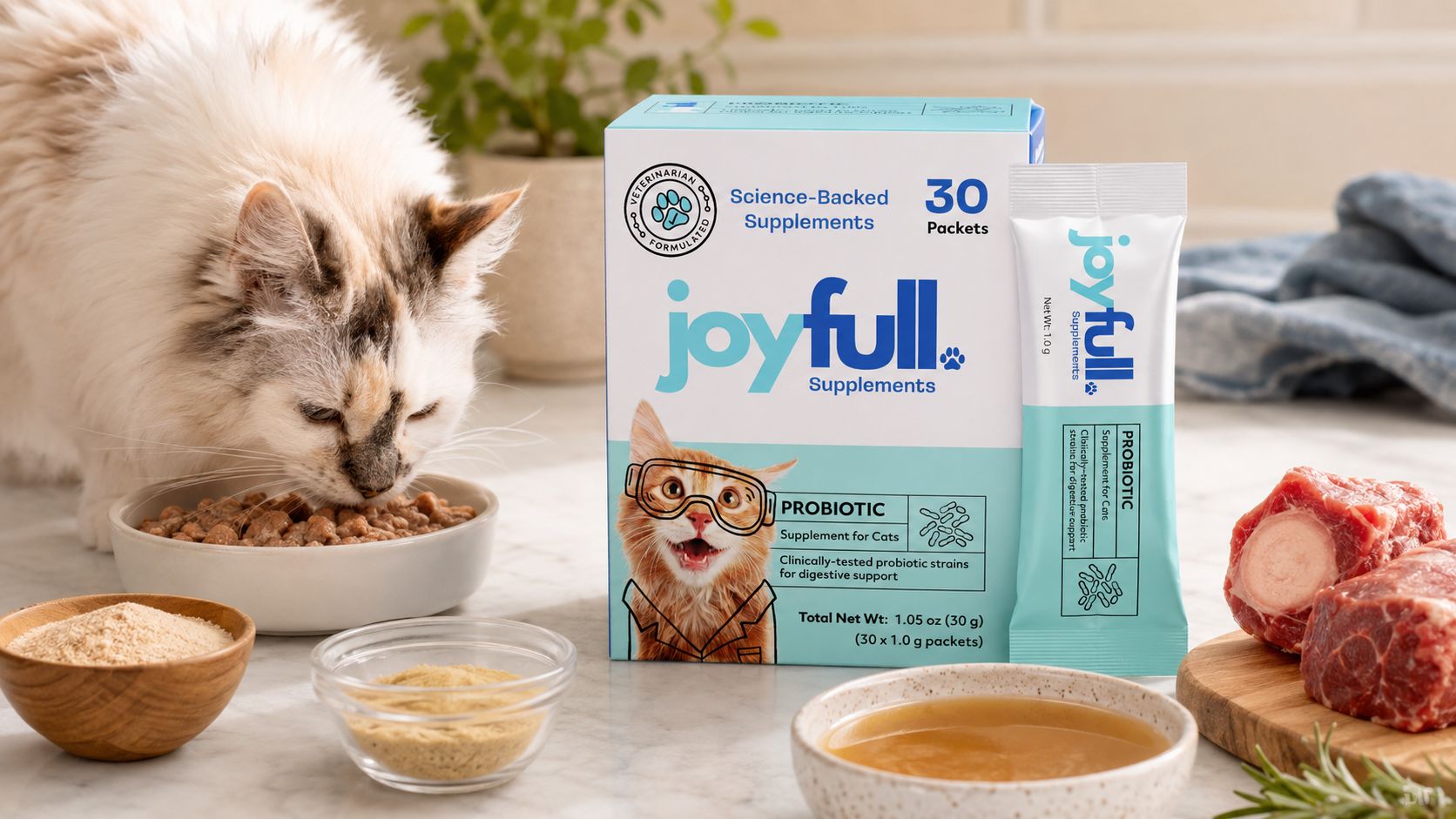
For example, Probiotic Supplement for Cats - 30 Single-Serving Packets uses real beef bone broth powder, veterinarian-formulated probiotic strains, two complementary prebiotics, and individually sealed servings. Its product information also states that it's third-party tested for potency and purity and contains no artificial flavors or heavily processed natural flavorings. That kind of detail gives a pet parent more to evaluate than the word “clean” alone.
How to Read Pet Product Labels Like a Pro
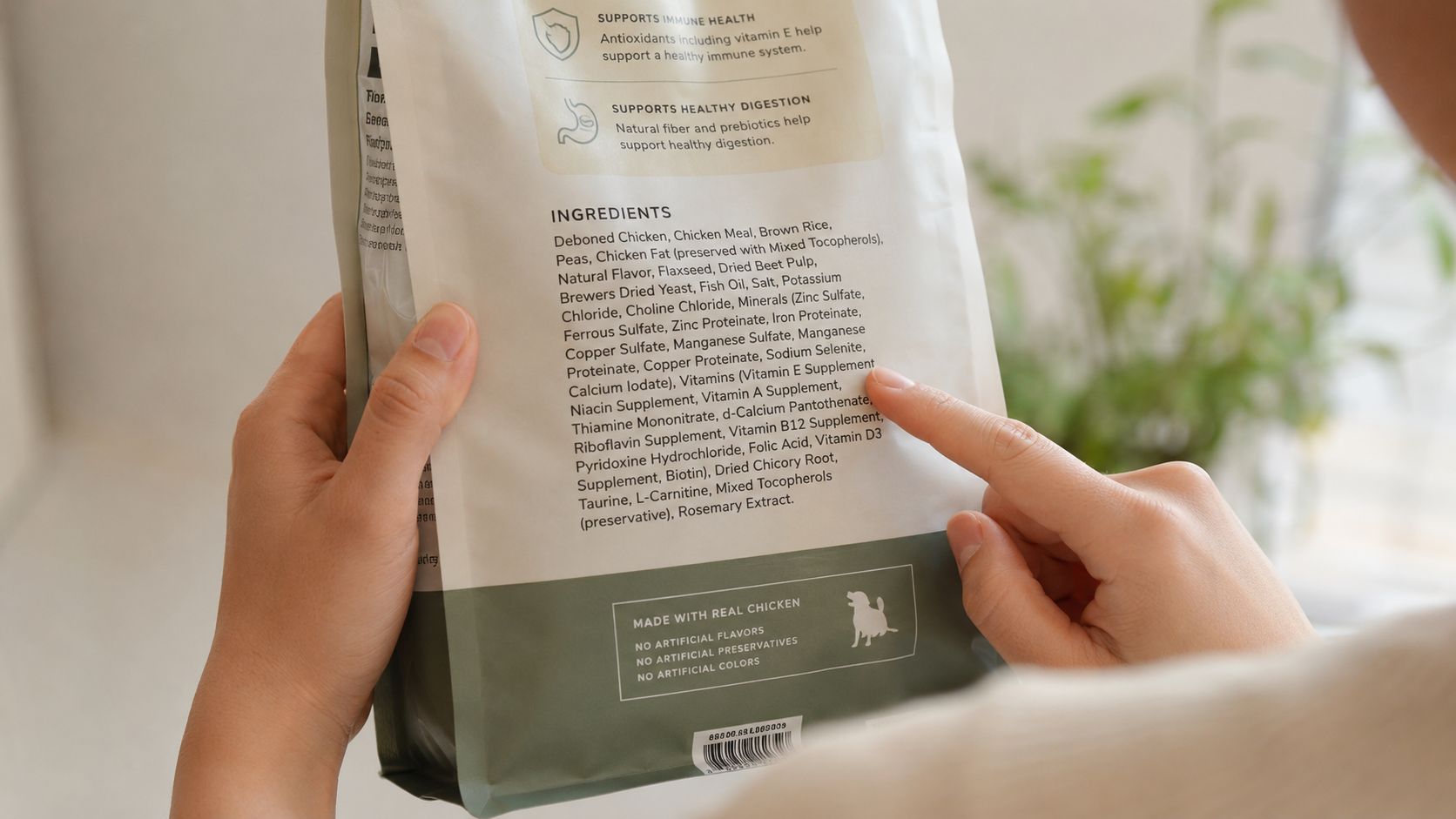
Start with the ingredient list, but don't stop there. Ingredients are generally listed by weight from greater to lesser amounts before processing, which means the opening items give you a broad picture of the formula's composition. This isn't the same as a complete nutritional analysis, because moisture and ingredient density can affect how the list appears.
Use a repeatable label-reading sequence
- Identify the main protein sources. Look for named animal ingredients near the beginning and note whether the product appears designed around one protein or several.
- Scan the supporting ingredients. Find the carbohydrate sources, fats, fibers, vitamins, minerals, and functional ingredients. Familiarity matters, but so does purpose. A technical term may be there to supply a nutrient or stabilize the product.
- Separate marketing language from ingredient evidence. Words such as natural, premium, or clean can attract attention, but they don't replace the actual ingredient list, feeding directions, or quality documentation.
- Read the guaranteed analysis carefully. Crude protein, fat, fiber, and moisture provide useful information, but they don't tell you everything about digestibility, amino-acid balance, ingredient quality, or caloric density. A practical guide to understanding the guaranteed analysis can help you interpret this panel more accurately.
Don't confuse simplicity with completeness
A short list may be valuable for tracking a suspected trigger, but it can also leave out nutrients or functional ingredients a pet needs. Cats have species-specific nutritional requirements, and puppies, kittens, senior pets, pregnant animals, and pets with diagnosed conditions may need different formulations.
Pet parents considering a restricted recipe can review the principles behind a limited ingredient diet for feline health, then discuss the choice with a veterinarian. The label should answer basic questions about the food, while professional guidance helps determine whether it suits the individual animal.
Practical rule: Use the front of the package to find a product, the ingredient list to investigate it, the guaranteed analysis to add context, and the manufacturer's documentation to judge trust.
The Hidden Risks in Pet Food You Cannot See
A food can have an attractive ingredient panel and still contain contaminants that aren't listed as ingredients. Heavy metals, pesticides, plasticizers, and other industrial or environmental pollutants may enter through crops, water, soil, animal feed, processing environments, or packaging. They aren't recipe components, so you won't usually see them listed beside chicken, rice, or fish.
That doesn't mean every pet food contains dangerous contamination. It means ingredient-list reading has a limit. The panel tells you what the manufacturer intentionally formulated into the recipe. It doesn't, by itself, tell you whether every batch was screened for substances that can be introduced before or during production.
Why the clean-label promise needs a second layer
The Clean Label Project's 2026 dog-food findings and certification language focus attention on contaminants including heavy metals, pesticides, and plasticizers. The organization's work reflects a broader shift in buyer expectations, from asking only “What ingredients are included?” to asking “What else could be present, and how was it checked?” The Clean Label Project's 2026 dog-food report describes this contaminant-focused testing and certification approach.
This is similar to checking a house for both visible materials and indoor air quality. A clean-looking room tells you what you can see. Testing examines conditions that your eyes and a product label can't evaluate.
Questions to ask before trusting a claim
- What does the company test for? Ask whether testing covers contaminants relevant to the ingredients and supply chain, rather than only confirming the recipe's intended contents.
- Who performs the testing? Independent third-party laboratories can provide an additional layer of verification, especially when the company shares the scope and documentation.
- How often does testing occur? A single test may describe one sample. Ongoing quality systems provide stronger insight into consistency.
- Can the brand explain its sourcing controls? Ingredient origin, supplier approval, batch records, and certificates of analysis help connect a marketing claim with a traceable process.
A clean label describes the recipe. A clean-quality program also examines what the recipe may carry with it.
Trusted Certifications and JoyFull's Ingredient Standards
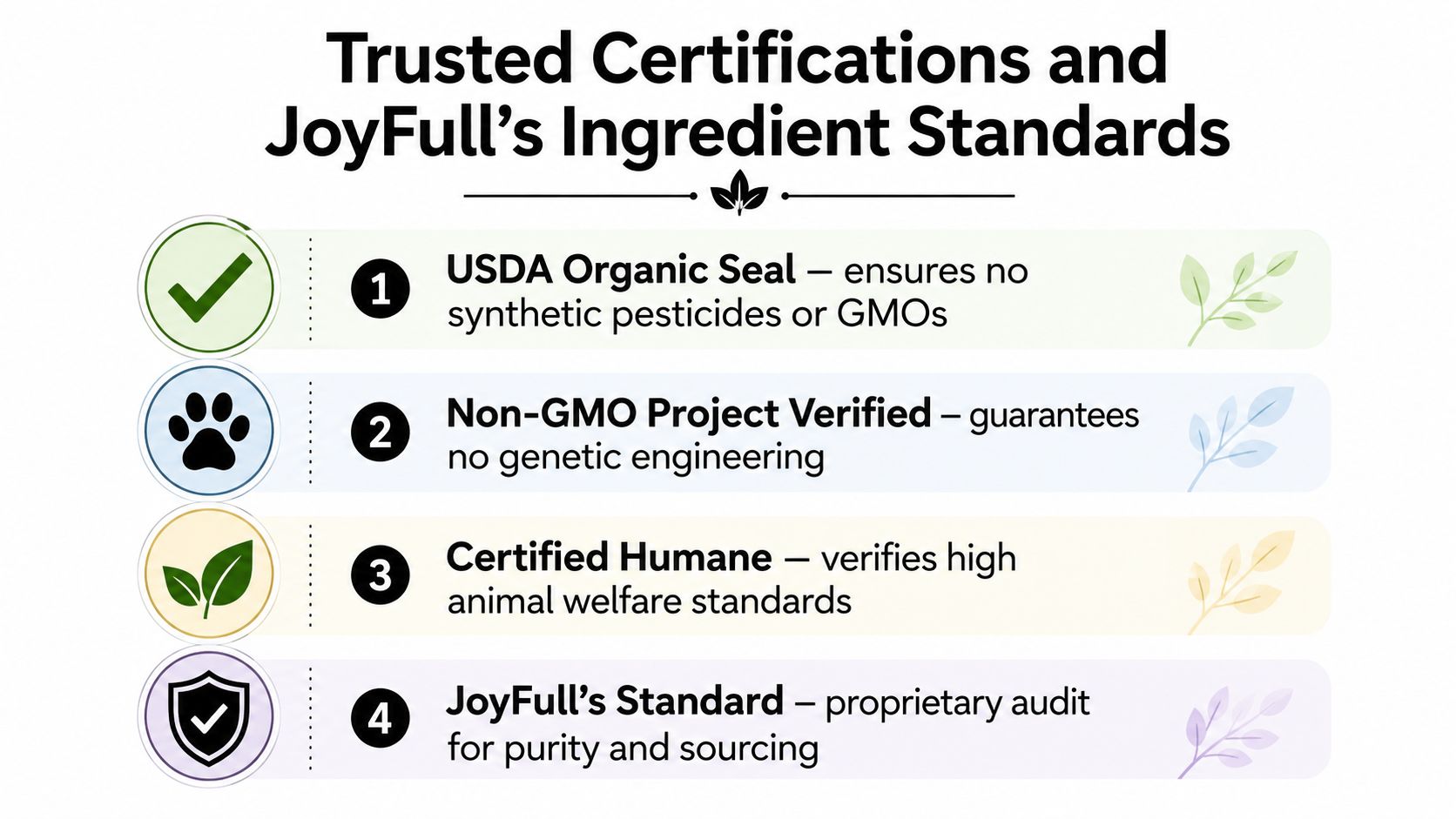
Certifications can simplify decisions, but each one answers a specific question. USDA Organic addresses production requirements associated with organic certification. Non-GMO Project Verified addresses genetic engineering criteria. Certified Humane focuses on animal-welfare standards. None of these labels, by itself, proves that a food is complete for every pet, suitable for a medical condition, or free from every possible contaminant.
Look for the seal, then read the certification scope. A claim applying to one ingredient may not apply to the entire finished product. You can also ask for documentation instead of treating a logo as a substitute for evidence. Resources that help brands communicate evidence backed claims are useful because they encourage a clear connection between what a product says and what its records support.
Build a complete quality checklist
A strong clean-label assessment combines several forms of evidence:
- Ingredient clarity: The recipe uses recognizable, specific names instead of relying on broad descriptions.
- Nutritional adequacy: The food provides appropriate nutrients for the animal, life stage, and intended use.
- Manufacturing controls: The producer can explain how it manages suppliers, batches, storage, and processing.
- Contaminant screening: The company can describe whether independent testing checks for relevant environmental and industrial pollutants.
- Claim discipline: Marketing language stays within what the documentation can support.
- Veterinary and technical review: Qualified professionals examine formulation decisions and intended use.
JoyFull describes its formulas as using clean ingredients and high-quality proteins, with rigorous scientific review from an in-house veterinary advisor. That approach fits the broader standard pet parents need: recognizable formulation paired with scientific oversight, not a promise that “natural” alone guarantees safety or nutritional value.
A useful standard: Trust grows when a brand can explain both the ingredients it selected and the controls it uses to verify the finished product.
Ask the company whether it can provide a current ingredient list, feeding guidance, testing information, and a clear explanation of its certifications. For pets with allergies, chronic digestive symptoms, kidney disease, urinary problems, or other diagnosed conditions, bring that information to your veterinarian before changing foods or adding supplements.
Clean label ingredients can make pet food easier to understand, but the most responsible definition includes more than a short panel. It includes appropriate nutrition, honest claims, traceable sourcing, and testing designed to identify what the label can't show.
If you want a more transparent approach to everyday pet wellness, visit Joyfull to explore formulas and supplements made with clearly identified ingredients and reviewed with veterinary input. Use the label-reading questions above, then choose products that give you meaningful information about both formulation and quality controls.
0 comments