How Many Dog Treats Per Day? a Vet-Approved Guide
Your dog is sitting by your feet. You opened the pantry for one thing, and now you've got a treat bag in your hand and a furry face looking up at you like you're the center of the universe.
Most owners know this moment well. You want to reward your dog, enjoy that little ritual, and maybe use a few extra bites during training. But then the question creeps in: how many dog treats per day is actually okay? Not “kind of okay.” Not “probably fine.” Actually fine.
That uncertainty doesn't mean you're doing anything wrong. It usually means nobody has shown you how to turn a general rule into a number you can use at home. Once you do the math once, it gets much easier.
Table of Contents
- That Look of Love And the Bag of Treats in Your Hand
- The 10 Percent Rule for Dog Treats Explained
- Step 1 Calculate Your Dog's Daily Calorie Needs
- Step 2 Translate Calories into Actual Treats
- Training Treats vs Dental Chews vs Snacks
- Common Questions About Dog Treats
That Look of Love And the Bag of Treats in Your Hand
A lot of treat trouble starts with kindness.
You give one after the morning walk. One when your dog comes in from the yard. A few during a quick training session. Then someone in the family shares a small bite from the kitchen. By evening, nobody is quite sure what the total was.
That's how good owners accidentally overfeed. Not because they don't care, but because treats feel small. A biscuit, a chew, or a soft training reward doesn't look like much on its own. Added together, though, they can gradually displace part of the diet your dog needs from balanced meals.
I see this especially in homes where treats are part of bonding, which is a lovely thing. If you're also shopping for pet-themed gifts or practical care packages for a fellow dog lover, OnlineGifts.us pet collections can be a useful place to browse ideas that celebrate pets without turning every moment into another snack.
Why owners get confused
While treats are often counted, dogs live on calories.
That's the whole issue. One dog may do fine with several tiny training rewards, while another dog may hit the day's limit with a single large chew. So when people ask me how many dog treats per day is safe, my first answer is always the same: the number depends on what's in the treat bag.
A treat routine gets safer the moment you stop asking “How many pieces?” and start asking “How many calories?”
Once you think in terms of a daily treat budget, the guesswork fades. You can still reward your dog. You just do it with a plan.
The 10 Percent Rule for Dog Treats Explained
The core rule is simple. Treats should make up no more than 10% of your dog's total daily calories, and the other 90% should come from complete and balanced meals according to AKC guidance on how many treats a dog can have.
That means treats are not counted by handfuls, scoops, or “just one more.” They're counted as part of your dog's total calorie budget for the day.

Think of treats like fun money
A simple analogy helps.
Your dog has a daily budget. Most of it needs to pay for the essentials, which means balanced food that provides protein, fat, vitamins, and minerals in the right proportions. A small slice of that budget can go to extras, which means treats, training rewards, table scraps, and chews.
If the treat side gets too big, the meal side gets squeezed. That's where trouble starts. Dogs can end up taking in extra calories, or owners may cut back meals to “make room” for treats and accidentally dilute the diet.
What the rule looks like in real life
If your dog needs 500 calories per day, the upper treat limit is 50 calories because 500 × 0.10 = 50. That's the budget. Once that budget is spent, additional treats push your dog over the line.
This also explains why there's no universal answer to how many dog treats per day every dog can have. A low-calorie training treat and a calorie-dense chew don't affect the budget the same way.
Practical rule: Don't count treats by the bag's serving picture. Count them by the calories listed for each treat.
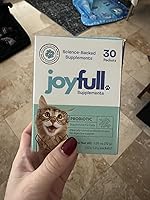
A quick side note for multi-pet households. If you're also managing a cat's digestive support, Probiotic Supplement for Cats - 30 Single-Serving Packets is a veterinarian-formulated cat supplement made with real beef bone broth, clinically-tested probiotic strains, and third-party testing for potency and purity. It's a different topic than dog treats, but many families are balancing nutrition decisions for more than one pet at a time.
Step 1 Calculate Your Dog's Daily Calorie Needs
Before you can figure out treats, you need your dog's total daily calories.
Veterinarians start with RER, or Resting Energy Requirement, using the formula RER = 70 × (weight in kg)^0.75. Then they adjust for activity to estimate TER, or Total Energy Requirement. Common examples include multiplying by 1.2 for sedentary dogs and 1.5 for moderately active dogs, as outlined in the earlier AKC guidance.

Start with ideal weight
Use your dog's ideal weight, not just current weight, especially if your dog is underweight or overweight. If you're not sure what that target should be, your veterinarian can help you choose a realistic number.
For owners trying to match calorie planning with meal amounts, a good companion resource is this guide to calculate optimal dog portions.
Then do the two-step math
Here's the sequence:
-
Find RER using the formula
RER = 70 × (weight in kg)^0.75 -
Adjust for activity to estimate daily needs
Use a multiplier such as 1.2 for a sedentary dog or 1.5 for a moderately active dog
That gives you your dog's daily calorie target.
A worked example
The verified example is a sedentary 10 kg dog.
- RER ≈ 440 kcal
- Multiply by 1.2
- TER ≈ 528 kcal
That means this dog's full daily calorie target is about 528 kcal. Once you know that, the treat budget becomes much easier to calculate.
For many owners, this is the step that turns feeding from guesswork into a plan.
If your dog's lifestyle changes, the number changes
A couch-loving senior and an energetic working dog don't need the same intake. That's why “one chart for all dogs” never works very well. Activity matters. Body condition matters. Growth matters too, especially for puppies.
Some readers get stuck because the formula looks clinical. Don't let that stop you. You only have to do it carefully once, then save the number in your phone, write it on the treat jar, or keep it on the fridge.
Keep it practical
If math isn't your favorite thing, use this simple framework:
- First number: your dog's daily calorie goal
- Second number: your treat budget
- Third number: calories in each treat
Once you have those three numbers, you can answer how many dog treats per day with much more confidence than “a few.”
Step 2 Translate Calories into Actual Treats
This is the step owners usually want most. You've got the calorie target. Now you need the actual treat count.
The key point is that there is no set number. The count changes with the calorie density of the treat. As noted earlier, a dog with a 50-calorie treat budget can have exactly two 25-calorie treats or ten 5-calorie treats in a day.
The formula to use
Use this equation:
Daily treat calorie budget ÷ calories per treat = maximum number of treats per day
So if your dog's treat budget is 50 calories:
- With a 25-calorie treat, the limit is 2
- With a 5-calorie treat, the limit is 10
That's why reading the package matters so much. Look for kcal per treat. If the label only gives calories per serving, slow down and figure out how many individual pieces are in that serving before you start handing them out.
A quick example table
Here is a simple visual to show how treat choice changes the count.
| Dog Weight | Approx. Daily Calories | 10% Treat Budget | Max # of Low-Cal Treats (5 kcal each) | Max # of High-Cal Treats (50 kcal each) |
|---|---|---|---|---|
| 2 kg | Low daily calorie needs | Small treat budget | A few more tiny pieces | Very limited |
| 10 kg | 528 kcal | 52.8 kcal | 10 | 1 |
| 30 kg | Higher daily calorie needs | Larger treat budget | More flexibility | Fewer large treats |
The exact count for your dog depends on your own calorie calculation and the treat label in your hand. If you're comparing options, this guide on choosing healthy dog treats can help you look beyond the front of the package.
Where people slip up
Owners often assume one item equals one treat opportunity. But one large chew can take a huge bite out of the daily budget, while many tiny training rewards may fit just fine.
Small treats aren't automatically healthier. Low-calorie treats are easier to fit into the budget.
That's the answer to how many dog treats per day. It's not a fixed number. It's a division problem.
Training Treats vs Dental Chews vs Snacks
Not all treats do the same job, and they shouldn't be managed the same way.

Training treats
For training, pea-sized rewards are the smartest option, according to Pedigree's guidance on dog treats. The point is efficiency. Your dog doesn't need a large snack to understand they did the right thing. They need a quick, repeatable reward.
That matters during obedience sessions, recall practice, or behavior work where rewards come fast. If each treat is tiny, you can reinforce often without filling your dog up.
If your dog is learning around other pets, treat delivery and timing matter just as much as calorie control. Households working on dog-cat dynamics may find FloofChonk multi-pet home guidance helpful for managing rewards and behavior in shared spaces.
Dental chews
Dental chews are different. They're usually larger, slower to eat, and often more calorie-dense than a training treat. That doesn't make them bad. It just means they need more planning.
If you give a dental chew, count it as a major part of the day's treat allowance. On those days, many dogs need fewer extra snacks.
Casual snacks and toppers
These are the little “just because” rewards. They tend to pile up because they don't feel intentional.
A better approach is to group them mentally under one category: all extras count. A training bite, a chew, a table scrap, or a squeeze-style reward all belong in the same daily budget. One option some owners use for portion control is dog squeeze treats, since squeezable formats can make it easier to deliver very small amounts during training.
Exceeding the treat allowance doesn't just add calories. As Pedigree notes, it can also dilute the nutrient density of the main diet, which can contribute to subclinical deficiencies if meals are repeatedly displaced.
A short video can help you think through treat choices in a practical way:
A simple way to decide
Use this quick lens:
- Training rewards: keep them tiny and frequent
- Dental chews: treat them like a major calorie event
- Snacks: give them intentionally, not automatically
That mindset helps owners stay generous without becoming accidental overfeeders.
Common Questions About Dog Treats
What about puppies
Puppies can rack up a lot of treat moments because they're learning all day. Keep rewards small and purposeful. Growth changes calorie needs, so if you're doing frequent training, ask your veterinarian to help you match reward use with the rest of the diet.
Can I give more treats on training days
Sometimes, yes. Purina's discussion of treat planning notes that some experts view the 10% cap as a weekly average rather than a daily hard stop for high-intensity training schedules, with more treats on active training days and less on rest days. The catch is that the main diet still needs to remain nutritionally adequate.
What if my dog is overweight
Use smaller rewards, fewer extras, and tighter tracking. In many cases, the easiest fix is not “no treats,” but switching to much smaller, lower-calorie rewards and being strict about counting every non-meal bite.
What if the package doesn't list calories
Be cautious. If you can't determine calories clearly, it's hard to fit that item into a sensible treat plan. Ask the manufacturer or choose a product with clear labeling.
Do “healthy” treats still count
Yes. If it has calories, it counts.
For owners trying to keep up with changing pet care expectations while planning travel or boarding, broader resources like 2026 pet care insights can be useful for thinking through routines and consistency when your dog's day doesn't look normal.
Treats should feel good for both of you. The trick is making them deliberate instead of random. Once you know your dog's calorie target, the 10% budget, and the calories in the treat, you're no longer guessing.
If you want pet wellness advice that stays practical and ingredient-aware, take a look at Joyfull. Their approach centers on convenient, straightforward products designed to support everyday pet health without making owners sort through confusing labels or overhyped claims.