


Clean ingredient protein snacks require more than a “natural” badge. Look for recognizable protein sources, minimal processing, and no artificial additives, while remembering that protein quality depends on amino acid availability and digestibility.
You're standing in the pet aisle with two similarly priced bags of treats. One says “natural,” the other says “grain-free,” and both use earthy colors, smiling animals, and a protein number on the front. Neither tells you whether the protein is named, whether your pet can digest it well, or what happened to it during processing.
That's the problem with clean ingredient protein snacks. The front of the package sells an impression, but the back of the package reveals the formula. A treat can avoid artificial colors and still rely on vague animal ingredients. It can advertise high protein and still deliver protein from sources with limited amino acid value. It can use simple ingredients and become less nutritious through excessive heat.
The broader protein-snacks category is now a mainstream packaged-food segment. One forecast estimates USD 54.86 billion in 2025, growing to USD 120.43 billion by 2034, while another projects USD 34.44 billion in 2026 rising to USD 49.62 billion by 2031. The differing forecasts use different market definitions, but both point to sustained demand for protein-focused snacking, as reported in this protein snacks market analysis.
For pets, the useful question isn't “Does this look clean?” It's “Does this snack combine a clearly identified protein with sensible processing and ingredients my pet tolerates?” The guide below gives you a practical way to answer that in under five minutes.
Table of Contents
- Why This Guide Exists and What You'll Walk Away With
- What Clean Ingredient Protein Snacks Actually Mean
- Protein Sources Worth Choosing and Why
- Red Flags Hiding Behind a Clean Label
- How to Read a Pet Snack Label in Five Minutes
- DIY Treats Versus Commercial Snacks
- Matching Snacks to Real Pets
- Your Take-Home Checklist for the Next Shopping Trip
Why This Guide Exists and What You'll Walk Away With
The words clean ingredient and high protein have become powerful shopping shortcuts, but they don't mean the same thing. “Natural” may describe a marketing position rather than a complete formula, while “high protein” says little about amino acid digestibility, protein source, or suitability for a dog or cat.
The research gives us a better starting point. Pet nutrition literature evaluates protein quality through amino acid digestibility, not crude protein alone. A DIAAS-like score of 100% or above is considered high quality, 50% to 100% moderate, and below 50% insufficient as a primary amino acid source, according to the Pet Nutrition Institute review of protein and pulses. Several animal and plant ingredients tested for pets showed indispensable amino acid digestibility above 80%, with some exceeding 90% for key amino acids.
That distinction matters at the checkout counter. A short ingredient list is useful, but it doesn't automatically guarantee a nutritionally strong snack.
The shopping framework
Use this sequence:
- Define clean properly: Require recognizable inputs, a named protein, and limited artificial additives.
- Judge protein quality: Look beyond the percentage and consider amino acid completeness and digestibility.
- Question processing: Heat, moisture, and extrusion can change nutritional value, especially lysine availability.
- Read the label in order: Start with the ingredient list, then inspect the guaranteed analysis and manufacturer details.
- Match the snack to the pet: A sensitive dog, senior cat, and growing puppy shouldn't all receive the same formula.
You'll also see where homemade treats beat commercial products, where they fall short, and how the same label principles change with age, health, and activity. The goal isn't to find a perfect-looking bag. It's to spot a sensible product quickly, without letting packaging do the thinking for you.
What Clean Ingredient Protein Snacks Actually Mean
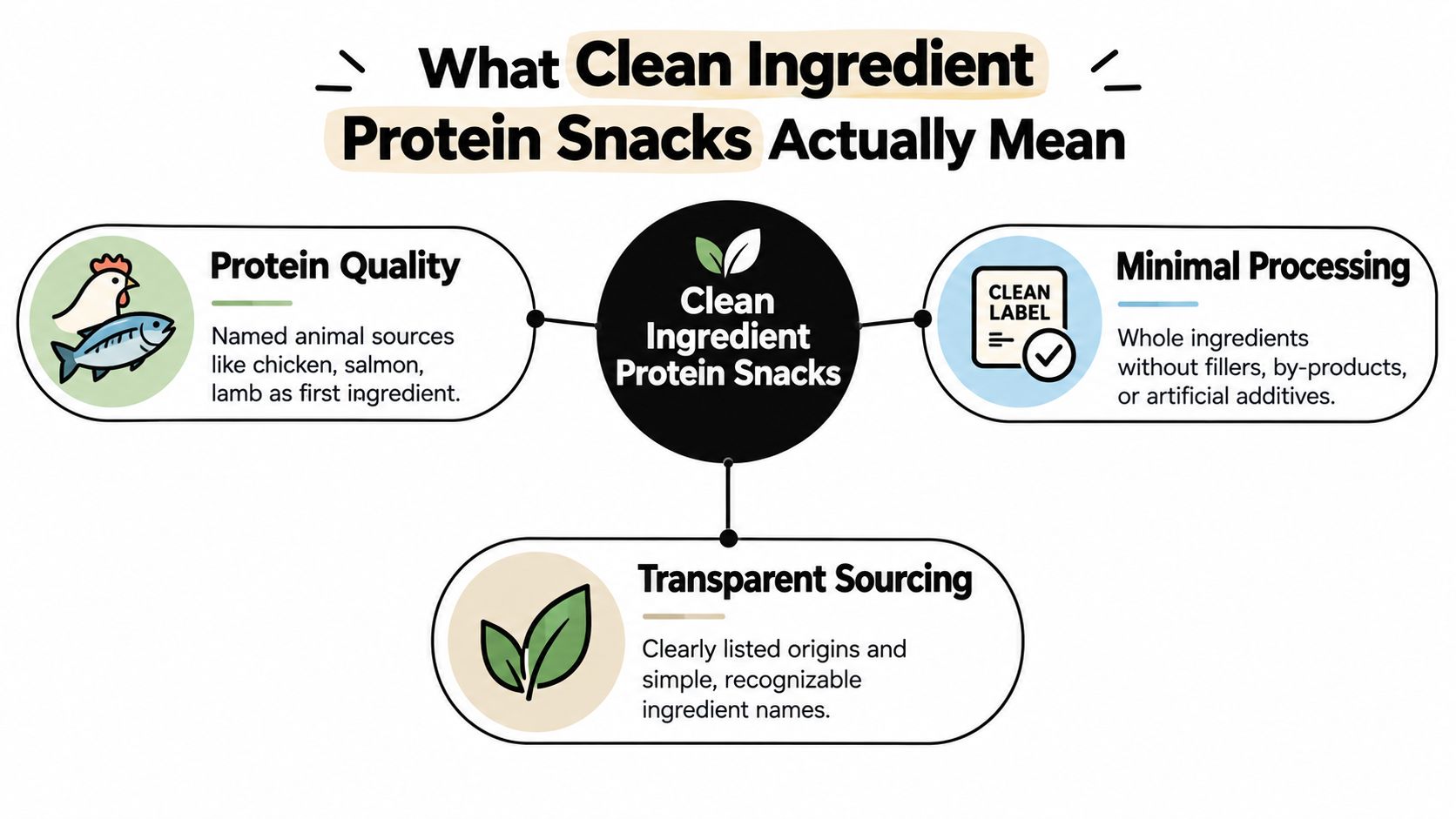
A useful definition has three pillars: protein quality, recognizable inputs, and minimal processing. Remove any one of them and the phrase becomes too easy for brands to use without delivering much substance.
Protein quality comes first
The protein should have a clearly named source, such as chicken, salmon, lamb, egg, or turkey. “Animal protein” and “meat meal” leave important questions unanswered. The source may be suitable, but the label gives you less information about its amino acid profile, sourcing, or consistency.
Cats are obligate carnivores, so animal-derived protein deserves especially careful attention in feline treats. Dogs can use a broader range of ingredients, but that doesn't make every plant-heavy formula equally valuable. Protein percentage is only the beginning. Digestibility determines how much of that protein becomes available to the animal.
Recognizable ingredients build trust
You should be able to understand the core ingredients without translating a long list of vague terms. Real chicken, salmon, pumpkin, sweet potato, or egg is clear. A label filled with unnamed fats, generic animal derivatives, or flavoring blends gives you less control over what your pet is eating.
That doesn't mean every unfamiliar scientific name is harmful. Some technical names identify legitimate nutrients or stabilizers. The issue is transparency. A clean formula should make the important parts easy to identify.
Minimal processing protects the formula
Minimal processing means avoiding unnecessary artificial colors, flavors, and preservatives, while using a process that protects nutrient availability. “Preservative-free” isn't enough if the product needs heavy heat exposure to become shelf stable.
Research on pet food processing shows that heating can impair lysine bioavailability through Maillard reactions, even though well-formulated extruded canine diets can still achieve high overall protein digestibility. The study on processing and protein quality in pet food makes the practical point clearly: clean label does not automatically mean highly digestible.
Practical rule: Clean means the protein source, ingredient list, and processing method make sense together. One attractive claim can't compensate for a weak formula elsewhere.
Protein Sources Worth Choosing and Why
Protein sources shouldn't be ranked by trendiness. Rank them by amino acid value, digestibility, tolerance, and usefulness for the individual pet.
Named animal proteins usually give you the strongest starting point. Chicken and turkey are familiar, practical options with complete amino acid profiles, although chicken is a common sensitivity trigger. Salmon and white fish add useful omega-3 fats, which can make them appealing for pets with skin or coat concerns, but fish-based treats often cost more. Lamb and venison can provide novel options when a pet has already eaten common proteins, yet sourcing and preparation still affect digestibility.
Egg is another strong choice. It can fit into small treats, tends to be highly digestible, and works well when you want a compact protein source. Plant proteins such as pea, chickpea, and lentil aren't automatically bad, but they shouldn't receive credit because the package calls them clean. They may contribute protein, fiber, and texture, while still offering a less complete profile for cats and varying digestibility for dogs.
The evidence supports evaluating the ingredient rather than assuming the category. Pet nutrition research reports indispensable amino acid digestibility above 80% for multiple animal and plant ingredients, with some key amino acids above 90%, while the same literature emphasizes standardized ileal digestibility or DIAAS-like testing as better benchmarks than label protein alone. See the protein quality reference for pet ingredients for the underlying framework.
| Protein Source | Digestibility | Amino Acid Profile | Common Sensitivities | Best For |
|---|---|---|---|---|
| Chicken or turkey | Generally strong when well processed | Complete animal protein | Chicken can trigger sensitivities | Everyday treats for tolerant dogs and cats |
| Salmon or white fish | Strong, formula dependent | Complete, with fish-derived nutrients | Fish intolerance in some pets | Skin and coat focused snack choices |
| Lamb or venison | Varies by ingredient quality and processing | Complete animal protein | Novel does not guarantee tolerance | Pets needing a less familiar protein |
| Egg | Typically highly digestible | Complete animal protein | Egg sensitivity is possible | Small treats and easy-to-digest options |
| Pea, chickpea, or lentil | Variable | Can be less complete, especially for cats | Gastrointestinal intolerance in some pets | Supporting ingredients, not automatic primary proteins |
For owners comparing protein-rich options beyond ordinary pet treats, this guide to high protein feed for backyard flocks is also useful for thinking about how ingredient choice and intended species change the recommendation. The same protein isn't automatically appropriate for every animal.
Red Flags Hiding Behind a Clean Label
Earth-tone packaging isn't evidence. Neither is a leaf icon, a paw-print seal, or the word “wholesome.” If a brand wants your trust, the ingredient panel should earn it.
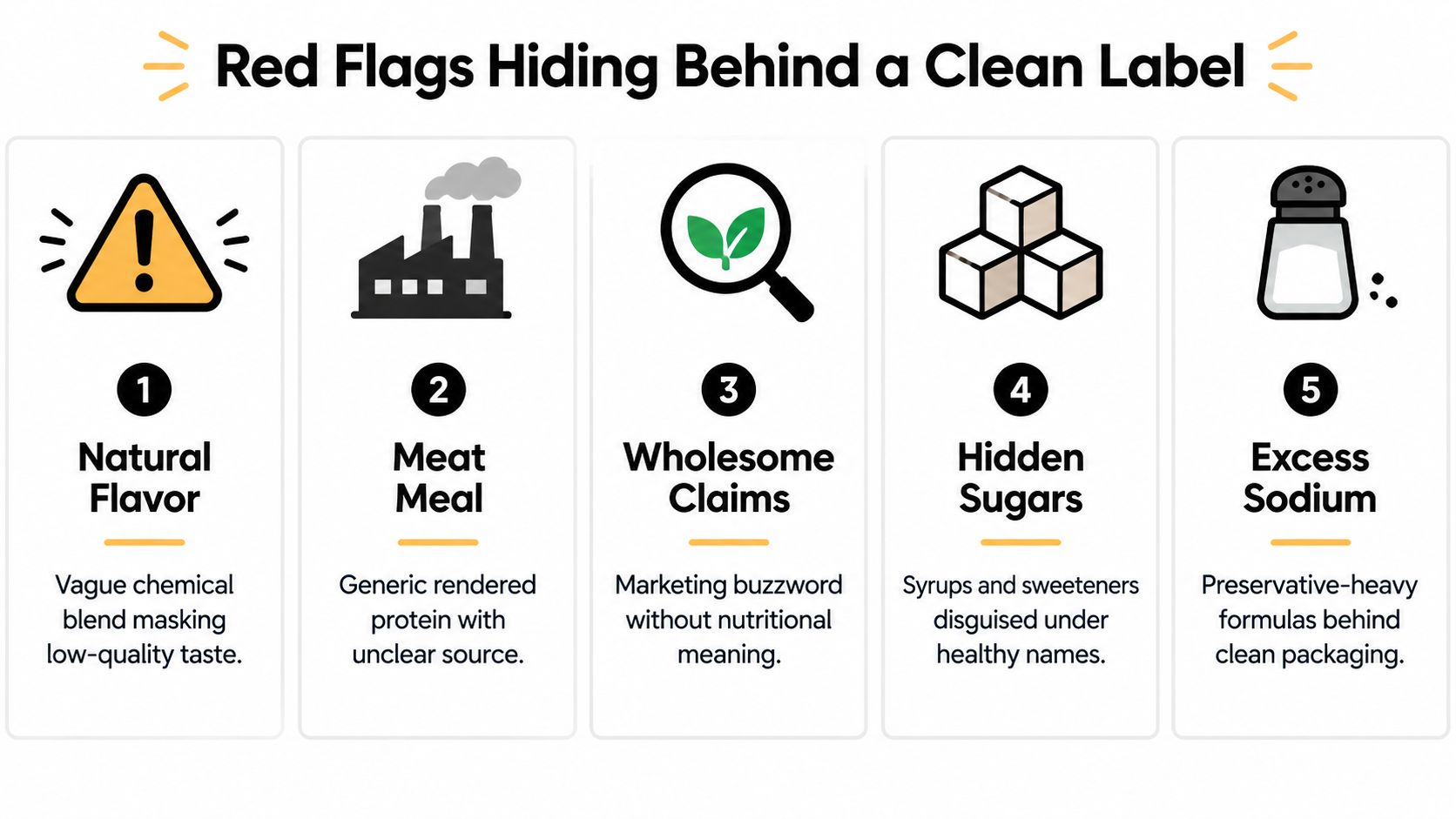
“Natural flavor” is one of the weakest phrases on a pet snack label because it tells you what the flavor is not, rather than what it is. It may represent a blend used to improve palatability, but it doesn't give you the same clarity as a named broth, liver, or meat ingredient. “Meat meal” has a similar problem. Rendered ingredients can be nutritionally useful, but a generic name hides the animal source.
Other warning signs deserve a slower read:
- Unnamed fats: “Animal fat” gives you less sourcing information than chicken fat or salmon oil.
- Ingredient splitting: A formula may list several similar starches or sweeteners separately, making each appear lower on the list.
- Wholesome language: “Wholesome” has no fixed nutritional meaning by itself.
- Preservative ambiguity: Citric acid, potassium sorbate, and mixed tocopherols aren't interchangeable claims. Ask what function each ingredient serves and whether the brand explains it.
- Protein-number fixation: Crude protein can be distorted by moisture, ash, fat, and lower-value fillers.
The distinction between human-grade and feed-grade also deserves attention. Those terms relate to regulatory handling and manufacturing standards, not a simple guarantee that one product is nutritionally superior for your pet. Treat the claim as one piece of information, not a substitute for the full ingredient list.
For a practical reference on safe ingredients for dogs, compare the specific ingredient with your pet's history rather than treating “safe” as the same thing as “suitable.”
A useful label question is simple: Could the manufacturer have named the source more clearly, but chose not to? If the answer is yes, put the bag back unless the company can explain the ingredient and processing method.
How to Read a Pet Snack Label in Five Minutes
Start on the back. The front panel is designed to make you feel confident before you know what you're buying.
Use this order every time
- Read the full ingredient list. Ignore “natural,” “grain-free,” and “high protein” until you know what the product contains.
- Inspect the first three ingredients. Look for a named protein such as chicken, salmon, or egg. “Meat” and “poultry” are less informative.
- Scan the rest for vague additions. Check for unnamed fats, flavor blends, sweeteners, and artificial colors or preservatives.
- Read the guaranteed analysis carefully. Protein percentage doesn't reveal digestibility on its own. Moisture and ash help you understand the context, but the label still won't replace validated digestibility data.
- Verify the product details. Check the nutritional adequacy statement, country of manufacture, feeding instructions, and whether the protein fits the species and health profile of your pet.
Position matters because ingredients are generally listed by weight before processing. That makes the first few entries useful, but it doesn't make the entire list irrelevant. A small amount of a problematic ingredient can still matter to an allergic pet.
| Label Element | Brand A, Clean | Brand B, Suspicious |
|---|---|---|
| First ingredient | Named chicken | Generic meat meal |
| Supporting ingredients | Recognizable broth and vegetables | Multiple vague flavor and fat terms |
| Preservatives | Clearly identified, limited use | Several unclear stabilizing ingredients |
| Protein claim | Supported by a named animal source | High number with unclear source |
| Manufacturer detail | Feeding guidance and sourcing information | Minimal product explanation |
Photograph labels on your phone before you leave the store. Comparing two images side by side is easier than trying to remember which bag had the named protein. For smarter shopping for pet food, use the same sequence every time so attractive packaging doesn't change your standards.
DIY Treats Versus Commercial Snacks
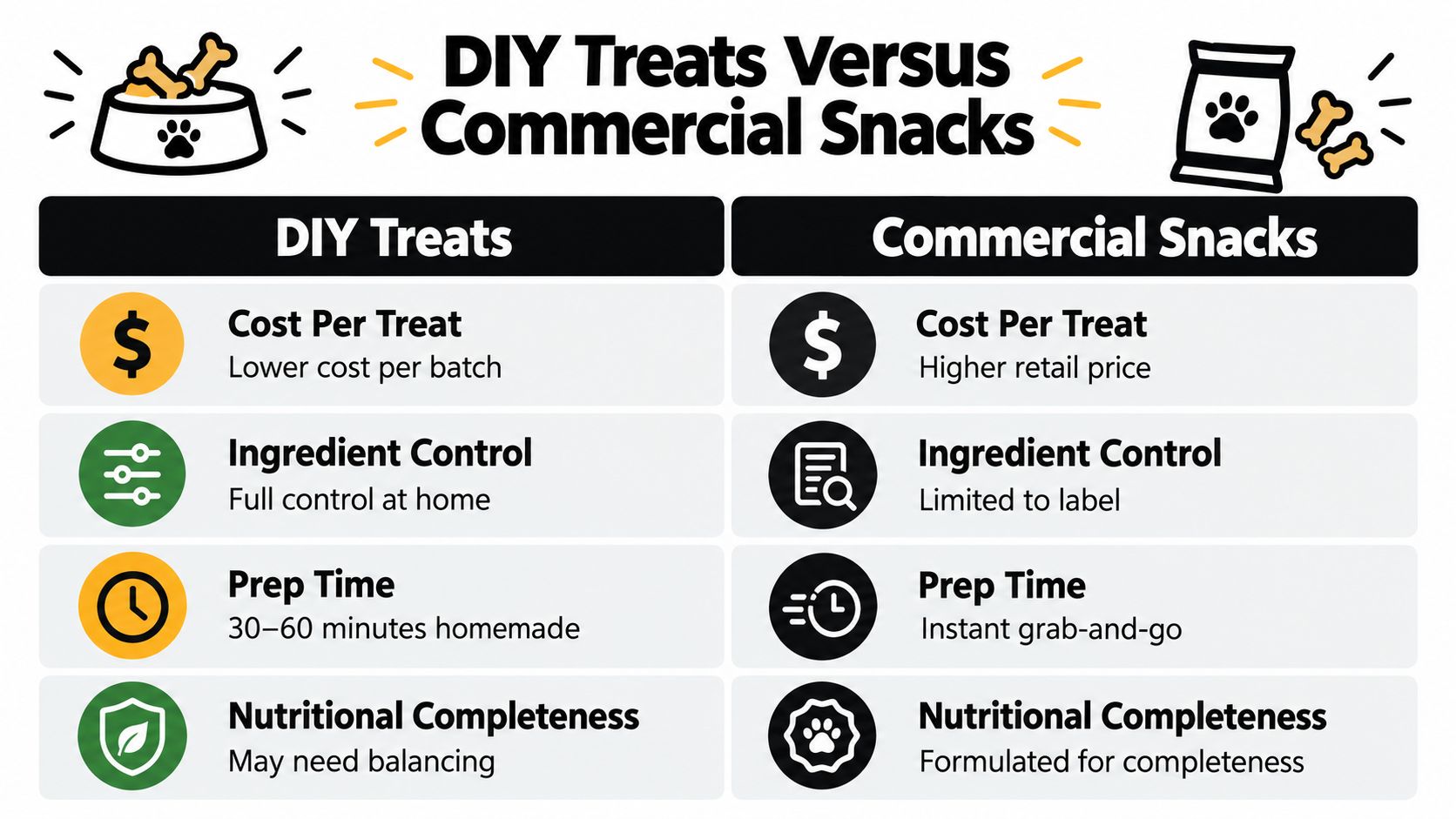
Homemade treats win the transparency contest. You choose the meat, control the recipe, and can avoid an ingredient your dog or cat doesn't tolerate. That makes DIY especially useful for elimination-style feeding plans supervised by a veterinarian or for small batches of training rewards.
Commercial snacks win on consistency. A responsible manufacturer can control batch formulation, test ingredients, and add nutrients that are difficult to balance in a home kitchen. That matters when owners start treating a snack as more than a reward.
The tradeoff is practical, not ideological
| Decision Factor | DIY Treats | Commercial Snacks |
|---|---|---|
| Cost per treat | Often lower across a batch | Includes retail and manufacturing costs |
| Ingredient control | Full control over selected ingredients | Control is limited to label transparency |
| Preparation | Requires cooking, drying, storage, and cleanup | Ready to serve |
| Nutritional completeness | May need professional balancing | Often formulated for a defined nutritional role |
The biggest DIY risk isn't that homemade food is poor. It's that owners may create an unbalanced routine, especially for cats, where calcium and phosphorus relationships matter. A treat can be perfectly clean and still be unsuitable as a major part of the diet.
Homemade is excellent for control. Commercial is often better for repeatability. Choose based on the job the snack needs to perform.
A sensible middle ground is to use homemade treats for occasional training, while choosing a commercial product for regular use when you need predictable composition. Plain dehydrated single-ingredient meat can sit between both approaches, offering a short ingredient list without requiring daily preparation. Store it safely, introduce it gradually, and keep treats in their proper role rather than letting them displace a complete diet.
For owners cooking at home, these healthy training bites for dogs can help with recipe ideas, but a recipe isn't a substitute for veterinary guidance when a pet has disease, allergies, or a restricted diet.
Matching Snacks to Real Pets
The right snack changes when the pet changes. Clean ingredients are not a universal prescription.
Consider a dog with recurring loose stool. Start with a veterinarian-guided plan, then look for a named, novel protein or a hydrolyzed option if clinically appropriate. Keep the formula simple, avoid multiple new proteins at once, and choose a soft training bite so you can give small portions without adding a heavy fat load or a long list of extras.
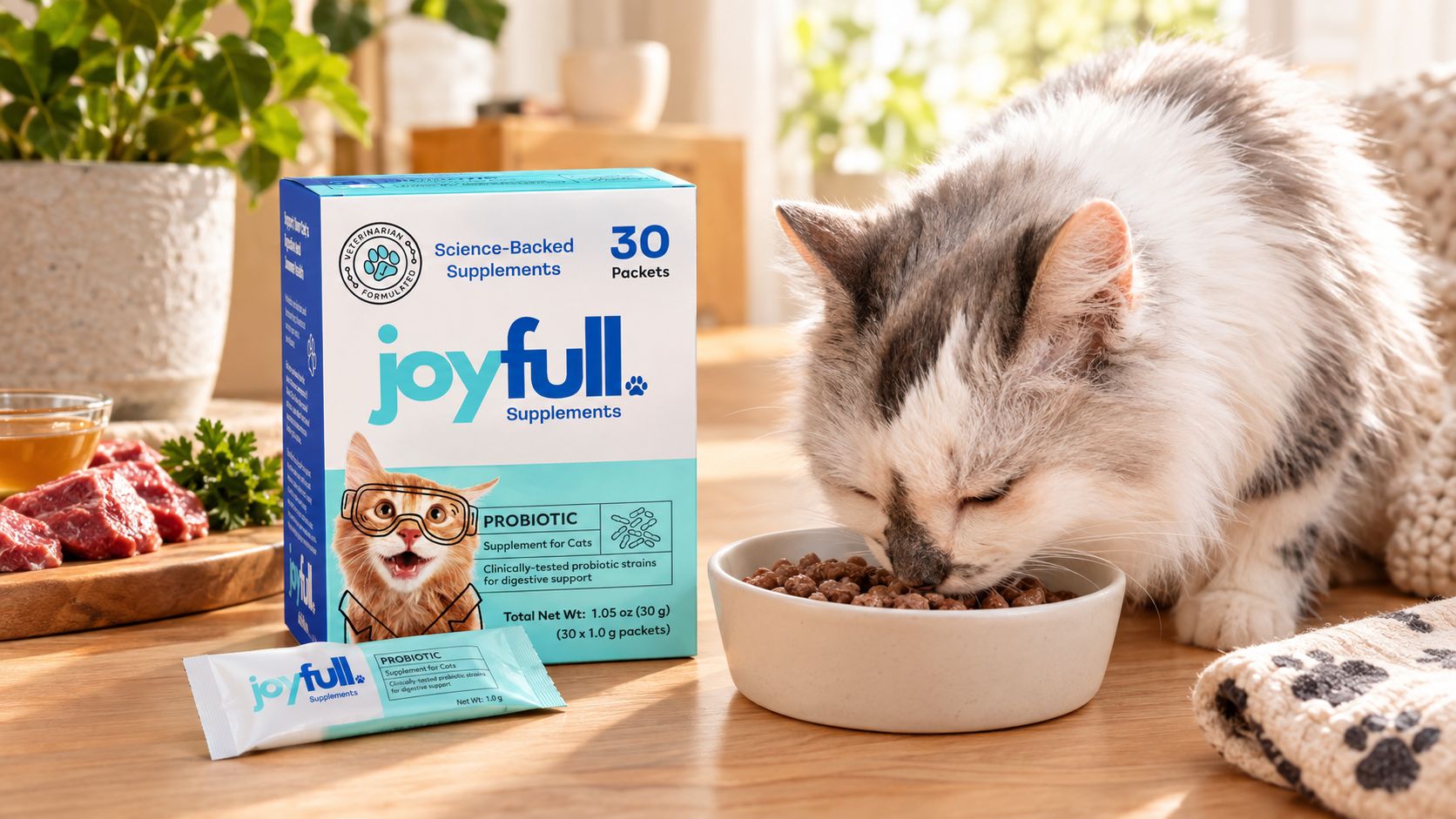
A senior cat with reduced kidney function needs a different level of caution. High protein isn't automatically the goal when kidney disease is present, because phosphorus, total diet formulation, hydration, and veterinary supervision matter. Choose treats only after checking them with the cat's veterinarian. A digestive supplement is also not the same thing as a protein snack. For example, Probiotic Supplement for Cats - 30 Single-Serving Packets is described as a veterinarian-formulated product with clinically tested probiotic strains, real beef bone broth, two prebiotics, and third-party testing for potency and purity. That makes it a gut-support product, not a replacement for a kidney-appropriate diet.
An active puppy needs calories and nutrients that support growth, not an adult workout-style snack. Choose a highly palatable whole-animal protein in small pieces, and check that treats don't crowd out a complete puppy diet. Frozen enrichment can slow eating, while soft pieces work better for training and socialization.
| Pet Profile | Recommended Protein | Ingredient Priorities | Limit or Avoid | Best Snack Format |
|---|---|---|---|---|
| Sensitive-stomach dog | Novel or veterinarian-selected hydrolyzed protein | Short list, consistent formula, gradual introduction | Multiple new proteins and rich extras | Small soft training bites |
| Senior cat with reduced kidney function | Veterinarian-approved protein choice | Kidney-appropriate nutrient profile and clear analysis | Unchecked high-protein or high-phosphorus treats | Tiny crunchy topper or approved supplement |
| Active growing puppy | Named whole-animal protein | Complete puppy diet remains primary, simple treat ingredients | Treats that replace meals or add unnecessary additives | Soft training pieces or frozen enrichment |
The same framework produces three different answers because protein quality is only useful when it matches the pet's tolerance and health status.
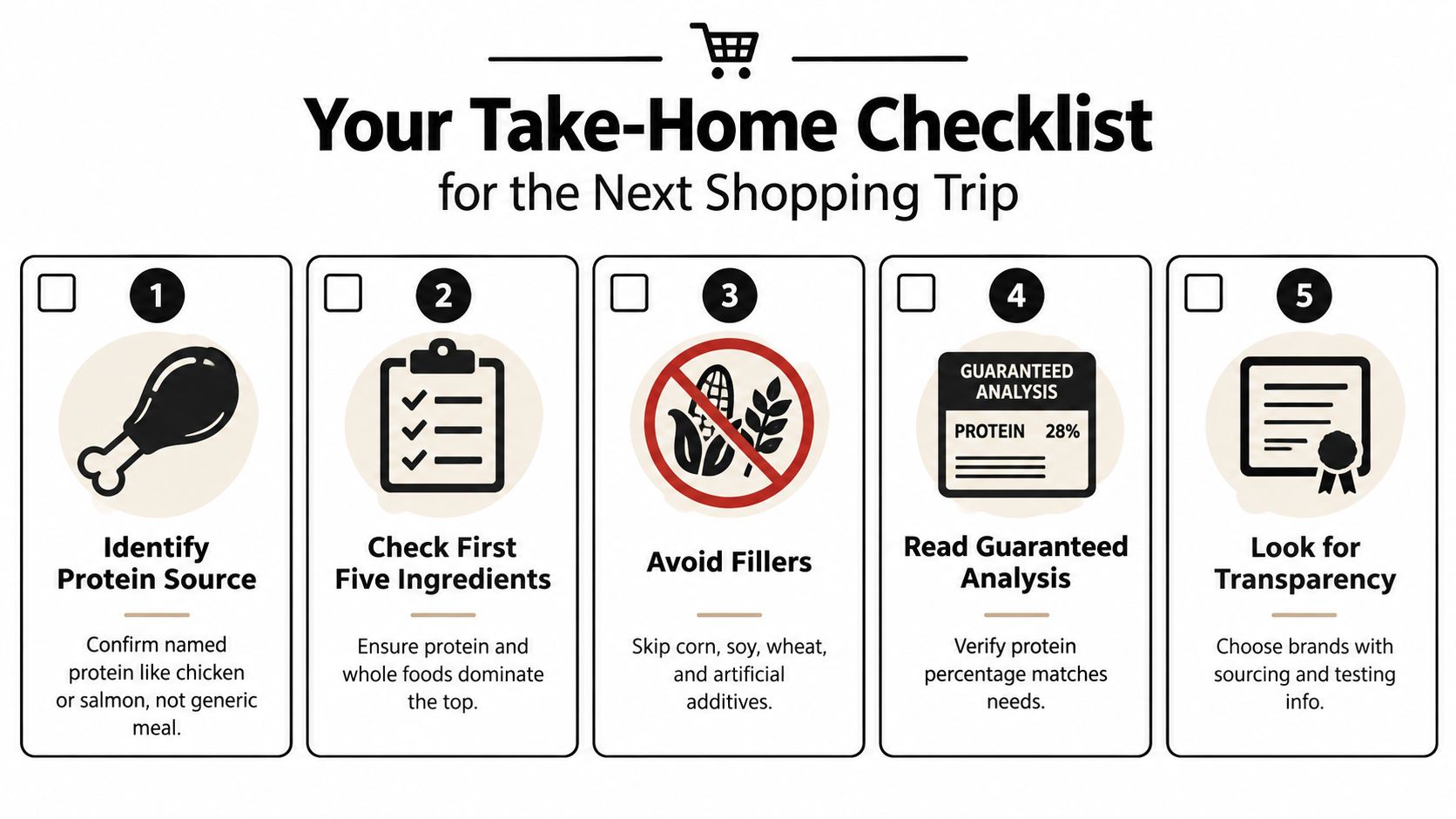
Your Take-Home Checklist for the Next Shopping Trip
Use this five-point check before you buy:
- Identify the protein source. Choose chicken, salmon, turkey, egg, lamb, or another named source over generic meat or poultry terms.
- Read the first five ingredients. Ask whether they look recognizable, whether the main protein appears early, and whether the formula depends heavily on starches or vague blends.
- Search for hidden ambiguity. Look for unnamed fats, “natural flavor,” ingredient splitting, unclear preservatives, and claims that sound nutritious but explain nothing.
- Match the snack to the pet. Age, activity, allergies, digestive tolerance, kidney health, and species all change the recommendation.
- Decide whether it's a reward or a nutritional tool. A training treat has a different job from a topper or supplement, so portion and evaluate it accordingly.
The market context explains why the shelves are crowded. Protein snacks are growing well beyond a niche category, and clean-label positioning is spreading across adjacent snack markets. One forecast cited by Fortune Business Insights' protein snack market overview says more than 60% of healthy snack launches in 2025 carried front-of-pack claims such as no artificial ingredients, non-GMO, or organic, with the share projected to exceed 75% by 2029. That trend makes label literacy more important, not less.
Ask two questions before checkout
- Would I understand and accept this ingredient list if the packaging were plain white?
- Does this protein match what my individual pet tolerates and needs?
If you can answer both confidently, the product has passed a meaningful test. If you can't, leave it on the shelf and keep comparing.
Joyfull offers pet wellness products built around clean ingredients, named high-quality proteins, and veterinary review, including options for dogs and cats. Visit Joyfull to explore products that make ingredient-conscious pet care easier to evaluate and use.
0 comments