


You're standing in the pet-food aisle with two bags that make nearly identical promises. One shows a roast chicken on the front. The other highlights “natural nutrition” and a glossy list of benefits. Both sound convincing, and neither tells you what the recipe looks like until you turn the package around.
That back panel is where the useful work starts. Learning how to read ingredient lists means understanding order, moisture, split ingredients, vague terms, and the difference between what appears on the label and what contributes most in the bowl. Once you know what to look for, you can compare products without letting the front-of-bag design make the decision for you.
Table of Contents
- Why the Ingredient Panel Matters More Than the Front of the Bag
- The Descending-Weight Rule and How to Read the First Ingredients
- Spotting Ingredient Splitting and Other Label Tricks
- Decoding Common Ingredient Terms Without Industry Jargon
- What Dogs Need Versus What Cats Need From a Label
- A Quick Shopping Checklist You Can Use at the Store
- Becoming a Confident Label Reader for Life
Why the Ingredient Panel Matters More Than the Front of the Bag
The front of a pet-food package is built to persuade you. Words such as “premium,” “farm-raised,” “natural,” or “with real meat” can describe a product without showing you how much of each ingredient it contains. A picture of meat doesn't tell you whether that meat is the dominant part of the recipe, either.
The ingredient panel follows a different set of rules. In major pet-food markets, ingredients must generally appear in descending order by weight, so the first ingredient contributes the most weight in the formula and the last contributes the least. In the United States, AAFCO's model pet-food regulations reflect the framework behind this order, alongside FDA requirements for common or usual ingredient names.
That makes the panel a rough map of the recipe. It doesn't give you exact percentages, and it doesn't tell you everything about digestibility or nutritional adequacy, but it gives you a consistent place to begin.
The rulebook behind the label
AAFCO adopted pet-food labeling guides in 1959, followed by the Pet Food Model Regulations in 1967. Those milestones helped create a more standardized way for owners to compare products instead of relying only on brand language. The same regulatory framework also requires ingredients to appear individually and in the same type, size, style, and color, limiting the ability to make one ingredient look more important through typography.
That doesn't make every label simple. It does mean the ingredient list deserves more trust than the marketing panel.
Shelf rule: Turn the bag around before you decide whether the front-of-package claim matters.
If you're comparing treats, you can use the same habit. For example, when you find Roscoe Stella treats, check the actual ingredient statement rather than relying on the product name or package imagery. For broader context on the safeguards behind pet-food labeling, Joyfull on pet food safety offers another useful reference.
The Descending-Weight Rule and How to Read the First Ingredients
Start with the basic mechanic. Ingredients are listed from most to least by weight, on an as-formulated basis. The first ingredient is the largest contributor by weight at the time the formula is prepared, while ingredients near the end appear in smaller quantities.
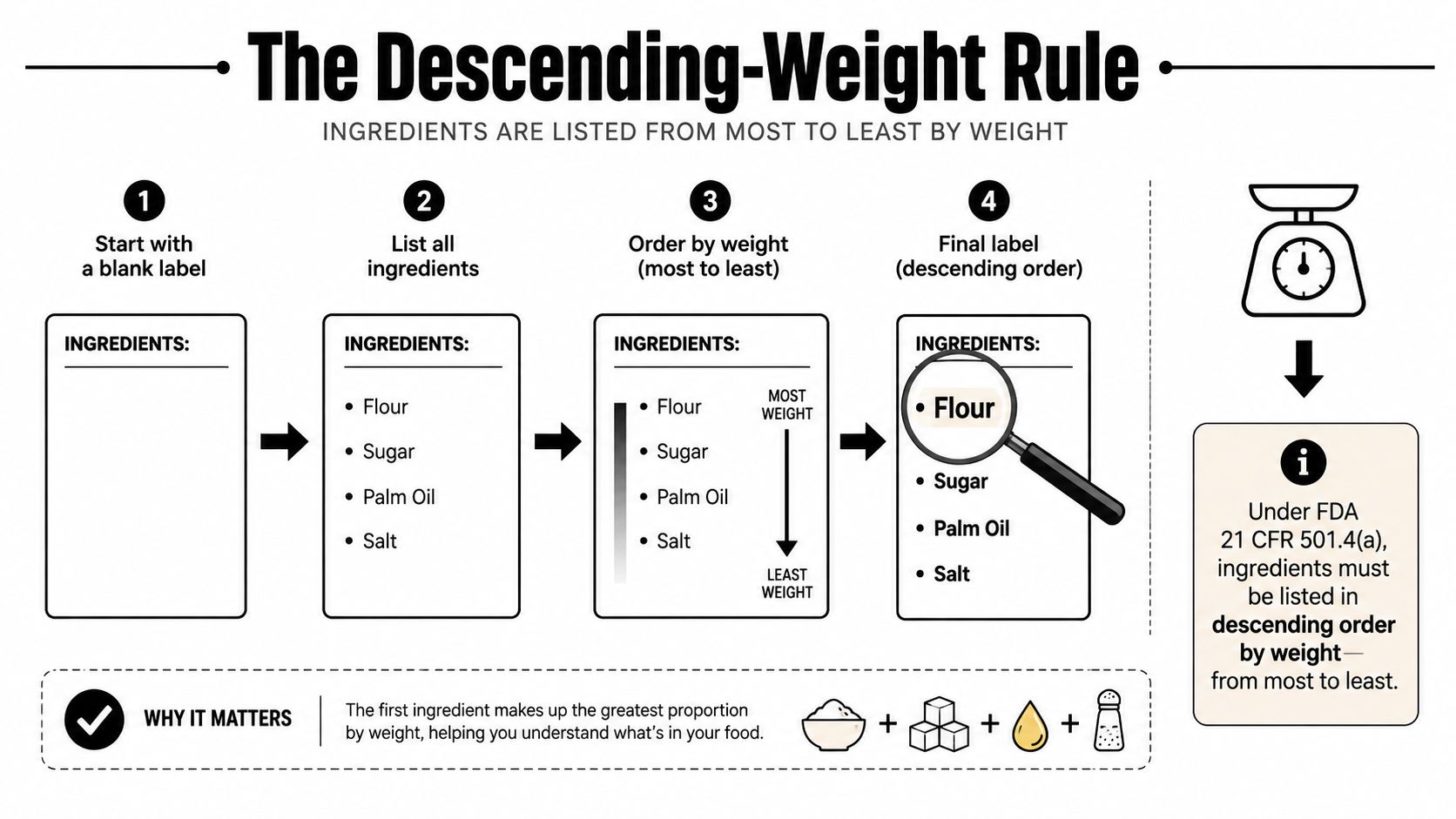
The FDA rule in 21 CFR 501.4(a) requires ingredients to be listed by their common or usual names and ordered by weight. AAFCO guidance also says ingredients should appear individually and in consistent type, size, style, and color. The label can't legally use oversized lettering to make one ingredient appear more prominent than another.
Use the first three to five ingredients as your starting map
Read the first three to five ingredients before you scan the rest. This opening cluster usually tells you what dominates the formula by weight.
Consider a fictional dry dog-food label:
- Chicken
- Chicken meal
- Brown rice
- Peas
- Chicken fat
- Beet pulp
- Minerals and vitamins
You can mentally divide that list into three groups:
- Dominant cluster: chicken, chicken meal, brown rice, and peas.
- Supporting ingredients: chicken fat and beet pulp.
- Technical tail: vitamins, minerals, and preservatives.
This is a reading method, not a promise about quality. Chicken appearing first doesn't tell you the absolute amount of chicken. It also doesn't tell you whether another product with chicken first has the same protein, carbohydrate, or moisture profile. Two formulas can share a first ingredient and still differ substantially in what they deliver.
Don't confuse order with nutritional value
A fresh ingredient can weigh heavily because it contains water. A dry ingredient can contribute more concentrated nutrients even if it appears lower on the list. That's why ingredient order is useful, but incomplete.
After reading the opening cluster, check the guaranteed analysis and the feeding statement. The ingredient panel tells you what goes into the recipe and in what weight order. The guaranteed analysis helps you understand the declared nutrient profile. You need both to judge the food that reaches your pet's bowl.
Spotting Ingredient Splitting and Other Label Tricks
Reading the first ingredient isn't enough. A label can follow the rules and still encourage a misleading first impression through ingredient splitting.
Suppose a recipe contains peas, pea protein, and pea starch. Each appears as a separate entry, so each individual pea-derived ingredient may sit lower on the list than a shopper expects. Mentally combine related entries before deciding what dominates the recipe. If several forms of the same plant ingredient appear throughout the opening cluster, treat them as a group rather than isolated items.
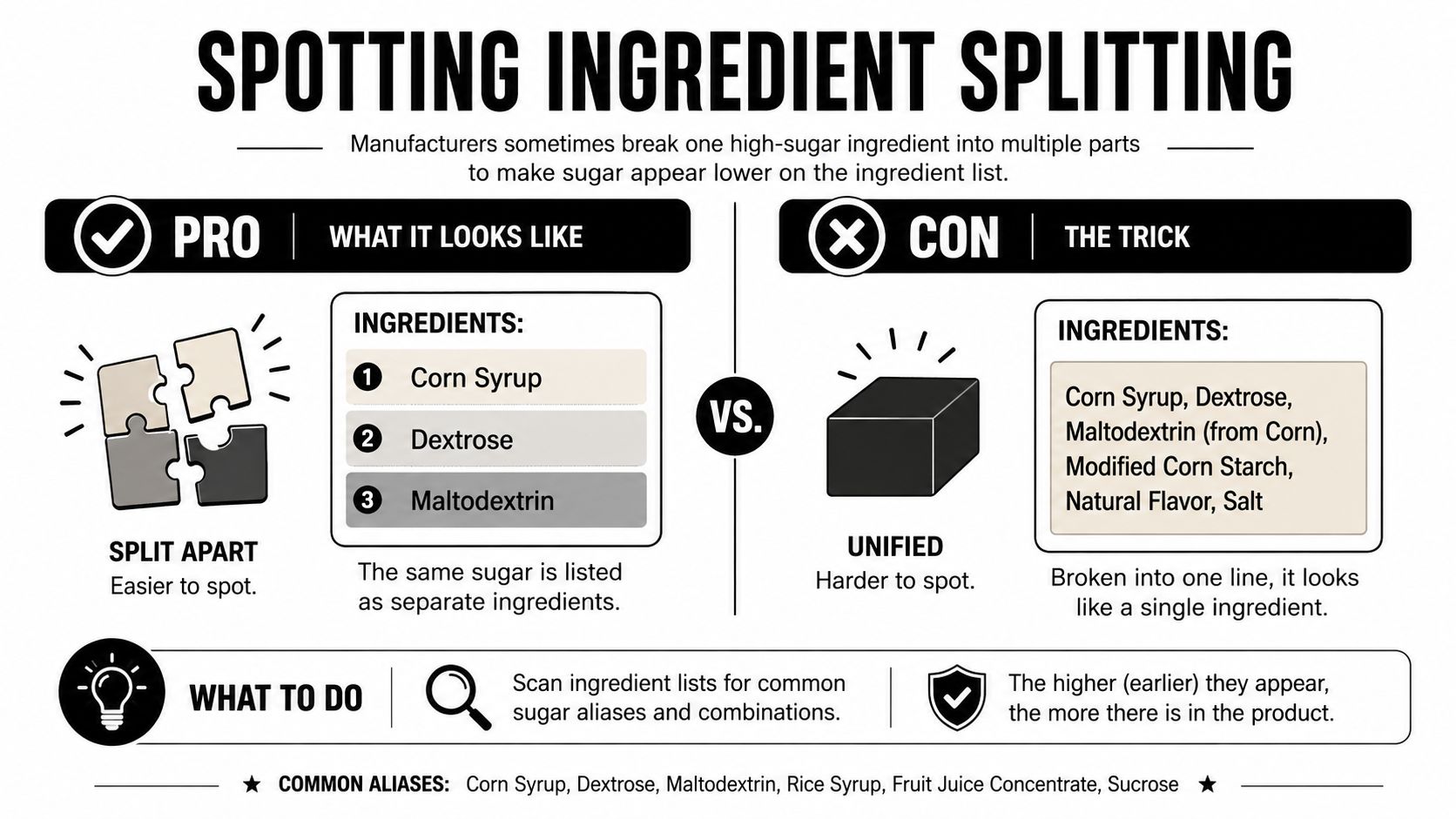
This confusion isn't theoretical. Recent consumer coverage reports that 29% identify ingredient lists as one of the top sources of confusion, while 58% say pet-food labels are misleading. Those figures appear in coverage of consumer concerns about pet-food descriptions. The problem is clear: “read the first ingredient” is useful advice, but it doesn't solve recombination or moisture.
Fresh meat can distort your first impression
Fresh meat contains substantial water. A fresh meat ingredient can therefore appear above a concentrated meat meal because it weighs more before cooking and processing. Once moisture leaves the recipe, the meal may contribute more concentrated animal material than the fresh ingredient's position suggests.
Don't treat this as an automatic reason to reject fresh meat. Treat it as a reason to read the panel alongside the guaranteed analysis. A formula with fresh chicken first and several plant ingredients immediately after it deserves a closer look than the front label's meat imagery might suggest.
Watch categories and parenthetical details
Specific names give you more information than broad category terms. “Chicken meal” tells you more than “meat meal.” “Beef fat” tells you more than “animal fat.” AAFCO guidance generally favors individually listed ingredients and limits mixing individual and category names in the same statement except where regulations allow it, so read the exact wording rather than mentally upgrading a vague term.
Use this quick recombining test:
- Circle related plant entries, such as peas, pea protein, and pea starch.
- Group repeated animal ingredients, including fresh meat and its meal.
- Notice whether unnamed fats or broad animal terms appear near the top.
- Reassess the recipe as a whole, not as a parade of isolated entries.
Decoding Common Ingredient Terms Without Industry Jargon
Ingredient names shouldn't intimidate you, but they should make you pause when they're vague.
Named meat meal, such as chicken meal or lamb meal, is a rendered, concentrated ingredient made from the named animal source. Because moisture is removed, meal can provide a more concentrated contribution than fresh meat by weight. Generic meal, such as meat meal without a clear animal name, gives you less information about the source. I prefer named ingredients because they make comparison easier.
By-products also deserve a fair reading. The term doesn't automatically mean waste. By-products can include nutrient-rich animal parts, but the label still matters because a named by-product tells you more than an unnamed one. I wouldn't reject a food because it contains a named by-product, but I would ask whether the overall formula is clear and appropriate for the species.
Translate the vague terms quickly
- Natural flavor: This is a broad flavoring term, not a detailed description of the original food. If the label gives you a clear whole-food flavor source instead, that's easier to evaluate.
- Animal fat: An unnamed fat source leaves you with less information than chicken fat, salmon oil, or another named source.
- Artificial colors: Pets don't need a colorful kibble. I treat added color as unnecessary decoration.
- Grain-free: Grain-free doesn't automatically mean lower carbohydrate or more meat-forward. Check what replaced the grains, especially if peas, pea protein, or starches appear repeatedly.
- Whole grains: Named grains can fit into a dog's diet when the overall recipe is balanced and digestible. The word “grain” alone isn't a quality verdict.
- Probiotics and prebiotics: These can serve a functional purpose, but look for clear ingredient names and straightforward product information. For example, prebiotics for dogs should be judged by the full formula, not by the front-panel claim alone.
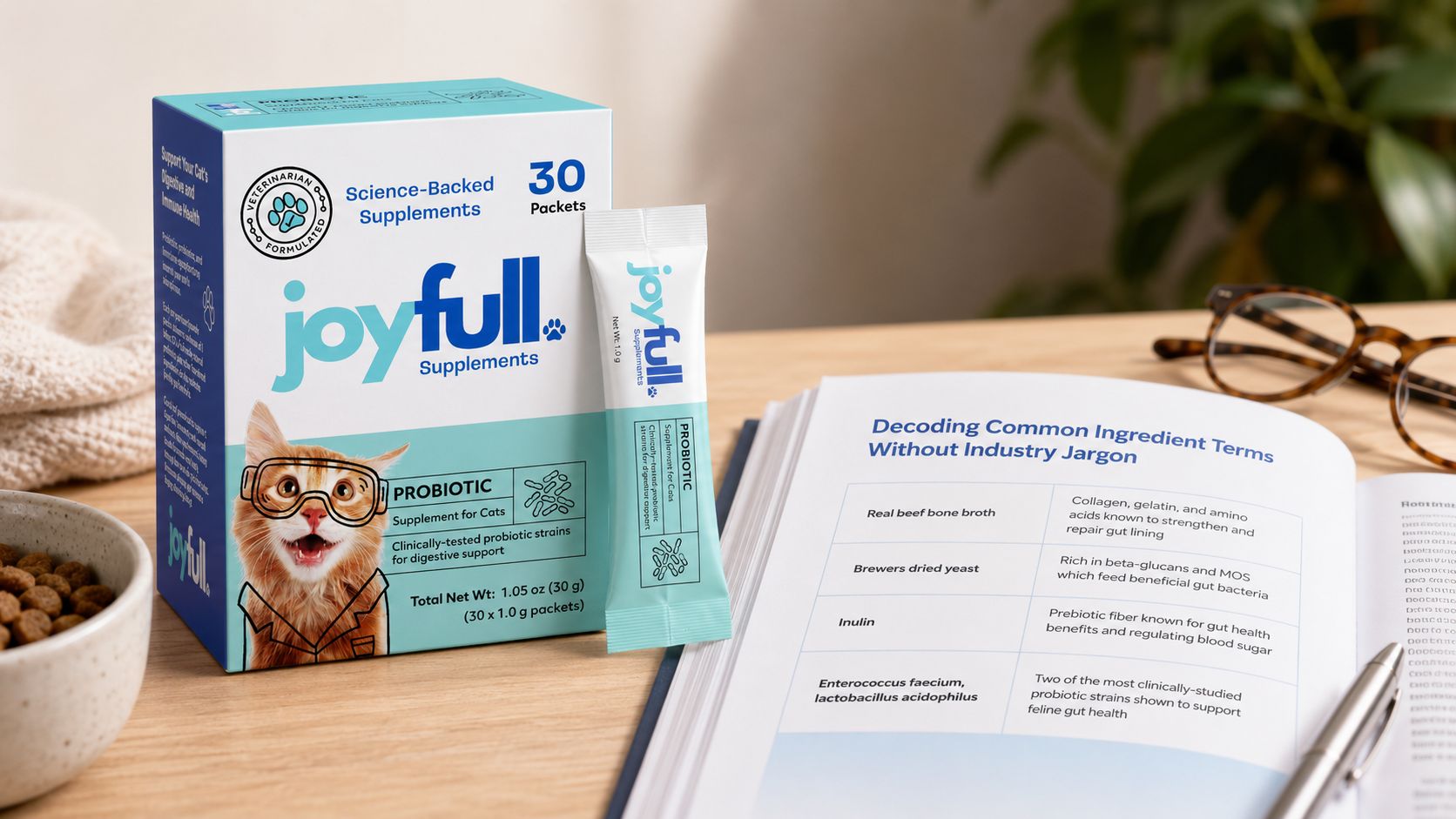
For a cat-specific example, Probiotic Supplement for Cats - 30 Single-Serving Packets lists real beef bone broth, veterinarian-formulated probiotic strains, two complementary prebiotics, and third-party testing for potency and purity. It also states that it contains no artificial flavors or heavily processed natural flavorings.
What Dogs Need Versus What Cats Need From a Label
The same ingredient list can look acceptable for a dog and questionable for a cat. Dogs can use a wider range of ingredients in a balanced diet, while cats have more specific nutritional needs associated with their obligate carnivore biology. Your reading strategy should reflect that difference.
For cats, I want to see clear animal-source ingredients near the front of the list and a formula that doesn't lean heavily on plant proteins to create the appearance of a high-protein recipe. A long list of peas, pea protein, corn gluten meal, or other plant concentrates should make you investigate the guaranteed analysis and nutritional adequacy statement more closely.
For dogs, named animal proteins still matter, but digestible grains or legumes aren't automatically problems. The bigger concern is whether the formula uses cheap-looking fillers, sweeteners, repeated starches, or unnamed fats to bulk out the recipe or improve palatability.
| Priority | Dog Food | Cat Food |
|---|---|---|
| Primary protein | Look for named animal proteins, then assess the full protein profile. | Favor clear animal-source proteins and question heavy reliance on plant protein. |
| Carbohydrate sources | Named grains or legumes can fit when the complete formula is appropriate. | Treat carbohydrate-heavy opening clusters as a reason for closer inspection. |
| Fat sources | Prefer clearly named fats and oils over vague animal fat. | Look for named animal fats or oils and avoid guessing at an unnamed source. |
| Treat structure | Watch for sugar, refined starch, and rendered fat masking low meat content. | Keep treats simple and compatible with the cat's species-specific diet. |
Red flags change by species
A dog treat with a named meat followed by a modest amount of grain may be reasonable. A dog treat led by sugar aliases, refined oils, and vague fats is a poor trade, even if the package shows a steak.
A cat food that leads with animal ingredients but then uses several plant protein concentrates may need more scrutiny than its first line suggests. For a deeper feline-specific guide, use how to read cat food labels alongside the panel itself.
Pet care also extends beyond food choices. If you're arranging travel for a short-nosed dog, information about safer ground transport for snub nose dogs belongs in the practical care checklist, too. The point is the same: specific details matter more than broad promises.
A Quick Shopping Checklist You Can Use at the Store
You don't need to stand in the aisle decoding every chemical-sounding word. Use a repeatable scan, take a photo, and compare products without the pressure of the shelf.
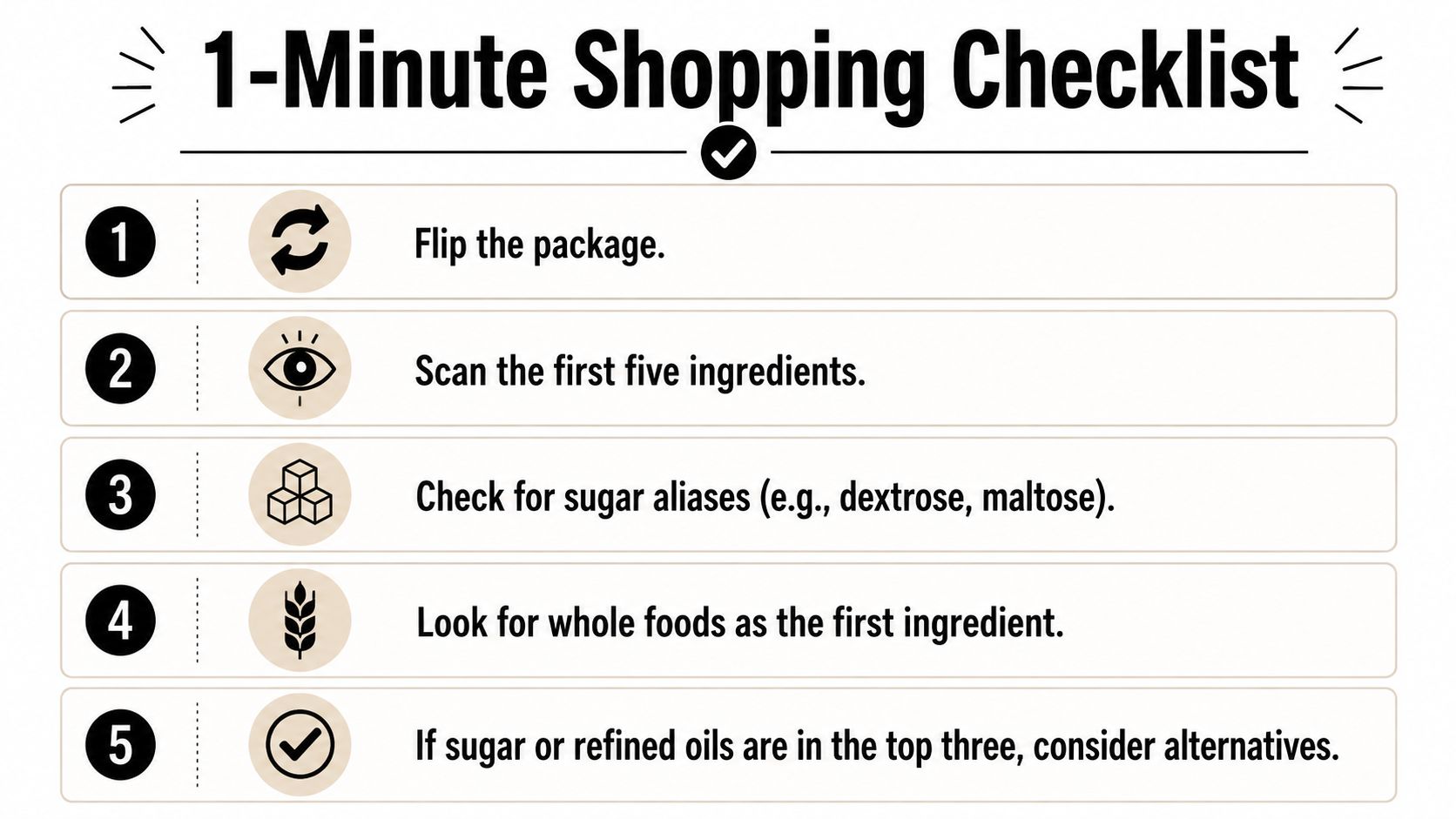
- Flip the package. Ignore the front claims until you've located the ingredient statement, guaranteed analysis, and nutritional adequacy information.
- Scan the first five ingredients. Identify the dominant cluster. Look for named animal proteins, repeated starches, and vague fats.
- Recombine related ingredients. Group peas with pea protein and pea starch. Do the same for repeated forms of grains, sweeteners, or animal ingredients.
- Account for moisture. Fresh meat can weigh heavily because of its water content, while meals are more concentrated. Use the guaranteed analysis to add context.
- Inspect the technical tail. Vitamins, minerals, preservatives, colors, flavors, and functional additives aren't automatically bad, but you should know why they're there.
Take a clear phone photo of the panel before you put the bag in your cart. At home, compare that image with another product and check whether your first impression survives a slower read.
Practical rule: The first ingredient starts the conversation. The whole opening cluster makes the case.
For dogs, apply the dog filter. For cats, apply the cat filter. If the recipe still looks sensible after those checks, then review feeding guidance and whether the product fits your pet's age, health needs, and normal diet.
Becoming a Confident Label Reader for Life
Label literacy isn't a talent reserved for nutrition professionals. It's a habit you build every time you turn a package around and ask what the recipe contains.
Memorize three rules:
- Trust the panel over the front of the bag. Marketing can highlight a single appealing feature. The ingredient statement gives you the structured list.
- Study the first three to five ingredients. That opening cluster reveals what dominates by weight.
- Remember that order means weight, not quality. A lower-listed ingredient isn't automatically inferior, and a first-listed ingredient isn't automatically the most nutritious.
Regulatory conversations can also change how stable labels feel. Coverage of the proposed PURR Act of 2025 has raised concerns about language involving ingredients that may be “sometimes present,” which could make ingredient statements harder to interpret over time. Keep your phone checklist and revisit it whenever a familiar brand changes its formula.
Read one label carefully this week. Then read the next one with the same method. Your confidence will come from repetition, and your pet's bowl will benefit from decisions based on the recipe rather than the artwork.
Joyfull offers pet products built around clearly identified ingredients, including better-for-you snacks and supplements for dogs and cats. Visit Joyfull and use the same label-reading standards here to evaluate each product before adding it to your routine.
0 comments