


When your dog has an upset stomach, the goal is simple: give their gut a break. For most healthy adult dogs, this means holding off on food—but never water—for 12 to 24 hours. After this short fast, you'll slowly reintroduce a very simple, bland diet.
Your First Steps When Your Dog Has Diarrhea
It’s always worrying when you realize your dog isn't feeling well. The good news? Most simple cases of diarrhea clear up on their own with a little help from you at home. Your actions in those first 24 hours are key to getting your pup back on track quickly.
Think of your dog’s digestive system as an overworked engine that's started sputtering. The smartest thing you can do is pull over and let it cool down. That's exactly what a brief fast does for an irritated GI tract.
The Immediate 24-Hour Action Plan
For a healthy adult dog, holding off on food for 12 to 24 hours gives their inflamed intestines a much-needed rest from the hard work of digestion. This pause can dramatically calm things down and help their system reset.
A quick heads-up: this advice is not for puppies, senior dogs, or dogs with other health issues. They need to see a vet right away.
While food is off the menu, water is essential. Diarrhea quickly leads to fluid loss, so preventing dehydration is your number one job. Keep their water bowl fresh and full. If they’re not drinking much, try adding a splash of low-sodium bone broth to their water or offering them ice cubes to lick.
Key Takeaway: The strategy for mild dog diarrhea is a one-two punch: Gut Rest + Active Hydration. This approach lets the digestive system heal while warding off the serious risk of dehydration.
To give you some peace of mind, know that you’re not alone. A huge UK study of over 22,000 dogs revealed that while diarrhea is common, around 78% of cases resolve within two days, often just with supportive care at home. This shows just how effective your at-home plan can be. You can read the full research on canine diarrhea prevalence here.
To help you stay on track, here's a quick-reference guide for that critical first day.
Immediate Action Plan for Canine Diarrhea
| Timeframe | Action | Key Goal |
|---|---|---|
| Hours 0-12 | Withhold all food. Provide constant access to fresh, clean water. | Give the GI tract a complete rest to reduce inflammation. |
| Hours 12-24 | Continue the food fast. Closely monitor for any worsening symptoms (e.g., lethargy, vomiting, blood). | Continue gut rest while ensuring hydration and watching for red flags. |
| Hour 24+ | If diarrhea has subsided, offer a tiny portion of a bland diet (e.g., one spoonful of boiled chicken and rice). | Gently reintroduce food to see if the digestive system is ready. |
This table provides a solid starting point for managing a simple case of diarrhea in an otherwise healthy adult dog.
Once you’ve made it through this initial rest period, the next step is reintroducing food—but definitely not their regular kibble. That's when the bland diet becomes your best friend. If you want to dig deeper into what might have caused the issue in the first place, check out our guide on what causes dog diarrhea.
Putting Together the Right Bland Diet for Your Dog
Once your dog’s digestive system has had a chance to rest, it’s time to gently reintroduce food. This is definitely not the moment to go back to their regular kibble or rich, savory treats. Instead, we’ll turn to a simple, time-tested solution that vets have recommended for years: the bland diet.
Think of it as the dog version of chicken soup and saltines. It's designed to be incredibly easy to digest, giving your dog the nutrients they need without asking their already-upset gut to work too hard. The whole point is to soothe, nourish, and help them heal from the inside out.
The Classic Foundation: Boiled Chicken and White Rice
The most common—and effective—bland diet combo is simple boiled chicken and plain white rice. This meal offers up easily digestible protein and carbohydrates, giving your dog a little energy boost without overwhelming their sensitive stomach.
How to Make It:
- Prep the Protein: Take a boneless, skinless chicken breast and boil it in plain water until it's cooked all the way through. Don't add any salt, oil, or seasonings. You want pure, simple protein.
- Cook the Rice: In a separate pot, cook some long-grain white rice. It's really important to use white rice, not brown. Brown rice has a lot more fiber, which can be a bit too rough on a compromised digestive system right now.
- Shred and Combine: After the chicken is cooked, pull it out of the water and shred it into small, bite-sized pieces. Let both the chicken and rice cool down completely to room temperature before you mix them.
- Get the Ratio Right: A good starting point is a 1:2 ratio—that’s one part chicken to two parts white rice. This higher proportion of bland starch helps absorb excess water in the gut and firm up their stool.
Start small. Offer just a tablespoon or two for a medium-sized dog to see how they tolerate it. If they keep that down without any trouble, you can continue offering small, frequent meals throughout the day instead of one or two big ones.
Great Alternatives for Protein and Starch
Of course, not every dog can have chicken, or maybe you just don't have any in the house. No problem. There are several other gentle ingredients that work just as well. The main principle is always the same: a lean protein and a simple starch, cooked plainly.
Protein Swaps:
- Lean Ground Meat: You can use lean ground turkey or beef, but make sure it's at least 93% lean. Boil the meat and then drain away every last bit of fat before mixing it with the rice or potato.
- White Fish: Mild, flaky fish like cod or tilapia are fantastic low-fat protein sources. Just boil or steam them until they're cooked through.
- Scrambled Eggs: A plain scrambled egg, cooked without any butter, oil, or milk, is highly digestible and a great protein boost.
- Low-Fat Cottage Cheese: For dogs that do well with dairy, a small amount of low-fat cottage cheese can be a good, gentle option.
Starch and Fiber Add-Ins:
- Plain Canned Pumpkin: Pumpkin is a digestive superstar. It contains soluble fiber, which can absorb excess water in the gut (tackling the diarrhea) while also adding bulk to firm up the stool. Just be sure you grab 100% pure pumpkin puree, not the sugary pumpkin pie filling. A teaspoon or two mixed into their food can work wonders. We cover this in more detail in our guide on how pumpkin helps a dog's digestive system.
- Cooked Oatmeal: Plain oatmeal, cooked with water and not milk, is another great source of soothing soluble fiber.
- Boiled Potatoes: Boiled and mashed white or sweet potatoes (with the skins removed) are a good substitute for rice.
Remember the golden rule of the bland diet: No fats, no seasonings, no extras. The entire point is simplicity. Spices, oils, butter, and even most vegetables can irritate the gut and reverse your progress.
Portion Sizes and Feeding Schedule
When reintroducing food, how you feed is just as important as what you feed. A dog’s stomach is still very delicate after a bout of diarrhea, and one big meal can easily cause a setback.
Instead of their usual one or two meals, break down their daily food intake into four to six tiny meals spaced out over the day. This simple strategy keeps their digestive system from getting overloaded and gives it a chance to process everything slowly and effectively.
Start with a tiny portion for the first meal. If that goes well, you can make the next one slightly bigger. Keep up with these small, frequent feedings for the next two or three days, or until your dog's stool looks consistently firm and normal. Only then should you start thinking about the slow transition back to their regular food.
When your dog has diarrhea, figuring out what to feed them can feel like walking on eggshells. The best approach is to hit the reset button on their digestive system. We want to give their gut a break by offering simple, gentle foods that calm things down instead of stirring them up.
Think of it as a temporary, ultra-simple meal plan. To make it easy, I've broken down the foods into a "Yes" list and a "No" list. Following this simple guide can genuinely speed up your dog's recovery.
The "Yes" List: Foods That Heal and Soothe
These are your go-to options for a dog's recovery diet. They're designed to be incredibly easy to digest, giving their inflamed gut the rest it needs to heal.
- Boiled Lean Meats: Stick to skinless, boneless chicken breast or 93% (or leaner) ground turkey. White fish like cod also works well. The key here is boiling—no oils, no frying, no seasoning. Just plain, cooked protein.
- Plain White Rice: This is the ultimate binder. White rice is low in fiber and helps soak up the excess water in your dog's intestines, which is exactly what you need to help form a more solid stool.
- 100% Pure Canned Pumpkin: This stuff is a miracle worker for digestive upset. Pumpkin has a special kind of soluble fiber that works both ways: it absorbs water to help with diarrhea, but can also add bulk to prevent constipation. Just make absolutely sure it's 100% pure pumpkin purée, not the sugary pie filling.
- Plain Bone Broth: Hydration is a huge concern with diarrhea. A simple, low-sodium bone broth is a fantastic way to encourage your dog to drink. It helps replenish fluids and lost electrolytes, and the savory taste can tempt a dog who has lost their appetite.
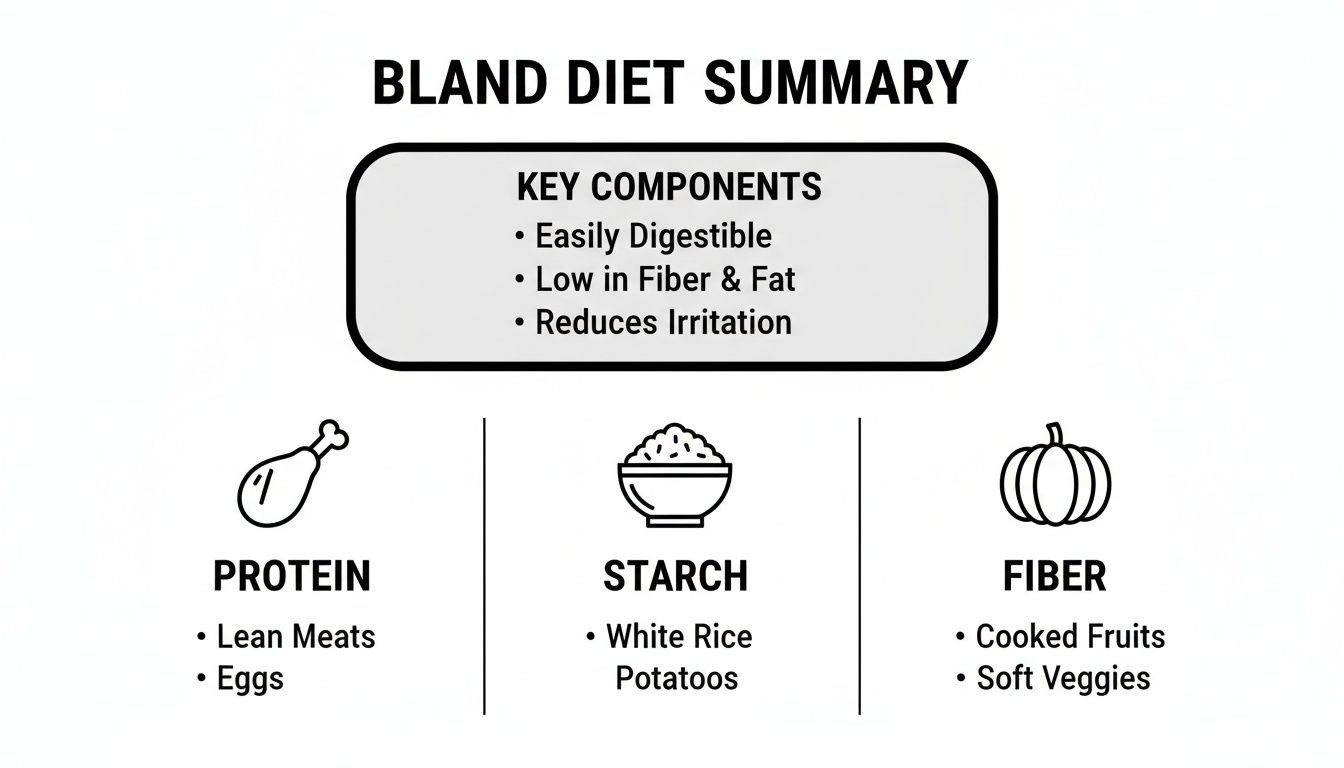
This simple trio—a lean protein, a binding starch, and a soothing fiber source—forms the backbone of an effective bland diet.
The "No" List: Foods That Harm and Hinder
Knowing what not to feed your dog is just as crucial as knowing what to give them. Even well-intentioned treats or additions can set back their recovery and make the diarrhea worse.
The Golden Rule: A dog's gut has a tough time processing fat when it's inflamed. High-fat foods can actually speed up gut contractions, which means more frequent, more watery diarrhea.
Keep these foods far away from your dog's bowl for now:
- Fatty Meats: Anything high in fat is off-limits. This includes ground beef that isn't extra-lean, any bacon or sausage, and dark meat chicken (especially with the skin on).
- Dairy Products: Many dogs can't process lactose very well to begin with. When their system is already upset, dairy is a definite no-go. That means no cheese, no milk, and no yogurt.
- Oils, Butters, and Seasonings: Don't add a single drop of oil or a pinch of seasoning to their food. These are hard to digest and can irritate an already sensitive stomach lining.
- Table Scraps: Our food is almost always too rich, fatty, or salty for a dog with an upset stomach. It's best to stick strictly to their bland diet.
- Commercial Dog Treats: Hold off on all the usual biscuits and chewy treats. They are often too complex and can easily disrupt a healing gut. Wait until their stool is completely back to normal before reintroducing them.
Safe Foods vs. Foods to Avoid for a Dog with Diarrhea
To make it crystal clear, here’s a simple chart that lays out the heroes and villains of a recovery diet.
| Safe to Feed (The 'Yes' List) | Why It Helps | Foods to Avoid (The 'No' List) | Why It Harms |
|---|---|---|---|
| Boiled Chicken or Turkey | Provides lean, easy-to-digest protein for energy. | Fatty Meats (Bacon, Sausage) | High fat content is difficult to digest and can worsen diarrhea. |
| Plain White Rice | Acts as a binder to absorb excess intestinal fluid and firm up stool. | Dairy (Cheese, Milk) | Many dogs are lactose intolerant; dairy can cause more GI upset. |
| Canned Pumpkin (100% Pure) | Soluble fiber soothes the gut and helps normalize bowel movements. | Oils, Butter & Seasonings | Adds unnecessary fat and irritants to a sensitive system. |
| Plain Bone Broth | Encourages hydration and replenishes lost electrolytes. | Table Scraps | Often too rich, fatty, or seasoned for a dog's healing gut. |
| Cooked Sweet Potatoes | A gentle source of fiber and nutrients that is easy on the stomach. | Commercial Dog Treats | Too complex and can contain ingredients that irritate the stomach. |
Sticking to the "Yes" list while strictly avoiding the "No" list gives your dog's digestive tract the best possible chance to rest, recover, and get back to normal.
Beyond Food: The Critical Role of Hydration and Probiotics
While the bland diet is your primary tool for settling your dog’s stomach, it doesn't work in a vacuum. Two other elements are just as crucial for a speedy recovery: hydration and gut support. If you overlook these, you might find your dog’s recovery stalling, or worse, a simple tummy ache turning into something more serious.
Think of diarrhea as a serious plumbing leak. Every time your dog has a loose stool, they're losing vital water and electrolytes. This fluid loss can spiral into dehydration surprisingly fast, leading to weakness, lethargy, and other complications. Your first priority, right alongside simplifying their diet, is making sure more fluids are going in than are coming out.
Keeping Your Dog Hydrated
Just keeping the water bowl full might not be enough. When a dog feels sick to their stomach, they often lose interest in drinking. You’ll probably need to get a little creative to get them interested again.
Simple Hydration Tricks:
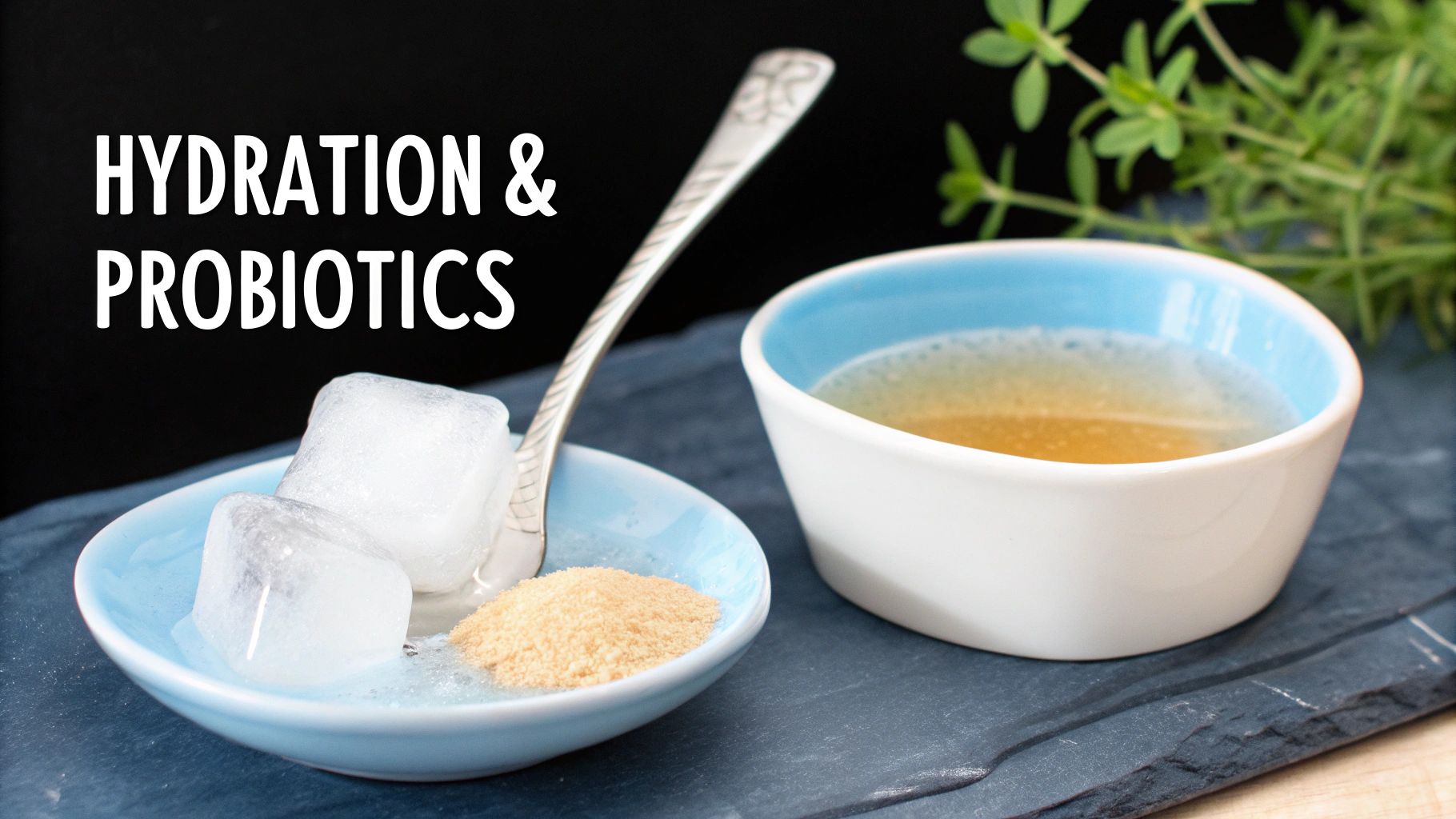
- Add Low-Sodium Bone Broth: A little bit of plain, low-sodium bone broth mixed into their water can make it far more appealing. The savory smell is often too good for a dog to resist.
- Offer Ice Cubes: For some dogs, crunching on an ice cube is a fun treat. It's an easy, playful way to sneak in some extra water.
- Make a "Soup": You can also just add extra warm water to their bland meals. This turns their food into a soupy mash, delivering hydration right along with their calories.
The key is to encourage small, frequent sips throughout the day. Keep an eye out for signs of dehydration, like tacky, dry gums or a loss of skin elasticity (if you gently pinch the skin on their back, it should snap back quickly).
Rebalancing the Gut with Probiotics
Your dog’s gut is home to a bustling ecosystem of bacteria—some good, some bad. This is their microbiome. In a healthy dog, the good bacteria are in control, helping with everything from nutrient absorption to immune defense. Diarrhea flips this balance on its head, creating a free-for-all where harmful bacteria can take over.
This is where probiotics come in. Think of them as the cavalry arriving to support the good guys in your dog's gut. Probiotics are live, beneficial bacteria that help restore order, push out the troublemakers, and get the digestive tract back on track. A healthy gut isn't just about fixing the current problem; it's about building resilience against future issues.
Expert Insight: Vets are focusing more and more on gut health for a reason. We have compelling data that shows just how powerful probiotics are for managing digestive upset in dogs.
A landmark 2020 study involving 3,189 dogs with acute diarrhea found that probiotics were the single most common treatment used, at 60.8% of cases. That’s more often than traditional GI medications (37.7%) and even antibiotics (49.7%), showing a clear shift toward supporting the gut's natural function.
When you're shopping for a probiotic, make sure you choose one made specifically for dogs. Their gut environment is different from ours. To learn more, check out our guide on the best probiotics for dogs. By pairing a bland diet with smart hydration and probiotic support, you’re giving your dog’s body everything it needs to heal from the inside out.
When You Need to Call the Veterinarian
For a simple case of the runs, managing your dog's mild diarrhea at home with a bland diet and plenty of water usually does the trick. But it's absolutely vital to know when a tummy ache is more than just a tummy ache. Being able to spot the difference between a minor issue and a real emergency means you can get your dog the help they need, right when they need it most.
Think of at-home care as basic first aid. It’s perfect for a minor scrape but totally wrong for a deep wound. Sometimes, diarrhea is the first sign of a much bigger problem, and waiting too long to call the vet can make things much worse.
Red Flags and Serious Symptoms to Watch For
If your dog is still bright, happy, and just has a day or two of loose stool, you're likely in the clear. But certain signs are immediate, non-negotiable "call the vet now" moments.
Keep a close eye out for these warning signs:
- It’s not getting better: If the diarrhea drags on for more than 48 hours, it’s time for a professional opinion. A simple upset should be on its way out by then.
- Vomiting is involved: When diarrhea is paired with persistent vomiting, the risk of dehydration skyrockets. This combination can point to more serious conditions.
- They're completely wiped out: Is your dog unusually tired, weak, or just not acting like themselves? Extreme lethargy is a big red flag that their body is in distress.
- They seem to be in pain: Watch for a hunched-over posture, whining when you touch their belly, a hard or bloated abdomen, or restlessness. These are all signs of significant pain.
What Blood in the Stool Really Means
Finding blood in your dog’s poop is always scary, but its color can give your vet some important clues.
- Bright Red Blood (Hematochezia): This fresh-looking blood usually means the bleeding is happening low down in the digestive tract, like the colon or rectum. It could be from simple straining, but it always warrants a call to the vet.
- Black, Tarry Stool (Melena): This is far more serious. The dark, tar-like appearance means the blood has been digested, which points to bleeding higher up in the GI tract, like the stomach or small intestine. This is a medical emergency.
While most bouts of diarrhea clear up fast, these other symptoms signal a more complex problem is brewing. In fact, clinical studies show that while bloody diarrhea is seen in about 29% of cases brought to the vet, it often comes with other worrying signs like vomiting (44% of those cases) and lethargy (24%). You can learn more about these clinical findings here. The presence of these symptoms together makes a vet visit that much more urgent.
Key Takeaway: You know your dog better than anyone. If something just feels off, or if they seem to be getting worse instead of better, trust your gut. It’s always better to make the call and be safe than to wait and wish you had.
How to Transition Your Dog Back to Regular Food
When your dog's stool is finally firm and normal again, it's easy to feel like you've crossed the finish line. It's tempting to celebrate by immediately switching back to their regular kibble. But this is a critical moment in their recovery, and moving too fast is one of the biggest mistakes owners make, often leading to a relapse that puts you right back where you started.
Think of your dog's gut like a sprained ankle. Just because the swelling has gone down doesn't mean it's ready for a marathon. Their regular food is far richer and more complex than the simple, bland diet they've been on. Their digestive system needs to be gently eased back into its normal workload, not thrown into the deep end.
Creating a Slow and Steady Transition Plan
The goal here is to reintroduce their normal food slowly over several days. This gives the good bacteria in their gut a chance to adapt, preventing the shock that a sudden dietary shift can cause. A gradual transition is the best way to avoid overwhelming their still-sensitive stomach and triggering another round of diarrhea.
A structured schedule is your best friend during this phase. Here’s a simple and effective 5-day plan that works for most dogs:
- Day 1: Start with a meal that is 75% bland diet and just 25% regular food.
- Day 2: Move to a 50/50 mix of the bland diet and their regular food.
- Day 3: Now, shift the ratio to 25% bland diet and 75% regular food.
- Day 4: Offer a meal that is almost entirely their regular food, with just a tiny bit of the bland diet mixed in.
- Day 5: If their stool has remained firm, you can now serve 100% of their regular food.
This step-by-step approach gives their system the time it needs to adjust without getting overwhelmed. Of course, you’ll want to keep a close eye on their stool quality throughout the process.
What to Do If Symptoms Reappear
Even with the most careful plan, you might see their stool start to soften a bit as you increase the amount of regular food. Don't worry—this isn't a failure. It’s simply a signal from their gut that it needs a little more time to heal.
If you notice any returning diarrhea, just take one step back in the plan. Go back to the ratio from the previous day where their stool was still firm. Stay at that stage for an extra day or two before trying to move forward again.
Patience really is key here. Every dog is different; some might fly through this transition in three days, while others may need a full week or more. The most important thing is to watch your dog and adjust the pace accordingly. Listening to their body is the surest way to get them back to their normal, happy, and healthy diet for good.
Frequently Asked Questions About Dog Diarrhea
Even with a good game plan, you're bound to have a few lingering questions when your dog has diarrhea. Having clear answers helps you feel confident you're doing the right thing for your furry friend. Let’s tackle some of the most common concerns I hear from pet owners.
How Long Should My Dog Be on a Bland Diet?
This is a great question, and the timing is key. You'll want to keep your dog on the bland diet for about 2-3 days after their poop has firmed up and looks normal again.
I know it’s tempting to switch back sooner, but this rest period is crucial. It gives their gut the time it needs to properly heal and recover its strength before you reintroduce their regular food. Rushing things is a common mistake that can easily trigger a relapse, sending you right back to square one.
Can I Give My Dog Human Anti-Diarrhea Medicine?
Unless your vet has explicitly told you to, the answer is a hard no. You should never give your dog over-the-counter human medications like Imodium or Pepto-Bismol without professional guidance.
Dosages are completely different for dogs, and certain ingredients in these products can be toxic. Plus, for dogs with specific health conditions or genetic sensitivities, these medicines can be downright dangerous. It's just not worth the risk.
Does My Dog Need Antibiotics for Diarrhea?
Most of the time, no. In fact, the veterinary community is moving away from prescribing antibiotics for simple cases of acute diarrhea. The thinking has shifted because we now know that unnecessary antibiotics can throw your dog's gut microbiome out of whack, sometimes making the problem worse in the long run.
For uncomplicated diarrhea, studies show that antibiotics often don't help dogs get better any faster. One UK study, for example, found that the recovery rates were almost identical for dogs who got antibiotics (88.5%) and those who didn't (87.4%). You can discover more insights about these findings here.
This really backs up a "less is more" approach that prioritizes diet and supportive care first.
Of course, while your dog is on the mend, keeping them comfortable and your home clean is a top priority. Accidents happen, and having something like a dog bed with a washable cover can be a real lifesaver. A clean, stress-free resting spot is a huge part of a smooth recovery.
At Joyfull, we're all about giving our pets the best through clean, high-quality ingredients. For everyday digestive health and wellness that helps your companion feel fantastic, check out our vet-reviewed formulas at https://joyfullpet.com.
0 comments