


If you've ever dealt with a dog with diarrhea, you know the drill. It's messy, it's stressful, and it's worrying. Most of the time, the culprit is something simple—what vets call dietary indiscretion. In plain English, that means your dog ate something they shouldn't have, from table scraps to a mystery snack found in the yard.
A sudden switch in their food can also throw their system for a loop. But sometimes, diarrhea is a red flag for more serious problems like infections, parasites, or even a chronic health issue. Getting to the bottom of the cause is the first step toward getting your pup back on their paws.
Decoding Your Dog's Upset Stomach
That sinking feeling you get when you realize your dog is sick is all too familiar for pet owners. An episode of diarrhea can throw your whole routine into chaos and leave you wondering what could have gone wrong. A dog’s digestive system is a pretty sensitive machine, and it doesn’t take much to disrupt it.
Think of their gut like a finely balanced ecosystem. When it’s working well, digestion is smooth and predictable. But introduce one foreign element—a bite of your greasy pizza, a new brand of treats, or even the stress from a thunderstorm—and that delicate balance can be completely thrown off, leading to loose, watery stool.
The Bedrock of a Healthy Gut
Your first line of defense against digestive issues is a consistent, high-quality diet. A stable nutritional routine builds a healthy gut microbiome, which is just a fancy term for the community of good bacteria that keeps digestion running properly. When your dog's meals are predictable and made from clean, simple ingredients, their system becomes much more resilient to the occasional slip-up.
The reasons a dog gets diarrhea usually fall into a few key buckets, ranging from a simple fix to a serious concern:
- Dietary Issues: This is the big one. It covers everything from garbage-raiding to food allergies or switching foods too quickly.
- Infections and Parasites: Nasty invaders like viruses (like Parvo), bacteria (like Salmonella), or intestinal worms can wreak havoc.
- Environmental Stress: Big changes like moving, a new baby, or even separation anxiety can manifest as tummy troubles.
- Underlying Medical Conditions: Chronic problems such as inflammatory bowel disease (IBD) or pancreatitis often list diarrhea as a primary symptom.
Understanding why it's happening is key. While most bouts of diarrhea clear up on their own, knowing the potential causes helps you figure out if it's a minor hiccup or a sign that you need to call the vet, stat.
This guide will walk you through all of these possibilities. We’ll break down the common culprits, teach you how to spot the warning signs, and give you a clear plan for managing and preventing future episodes. For a closer look at your dog’s internal timeline, you can explore how long dog digestion takes in our dedicated article. Our goal is to give you the confidence and knowledge to handle this common problem with care.
The Most Common Culprits Behind Dog Diarrhea
When your dog suddenly gets diarrhea, it’s natural to worry about the worst. But the reality is, most of the time, the cause is something surprisingly simple and not a sign of a serious illness.
These everyday triggers, while certainly messy, usually clear up with a bit of time and supportive care. Getting to know these common culprits is your first step toward managing the current mess and, just as importantly, preventing it from happening again.
Dietary Indiscretion: The "Garbage Gut" Phenomenon
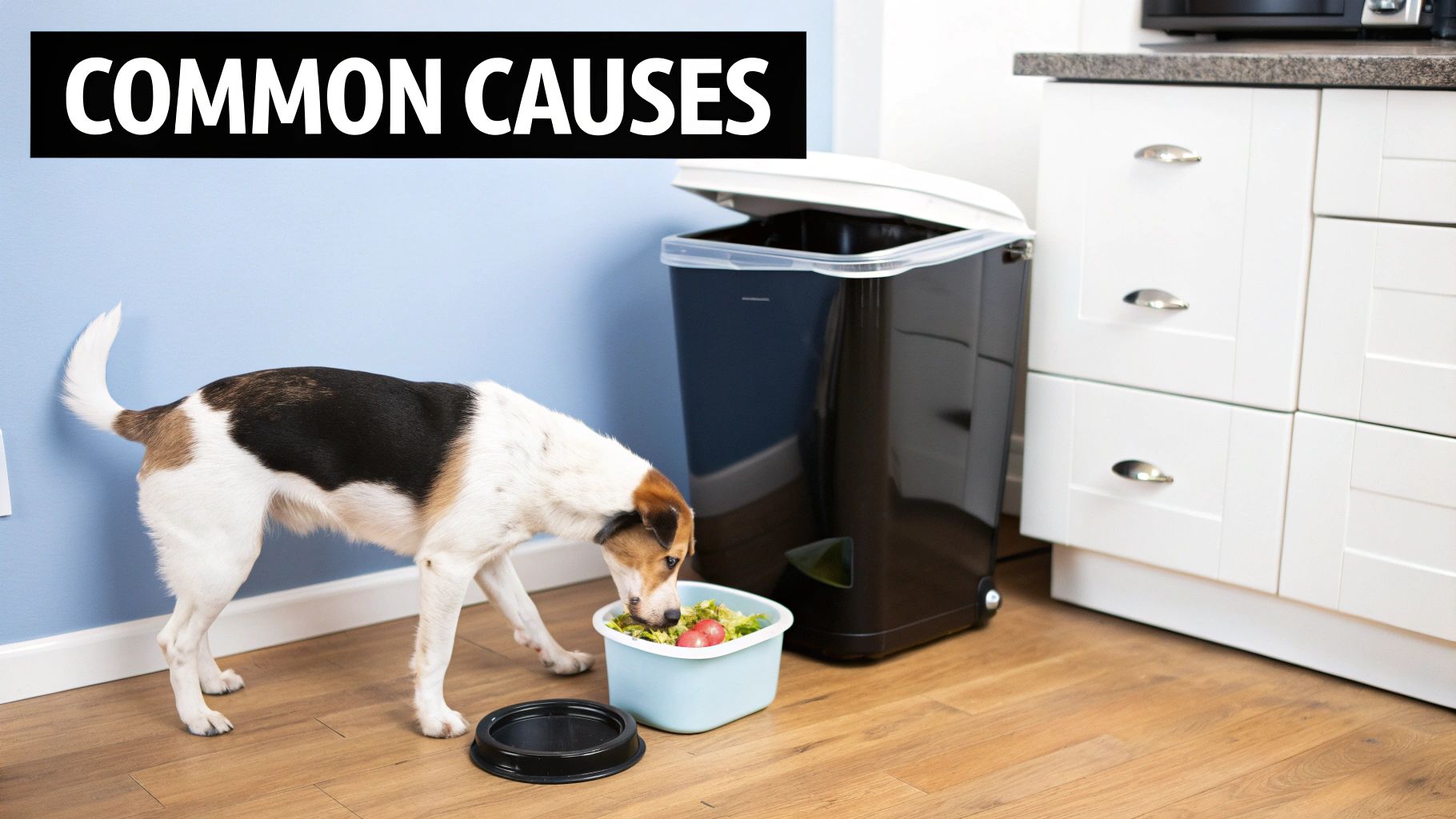
If you were to ask a vet what causes dog diarrhea, this would almost always be their first answer. We call it dietary indiscretion in the clinic, but most dog owners know it as "garbage gut." It’s the technical term for when your dog eats something they absolutely shouldn’t have.
This could be anything from a half-eaten sandwich snagged from a park bench to a full-on raid of the kitchen trash. A dog's digestive system just isn't built to handle the fatty, salty, or spicy ingredients in our food, which can quickly trigger an inflammatory response and a bout of diarrhea.
Think about how your own stomach feels after eating a super rich, unfamiliar meal. That unsettled, queasy feeling is a lot like what your dog experiences when they get into something new and exciting—their gut simply isn’t prepared for it.
Dietary slip-ups are a huge factor in acute diarrhea cases. One study of UK vet records found a prevalence of 8.18%, with many incidents directly linked to these kinds of dietary mishaps. You can dive into the full research on acute diarrhea in dogs and cats for a closer look at the data.
Abrupt Food Changes and Intolerances
Another major trigger is a sudden switch in your dog's regular food. Changing kibble brands overnight without a gradual transition is a classic recipe for digestive upset. Every dog food has a unique blend of proteins, fats, and fibers, and a rapid change can shock the delicate balance of their gut microbiome.
Beyond that, a food intolerance or sensitivity can be the source of ongoing digestive problems. This isn't a true allergy, which is an immune system reaction, but rather a digestive issue. Your dog might simply have a hard time breaking down a specific ingredient.
Common culprits include:
- Specific Proteins: Beef, chicken, and dairy are known to cause trouble for some dogs.
- Grains: Ingredients like wheat or corn can be tough on a sensitive stomach.
- High-Fat Foods: Excessively rich meals can easily overwhelm their digestive system.
If diarrhea seems to pop up regularly after meals, it’s worth talking to your vet about a potential food sensitivity. To learn more about this, check out our guide on what causes food allergies in dogs.
Stress and Anxiety: The Gut-Brain Connection
Sometimes, diarrhea has nothing to do with what your dog ate. It can be purely emotional. Dogs thrive on routine, and major disruptions can show up as physical symptoms—often starting with their digestion. This happens because of the powerful gut-brain axis, the direct line of communication between their brain and their intestines.
When a dog is stressed or anxious, their body floods with hormones like cortisol. These hormones can throw the digestive tract into chaos, speeding things up and disrupting the healthy gut bacteria, leading to a sudden case of loose stool.
Stressors that can set off a bout of diarrhea include:
- Big Changes at Home: Moving, a new baby, or even just rearranging the living room furniture.
- Separation Anxiety: Being left alone for longer than usual is a huge trigger for many dogs.
- Scary Noises: A thunderstorm, fireworks display, or loud neighborhood construction.
- Routine Disruptions: A trip to the kennel, having houseguests over, or a change in your work schedule.
If your dog's diarrhea seems to coincide with a stressful event, their emotional state is very likely the cause. Focusing on calming them and providing a secure, predictable environment can often resolve the tummy troubles all on its own.
Recognizing More Serious Health Threats
While a lot of dog diarrhea comes from simple dietary slip-ups, sometimes it’s a red flag for a much bigger problem. We're talking about situations that go way beyond a simple upset stomach—things like infections, parasites, or even poisoning.
Knowing how to spot the difference is crucial. This isn't about panicking over every loose stool; it's about being prepared to act fast when your dog’s health is genuinely on the line. Let's move past the common culprits and dig into the causes that demand an immediate call to your vet.
When Bacteria and Viruses Attack
Just like us, our dogs can fall victim to nasty germs that wreak havoc on their digestive systems. These aren't your run-of-the-mill tummy troubles; they are serious infections that can spiral into major health complications if you don't get on top of them quickly.
Bacterial infections are a frequent source of severe diarrhea. Bugs like Salmonella, Campylobacter, and certain strains of E. coli can be picked up from contaminated food, stagnant water, or contact with another infected animal's waste. Understanding bacterial gastroenteritis symptoms is key to spotting the problem early. These infections often trigger intense, watery, and sometimes bloody diarrhea, often alongside a fever and vomiting.
Think of your dog's gut as a balanced garden. When a harmful bacteria like Salmonella gets in, it’s like an invasive weed that overtakes everything, disrupting the entire ecosystem and causing widespread inflammation and distress.
Viral infections can be even more menacing, especially for puppies and dogs that aren't up to date on their vaccinations. Canine Parvovirus is one of the scariest, causing severe and often bloody diarrhea, profound weakness, and life-threatening dehydration. It's incredibly contagious and requires immediate, aggressive veterinary care to give a dog a fighting chance.
The Hidden Danger of Parasites
Another serious cause of diarrhea comes from tiny organisms that set up camp in your dog's intestines. These parasites range from microscopic single-celled protozoa to worms you can actually see, and all of them can cause significant digestive distress.
Giardia is a common microscopic parasite dogs often get from drinking contaminated water—think puddles, creeks, or ponds. It latches onto the intestinal wall and causes a stubborn, foul-smelling diarrhea that can be tough to shake. Coccidia, another protozoan parasite, tends to cause watery, mucus-filled diarrhea, particularly in stressed-out puppies.
Intestinal worms are also a major concern:
- Roundworms: Very common in puppies, they can cause a classic pot-bellied look along with diarrhea.
- Hookworms: These nasty parasites hook into the intestinal lining to feed on blood, which can lead to bloody diarrhea and anemia.
- Whipworms: Known for causing on-again, off-again bouts of diarrhea that often contain blood, making them tricky to diagnose.
Parasitic infections are a perfect example of diarrhea that needs a vet's intervention. A simple fecal test can pinpoint the exact culprit, which allows for targeted treatment. Don't waste time with over-the-counter remedies; they often don't work and just delay the proper care your dog needs.
Toxic Substances and Household Poisons
A dog's natural curiosity can sometimes lead them straight into a medical emergency. So many everyday things—from houseplants to human foods—are toxic to dogs and can trigger sudden, severe diarrhea as their body desperately tries to expel the poison.
Toxin ingestion is always an emergency. The reaction depends on what they ate and how much, but diarrhea is frequently one of the first and most obvious signs. It’s the body’s alarm system screaming that something is terribly wrong.
Keep a close watch for these common household dangers:
Human Foods
- Xylitol: This artificial sweetener is in sugar-free gum, candy, and some peanut butters. It’s extremely toxic and can cause liver failure.
- Grapes and Raisins: Can lead to sudden kidney failure.
- Chocolate: The theobromine in chocolate is toxic to dogs, causing everything from GI upset to heart problems and seizures.
- Onions and Garlic: Can destroy red blood cells and cause anemia.
Household Plants
- Lilies: Extremely toxic to both dogs and cats.
- Sago Palm: Every part of this plant is poisonous and can shut down the liver.
- Tulips and Daffodils: The bulbs contain the highest concentration of toxins.
Chemicals and Medications
- Human Medications: Pain relievers like ibuprofen and acetaminophen are incredibly dangerous for dogs.
- Rodenticides (Rat Poison): Designed to cause internal bleeding, and bloody diarrhea is a telltale sign.
- Antifreeze: Its sweet taste is tempting, but it’s deadly, causing rapid and irreversible kidney failure.
If you even suspect your dog ate one of these, it's a true emergency. Don't wait for symptoms to get worse. Call your veterinarian or the ASPCA Animal Poison Control Center right away. In these situations, diarrhea isn't just a symptom—it's a critical distress signal you can't afford to ignore.
When Diarrhea Becomes a Chronic Problem
A random bout of diarrhea is practically a rite of passage for every dog owner. But what happens when it's no longer just a one-off event? When loose stools drag on for weeks, or seem to resolve only to pop back up again, you're looking at a different beast entirely.
This is the shift from a simple, acute problem to a chronic one. It's a clear signal that something more complex is going on under the hood. Think of it like a smoke alarm that just won't quit. The annoying beep is the symptom you notice, but the real problem is the fire causing the smoke. Finding and managing that "fire" is the only way to get your dog lasting relief.
Uncovering Deeper Digestive Diseases
When diarrhea sticks around, vets often start to suspect conditions like Inflammatory Bowel Disease (IBD) or Pancreatitis. Both cause major inflammation in the digestive system, but they target different organs and need very different game plans.
Inflammatory Bowel Disease (IBD) is essentially a case of the gut's immune system going haywire. The lining of the intestines becomes chronically inflamed, making it nearly impossible to absorb nutrients properly. This leads to that stubborn diarrhea, along with vomiting and often, weight loss. We don't know the exact trigger, but it seems to be an over-the-top immune response to things that should be harmless, like certain food proteins or normal gut bacteria.
Pancreatitis, on the other hand, is all about the pancreas. This small but mighty organ produces powerful digestive enzymes. When it gets inflamed, those enzymes can leak out and start doing serious damage, essentially "digesting" the pancreas itself. This is incredibly painful and causes severe vomiting and diarrhea. A single high-fat meal can trigger an acute attack, but for some dogs, it becomes a grumbling, recurrent problem.
Managing a chronic condition like IBD or Pancreatitis isn't a quick fix; it's a long-term partnership with your veterinarian. Treatment usually involves a combination of highly specific diets, medications, and careful monitoring to keep flare-ups at bay.
The Role of Medications and Diet
Sometimes, the culprit behind ongoing diarrhea isn't a disease but a treatment for something else entirely. Certain medications, especially antibiotics, can wreak havoc on a dog's digestive system. While they’re lifesavers for bacterial infections, they're not very discerning—they kill off both the bad and the good bacteria in the gut.
This carpet-bombing approach can disrupt the delicate ecosystem in your dog's intestines, leading directly to diarrhea. If you notice loose stools right after your dog starts a new medication, let your vet know immediately. Don't just stop the prescription; they can help you manage the side effects, often by adding a probiotic to support the gut.
This is also where the right diet becomes absolutely critical. For a dog with a sensitive or chronically inflamed gut, food isn't just fuel—it's medicine. Your veterinarian is your best guide here.
They might suggest one of several therapeutic approaches:
- A Novel Protein Diet: This involves switching to a protein your dog has never been exposed to before, like venison, duck, or even kangaroo. The goal is to see if a hidden food allergy to a common protein like chicken or beef is the root cause.
- A Hydrolyzed Protein Diet: These special diets feature proteins that have been broken down into such tiny fragments that the immune system doesn't even recognize them. This can stop an allergic reaction in its tracks.
- A Low-Fat, Highly Digestible Diet: This is the go-to strategy for managing Pancreatitis. It puts less stress on the inflamed pancreas and is much easier for the compromised gut to process.
Ultimately, figuring out what causes dog diarrhea when it becomes a chronic puzzle takes patience and a solid diagnostic plan with your vet. Working together is the only way to get to the bottom of it and bring lasting comfort back to your best friend.
Your Action Plan for Managing Dog Diarrhea
When you’re faced with the mess and worry of a dog with diarrhea, having a clear game plan is a lifesaver. For a simple, one-off case in an otherwise healthy dog, a little at-home TLC is often all it takes to get them back to normal. But the most critical part is knowing when you can handle it yourself and when it's time to call the professionals.
The first step is to give their overworked digestive system a break. This isn't about starving your dog, but simply giving the inflamed gut lining a chance to rest and heal. Think of it like resting a sprained ankle—you wouldn't keep running on it, and the same idea applies here.
Hold off on food for 12 to 24 hours. The key, however, is to make sure they have constant access to fresh, clean water. Diarrhea can lead to dehydration fast, so encouraging small, frequent sips is essential. If you have a puppy, a senior dog, or a dog with a pre-existing health condition, you should skip the fasting and call your vet right away.
Reintroducing Food Gently
After that short fast, don’t go right back to their regular food. You want to reintroduce something incredibly easy for their sensitive stomach to process. This is where the classic bland diet comes in.
- Boiled Chicken: Stick to boneless, skinless chicken breast. Boil it until it’s fully cooked, let it cool, and then shred it into small, manageable pieces.
- White Rice: Plain white rice cooked until it’s soft—even a little mushy—is perfect. Steer clear of brown rice for now; its high fiber content can be too rough on an irritated gut.
- The Right Mix: A good starting ratio is about one part shredded chicken to three parts rice.
Start with just a small spoonful. If your dog handles that well and their stool starts looking a bit more solid, you can gradually offer slightly larger meals over the next day or so. After a few successful days on the bland diet, you can start mixing a little of their regular food back in, slowly transitioning them over.
When to See a Vet: A Quick Reference Guide
It can be really stressful trying to decide between waiting it out and rushing to the vet. Use this simple table to help you make a quick, informed decision.
This guide helps you spot the difference between a minor issue and a potential emergency.
| Symptom | Monitor at Home (If Isolated and Mild) | Call Your Vet Immediately |
|---|---|---|
| Lethargy | Still seems alert and playful between potty breaks. | Appears unusually tired, weak, or isn't responding normally. |
| Vomiting | Maybe one or two isolated incidents, then it stops. | Is vomiting repeatedly or can't even keep water down. |
| Blood in Stool | No blood is visible. | You see any bright red blood or dark, tarry-looking stools. |
| Appetite | Is happy to drink water and eats the bland diet after fasting. | Refuses all food and water for more than 24 hours. |
| Dehydration | Gums are pink and slick. Skin snaps back into place when lifted. | Gums are pale, dry, or tacky. The skin "tents" instead of snapping back. |
| Pain | Seems comfortable and relaxed. | Is whining, hunching over, or has a tight, bloated belly. |
| Duration | Things start improving within 24-48 hours. | The diarrhea lasts longer than 48 hours or gets worse. |
When in doubt, a phone call to your vet’s office is never the wrong choice. They can give you the best advice for your specific dog.
For diarrhea that just won't quit, veterinarians have to dig deeper to find the underlying cause.
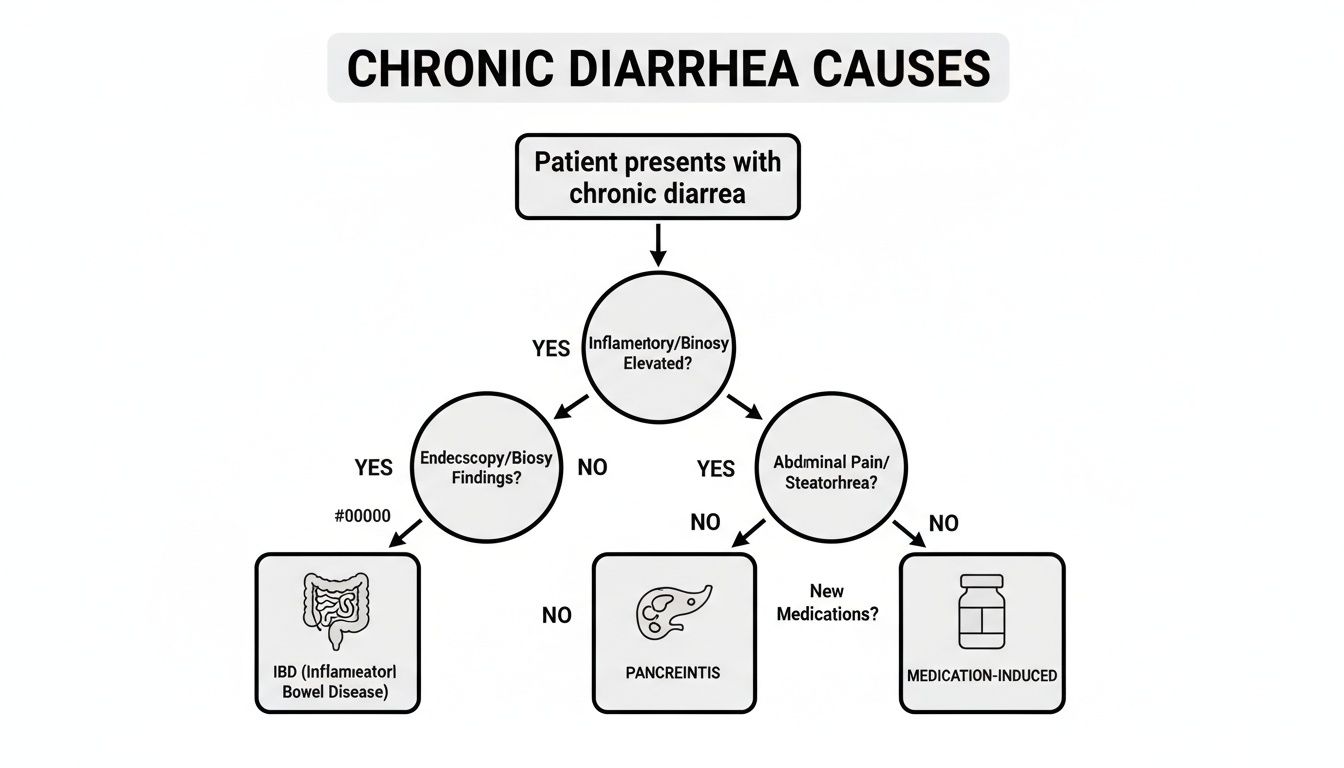
This chart gives you a peek into how a vet might approach chronic issues, which could be anything from Inflammatory Bowel Disease (IBD) to pancreatitis. It’s a process of elimination that often requires specific tests. If you're looking for ways to support your dog's gut health proactively, you can learn more about adding a dog digestive supplement to their daily routine.
At the end of the day, you know your dog better than anyone. If your gut feeling is that something is seriously wrong, trust it. Get professional help.
How to Proactively Prevent Digestive Issues
Every dog owner knows that sinking feeling when diarrhea strikes, but an ounce of prevention is truly worth a pound of cure. While it's good to know how to handle an upset stomach, the best-case scenario is avoiding it altogether. By taking a few proactive steps, you can help build a resilient digestive system for your dog, making those unpleasant episodes far less common.
Think of it as setting your dog up for success. The cornerstone of good gut health is a consistent, high-quality diet. Feeding your dog the same balanced food every day helps their gut microbiome—the community of good bacteria in their intestines—stay stable and strong. A predictable diet means their system isn't easily thrown off balance.
Everyday Habits for a Happy Gut
Most of the time, diarrhea is caused by something preventable. A few simple, consistent habits can dramatically lower the risk of your dog getting into something they shouldn't. This is all about minimizing the chances of "garbage gut."
- Secure Your Trash: This is a big one. Get a can with a locking lid or simply keep it in a closet or pantry where your dog can't get to it.
- Dog-Proof Your Kitchen: Always be mindful of food left on counters. Common ingredients like onions, grapes, and of course, chocolate, are toxic to dogs.
- Master the "Leave It" Command: On walks, this command is a potential lifesaver. It can stop your dog from gobbling up a discarded piece of food or something more dangerous.
Making a change to your dog's food? Don't rush it. A gradual transition over 7-10 days is the golden rule. Slowly mix a little more of the new food in with the old each day. This gives their digestive system the time it needs to adjust without causing a major upset.
The real secret to prevention is consistency. A stable diet, a secure home environment, and regular vet care all work together. They create a powerful defense that keeps your dog's digestive system running smoothly.
The Power of Routine Veterinary Care
Your vet is your best partner in proactive health. Regular check-ups are for so much more than just annual shots; they’re your opportunity to stay ahead of potential problems before they start.
This includes keeping your dog up-to-date on crucial vaccinations, especially for highly contagious and dangerous viruses like Parvovirus. It also means sticking to a consistent parasite control schedule for fleas, ticks, and worms.
Don't underestimate how common digestive issues are. A huge 2019 UK study revealed that 8.18% of dogs—that's roughly one in every twelve—were treated for acute diarrhea. The research also showed that breeds like German Shepherds and Miniature Poodles were more prone to it, underscoring the importance of preventive care. You can read the full findings on canine diarrhea trends to learn more.
By working closely with your veterinarian, you're not just treating problems—you're building a solid defense plan to keep your dog healthy for the long haul.
Answering Your Top Questions About Dog Diarrhea
Even with a solid game plan, you're bound to have a few nagging questions when you're dealing with a bout of diarrhea. Let's tackle some of the most common ones dog owners ask.
How Long Is Too Long for a Dog to Have Diarrhea?
For a healthy adult dog with a mild case, you should see some improvement within 24-48 hours after switching to a bland diet. If things aren't getting better after two days, it’s time to give your vet a call.
But that timeline isn't one-size-fits-all. You need to act much faster in certain situations. Call your vet immediately if you have:
- A puppy or a senior dog, as they can become dehydrated in a flash.
- A dog with a known health condition like kidney disease or diabetes.
- Any dog who also has other worrying symptoms, like vomiting, extreme tiredness, or visible blood in their stool.
Can I Give My Dog Human Medicine for Diarrhea?
The short answer is a firm no. You should never give your dog any human medication without your veterinarian's direct guidance.
Common over-the-counter products like Imodium or Pepto-Bismol can be dangerous for dogs. The dosages are completely different, and some ingredients are outright toxic. Worse, giving medication could cover up the signs of a serious problem that your vet needs to see to make an accurate diagnosis.
Your vet is the only person qualified to determine what medication is safe for your dog. Self-prescribing can unintentionally cause more harm than good, turning a manageable issue into a serious one.
Is Pumpkin a Good Remedy for Dog Diarrhea?
Yes, it can be! Plain, 100% canned pumpkin—not the sweetened pie filling—is a fantastic home remedy for simple cases of loose stool. It’s packed with soluble fiber, which works like a sponge to absorb extra water in the gut and help firm things up.
Just add a tablespoon or two to their bland diet. Think of it as a helpful sidekick for minor digestive upset, not a cure for more serious issues like infections or chronic GI problems.
At Joyfull, we believe pet wellness starts with clean, high-quality nutrition. Our formulas are created with simple ingredients and backed by science to support your pet's digestive health and overall well-being, because a healthful life isn’t just for humans. Discover the difference at https://joyfullpet.com.
0 comments