


Omega-3 fatty acids, specifically EPA and DHA, have the strongest clinical evidence for joint comfort and mobility in dogs, while glucosamine and chondroitin show weak or no meaningful benefit in rigorous analyses. For cats, weight management and diet may matter more than any supplement.
That answer runs against the advice many pet owners hear first. A dog slows down on walks, a cat stops jumping onto furniture, and a glucosamine chew is offered as though it were an obvious fix. But joint support isn't a popularity contest. The useful question is whether a product helps a particular animal move more comfortably, and whether its ingredients, dose, quality, and safety justify using it.
For dogs with osteoarthritis, omega-3s deserve the most serious consideration. For cats, the right starting point may be a veterinary assessment, a nutrition review, and changes to the home environment rather than a canine-style joint chew. Supplements can support a broader plan, but they shouldn't replace diagnosis, pain management, healthy body condition, or controlled exercise.
Table of Contents
- Why the Default Joint Supplement Advice Is Wrong
- Joint Supplement Ingredients and What the Evidence Shows
- Why Omega-3s Are the Strongest Choice for Dogs
- The Overlooked Reality of Joint Health in Cats
- How to Choose a High-Quality Joint Supplement
- Dosing Guidelines and Safety Considerations
- Your Practical Joint Health Action Plan
Why the Default Joint Supplement Advice Is Wrong
Glucosamine became the default recommendation because its story sounds intuitive. Cartilage contains compounds associated with glucosamine and chondroitin, so labels often suggest that adding them will rebuild or protect damaged joints. That mechanism is plausible. It does not prove a meaningful clinical result in a dog or cat.
A 2017 systematic review of dietary supplements for osteoarthritis found moderate, clinically meaningful short-term improvements in pain and function overall, while rating the evidence quality very low (systematic review of osteoarthritis supplements). It also found that glucosamine and chondroitin were ineffective or produced benefits too small to matter clinically. Those effects did not persist at medium- or long-term follow-up.
Anecdotes still matter to owners, but they cannot show whether a supplement caused improvement. Use a defined trial instead. Record a practical outcome, such as willingness to climb stairs or length of a comfortable walk, and set a point at which the product will be stopped if no change appears.
Marketing language versus useful outcomes
Joint products commonly promise support for cartilage, flexibility, aging, and mobility. These phrases sound reassuring but rarely specify the result to expect. Judge the product by function: Is the dog rising more easily, walking farther, playing willingly, or hesitating less on stairs?
Human evidence also supports selective expectations. A 2020 meta-analysis covering 42 randomized clinical trials, 4,160 participants, and 33 nutraceuticals found statistically significant improvements in total WOMAC, pain, and stiffness, but not the WOMAC physical-function subscale. The effect sizes were modest, SMD = −0.23 for total WOMAC and SMD = −0.36 for pain, which does not support dramatic transformation (2020 osteoarthritis nutraceutical meta-analysis).
Practical rule: A supplement that produces no noticeable, trackable functional benefit during a reasonable trial should not remain in your pet's routine indefinitely.
For dogs, EPA and DHA deserve closer attention than the default chew ingredients. Cats require a different level of caution. Their joint problems may show as less jumping, reduced grooming, or changes in litter-box access, so assessment, body condition, food, pain recognition, and home setup can matter more than a canine-style product.
Joint Supplement Ingredients and What the Evidence Shows
Read a pet joint label as a clinical document, not a shopping slogan. The ingredient name matters, but so do its amount, chemical form, quality testing, and the outcome it is supposed to influence. A familiar ingredient in a low-dose chew may offer less value than a clearly tested product with a more relevant formula.
| Ingredient | Evidence Strength | Primary Benefit | Best For |
|---|---|---|---|
| Omega-3 fatty acids, EPA and DHA | Strongest pet-specific evidence for canine osteoarthritis | Joint comfort and mobility support | Dogs with chronic osteoarthritis |
| Glucosamine | Weak or inconsistent | Marketed for cartilage support | Only as a carefully monitored veterinary-guided trial |
| Chondroitin | Weak or inconsistent | Marketed for cartilage and cushioning support | Not a default pain-management choice |
| MSM | Insufficient pet-specific evidence | Often included in combination formulas | Products where the primary evidence comes from another ingredient |
| Hyaluronic acid | Limited evidence in the provided pet data | Often marketed for joint lubrication | Avoid assuming benefit from inclusion alone |
| Collagen | Limited and ingredient-specific | Structural support claims | A secondary consideration, not the leading choice |
| EPA and DHA | Mechanistically plausible and supported by canine and feline evidence reviews | Less inflammatory signaling and improved comfort | Especially dogs with osteoarthritis |
Glucosamine and chondroitin
Separate cartilage-related theory from demonstrated improvements in pain or mobility. The 2017 evidence review found glucosamine and chondroitin ineffective, or associated with benefits unlikely to matter clinically, particularly over longer follow-up (evidence review on glucosamine and chondroitin). A veterinary systematic review and meta-analysis also found a marked non-effect for chondroitin-glucosamine products in companion animals and did not support using them for pain management (systematic review of nutraceuticals for canine and feline osteoarthritis).
That does not make every product identical. Formulation, dose, manufacturing standards, and the animal's diagnosis still matter. It does mean glucosamine and chondroitin should not receive automatic priority because they are common in joint chews.
A glucosamine for dogs guide can help interpret marketing claims, but selection should still depend on a defined trial and observable changes in function.
MSM, hyaluronic acid, and collagen
MSM frequently appears in combination chews, yet the evidence provided here does not establish it as a strong standalone choice for pets. Hyaluronic acid and collagen may sound relevant to lubrication or joint structure, but their presence on a label does not demonstrate improved comfort.
Collagen products also differ substantially. Undenatured type II collagen has shown promise in human knee osteoarthritis research, but that finding cannot justify a blanket claim for every collagen powder or chew used in dogs and cats. Treat these ingredients as secondary options, not substitutes for diagnosis, monitoring, or the stronger canine omega-3 evidence.
Why Omega-3s Are the Strongest Choice for Dogs
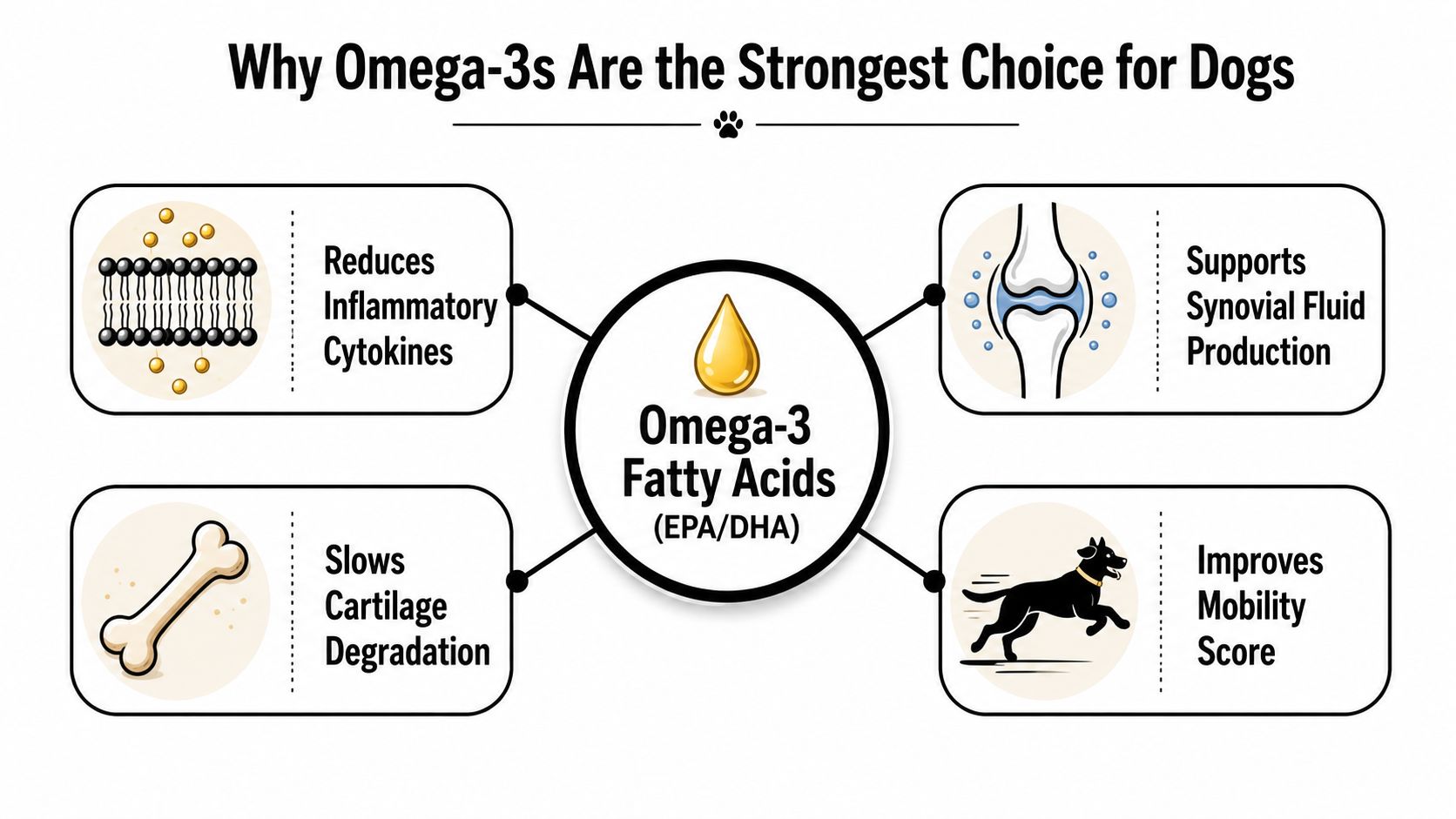
For a dog with chronic osteoarthritis, EPA and DHA are the most defensible first supplement to discuss with a veterinarian. The available veterinary evidence supports omega-3 products more clearly for comfort and function than it supports automatically choosing glucosamine and chondroitin. That does not make every fish-oil product suitable, or replace a diagnosis, weight management, pain control, and an exercise plan.
EPA and DHA influence eicosanoid signaling and shift inflammatory activity toward less pro-inflammatory mediators. They do not rebuild damaged cartilage or correct every cause of lameness. They may reduce inflammatory pressure around an osteoarthritic joint, giving some dogs more comfortable movement over time.
What improvement should look like
The useful outcome is functional change, not a glossy promise of “joint nourishment.” Owners in a multicenter dog study reported better ability to rise from rest, play, and walk after omega-3-enriched feeding, with improvement appearing over 6 to 24 weeks. Track the behaviors that matter in your home: getting up, climbing stairs, joining family activity, walking willingly, and settling comfortably.
Keep a simple baseline before starting the product. Note how long your dog takes to stand, whether stiffness follows rest, and how much activity is tolerated. A supplement is worth continuing only when the change is observable and remains acceptable to your veterinarian.
How to assess an omega-3 product
Do not compare bottles by total fish oil alone. Look for clearly stated EPA and DHA amounts per serving, since those are the active fatty acids relevant to comparison. A large total-oil figure can hide a modest EPA and DHA supply.
Check whether the manufacturer provides independent testing for potency, contaminants, and oxidation. Fish oil can deteriorate with poor storage, so follow the label, protect it from heat and light, and discard it if it smells rancid or the packaging is damaged. Triglyceride and ethyl ester forms may differ in handling and absorption, but verified EPA and DHA content remains the central quality check.
If mobility limits outings, equipment such as comparing pet strollers and gear wagons can help maintain safe participation while your veterinarian investigates the cause. It supports controlled activity, not treatment for osteoarthritis.
For a label-focused discussion, see Joyfull's omega 3 for dogs guide. Probiotic Supplement for Cats - 30 Single-Serving Packets is intended for digestive balance, not joint disease, so it should not be substituted for an omega-3 joint product.
The Overlooked Reality of Joint Health in Cats
Cats often hide mobility problems so well that owners mistake pain for personality. A cat may stop jumping, sleep in easier-to-reach places, hesitate before using stairs, or groom less thoroughly without crying or limping. Those changes deserve attention even when the cat still eats, purrs, and uses the litter box.
The evidence for oral joint supplements in cats is much thinner than the confidence of many labels suggests. Veterinary reviews have historically described limited clinical evidence for glucosamine, chondroitin, and omega-3s in cats, despite joint disease being a genuine concern in aging animals (review of joint supplements for cats). A canine-oriented chew shouldn't become the automatic answer because a cat has become less agile.

Start with the factors that change joint load
Body condition matters because excess weight increases the physical demand placed on painful joints. Ask your veterinarian to assess your cat's weight and muscle condition, then adjust food portions or formulation if needed. Don't crash-diet a cat or make abrupt food changes without professional guidance.
The home can also make movement less demanding:
- Improve access: Use steps or ramps to favorite resting places if jumping has become difficult.
- Simplify toileting: Choose a litter box with an easy entry and place it where the cat spends time.
- Add stable footing: Secure rugs or mats on slippery surfaces.
- Offer warm rest: Provide soft, comfortable bedding away from drafts.
- Observe daily behavior: Record jumping, grooming, play, stairs, and litter-box access rather than waiting for obvious lameness.
A cat with a sudden change, marked reluctance to move, appetite loss, or signs of distress needs veterinary evaluation. Medication, physical assessment, and environmental support may provide far more benefit than experimenting with several supplements. For a practical framework, see how to support your cat's mobility naturally, while keeping expectations appropriate to the limited feline evidence.
How to Choose a High-Quality Joint Supplement
A clean label isn't automatically an effective label. Quality begins with knowing exactly what you're buying and whether the manufacturer gives you enough information to judge it.
Five checks before you purchase
- Find the active amount. For fish oil, identify EPA and DHA separately. For other ingredients, look for a defined amount rather than a broad “joint complex.”
- Reject hidden blends. Proprietary blends can make it impossible to tell whether an ingredient is present at a meaningful dose. If you can't identify the amount, you can't run a fair trial.
- Look for independent verification. Third-party testing for potency and purity provides more useful reassurance than a front-label claim. Certifications such as NASC or independent laboratory verification can help, provided the manufacturer clearly explains what was tested.
- Check species and serving instructions. A human supplement may contain flavors, sweeteners, concentrated ingredients, or dosing assumptions that don't fit pets. Choose a product with clear guidance for the animal's species and size.
- Inspect storage and freshness details. Oils need protection from oxidation. Packaging, expiration information, and storage directions deserve as much attention as the ingredient list.
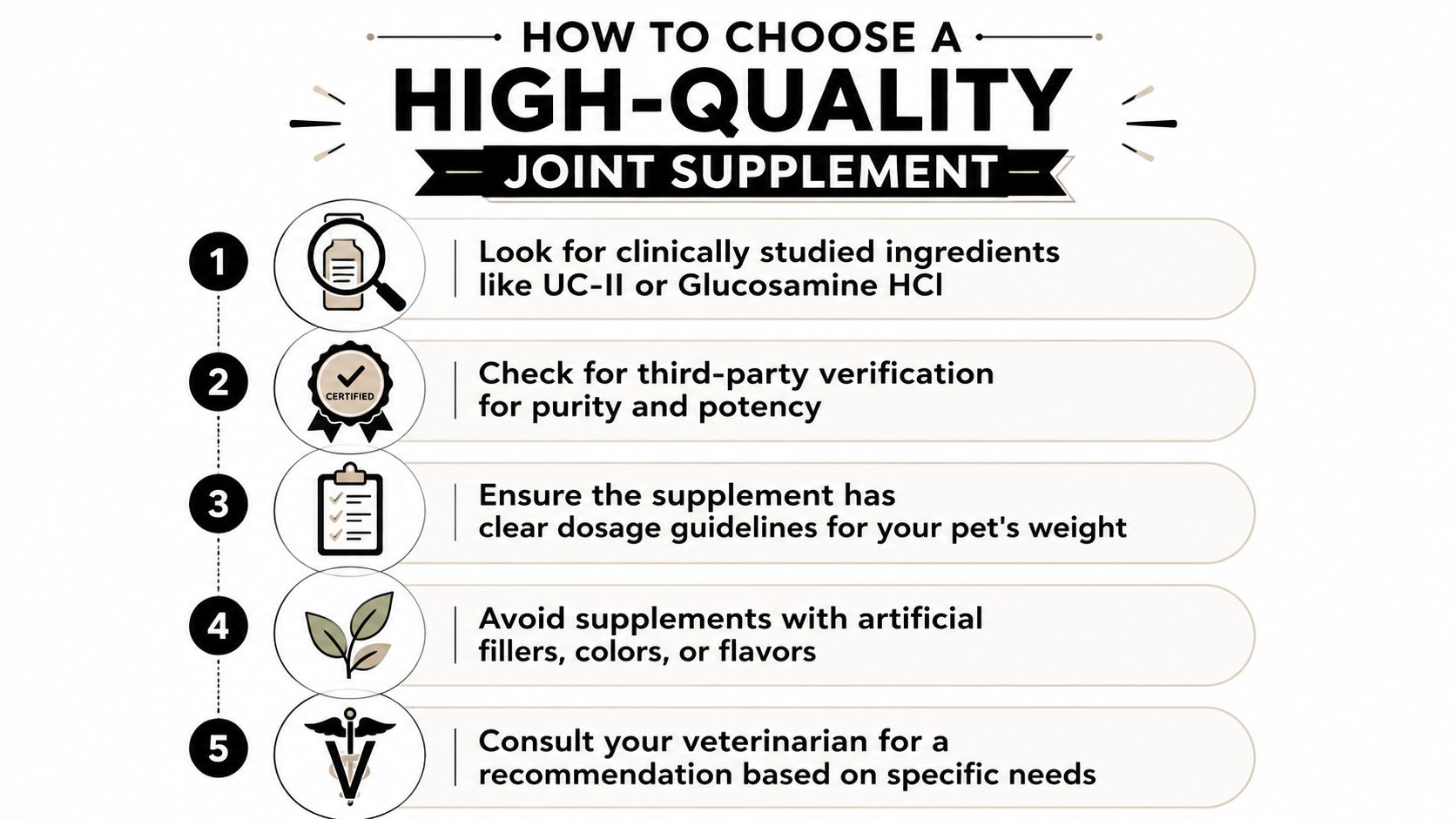
Flavoring is another trade-off. A palatable product may be easier to give consistently, but artificial colors and unnecessary flavor systems don't improve joint function. Choose the simplest formulation your pet will reliably accept.
Label test: If the package makes a strong promise but hides the active amounts, the label has given you a marketing message instead of a usable treatment plan.
A product marketed for topical comfort, such as cooling CBD muscle cream, is a separate category from an oral joint supplement. Don't apply human topical products to a pet unless a veterinarian confirms that the ingredients, route, and risk of licking are appropriate.
Dosing Guidelines and Safety Considerations
The most important dosing fact is also the one many labels obscure: there isn't a universal pet omega-3 dose that can be responsibly given without considering body weight, diet, diagnosis, medications, and the product's EPA and DHA concentration. A veterinarian should calculate the plan from the animal's needs and the actual active fatty-acid content, not from the total volume of oil.
Start gradually, especially if your pet has a sensitive stomach. Introduce one product at a time with food, observe stool quality, appetite, vomiting, and willingness to eat, and avoid changing several parts of the diet simultaneously. If digestive upset appears, pause and contact your veterinary team rather than adding another product to counter it.
When supplements need extra caution
Discuss omega-3 supplementation before use if your pet receives medication that affects clotting or is scheduled for a procedure. The same applies to combination products containing glucosamine, chondroitin, herbs, or other active compounds. Human capsules aren't automatically suitable for dogs or cats, and some formulations may contain ingredients or concentrations that aren't appropriate for animals.
Keep a short baseline record before starting. Note how your pet rises, walks, plays, climbs, jumps, and settles. Reassess after a clinically reasonable trial rather than judging the product after one enthusiastic walk or one quiet day.
Don't supplement a sudden mobility change blindly
A sudden limp, inability to bear weight, severe reluctance to move, vocalization, swelling, or rapid deterioration warrants veterinary attention. These signs can reflect injury or another painful condition that requires diagnosis, not a slow supplement trial.
Chronic stiffness also deserves assessment, particularly when it affects normal routines. A supplement may become one component of care, but pain control, rehabilitation, weight management, and treatment of the underlying disease may be more important.
Your Practical Joint Health Action Plan
The right plan depends on what you're seeing now, not just your pet's age or the ingredient featured on a package.
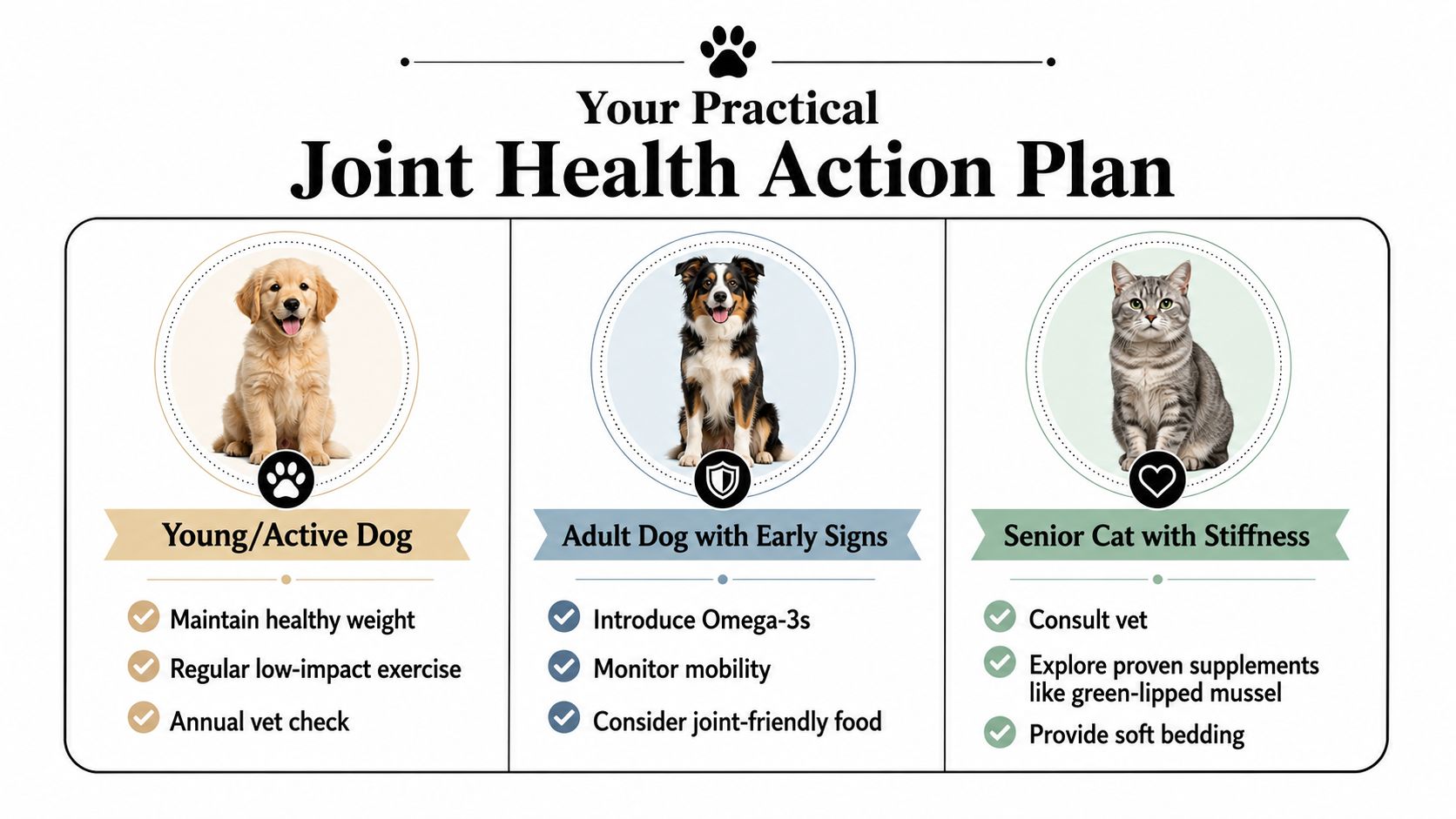
Young or middle-aged dog without symptoms
Keep the focus on a healthy body condition, regular controlled activity, and avoiding repetitive strain. Don't add multiple joint products “just in case” without a reason. At routine veterinary visits, discuss breed-related risks, previous injuries, exercise tolerance, and whether the diet already supplies appropriate nutrition.
If a supplement becomes appropriate, choose one clearly labeled for dogs and evaluate its active ingredients rather than buying the most elaborate chew. Prevention is mostly about maintaining comfortable movement and identifying problems early.
Senior dog with early stiffness
Begin with a veterinary examination, especially if the change is new or progressing. For confirmed or suspected osteoarthritis, omega-3s containing clearly identified EPA and DHA are the strongest supplement option supported by the pet-specific evidence discussed above.
Use a single-product trial, record functional changes, and keep exercise low impact and consistent. If your dog improves, continue monitoring rather than assuming the joint disease has disappeared. If there's no meaningful change, reconsider the diagnosis and overall pain plan instead of stacking glucosamine, chondroitin, MSM, and other ingredients indefinitely.
Cat with reduced mobility
Treat reduced jumping, altered grooming, hiding, or difficulty entering the litter box as clinical information. Arrange a veterinary assessment, review body condition and diet, and modify the home so essential resources are easy to reach.
Don't assume a dog supplement translates safely or effectively to cats. The evidence base is limited, and a supplement should come after practical needs such as pain recognition, weight management, nutrition, bedding, footing, and access have been addressed.
A useful standard: Choose one clear goal, one appropriately labeled product, and one way to measure progress. If you can't tell whether your pet is better, the plan needs simplifying.
Joyfull offers pet wellness products built around clearly described ingredients and veterinary-informed formulation, including options for digestive support rather than pretending every supplement solves joint disease. Visit Joyfull to review the available pet wellness products, then discuss any joint supplement choice with your veterinarian before adding it to your dog's or cat's routine.
0 comments