


When it comes to the best omega-3 supplements for dogs, look for products packed with EPA (eicosapentaenoic acid) and DHA (docosahexaenoic acid). The highest quality options come from pure, sustainable fish or algae, are verified for purity by outside labs, and are easy to dose, like potent liquid oils or tasty soft chews that support everything from a shiny coat to comfortable joints.
Why Omega-3s Are a Game Changer for Your Dog
Ever notice your dog's coat looking a little lackluster? Or maybe they seem a bit stiff and slow getting up in the morning? These are the exact reasons so many savvy dog owners turn to omega-3s. These essential fatty acids aren't just another health trend; they are a cornerstone of canine wellness, delivering real benefits that can visibly improve your dog’s quality of life.
Think of omega-3s as a super-skilled maintenance crew for your dog’s entire body. And on this crew, there are two star players: EPA and DHA. Each one has a very specific job that contributes to your dog's overall health.
Meet the Power Players: EPA and DHA
EPA is the anti-inflammation specialist. It works deep down at the cellular level to soothe the irritation that can cause itchy skin, allergic flare-ups, and achy, sore joints. If your dog is constantly scratching or just isn't as excited about walks anymore, a lack of EPA could be part of the problem. By getting that inflammation under control, EPA helps bring back comfort and mobility.
DHA, on the other hand, is the master builder. It’s a crucial structural block for the brain, eyes, and even the skin. For puppies, getting enough DHA is non-negotiable for healthy brain development. In adult and senior dogs, it keeps their minds sharp while maintaining a strong, resilient skin barrier. This barrier is key—it locks in moisture and keeps irritants out, which is what gives your dog that healthy, glossy coat we all love to see. In fact, omega-3s are so important for cognitive function that they're often included in supplements for brain health for a wide range of species.
The Rise of Proactive Pet Wellness
More and more, we're seeing a shift toward proactive nutrition in how we care for our pets. This isn't just a hunch; the numbers back it up. The global omega-3 pet supplement market hit USD 1,280.7 million in 2024 and is expected to soar to USD 2,292.5 million by 2034. Dogs represent the largest share of this market, proving that owners are actively seeking out solutions for common problems like joint discomfort and skin irritation.
By adding a high-quality omega-3 supplement to their diet, you're not just trying to fix a dull coat. You're giving them the essential building blocks for long-term health, from their brain all the way down to their paws.
This forward-thinking approach means you can make choices that lead to a happier, healthier life for your best friend. Understanding what these powerful fatty acids do is the first step, and you can dive deeper with our complete guide to fatty acids for dogs.
Decoding Omega 3 Sources for Your Dog
So, you’re sold on the benefits of omega-3s. The big question now is, where do you get them from? The source of an omega-3 supplement makes a huge difference in its purity, how powerful it is, and its impact on the planet.
It can feel a bit overwhelming to sort through the options, but it really boils down to three main players: classic fish oil, up-and-coming krill oil, and the plant-based powerhouse, algae oil. Each has its own pros and cons, and the best one for your dog depends on their specific needs.
Let's dive in.
The Classic: Fish Oil
When you think of omega-3s, you probably think of fish oil. It’s the old standby for a reason, packed with EPA and DHA from fatty, cold-water fish.
- Common Fish Used: You'll often see supplements made from salmon, anchovies, sardines, and mackerel, all of which are naturally high in these healthy fats.
- What to Look For: The type of fish really matters. Smaller fish like sardines and anchovies are generally a better bet. They have shorter lifespans, which means they have less time to accumulate heavy metals and other nasty contaminants from the ocean compared to bigger fish.
Always choose a fish oil that tells you where it comes from and proves it’s clean with third-party purity testing. And while fish oil is great, if you're curious about feeding your dog actual fish, we've got a whole guide on whether dogs can eat fish.
The image below gives you a great visual of why these fatty acids are so critical, no matter which source you choose.
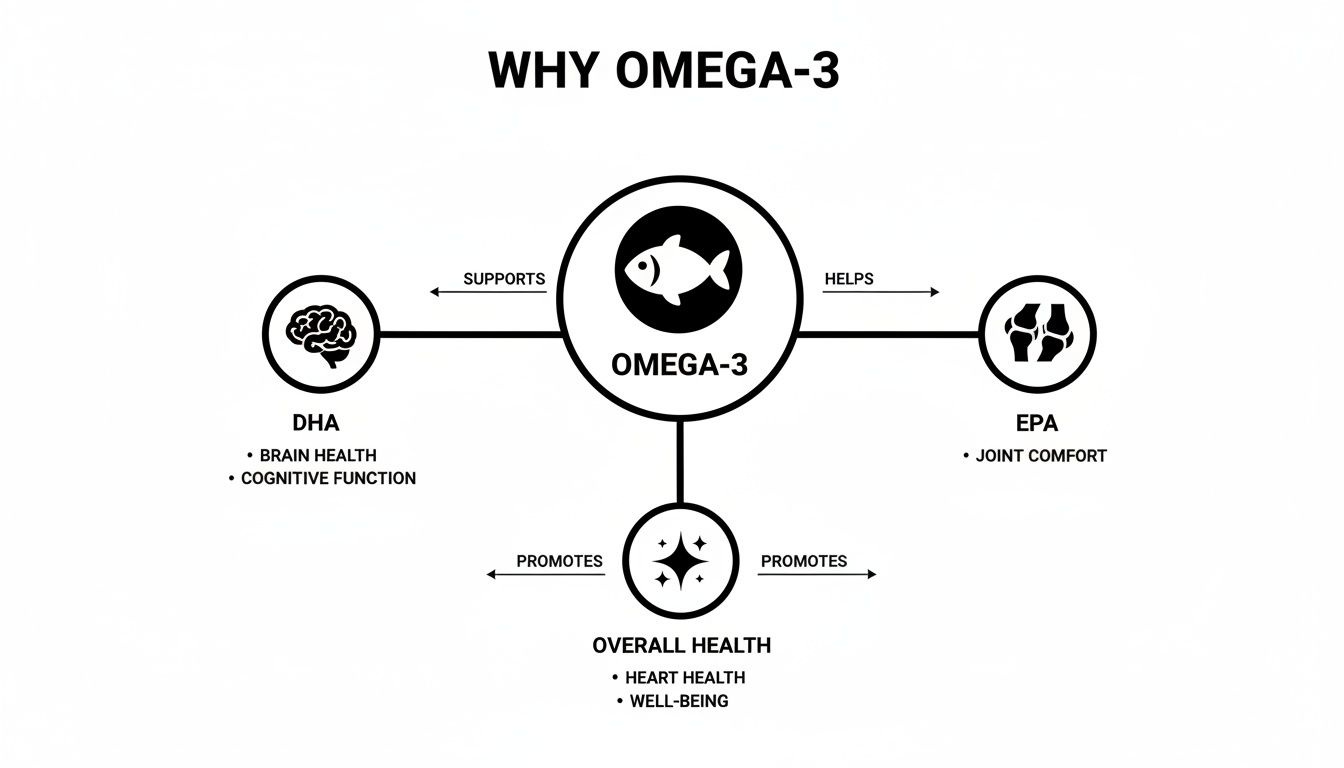
As you can see, omega-3s are at the heart of your dog's health, supporting everything from sharp thinking to comfortable joints and overall vitality.
The Challenger: Krill Oil
You may have heard the buzz around krill oil. It’s harvested from tiny, shrimp-like critters in the Antarctic and has a unique trick up its sleeve.
The EPA and DHA in krill oil are attached to phospholipids. Think of these as a special key that helps unlock your dog’s cells, potentially making the omega-3s easier and faster for their body to absorb compared to the standard form found in fish oil.
The catch? Krill are the foundation of the entire marine ecosystem. While harvesting is regulated, there are valid concerns about its long-term sustainability, which is an important consideration for any eco-conscious dog owner.
The Sustainable Powerhouse: Algae Oil
What if you could skip the fish and go straight to the source? That's exactly what algae oil does.
Here’s a little secret: fish don’t actually make their own EPA and DHA. They get it from munching on microalgae. By harvesting the oil directly from algae, we get a pure, potent, and incredibly sustainable alternative.
This isn’t just a niche product anymore; it's a game-changer. It offers the exact same health benefits—especially for joint inflammation and skin issues—without depleting our oceans. With dogs making up a massive 63.9% of the omega-3 supplement market, this sustainable shift is huge.
Key Takeaway: Algae oil gives you the same biologically available EPA and DHA as fish oil, but it's grown in a clean, controlled environment. It’s the perfect solution for dogs with fish allergies and for owners who want to make an earth-friendly choice.
Comparing Omega 3 Sources for Your Dog
To make things even simpler, here’s a side-by-side look at the options. This table should help you quickly compare the most popular omega-3 sources and pick the right fit for your dog and your values.
| Source | Key Benefit | EPA/DHA Potency | Sustainability Factor | Best For |
|---|---|---|---|---|
| Fish Oil | Widely available and highly potent | High | Varies by fish type | General support for dogs without fish sensitivities |
| Krill Oil | High bioavailability due to phospholipids | Moderate to High | Moderate (concerns exist) | Dogs needing enhanced absorption |
| Algae Oil | Pure, sustainable, and hypoallergenic | High | High | Dogs with allergies, eco-conscious owners, targeted support |
In the end, there's no single "best" source for every dog. It comes down to what you prioritize—whether that's potency, easy absorption, or sustainability. By understanding what makes each one unique, you can feel confident you’re choosing a supplement that truly supports your dog’s health and aligns with what’s important to you.
The Science Behind a Healthier Coat and Joints
When veterinarians consistently recommend a supplement for common problems like itchy skin and stiff joints, it’s time to listen up. Omega-3s have earned this top-tier reputation because they work on a deep, biological level to deliver results you can actually see and feel.
Let's unpack the science and see what it really means for your dog's day-to-day happiness. The real power players here are EPA and DHA, two specific omega-3 fatty acids. Think of them as a highly specialized team, each with a crucial job in calming down irritation and building strength from the inside out.
EPA: The Body's Natural Firefighter
Picture inflammation as a tiny, smoldering fire inside your dog's body. In dogs with allergies, that fire manifests as red, itchy skin and constant scratching. For senior dogs, it burns away in their joints, causing the pain and stiffness that makes getting out of bed or hopping in the car a real challenge.
EPA's main job is to act as the firefighter. It works right down at the cellular level, creating compounds that actively cool down and "resolve" that inflammatory blaze.
By dialing back chronic inflammation, EPA gets to the root cause of many skin and joint issues. This isn't just about covering up symptoms—it's about restoring the body's natural balance and providing genuine relief.
This potent anti-inflammatory effect is a huge reason why the best omega 3 supplements for dogs are almost always rich in EPA. It's the key ingredient that helps your dog feel comfortable in their own skin again.
DHA: The Master Structural Engineer
While EPA is busy putting out fires, DHA is on the job rebuilding and reinforcing. Think of DHA as the master structural engineer for your dog’s body, especially for the skin. Your dog's skin has a natural protective wall, often called the lipid barrier, which has two critical functions:
- Locking in moisture: A healthy barrier keeps water from escaping the skin, which is essential for keeping it hydrated, flexible, and resilient.
- Keeping out irritants: It also serves as a gatekeeper, blocking allergens, yeast, and bacteria from getting in and causing problems.
DHA is a core building block of this protective barrier. When a dog gets enough DHA, their skin barrier becomes strong and robust. The result? A coat that isn't just glossy, but is a true sign of a well-protected, healthy body. For more tips on getting that perfect sheen, check out our guide on the best skin and coat supplements for dogs.
The demand for these health benefits is clear. With 69 million dog-owning households in the US, the pet supplement market is growing fast—projected to jump from USD 2.81 billion in 2025 to USD 6.61 billion by 2035. Dogs are the biggest part of this market, holding a massive 63.9% share. This is largely driven by owners looking for real solutions for joint pain and skin issues, two areas where omega-3s truly shine. You can dig deeper into these trends and see the driving forces behind pet supplement growth on futuremarketinsights.com.
How to Choose a High-Quality Supplement
Walking down the supplement aisle can be overwhelming. Brightly colored bottles and flashy claims all compete for your attention, but the real test of a good omega-3 supplement is on the back label. Learning to read that fine print is the single best way to make sure you're bringing home a product that's both safe and effective.
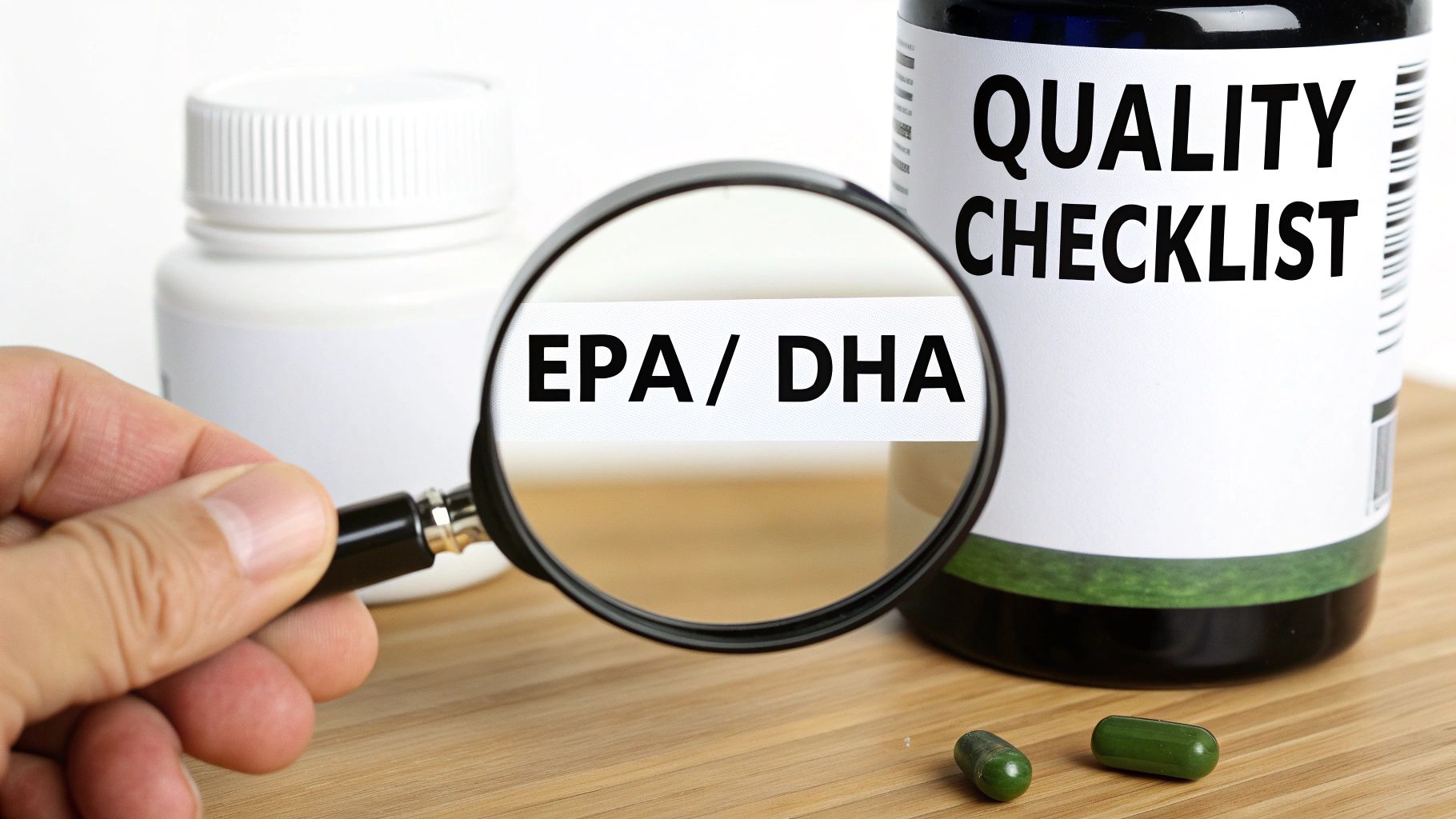
The good news is, you don’t need to be a scientist to figure it out. You just need to know what to look for—and, just as importantly, what to ignore. Let's dig into the details that separate a great supplement from the rest.
Look for Specific EPA and DHA Amounts
This is the most important rule. Don't be fooled by big numbers on the front of the bottle, like “1,000 mg Fish Oil.” That number often just tells you the total amount of oil in a serving, not the amount of the good stuff.
A supplement's true value isn't in its total oil content; it's in the specific, guaranteed amounts of EPA (eicosapentaenoic acid) and DHA (docosahexaenoic acid). These are the powerhouse compounds that deliver the anti-inflammatory and structural benefits your dog needs.
Flip the bottle over and find the "Guaranteed Analysis" or "Supplement Facts." This is where the truth is. A quality product will clearly state the exact milligrams (mg) of EPA and DHA per serving. If the label is vague, that’s a big red flag.
Prioritize Purity and Third-Party Testing
As wonderful as our oceans are, they can contain contaminants like heavy metals (mercury, lead), PCBs, and dioxins. Since omega-3s come from marine sources, the final oil must be purified to ensure it’s free from these harmful substances.
The pet supplement industry isn't as tightly regulated as human pharmaceuticals, which makes independent verification absolutely essential. Here are the signs of a brand you can trust:
- Third-Party Testing: The label should state that the product is tested by an independent lab for purity and potency. This is your proof that an unbiased source has verified the supplement is clean and actually contains the EPA and DHA it promises.
- Certifications: Look for seals from reputable organizations, like the National Animal Supplement Council (NASC) Quality Seal. This tells you the manufacturer adheres to strict quality control and manufacturing standards.
- Sourcing Information: Good brands are open about where their ingredients come from. They’ll often specify the type of fish (like wild-caught sardines and anchovies) or the origin of their algae. Small, wild-caught fish are a great choice because their shorter lifespans mean they accumulate fewer toxins.
Understanding the baseline safety framework, including the latest on FDA regulations for dietary supplements, helps you appreciate why these voluntary quality checks are so important.
Check the Formulation and Ingredients
Finally, give the full ingredient list a quick scan. You want to see a short, clean list without a bunch of unnecessary fillers or artificial junk.
One key ingredient to look for is an antioxidant, usually Vitamin E (often listed as tocopherols). Omega-3 oils are delicate and can spoil or go rancid when exposed to air. Vitamin E acts as a natural preservative, protecting the oil’s freshness and potency so it can do its job.
Steer clear of products with vague terms like "fish oil blend" or those with artificial colors and flavors. The simpler and more transparent the ingredient list, the better. And don't forget to think about the form—liquid, softgel, or chew—that will be easiest to give your dog consistently. Armed with this checklist, you can confidently pick a top-tier supplement that will make a real difference in your dog's health.
Finding the Right Dose for Your Dog
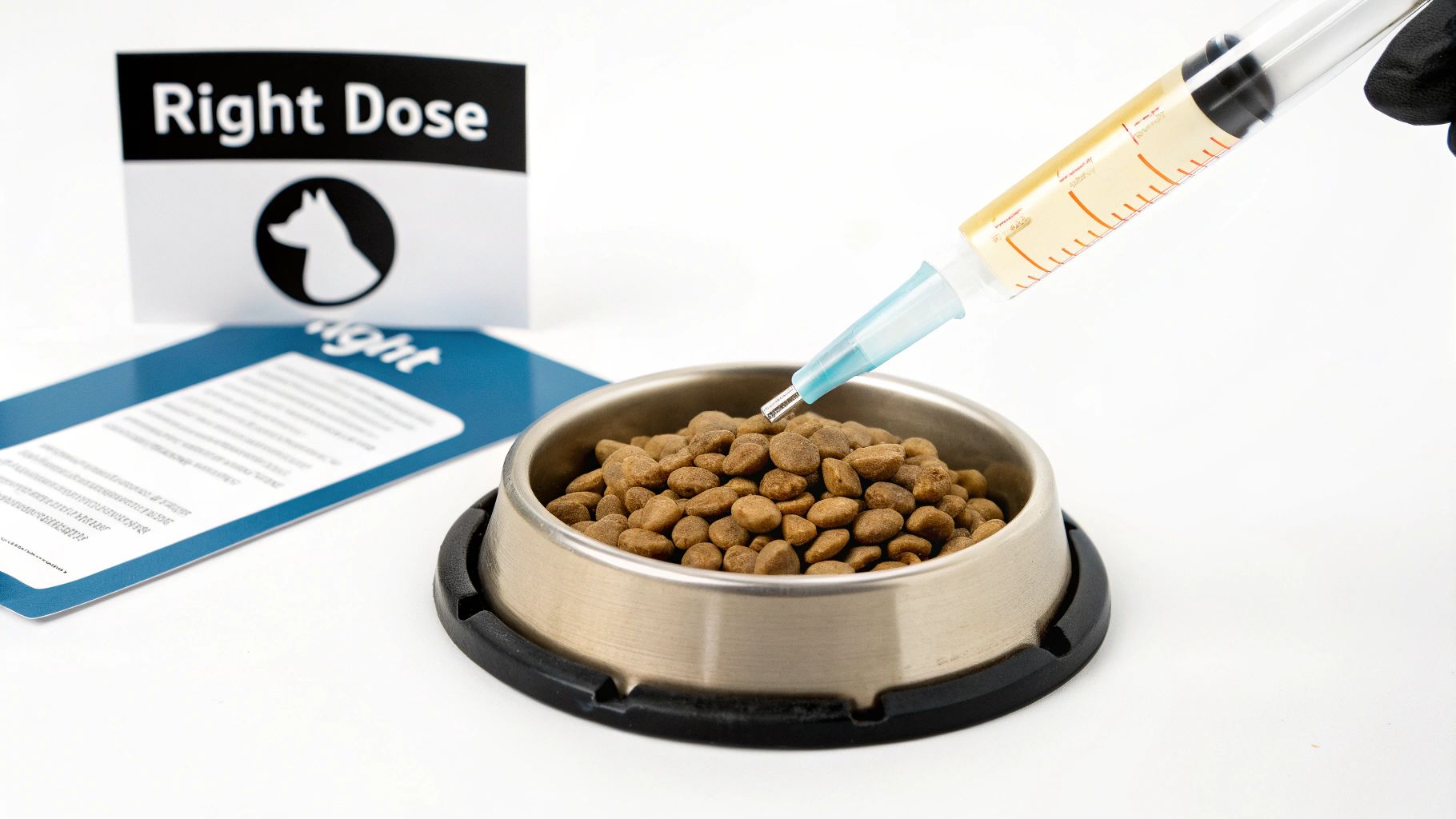
This is where the rubber meets the road. Giving your dog the right amount of omega-3s is what makes all the difference. Too little, and you might not see the shiny coat or improved mobility you're hoping for. Too much, and you could be looking at an upset stomach.
The key is finding that sweet spot for your dog’s specific needs.
Your veterinarian is your best resource for a precise dose, but some well-established guidelines give you a solid place to start. And remember, we're not talking about the total volume of oil; the important number is the combined milligram (mg) count of the active ingredients: EPA and DHA.
Focusing on the combined EPA and DHA total is how you dose with purpose.
General Dosing Guidelines by Weight
Think of omega-3 dosage on a sliding scale. A healthy, young dog might only need a "maintenance dose" to stay in peak condition. On the other hand, a senior dog with achy joints or a pup with chronic skin allergies will likely benefit from a higher, more "therapeutic dose" to help manage inflammation.
Before we get to the numbers, here's the most important step: have a chat with your vet. They know your dog’s health history and can fine-tune the dosage for maximum benefit and safety.
This dosing guide is a great starting point for that conversation. Use the combined EPA + DHA value on your supplement's label to find where your dog fits.
General Daily Omega 3 (EPA+DHA) Dosing Guide for Dogs
This table provides a reliable starting point for omega 3 dosage based on your dog's weight. Always confirm the ideal dose with your veterinarian.
| Dog Weight (lbs) | Recommended Combined EPA+DHA (mg/day) | Purpose |
|---|---|---|
| Under 15 lbs | 150 - 250 mg | General wellness and maintenance |
| 15 - 30 lbs | 250 - 500 mg | Support for skin, coat, and mild joint stiffness |
| 31 - 60 lbs | 500 - 1000 mg | Therapeutic support for moderate skin or joint issues |
| 61 - 90 lbs | 1000 - 1500 mg | Strong support for chronic conditions like arthritis |
| Over 90 lbs | 1500 - 2000+ mg | High-level support for large breeds and severe conditions |
Remember, these are just guidelines. Your vet might suggest a different amount based on what they see in your dog.
Introducing Supplements the Right Way
Even the best omega 3 supplements for dogs can cause a bit of tummy trouble if you start too fast. The secret to success is to go slow. A gradual introduction gives your dog's digestive system time to get used to the new addition, which helps you avoid messes and discomfort.
Here's a simple, proven way to get started:
- Start with a Quarter Dose: For the first 2-3 days, give just 25% of the target daily amount. Mix it right into their food.
- Move to a Half Dose: If all is well (no upset stomach!), bump it up to 50% for another 2-3 days.
- Work Up to the Full Dose: Continue this gradual increase over the course of about a week until you reach the full recommended dose.
This "low and slow" method is the best practice for adding any new supplement to your dog's diet. Just keep an eye on them, and if you notice any digestive upset, simply scale back for a few days before trying again. Consistency and correct dosing are what will truly help your dog thrive.
Your Top Omega-3 Questions, Answered
Alright, let's tackle some of the most common questions we hear from dog owners. When you're diving into the world of supplements, it's completely normal to have a few things you're wondering about. Getting clear, straightforward answers is key to feeling confident about the choices you make for your best friend.
We've rounded up the questions that pop up most often to clear away the confusion and give you the solid information you need.
Can I Just Give My Dog My Own Fish Oil Capsules?
It’s a tempting shortcut, for sure. You’ve already got them in the cabinet, so why not? But this is one of those times where sharing isn’t the best idea. Supplements for people and pets are formulated very differently, and those differences really matter.
For starters, many human fish oil products have added flavorings—like lemon or orange oil—to mask the fishy taste. While that might be nice for us, those flavors can be off-putting for a dog’s sensitive palate and might even lead to an upset stomach.
The bigger issue, though, is the dosage. The concentration of EPA and DHA in a human supplement is balanced for a human body, not a 75-pound Lab or a 10-pound terrier. This turns dosing into a wild guessing game. You could easily give too little to have any real effect, or give too much and risk side effects.
The Takeaway: Stick with a high-quality supplement made specifically for dogs. This ensures the ingredients are safe, the flavor is dog-friendly, and the EPA/DHA levels are appropriate for their body weight, allowing for precise and effective dosing.
How Long Until I See a Difference?
This is where a little patience goes a long way. The benefits of omega-3s happen at a cellular level, so it’s more of a gradual improvement than an overnight miracle. How quickly you see results often depends on what you're hoping to address.
Here’s a rough timeline of what you might expect:
- For a Shinier Coat & Healthier Skin: You'll likely start to see improvements like less flaking, reduced shedding, and a healthier gloss within 3 to 4 weeks of daily use.
- For Joint Support & Better Mobility: Soothing inflammation is a slower, deeper process. Give it at least 6 to 8 weeks—sometimes a bit longer—to notice a real change in your dog's comfort and ease of movement.
The absolute most important thing is consistency. Giving the supplement every single day ensures their body has a steady supply of these powerful fatty acids to do their work.
Are There Any Side Effects I Should Worry About?
For the most part, omega-3 supplements are incredibly safe for dogs when you follow the dosing guidelines. When side effects do pop up, they’re almost always minor and linked to giving too much, too soon.
The most common culprit is a bit of digestive upset, like loose stools or an unhappy tummy. This usually happens if you introduce the supplement at a full dose right away. That's why we always recommend the "start low, go slow" method—it gives their digestive system a chance to get used to the new addition.
In very rare cases, extremely high doses of omega-3s can thin the blood. This is why it's crucial to have a chat with your vet before starting, especially if your dog has a known clotting disorder, is on blood-thinning medication, or has surgery coming up.
My Dog's Food Already Has Omegas. Is a Supplement Really Necessary?
This is a fantastic question and one that shows you're already paying close attention to your dog's nutrition. It's true that many high-quality dog foods list omega fatty acids on the bag, which is a great starting point. But a dedicated supplement is on a completely different level.
There are two big reasons why food alone often isn't enough:
- Potency and Processing: Omega-3s are delicate. The high heat used to cook kibble can seriously degrade these sensitive fats, meaning what’s listed on the bag might not be what actually makes it into your dog’s bowl in a usable form.
- Maintenance vs. Therapeutic Doses: The amount of omegas in dog food is typically just enough for basic daily maintenance. It’s not a therapeutic dose designed to actively address a specific issue like arthritis, skin allergies, or inflammation. For that, you need a much higher, more concentrated level of EPA and DHA than food can provide.
Think of it this way: the omegas in kibble are like a daily multivitamin, while a good supplement is like a targeted tool you use to solve a specific problem. A dedicated fish oil supplement guarantees a fresh, potent, and consistent dose that can truly make a difference for your dog's health.
At Joyfull, we believe that giving your dog the best shouldn't be complicated. Our formulas are built on a foundation of clean, high-quality ingredients to deliver real, noticeable benefits. Explore our vet-advised supplements and give your best friend the gift of vibrant health.
0 comments