


You're standing in the pet aisle with a bag of lamb dog treats in one hand and your dog's allergy history in the other. The package says “natural,” “limited ingredient,” and possibly “hypoallergenic,” but those words don't tell you whether the treat is made from lamb, how concentrated it is, or whether it fits your dog's diet.
Lamb can be a useful treat protein, but lamb itself isn't a quality guarantee. The cut, recipe, processing method, calorie density, sourcing, and your dog's previous exposure all matter. Here's how to sort the useful products from the attractive packaging.
Table of Contents
- What Lamb Dog Treats Actually Are
- Nutritional Profile and How Processing Changes It
- The Allergy Question and Elimination Diets That Work
- Reading the Label and Judging Ingredient Quality
- Serving Guidelines and Safety Considerations
- A Simple Homemade Lamb Treat Recipe and Storage
- How to Choose the Right Lamb Treat for Your Dog
- Key Takeaways for Confident Treat Shopping
What Lamb Dog Treats Actually Are
A conscientious owner usually starts with the ingredient panel. You might see “100% lamb,” lamb meal, lamb liver, lamb heart, a lamb-and-turkey jerky, or a biscuit that contains only a small amount of lamb alongside grains and starches. Those products may all sit under the same broad category, but they're not interchangeable.
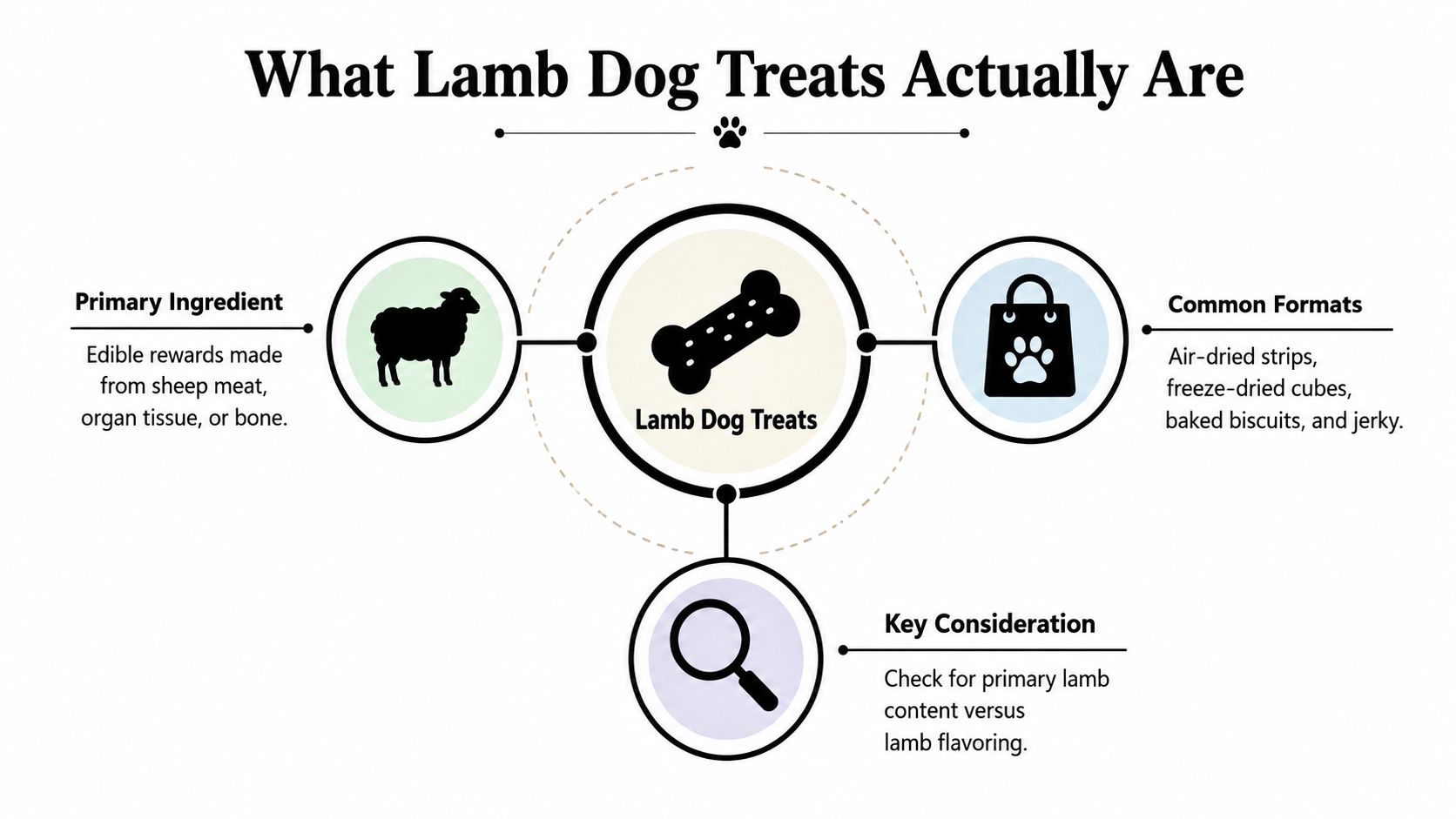
Lamb dog treats are rewards made from sheep meat, organs, bone, or lamb-derived ingredients. The common formats include air-dried strips, freeze-dried cubes, jerky, soft-moist bites, oven-baked biscuits, dental chews, and raw or frozen products. Some are single-ingredient treats, such as lamb lung or lamb heart. Others use lamb with binders that help create a shaped biscuit or soft training bite.
The front of the bag can be misleading
A bag featuring a large lamb illustration may contain a lamb-forward recipe, or it may contain a flavored biscuit with several other protein sources. “Lamb flavor” is especially different from a named lamb ingredient. If you're trying to avoid chicken, beef, or another trigger, the distinction matters more than the picture on the front.
Look for the ingredient list before the marketing language. A single named lamb ingredient gives you a clearer picture than a vague meat blend. “Lamb meal” is a rendered, concentrated ingredient, while fresh lamb contains more moisture. Neither phrase automatically makes a product good or bad, but they represent different formulations.
Format changes the practical use
A soft-moist bite may work well for frequent training because it can be broken into tiny pieces. A freeze-dried organ cube may be more aromatic and motivating, but its concentrated nutrition makes portion control more important. Jerky can suit dogs that enjoy chewing, while a baked biscuit may be easier to measure and store.
The U.S. Amazon niche for lamb dog treats was estimated at about $150,000 in annual revenue, with roughly 10,000 to 13,000 units sold per year and about 86,000 annual searches in 2026, according to market tracking data on lamb dog treats. That category also had an estimated 12.4% average conversion rate, and the top five brands held 64% of demand, so shoppers are choosing among recognizable competing products rather than browsing an undefined novelty category.
Practical rule: Treat “lamb” as the starting point for label inspection, not the conclusion.
Nutritional Profile and How Processing Changes It
Lamb treats can range from light, soft rewards to intensely concentrated pieces of meat or organ. The word lamb doesn't tell you the calorie density. Moisture removal, added ingredients, fat content, and the selected cut do.
Product-label examples show the spread clearly. One lamb-and-turkey jerky treat lists 14 calories per treat and 3,914 kcal/kg, while a 100% lamb air-dried treat lists 49.8% crude protein, 35.5% crude fat, 10% moisture, and 5,250 kcal/kg, as reported in product-label information for lamb treats. A soft-moist lamb treat lists 8 calories per treat, while a crunchy lamb biscuit lists 20 calories per treat from the same product-label reference.
Why concentration matters
Freeze-drying and air-drying remove water, leaving a smaller, more concentrated reward. Independent product analyses report freeze-dried lamb treats at about 42% crude protein and 35% crude fat, while lamb-heart treats are around 35% protein and 15.5% fat. Phosphorus can sit near 0.8% to 2.0%, depending on the cut and processing method, according to lamb treat composition data.
That makes these products useful as high-value rewards, but less suitable for casual handfuls. A small cube can carry more nutritional weight than its size suggests, particularly when it's made from fatty meat or organ tissue.
| Format | Moisture | Crude Protein (approx.) | Fat (approx.) | Calories per 100g |
|---|---|---|---|---|
| Soft-moist lamb treat | Higher than dried formats | Not stated | Not stated | Not stated |
| Lamb-and-turkey jerky | Not stated | Not stated | Not stated | Not stated |
| Air-dried lamb | 10% | 49.8% | 35.5% | 525 kcal |
| Freeze-dried lamb | Low after moisture removal | 42% | 35% | Not stated |
| Crunchy lamb biscuit | Lower than soft-moist treats | Not stated | Not stated | Not stated |
The table uses only the available product-label and independent analysis data. Don't fill missing values with guesses. Read the package's feeding directions and calorie statement instead.
Owners comparing gut-support products should also keep categories separate. The Probiotic Supplement for Cats - 30 Single-Serving Packets is a cat supplement made with real beef bone broth, veterinarian-formulated probiotic strains, and third-party testing for potency and purity. It isn't a lamb treat and shouldn't be treated as one.
The Allergy Question and Elimination Diets That Work
Lamb isn't automatically hypoallergenic. Veterinary literature identifies lamb among the proteins that can trigger adverse food reactions in dogs, even though other proteins appear more often in reports. A dog may tolerate lamb well, but tolerance depends on the individual dog's immune history, not on a reassuring word printed on a pouch. Veterinary literature on canine food reactions supports a more careful approach than treating lamb as allergy-proof.
The “novel protein” idea only works if the protein is new to your dog. Many adult dogs have eaten lamb through rotating foods, mixed-protein formulas, dental chews, or treats without their owners remembering every exposure. If lamb has already appeared in the diet, it may not be a useful elimination-trial choice.
What a real elimination trial requires
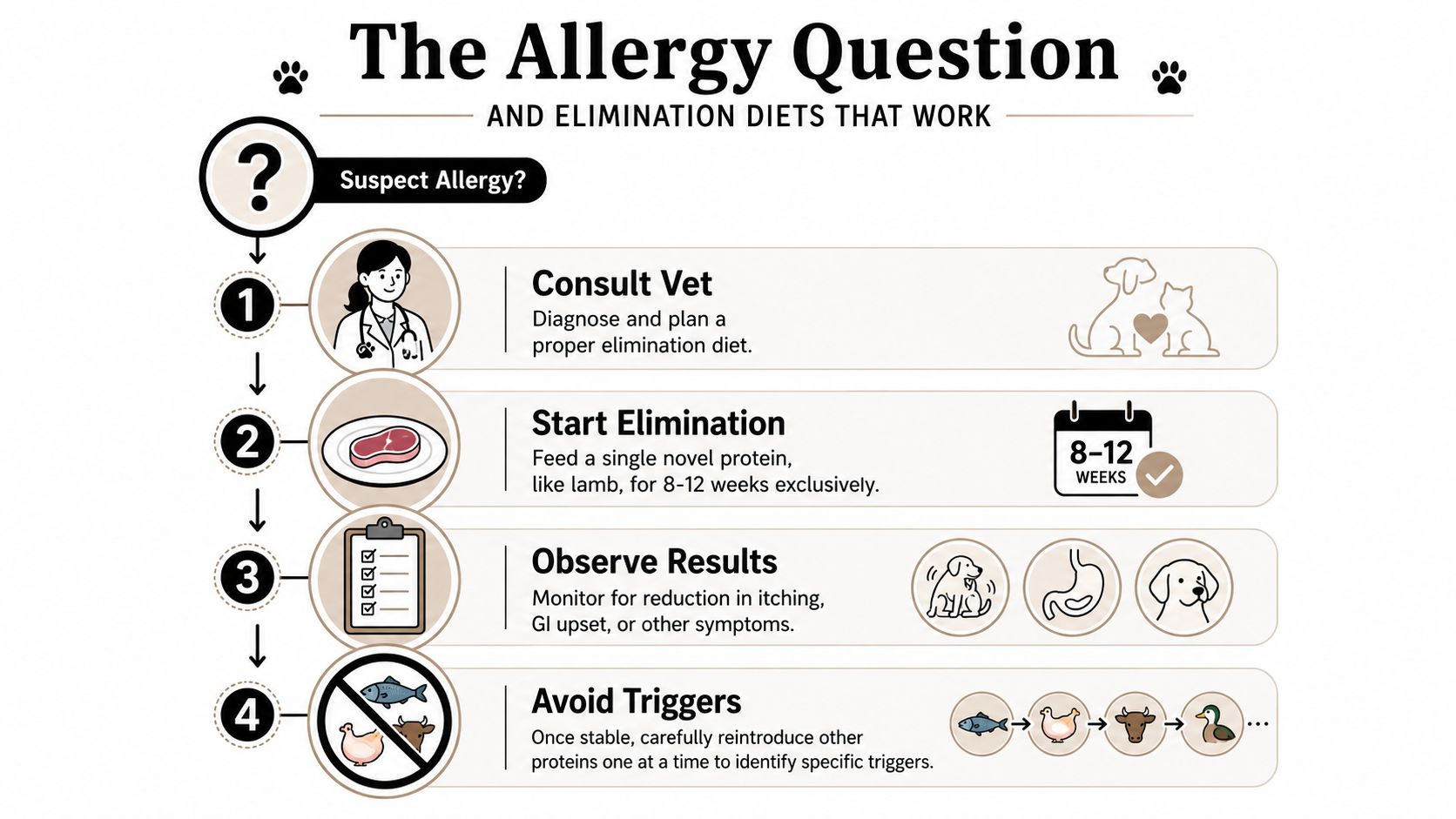
Work with your veterinarian to select a diet and protein source, then feed that plan exclusively for the prescribed trial period. The planning notes for this guide identify an 8-to-12-week elimination period, but your veterinarian should decide the appropriate protocol for your dog.
During the trial:
- Remove every unapproved reward. That includes dental chews, flavored supplements, table scraps, pill pockets, and training treats with unnamed animal ingredients.
- Keep a symptom diary. Record itching, ear problems, paw licking, vomiting, stool changes, and medication use.
- Avoid casual substitutions. A treat that contains chicken, beef fat, or “natural flavor” can undermine the test.
- Rechallenge only with guidance. Once symptoms improve, reintroducing proteins one at a time helps identify a trigger rather than proving that the original diet was different.
Use the Joyfull guide to hypoallergenic dog snacks as additional reading, not as a replacement for veterinary diagnosis. If symptoms are severe, persistent, or involve repeated ear infections, gastrointestinal distress, or widespread skin disease, ask your veterinarian whether a veterinary dermatologist is appropriate.
Reading the Label and Judging Ingredient Quality
You can screen most bags quickly if you read them in the right order. Start with the ingredient list, then check the guaranteed analysis, calorie information, feeding directions, and sourcing language. Don't let a rustic package design do the thinking for you.
A fast label-reading sequence
First, identify the actual lamb ingredient. “Lamb,” “lamb meal,” “lamb liver,” and “lamb heart” tell you more than “lamb flavor.” If the package says “with lamb,” expect lamb to be only one component of a broader recipe unless the ingredient panel says otherwise.
Next, look for hidden proteins. Generic terms such as “meat by-products,” “animal fat,” or “natural flavor” make allergy management harder. A dog may react to an unlisted or broadly named protein, and you won't have enough information to connect the reaction to the product.
Then, assess the recipe's purpose. A short ingredient list is useful when you need transparency. A longer list isn't automatically poor quality, but every added starch, sweetener, flavor, or protein creates another question. Molasses and honey are still added sweeteners, even when the label presents them as natural ingredients.
Finally, compare fat, protein, and calories. A rich air-dried or freeze-dried treat may work as a high-value reward, while a lower-calorie soft treat may be more practical for repeated training. Treat calories should be considered alongside the dog's complete daily diet.
Country-of-origin statements also deserve careful reading. “Made in” can describe where a product was manufactured, not necessarily where every animal ingredient originated. If sourcing matters to you, ask the manufacturer where the lamb was raised, where it was processed, and whether the facility handles other proteins.
For a deeper walkthrough, use this pet food ingredient label guide. My quick scoring system is simple: give a product one point for a clearly named lamb source, one for transparent additional ingredients, one for a stated calorie value, one for clear processing information, and one for sourcing answers you can verify. If the package can't answer basic questions, choose another product.
Serving Guidelines and Safety Considerations
Treats should fit into the diet, not sit on top of it. A widely used starting point is to keep treats near 10% of daily calories, but the exact allowance depends on your dog's body condition, activity, age, medical status, and complete food. Use the calorie statement on the package, then ask your veterinarian to help calculate an appropriate daily amount.
For example, if your dog's daily maintenance intake is represented by a known calorie target, reserve roughly one-tenth of that target for treats and provide the rest through balanced food. Don't use the table below as a substitute for the package label or veterinary advice. The available data doesn't establish universal treat counts by body weight.
| Dog Weight | Daily Treat Calorie Cap | Small Soft Treats (per day) | Jerky Strips (per day) |
|---|---|---|---|
| Small dog | Calculate from daily calories | Follow package calories | Follow package calories |
| Medium dog | Calculate from daily calories | Follow package calories | Follow package calories |
| Large dog | Calculate from daily calories | Follow package calories | Follow package calories |
Introduce the product gradually
Start with about one-quarter of the planned serving, then watch your dog before increasing it. A cautious seven-day introduction gives you time to notice loose stool, vomiting, itching, ear changes, or reluctance to eat. Don't introduce a new treat during a suspected allergy trial unless your veterinarian has approved it.
Rich lamb treats deserve extra care for dogs with pancreatitis history or fat-sensitive digestion. Dogs with reduced kidney function may need moderated phosphorus, and concentrated lamb products can carry a meaningful mineral load. Puppies under 12 weeks can also struggle with rich treats, so keep rewards small and discuss suitable options with your veterinarian.
Skip bones
Heating bones can make them brittle and prone to sharp fragmentation. Veterinary guidance says cooked and raw bones can obstruct the gastrointestinal tract, damage teeth, cause constipation, and produce abdominal pain, according to veterinary guidance on lamb bones.
If your dog accidentally swallows a bone and develops gagging, retching, blood in the stool, labored breathing, or severe abdominal pain, seek urgent veterinary care. Don't wait for symptoms to become dramatic.
A Simple Homemade Lamb Treat Recipe and Storage
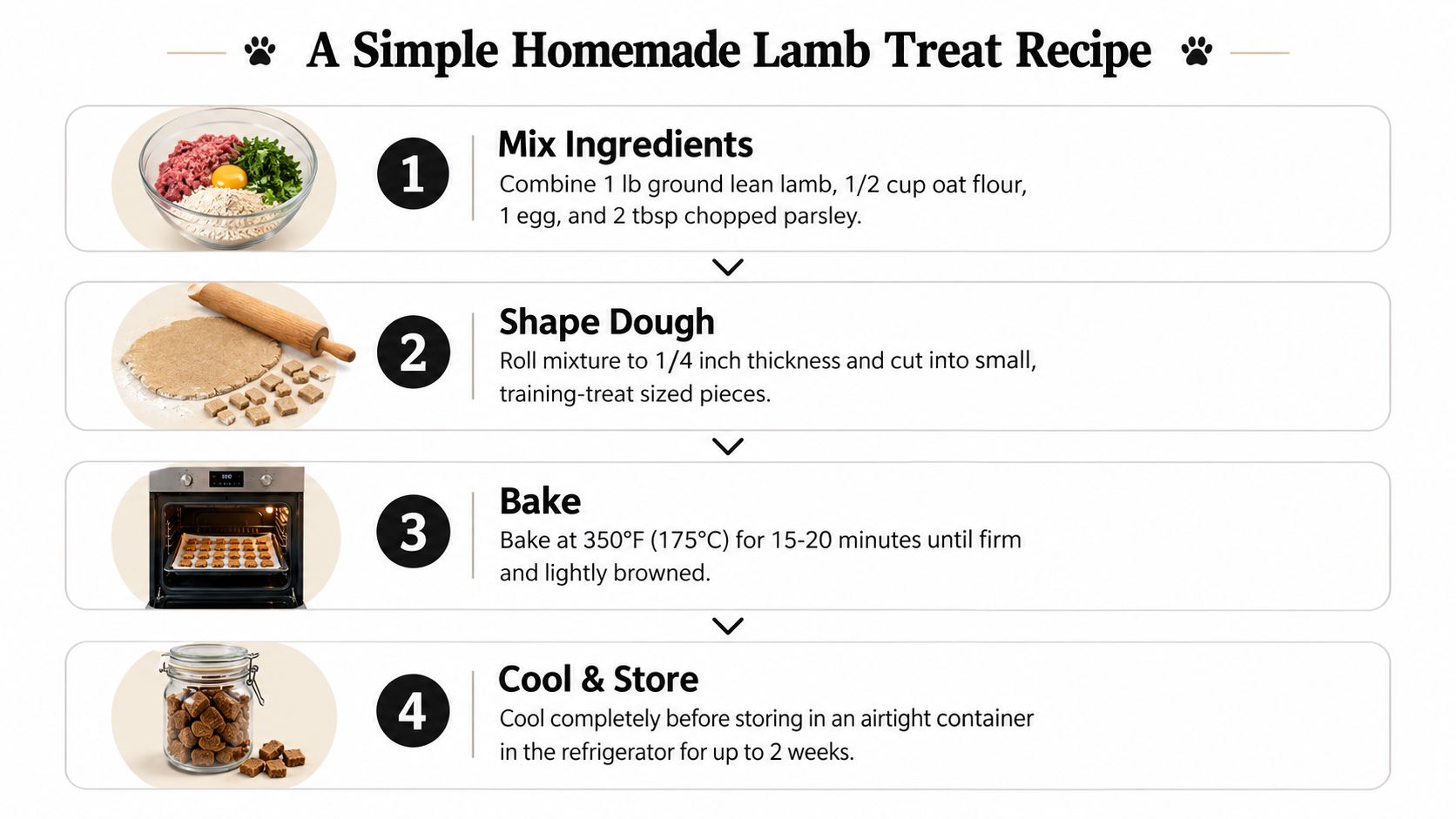
Homemade lamb treats give you control over the protein, but they don't remove the need for food safety or portion discipline. Use 1 pound of ground lean lamb, one-half cup oat flour, one egg, and 2 tablespoons of chopped parsley. Skip salt, onion, garlic, and other seasonings that aren't appropriate for dogs.
Mix the ingredients until evenly combined. Roll the mixture to about one-quarter-inch thickness, cut small training-sized pieces, and place them on a lined baking sheet. Bake at 350°F, or 175°C, for 15 to 20 minutes, until firm and lightly browned. Cook the lamb thoroughly and allow the treats to cool completely before serving.
Adjust the texture and ingredients
For softer bites, use slightly thicker pieces and remove them once they're set. For crunchier treats, extend baking cautiously while checking that they don't burn. Dogs with grain sensitivities may tolerate chickpea or coconut flour, but substitutions change texture and may not suit every dog. During an elimination diet, don't substitute ingredients without veterinary approval.
You can also shape the mixture into thin strips and dehydrate them at 165°F for 6 to 8 hours. Lean lamb works better than fatty lamb for this method because excess fat can shorten storage life and make the strips greasy.
Store by daily portions
Divide cooled treats into small daily serving bags before refrigeration or freezing. Refrigerate a fresh batch for 5 to 7 days according to the recipe plan, or freeze portions for up to 3 months. The infographic's storage instruction says refrigeration can extend to up to 2 weeks, but homemade shelf life depends on moisture, handling, refrigeration, and how thoroughly the treats were cooked. Use the more conservative window unless your veterinarian or food-safety professional advises otherwise.
Discard any batch with off odors, mold, unusual moisture, or a changed texture. Don't taste-test questionable pet food yourself. Clean utensils, cutting boards, and surfaces thoroughly after handling raw lamb.
How to Choose the Right Lamb Treat for Your Dog
Choose the format based on the job. A training reward needs to be small, easy to break, and quick to eat. A chew needs appropriate size and texture. A daily snack needs predictable calories and a recipe your dog can tolerate repeatedly.
Before browsing, write down your top three priorities. For example, you might choose single-protein transparency, low calorie density, and easy storage. This simple exercise keeps attractive packaging from pushing you toward a product that doesn't fit your dog.
| Format | Avg Cost per Treat | Calorie Density | Best For | Storage |
|---|---|---|---|---|
| Soft-moist | Not stated | Often easier to portion by piece, verify the label | Frequent training | Follow package directions |
| Jerky | Not stated | Can be concentrated | High-value rewards and chewing | Seal tightly, follow label |
| Freeze-dried | Not stated | Concentrated | Strong motivation and small portions | Keep dry and sealed |
| Baked biscuit | Not stated | Varies by recipe | Routine rewards | Airtight storage |
| Raw or frozen | Not stated | Varies by cut | Owners following a veterinarian-approved raw plan | Requires strict cold storage |
I won't invent cost comparisons where the available data doesn't provide them. Compare the package's total price, number of pieces, stated calories, and storage requirements yourself. A cheaper bag may not be cheaper per usable training reward if each piece is large or calorie-dense.
Budget products may rely more heavily on flavoring or mixed ingredients, while premium products often emphasize single-ingredient transparency. That's a tendency, not a guarantee. Check for vague by-products, unnamed meals, undeclared fats, and “natural flavor,” especially if your dog has suspected food reactions.
For browsing, compare carefully labeled dog treats against your written priorities. My preference is clear: choose single-ingredient lamb when you need dietary control, a small soft treat for repetitive training, and a measured dried piece when you need a stronger reward. Avoid raw products unless you understand the handling risks and have a veterinary reason to use them.
Key Takeaways for Confident Treat Shopping
Lamb is not automatically hypoallergenic. Your dog may tolerate it, but lamb remains a possible trigger. If allergies are suspected, use a properly planned elimination diet rather than relying on the protein name printed on a treat bag.
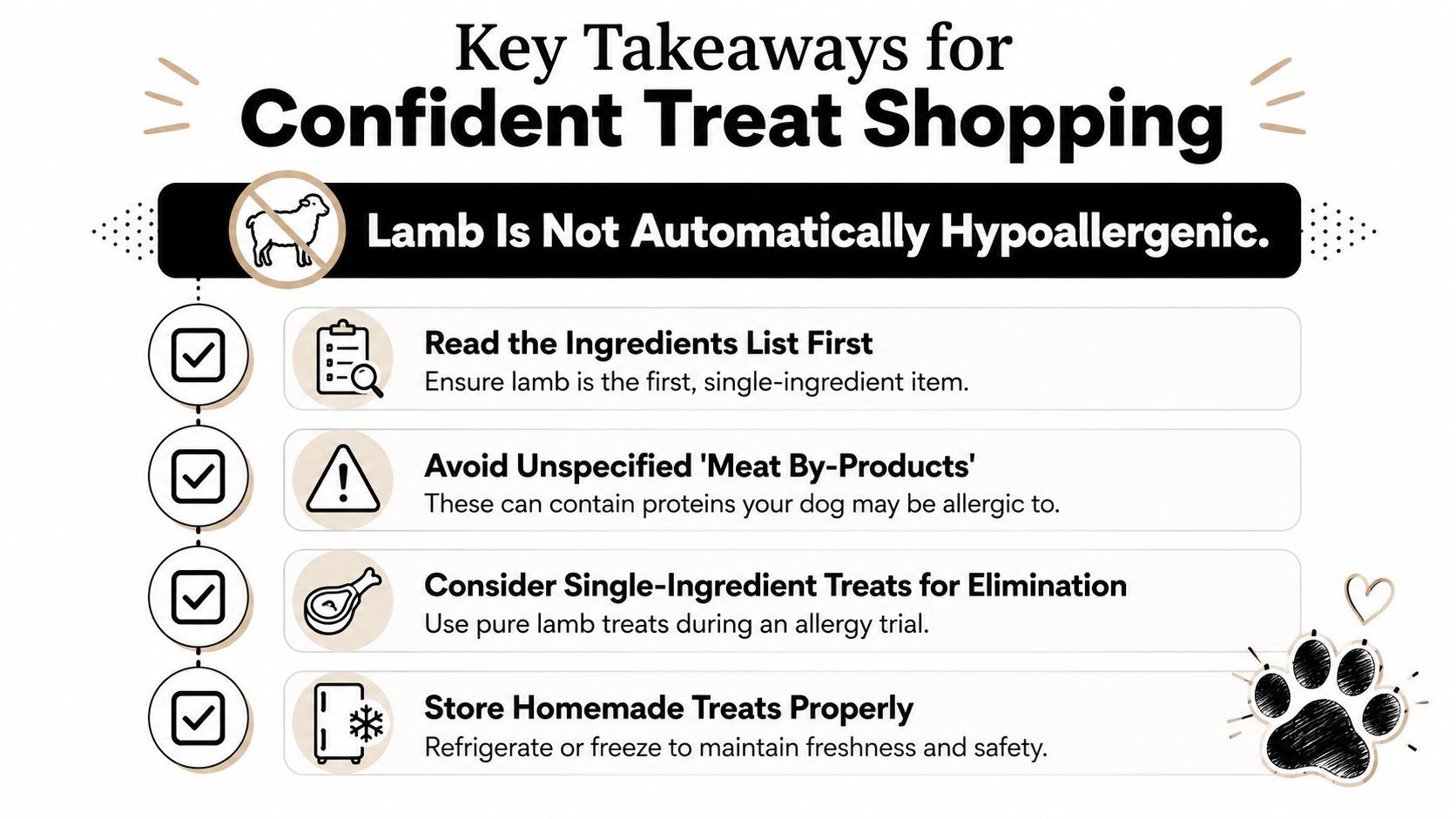
Keep this checklist handy:
- Read the ingredients first. Look for a clearly named lamb source and identify every other animal ingredient.
- Reject vague protein language. “Meat by-products,” “animal fat,” and “natural flavor” make the product harder to evaluate.
- Match processing to the dog. Dried formats are convenient and concentrated, soft treats can suit training, and raw products require more careful risk management.
- Count calories. Keep treats near 10% of daily calories as a general starting rule, using the package calorie statement and your veterinarian's guidance.
- Introduce slowly. Start with a small portion and watch for digestive or skin changes before making the treat routine.
- Ask sourcing questions. A trustworthy manufacturer should be able to explain where the lamb comes from, where it's processed, and how cross-contact with other proteins is managed.
The same standard applies when you shop outside the dog aisle. If you're caring for horses as well, you can compare ingredient transparency and sourcing questions through these horse treat options from Bridle Up Hope Shop.
Lamb dog treats can be excellent rewards, but the winning choice isn't the bag with the loudest health claim. It's the product whose ingredients, processing, calories, storage, and sourcing make sense for your individual dog.
Joyfull offers pet wellness products built around clearly identified ingredients, high-quality proteins, and scientific review by an in-house veterinary advisor. Visit Joyfull to explore straightforward options for supporting your pets beyond the treat jar.
0 comments