


Most adult cats should get roughly 10 to 20 small treats per day, depending on calorie density, with treats capped at about 10% of their daily calories. A treat budget may mean around 18 to 22 calories for an adult cat eating 180 to 220 calories daily, or about 27.5 calories for a 10-pound cat estimated at 275 calories per day.
You know how this goes. It's 6 p.m., your cat is weaving between your legs, the bag crinkles, and one “just because you're cute” treat turns into several before dinner is ready. The problem usually isn't the first treat. It's losing track of the total.
Table of Contents
- Why Treat Math Matters More Than Treat Count
- Calculating Your Cat's Daily Treat Budget
- Treat Counts by Cat Size and Life Stage
- Choosing Treats That Fit the Budget
- Special Rules for Overweight and Indoor Cats
- Warning Signs You Are Overdoing It
- A Simple Daily Treat Routine That Works
Why Treat Math Matters More Than Treat Count
The number of pieces in your hand tells you almost nothing. A tiny freeze-dried morsel may contain about 1 calorie, while a larger soft chew can contain about 3 calories, and some treats contain far more. That's why asking only “how many cat treats per day” can lead you in the wrong direction.
The dependable rule is the calorie ceiling. Treats should provide no more than 10% of daily calories, leaving about 90% for a complete-and-balanced main diet. Petfinder's cat-treat guidance explains the practical translation, including roughly 20 treat calories for a cat eating about 200 calories daily.
AAFCO's labeling framework explains why calorie math beats a fixed piece count. Treats and snacks aren't required to meet the same full nutritional adequacy standards as complete-and-balanced foods, and AAFCO's guidance on reading pet-food labels emphasizes that individual calorie needs vary with factors such as body size, age, and activity.
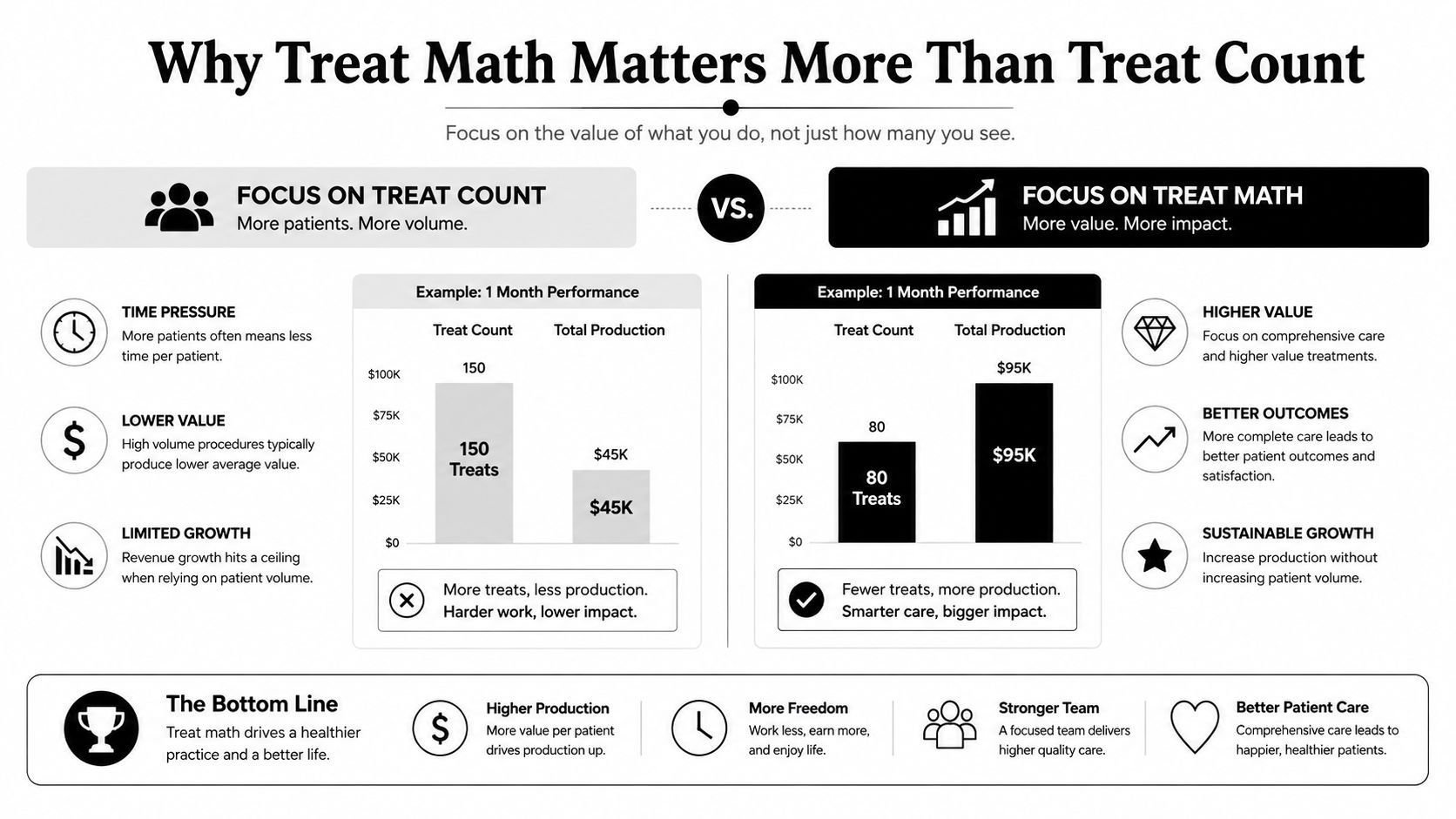
The rule that survives every brand
Read the package's calorie statement, then divide the daily budget by calories per piece. A cat with an 18-calorie allowance could receive about 18 treats at 1 calorie each, 6 treats at 3 calories each, or only a few larger treats.
Practical rule: Count calories, not crumbs. “Low-calorie” doesn't mean unlimited.
Treats also include food used to hide medication, lickable purées, dental products, and table scraps. If it enters your cat's mouth outside the balanced meal, count it before opening the bag again.
Calculating Your Cat's Daily Treat Budget
Use a three-part calculation, but treat the result as a starting estimate rather than a substitute for veterinary advice.
Start with daily calorie needs
A commonly used energy formula begins with 70 × body weight in kilograms raised to 0.75, then adjusts for lifestyle. The planning examples often use a factor of 1.2 for indoor adults, 1.4 for active adults, and 1.6 for kittens under a year. A 4 kg indoor adult works out to roughly 180 calories per day in this example.
For a more practical feeding plan, compare that estimate with your cat's body condition, current food intake, and veterinary guidance. If you're unsure how much complete food your cat needs, use this guide to cat food portions by weight.
Reserve the treat portion
Take 10% of the daily calorie target as the maximum treat budget. For the 4 kg indoor example, that's about 18 calories. The other calories should come from the complete-and-balanced food that supplies the cat's core nutrients.
Measure the main meal rather than pouring kibble by eye. Check the package for calories per cup, can, pouch, or serving, and account for every food source. A supplement such as Probiotic Supplement for Cats - 30 Single-Serving Packets may be administered separately, but any product or food with calories still belongs in the overall intake calculation.
Convert calories into pieces
Divide the treat budget by the calories in one treat. The table below uses practical planning values, not a universal allowance.
| Cat Weight | Maintenance kcal/day | 10% Treat Budget (kcal) | Treats @ ~1 kcal each | Treats @ ~3 kcal each |
|---|---|---|---|---|
| 3 kg | 130 | 13 | 13 | 4 |
| 4 kg | 180 | 18 | 18 | 6 |
| 5 kg | 200 | 20 | 20 | 6 |
| 6 kg | 250 | 25 | 25 | 8 |
| 7 kg | 250 | 25 | 25 | 8 |
Purina's treat-feeding guide gives the same basic method, using a 5 kg adult example with about 300 kcal daily, a 30-calorie treat budget, and about 10 treats when each contains 3 calories. The formula is simple. The label is where owners usually fail.
Treat Counts by Cat Size and Life Stage
A small indoor cat and a large adult cat cannot share the same treat count. Use the calorie budget from the previous section, then divide it by the calories in your chosen product. Dental treats need their own column because one piece can consume several times the calories of a mini reward.
| Cat Profile | Daily kcal Budget | Mini Treats (~1 kcal) | Soft Chews (~3 kcal) | Dental Treats (~6 kcal) |
|---|---|---|---|---|
| Small or senior indoor cat, 3 kg | 130 | 13 | 4 | 2 |
| Average indoor adult, 4 to 5 kg | 180 to 200 | 18 to 20 | 6 to 7 | 3 |
| Large adult, 6 to 7 kg | 250 | 25 | 8 | 4 |
Use these counts only as a planning reference. Check the package, since a “mini” treat from one brand may contain substantially more calories than one from another. A 5 kg cat receiving dental treats at roughly 6 calories each may reach its daily treat limit after only a few pieces.
Kittens need a different conversation
Kittens under 12 months are growing. Treats must not replace the complete food formulated for development. Some guidance permits treats to approach 15% to 20% of intake during specific training situations, but that is not a reason for casual overfeeding. Keep rewards small, meat-based, and secondary to the kitten's main diet.
Senior cats often need stricter control, especially with reduced kidney function, dental disease, or another condition that limits food choices. Cornell's feline feeding guidance recommends keeping treats to a limited share of daily calories and adjusting feeding decisions to the individual cat.
Overweight cats deserve a separate rule: do not use their current weight to justify extra treats. Set the budget around the target weight and count every piece. Life stage changes the budget, but the label determines the count.
Choosing Treats That Fit the Budget
Treat categories vary too widely for a universal piece count. Compare the calorie line first, then inspect ingredients for your cat's health needs.
| Treat Type | Calories per Piece | Best Use | Watch For |
|---|---|---|---|
| Freeze-dried meat | 1 to 3 | Frequent rewards or training | Pieces vary in size |
| Crunchy kibble-style treats | 1 to 2 | Small routine rewards | Dense binders or added sugars |
| Creamy lickable purée | 35 to 60 per teaspoon | High-value reward or medication | Easy to overserve |
| Dental treats | 5 to 15 | Occasional dental-focused reward | Large calorie load per piece |
The ranges above come from the provided feeding guidance, including Banfield's cat-treat advice, which warns that repeated low-calorie rewards can still exceed the daily ceiling. A creamy purée can consume most or all of a small cat's treat budget quickly, even if it looks like a modest serving.
Quality matters after calories
For a healthy cat, calorie fit comes first. For a cat with allergies, kidney concerns, diabetes, or another diagnosed condition, ingredient selection becomes equally important. Avoid treating “natural” as a license to feed freely, and check for added sugars, unnecessary fillers, and heavy carbohydrate binders when weight control is already difficult.
If you're comparing everyday food and treat options, Glo More Grooming's Friskies savings guide can help you review relevant product choices without confusing a lower price with a lower calorie count.
Some owners also use functional products as part of a broader routine. If you're considering cat probiotics, count any calories they provide and keep the product separate from the assumption that a supplement replaces balanced food.
Special Rules for Overweight and Indoor Cats
Overweight and indoor cats need stricter treat management, not because treats are forbidden, but because their calorie margin is smaller. Veterinary literature identifies obesity as a common nutritional disorder in cats and stresses that treat calories belong inside the daily ration, particularly during weight-loss plans. This veterinary review on feline obesity supports treating weight control as a complete daily accounting exercise.
Don't guess based on the words “low-calorie” or “natural.” A cat can exceed its budget through repeated small rewards across breakfast, medication, play, and bedtime. Indoor lifestyle often means the cat has fewer opportunities to burn calories, so the treat allowance must match the actual maintenance plan, not the cat's enthusiasm.
Preserve the ritual, reduce the calories
If your veterinarian has approved a weight-management plan, reserve treats before the day begins. You can reduce the main meal to make room for that allowance, but don't make random cuts that leave the cat short on essential nutrition.
A simple approach is:
- Pre-portion rewards: Put the full day's treats in one container before the first session.
- Use tiny pieces: Break larger treats into smaller rewards when the texture allows it.
- Reward behavior: Give a piece after play, calm handling, or a training response instead of responding to every demand.
- Track the meal adjustment: Reduce the balanced food only as directed by the overall calorie plan.
A 12-pound indoor cat on a weight-management diet might have room for only 8 to 12 freeze-dried treats daily, depending on the cat's calorie target and the treat's size. That example isn't a universal prescription. It shows why your cat's weight-management calories, not the bag's serving suggestion, must control the count.
Use this guide to how to tell if your cat is overweight, then involve your veterinarian before making a substantial calorie reduction.
Warning Signs You Are Overdoing It
Your cat's body and behavior usually reveal an excessive treat routine before the treat bag does. Start with a hands-on body check. You should be able to feel the ribs without pressing hard, and the body should show a waistline rather than a steadily rounded shape.
Watch for these practical signals:
- Weight creep: The scale trends upward despite apparently normal meals.
- Persistent begging: Your cat demands treats between scheduled sessions and becomes harder to redirect.
- Meal refusal: The cat ignores balanced food while waiting for the more rewarding snack.
- Food aggression: The cat guards treats, rushes toward them, or becomes unusually frantic.
- Digestive changes: Soft stool, intermittent vomiting, or diarrhea appears after the treat routine expands.
- Fast eating: The cat coughs, gags, or struggles after swallowing a dry piece too quickly.
A cough after a freeze-dried treat can mean the piece was swallowed too fast, not that the cat needs another reward. Slow the delivery, offer smaller pieces, and stop the session if the coughing continues.
A monthly home weigh-in is more useful than guessing from appetite alone.
Use a baby scale, record the result, and look for a pattern rather than reacting to one reading. If vomiting, diarrhea, appetite loss, or sudden food-seeking persists, stop experimenting with treats and contact your veterinarian.
A Simple Daily Treat Routine That Works
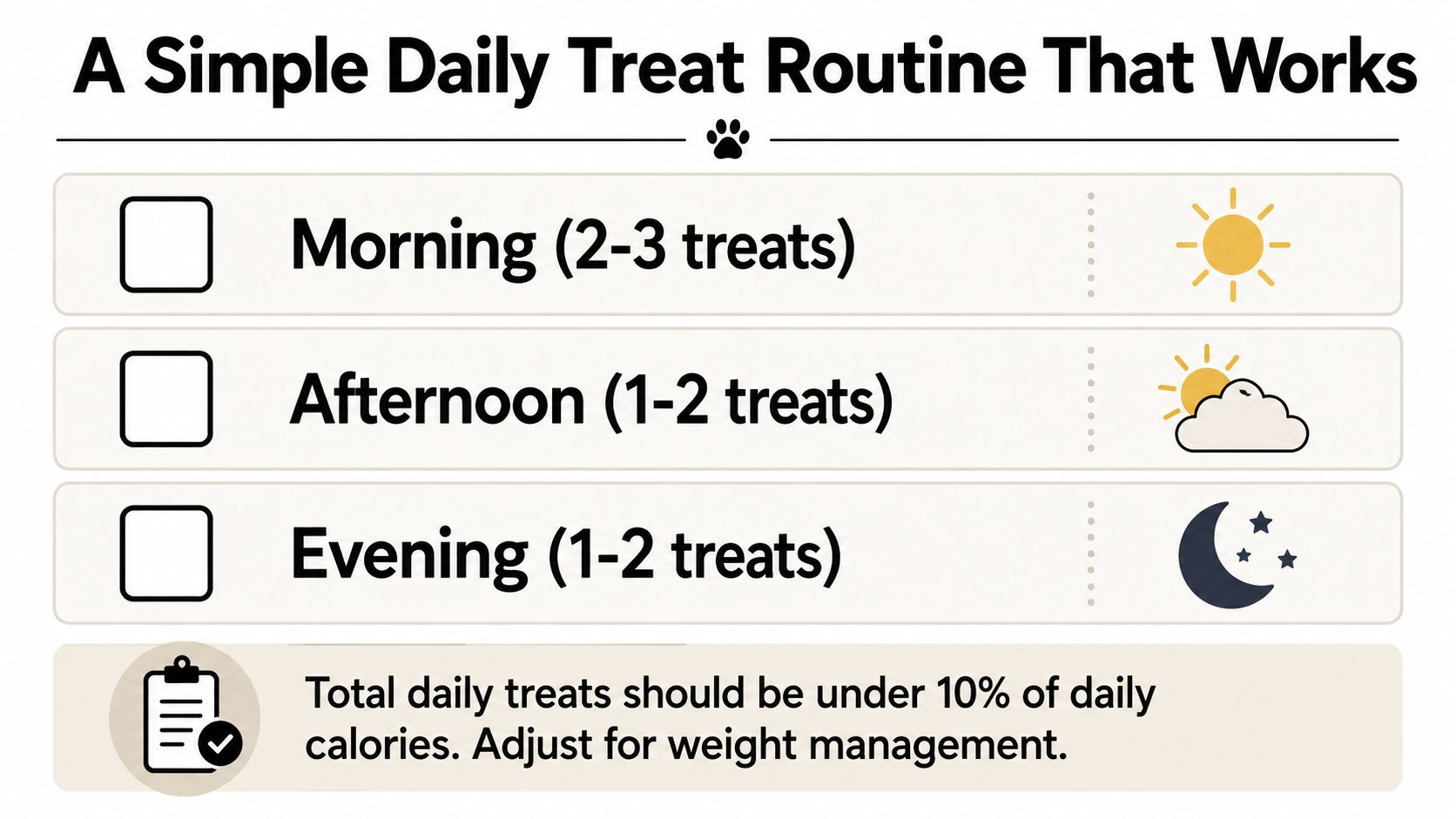
Treats work best when they're scheduled before your cat starts campaigning. Divide the daily calorie allowance into three windows, then keep the combined total under the established ceiling.
- Morning: Reserve a small portion for calm handling, grooming, or a post-breakfast reward.
- Afternoon: Use a higher-value soft treat for clicker training, play, or medication when needed.
- Evening: Keep the bonding ritual, but use a measured amount of a lower-calorie option.
The exact piece count depends on the label. A cat with an 18-calorie budget might receive several 1-calorie pieces across the day, while a 3-calorie chew consumes the budget faster. Don't copy a serving suggestion without checking whether it fits your cat's total intake.
The fridge checklist
Write down the number that applies to your cat and treat brand. Then follow the same routine every day.
- Calculate: Set the treat ceiling at no more than 10% of daily calories.
- Read: Find the kcal-per-piece value on the package.
- Pre-portion: Set aside the full daily amount before the first reward.
- Count everything: Include dental products, purées, medication carriers, and scraps.
- Adjust meals: If treats increase, adjust the balanced food under your feeding plan.
- Check monthly: Weigh your cat and reassess begging, appetite, stool, and body shape.
The best treat routine is predictable enough for you to follow and small enough to protect the main diet.
Joyfull offers cat wellness products, including treats and supplements designed to fit into a measured care routine rather than replace balanced food. Visit Joyfull to explore options, then choose the product and portion that match your cat's calorie budget.
0 comments