


When you get right down to it, the healthiest dog treats are the ones made with high-quality, recognizable ingredients—things like real meat and whole vegetables. They skip the artificial junk and mystery fillers. A truly healthy treat is all about balanced nutrition that fits your specific dog's needs, not just a slick marketing campaign.
What Makes a Dog Treat Truly Healthy?
Walking down the pet food aisle can be dizzying, with all the bright packaging and bold claims. But picking a healthy treat doesn't have to be complicated. The best approach is to think about it just like you do when grocery shopping for yourself. You'd choose whole, minimally processed foods over something with a long list of chemicals you can't pronounce, right? That same logic is the key to finding the best treats for your dog.
It's clear that pet owners are catching on. The demand for natural, wholesome options is completely changing the game. The natural dog treats market hit USD 7.84 billion in 2023 and is on track to reach a massive USD 14.03 billion by 2030. That's a huge jump, growing at 12.3% every year, which just goes to show how much people now care about quality and transparency.
To really get a handle on this, it helps to have a good foundation in understanding dog nutrition as a whole. Once you know the basics, you can look past the fancy labels and see what you're really giving your best friend.
This simple infographic breaks it down into the three pillars of a healthy treat: quality ingredients, balanced nutrition, and vet approval.
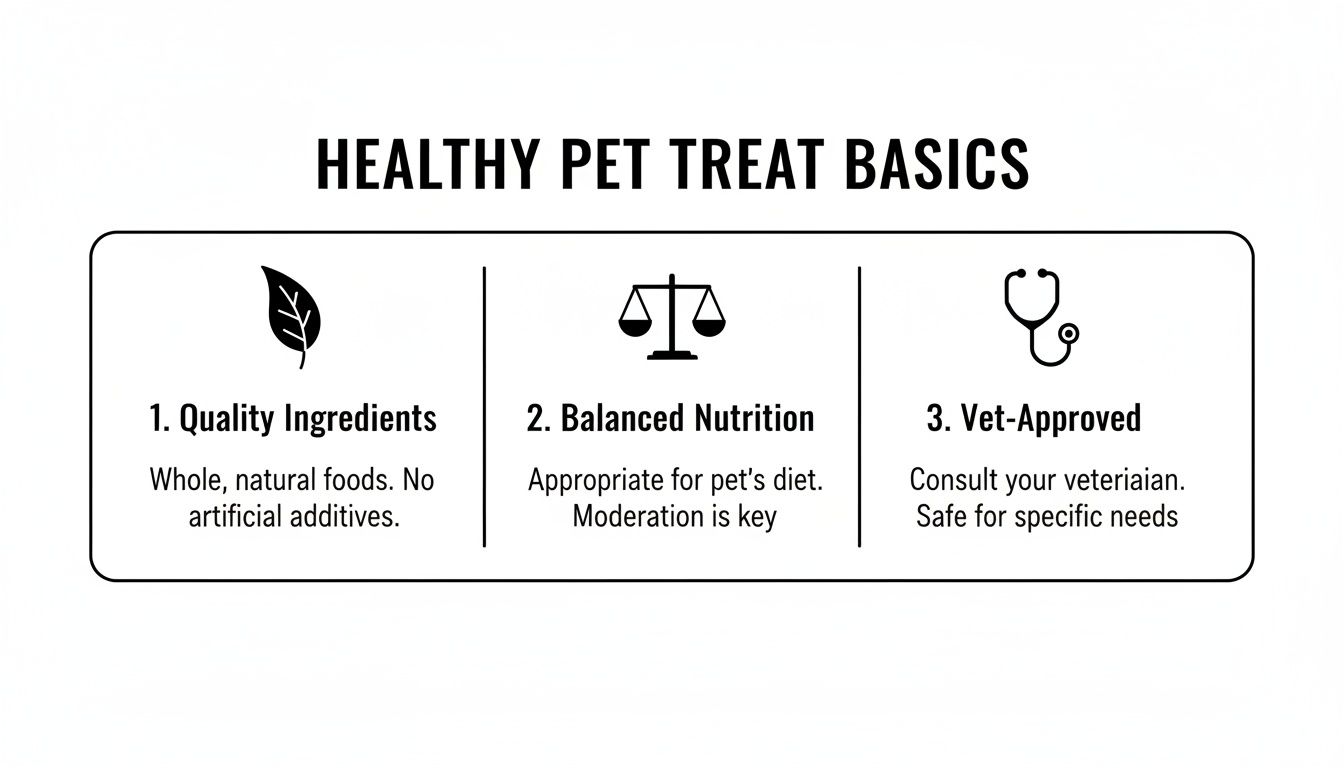
Think of these three elements as a team. They have to work together to create a snack that’s actually good for your dog. A healthy treat isn't just about what's inside; it's about a formula that genuinely adds to your dog's well-being and gets the thumbs-up from veterinary pros. This simple framework helps you shift from being just another customer to a true advocate for your dog's health.
How to Decode an Ingredient Label
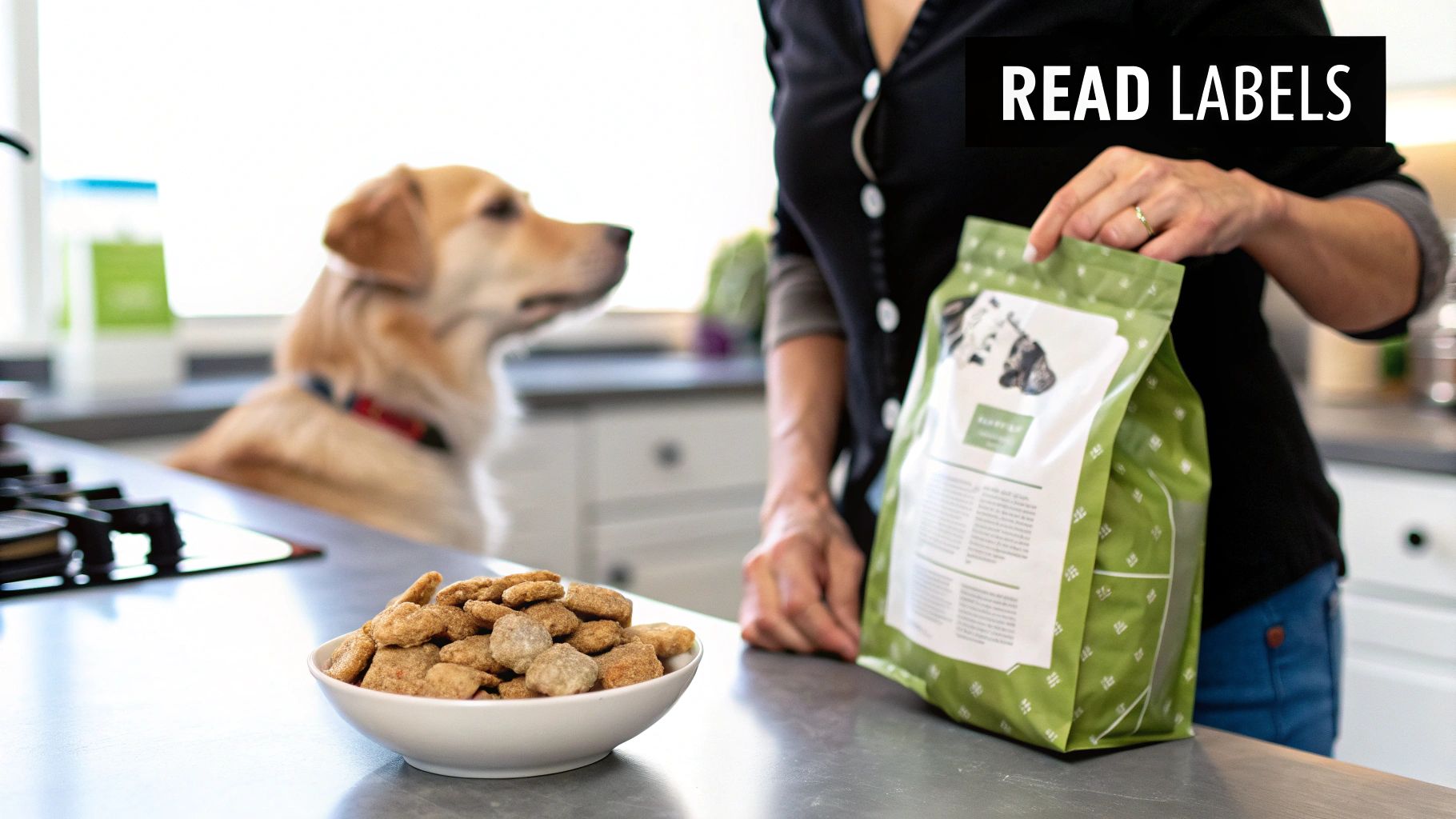
Let's be honest—flipping over a bag of dog treats to read the ingredients can feel like trying to decipher a secret code. The list is often long, confusing, and packed with terms that don't sound anything like real food.
But here’s the good news: once you learn what to look for, that label transforms from a puzzle into your best tool for keeping your dog healthy. The trick is to think like a food detective. Your mission is to spot the good stuff and instantly recognize the junk.
Green Flags: Wholesome Ingredients to Look For
Green flags are the heroes on an ingredient list. These are the whole, recognizable foods that pack a real nutritional punch. When you spot these ingredients, especially near the top, you know you're on the right track.
Keep in mind, ingredients are always listed by weight, from heaviest to lightest, before they're cooked. This means the first few ingredients make up the bulk of the treat, so you want to see high-quality protein leading the charge.
Here's what you should be looking for:
- Whole Meat Proteins: Specific, named meats like "chicken," "beef," "salmon," or "lamb" should be the very first thing you see. This signals a high-quality, real-meat source, not some mystery "meal."
- Nutrient-Rich Vegetables: Veggies like sweet potatoes, carrots, peas, and pumpkin are fantastic additions. They deliver essential vitamins, minerals, and fiber to support good digestion and overall health.
- Beneficial Fruits: Things like blueberries, cranberries, and apples (just not the seeds!) are excellent sources of antioxidants. You just need to be sure the recipe is free from toxic fruits like grapes.
- Healthy Fats: Look for sources like flaxseed or salmon oil. These are rich in Omega-3 fatty acids, which are amazing for promoting a shiny coat and healthy skin.
Think of it this way: if an ingredient sounds like something you'd find in your own healthy kitchen, that's a huge green flag. It’s a sign that the company, like us here at JoyFull, puts real, whole-food nutrition first.
Red Flags: Problematic Ingredients to Avoid
Just as important as spotting the good stuff is knowing how to identify the bad. Red flags are the deal-breakers—the ingredients that offer little to no nutritional value and could even be harmful to your dog.
Many of these are just cheap fillers or synthetic chemicals used to make treats last longer or look prettier, but they do nothing for your dog's well-being. Getting good at spotting these is a major step up in your pet parent game. For a deeper dive, our guide on how to read a dog food label has even more great tips.
A simple rule of thumb: If you can't easily pronounce an ingredient or picture it as a real food, it's worth a second look. The best dog treats don't need a long list of chemicals to be delicious.
Here are the top red flags to watch out for:
- Vague Meat Terms: Steer clear of non-specific phrases like "meat by-products" or "animal meal." These are intentionally vague terms that can hide a mix of low-quality, rendered sources. You deserve to know what your dog is eating.
- Artificial Preservatives: Chemicals like BHA, BHT, and ethoxyquin are used to extend shelf life but have been linked to some serious health concerns. Natural preservatives like mixed tocopherols (a form of Vitamin E) are a much safer bet.
- Artificial Colors and Flavors: Dyes like Red 40 or Blue 2 serve absolutely no purpose other than to make the treat look more appealing to you. Your dog doesn't care about the color, and these additives can trigger allergic reactions in sensitive pups.
- Harmful Sweeteners: Xylitol is extremely toxic to dogs and must be avoided at all costs. Other sweeteners like corn syrup or sucrose just add empty calories and can contribute to weight gain.
- Unnecessary Fillers: Ingredients like corn, wheat, and soy are often used as cheap fillers to bulk up a product. While not harmful to every dog, they offer limited nutritional value and are common allergens for many.
To make this even easier, here's a quick cheat sheet you can reference next time you're shopping.
Ingredient Cheat Sheet: Green Flags vs. Red Flags
| Green Flag Ingredient (Look For) | Why It's Healthy | Red Flag Ingredient (Avoid) | Why It's Harmful |
|---|---|---|---|
| Chicken, Beef, Lamb, Salmon | Excellent source of high-quality, digestible protein for muscle health. | Meat By-Products, Animal Meal | Vague, low-quality sources that can include rendered, indigestible parts. |
| Sweet Potato, Pumpkin, Carrots | Packed with fiber, vitamins (like Vitamin A), and minerals for digestive and immune health. | Corn, Wheat, Soy | Common allergens and cheap fillers that offer little nutritional value. |
| Blueberries, Cranberries | Rich in antioxidants that help fight cellular damage and support urinary tract health. | Artificial Colors (Red 40, etc.) | Unnecessary chemical dyes linked to hyperactivity and allergic reactions. |
| Flaxseed, Salmon Oil | Provides Omega-3 fatty acids for a healthy coat, skin, and joint function. | BHA, BHT, Ethoxyquin | Artificial preservatives linked to potential long-term health issues. |
| Mixed Tocopherols (Vitamin E) | A natural, safe preservative that also provides antioxidant benefits. | Xylitol, Corn Syrup, Sucrose | Xylitol is highly toxic; other sugars add empty calories and spike blood sugar. |
By keeping this simple "green flag, red flag" system in mind, you can quickly size up any treat on the shelf. This skill helps you look right past the clever marketing and focus on what truly matters: giving your best friend snacks that are safe, nutritious, and genuinely good for them.
Matching Treats to Your Dog's Life Stage
Just like people have different dietary needs at different ages, so do our dogs. The perfect treat for a rambunctious puppy isn't necessarily the best choice for a mellow senior.
Think of it this way: you wouldn't pack the same lunch for a toddler that you would for a marathon runner or a grandparent. Each one has unique needs for energy, growth, and maintenance. Applying that same mindset to your dog’s snacks is a simple, powerful way to support their long-term health.
This isn’t about a one-size-fits-all approach. It’s about recognizing that your dog’s requirements for calories, key nutrients, and even treat texture change dramatically as they move from their first wobbly steps to their golden years.
Treats for Energetic Puppies
Puppies are pure potential, little balls of energy whose bodies are working overtime. They’re building strong bones, developing organs, and fueling a brain that's learning about the world at an incredible pace. Their treats should support all that hard work.
The goal is to find snacks that complement this massive growth spurt. Look for treats that are a bit softer and smaller, making them easier on delicate puppy teeth and safer to swallow. But what's inside is what really counts.
Here's what to look for in a great puppy treat:
- DHA for Brain Development: This powerhouse omega-3 fatty acid is a game-changer for cognitive function and eye health. Treats with sources like salmon oil give your little genius a valuable head start.
- High-Quality Protein: Protein is the essential building block for all that new muscle. Look for real, named meats like chicken or lamb high up on the ingredient list.
- Easily Digestible Ingredients: A puppy's digestive system is still getting up to speed. Simple, whole-food ingredients are much gentler on their developing tummies.
Fueling Active Adult Dogs
Once your dog hits adulthood, the focus shifts from growth to maintenance. Now, it's all about sustaining energy for their daily adventures, keeping them at a healthy weight, and promoting overall vitality—without piling on empty calories.
This is where your dog's size and activity level really come into play. A Border Collie who spends her weekends hiking has vastly different needs than a Basset Hound whose main hobby is napping. The trick is to match the treat's calorie count to your dog's lifestyle.
For adult dogs, it’s all about balance. A treat should offer real nutritional benefits that add to their main diet, not disrupt it with filler and unhealthy fats.
Functional treats can be fantastic for adult dogs. Think dental chews that help scrape away plaque or treats fortified with omega fatty acids that give their skin and coat a healthy shine. These go beyond just being a tasty reward.
Supporting Wise Senior Dogs
As our dogs enter their senior years, things naturally start to slow down. Their metabolism isn't what it used to be, and their bodies start showing the beautiful signs of a life well-lived. Their treats need to adapt to these changes, focusing on comfort, mobility, and keeping them lean.
Senior dogs are often less active, so they need fewer calories. Extra weight can put a lot of strain on aging joints. Softer treats are also a kind gesture for older dogs who might have sensitive teeth or sore gums.
Keep an eye out for these ingredients to support your senior:
- Joint Support: Ingredients like glucosamine and chondroitin are famous for a reason. They help support cartilage and joint health, keeping your old friend moving more comfortably.
- Lower Calorie Count: To match their slower metabolism, choose treats that are lower in fat and overall calories.
- Anti-Inflammatory Properties: Ingredients rich in antioxidants and omega-3s (like those found in fish oil) can help manage the low-grade inflammation that often comes with aging.
By thoughtfully picking treats that match your dog's life stage, you turn a simple snack into a powerful tool for supporting their health, from their chaotic puppy days all the way through their sweet golden years.
Choosing Treats for Dogs with Sensitivities
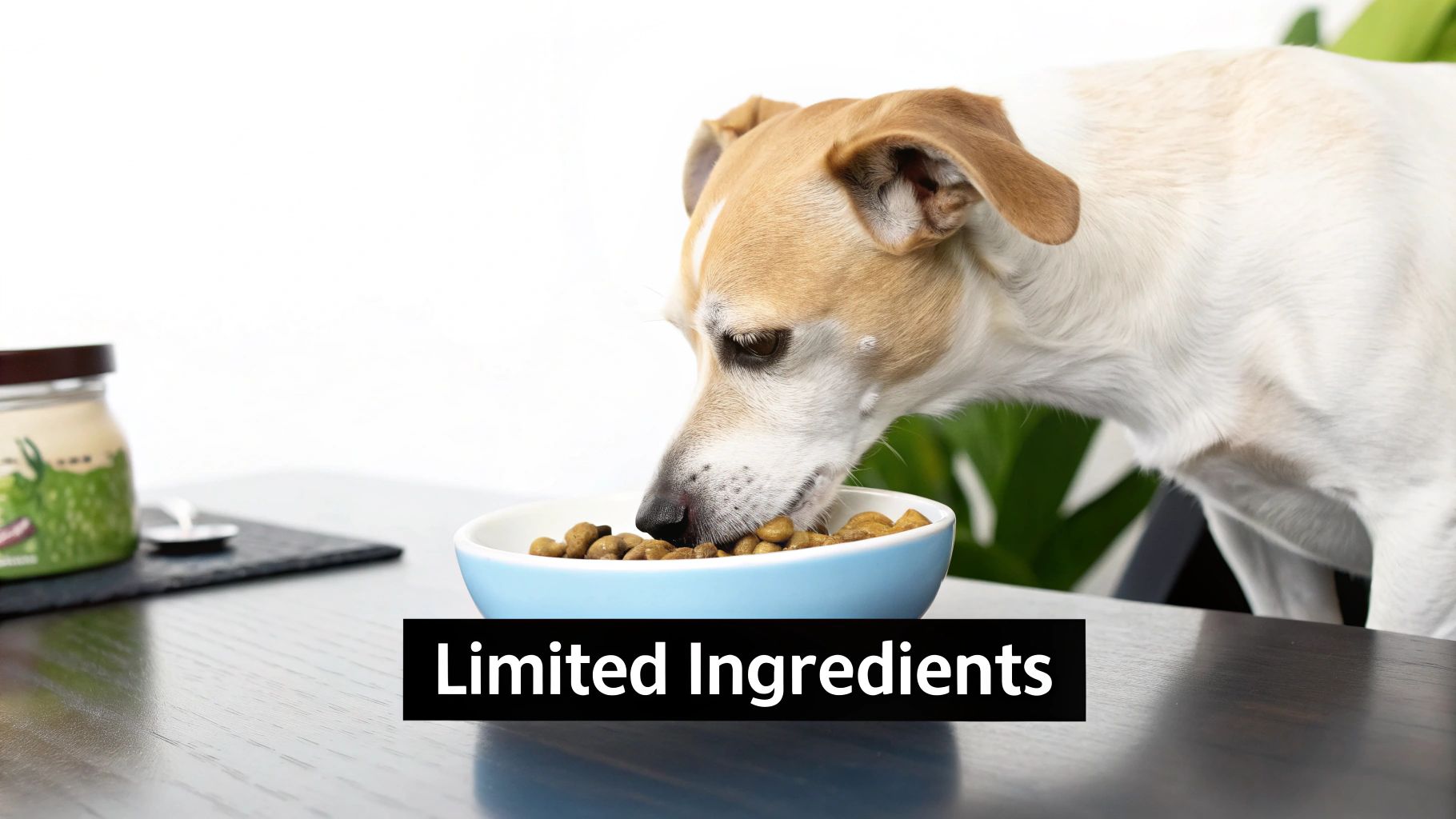
If your dog is constantly itching, licking their paws, or dealing with an upset stomach, you know how maddening food sensitivities can be. Treat time is supposed to be fun, but it can quickly become a source of worry when you're not sure what’s causing the problem.
The tricky part is that a perfectly healthy ingredient for one dog can be a major trigger for another. This is where you have to get a little more strategic. Just like some people have trouble with gluten or dairy, certain dogs just don't do well with common proteins and grains found in many snacks.
Figuring this out is the first step. You basically have to become a detective for your dog's diet, pinpointing the culprits and swapping them for safe, delicious alternatives.
Identifying Common Allergy Triggers
When it comes to adverse food reactions in dogs, a few usual suspects tend to pop up again and again. While any ingredient can cause an issue, veterinary data consistently points to a handful of common triggers. Ironically, they're often the most common ingredients in commercial dog foods.
The most frequent culprits behind food sensitivities are:
- Common Proteins: Beef and chicken are at the very top of the list. They are so widely used in dog food and treats that dogs have constant exposure, which can increase the odds of developing a sensitivity over time.
- Dairy Products: Many dogs are essentially lactose intolerant. They don't have enough of the enzyme needed to break down milk sugars, which often leads to an upset stomach.
- Wheat and Corn: These grains are frequently used as inexpensive fillers and can cause reactions in some dogs, showing up as itchy skin or digestive upset.
Keep an eye out for the signs. If you notice your dog gets itchy skin, chronic ear infections, or has gas or loose stools after eating certain treats, that’s a big clue that an ingredient might be to blame.
The Power of Limited Ingredient Diets
This is where a Limited Ingredient Diet (LID) can be a real lifesaver. Think of it as a "less is more" approach to your dog's snacks. LID treats are made with just one source of animal protein and a few other simple, whole-food ingredients.
The beauty of an LID treat is its simplicity. By intentionally keeping the ingredient list short, you dramatically lower the chances of including a trigger. It makes it so much easier to figure out what works for your dog.
For instance, a standard treat might list chicken, beef broth, wheat flour, and corn. A comparable LID treat might just contain duck and sweet potato. This simple swap removes all the guesswork and gives your dog’s system a break from potential irritants, making it one of the healthiest dog treat options for sensitive pups.
Exploring Novel Proteins
For dogs who react to the usual suspects like chicken or beef, novel proteins can be a game-changer. A "novel protein" is just that—a protein source your dog has never had before.
Because their immune system hasn't encountered it, the chance of an adverse reaction is incredibly low. It’s like hitting the reset button on their diet. Some great novel proteins to try include:
- Duck
- Venison
- Rabbit
- Lamb
- Salmon
Switching to treats made with these proteins can bring almost immediate relief for many dogs. It means you can go back to rewarding and bonding with your pup, minus the fear of causing a miserable flare-up. If this sounds like your dog, you can learn more in our detailed guide on the best dog treats for a sensitive stomach.
The 10 Percent Rule: Your Golden Ticket to Healthy Treating
Even the best-intentioned treat-giving can go sideways. If you give too many, even the healthiest snacks can pack on the pounds. This is where the single most important guideline comes in, a principle every veterinarian will stand by: the 10 percent rule.
It’s a simple concept but a powerful one. The rule states that treats should make up no more than 10% of your dog's total daily calories. Think of it like this: for us, it's the difference between a main meal and a dessert. Treats are the fun stuff, the little extras, not the foundation of a healthy diet.
Sticking to this guideline is the best way to prevent the kind of gradual weight gain that can sneak up on you. With over 56% of dogs in the U.S. now considered overweight or obese, it’s clear that extra calories from treats are a big part of the problem. Following this rule ensures treats stay a joyful part of your bond, not a risk to their health.
How to Calculate Your Dog’s Daily Treat Allowance
So, how do you actually use this rule? It all starts with knowing how many calories your dog needs in a day. The best way to get a precise number is always to ask your vet, but you can get a pretty solid estimate with a quick calculation.
First, you'll need your dog's weight in kilograms (kg). If you weigh your dog in pounds, just divide that number by 2.2. With that, you can figure out their Resting Energy Requirement (RER)—the basic amount of calories they need to run their body's systems, even when just snoozing on the couch.
The Basic RER Formula:
70 x (your dog's weight in kg)^0.75 = RER Calories
Once you have that baseline number, you'll multiply it by a factor that accounts for their lifestyle. For most spayed or neutered adult dogs, that factor is 1.6. So, the complete formula looks like this: RER x 1.6 = Total Daily Calories.
Let's Break It Down with an Example
Okay, let's make this real. Imagine you have a 40-pound dog who loves their snacks.
- Convert Pounds to Kilograms: 40 lbs / 2.2 = 18.2 kg
- Calculate RER: 70 x (18.2)^0.75 = 616 calories (this is their baseline energy need)
- Find Total Daily Needs: 616 x 1.6 = 986 calories per day
- Figure Out the Treat Allowance: 10% of 986 is 98.6 calories
And there you have it. Your 40-pound dog can have about 99 calories from treats each day without tipping the scales. Now you can flip over that bag of treats, check the calorie count, and know exactly how many they can have. It takes the guesswork out of treating and makes it a simple, healthy way to show your dog some love.
Simple Vet-Approved DIY Dog Treat Recipes
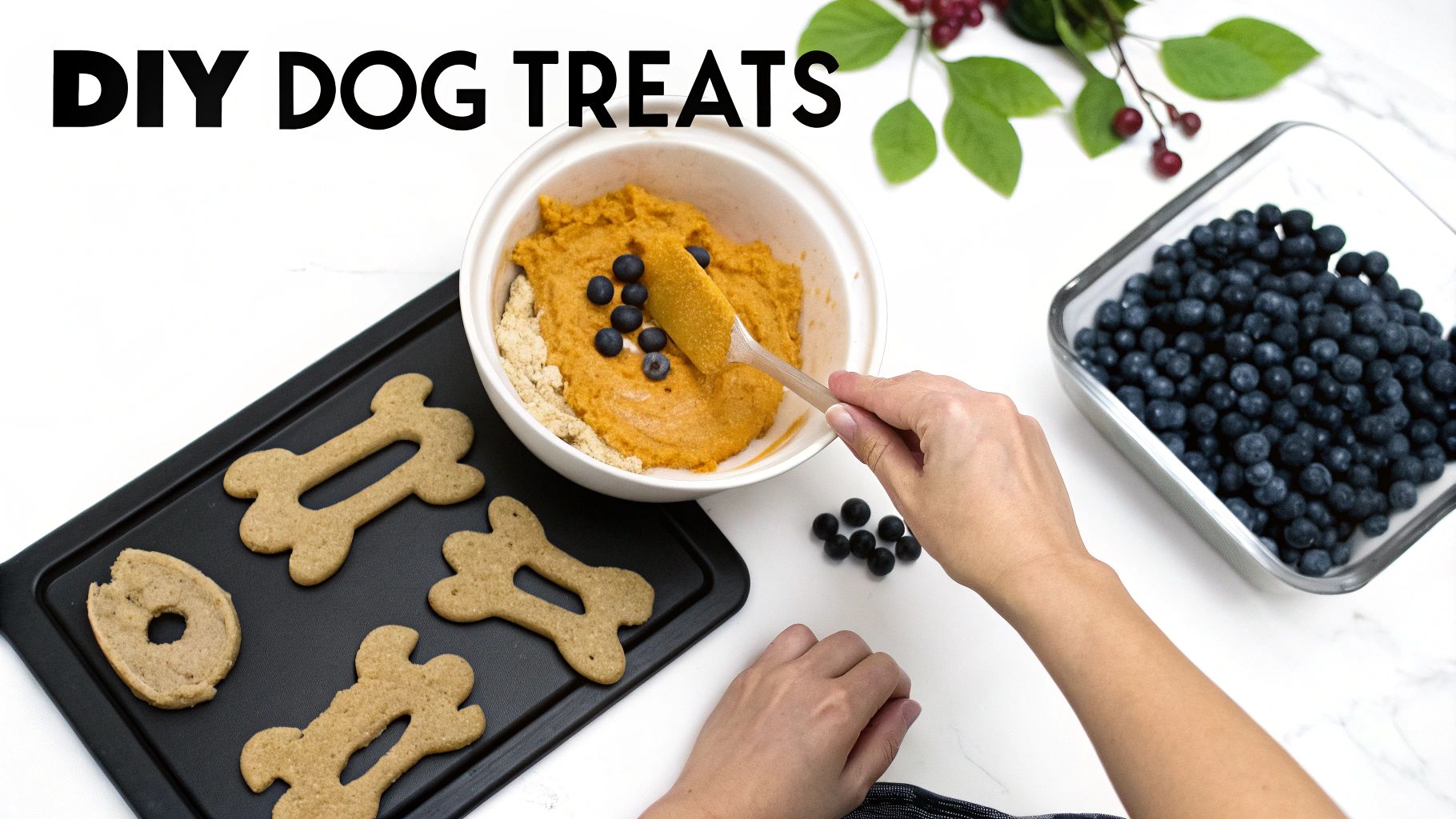
Ready to put on the chef's hat for your dog? Making treats at home is one of the best ways to guarantee your pup is getting top-notch ingredients. You get total control over what goes in, which means no mystery fillers, sneaky artificial additives, or questionable proteins.
This hands-on approach is the perfect way to practice what we've been talking about. You'll be using whole, recognizable foods to create snacks that are both delicious and genuinely good for them. It’s also a great way to save a little money and, of course, strengthen that special bond you have with your dog.
If you enjoy getting creative in the kitchen, exploring easy homemade dog treat recipes is a fantastic way to ensure your dog is snacking healthy. To get you started, here are a couple of my favorite simple, vet-approved recipes.
Pumpkin and Peanut Butter Power Bites
This one's a classic for a reason—most dogs absolutely love this combination, and it happens to be packed with good stuff. Pumpkin is a fantastic source of fiber, which is great for their digestion, while a good peanut butter adds healthy fats and a boost of protein.
Crucial Safety Note: This is non-negotiable. ALWAYS use peanut butter that is 100% free of xylitol. This artificial sweetener is extremely toxic to dogs and can be fatal. Double-check the label for xylitol, which is sometimes listed as "birch sugar."
Here’s what you’ll need:
- 1 cup of 100% pure pumpkin purée (the plain stuff, not pumpkin pie filling)
- ½ cup of xylitol-free peanut butter (creamy or crunchy works fine)
- 2 large eggs
- 2 ½ cups of whole wheat flour (you can swap for oat flour if your dog needs a grain-free option)
This recipe is wonderfully straightforward. It sidesteps all the common red flags like artificial preservatives and fillers. Instead, it relies on whole-food ingredients that offer real health benefits. It's a perfect example of how the healthiest dog treats are often the simplest.
Step-by-Step Instructions:
- First things first, preheat your oven to 350°F (175°C).
- In a large bowl, whisk the pumpkin purée, peanut butter, and eggs together until everything is nicely combined.
- Slowly add the flour and mix until a stiff dough starts to form. You might need to get your hands in there at the end to bring it all together.
- On a lightly floured surface, roll the dough out until it's about ¼-inch thick.
- Use your favorite cookie cutters to cut out shapes and place them on a baking sheet. No need to grease it.
- Bake for 20-25 minutes, or until the edges just start to turn golden brown.
- Let the treats cool completely on a wire rack before treating your pup. You can store them in an airtight container in the fridge for up to two weeks.
Blueberry and Oat Frozen Delights
Looking for a refreshing treat, especially when the weather warms up? These frozen bites are incredibly easy, and best of all, there's no baking involved. Blueberries are loaded with antioxidants and oats provide soluble fiber, making this a healthy and cooling snack.
Ingredients You Will Need:
- 1 cup of plain, unsweetened yogurt (again, check to be sure it's xylitol-free)
- ½ cup of fresh or frozen blueberries
- ¼ cup of rolled oats (uncooked)
- 1 tablespoon of water (only if needed to help it blend)
How to Make Them:
- Toss the yogurt, blueberries, and oats into a blender.
- Blend until the mixture is smooth. If it seems a little too thick to blend well, add that tablespoon of water.
- Carefully pour the smoothie-like mixture into a silicone mold or a regular ice cube tray.
- Pop it in the freezer for at least 4 hours, or until the treats are frozen solid.
- Once they're firm, you can pop them out and give one to your dog for a cool reward.
Store these tasty bites in a freezer-safe bag for up to one month. And if you're looking for more inspiration, be sure to check out our other healthy dog treat recipes you can try at home.
Got Questions About Dog Treats? We’ve Got Answers.
It's totally normal to still have a few questions floating around. When it comes to our dogs, we all want to get it right. Let’s dive into some of the most common things pet parents wonder about when picking out the perfect, healthy dog treat.
Here are some clear, straightforward answers to help you feel confident in your choices.
Are Grain-Free Dog Treats Actually Better?
"Grain-free" has become a huge buzzword in the pet food aisle, but it's not automatically a synonym for "healthier." For a dog with a true grain allergy or sensitivity, then yes, grain-free options are a game-changer. But for most dogs, healthy whole grains like brown rice or oats are perfectly fine and can even be a great source of nutrients.
The real story is in the entire ingredient list, not just what's missing. A lot of grain-free treats just swap grains for other fillers like potato starch or pea flour. So, instead of getting hung up on that one label, focus on finding treats with high-quality protein and simple, whole-food ingredients you can actually recognize.
How Can I Tell If My Dog Has a Food Allergy?
Catching a food allergy or sensitivity early can save your dog a world of discomfort. Interestingly, the most common signs aren't always tummy troubles, so you have to look at the whole picture.
Keep an eye out for these classic symptoms:
- Persistent Itchy Skin: This is the big one. If your dog is constantly scratching, licking, or chewing—especially at their paws, ears, or belly—a food sensitivity could be the culprit.
- Chronic Ear Infections: Do you feel like you're always dealing with red, smelly, or painful ear infections? An underlying allergy is often the trigger.
- Digestive Upset: Of course, the more obvious signs like frequent gas, vomiting, or diarrhea are also red flags for a food intolerance.
If you spot any of these signs, particularly after introducing a new treat, it's a good idea to stop giving it to them. The best next step is always a chat with your vet to get a proper diagnosis and a solid plan.
Are Dental Chews a Healthy Treat?
Absolutely! The good ones are, at least. Many dental chews are fantastic "functional" treats, meaning they do more than just taste good. They satisfy that primal need to chew while also helping to clean your dog’s teeth. The chewing action itself helps scrape away plaque and reduce tartar buildup, which is a big win for their oral health.
To make sure you're picking a good one, look for products with the Veterinary Oral Health Council (VOHC) Seal of Acceptance. This seal is a big deal; it means the product has been scientifically proven to work. As always, scan the ingredient list for any artificial junk and pick a size that’s right for your dog to avoid a choking hazard. And don't forget—those calories count toward their daily 10% treat allowance!
A VOHC-approved dental chew is a great way to support your dog’s oral health between professional cleanings. Think of it as a toothbrush they can eat.
What Human Foods Are Safe for Dogs?
Plenty of fresh foods right out of your fridge can make excellent, low-calorie dog treats. The key is to serve them plain—no salt, sugar, butter, or seasonings.
Here are a few safe and healthy options:
- Carrot sticks
- Green beans
- Apple slices (just be sure to remove the seeds and core)
- Blueberries
- Plain, cooked sweet potato
On the flip side, you have to be incredibly careful about foods that are toxic to dogs. Never, ever give your dog grapes, raisins, onions, garlic, chocolate, or anything made with the artificial sweetener xylitol.
At JoyFull, we build our treats on these very same principles. We stick to clean, simple ingredients and high-quality proteins to make snacks that you can feel good about giving. Ready to see the difference? Explore our better-for-you treats.
0 comments