A Pet Parent's Guide to Genuinely Healthful Cat Food
Let's be honest, walking down the pet food aisle can feel overwhelming. The shelves are packed with bags covered in flashy promises and pictures of happy, healthy cats. But what really makes a cat food healthful?
It's not about the clever marketing. It all comes down to a simple, fundamental biological fact: cats are obligate carnivores.
This means their bodies are hardwired to thrive on a diet made almost entirely of meat. A cat's digestive system is short, acidic, and perfectly tuned to break down animal protein and fat. Unlike us or even dogs, they just aren't built to get what they need from plants.
Feeding a Tiny Predator
Think of your cat as a finely tuned athlete. You wouldn't fuel a sprinter with a diet of junk food and expect them to win races, right? The same logic applies here. Your cat needs the right kind of fuel to power everything from a lightning-fast pounce on a feather toy to simply maintaining a soft, glossy coat.
When we talk about a truly healthful diet, we're talking about providing the specific building blocks their bodies crave. High-quality, animal-based proteins deliver the essential amino acids they need to build and maintain lean muscle, support healthy organs, and just feel their best every single day.
At its core, the best food for a cat is one that closely mimics what their wild ancestors ate. That means a diet high in protein, moderate in fat, and with very, very few carbs.
The Cornerstones of a Great Cat Food
So, what does this actually look like when you're reading a label? A genuinely healthful meal is built on a few non-negotiable pillars. Getting these right is the first step to cutting through the noise and choosing a food that truly supports your cat's long-term well-being.
Here are the key elements that separate a filler-packed food from a nourishing one:
- High-Quality Animal Protein: This needs to be the #1 ingredient. Look for specific, named sources like "chicken," "turkey," or "salmon"—not vague terms like "meat by-products."
- Essential Fatty Acids: Healthy fats like Omega-3 and Omega-6, often from sources like fish oil or chicken fat, are non-negotiable for a healthy coat, supple skin, and even joint health.
- Plenty of Moisture: Cats naturally have a low thirst drive and evolved to get most of their water from their prey. Food with high moisture content, especially wet food, is crucial for supporting their kidney and urinary tract health.
How to Read an Ingredient Label Like an Expert
The ingredient panel is the most honest part of any cat food bag. Forget the flashy pictures and clever marketing on the front—the back is where the real story is. Learning to decode this list is the single most important skill you can have when searching for truly healthful cat food.
Think of it like reading the credits of a movie. The main stars, the most important players, are always listed first. By law, ingredients have to be listed in descending order by their pre-cooking weight. This means the first five to seven ingredients make up the bulk of the food, and they should tell you everything you need to know.
Spotting the Stars of the Show
The very first ingredient should always be a high-quality, named animal protein. For an obligate carnivore, this is non-negotiable. Vague, generic terms are an immediate red flag.
Here's what you want to see:
- Specific, named meats: Look for clear terms like "deboned chicken," "turkey," "salmon," or "lamb." You know exactly what you're getting.
- Named meat meals: Don't be afraid of "chicken meal" or "turkey meal." A "meal" is just the meat with the water and fat rendered out, which creates a highly concentrated and excellent source of protein.
And here's what to avoid:
- Vague "meat" terms: Ingredients like "meat by-products," "animal digest," or "poultry by-product meal" are huge warning signs. You have no idea what animal—or what parts of the animal—are in there.
- Carbohydrates in the top spot: If the first ingredient is corn, wheat, soy, or potatoes, put the bag down. You're looking at a plant-based food pretending to be a meal fit for a carnivore.
This decision tree helps visualize how choosing the right ingredients fuels your cat's health, from building muscle to boosting their energy levels.
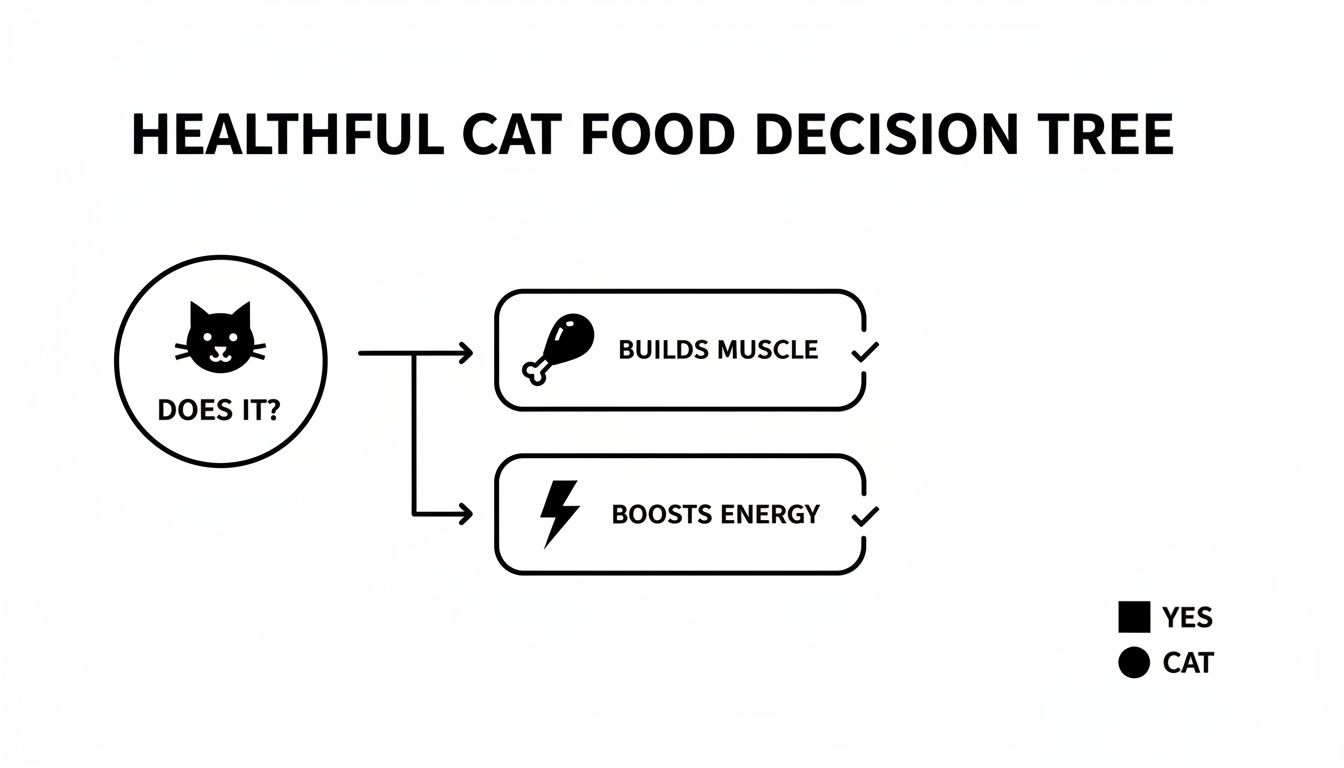
As you can see, a healthful choice always starts with high-quality protein to support your cat's core biological needs.
Identifying Unnecessary Fillers
After checking the first few ingredients, scan the rest of the list. This is where you’ll see the brand's true colors. Many companies use cheap fillers to bulk up their food and cut costs, but these ingredients offer little to no nutritional value for your cat and can even cause digestive upset.
Common fillers to watch out for include:
- Corn and corn gluten meal: A cheap, low-grade protein source that’s tough for cats to digest.
- Wheat and soy: These are common allergens for cats and provide none of the animal-based nutrition they actually need.
- Cellulose: This is basically just wood pulp or plant fiber used to add bulk. It has zero nutritional benefit.
- Artificial additives: Chemical preservatives like BHA, BHT, and ethoxyquin, plus artificial colors and flavors, have no business being in your cat's food.
Key Takeaway: A short, easy-to-understand ingredient list is almost always a good sign. If it’s a mile long and filled with chemical-sounding names and plant-based fillers, it’s probably not the best choice for your tiny predator.
A Tale of Two Labels
Let's put this into practice by comparing two hypothetical ingredient lists. The difference is night and day, and it instantly shows you which one is a healthful cat food and which is just filler-heavy kibble.
Here’s a side-by-side look at what a good label looks like versus a bad one.
Healthful vs. Filler-Heavy Cat Food Ingredient Labels
| Ingredient Rank | Healthful Cat Food Example (What to Look For) | Filler-Heavy Cat Food Example (What to Avoid) |
|---|---|---|
| 1st Ingredient | Deboned Chicken | Corn Gluten Meal |
| 2nd Ingredient | Chicken Meal | Poultry By-Product Meal |
| 3rd Ingredient | Turkey Meal | Brewers Rice |
| 4th Ingredient | Chicken Fat | Soybean Meal |
| 5th Ingredient | Peas | Animal Fat Preserved with BHA |
The comparison makes it obvious. The healthful option proudly leads with three distinct, high-quality animal proteins. In stark contrast, the filler-heavy food starts with a cheap carbohydrate and follows it up with a vague, low-quality protein source you can’t even identify.
This push for clean, transparent labels isn't just a small trend; it's a movement that's reshaping the entire pet food world. Knowing what’s in your cat’s bowl is the first step. To build on this, check out our guide on the best ingredients for cat food and why they’re so important. For a broader look at label reading that applies to all kinds of products, this resource on how to read food labels like a pro is a great next step.
Choosing Between Wet and Dry Cat Food
The "wet food vs. dry food" debate is one of the oldest and most common conversations you'll have as a cat owner. And for good reason—it’s a fundamental choice. Each has its place, and the best plan isn’t about picking a side, but about understanding what your individual cat needs to thrive.
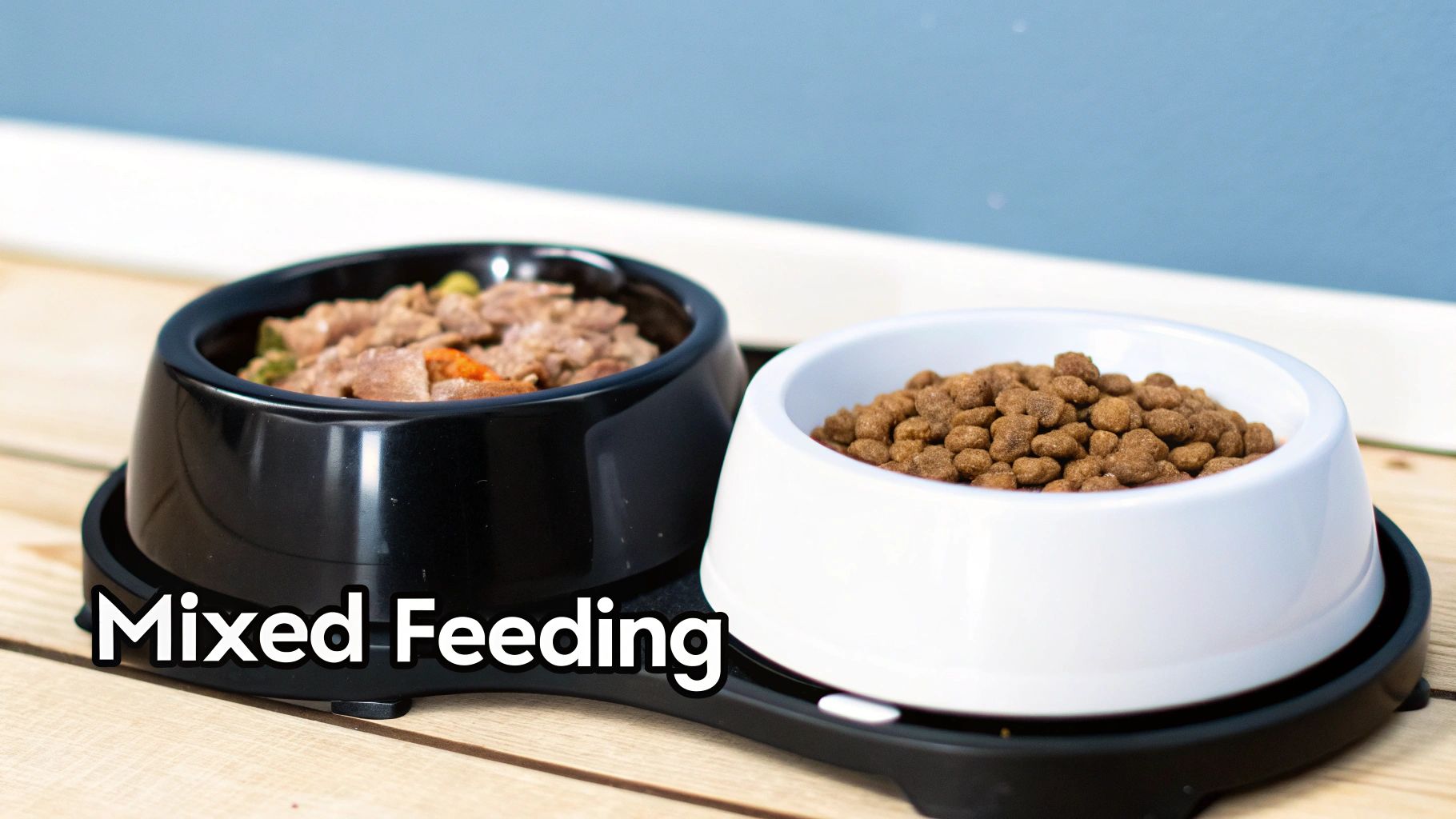
This isn't just about whether your cat prefers pâté or crunch. This decision affects hydration, calorie count, and even dental health. Let's look at what each type of food brings to the table.
The Case for Wet Food: Hydration is King
If wet food has one superpower, it's moisture. With a water content of around 75-85%, it's a game-changer for hydration.
This is critical because cats have a naturally low thirst drive. Think about their wild ancestors—desert hunters who got most of their water directly from their prey. That instinct is still very much alive in our house cats. A diet of only dry kibble (which has about 10% moisture) can easily lead to a state of low-grade, chronic dehydration, putting a real strain on their kidneys and urinary tract over the years.
A consistent diet of high-moisture wet food is one of the most effective ways to support long-term urinary tract and kidney health, closely mimicking the natural hydration cats would get from their prey in the wild.
Beyond just water, wet food often has a better nutritional profile for a carnivore. It tends to be higher in protein and lower in carbs compared to kibble, which is exactly what a cat’s body is designed for. Plus, its soft texture is a blessing for seniors or any cat with sensitive teeth.
The Case for Dry Food: Convenience and Dental Care
Dry food, or kibble, definitely has its perks. For starters, it's convenient and budget-friendly. A bag of quality kibble is shelf-stable, simple to measure out, and perfect for cats that like to "graze" throughout the day (a method called free-feeding).
There’s also a potential dental upside. Some vets believe the crunchy, abrasive texture of kibble can help scrape away plaque and tartar as a cat chews, giving their teeth a bit of a cleaning. Just remember, it’s not a substitute for proper dental care.
When you're choosing a dry food, the same rules apply. Check that label! The first ingredient should always be a named animal protein, and you want to avoid formulas packed with fillers like corn and wheat.
Finding the Best of Both Worlds with Mixed Feeding
Why choose one when you can have both? Many of us have found that a mixed-feeding routine is the perfect solution. It’s a strategy that combines the strengths of both food types for a diet that's balanced, hydrating, and interesting for your cat.
Think of it this way: you might have a hydrating salad for lunch and some energy-dense whole grains for dinner. It's the same principle.
Here’s a simple way to make mixed feeding work:
- Wet Food for Main Meals: Serve wet food once or twice a day, maybe for breakfast and dinner. This ensures they get that all-important moisture boost.
- Dry Food for Grazing or Enrichment: Leave a carefully measured amount of high-quality kibble out for snacking. You can also make it more fun by using puzzle feeders, which encourages your cat to "hunt" and engage their brain.
This approach gives you a fantastic compromise—you get the hydration benefits of wet food and the convenience of dry. To learn more about finding the right balance for your cat, you can dive deeper into the wet vs. dry cat food discussion.
Matching Nutrition to Your Cat's Life Stage
You wouldn't feed a toddler the same meal as a teenager or a grandparent, right? The same logic applies to our cats. Their dietary needs change dramatically as they grow, and a one-size-fits-all approach just doesn’t cut it. To give them truly healthful food, we have to match their meals to their specific life stage, making sure they get the right fuel at the right time.
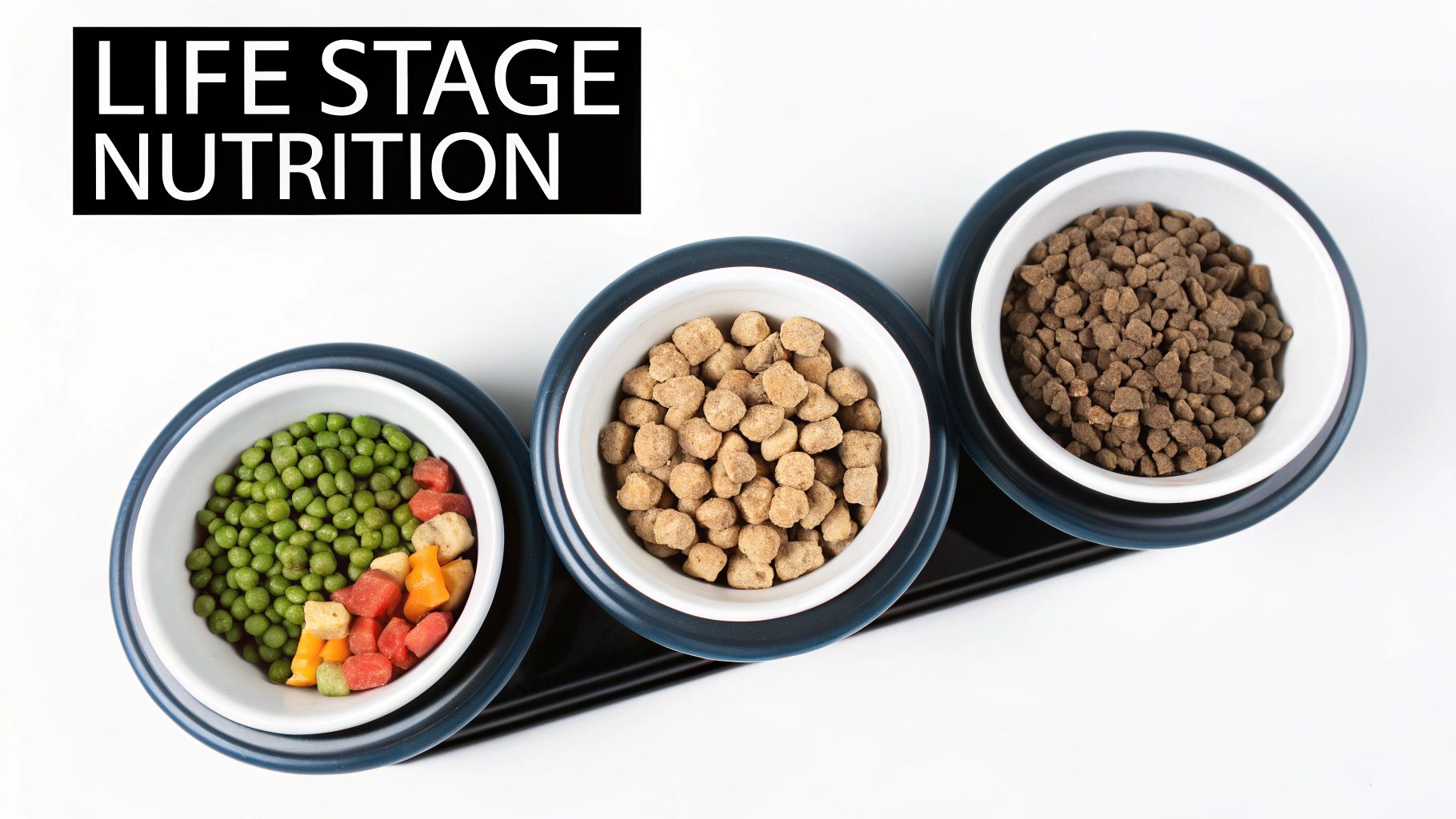
Think of it as proactive care. By tailoring their diet, you’re supporting them from their first clumsy pounce all the way through their golden years, addressing their unique energy and nutrient requirements every step of the way.
The Kitten Years: Fueling an Explosion of Growth
Kittenhood is a whirlwind of development. In just a few short months, that tiny ball of fluff transforms into a nearly full-grown cat. This incredible growth spurt demands a specialized diet packed with energy and specific nutrients. They're like little construction sites, needing a constant supply of premium materials to build strong bones, muscles, and organs.
A kitten’s diet absolutely must be:
- Higher in Calories: Kittens are nonstop. They burn a massive amount of energy for both growth and play, so their food needs to be more calorie-dense to keep up.
- Rich in Protein: They require significantly more protein than adult cats to support the development of every single tissue in their body.
- Packed with Key Nutrients: Crucial nutrients like DHA, an omega-3 fatty acid, are vital for building a healthy brain and sharp eyes.
Choosing a food specifically labeled for "kittens" or "growth" is the best way to ensure they get these fundamental building blocks during their most formative months.
Adult Cats: Maintaining Peak Condition
Once a cat hits about one year of age, the explosive growth phase is over. Their nutritional needs shift from building a body to maintaining a healthy, active one. This is the longest stage of their life, and the focus here is all about balance and prevention.
A diet for an adult cat should prioritize:
- Balanced Macronutrients: The right blend of high-quality protein, healthy fats, and minimal carbs is key to maintaining lean muscle mass and an ideal body weight.
- Portion Control: This is the stage where it's incredibly easy to overfeed. Obesity is a common and serious problem that can lead to issues like diabetes and arthritis.
The goal is to provide enough nutrients to fuel their daily adventures without giving them excess calories that will just be stored as fat. Regular weigh-ins are a great habit to get into.
One of the most common mistakes I see is owners continuing to feed kitten formula well into adulthood. While it's great food, its high-calorie content will quickly lead to an overweight adult cat.
Senior Cats: Supporting Graceful Aging
As cats move into their senior years—usually around age seven to ten—their bodies start to change. Their metabolism might slow down, their joints can get a little stiffer, and their digestive systems often become more sensitive. A healthful diet for a senior cat is designed to address these changes head-on.
Senior formulas are often tweaked to include:
- Highly Digestible Protein: This makes it easier for an older cat's system to absorb and use essential amino acids, which helps prevent muscle loss.
- Joint Support: You'll often see ingredients like glucosamine and chondroitin added to help support aging joints and keep them mobile.
- Controlled Phosphorus Levels: This is really important for supporting kidney health, as older cats are more prone to kidney problems.
As pet owners become more informed, the demand for this kind of specialized nutrition is growing. We're seeing a global trend where owners are prioritizing functional foods to manage specific health concerns. As their needs change, it is important to provide the best cat food for older cats. In markets like China, the cat food sector is growing by over 10% annually, driven by demand for products that tackle common issues like hairballs and dehydration. This worldwide push for premium, health-focused options is projected to expand the pet food market to $226.53 billion by 2034.
Making Sense of AAFCO and Feeding Guides
Ever flip over a bag of cat food and feel like you need a law degree to understand it? Between the guaranteed analysis, ingredient lists, and official-looking statements, it’s easy to feel overwhelmed.
But two of the most powerful tools for choosing the right food are hiding in plain sight: the AAFCO statement and the feeding guidelines. Once you know what to look for, they become your best allies.
The Association of American Feed Control Officials (AAFCO) isn't a government body that "approves" or certifies pet food. A better way to think of them is as the group that writes the nutritional rulebook. They establish the minimum (and sometimes maximum) levels of protein, vitamins, and minerals that a food must have to be considered "complete and balanced."
So, when you see an AAFCO statement on the label, you're looking at confirmation that the food is designed to meet all of your cat's fundamental nutritional requirements.
Decoding the AAFCO Statement
Here's where a little knowledge goes a long way. You'll generally see one of two phrases in the AAFCO statement, and the difference between them is a big deal.
-
"Formulated to meet the nutritional levels...": This tells you the food was made using a recipe that, on paper, ticks all the AAFCO boxes. It’s a bit like an architect following a proven blueprint to design a house—it should be sound, but it hasn't been lived in yet.
-
"Animal feeding trials...substantiate that [Pet Food Name] provides complete and balanced nutrition...": This is the one you really want to see. It means the recipe wasn't just formulated to meet the standards; it was actually fed to cats in a controlled study to prove they thrived on it. This is like having a building inspector live in the house for a few months to confirm everything works perfectly.
While both statements mean the diet is complete, the one backed by feeding trials gives you a much higher level of confidence.
Choosing a food that has undergone AAFCO feeding trials offers stronger proof that the nutrients are not only present but also bioavailable—meaning your cat can actually absorb and use them effectively.
Using Feeding Guides as a Starting Point
Think of the feeding guide on the package as a helpful suggestion, not a set of strict rules. These charts give you a baseline amount to feed based on an "average" cat's weight. But let's be honest, is any cat truly "average"?
Several factors will require you to adjust that suggested amount:
- Activity Level: A kitten chasing toys all day is a tiny furnace burning through calories, while a senior cat who prefers napping in a sunbeam needs far less fuel.
- Age: Growing kittens have massive energy needs compared to adults, and seniors often need fewer calories to maintain a healthy weight.
- Body Condition: Is your cat sleek and trim, or a little on the fluffy side? You should be able to feel their ribs easily with a light touch, but not see them. Your vet can show you how to do a quick body condition score at home.
- Spayed/Neutered Status: This one is huge. Cats that have been spayed or neutered can have a metabolic rate up to 30% slower, meaning they need significantly fewer calories.
The best strategy is to begin with the amount recommended on the bag, then watch your cat's weight and body condition over the next few weeks. If they're gaining a little too much, cut back slightly. If they seem a bit thin, add a little more. This hands-on approach is the only way to find the perfect portion for your one-of-a-kind cat.
Answering Your Top Questions About Healthful Cat Food
Once you start digging into what makes cat food truly healthful, the questions can really start piling up. It's easy to feel overwhelmed, but I promise it's not as complicated as it seems. Let's walk through some of the most common questions I hear from cat owners to clear things up and help you feel confident in what you're putting in your cat's bowl.
We'll tackle some of those confusing topics, like the whole grain-free debate, how to switch foods without upsetting a sensitive stomach, and whether that expensive bag of kibble is actually worth the money.
Is Grain-Free Food Always the Healthiest Option?
Not always, and this is a huge point of confusion. Cats are obligate carnivores, which means their bodies are designed to thrive on meat, not grains. They have zero biological need for corn, wheat, or soy.
The catch is that "grain-free" isn't an automatic stamp of quality. Many brands just swap out grains for other high-carbohydrate fillers like potatoes, peas, or lentils. What really matters is the overall recipe. A food that leads with high-quality, named animal protein is always going to be better, whether it contains a small amount of grain or not.
For a cat with a diagnosed grain allergy, going grain-free is a must. But for most healthy cats, your focus should be on maximizing high-quality animal protein and minimizing all fillers, not just grains.
How Can I Transition My Cat to a New Food?
Slow and steady wins the race here. If you swap your cat’s food overnight, you’re practically asking for digestive upset like vomiting or diarrhea. A gradual transition over 7 to 10 days is the key to letting their digestive system get used to the new ingredients.
Here’s a simple timeline that almost always works:
- Days 1-3: Start with a mix of 75% old food and 25% new food.
- Days 4-6: Move to a 50/50 split.
- Days 7-9: Up the new food to 75%, with just 25% of the old stuff left.
- Day 10: You've made it! You can now serve 100% of the new, healthful cat food.
Are By-Products in Cat Food a Bad Thing?
This is a tricky one because the term "by-product" is incredibly vague. In theory, by-products are just the non-muscle parts of an animal. This can include things like the liver, kidneys, and spleen—organs that are actually packed with nutrients and would be the first things a wild cat would eat.
The real issue with by-products is a lack of transparency. An ingredient like "chicken by-product meal" is acceptable because the animal source is named. However, a generic term like "meat by-product meal" is a major red flag—you have no idea what animal it came from. The best foods will list specific organs instead of using the broad "by-product" label.
Is More Expensive Cat Food Actually Better?
While price isn't a perfect indicator of quality, you often get what you pay for. Sourcing high-quality ingredients like deboned chicken or wild-caught salmon simply costs more than manufacturing a food full of cheap corn, wheat, and anonymous "meat" meals.
Try to think of it as an investment in your cat’s long-term health. Feeding a premium food packed with bioavailable nutrients can lead to a shinier coat, better digestion, more energy, and potentially fewer vet bills over their lifetime. When in doubt, let the ingredient panel—not the price tag—be your final guide. Beyond their daily meals, showing your love can come in many forms; if you're looking for inspiration, you might find some great cat lover gift ideas for a special occasion.
At JoyFull, we believe that feeding your cat well shouldn't be confusing. We built our formulas around clean, identifiable ingredients and high-quality animal proteins, so you never have to wonder what's in their bowl. Explore our recipes and see the difference that real food makes at https://joyfullpet.com.