Best cat food for older cats: Premium senior nutrition
When you're looking for the best food for an older cat, your best bet is usually a wet food formula. You want something packed with highly digestible animal protein but with carefully controlled phosphorus levels. This combination is key to supporting their aging kidneys, helping them hold onto precious muscle, and giving them the hydration they desperately need.
Understanding Your Senior Cat's Changing Needs
Once your cat cruises past their 10th birthday and officially enters their golden years (around age 11), you'll start to notice subtle shifts. Their body is a bit like a classic car—it still runs like a dream, but it needs a more refined, specialized kind of fuel to keep everything humming along. The food that kept them healthy and spry as an adult just might not cut it anymore.
That's because a senior cat’s internal engine works differently now. Their ability to digest and pull nutrients from their food, especially protein and fat, often becomes less efficient. This can make them susceptible to age-related muscle wasting, a condition called sarcopenia, which can really impact their strength and ability to get around.
Key Biological Shifts in Older Cats
To pick the right food, you first have to understand what you're up against. Their dietary needs aren't just about maintaining the status quo anymore; it's about actively protecting their aging systems from common weak spots.
Here are the big changes to keep in mind:
- A Fickle Metabolism: Some older cats pack on the pounds due to a more sedentary lifestyle, but many others actually struggle to keep weight on because their bodies aren't absorbing nutrients as well.
- A Weaker Thirst Drive: Senior cats are notoriously bad at staying hydrated. This low thirst drive can easily lead to dehydration, which puts a ton of extra stress on their kidneys.
- More Sensitive Stomachs: As they age, their digestive tract can get a bit touchy, so they need food that’s gentle and easy to break down.
- Stiff Joints: All those years of leaping onto bookshelves and chasing toys can take a toll. Ingredients that support joint health become incredibly helpful.
The right senior cat food isn't just a low-calorie version of their old food. It's a proactive tool designed to deliver highly digestible protein, targeted nutrients, and extra moisture to push back against the effects of aging and keep them feeling great.
This shift in understanding isn't just happening in our homes; it's reshaping the entire pet food industry. In fact, the senior cat food market is expected to grow globally by a whopping 10.30% between 2025 and 2033. This growth is driven by owners like us who see that cats over seven need more targeted support for things like kidney function and joint stiffness. You can find out more about senior pet food market trends and see what's behind this demand.
Ultimately, picking the right food means looking past the "adult maintenance" formulas. The goal is to find a recipe that delivers concentrated, high-quality nutrition designed specifically for an older cat's unique physiology, setting them up for healthier, happier twilight years.
How to Read a Senior Cat Food Label
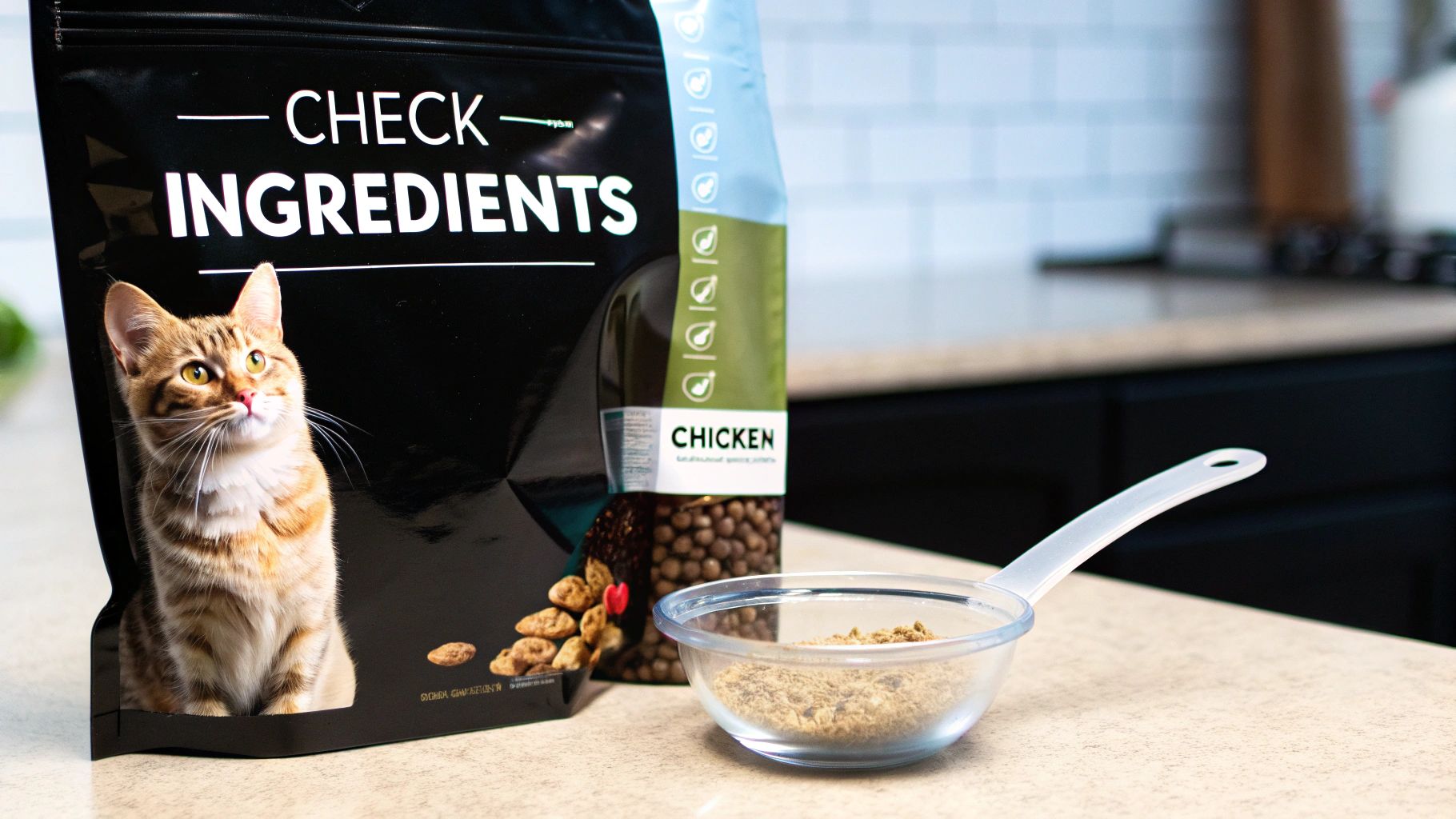
Walking into the pet food aisle can feel like stepping into a carnival of colors and claims. Every bag and can is shouting for your attention. To truly find what’s best for your older cat, you have to become a label detective and learn to see past the flashy marketing.
The secret is knowing where to look: the ingredient list and the guaranteed analysis. These two panels tell you the real story of what’s inside.
The Ingredient List: The Real Story of a Recipe
Think of the ingredient list as the food’s recipe, with the most abundant ingredients listed first. Because they’re listed by weight, the first few items on that list make up the majority of what your cat is eating. This is where you separate the good stuff from the fluff.
For your senior cat, a true carnivore, the first ingredient should always be a high-quality, named animal protein. This isn't just a nice-to-have; it's a biological necessity.
You want to see clear, specific sources right at the top, like:
- Deboned Chicken
- Salmon
- Turkey
- Beef
Vague, generic terms like "meat by-products" or "poultry meal" are red flags. These are mystery meats, often made from lower-quality parts that can be tough for a senior cat’s digestive system to handle. If you're curious to learn more, our guide on the best cat food ingredients (https://joyfullpet.com/blogs/news/best-cat-food-ingredients) goes into much more detail.
After you've confirmed a solid protein source, scan the rest of the list for bonus ingredients that support an aging body. Things like fish oil provide omega-3s, which are fantastic for soothing stiff, arthritic joints. Antioxidants like vitamin E and beta-carotene are also great additions, helping to give their aging immune system a much-needed boost.
Decoding the Guaranteed Analysis
If the ingredient list is the recipe, the guaranteed analysis is the nutrition facts panel. It gives you the breakdown of minimum protein and fat, and maximum fiber and moisture. These numbers are your roadmap to a balanced senior diet.
For older cats, you’re looking for a formula with high protein to prevent muscle wasting, moderate fat for energy without packing on pounds, and low carbohydrates. Cats don’t have a biological need for carbs, so ingredients like corn, wheat, and soy are often just cheap fillers.
A crucial tip for senior cat parents: Keep an eye out for phosphorus levels. High phosphorus can be hard on aging kidneys. While it’s not always on the main panel, many senior foods will mention "controlled phosphorus." If you can't find it, a quick email to the manufacturer is well worth the effort.
Thankfully, the pet food market is listening to what owners want. The global cat food sector is expected to grow from $23.38 billion in 2024 to $24.87 billion in 2025, with a big focus on clean labels and specialized senior formulas. This trend makes it easier than ever to find high-quality options for your cat.
Here’s a quick checklist to help you make sense of it all at a glance.
Senior Cat Food Label Checklist
| Nutrient/Ingredient | What to Look For (The Good Stuff) | What to Avoid (The Red Flags) |
|---|---|---|
| Protein Source | Named animal protein (e.g., chicken, salmon, turkey) listed as the first ingredient. | Vague terms like "meat by-products," "animal digest," or "poultry meal." |
| Carbohydrates | Minimal carbs. Grain-free options or whole grains like brown rice in small amounts. | High levels of corn, wheat, or soy, especially in the first few ingredients. |
| Fats & Oils | Named animal fats (e.g., chicken fat) and fish oils (e.g., salmon oil) for omega-3s. | Generic "animal fat" or plant-based oils that are less beneficial. |
| Additives | Antioxidants (Vitamins E & C), glucosamine, chondroitin, probiotics, and taurine. | Artificial colors, flavors, and chemical preservatives like BHA, BHT, or ethoxyquin. |
| Guaranteed Analysis | High protein, moderate fat, and low phosphorus (if possible). | Low protein percentages and high fiber, which can indicate fillers. |
Ultimately, learning to read a food label is about empowerment. It gives you the confidence to look past the pretty pictures and choose a food based on what will genuinely nourish your best friend. Your diligence in the store aisle translates directly to more healthy, happy years together at home.
Wet Food vs. Dry Food: What's Best for Your Senior Cat?
The age-old debate of wet versus dry food gets a lot more straightforward when your cat hits their golden years. For an older cat, the right food isn't just about taste anymore—it's about supporting their changing body. The texture and moisture content of their meals can make a huge difference in their hydration, dental comfort, and even kidney health.
While dry kibble is convenient, wet food is almost always the better choice for a senior cat. The biggest reason comes down to one simple, crucial ingredient: water.
Why Moisture is a Game-Changer for Older Cats
As cats get older, their thirst drive tends to take a nosedive. They just don't feel the urge to drink as often, which puts them at a constant risk for low-level dehydration. This is a big deal, because staying hydrated is the number one way to help their aging kidneys and urinary system function properly.
Think of wet food as a sneaky way to get more water into their diet. A typical can or pouch of wet food is packed with 75-80% moisture, a stark contrast to the 10% or so found in dry kibble. That extra water helps flush their system, lightening the load on their kidneys and supporting a healthy urinary tract.
For a senior cat, every meal of wet food is a two-for-one deal: they get their nutrition and a big hydration boost at the same time. This simple dietary shift is one of the most powerful things you can do to promote their long-term health.
This doesn't mean dry food is completely out, but wet food should absolutely be the main event. If you want to dig deeper into the pros and cons, our guide on wet vs dry cat food offers a more detailed breakdown to help you decide.
Thinking About Tender Gums and Fading Appetites
Another major win for wet food is its soft texture. Senior cats are notorious for having dental problems—sore gums, sensitive teeth, you name it. For a cat with a tender mouth, crunching on hard kibble can be downright painful, which can cause them to skip meals.
The soft, smooth consistency of a pâté or a food in gravy is so much easier on their mouth. It requires very little chewing, which is perfect for cats with dental issues or even those who have had teeth removed.
Plus, an older cat's sense of smell often isn't what it used to be, which can make them picky eaters. The strong, tempting aroma of wet food can be just the thing to coax a cat with a lagging appetite to finish their bowl, helping them maintain a healthy weight.
Finding the Right Feeding Balance
So, while wet food is the clear front-runner, a good quality dry food can still have a place. Some cats just really love that crunch. The best approach for many is often a combination of the two.
Here’s a simple way to get the best of both worlds:
- Make Wet Food the Main Course: Serve a portion of high-quality wet food for their main meals, usually twice a day. This ensures they get that all-important moisture.
- Offer Dry Food as a "Snack": You can leave a small, measured amount of a senior-friendly dry kibble out for them to nibble on. This can satisfy their crunchy cravings.
- Get Creative with Hydration: Always have fresh water available, but don't stop there. A pet water fountain can often encourage cats to drink more. You can even stir a little extra warm water or some low-sodium bone broth into their wet food for another hydration hit.
Ultimately, the best food for your older cat is one that works with their aging body, not against it. By making moisture-rich wet food the star of their diet, you’re giving them the support they need to feel their best well into their senior years.
Using Nutrition to Manage Common Senior Health Issues
When you're picking out food for an older cat, you're not just filling their bowl—you're practicing preventative care. The right diet is like a toolkit, packed with specific ingredients that can directly support the body systems most vulnerable to aging. By understanding these connections, you can turn every meal into an opportunity to proactively manage your cat's health.
Think of it this way: just as we might take vitamin C for a cold or calcium for our bones, certain nutrients in your cat's food can deliver targeted benefits. This problem-solution approach lets you choose a diet that addresses your cat’s unique challenges, whether it's creaky joints or a sensitive stomach.
This mindset is catching on. The demand for senior cat foods with functional ingredients for joint and digestive support is a huge reason the global senior pet food market is projected to hit $62.76 billion in 2025. In the US alone, cat food sales are expected to climb to $18.1 billion. As our pets live longer, we’re all looking for ways to help them thrive. You can discover more insights about these senior cat food trends to see how the market is responding.
Supporting Stiff Joints And Mobility
One of the first signs of aging you might notice is a subtle change in your cat’s mobility. Maybe they hesitate before leaping onto the couch, or perhaps they take the stairs a bit slower than they used to. This is often just the result of natural wear and tear on their joints over a long and happy life.
To help with this, look for foods fortified with glucosamine and chondroitin. These compounds are the natural building blocks of cartilage, the cushion that keeps their joints moving smoothly. Adding them to your cat's diet helps maintain that lubrication and support cartilage health, promoting more comfortable movement.
Another fantastic ingredient to look for is green-lipped mussel. It's a powerhouse, providing a natural source of both glucosamine and chondroitin, plus omega-3 fatty acids that have anti-inflammatory properties to soothe achy joints. If your cat is already showing significant stiffness, you might also consider a dedicated supplement. We have a detailed guide that can help you choose the best joint supplements for cats for that extra boost.
Protecting Aging Kidneys
Kidney health is a major concern for senior cats. As they get older, their kidneys can become less efficient at filtering waste from their blood. The good news is that a thoughtfully formulated diet can significantly reduce the strain on these vital organs.
Two things are critical here: controlled phosphorus levels and high-quality, easily digestible protein. Too much phosphorus is hard for aging kidneys to process, so senior-specific formulas are designed to keep this mineral in a safe, healthy range.
At the same time, it’s a myth that older cats need less protein. They actually need more high-quality protein to prevent muscle loss. The trick is that this protein must be easy to digest, creating less metabolic waste for the kidneys to handle. That’s why a food with a named animal source like deboned chicken or salmon is far better than one with generic "meat by-products."
The goal for kidney support is simple: give them all the protein they need to stay strong while minimizing the workload on their kidneys. It’s a delicate but crucial nutritional balance.
Easing A Sensitive Digestive System
As cats age, their digestive tract can become more sensitive, which might lead to issues like constipation or inconsistent stool quality. Fortunately, the right ingredients can help keep their gut healthy and ensure they absorb all the nutrients from their food.
For digestive support, look for these on the label:
- Prebiotics and Probiotics: Think of prebiotics (like inulin or FOS) as fertilizer for the good bacteria in the gut. Probiotics are the beneficial bacteria themselves. Together, they create a balanced gut microbiome, which is the foundation of healthy digestion.
- Digestible Fibers: Ingredients like pumpkin, psyllium husk, or beet pulp add both soluble and insoluble fiber. This combination helps regulate digestion, prevent hairballs, and promote regular, healthy bowel movements without being harsh on their system.
Managing Weight And Metabolism
Finally, weight management can be a real balancing act. Some senior cats slow down and start to pack on the pounds, while others struggle to keep weight on due to less efficient nutrient absorption.
A well-designed senior diet anticipates both scenarios. It should have an optimized calorie count to prevent unhealthy weight gain in less active cats. For those who need help maintaining lean muscle, an amino acid called L-carnitine is a fantastic addition. It helps the body convert fat into energy more efficiently, which in turn supports a lean, strong body condition. This helps your cat stay energetic, even as their metabolism naturally changes.
The following table breaks down how specific dietary components can help address these common age-related health issues.
| Health Concern | Key Nutritional Support | Why It Helps |
|---|---|---|
| Joint Stiffness & Arthritis | Glucosamine, Chondroitin, Omega-3s | Rebuilds cartilage, reduces inflammation, and lubricates joints for better mobility. |
| Kidney Decline | Controlled Phosphorus, High-Quality Protein | Reduces strain on kidneys while providing essential amino acids to prevent muscle loss. |
| Digestive Sensitivity | Prebiotics, Probiotics, Digestible Fiber | Balances gut bacteria, improves nutrient absorption, and ensures regular bowel movements. |
| Weight Management | Optimized Calories, L-Carnitine | Prevents obesity in less active cats and helps metabolize fat to preserve lean muscle mass. |
By using this table as a guide, you can start to read labels with a purpose and find a food that does more than just fill your cat’s stomach—it actively supports their long-term health.
How to Transition Your Cat to a New Senior Food
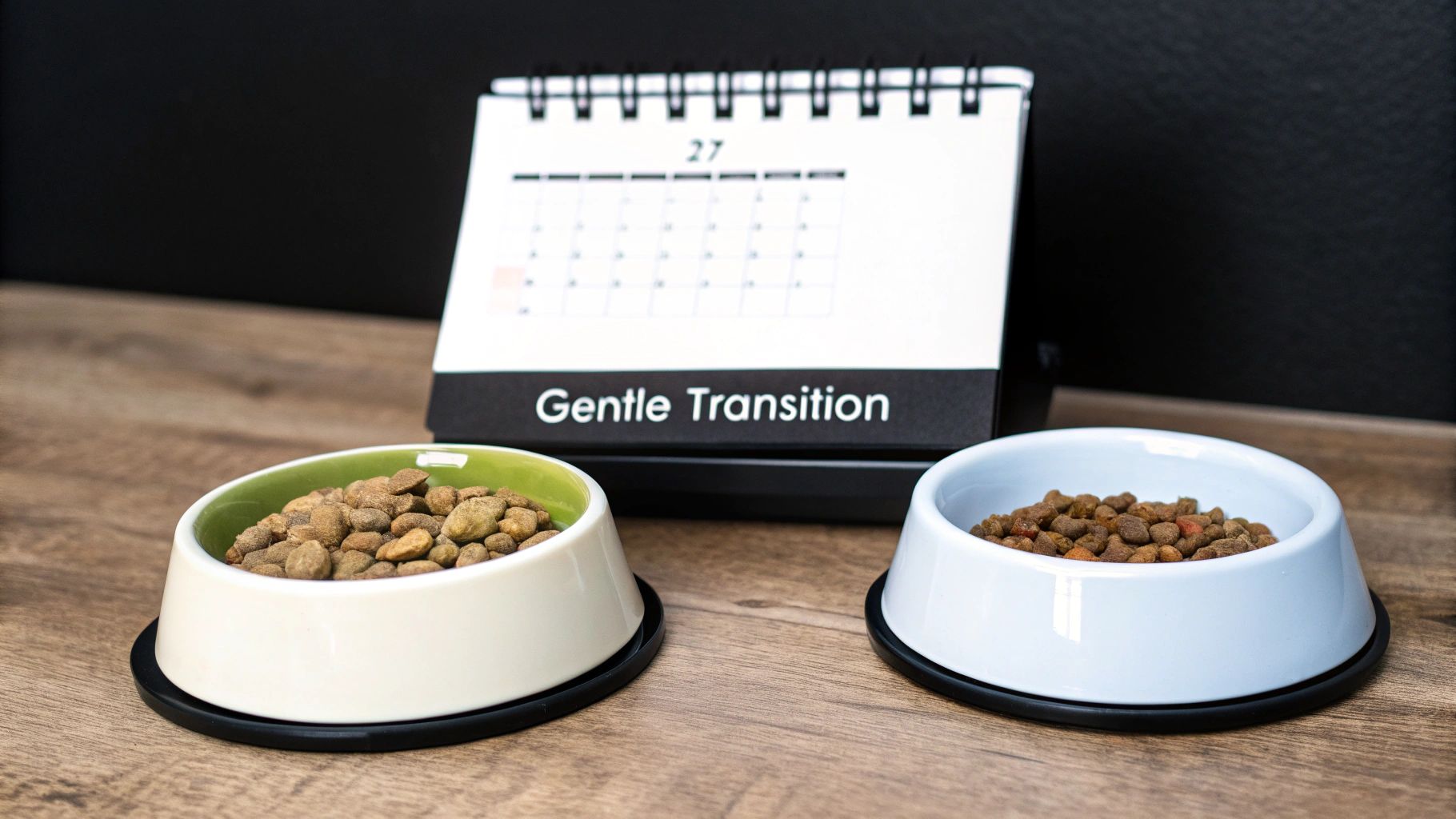
We all know cats are creatures of habit, and this is especially true for their digestive systems. If you've ever tried to swap their food out cold turkey, you've probably seen the results: an upset stomach, vomiting, or diarrhea. That's the last thing your older companion needs.
The secret to a successful switch is simple: go slow. Think of it like a person starting a new workout plan. You wouldn't jump from the couch straight into a marathon, right? You build up gradually. We need to give our cat’s gut the same courtesy, allowing it time to adjust to the new ingredients and nutrient balance in their senior formula.
This careful approach not only prevents tummy troubles but also gives your cat a chance to get used to the new food's taste and smell—a critical step if you've got a picky eater on your hands.
The Slow Switch: A Step-by-Step Guide
The sweet spot for a food transition is usually 7 to 10 days. This gives you enough time to slowly increase the amount of new food while phasing out the old stuff. It might feel like a hassle, but rushing this process is the most common reason for digestive upset and food refusal.
Here’s a simple schedule that works wonders. Just be sure to use a measuring cup to keep the total daily portion the same.
- Days 1-2: Mix 75% of the old food with 25% of the new food.
- Days 3-4: Go for a 50/50 split.
- Days 5-6: Tip the scales with 25% old food and 75% new food.
- Day 7 and beyond: You've arrived! It’s 100% new food.
Make sure you stir the two foods together really well. Some cats are masters at picking out the old kibble and leaving the new stuff behind!
A gradual transition isn’t just a friendly suggestion; it's a way of respecting your cat's sensitive biology. A little patience over this one week can set your cat up for a healthy and happy relationship with their new diet for years to come.
While you're making the switch, it’s also your job to play detective. Keep a close eye on your cat's behavior and what's happening in the litter box. These are your best clues for how well the transition is going.
Watching for Signs of Success (or Trouble)
During the transition period, you're looking for signs that everything is going smoothly. A successful switch means your cat is eating well, seems to have their usual energy, and isn't showing any signs of digestive problems.
Here’s what you should be watching for:
- Litter Box Clues: You want to see well-formed stools. If you notice persistent diarrhea or constipation, it's a signal to slow down. Stay at the current food ratio for a few extra days before you try increasing the new food again.
- Appetite and Attitude: Is your cat still excited for mealtime, or are they walking away from their bowl? A little hesitation at first can be normal, but if they consistently refuse to eat, that’s a red flag.
- Vomiting or Tummy Troubles: A single instance of throwing up might not be a big deal, but if it becomes a regular thing, hit pause on the transition and give your vet a call.
If your cat is putting up a fight, don't give up! Sometimes, all they need is a little extra encouragement. You could try gently warming wet food to make it smell more appealing or mixing in a splash of low-sodium chicken broth. Your persistence will pay off, helping your senior cat get the fantastic nutrition they deserve.
Still Have Questions About Senior Cat Nutrition? Let's Clear Them Up.
Trying to pick the right food for your older cat can feel overwhelming. Just when you think you’ve got it all figured out, a new question pops up. We get it. Let’s walk through some of the most common questions our team hears from cat owners, so you can feel confident you’re making the best choice for your furry old friend.
When Is a Cat Really a Senior?
This is easily the most common question, and the answer isn't as simple as a single birthday. While you'll see bags of food labeled "senior" for cats aged 7 and up, most veterinarians will tell you a cat truly enters their golden years around age 11.
It’s more helpful to think about aging in stages:
- Mature Adult (7-10 years): This is the pre-senior phase. Your cat might still be chasing laser pointers like a kitten, but their internal systems are starting to slow down. It’s a great time to pay closer attention to any subtle changes.
- Senior (11-14 years): Now we're talking. By this age, the metabolic shifts we’ve discussed are in full swing. This is the sweet spot for switching to a diet specifically formulated for their changing needs.
- Geriatric (15+ years): Our truly elderly companions often face more significant health challenges, like muscle loss or kidney trouble. For them, a specialized diet isn't just helpful—it's critical.
The bottom line is that "senior" is a process, not a number. The right time to switch foods is a conversation between you and your vet, but it usually happens when your cat is somewhere between 10 and 12 years old.
What Should I Feed a Senior Cat That Is Losing Weight?
First things first: if your older cat is losing weight for no obvious reason, your first call should be to the vet. This can be a red flag for underlying issues like hyperthyroidism, kidney disease, or painful dental problems.
Once you have the all-clear from the vet, nutrition becomes your best tool for helping them get back to a healthy weight. The goal isn't just to pack in more calories, but to serve up the right kind of calories in a form they can easily eat and digest.
Focus on Highly Palatable, Nutrient-Dense Wet Food
For an underweight senior, a calorie-dense, high-protein wet food is almost always the answer. The soft texture is a blessing for sensitive teeth and gums, and the stronger aroma can tempt a cat whose sense of smell isn't what it used to be. Look for formulas with:
- High-Quality Animal Protein: Protein is the key to rebuilding that lost muscle. A named meat like chicken or salmon listed first means they're getting the good stuff.
- Healthy Fats: Fat is a fantastic, concentrated source of energy. Ingredients like chicken fat or fish oils pack a caloric punch and provide those all-important omega fatty acids.
- Tempting Textures: Many seniors find a smooth pâté or a minced food in a savory gravy much easier to handle than a chunky formula.
Is a Grain-Free Diet Better for Older Cats?
The "grain-free" craze has been everywhere, but honestly, it's not the magic bullet for seniors that some brands make it out to be. For the vast majority of cats, grains aren't the enemy—it’s the total amount of carbohydrates that can be a problem. True grain allergies in cats are surprisingly rare.
What’s far more important is finding a food that is low in total carbs, no matter where they come from. Cats are carnivores, plain and simple; their bodies aren't designed to process a diet heavy in carbohydrates. High-carb foods often use cheap fillers like corn and wheat, which can lead to weight gain without providing much real nutrition.
So, instead of getting hung up on the "grain-free" label, just turn the bag around. If a high-quality animal protein is the first ingredient, you're on the right track. Many top-tier senior foods use a small amount of easily digestible carbs like sweet potato or pumpkin for texture, and that’s perfectly fine.
How Many Times a Day Should I Feed My Senior Cat?
As cats get older, how you feed them can become just as important as what you feed them. Many adult cats do fine on two meals a day, but that routine often needs a rethink in the senior years. Leaving a heaping bowl of dry food out all day, or "free-feeding," is a definite no-go for seniors. It's a recipe for obesity and makes it impossible to notice if their appetite has changed.
The best strategy is usually smaller, more frequent meals.
The Benefits of Multiple Small Meals
Try offering your senior cat three to four small meals spaced throughout the day. This simple switch has some big benefits:
- Easier on Digestion: Smaller portions are gentler on an older digestive system and can help cut down on post-meal vomiting.
- Better Nutrient Absorption: Their gut can absorb nutrients more efficiently when it's not overwhelmed by a huge meal.
- Sparks Their Appetite: A fresh, small serving of food is often much more appealing to a picky senior than a big bowl that's been sitting out for hours.
- Keeps Energy Stable: This approach helps prevent spikes and crashes in their blood sugar, keeping their energy levels more consistent.
Ultimately, choosing the best food for your older cat comes down to understanding their unique, changing biology. By getting answers to these common questions, you're in a much better position to provide the targeted nutrition that will help them live their golden years to the fullest.
At Joyfull, we believe a healthy life isn't just for people—our pets deserve it, too. We craft our recipes with clean ingredients and high-quality proteins, all reviewed by our in-house veterinary advisor, to give your senior cat the genuinely beneficial nutrition they need. Discover the difference Joyfull can make.