


Your dog is staring at you by the treat jar. You want to reward that sweet sit, but you also find yourself wondering whether treat time could do a little more than hand out calories.
That's the moment many dog owners are in now. The old question was, “Will my dog like this?” The newer question is, “Will my dog like this, and does it help with something useful?”
That shift matters because functional dog treats sit in a different category from ordinary snacks. A regular treat is mostly about taste, routine, and reinforcement. A functional treat is meant to act like a small delivery tool. It still has to be tasty, but it's also trying to bring a specific ingredient, in a usable amount, to the right dog for the right reason.
That idea has moved well beyond niche wellness marketing. Market research now treats functional pet treats as a defined commercial category. One market study values the global functional pet treats category at USD 7.1 billion in 2025 and projects USD 13.8 billion by 2034, with dogs accounting for 65.8% of revenue, or about USD 4.7 billion in 2025 according to pet treat market research. In plain terms, owners aren't just buying treats for fun anymore. They're looking for support with digestion, joints, skin, dental care, and daily wellness.
Table of Contents
- Introduction to Functional Dog Treats Beyond the Reward
- What Makes a Dog Treat Functional
- Common Functional Ingredients and What Science Actually Shows
- How to Evaluate Labels Safety and Dosing Without the Guesswork
- Choosing the Right Function for Your Dog Life Stage and Goals
- Real World Examples of Functional Treats Done Well
- Smart Next Steps for Using Functional Dog Treats Confidently
Introduction to Functional Dog Treats Beyond the Reward
A simple example helps. If you give your dog a biscuit after a walk, that's a reward. If you give your dog a small chew or lickable treat because you want to add prebiotics, support the gut, or make dental care part of the routine, that's a different job.
The treat may look small. The purpose is bigger.
The mindset shift that helps most
Many owners get confused because the packaging often looks similar. A chicken-flavored snack and a gut-support treat may both sit on the same shelf. Both may say “natural,” “premium,” or “healthy.” But one is mostly a snack, and the other is trying to function more like a daily wellness tool.
A good way to think about it is this:
- Reward treats are like candy in your coat pocket. Handy, enjoyable, and useful for training.
- Functional treats are more like a supplement wrapped in something your dog wants to eat.
That doesn't make them medicine. It also doesn't mean every product with a health claim is meaningful. It means your job as a buyer changes. Instead of asking only whether your dog loves the flavor, you start asking whether the formula has a real target and whether the format can reliably deliver it.
Functional treats work best when you treat them as part of a routine, not as rescue products you use once in a while and hope will fix a bigger issue.
Why this category keeps gaining attention
The broader pet treats market is expanding quickly, and functional dog treats are riding that wave with a stronger wellness angle. One market report projected the global pet treats market at USD 38.40 billion in 2026 and USD 58.71 billion by 2031, while another forecast estimated USD 40.52 billion in 2024 rising to USD 79.23 billion by 2030 according to pet treats market coverage. That doesn't tell you which treat to buy, but it does explain why shelves are filling up fast.
Owners who care about ingredient quality often start by seeking out clean ingredient pet snacks and then realize there's another layer to consider. Clean ingredients matter. So does purpose.
The key is not to get swept up by buzzwords. A useful functional treat should match a clear goal, fit your dog's life stage, and hold up under basic label scrutiny. That's where things get much easier.
What Makes a Dog Treat Functional
Your dog begs for a treat after a walk. One bag promises joint support. Another says calming. A third highlights gut health. The useful question is not which claim sounds healthiest. The useful question is whether that treat works like a delivery tool for a clear job.
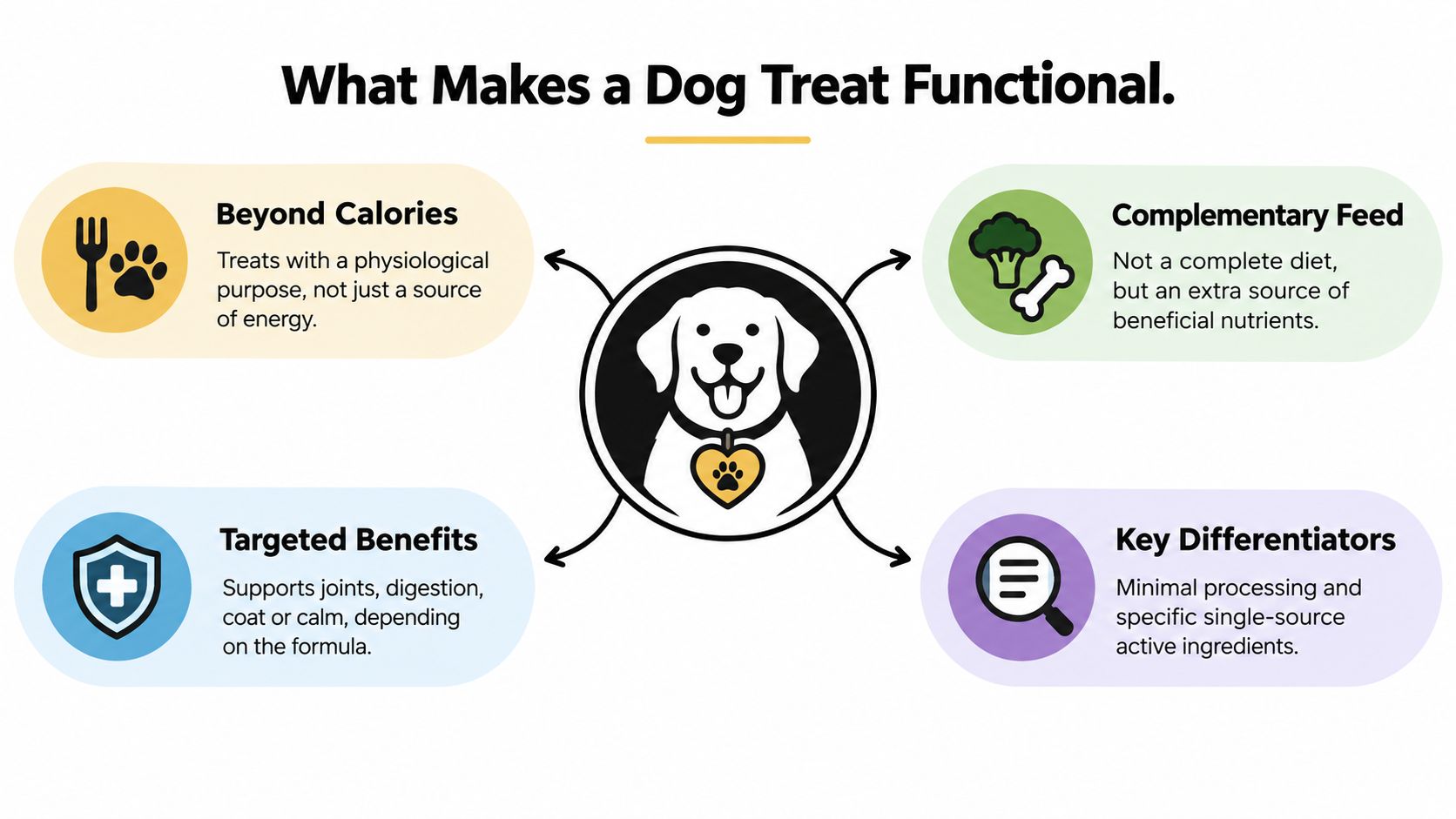
A dog treat becomes functional when it is built to deliver a specific ingredient, in a meaningful amount, in a form your dog will eat. That is the difference between a snack with a wellness label and a product with a real purpose.
A simple way to look at it is to compare the treat to a small delivery vehicle. The ingredient is the cargo. The treat format is the vehicle. If the cargo is weak, unstable, or packed in too tiny an amount, the trip does not accomplish much.
So the label on the front is only the starting point. The stronger questions are more practical. What is this treat trying to do. How much of the active ingredient does one serving provide. Can that ingredient stay intact through processing, shipping, and storage.
Function starts with a clear target
Good functional products usually make narrow claims because narrow claims are easier to build around. A treat may be designed to support stool quality, help maintain skin and coat condition, add joint-related ingredients to the daily routine, or provide a calming ritual with selected actives.
That target matters because a treat has limited space. Unlike a full diet, a treat has to fit inside a small daily calorie budget. It also has to be tasty enough that your dog accepts it without a struggle.
Those constraints shape the formula.
Three things have to work together
A functional treat succeeds only if three parts line up:
- Acceptance: the dog eats it willingly and consistently
- Delivery: the ingredient amount per serving is large enough to match the intended goal
- Stability: the active ingredients still perform after manufacturing and time on the shelf
Miss one of those pieces and the product can sound better than it works. A biscuit with a helpful ingredient name but a tiny serving amount may act more like marketing than nutrition. A formula with fragile live cultures may also fall short if the manufacturing method or storage conditions reduce their activity before the treat reaches the bowl.
This is why experienced buyers look past ingredient lists alone. A long ingredient panel can look impressive while still telling you very little about dose, survival, or usefulness.
Format affects performance
Format is not a cosmetic choice. It changes how the function is delivered.
A chew can slow intake and suit goals tied to chewing behavior. A lickable treat can make daily use easier for picky dogs, older dogs, or dogs that do better with a topper or enrichment format. A powder or single-serve packet may also help protect sensitive ingredients better than a baked biscuit, depending on the formula.
That makes functional treats less like generic rewards and more like tools matched to a job. The best format is the one that helps the active ingredient get to the dog, in the right amount, with the least friction in real life.
One example is Prebiotic Chicken Squeeze Treats for Dogs - 24 Packets, a lickable product described as made with real cage-free chicken and prebiotics for gut health, without artificial colors, preservatives, or flavors. It shows the basic idea well. The squeeze format is the delivery system. The prebiotic is the intended function.
Practical rule: Judge a functional treat the way you would judge any tool. Start with the job, then check whether the design, dose, and format fit that job.
Common Functional Ingredients and What Science Actually Shows
A bag can say “supports gut health,” “calming,” and “mobility” all at once. That sounds impressive until you ask a more useful question: what is the active ingredient supposed to do inside the dog?
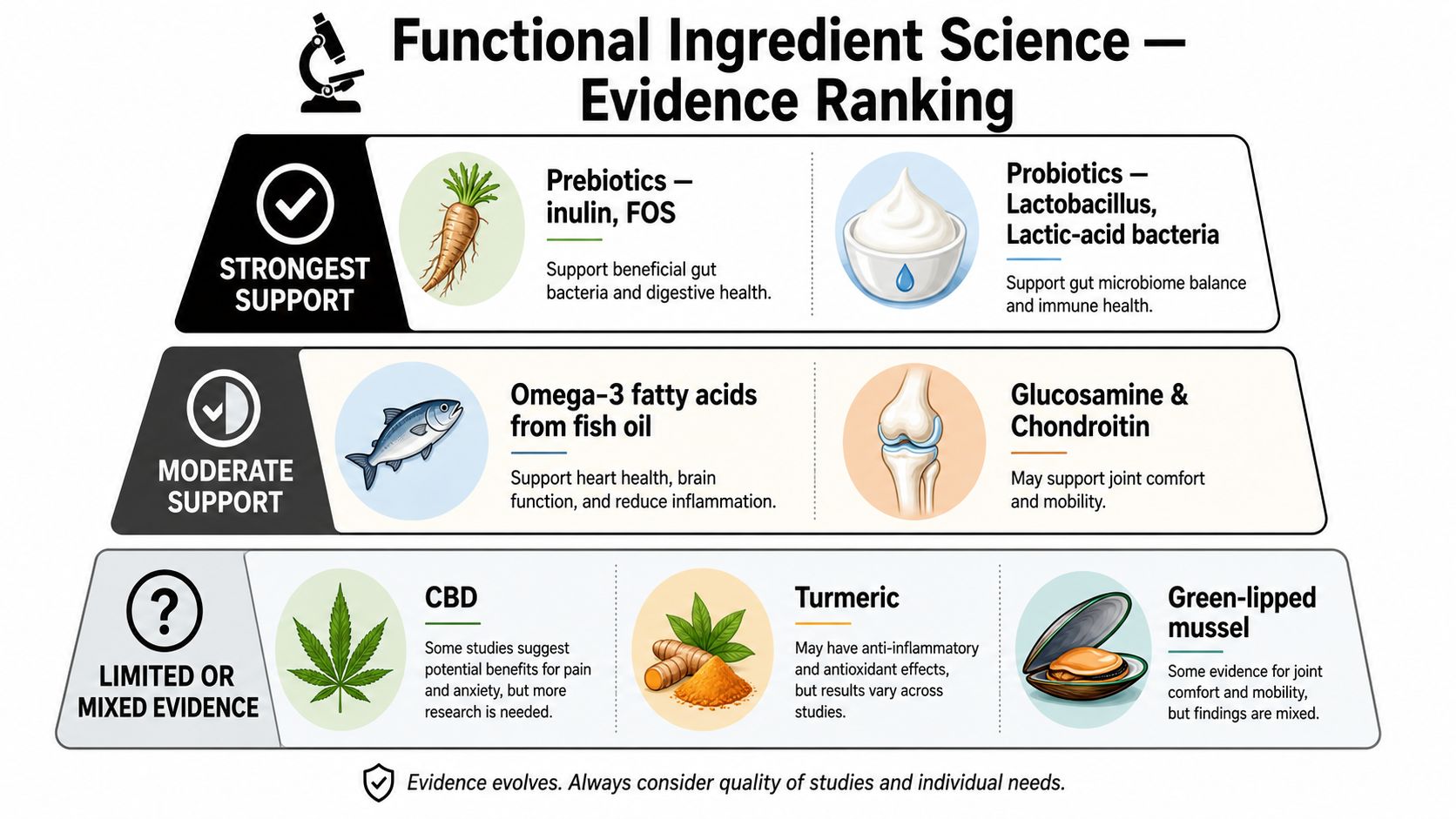
Functional ingredients make more sense when you sort them by job. Some are aimed at the gut. Some target skin, coat, or joints. Some are much fuzzier, with marketing that runs ahead of the evidence. That matters because a functional treat is a delivery tool. If the tool has no clear target, the claim is hard to judge.
The ingredients with the clearest support
The most consistent support tends to show up with gut-directed ingredients, especially prebiotics.
Prebiotics such as inulin and fructooligosaccharides, often shortened to FOS, are fibers that feed helpful gut microbes. The effect is less like adding a new player to the team and more like feeding the players already on the field. In dogs, that can translate into measurable shifts in the gut environment, which is one reason digestive-support treats are often a more grounded starting point than broad “wellness” blends.
If you're comparing products built around prebiotics for dogs, you are looking at one of the more evidence-aligned functions in this category.
Probiotics sit nearby but do a different job. Prebiotics feed microbes. Probiotics add live microbes directly. Some products combine both, which can make sense, but owners should not treat the words as interchangeable.
A parallel example from another species is Prebiotic Tuna Squeeze Treats for Cats, which is described as made with real wild-caught tuna, including prebiotics to support gut health, and free of artificial and “natural” flavors, colors, and preservatives. It shows how the same functional logic can carry across formats and species, even though the actual product choice should always match the animal.
Ingredients with useful but narrower support
Other categories can be useful, but they usually depend more heavily on dose, source, and product design.
Omega-3 fatty acids are a good example. They are often used for skin, coat, and inflammatory support. A label mention alone does not tell you much. Fish-based omega-3s can help, but fats are prone to oxidation, so stability matters just as much as inclusion.
Glucosamine is common in joint treats. Its presence does not automatically make a chew meaningful for mobility support. A joint product still has to answer practical questions. How much is in each serving? Is the serving realistic for the dog's size? Is the treat meant to play a small support role or function more like a supplement?
Antioxidants and plant extracts sit in a more uneven category. Some formulations show promising biomarker changes in research settings, but that does not place every berry blend or herb mix on equal footing. Labels often drift from science into storytelling.
A simple ranking helps:
- Most grounded for everyday use: prebiotics, probiotics, gut-support combinations
- Potentially useful when the formula is well built: omega-3s, joint-support ingredients
- Most often oversold: broad “superfood” blends, vague herbal mixes, trend-driven actives without clear dosing context
Later in the section, this video gives a practical overview of how owners think through these products in everyday care.
Why biomarkers matter more than buzzwords
“Supports wellness” is easy to print on a package. Measurable effects are harder to earn.
Researchers studying functional ingredients often look for signs that something changed in a meaningful way, such as stool quality, microbiome activity, inflammatory markers, or oxidative stress markers. You do not need to memorize those terms. The takeaway is simpler than it sounds. Better functional treats are built around a target you can define, not a mood you can market.
A strong functional treat works like a tool with a specific job. The label should help you see the target, the active ingredient, and the logic behind the claim.
How to Evaluate Labels Safety and Dosing Without the Guesswork
You are standing in the treat aisle with two bags in your hand. Both promise support. Both use polished words on the front. One may be a useful delivery tool for a real need. The other may be a regular snack with a health claim attached.
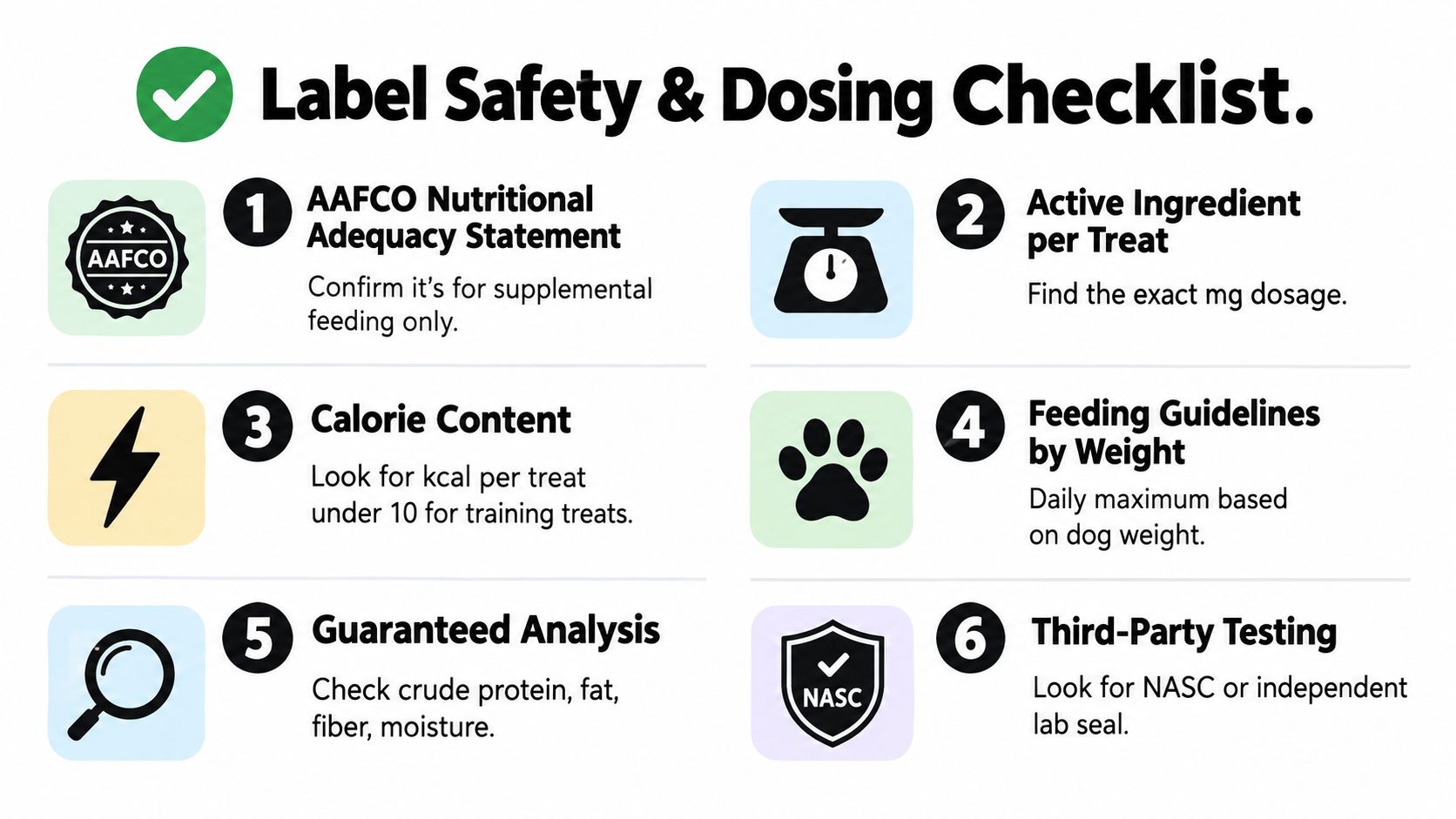
The easiest way to sort them is to stop asking, “Does this sound healthy?” and start asking, “What is this treat delivering, and can it still deliver it by the time my dog eats it?”
That shift matters. Functional treats work best when you treat them like delivery systems with a job to do, not like wellness slogans in chew form.
What to check first
Start with the function. The label should tell you the target in plain terms, such as digestive support, joint support, calming, dental use, or training enrichment with one added purpose. If you cannot tell what problem the product is trying to solve, the rest of the label will not help much.
Then move to the active ingredients. “Contains probiotics” or “made with superfoods” is too vague. A better label names the ingredient and gives you enough detail to judge whether the claim has substance.
After that, look at the serving directions and the format together. A soft chew, powder, topper, biscuit, or lickable treat each handles ingredients differently. Some actives tolerate heat and storage well. Others are more fragile and need careful formulation, protective packaging, or clearer storage instructions to stay useful.
The front of the package sells the idea. The back of the package shows whether the idea was built properly.
Dose matters more than decoration
A long ingredient list can impress the eye and still do very little for the dog.
What matters more is whether the useful ingredient is present in a meaningful way, whether the treat format protects it, and whether your dog will get it often enough to match the product's intended use. A treat your dog takes gladly every day may be more useful than a stronger product that turns each serving into a struggle.
Many buyers get tripped up. They focus on ingredient variety instead of delivery. But a functional treat is closer to a daily tool than a menu. If the active is unstable, hidden in a vague blend, or offered in a serving plan that makes little sense for your dog's size, the label is telling you to be cautious.
A good functional treat does not just contain an ingredient. It gives that ingredient a realistic path from package to dog.
A quick buyer checklist
Use this screen before you buy:
- Name the goal: Choose for a defined need, such as stool support or mobility support, not a broad promise like “overall wellness.”
- Find the active: Look for named ingredients rather than vague category words.
- Check the dose logic: Serving directions should match body size and regular use.
- Check the format: Ask whether a biscuit, chew, powder, or topper makes sense for that ingredient.
- Look for stability clues: Packaging, storage directions, and handling notes should fit the sensitivity of the active.
- Keep routine in mind: The best option is one your dog will take consistently.
- Ask your veterinarian when needed: This matters more for dogs with chronic disease, medications, or multiple supplements.
If you want a stronger baseline for label reading in general, this guide on how to pick the right dog food builds the same skill from a wider angle.
Choosing the Right Function for Your Dog Life Stage and Goals
The best functional treat for one dog may be pointless for another. A puppy with a sensitive stomach, an active adult in training, and a senior who rises slowly after naps are not asking the same question of a treat.
Start with the dog, not the shelf
Many labels lead with benefits. That sounds helpful, but it often skips over the more important issue. Why does your dog need this at all?
A practical way to decide is to sort needs into two buckets:
- Preventive support: daily help for a dog who is generally well
- Targeted support: a more specific goal tied to age, lifestyle, or a recurring issue
A young dog might benefit from a gentle digestive-support treat during transitions, travel, or training-heavy weeks. An athletic adult might do better with a treat strategy built around gut consistency and recovery-friendly routines. A senior may need products selected with mobility, appetite changes, or ease of chewing in mind.
Match Function to Dog Profile
| Dog Profile | Primary Goal | Most Relevant Functions | What to Prioritize |
|---|---|---|---|
| Puppy or newly adopted dog | Settling the gut and building routine | Digestive support, gentle enrichment | Simple formulas, easy-to-administer formats, mild ingredients |
| Healthy adult dog | Preventive wellness | Gut support, dental support, skin and coat support | Consistency, palatability, clean ingredient list |
| Highly active dog | Recovery-friendly daily support | Digestive stability, joint-focused support, omega-containing options | Reliable acceptance, routine use, function matched to workload |
| Senior dog | Comfort and daily maintenance | Joint support, digestive support, easy-to-chew or lick formats | Texture, clear purpose, compatibility with existing supplements |
| Small breed dog | Safe, practical dosing | Digestive or dental support in small servings | Tiny portions, easy dosing control, lower treat burden |
| Allergy-prone or ingredient-sensitive dog | Avoid flare-ups while still supporting function | Limited-ingredient options, gut support where appropriate | Protein choice, short ingredient list, careful observation |
Where many owners get tripped up
The most common mistake is buying by broad promise. “Immune support,” “calming,” and “wellness blend” can all sound useful, but they aren't equally actionable.
Recent market coverage notes that demand is shifting toward benefit-led products such as immune support, digestion, joint care, dental care, and calming, while also pointing out that science across functional ingredients remains fragmented and that buyers still lack clear evidence-ranked guidance in many areas according to pet treats market analysis focused on category gaps. That matches what veterinarians see every day. Owners are trying to do the right thing, but labels don't always help them compare purpose against proof.
Choose the narrowest useful goal first. “Better stool quality during training season” is a better buying target than “whole body wellness.”
Real World Examples of Functional Treats Done Well
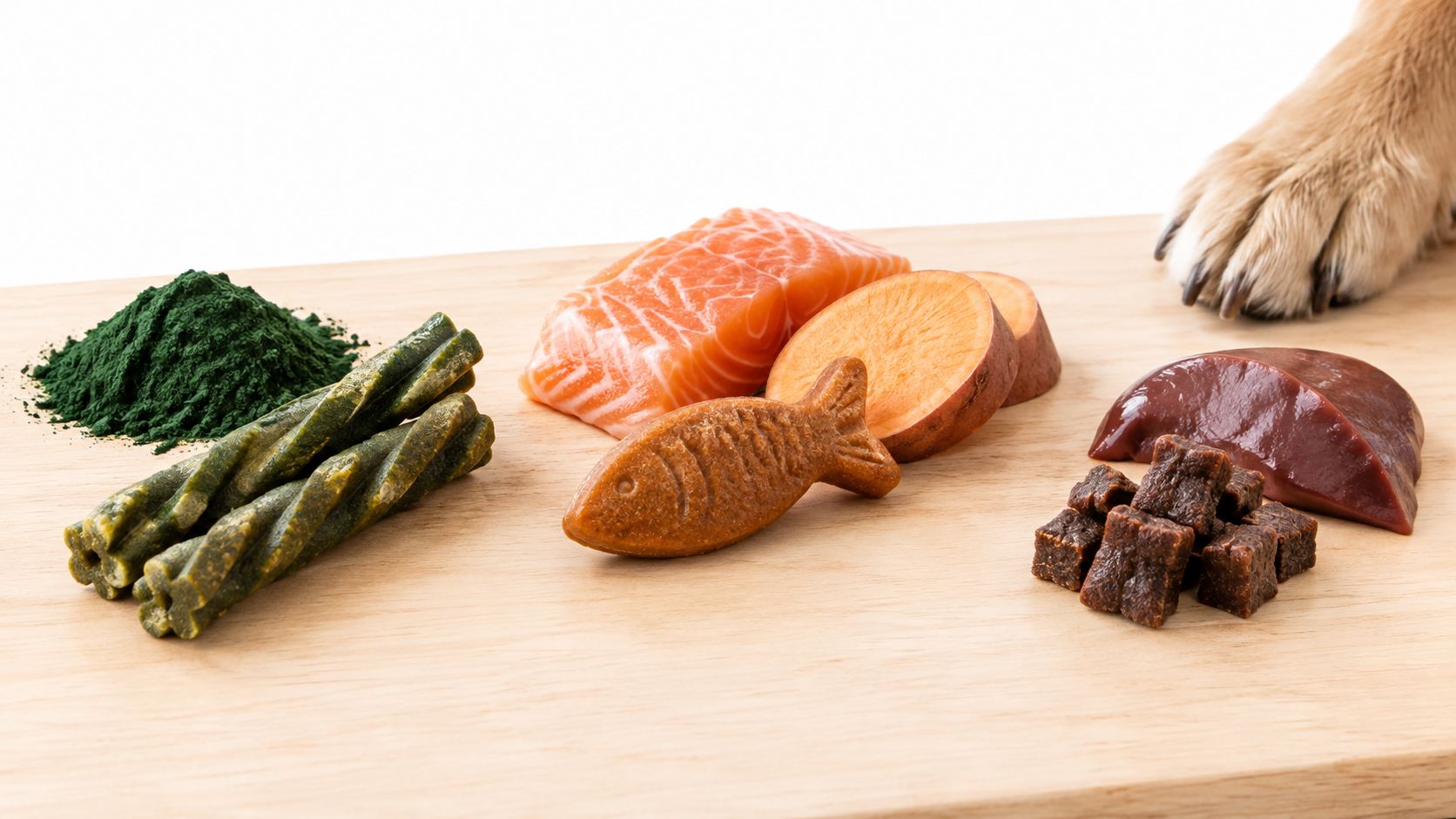
You can usually recognize a thoughtful functional product by how well the pieces fit together. The ingredient, the format, the serving pattern, and the storage method all support the same goal.
What good design looks like in daily life
A lickable treat can work well when a dog is picky, when you want to use a lick mat, or when you need a topper that adds a targeted ingredient without turning feeding into a battle. In that setup, the function isn't only the prebiotic or other active. The function also depends on whether the dog will take it consistently.
Single-serve packets and sealed supplement formats can make sense when ingredient protection matters more. Probiotics are the clearest example. Live organisms are more sensitive than many owners realize, so packaging that protects potency is part of the formulation, not an afterthought.
Signs that a product was built with purpose
Thoughtful products often share a few traits:
- The format fits the goal: chew for chewing, lickable for easy intake, packet for sensitive actives.
- The ingredient story is short and coherent: fewer distractions, clearer intent.
- The dog's experience was considered: smell, texture, and ease of use aren't separate from efficacy.
- The product fits a routine: enrichment, meal topping, travel use, or predictable daily dosing.
That combination is what turns a treat from a nice idea into a useful tool. It also explains why some functional products earn a place in a household routine while others end up forgotten in the cupboard.
Smart Next Steps for Using Functional Dog Treats Confidently
The easiest way to shop smarter is to keep three questions in order.
First, what job do I want this treat to do? Second, can this product realistically deliver that function? Third, does it fit my dog's body, routine, and health picture?
If you keep that sequence, most of the confusion falls away. You stop chasing broad wellness language and start matching product type to need. You also become much better at spotting when a treat is a useful daily tool versus when it's just a regular snack with upgraded packaging.
A few final habits help:
- Pick one goal at a time: digestive support, joint support, dental support, or another clear target.
- Use consistently: functional effects usually depend on repeated use, not occasional sampling.
- Watch your dog, not just the label: stool quality, enthusiasm, tolerance, and ease of routine all matter.
- Check with your veterinarian: especially for seniors, dogs with medical conditions, or dogs already taking supplements.
Functional dog treats can be useful. They just work best when you treat them as targeted delivery tools, not as wellness buzzwords.
Joyfull makes clean-ingredient pet products built around that same logic, including targeted options for gut support and vet-reviewed formulations designed for real daily use. If you want to compare products with function, ingredient quality, and format in mind, visit Joyfull.
0 comments