


Cooper, a Labrador mix, is halfway through a white rawhide roll when his owner notices the missing piece. The chew has softened between his back teeth, and a section that was there moments ago has vanished. Cooper looks pleased. His owner starts wondering whether that chunk will pass normally or sit somewhere it shouldn't.
That moment explains why many owners are searching for dog treats with no rawhide. The issue isn't that every rawhide chew harms every dog. The issue is that rawhide can behave unpredictably, and the label alone won't tell you whether a particular chew suits a power chewer, a gulper, a puppy, or a senior dog with fragile teeth.
The better approach is to match the material, shape, hardness, and supervision plan to the dog in front of you. Rawhide-free is a useful starting filter, not a safety guarantee.
Table of Contents
- Why Owners Are Walking Away From Rawhide
- What Actually Makes Rawhide Risky
- What Rawhide-Free Actually Means
- Safe Rawhide-Free Alternatives Worth Considering
- Matching the Right Chew to Your Dog
- Supervision and Safety Habits That Matter Most
- A Practical Vet-Style Feeding Routine
Why Owners Are Walking Away From Rawhide
A gulper and a grinder can receive the same rawhide roll and create entirely different risks. That difference explains why owners are moving toward dog treats with no rawhide and evaluating chews by chewing style, body size, age, and dental condition rather than by shelf appearance.
Rawhide became a default solution for boredom, chewing, and plaque buildup because it was inexpensive, easy to find, and lasted longer than an ordinary biscuit. The decision has changed. Owners now ask how a chew breaks apart, whether a dog is likely to swallow pieces, and what happens if supervision fails.
The aisle is responding to a behavior problem
Retailers have expanded alternatives because owners want products suited to the dog in front of them. A careful grinder and an eager gulper should not receive the same recommendation, even if they weigh the same.
A small dog may take in a large share of its daily food from a chew that looks modest in a large-dog aisle. A senior dog may need chewing enrichment but lack the dental strength for a rigid product. Puppies, power chewers, and dogs with sensitive teeth add different constraints.
Sourcing and contamination now belong in the purchase decision too. A pale chew with a vague ingredient panel does not earn trust because it looks clean. Check what the product is made from, how it is processed, how it breaks apart, and whether the manufacturer can explain its supply chain.
The replacement categories keep multiplying
The rawhide-free shelf includes edible animal chews, dental products, rubber enrichment toys, dehydrated treats, vegetable-based options, and dense milk-based chews. Each category removes one concern while creating another trade-off.
The useful question isn't “Which chew is safest?” It's “Which chew fails least dangerously for my dog?”
A bully stick may digest more readily than rawhide, yet its softened end can still become a gulped piece. A rubber toy avoids adding much food energy, but a determined dog may shred and swallow it. A hard chew may last longer while increasing stress on teeth.
Use the category as a starting point, then match it to the dog's size, age, jaw strength, dental needs, and chewing style. A grinder may suit a durable edible chew with close supervision. A gulper needs a format that does not create a manageable-sized end piece, and any chew that splinters, cracks, or becomes small enough to swallow should be removed. Rawhide-free is a filter, not a safety guarantee.
What Actually Makes Rawhide Risky
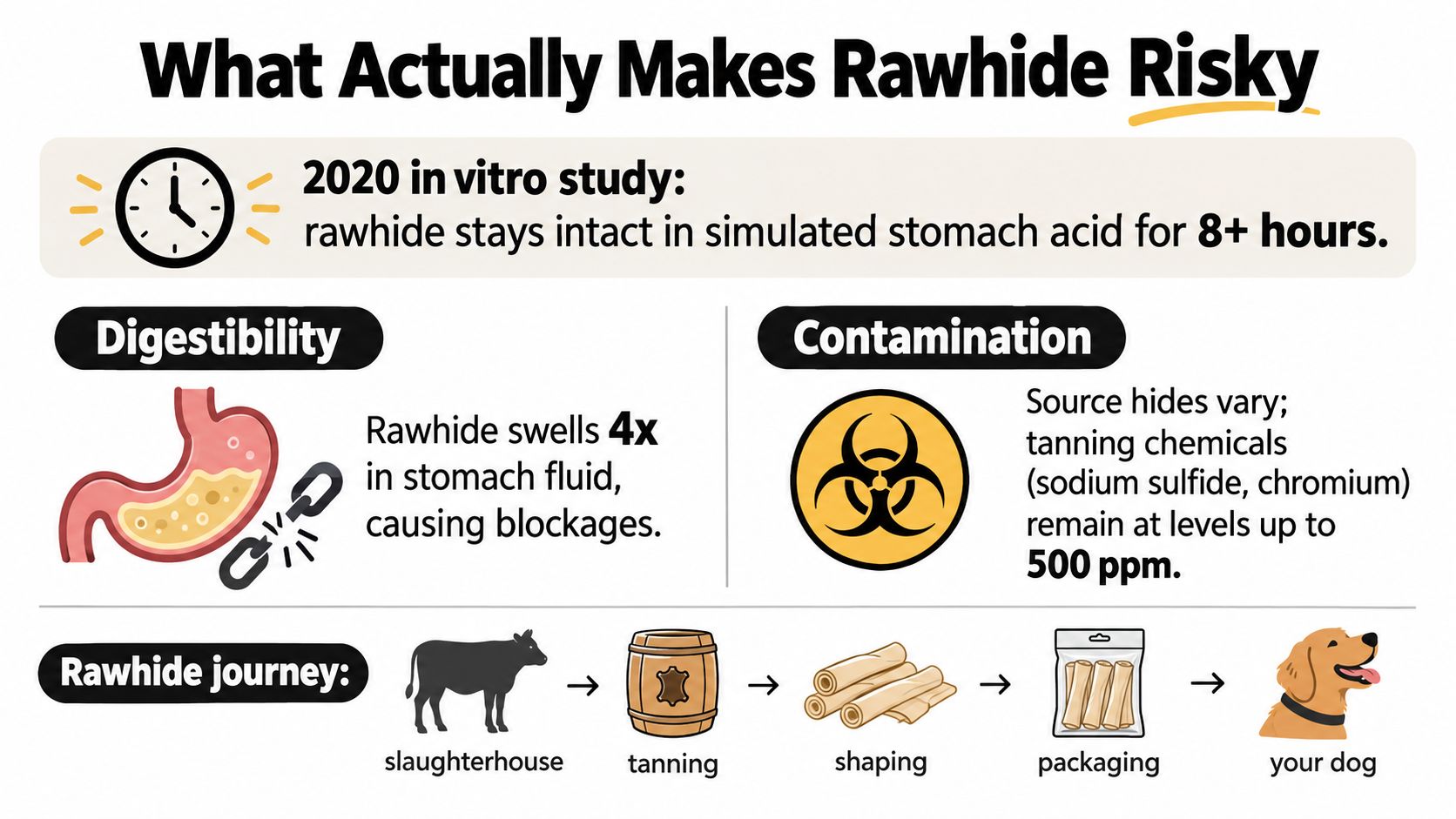
A dog can turn a rawhide roll into an emergency during an ordinary chew session. Rawhide has two separate safety problems. The first is mechanical, because a dog may tear off and swallow a piece that lodges in the throat or digestive tract. The second is digestive, because the material may not break down quickly after swallowing.
The research also shows why a product's appearance tells you very little. Two in vitro studies measured sharply different results across chew types and digestion stages:
| Study finding | What it showed |
|---|---|
| 2020 study | Gastric dry matter digestibility ranged from 8.41% to 86.90%, while intestinal-phase digestibility ranged from 35.10% to 95.70% among tested rawhide and rawhide-like treats. |
| 2014 comparison | After six hours, a pork skin chew was more than 50% digested, compared with 7.6% for a beef rawhide chew. The pork skin product was almost fully digested under intestinal conditions, while the tested beef rawhide reached about 50% to 70% and could require up to 24 hours to reach as much as 85% digestion. |
The 2020 findings are reported in this 2020 dog-treat digestibility study, and the earlier comparison appears in the 2014 dog-treat digestion study. The practical takeaway is simple: rawhide is not a consistent material, and neither “natural” appearance nor familiar shape predicts how it will behave after swallowing.
Why a swallowed piece can become a blockage
A piece does not need to be poisonous to cause an emergency. If a dog tears off a broad, softened section and gulps it, the piece can obstruct the esophagus or travel into the gastrointestinal tract and become stuck. That risk is especially relevant for dogs that chew briefly, swallow quickly, or keep working at a softened end.
Why the label doesn't solve the problem
Beefhide is still rawhide in the relevant sense. “Made in USA,” “natural,” and “organic” may describe sourcing or marketing standards, but they do not automatically change how a dense hide piece hydrates, softens, fragments, or moves through a dog's digestive tract.
Contamination deserves separate attention. A 2024 review of dog treats discusses contamination concerns, tooth damage from hard chews, and ingredients that may not suit dogs prone to calcium-oxalate stones. Inspect the specific product, its ingredients, processing details, and failure mode. “Rawhide-free” is only a filter.
For dental support, a purpose-designed plaque reduction chew for pets can be a more targeted choice than relying on a hide product whose dental effect is difficult to separate from its obstruction risk.
Rawhide risk is structural, not just a bad-brand problem. Processing can change digestibility, but owners cannot reliably predict that behavior by looking at the roll.
What Rawhide-Free Actually Means
Your dog ignores the package claim. A “no rawhide” label tells you only what the product excludes. It does not explain what the chew contains, how hard it is, how quickly it breaks down, or what happens if your dog tries to swallow it whole.
The category includes bully sticks, rubber food-dispensing toys, dental chews, sweet potato slices, fish skin, jerky, trachea, and dense milk-based chews. They do not share one safety profile. Each can fail differently, depending on the material and the dog using it.
A bully stick is edible, but a fast eater may gulp the remaining end. A rubber toy passes through the body differently from food, yet a dog that shreds it can swallow fragments. A dehydrated vegetable slice may be easy to chew, but it can disappear quickly and still add food energy. Treats with unclear sourcing or processing also deserve closer inspection, even when the front label says rawhide-free.
Judge the chew's failure mode
Choose the category by asking what happens when your dog uses it badly.
- Swallows quickly: Pick a chew or toy large enough to reduce whole-piece swallowing, then remove it before it becomes a small end piece.
- Tears and shreds: Avoid materials that create sharp or large fragments. Inspect the chew during every session.
- Grinds patiently: Edible options may fit, but hardness still matters, especially for dogs with dental problems.
- Chews gently: Softer dehydrated treats, pliable dental products, and stuffed rubber toys can provide enrichment without demanding heavy jaw pressure.
This product-specific approach also keeps dental, digestive, and sourcing questions separate. Hardness may create tooth risk, while an edible chew raises questions about swallowed pieces, ingredients, and calorie intake. Match the material to the dog, not to the marketing category.
Rawhide-free is only a filter
Before buying, answer four questions:
- Can my dog digest the material if a small piece is swallowed?
- Can the chew break into a dangerous shape?
- Is it hard enough to damage teeth?
- Can I identify the ingredients and sourcing clearly?
If the package answers only the first question with “rawhide-free,” keep looking. Build your rotation around chewing style, body size, age, and dental needs. A rawhide-free product can still be the wrong choice if its texture, density, or failure pattern does not fit your dog.
Safe Rawhide-Free Alternatives Worth Considering
The best rawhide-free rotation uses different kinds of enrichment instead of one oversized chew every day. That reduces dependence on a single material and lets you choose softer or harder options based on the session.
| Chew Type | Avg Chew Time | Digestibility | Calories per Chew | Supervision Level | Best Fit |
|---|---|---|---|---|---|
| Dental chew | Short to moderate | Product-specific, often designed to be eaten | Product-specific | Moderate | Dogs needing routine dental enrichment |
| Bully stick | Moderate to long | Edible, but swallowed ends still need monitoring | Product-specific | High | Patient or moderate chewers |
| Rubber chew | Variable | Not a food; remove fragments | No food calories unless stuffed | High | Power chewers and food-motivated dogs |
| Dehydrated or jerky-style chew | Short to moderate | Usually edible, material-specific | Product-specific | Moderate to high | Gentle and moderate chewers |
| Vegetable-based chew | Short to moderate | Edible, product-specific | Product-specific | Moderate | Dogs that enjoy lighter chew textures |
| Dense milk-based chew | Long | Product-specific; remove small remnants | Product-specific | High | Dogs needing resistance, with dental caution |
Dental chews
Purpose-designed dental chews can combine chewing with a brushing-like mechanical action. Choose a product with clear feeding directions and a texture appropriate for your dog's mouth. They aren't a free pass to ignore brushing, and they can still add to the daily food ration.
For dogs with dental disease, loose teeth, or painful chewing, ask your veterinarian before choosing a firm dental product. A dog that avoids hard food may need a softer enrichment format rather than a more aggressive “tartar control” chew.
Bully sticks
Bully sticks are typically single-ingredient, protein-based chews, and the available digestion evidence is more favorable for some pork skin products than for the tested beef rawhide. Still, the category isn't risk-free. Bacteria, sourcing, odor, calorie density, and the small final piece all deserve attention.
Use a holder for dogs that rush the last section. Remove the chew when it becomes short enough to fit fully behind the dog's teeth or when the dog starts trying to swallow it instead of working it.
Rubber toys
Durable rubber toys from brands such as Kong or West Paw can turn chewing into a controlled feeding activity. Fill them with part of the dog's regular meal rather than automatically adding extra treats. Dishwasher-safe construction can make cleaning easier, but inspect for cracks, gouges, and detached pieces.
Rubber is especially useful for power chewers and gulpers because you can select a shape that resists whole-mouth swallowing. It still requires supervision, particularly during the first sessions.
Dehydrated, jerky-style, and vegetable chews
Single-ingredient muscle meat, fish skin, and trachea give owners a clearer ingredient story than a heavily processed composite chew. They usually don't last as long as dense rubber or a firm edible chew, and a fast eater may consume them almost immediately.
Vegetable options such as sweet potato slices can suit dogs that prefer a softer texture. They should still count as food, especially when used repeatedly. Dense yak-style milk chews can last longer, but their hardness makes dental sensitivity and tooth-fracture risk important considerations.
One gentler enrichment option is Prebiotic Chicken Squeeze Treats for Dogs - 24 Packets, made with real cage-free chicken, prebiotics, and no artificial colors, preservatives, or flavors. It's a lickable treat rather than a chew, so owners can spread it on a lick mat or use it inside a rubber toy when the dog needs enrichment without a hard object.
For ingredient-focused ideas, Joyfull's vet-reviewed guide can help you compare air-dried formats with other edible treats.
Variety beats volume. Rotate textures and activities, and stop treating “long-lasting” as the only measure of value.
Matching the Right Chew to Your Dog
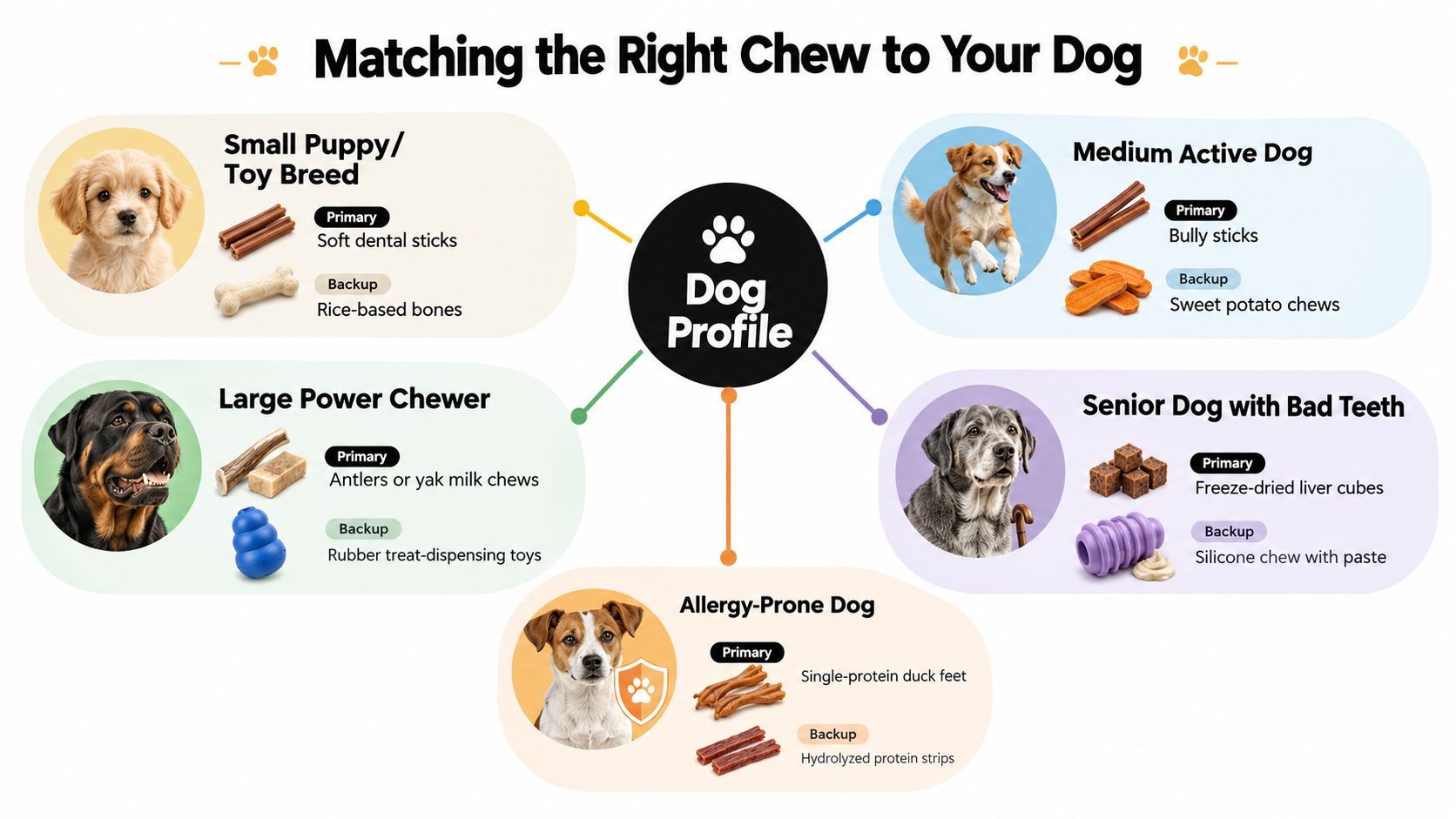
Start with behavior, not the package photograph. Breed can offer clues, but jaw strength, body size, age, and swallowing habits usually tell you more about whether a chew will work.
Power chewers
Labradors, pit bulls, huskies, and other determined chewers often need a durable rubber toy or a carefully selected dense edible chew. Don't respond to rapid destruction by automatically moving to antlers or bones. Excessive hardness can create a tooth problem while solving the toy problem.
Use a size that can't fit completely inside the mouth, inspect it after each session, and keep an edible backup for days when a rubber toy isn't enough. Nandog Pet Gear's safety guide for heavy chewers offers useful context for evaluating durability without confusing “hardest” with “safest.”
Gulpers and fast eaters
Beagles, doodles, and many small dogs can turn an edible chew into a swallowing exercise. A large rubber food-dispensing toy is often the strongest primary choice because it slows access and doesn't become a digestible chunk. A bully stick can work as a backup when used with a holder and removed early.
Watch the first sessions closely. If your dog repeatedly abandons chewing to bite off and swallow sections, the product isn't a good match, regardless of its ingredient list.
Small dogs
For dogs under 20 pounds, size and calorie control become especially important. Select small-dog dental chews or split edible chews only when the package specifically supports that size. A chew designed for a large dog can be physically awkward and nutritionally excessive for a toy breed.
The safe choice is not the smallest available piece. It's the piece your dog can handle without swallowing whole.
Seniors and dogs with dental sensitivity
Senior dogs may still want the soothing routine of chewing even when their teeth and gums can't handle rigid resistance. Try softened food inside a rubber toy, pliable dehydrated treats, or dental chews designed for sensitive mouths.
Stop if your dog drops the chew, paws at the face, chews only on one side, or shows a sudden change in eating behavior. Those signs deserve a dental check rather than a harder replacement.
Puppies
Puppies need age-appropriate sizing and softer textures. Keep sessions brief, supervise closely, and avoid rigid chews that place unnecessary pressure on developing teeth and jaws. A stuffed rubber toy or soft edible chew often gives a puppy the right outlet without turning chewing into a dental stress test.
The broader set of safe dog snack recommendations can help you keep training treats and chew sessions separate.
Supervision and Safety Habits That Matter Most
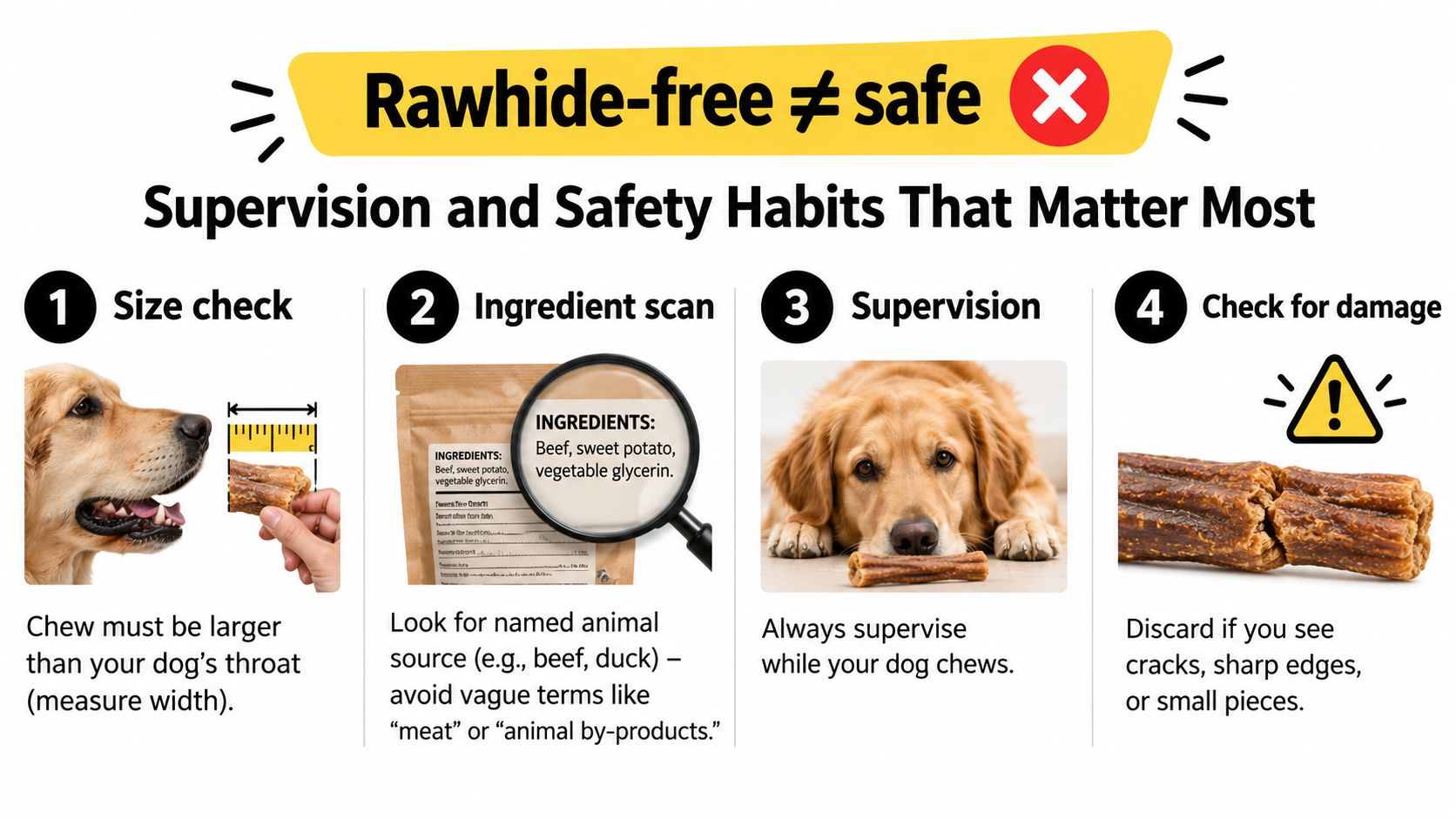
A rawhide-free label won't stop a dog from swallowing a dangerous piece. Sizing, supervision, and removal timing matter more than front-of-pack reassurance. Treat every new chew as an experiment in your dog's behavior, not as a guaranteed safe object.
Use this store-and-home checklist:
- Check the size: The chew should be wider than your dog's throat and difficult to swallow whole. Follow the manufacturer's size guidance, then apply common sense to your individual dog.
- Supervise the first ten uses: Stay present until you know whether your dog licks, grinds, tears, or gulps. A product that works for one dog may fail quickly with another.
- Read the full ingredient list: Look for named animal sources and clear ingredients. Be cautious with vague proteins, artificial colors, and undeclared allergens.
- Remove the final fragment: Discard a chew when it breaks into a swallowable piece, develops sharp edges, or softens into a lump your dog can gulp.
- Account for the food: High-calorie chews belong inside the daily ration, not on top of it. Ask your veterinarian for individualized guidance if your dog has weight, kidney, urinary, or digestive concerns.
Hard chews deserve a separate tooth check. If your dog has a history of broken teeth or dental disease, don't use toughness as your selection method.
If your dog is gagging, pawing at the mouth, or retching without producing vomit, seek veterinary care immediately.
Supervision isn't hovering. It's how you discover the exact point at which a chew stops being a chew and becomes a loose piece.
A Practical Vet-Style Feeding Routine
Make the first session deliberately boring. Give your dog the new rawhide-free chew for a short observation period, watch the bite pattern, and remove it before the dog reaches a small end or begins gulping. Check the mouth, the floor, and the remaining chew for fragments.
Keep treats within the daily food plan. The commonly used ten-percent rule is a general veterinary feeding principle, but dogs with obesity, diabetes, urinary disease, allergies, or gastrointestinal conditions may need a more specific plan from their veterinarian.
A simple weekly rhythm
- Daily: Use a low-calorie enrichment activity, such as a portion of regular food in a rubber toy or a lick mat.
- Several times weekly: Offer a suitable edible chew under supervision, varying the protein or texture when your dog tolerates it.
- After every session: Inspect the chew, clean reusable toys, and note stool changes, vomiting, reduced appetite, or abdominal discomfort.
- Before repeating a problem product: Stop if digestion changes or your dog shows dental pain. Don't reopen the bag until your veterinarian has helped identify the cause.
For most healthy adult dogs, I'd buy a properly sized durable rubber food-dispensing toy first. It provides chewing and mental work without making the chew itself a major nutritional addition, and you can control what goes inside. Add an edible chew later if your dog chews calmly and handles it well.
Get veterinary input before buying the next bag if your dog has known dental disease or has previously choked, vomited, or developed digestive trouble after a chew. Those cases call for an individualized plan, not a more persuasive package label.
Joyfull offers clean-ingredient pet snacks, including a lickable chicken treat with prebiotics that can be used on a lick mat or inside a rubber enrichment toy. If you're building a rawhide-free routine around controlled portions and gentler enrichment, visit Joyfull to explore the available options.
0 comments