


Your dog scratches through dinner, wakes up to chew a paw, then starts again the moment you sit down. You check the coat and find no obvious fleas, so you try a new shampoo, change the food, or hope the problem will settle. That approach often wastes time because constant scratching is a symptom, not a diagnosis.
Veterinarians call itching and scratching pruritus. The useful question is not just how to stop it. It is what is driving it, where is the skin being damaged, and has a secondary infection already taken over?
Table of Contents
- Understanding Why Your Dog Is Constantly Scratching
- The Four Primary Causes of Canine Itching
- How to Identify the Root Cause by Location and Skin Changes
- The Self-Perpetuating Cycle of Chronic Itch and Infection
- Immediate Home Care Steps Before the Vet Visit
- Supporting Skin Health Through Gut-Dermis Connection
- When Scratching Becomes an Emergency Situation
- Building a Long-Term Prevention and Management Plan
Understanding Why Your Dog Is Constantly Scratching
A dog is constantly scratching for a medical reason far more often than because of a harmless habit. Pruritus is a major dermatologic presentation in dogs, and skin problems account for roughly 15% to 25% of veterinary consultations, according to veterinary literature summarized in this PubMed-indexed study on canine dermatologic disease.
That same source reports that pruritus represents approximately 25% to 40% of dermatology cases, while canine atopic dermatitis was the diagnosis in 59.1% of dermatologic cases in one central-European study. The point isn't that every itchy dog has atopic dermatitis. The point is that persistent scratching belongs in the medical category, not the “wait and see” category.
Start with the pattern, not the product
Observe your dog for a full day before applying anything new. Record:
- Where the dog scratches: tail base, paws, ears, belly, face, or one isolated area.
- What else happens: licking, chewing, rubbing, head shaking, or scooting.
- What the skin looks like: redness, flakes, scabs, hair loss, thickening, moisture, or open sores.
- How the problem behaves: seasonal, year-round, sudden, or gradually worsening.
This information helps a veterinarian rank parasites, infection, allergy, and non-skin causes. It also prevents the common mistake of treating the most visible sign while missing the condition underneath.
Practical rule: Occasional scratching can be normal. Persistent, intense, or skin-damaging scratching deserves a structured veterinary assessment.
The Four Primary Causes of Canine Itching
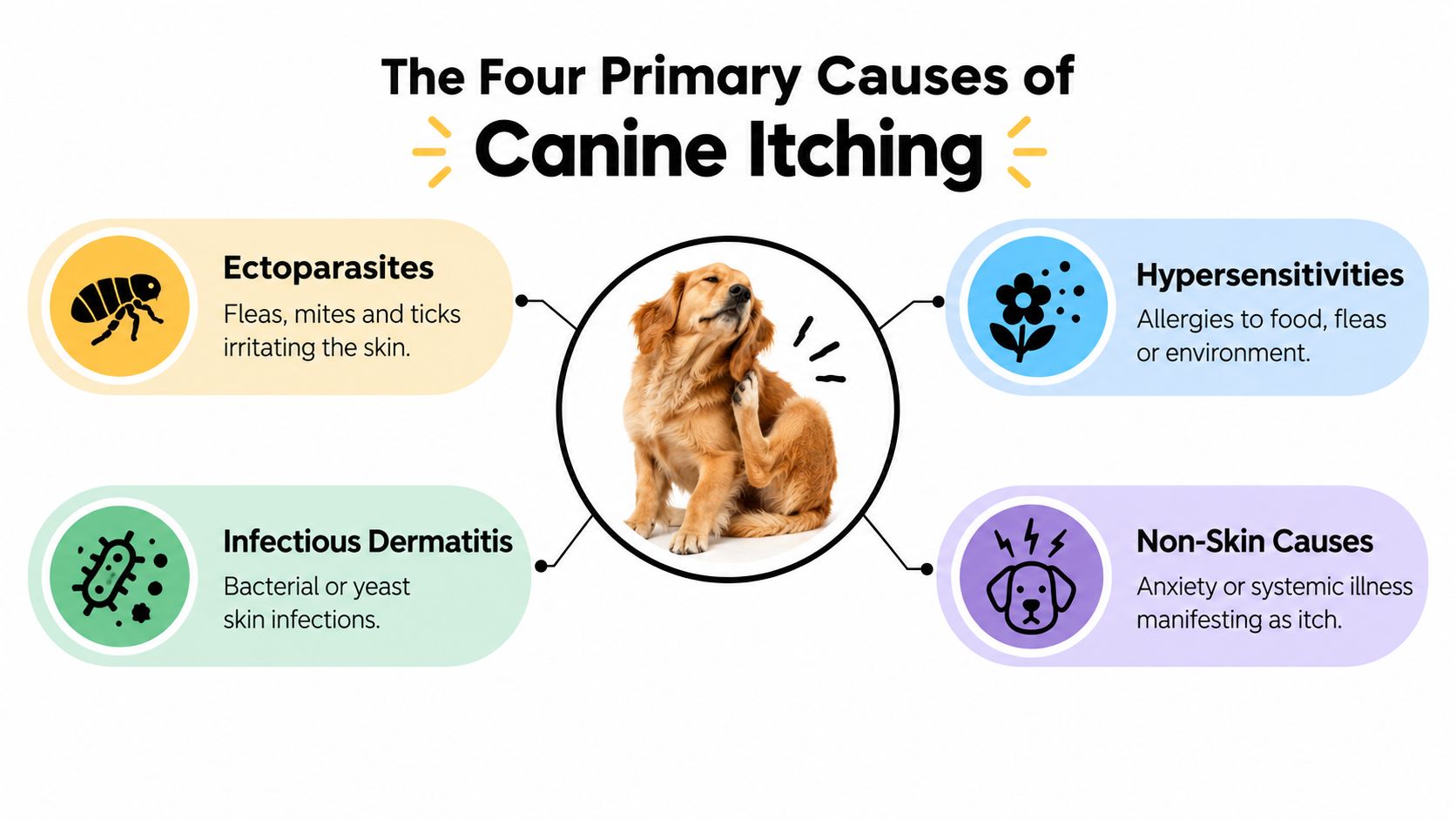
Most itchy dogs fit into four broad diagnostic groups. They can overlap, and one problem often creates another, but this framework gives you a sensible starting point.
Ectoparasites
Fleas and sarcoptic mites irritate the skin directly. A flea may be gone by the time you inspect the coat, and mites may require skin scrapings to identify. Flea allergy dermatitis can produce intense itching even when you don't find a visible infestation. For a practical guide to recognizing flea evidence around the home and on pets, use this flea infestation signs guide from FullScope Pest Control.
Hypersensitivities
Allergy is repeatedly identified as the leading cause of canine pruritus. Common forms include flea allergy dermatitis, atopic dermatitis, food allergy, contact dermatitis, and reactions associated with sarcoptic mange. Vetstreet data cited in a Royal Canin veterinary review of perianal pruritus recorded an almost 50% rise in itch-related visits among dogs from 2013 to 2018.
Infectious dermatitis
Bacterial and Malassezia yeast overgrowth may begin as a secondary consequence of allergy, parasites, or scratching. Once established, infection can become the dominant source of discomfort.
Non-skin contributors
Repeated licking or chewing isn't always itch. Pain, including pain associated with osteoarthritis, can make a dog focus on one limb. Anxiety or compulsive grooming is possible too, but it should be considered only after physical causes receive proper attention.
How to Identify the Root Cause by Location and Skin Changes
Location provides clues, but it doesn't prove a diagnosis. Use it to collect better information, not to declare that your dog “definitely has allergies.”
Compare the scratching zones
| Location or pattern | Signs to inspect | More likely possibilities |
|---|---|---|
| Tail base and lower back | Black specks, scabs, thinning hair | Fleas or flea allergy |
| Paws and between toes | Redness, saliva staining, dampness, odor | Environmental allergy, contact irritation, yeast |
| Face and ear flaps | Redness, rubbing, recurrent ear trouble | Atopic disease, infection, parasites |
| Belly or armpits | Localized redness after a new product or surface exposure | Contact dermatitis |
| Ears with head shaking | Odor, discharge, pain, redness | Yeast, bacteria, mites, or allergy |
| One wet, painful patch | Oozing, matting, heat, hair loss | Hot spot or localized infection |
| One repeatedly licked limb | Minimal surface change but persistent attention | Pain or another non-skin problem |
Flea-related irritation often concentrates around the tail base and lower back. Environmental reactions more commonly involve the paws, face, ears, and ear flaps. A dog reacting to something that touches the skin may develop sharply localized redness on the belly, feet, or another contact area.
Food-triggered disease is harder to identify visually. It can resemble environmental allergy and may persist regardless of season. Don't try to confirm it with saliva testing, blood-based food panels, or casual food switching. Veterinary guidance recommends a properly controlled elimination trial with a hydrolyzed diet, followed by an appropriate challenge if the itch improves. The Royal Canin guide to canine pruritus causes and therapies explains why that process is more reliable than unsupported food-allergy tests.
Odor, greasy skin, crusting, thickening, hair loss, and discharge raise the likelihood of infection or significant inflammation. Those findings should move you from home observation to a veterinary appointment.
The Self-Perpetuating Cycle of Chronic Itch and Infection
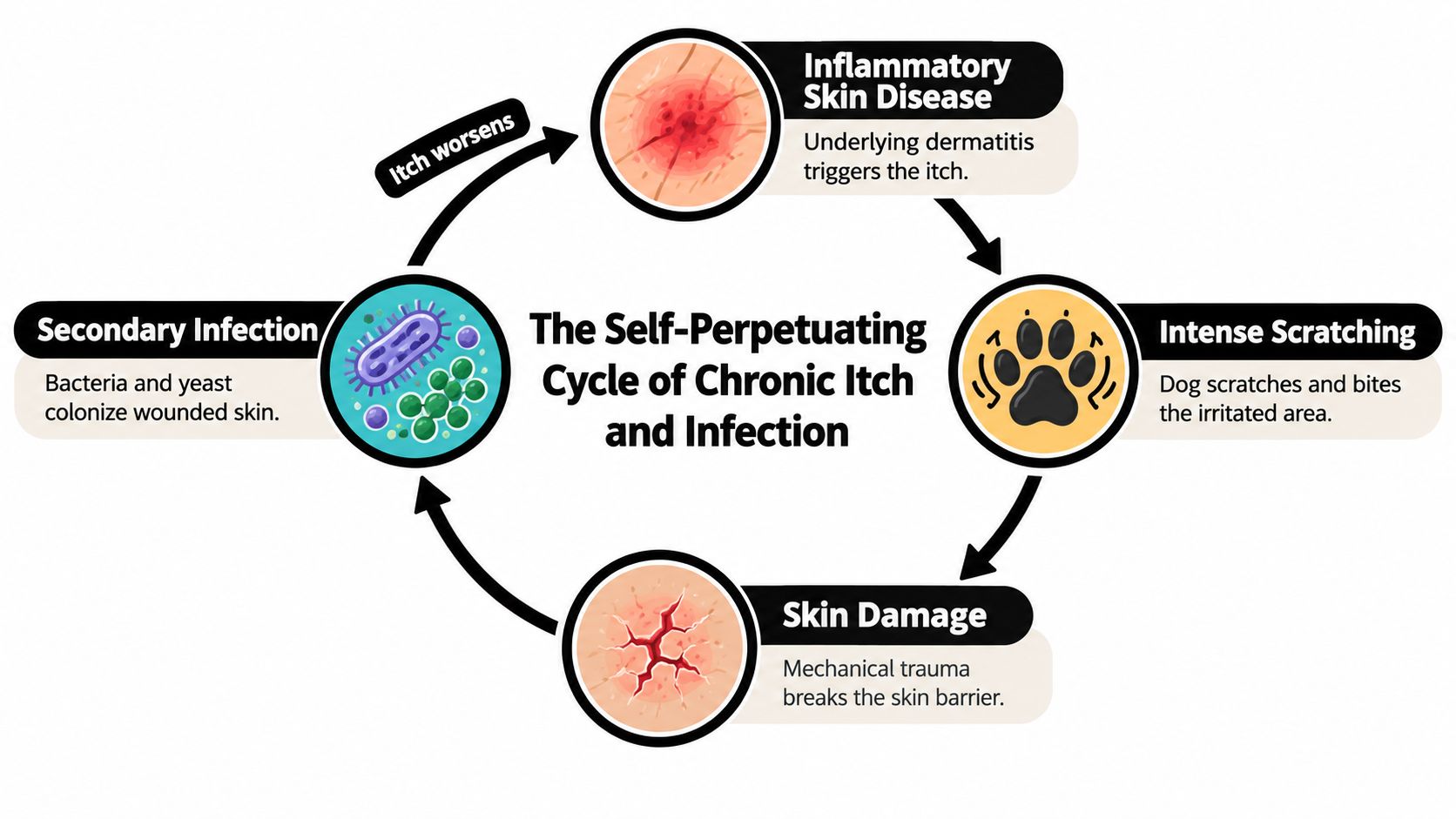
A dog starts with an inflammatory skin problem. The dog scratches, chews, or rubs the area. That mechanical trauma breaks the protective barrier, allowing bacteria or Malassezia yeast to multiply more easily. The damaged skin then becomes more inflamed, and the dog becomes even itchier.
Why the original trigger may no longer be the main problem
Suppose an allergic flare starts the process on a paw. After repeated chewing, the paw becomes moist and raw. Yeast or bacteria overgrow. At that stage, removing the original outdoor allergen may not stop the itching because the infection has become an independent source of inflammation and discomfort.
This is why a soothing bath can provide temporary comfort without solving the case. It may remove surface allergens, but it can't determine whether mites are present, identify organisms on a slide, or select treatment for an established infection.
The clinical signs of this cycle include:
- Recurrent ear disease, especially with odor or discharge.
- Hair loss and skin thickening from prolonged trauma.
- Hot spots, which may become wet, painful, and rapidly larger.
- Musty, greasy, or foul-smelling skin.
- Licking and chewing in addition to scratching.
- Crusts, sores, or raw patches.
The veterinary review of chronic pruritus and skin-barrier damage describes chronic itch as an inflammatory state in which repeated scratching increases epidermal damage and the risk of bacterial or Malassezia overgrowth.
Treat the itch cycle as a chain. Breaking only one link rarely produces lasting relief.
Immediate Home Care Steps Before the Vet Visit
Home care should protect the skin and prevent further trauma. It should not attempt to diagnose or medicate a complicated dermatology case.
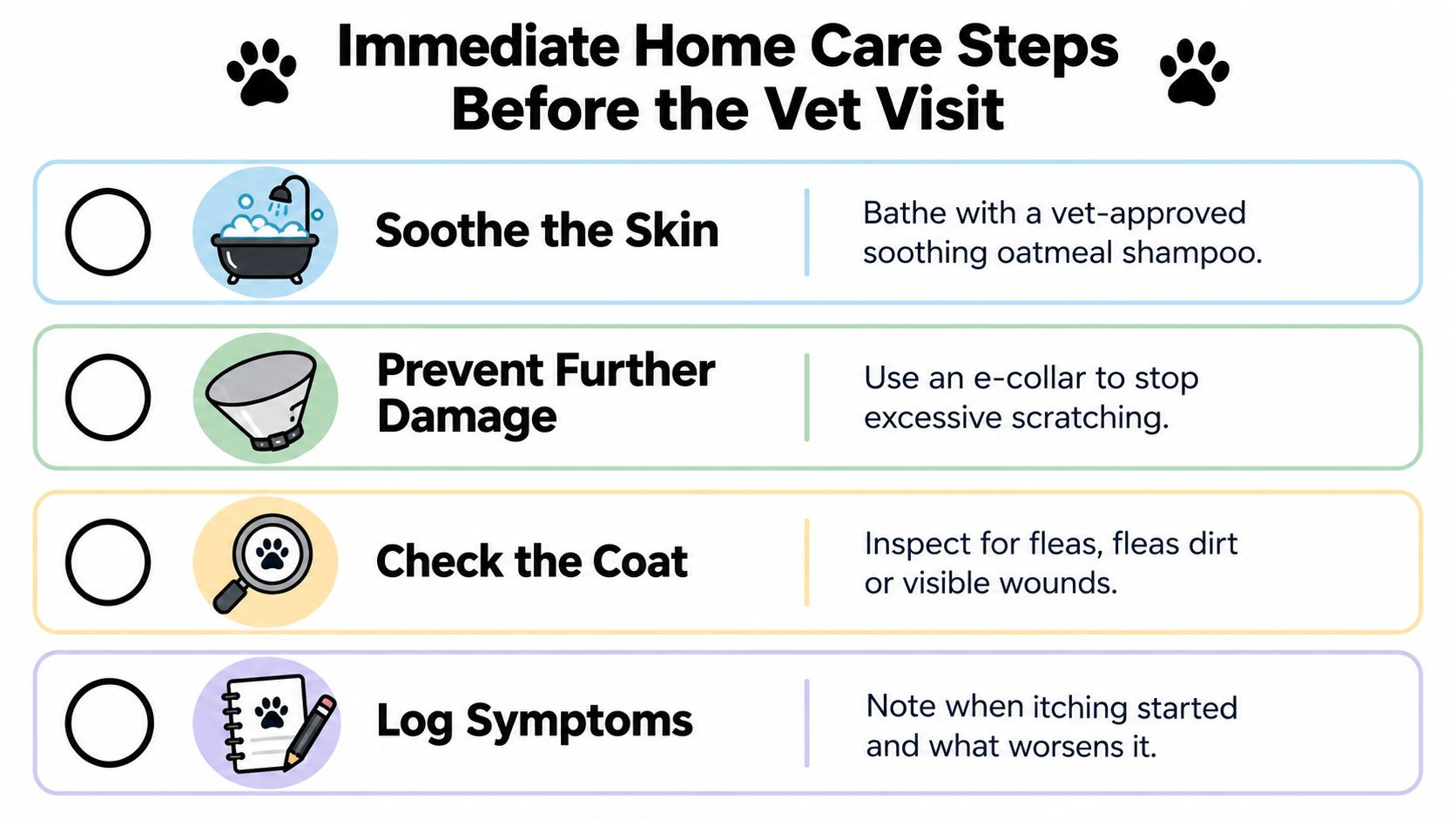
- Inspect calmly. Part the coat in good light and check the tail base, belly, paws, ears, and skin folds. Look for fleas, flea dirt, scabs, redness, hair loss, moisture, heat, and wounds.
- Use a flea comb. Work slowly over a white towel, concentrating on the tail base and belly. Finding no flea doesn't completely exclude flea allergy, but a proper check gives your veterinarian useful information.
- Rinse after outdoor exposure. If the paws become itchy after walks, rinse them with clean water and dry carefully between the toes. Stop using a new shampoo, detergent, lawn product, or bedding material if the timing suggests contact irritation.
- Prevent self-trauma. An e-collar can stop a dog from turning a small irritated area into an open wound. Keep nails reasonably trimmed, but don't force handling if the skin is painful.
- Bathe only when appropriate. A vet-approved soothing dog shampoo may remove environmental material and reduce surface irritation. Rinse thoroughly and dry the coat completely. Over-bathing or harsh products can further disrupt the skin barrier.
- Log the details. Note when the problem started, whether it is seasonal, what areas are affected, and whether other pets itch. Take clear photographs before and after any home-care step.
Watch this short demonstration for practical handling context:
Use fragrance-free, pet-safe household products and wash bedding regularly. Guidance on choosing safer products is available in Gmaids' non-toxic cleaning advice for homes with pets. For additional practical dog skin relief, keep the focus on barrier protection and veterinary diagnosis rather than aggressive experimentation.
Don't apply human steroid creams, pain medication, antihistamines, essential oils, or random anti-itch products unless your veterinarian specifically approves the product and dose. These substances can be unsafe when swallowed, may mask important signs, and can complicate an infection.
If you want to discuss supportive gut care with your veterinarian, Joyfull Probiotic Supplement for Dogs, 30 Single-Serving Packets is described as containing real beef bone broth, veterinarian-formulated probiotic strains, two prebiotics, and third-party testing for potency and purity.
Supporting Skin Health Through Gut-Dermis Connection
Gut support has a place in a skin-management plan, but it doesn't replace parasite control, cytology, skin scrapings, or treatment for a hot spot. A probiotic won't eliminate fleas, remove mites, or cure an active bacterial infection. Use it as supportive care after the immediate dermatologic problem has been assessed.
The sensible approach is to improve overall digestive balance without presenting supplements as allergy medication. Probiotics and prebiotics may support the intestinal microbiome, while consistent nutrition helps you monitor whether diet changes coincide with flare-ups. If food allergy is suspected, don't add multiple supplements or treats during an elimination diet because extra ingredients can invalidate the trial.
What to avoid
Home remedies often fail because they confuse comfort with treatment. Coconut oil, essential oils, undiluted plant extracts, frequent harsh bathing, and human creams can irritate damaged skin or create a licking and ingestion risk. Raw ingredients added indiscriminately also make it harder to identify a food trigger.
For owners discussing microbiome support with a veterinarian, dog gut health is a separate consideration from acute itch treatment. The Joyfull canine supplement snapshot identifies a minimum of 1 billion CFU per serving, clinically tested probiotic strains, two complementary prebiotics, real beef bone broth, individual serving seals, and third-party testing for potency and purity.
A cat-specific product isn't interchangeable with a dog product. Probiotic Supplement for Cats, 30 Single-Serving Packets is formulated for cats and is described as containing real beef bone broth, probiotic strains, two prebiotics, individual serving seals, and third-party testing.
When Scratching Becomes an Emergency Situation
Don't wait for routine monitoring when scratching has produced open sores, bleeding, marked swelling, intense heat, or a foul odor. These signs suggest a hot spot, bacterial or yeast overgrowth, parasitic disease, or deeper inflammation that needs examination and targeted treatment.
Arrange prompt veterinary care when your dog has persistent hair loss, recurrent ear trouble, discharge, painful paws, thickened skin, or a patch that is expanding. A dog that can't settle, sleep, or stop biting the skin is also past the point where another home shampoo is a sensible plan.
Seek urgent care for sudden facial swelling, breathing difficulty, collapse, or signs of a severe allergic reaction. Don't wait to see whether an over-the-counter product works.
Do not miss this clue: A dog that repeatedly licks one limb may be communicating pain rather than itch.
The PetMD overview of itchy dogs highlights the possibility of hot spots, secondary infections, and non-skin contributors such as pain from osteoarthritis. If the skin looks relatively normal but one leg receives relentless attention, ask the veterinarian to assess joints, muscles, nails, and the paw as well as the skin.
Building a Long-Term Prevention and Management Plan
Long-term control starts with a written plan, not a rotating shelf of products. Your veterinarian should identify the likely trigger, check for parasites, examine suspicious skin and ears, and treat secondary infection when present. Your job is to observe patterns and follow the plan consistently.
Build the routine around prevention
- Keep parasite prevention consistent. Ask your veterinarian which flea and mite strategy fits your dog, household, region, and other animals. Don't use visible fleas as the only measure of success.
- Inspect the coat weekly. Check the tail base, paws, ears, belly, and folds for early redness, odor, moisture, scabs, or hair loss.
- Control exposure sensibly. Rinse and dry paws after irritating outdoor exposure, wash bedding with a fragrance-free product, and stop new grooming products if the timing points to contact irritation.
- Track flare-ups. Record food changes, treats, walks, bathing, season, ear symptoms, and treatment response. A simple timeline is more useful than guessing from memory.
- Test food properly. If your veterinarian suspects food allergy, follow the prescribed elimination diet exactly. Random brand changes and unapproved treats don't answer the diagnostic question.
- Recheck recurring disease. Repeated ear infections, hot spots, and yeast problems usually indicate an unresolved driver. Ask what is causing the recurrence instead of repeatedly treating the latest outbreak.
Supportive nutrition can sit alongside this plan, but it shouldn't distract from diagnostics. Owners evaluating itchy skin relief for dogs should separate general wellness support from treatment of allergy, infection, mites, or pain.
A dog prone to pruritus needs an owner who notices small changes early and a veterinarian who follows the evidence in sequence. Start with observation, rule out parasites and infection, investigate allergy when appropriate, and protect the skin while the cause is being identified.
Joyfull offers pet wellness products that focus on convenient probiotic and prebiotic support, including a veterinarian-formulated dog probiotic made with real beef bone broth and individually sealed servings. Visit Joyfull to review the available options, then discuss whether supportive gut care fits your dog's veterinary skin-management plan.
0 comments