


Your dog stops halfway through the walk, plants both front paws in a muddy patch, and starts licking. You give the leash a gentle lift, but your dog keeps working at the soil as if it has found something important. You're left wondering whether this is an odd but harmless habit or a sign that something is wrong.
Occasional sampling may be unremarkable, but repeated or intense mud eating deserves attention. Veterinarians call the behavior geophagia, a form of pica involving the consumption of soil, dirt, or mud. The cause can be medical, nutritional, behavioral, or environmental, and the right response depends on the pattern you're seeing.
Table of Contents
- When Your Dog Stops Mid-Walk to Eat Mud
- What Geophagia Actually Is and Why It Happens
- Medical and Nutritional Reasons Dogs Eat Mud
- Behavioral and Environmental Triggers
- Health Risks of Letting Mud Eating Continue
- How Vets Diagnose the Underlying Cause
- Prevention Strategies and Training That Work
- First Aid, Red Flags, and When to Call the Vet
When Your Dog Stops Mid-Walk to Eat Mud
The first useful question isn't “How do I stop this?” It's “What else is happening?” A dog who takes a quick lick from damp ground and then happily continues the walk is different from a dog who seeks mud at every opportunity, swallows large clumps, or becomes frantic when you pull them away.
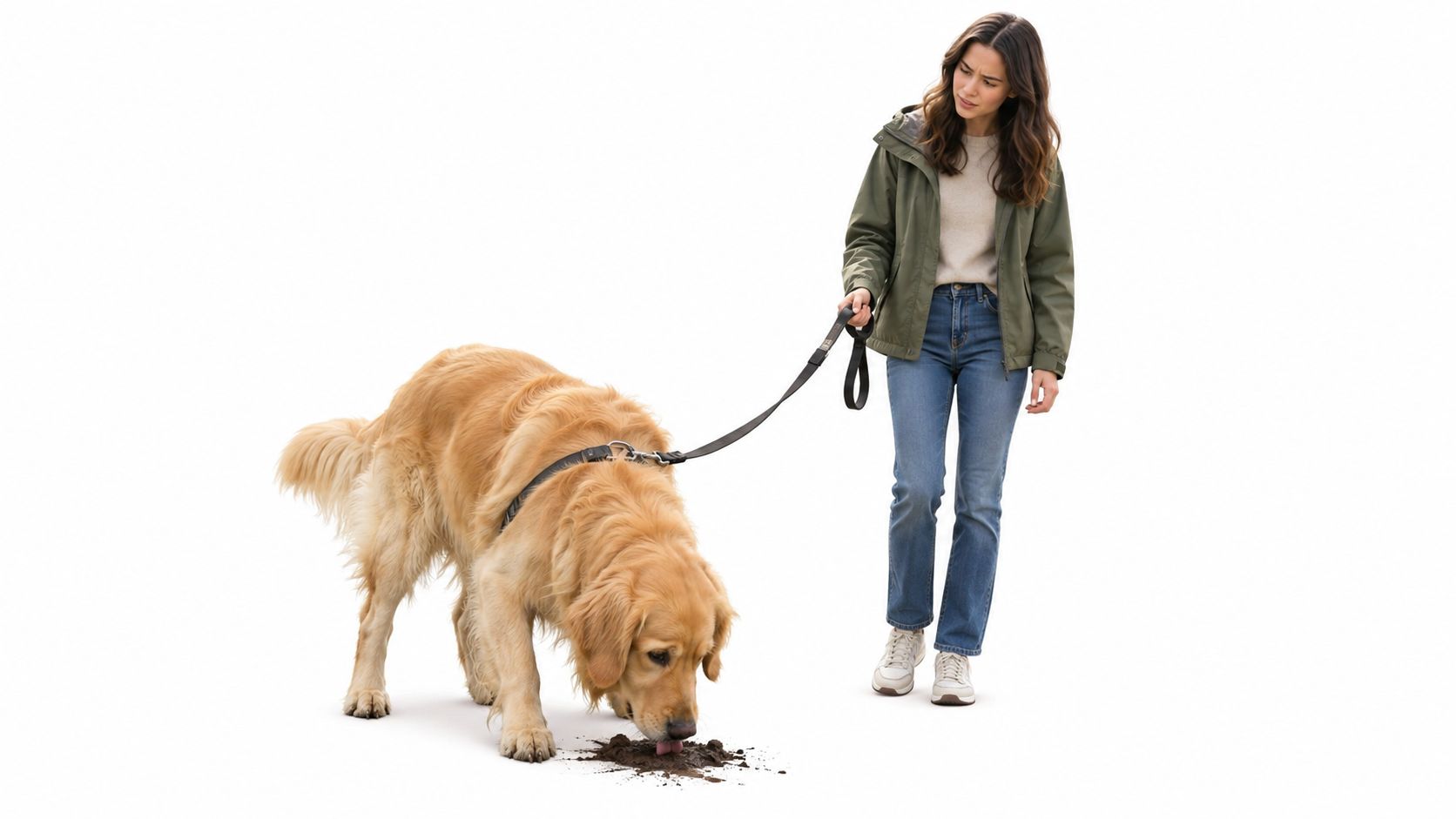
Watch the behavior as if you're gathering clues. Note whether it began suddenly, whether it happens only outdoors, and whether your dog has changes in appetite, stool, energy, weight, or thirst. Frequency, intensity, and accompanying symptoms help determine whether home management is reasonable or a veterinary appointment should come first.
Practical rule: A single small mouthful usually calls for calm observation. A persistent pattern, especially with illness signs, calls for professional assessment.
Geophagia can occur alongside other forms of pica. Clinical references describe dogs consuming soil, rocks, grass, and other non-food items, and one veterinary summary reports that pica may affect up to 20% of dogs, with higher prevalence reported in breeds prone to compulsive behaviors, including Terriers, Bulldogs, and Border Collies. Those figures come from a veterinary summary of canine pica, but they don't tell you what's causing your individual dog's behavior.
Some owners also compare mud eating with other scavenging habits. If your dog eats feces as well, you may find practical ideas in Joyfull coprophagia solutions. The key is still the same: redirect safely, then look for the reason instead of scolding.
What Geophagia Actually Is and Why It Happens
Geophagia means eating earth, including soil, dirt, clay, or mud. Pica is the broader term for repeatedly craving and consuming substances that aren't food. In simple terms, geophagia is one specific branch of pica.
A useful analogy is a child mouthing objects. A young child may explore texture, respond to an internal need, or seek sensory comfort. Dogs can show similar exploratory behavior, but persistent consumption may also point to discomfort or a problem with nutrient absorption. That's why the same muddy mouth can have very different explanations from one dog to another.
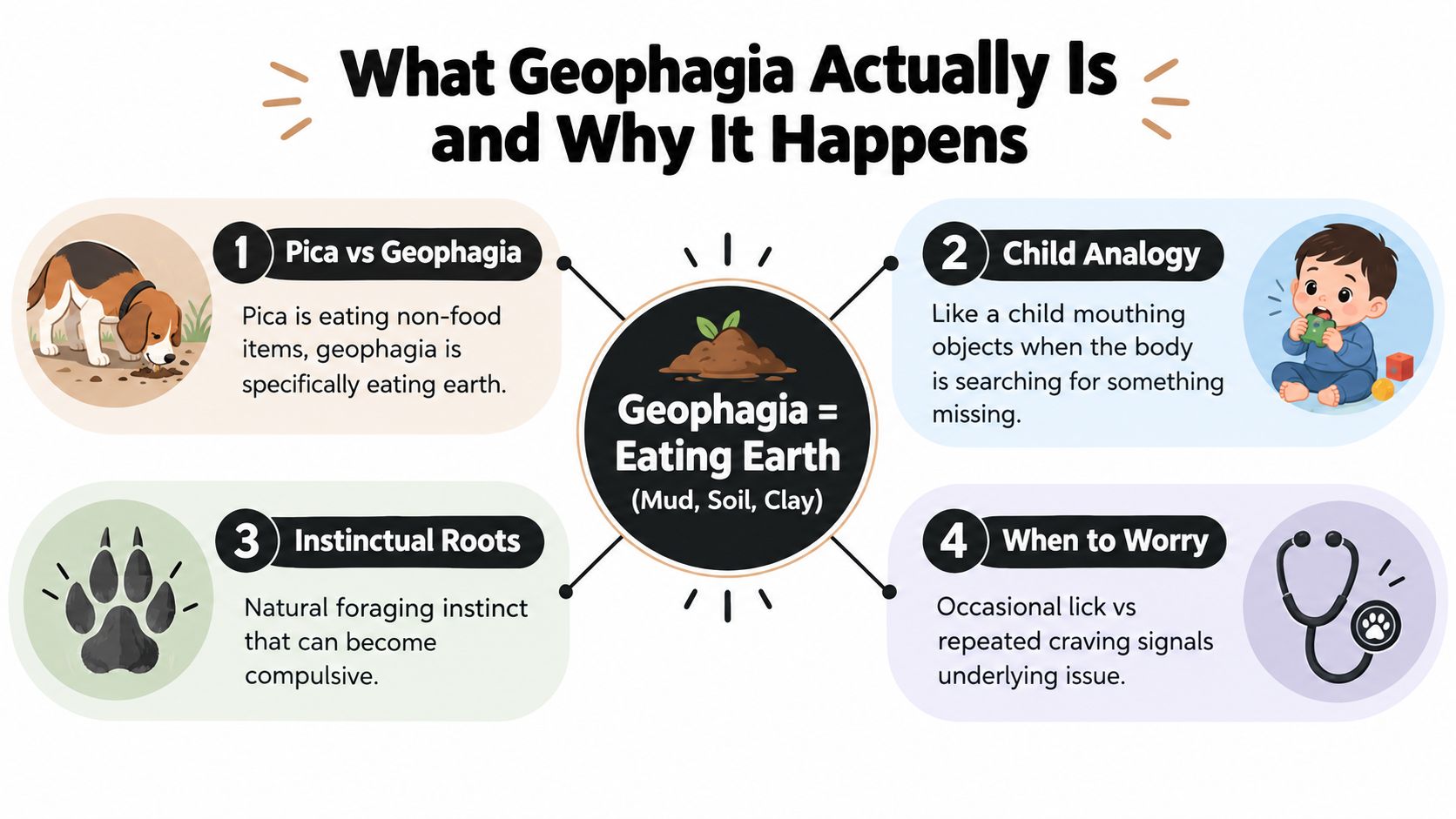
Start with three broad categories:
- Medical: Anemia, gastrointestinal discomfort, parasites, or systemic illness may change appetite and create unusual cravings.
- Nutritional: A poorly balanced diet or an absorption problem may leave the body short of nutrients, including minerals associated with pica.
- Behavioral: Boredom, stress, sensory interest, attention, or a learned habit can make mud rewarding even when the dog is physically well.
These categories overlap. A dog may begin eating mud because nausea makes soil appealing, then continue because licking cool, wet ground becomes a familiar soothing routine. Another dog may start from boredom and develop stomach upset after repeated exposure to contaminated soil.
The behavior itself doesn't diagnose the cause. Think of it as a dashboard warning light. It tells you to look at the dog's complete picture, including health, diet, environment, and daily routine.
Medical and Nutritional Reasons Dogs Eat Mud
A vet approaches mud eating by connecting the behavior with physical clues. For example, anemia or iron-related problems may accompany pale gums, tiredness, weakness, or an unusually strong drive to consume soil. Veterinary references identify anemia and nutrient-malabsorption as important medical associations, so a dog with persistent geophagia shouldn't be treated as merely mischievous. See the clinical discussion of canine geophagia and pica for the broader symptom picture.
Nutritional concerns can involve iron, calcium, magnesium, potassium, or sodium. A homemade diet that hasn't been formulated for the dog's life stage can create gaps, but a dog eating a commercial diet may still have an absorption problem or another illness. Don't start iron or mineral supplements on your own. Excesses can also harm dogs, and bloodwork is more useful than guessing.
The cause-to-symptom chain
Chronic nausea, reflux, intestinal inflammation, or other gastrointestinal discomfort may lead a dog to seek out soil. Parasites can interfere with digestion and nutrient use, while broader metabolic or endocrine disease can alter appetite in less obvious ways. A dog may still eat normal meals, so appetite changes aren't always dramatic.
| Underlying cause | Common symptoms at home |
|---|---|
| Anemia or iron-related disease | Pale gums, lethargy, weakness, reduced stamina |
| Mineral imbalance or inadequate diet | Persistent cravings, poor coat quality, changes in appetite or body condition |
| Gastrointestinal irritation | Vomiting, diarrhea, nausea, constipation, lip licking, abdominal discomfort |
| Parasite burden | Loose stool, weight loss, pot belly, poor growth, dull coat |
| Systemic disease | Changes in thirst, urination, energy, appetite, or weight |
Veterinary guidance recommends assessing repeated mud eating with tools such as a CBC or hematocrit review, parasite testing, and a diet assessment when appropriate. A technical veterinary overview of dirt and rock eating also notes links with iron, calcium, magnesium, potassium, and sodium concerns, as well as iron-deficiency states and immune-mediated hemolytic anemia.
If digestive upset is part of the picture, ask your veterinarian whether dog probiotics fit your dog's care plan. They can support digestive balance, but they won't correct anemia, parasites, toxin exposure, or an unbalanced diet.
Behavioral and Environmental Triggers
Not every dog eating mud is sick. Some dogs discover that wet soil has an interesting texture, a cool sensation, or a rewarding mineral taste. Puppies may investigate with their mouths, while adult dogs can repeat the behavior because it provides stimulation or comfort.
The pattern often gives you more information than the act itself. Ask yourself:
- Context: Does it happen only on walks, in one garden bed, or whenever your dog is left in the yard?
- Timing: Does it occur after meals, during thunderstorms, or when household routines change?
- Audience: Does your dog do it only when you're watching, then stop when you leave?
- Health: Is your dog otherwise energetic, eating normally, and producing normal stools?
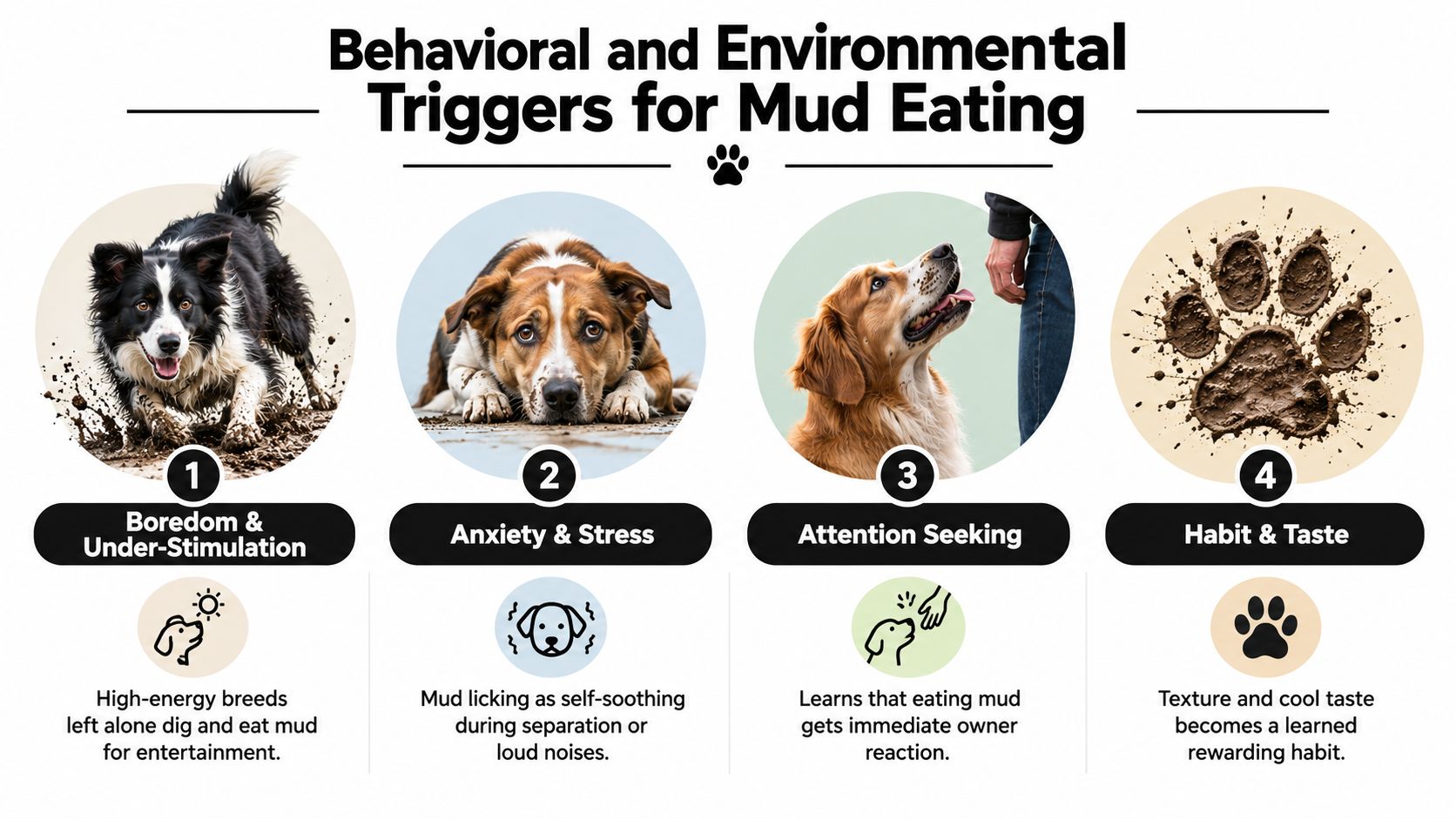
Reading the pattern
Boredom and under-stimulation often appear in dogs with plenty of physical energy but too little mental work. Digging, licking, and eating soil can fill an empty afternoon, particularly when a dog spends long periods alone outdoors.
Anxiety and stress can make mud licking a displacement behavior. Separation, loud weather, visitors, moving, or changes in the household may trigger repetitive actions that help the dog self-soothe.
Attention can reinforce the habit. If the first episode produces a dramatic chase, loud reprimand, or intense interaction, some dogs learn that mud eating reliably brings their person closer. That doesn't mean they're being manipulative. It means the response became part of the reward.
A behavior that occurs in a predictable setting and leaves the dog otherwise healthy may respond to management and enrichment. A behavior that appears everywhere, escalates rapidly, or sits beside physical symptoms belongs in the medical decision tree first.
Health Risks of Letting Mud Eating Continue
Soil isn't a uniform substance. A clean patch of garden earth differs from mud beside a treated lawn, a road, a drainage area, or standing water. Repeated ingestion can expose a dog to bacteria, parasites, foreign material, and chemicals.
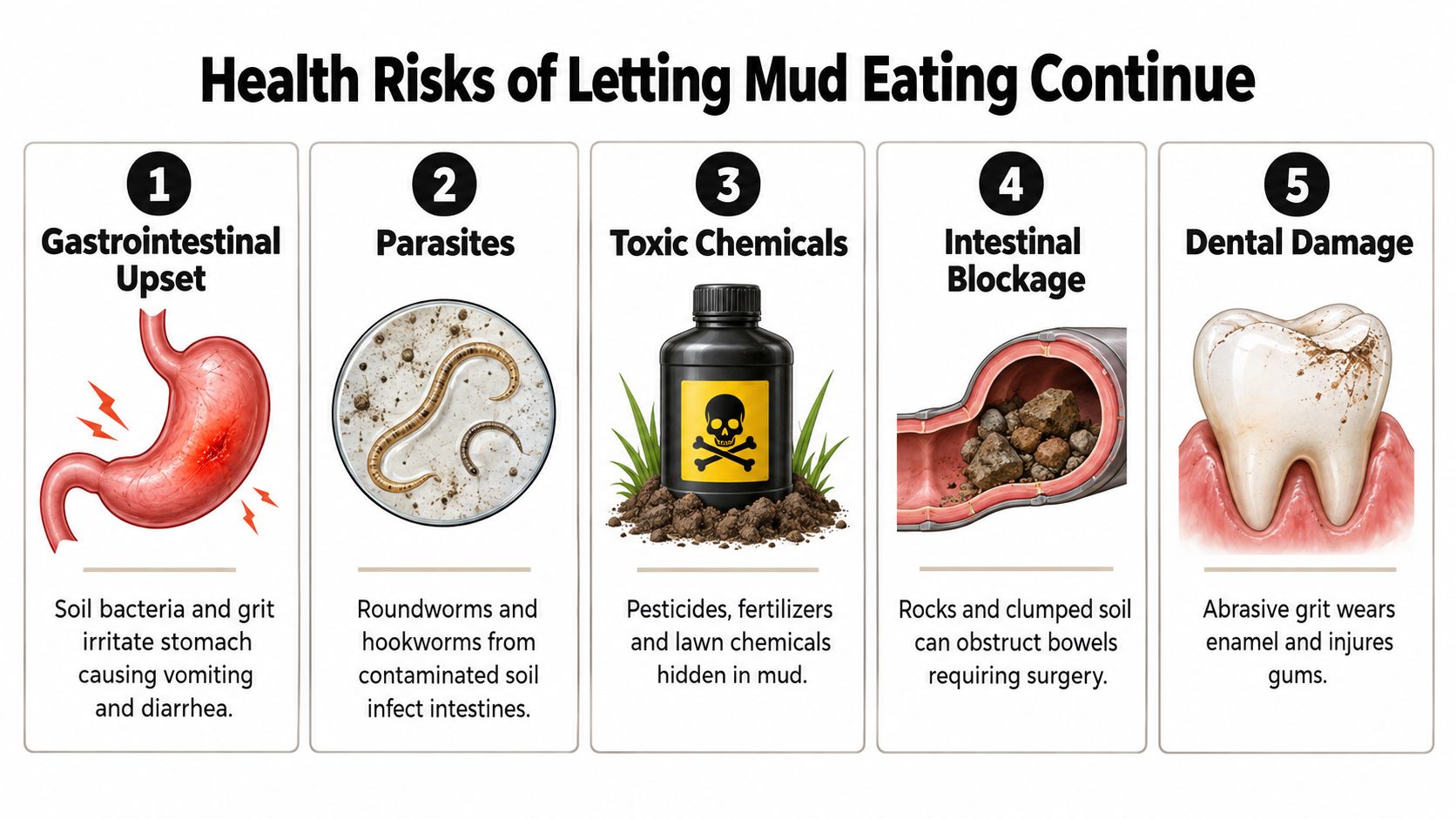
The most practical way to assess risk is to match the exposure with what you can observe:
- Digestive irritation: Soil, grit, and bacteria may contribute to vomiting, diarrhea, constipation, drooling, or abdominal discomfort.
- Parasites: Contaminated ground can carry intestinal parasites, including roundworms, hookworms, and Giardia. Ongoing loose stool, weight loss, or low energy warrants testing.
- Chemical exposure: Mud may contain fertilizer, pesticide, herbicide, antifreeze runoff, or lead contamination, depending on its location.
- Blockage: Large clumps of soil, rocks, or other material can obstruct the digestive tract. Repeated vomiting, abdominal pain, bloating, or refusal to eat raises concern.
- Dental injury: Abrasive grit can wear enamel, irritate gums, and contribute to bad breath or difficulty chewing.
A single lick doesn't mean your dog will develop one of these problems. The concern rises when your dog eats mud daily, swallows substantial amounts, targets treated ground, or has another condition that makes illness harder to tolerate.
If your yard repeatedly turns into a mud trap, changing the environment may be safer than trying to out-train every craving. A resource on durable turf for pets in Arizona can help you think through outdoor surfaces and drainage choices, especially where soil exposure is difficult to manage.
For dogs recovering from mild digestive disruption, your veterinarian may discuss Joyfull Probiotic Supplement for Dogs - 30 Single-Serving Packets, which is made with real beef bone broth, veterinarian-formulated probiotic strains, two complementary prebiotics, and individually sealed servings. It provides a minimum of 1 billion CFU per serving, according to the product information, and it should be considered supportive care, not a substitute for diagnosis.
How Vets Diagnose the Underlying Cause
A veterinary visit usually starts with questions, not a test. Write down when the mud eating began, how often it happens, where it occurs, and whether your dog swallows the soil or mostly licks it. Bring details about meals, stool quality, energy, weight changes, recent travel, medications, parasite prevention, and changes in the home.
What the examination looks for
The physical exam helps the vet decide whether the behavior has a physical footprint. They may assess gum color, hydration, body condition, weight, coat quality, oral health, and abdominal comfort. The vet may also look for evidence of pain, weakness, poor digestion, or another non-food eating habit.
Testing then follows the clues. A complete blood count can screen for anemia and signs of inflammation or infection. Serum chemistry can help evaluate organ function and selected mineral concerns, while a fecal float or antigen test can look for parasites. A urinalysis may be appropriate if thirst, urination, weight, or metabolic concerns are present.
Bring a sample of the story: A short phone video, a photo of the muddy area, and a simple log can reveal patterns your dog won't show inside the clinic.
The decision tree
If the exam and initial tests are reassuring, the vet may recommend environmental management, enrichment, positive-reinforcement training, and monitoring. If results point toward anemia, parasites, gastrointestinal disease, or another condition, treatment targets that cause first.
A dietary review matters even when bloodwork is normal. The vet may ask about the exact food, treats, supplements, table scraps, preparation method, and recent changes. Imaging or referral may be considered if your dog has persistent symptoms, suspected obstruction, or unexplained abnormalities.
Prevention Strategies and Training That Work
Start with management before expecting perfect self-control. Keep your dog on a leash around known mud patches, supervise yard time, block garden beds, and remove standing water or freshly turned soil when possible. Restrict access to areas treated with lawn chemicals until the product label and your veterinarian indicate that access is safe.
Training works best before the mouth reaches the ground. Teach “leave it” indoors with a low-value object and a high-value reward, then practice in increasingly distracting places. When your dog notices mud but hasn't started eating, call them away, reward the turn, and offer an alternative such as carrying a toy.
Replace the job, not just the behavior
Mud eating often fills a need. Give your dog another task:
- For the nose: Use sniff walks, scent games, or scatter feeding in a clean area.
- For the mouth: Offer an appropriate chew or toy, supervised for safety.
- For problem-solving: Use a food puzzle or a stuffed enrichment toy.
- For connection: Add brief training sessions throughout the day.
If anxiety drives the habit, management needs to address the trigger. A dog distressed by separation may need a gradual alone-time plan, while a dog unsettled by storms may benefit from a quiet retreat and veterinary guidance. A dog who eats mud for attention needs calm redirection rather than a dramatic chase.
Feed a complete, balanced diet appropriate for your dog, keep fresh water available, and ask your veterinarian before adding minerals or supplements. If gut support is appropriate after mild digestive upset, Joyfull's probiotic product combines probiotic strains with prebiotics, but it shouldn't replace testing when symptoms persist.
For help building a safer outdoor setup, review this landscaping for dogs guide. For training mechanics and reward timing, these practical dog training tips can help you make the alternative behavior easier for your dog to choose.
Consistency matters more than intensity. Prevent access, reward the behavior you want, and record the pattern so you can tell whether the habit is fading or becoming more focused.
First Aid, Red Flags, and When to Call the Vet
If your dog just ate a small amount of mud, stay calm. Move them away from the area, gently rinse visible soil from the mouth, offer fresh water, and monitor their behavior, appetite, stool, and energy over the next day. Don't induce vomiting or give home remedies unless a veterinarian specifically instructs you to do so.
Call your veterinarian promptly for repeated vomiting, bloody or black stool, marked lethargy, heavy drooling, loss of appetite, abdominal pain, repeated attempts to vomit, or suspected exposure to fertilizer, pesticide, antifreeze, lead, or another toxin. A dog that swallows rocks or large clumps of soil also needs prompt advice because obstruction can become serious.
Quick answers for worried owners
Is a small amount ever safe? A small, isolated mouthful is usually a monitoring situation for an otherwise well dog, but contaminated soil can change the risk.
Which dogs tend to do this? Pica is reported more often in breeds prone to compulsive behavior, including Terriers, Bulldogs, and Border Collies, but any dog can develop geophagia.
How long should I wait if symptoms appear? Don't wait for symptoms to intensify. Contact your vet when vomiting, diarrhea, lethargy, pale gums, appetite loss, or unusual behavior appears, particularly if mud eating is repeated.
The calmest response combines immediate safety, careful observation, and a low threshold for professional guidance when the pattern changes.
Joyfull offers veterinarian-formulated probiotic support with clinically tested strains, prebiotics, and real beef bone broth for dogs whose digestive routine needs support. Visit Joyfull to explore the dog wellness products and choose a practical next step alongside your veterinarian's advice.
0 comments