


Your dog spots the pile before you do. One second, you're enjoying a quiet morning walk, and the next, your leash hand is bracing against a determined lunge toward another dog's stool. You pull back, say the dog's name, and get that familiar guilty look, but guilt isn't a plan. Coprophagia, the technical term for eating feces, is a management and training problem first, not a supplement-shopping problem.
The practical answer is straightforward: remove access, supervise closely, teach “leave it” and recall, then investigate medical causes when the pattern or symptoms justify it. Punishment usually adds stress without teaching your dog what to do instead. The advice below is built around what consistently gives owners control over the situation.
Table of Contents
- Why Dogs Eat Poop in the First Place
- Stop the Opportunity First With Cleanup and Supervision
- Train a Reliable Leave It and Come Cue
- Diet Tweaks That Are Worth Trying and Ones to Skip
- Medical Causes Worth Ruling Out at the Vet
- A Realistic 30-Day Plan and What to Do If Nothing Changes
Why Dogs Eat Poop in the First Place
A dog finds a fresh pile, grabs it before you can react, and turns your attempt to intervene into a chase. The behavior feels deliberate because it is rewarding to the dog, but it is not a sign that your dog is uniquely defective. Dogs explore with their mouths, scavenge when an opportunity appears, and quickly repeat behaviors that pay off. A University of California, Davis survey of 1,552 usable responses found that 24% of dogs had been observed eating feces at least once, while 16% were frequent stool eaters, meaning they had been caught doing it five or more times (UC Davis research).
The same survey found that 85% of feces-consuming dogs preferred other dogs' stools over their own. It also reported more coprophagia in multi-dog households, rising from 19% in single-dog homes to 30% in homes with three dogs. Those findings support a practical conclusion: treat this as a learned, rehearsed behavior that needs management and training, not as a character flaw.
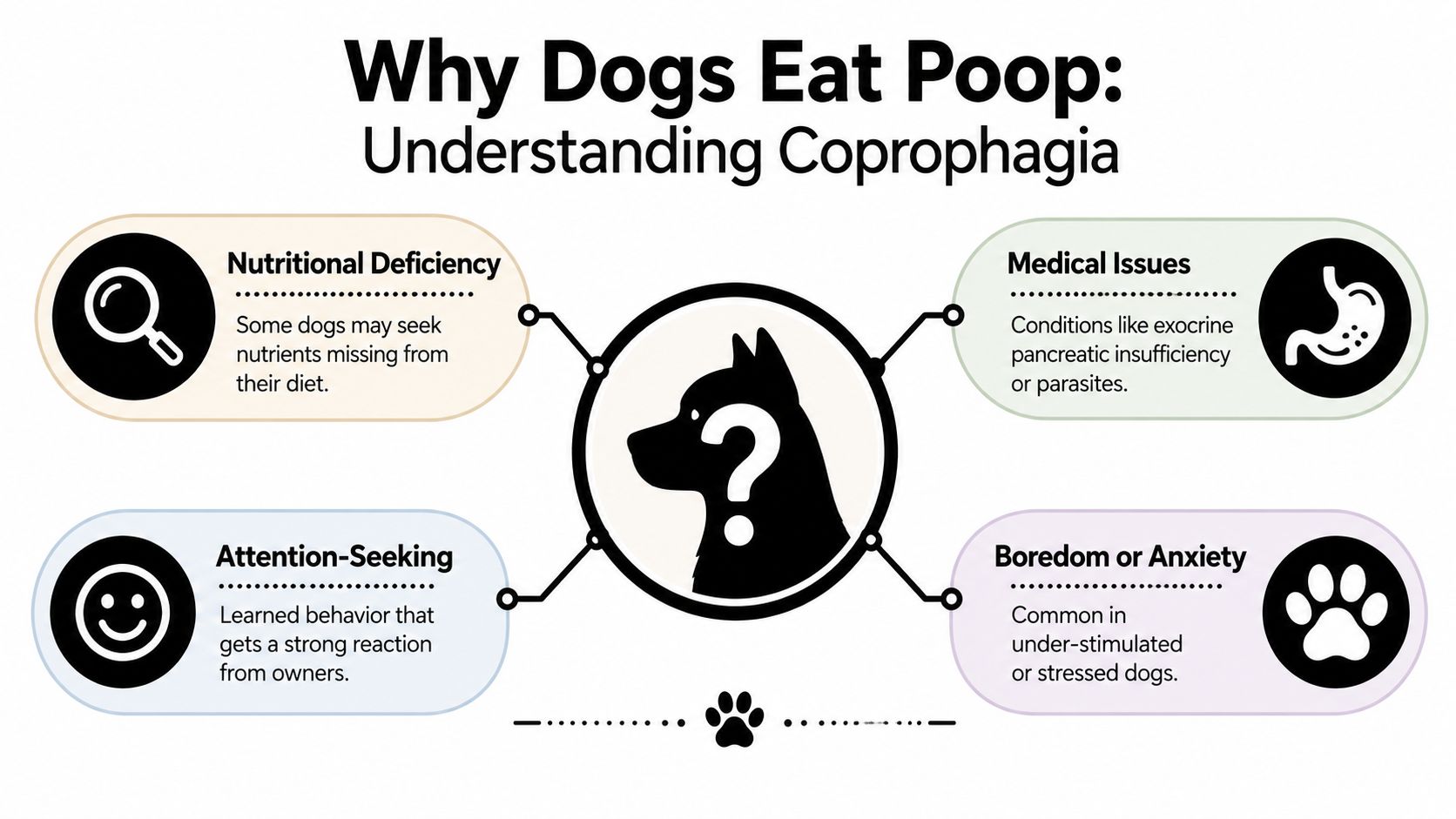
Match the trigger to the fix
Watch what happens just before your dog eats stool. The trigger points to the most useful response.
- Scavenging instinct: A dog that searches constantly and eats anything needs fewer chances to practice. Provide structured sniffing, food puzzles, and appropriate outlets for foraging.
- Attention-seeking: Shouting, chasing, or making a frantic grab can turn stool into a reliable way to start an exciting interaction. Give a firm cue, move away, and reward the dog for following you.
- Boredom: A dog that is under-exercised, confined, or left alone may create its own entertainment. Add sniffing walks, short training sessions, and food-based enrichment.
- Copying another dog: One dog can establish the routine for another. Supervise shared outdoor time and remove stool before either dog can investigate it.
- Anxiety or stress: Scavenging can appear during stressful routines. Make bathroom trips predictable, reduce chaotic handling, and seek professional help if anxiety affects other parts of daily life.
A 2008 comparative coprophagia study reported that 49.2% of 632 dogs had attempted to eat feces during their lives, while 28.5% were doing so more than once a month. The habit can persist, so waiting for maturity or buying a supplement is a poor primary strategy. Stop the rehearsal cycle, teach a clear alternative, and involve a veterinarian when symptoms or a sudden change suggest a medical cause.
Stop the Opportunity First With Cleanup and Supervision
The highest-yield intervention is boring, physical, and effective: your dog can't eat what your dog can't reach. Treat cleanup as part of the bathroom routine, not as a chore you'll get to later.
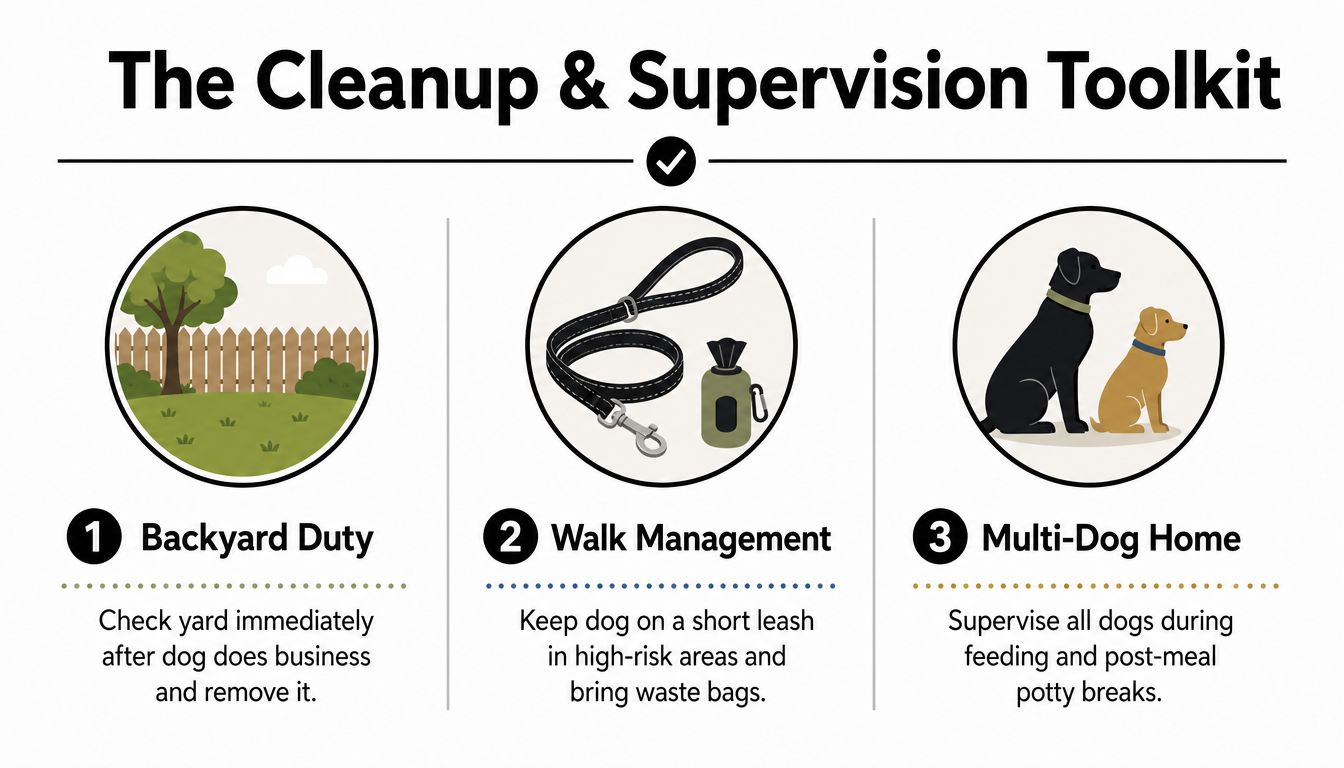
In the backyard, stay present while your dog eliminates. The moment the dog finishes, call them toward you, reward that movement, and remove the stool. Aim to pick it up within five minutes of defecation so your dog doesn't have time to circle back, sniff, and rehearse the behavior. If your yard has artificial turf, use a consistent waste routine and follow a guide to clean artificial grass without leaving residue that attracts repeated investigation.
Use a walk setup that gives you the first look
Don't give your dog a loose lead and hope your reflexes win. In areas where stool is common:
- Use a short, six-foot leash.
- Keep your dog on your left if that gives you a predictable handling position.
- Wear an open treat pouch or carry rewards where you can reach them instantly.
- Scan the ground roughly fifteen feet ahead so you see stool before your dog does.
- The moment your dog orients toward it, say “leave it”, turn away, and deliver a treat once the dog moves with you.
Carry bags every time, even on a quick outing. A no-BS poop bag holder can keep cleanup supplies accessible, but no accessory replaces supervision.
Manage the whole household
In multi-dog homes, give each dog enough space to eliminate without another dog hovering. If possible, separate feeding and potty zones. Pick up after the lower-ranking dog first when competition or guarding is part of the problem, then bring the other dog through after the area is clear. Don't allow one dog to watch another eat stool and treat the behavior as harmless copying.
Cat litter boxes deserve the same attention. Put them behind a baby gate, use a covered setup that your cat accepts, or place the box in a room your dog can't enter. Management makes training easier because every successful theft strengthens the habit.
Practical rule: If your dog keeps reaching stool, the training environment is too difficult or the management is too loose.
Train a Reliable Leave It and Come Cue
“Leave it” isn't a magic word you yell after your dog has already swallowed the evidence. Build it in easy conditions, reward the decision to disengage, and increase difficulty gradually.
Build leave it from the closed hand
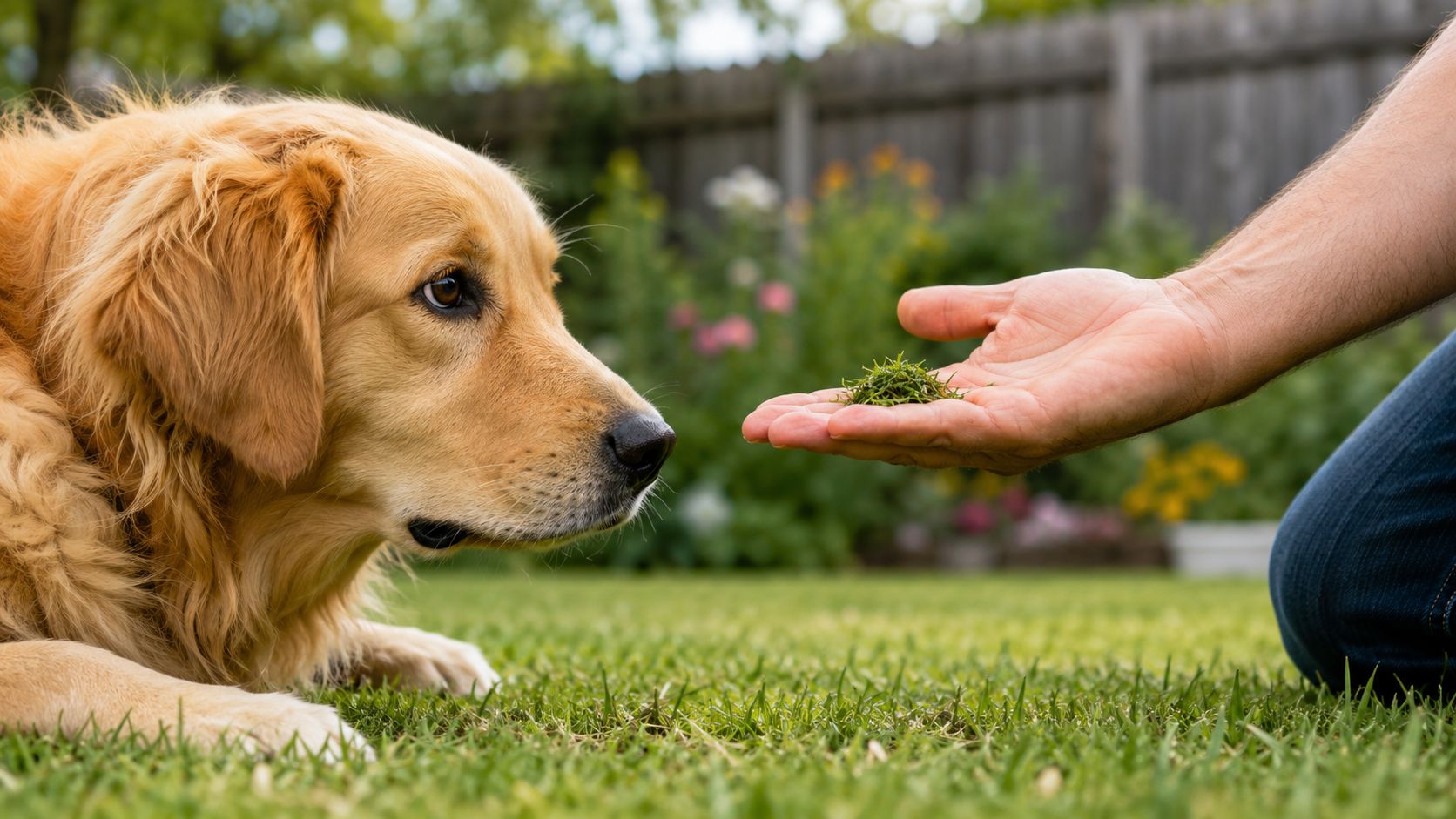
Start in a quiet room with a treat hidden in a closed fist. Let your dog sniff or mouth your hand without opening it. The instant the dog pulls away, mark the moment with a calm “yes” or a click, then reward from your other hand. That second treat matters. Your dog learns that ignoring the first item earns a separate, better outcome.
Repeat until your dog backs away from the closed fist without persistent investigation. Only then add the verbal cue just before presenting your hand. Progress through an open palm, a treat on the floor covered by your hand, an uncovered treat, and finally a dropped treat while you say “leave it.”
Keep sessions to two or three minutes, three times a day. Short practice keeps the cue sharp and prevents frustration.
Add recall as your emergency exit
Use a high-value reward, such as chicken, and pair your dog's name with “come” in a quiet area. Practice indoors first, then outdoors on a long line. Don't call your dog only when fun ends or when you're about to grab something from their mouth. Make coming to you predictably worthwhile.
Raise distractions in stages: a rolling ball, food on the ground, then stool at a distance. Keep enough space that your dog can succeed. When the dog leaves stool, reward generously after you've walked ten paces away, so moving away becomes part of the payoff rather than a prelude to punishment.
For more guidance on reward timing and progression, use these science-backed dog training tips. Never chase your dog around the yard after a grab. Chasing can turn the stool into a stolen prize and your approach into a game.
Diet Tweaks That Are Worth Trying and Ones to Skip
A new powder rarely solves a dog that has reliable access to stool. Commercial deterrents and punishment-based methods have performed poorly in the available evidence. A 2008 survey of coprophagia treatments in 632 dogs found that most commercial products helped no more than a small minority of dogs. Treat that result as a warning against building your plan around additives.
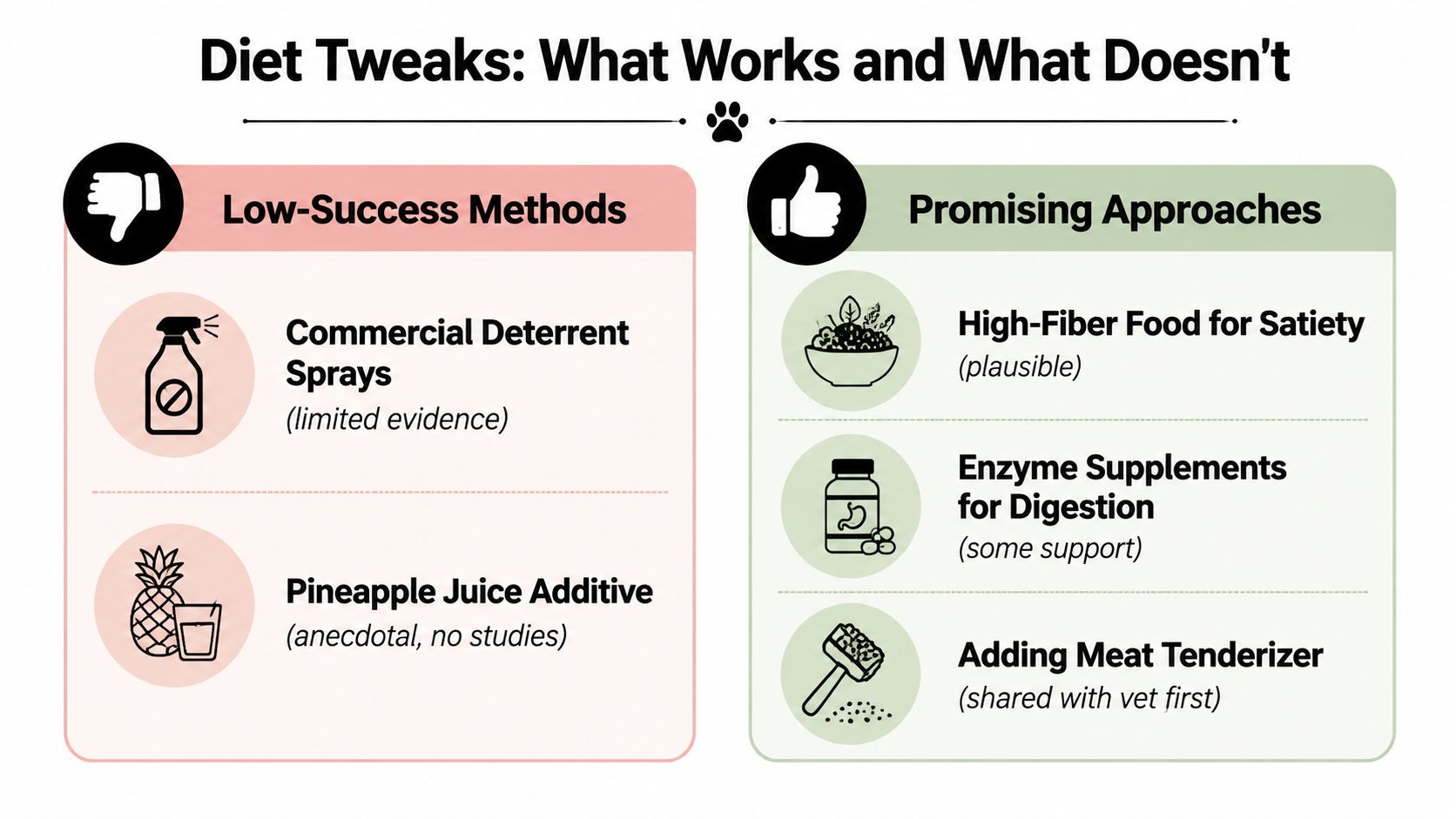
Diet still deserves attention when it addresses a real feeding or digestive problem. Check that the food suits your dog's life stage, is well tolerated, and is fed in a measured amount. A high-drive puppy, thin senior, or dog with ongoing loose stools may need a veterinary review of calories, ingredients, meal size, and digestion. Scheduled meals also make intake easier to track than unrestricted feeding.
Fiber helps some dogs feel fuller and can alter stool texture, but it is not a universal deterrent. Probiotics make sense when a veterinarian identifies a digestive reason to use them, not as a substitute for cleanup and training. If you are confused about your dog's diet, settle the food question before adding several products at once.
Pineapple juice, meat tenderizer, MSG, parsley, and commercial chews belong in the low-confidence category. Owner testimonials do not establish reliable results, and additives may cause digestive upset or complicate a medical workup. Ask your veterinarian before using meat tenderizer or any concentrated additive.
If digestive support is appropriate, discuss dog probiotics with your veterinarian. The Probiotic Supplement for Cats - 30 Single-Serving Packets is described as veterinarian-formulated with clinically tested probiotic strains, real beef bone broth, and third-party potency and purity testing. It is a cat product. Do not give it to a dog without veterinary direction.
Diet can support the plan, but it cannot outwork unrestricted access. Keep cleanup, supervision, and training in charge. Use food changes only when they solve a specific problem.
Medical Causes Worth Ruling Out at the Vet
A sudden change in an adult dog deserves more attention than a long-standing puppy habit with no other symptoms. Coprophagia can accompany problems that alter appetite, digestion, absorption, or stress levels. The relevant question isn't “Which supplement makes poop taste bad?” It's “Why has this dog started seeking it?”
Ask your veterinarian about parasites, malabsorption, exocrine pancreatic insufficiency, hypothyroidism, hyperadrenocorticism or Cushing's disease, diabetes, and medication effects. Steroids and appetite stimulants can increase food-seeking behavior, while intestinal disease can leave a dog hungry despite eating.
Red flags that change the recommendation
Book a veterinary appointment if stool eating appears suddenly, persists despite strict management, or comes with:
- Weight loss or failure to maintain condition.
- Increased appetite that seems out of character.
- Soft, greasy, unusually large, or very frequent stools.
- Gas, vomiting, diarrhea, or other digestive changes.
- Coat changes, poor growth, or a dull appearance.
- Increased thirst or urination, especially alongside appetite changes.
- A medication change followed by intense scavenging.
A 2026 study discussed in recent coverage found that habitual coprophagia wasn't linked to measurable changes in healthy dogs' gut microbiota or increased enteropathogen carriage, a useful nuance but not a reason to ignore symptoms (coverage of the recent study). A healthy dog can still have a behavior problem, and a dog with a behavior problem can still become medically ill.
What the appointment may include
Bring a fresh stool sample if your clinic requests one, and describe the diet, meal schedule, medications, appetite, stool appearance, and exact onset. Testing may include a physical examination, fecal testing, bloodwork, thyroid assessment, and targeted digestive tests such as TLI, B12, and folate.
| Condition | Why it drives stool eating | Typical vet test |
|---|---|---|
| Exocrine pancreatic insufficiency | Poor digestion and nutrient absorption can increase hunger and alter stool | TLI, B12, folate, bloodwork |
| Parasites | Parasites can interfere with digestion or nutrient availability | Fecal examination and targeted parasite testing |
| Malabsorption or intestinal disease | The dog may eat normally but fail to absorb nutrients well | Physical exam, bloodwork, fecal testing, further GI workup |
| Diabetes | Appetite and metabolism can change, often with other routine changes | Bloodwork and urinalysis |
| Hypothyroidism | Metabolic and body-condition changes may accompany altered behavior | Thyroid panel |
| Cushing's disease | Appetite and metabolic changes can fuel scavenging | Bloodwork and endocrine testing |
| Medication effects | Steroids or appetite stimulants may increase food-seeking | Medication review and examination |
Abnormal results shift the plan from behavior management alone to treatment of the underlying condition. Normal results are still useful. They let you focus confidently on access control, reinforcement, and anxiety or enrichment work.
A Realistic 30-Day Plan and What to Do If Nothing Changes
Stop changing five variables at once. Use a hierarchy: management first, training second, diet review third, professional intervention when progress stalls or symptoms appear.
Days 1 through 7
Make stool inaccessible every time. Supervise every yard break, pick up immediately, use a short leash in high-risk areas, block access to litter boxes, and record when the behavior happens. Don't test your dog off leash just to see whether the problem is gone.
Days 8 through 14
Practice “leave it” and recall in easy settings. Use brief sessions, valuable rewards, and a calm response when your dog disengages. Continue the strict cleanup routine, because training is weaker when your dog keeps receiving reinforcement from successful scavenging.
Days 15 through 21
Increase distractions one at a time. Work near ordinary food, moving toys, and controlled outdoor temptations before practicing around real stool at a safe distance. If your dog ignores the cue, reduce difficulty instead of repeating the command louder.
Days 22 through 30
Review the pattern. Look for fewer lunges, more frequent check-ins, faster responses, and fewer attempts to reach stool. A setback after illness, boarding, a heat cycle, household disruption, or a missed training period doesn't erase progress, but it does tell you to return to the last level where your dog succeeded.
If nothing changes after consistent management, schedule a veterinary review, especially if the behavior began suddenly or other symptoms are present. If medical causes are ruled out, consult a certified behavior professional and audit the environment. Off-leash yard time, missed cleanup, accessible litter, or another dog's stool may be keeping the habit alive.
The winning strategy is deliberately unglamorous. Make the wrong behavior difficult, make the right behavior rewarding, and repeat that pattern until your dog stops getting paid in poop.
Joyfull offers pet wellness products built around convenient, clearly described formulas, including digestive-support options for pets where they fit the plan. Visit Joyfull to explore the available products, then pair any supplement decision with the cleanup and training routine that changes your dog's behavior.
0 comments