


A kitten that hides after a carrier ride, trembles during a noisy evening, or hisses when a new person enters the home can leave you searching for an immediate solution. Calming treats seem simple, especially when the package promises relaxation in a bite-sized snack. For a young cat, though, the right question isn't only whether a treat might help. You also need to ask whether your kitten is old enough, whether the ingredients are suitable, and whether a treat is the right response to the cause of the stress.
Kittens aren't miniature adult cats. Their age, diet, health, and developmental stage affect how carefully you should approach any supplement. This guide will help you evaluate calming treats for kittens with a safety-first mindset, while keeping environmental changes and veterinary care at the center of the plan.
Table of Contents
- Understanding When Calming Treats Are Appropriate for Kittens
- How Calming Ingredients Work in Developing Bodies
- Safety Thresholds and Age Restrictions Every Owner Must Know
- Reading Labels for Kitten-Safe Formulations
- Integrating Treats Into a Comprehensive Stress Management Plan
- When Treats Fall Short and Alternative Approaches Matter
- Making Confident Decisions About Your Kitten's Wellness
Understanding When Calming Treats Are Appropriate for Kittens
A kitten may accept a calming treat one day and develop loose stool or refuse food the next. That response does not automatically mean the product is harmful, yet it shows why age, development, and suitability should be checked before relying on a snack during stressful events.
The first question is age, followed by dosage. A young kitten has different nutritional needs and a developing digestive system. Lowering an adult serving is like shortening an adult-sized recipe without changing its ingredients. The result is not automatically suitable for a growing animal, especially if the product was never formulated or evaluated for kittens.
Age changes the answer
Veterinary recommendations vary, so the product label and your veterinarian both matter. One veterinary source says calming cat treats should not be given to kittens under 12 weeks, while another says kittens may begin receiving treats after they have fully transitioned to solid food, around 8 weeks. That guidance also recommends keeping treats below 10% of daily calories, because extra calories can displace the complete nutrition a growing kitten needs. Veterinary guidance on calming cat treats and kitten age limits explains these boundaries in more detail.
The difference reflects product type and formulation rather than a simple dosing problem. A kitten old enough for a small food reward may still be too young for a concentrated calming supplement. Check the minimum age, ingredient list, serving instructions, and whether the package identifies kittens as intended users. If those details are missing, pause before offering it.
Stress severity matters too
A short period of hiding after a household change may improve with quiet space, familiar bedding, and time. Persistent fear, appetite changes, elimination problems, aggression, or physical symptoms call for veterinary assessment rather than repeated treats. Record what happened before the behavior, how long it lasted, and whether your kitten returned to normal. Those observations help distinguish a temporary adjustment from a problem needing further care.
How Calming Ingredients Work in Developing Bodies
A calming product can be a soft chew, a powder mixed with food, or a veterinary diet. The format tells you very little about the evidence. What matters more is the active ingredient, its amount, the product's intended age range, and how the individual kitten responds.
Look beyond the word “calming”
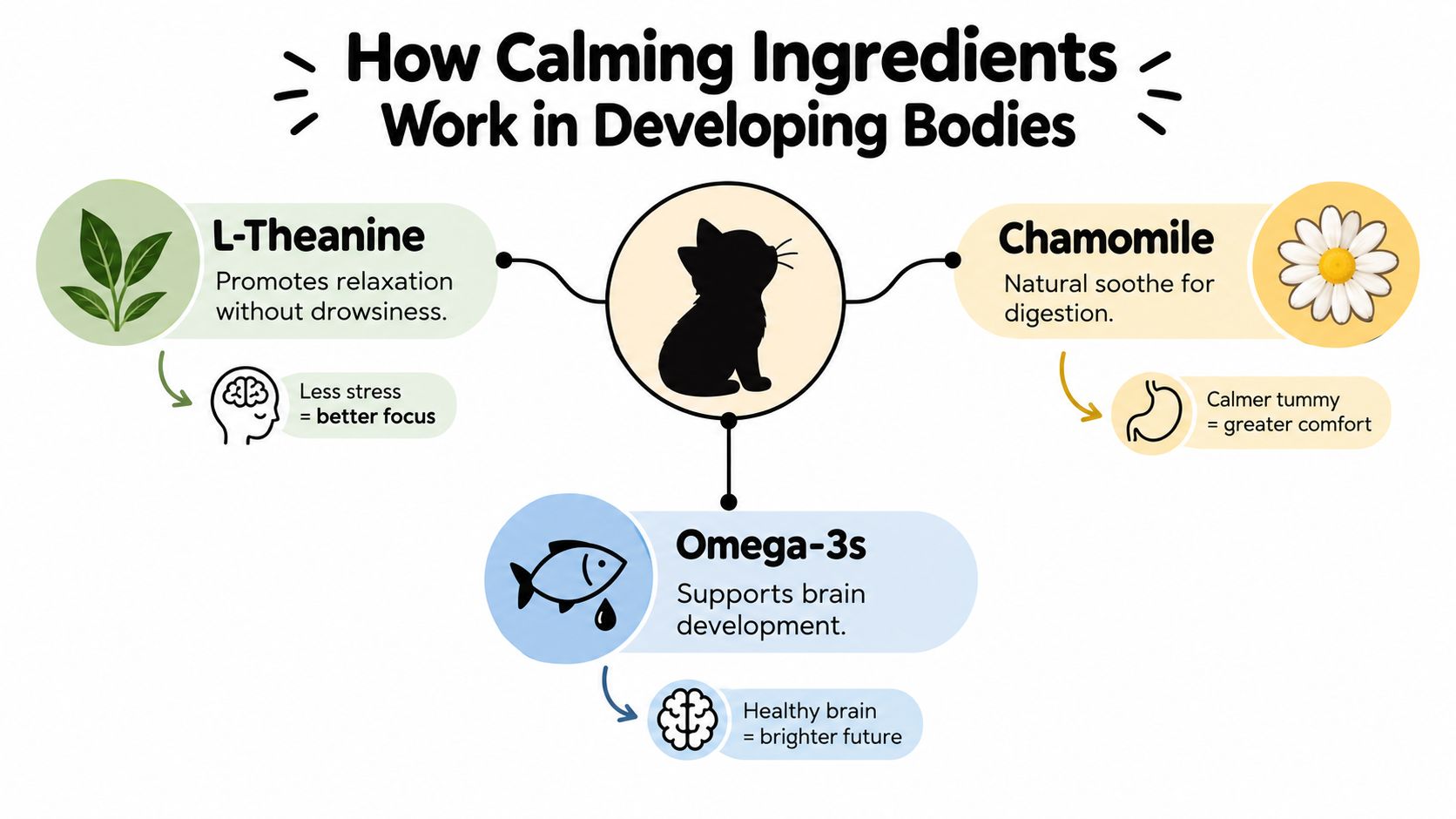
Evidence-based feline products often use alpha-casozepine, L-tryptophan, or DHA in nutraceuticals and veterinary diets rather than relying on a generic treat base. Veterinary guidance says these ingredients may help reduce fear, anxiety, and stress in cats, but nutraceuticals aren't standardized for efficacy testing. That means two products with similar marketing language may produce different results, and one kitten may respond differently from another. Veterinary information on complementary behavioral products for cats provides useful context.
The evidence also tends to focus on individual ingredients, not on the treat format itself. For some ingredients, owners may judge a response after 1 to 2 weeks of daily use, while probiotics may require about 6 weeks before conclusions can be drawn, according to veterinary product guidance. Those timeframes aren't promises that a kitten will improve. They show why giving a product once during a crisis may not answer whether it suits your cat.
A kitten needs a cautious trial
Don't introduce several new supplements at once. If your veterinarian approves a product, use the label's kitten-specific instructions, observe appetite and stool quality, and record changes in hiding, play, sleep, and social behavior. A product that causes marked sleepiness or digestive upset isn't a successful calming strategy.
If your goal is digestive support rather than anxiety support, keep the categories separate. For example, cat gut health treats address a different wellness concern and shouldn't automatically be treated as calming products. A kitten's food tolerance and stress behavior both deserve attention, but one doesn't prove that the other will improve.
Practical rule: Choose the ingredient and age guidance first. Choose the treat texture second.
Safety Thresholds and Age Restrictions Every Owner Must Know
A kitten who weighs less than an adult cat is not merely an adult cat in a smaller package. Developing organs, changing digestion, and limited experience with new foods can alter how a kitten handles a calming product. Age suitability is not the same as body-size suitability, so never calculate a kitten serving by dividing an adult serving.
Guidance on minimum age varies by product type, as covered earlier. When two labels disagree, use the stricter stated minimum age and confirm with your veterinarian. Check whether the product is intended for kittens, whether it lists a minimum weight, and whether it limits how long the product may be used. Some calming products should not be used for more than 7 consecutive days, according to Safety guidance on feline calming products and use limits.
Treat calories still count
A treat can be age-appropriate and still crowd out the balanced food a kitten needs for growth. Keep kitten treats below 10% of daily calories, as described in guidance about treats for kittens. Count calories from every snack, including rewards used during handling, training, and play. The number of pieces can mislead you because serving sizes and calorie content differ.
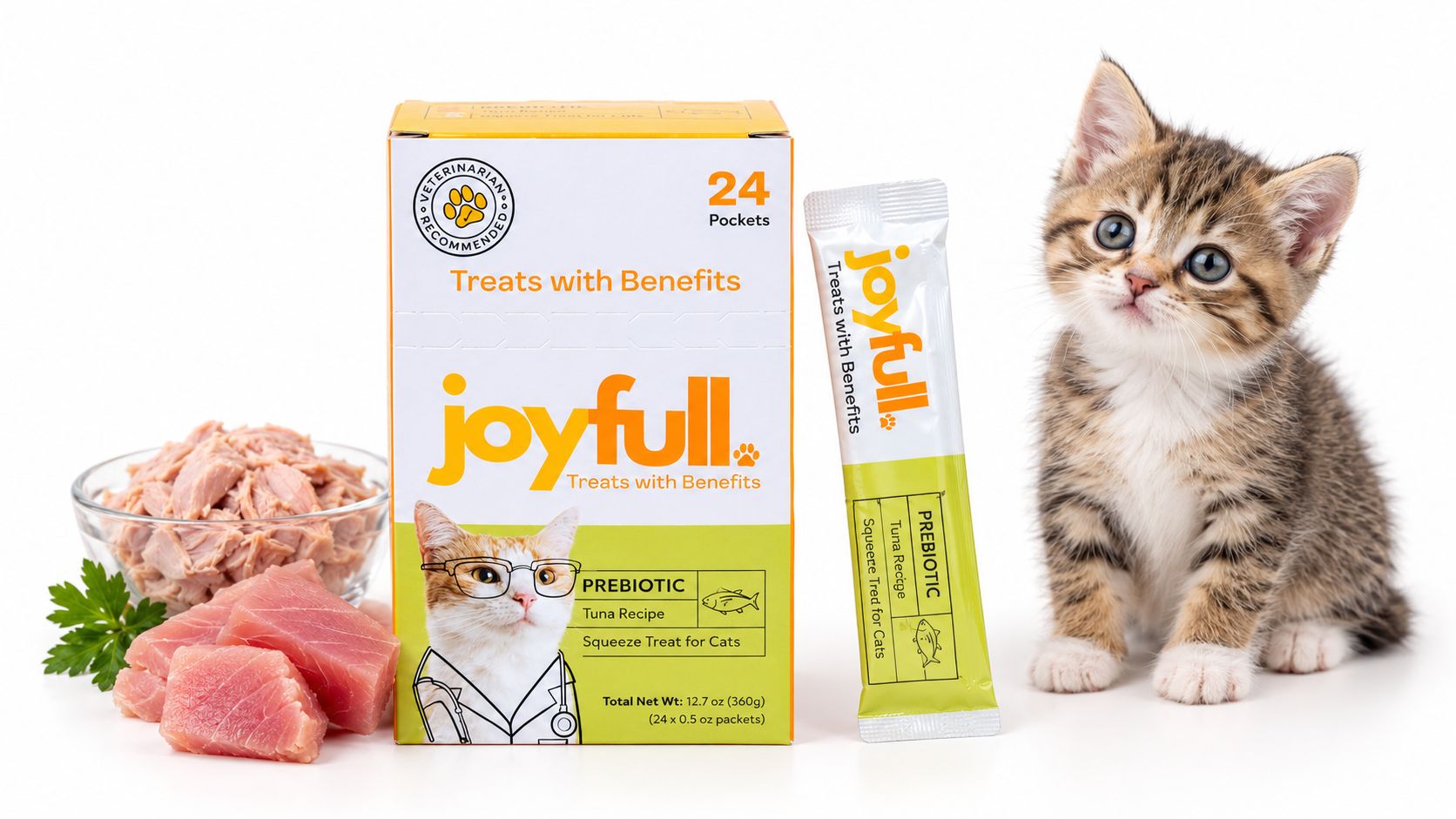
The Prebiotic Tuna Squeeze Treats for Cats are described by the manufacturer as containing real wild-caught tuna and prebiotics, without artificial or “natural” flavors, colors, or preservatives. Those details describe the product's ingredients, not its calming effect or suitability for a particular kitten. Review the label before use. A product marketed for digestive support, such as cat probiotics, should not automatically be treated as a calming product.
Match the intervention to the stress
A veterinarian may approve a product for mild, short-lived stress. Ongoing fear, major behavior changes, or chronic anxiety call for an examination rather than repeated servings or a higher frequency.
Stop offering the treat and seek veterinary advice if your kitten becomes unusually sleepy, uncoordinated, or ill. More sedated isn't the same as calmer. Reduced activity can signal an unwanted effect, while the original source of stress remains unresolved.
Reading Labels for Kitten-Safe Formulations
The front of a package is designed to attract attention. The back tells you whether the product deserves consideration. Read it in a fixed order so appealing words such as “natural” or “calming” don't make the decision for you.
Start with species and age
Confirm that the product is made specifically for cats, not dogs. Ingredients and dosing can vary widely between species, so a dog product shouldn't be adapted for a kitten by guessing at a smaller portion. Next, find the minimum age and, where provided, the minimum body weight. If the label only says “for cats” without a clear kitten age range, ask your veterinarian before using it.
The package should also explain how much of each active ingredient appears in a serving. A proprietary blend that lists several compounds without individual amounts prevents you from evaluating what your kitten would receive. Transparent information doesn't guarantee effectiveness, but missing information makes informed use difficult.
Scan for avoidable hazards
Ingredient screening matters because kittens may react strongly to an inappropriate product or an excessive amount. Feline calming products can cause sedation, gastrointestinal upset, or incoordination when overdosed. The ASPCA lists possible signs of calming-aid overexposure, including vomiting, sleepiness, lethargy, and rare incoordination. ASPCA guidance on calming-aid and treat exposure explains what owners should watch for.
Be especially cautious around essential oils, alcohol-based tinctures, and xylitol, which may be toxic or inappropriate for cats. Don't assume that a plant-based ingredient is automatically gentle, or that a product sold for pets is appropriate for every age.
A useful label checklist looks like this:
- Species: The package clearly identifies cats, not dogs or a general pet population.
- Age and weight: The manufacturer provides a minimum age or weight that includes your kitten.
- Active amounts: Individual ingredient quantities are visible rather than hidden in a blend.
- Directions: The label explains serving limits and what to do if a dose is missed.
- Warnings: The product identifies relevant cautions, medications, and adverse reactions.
Integrating Treats Into a Comprehensive Stress Management Plan
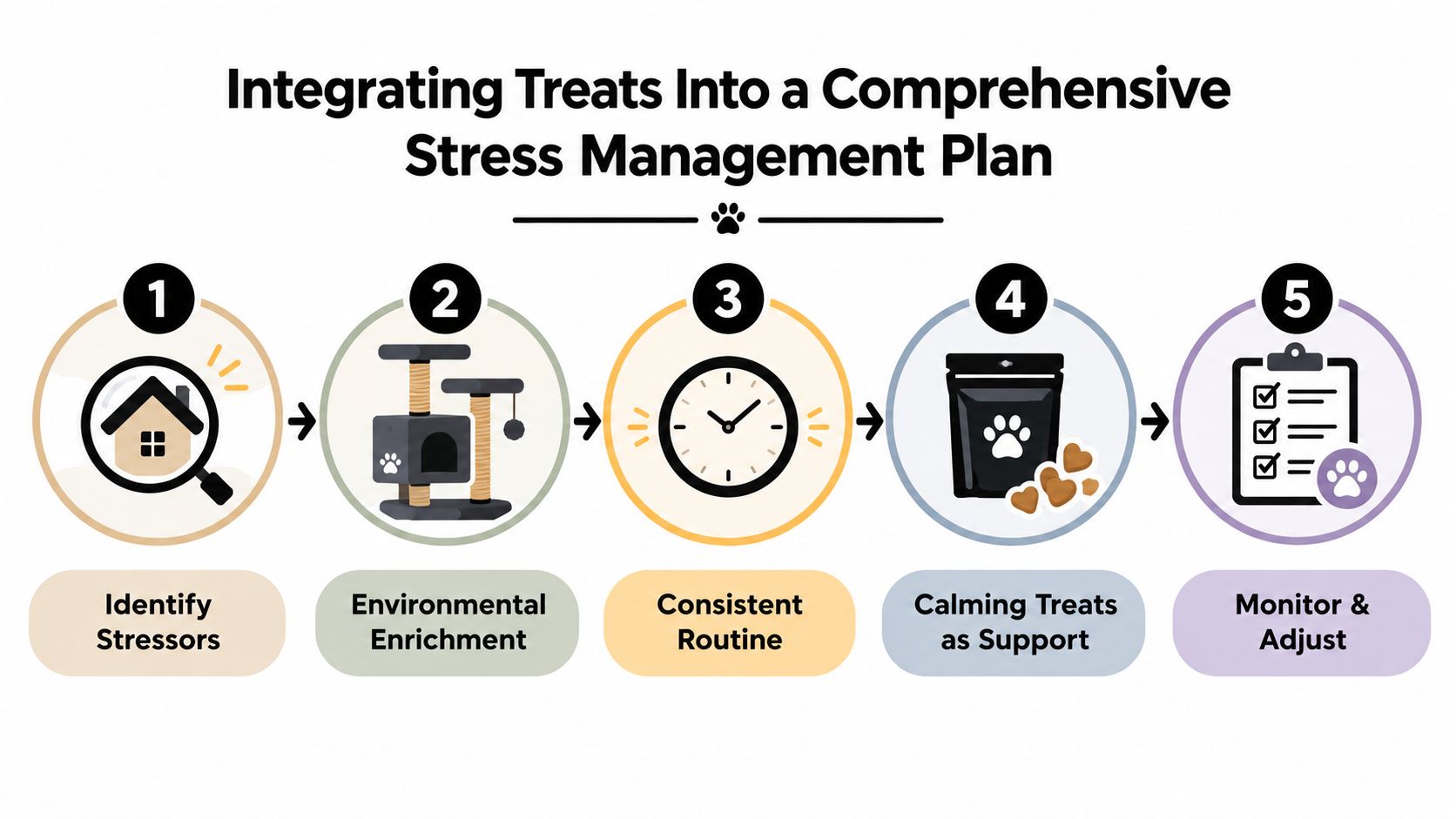
A kitten that panics during a thunderstorm needs more than an edible product. Close curtains, reduce noise, provide a covered retreat, and let the kitten choose whether to come out. A kitten reacting to a new roommate needs a controlled introduction, separate resources, and gradual exposure rather than a snack placed beside an overwhelming stranger.
Identify the trigger before choosing the tool
Start by asking what your kitten is responding to. A carrier may predict travel. A vacuum cleaner may create sudden noise. A new animal may threaten access to food, water, resting places, or a litter box. Once you identify the trigger, change the surroundings so your kitten has distance, choice, and a reliable safe area.
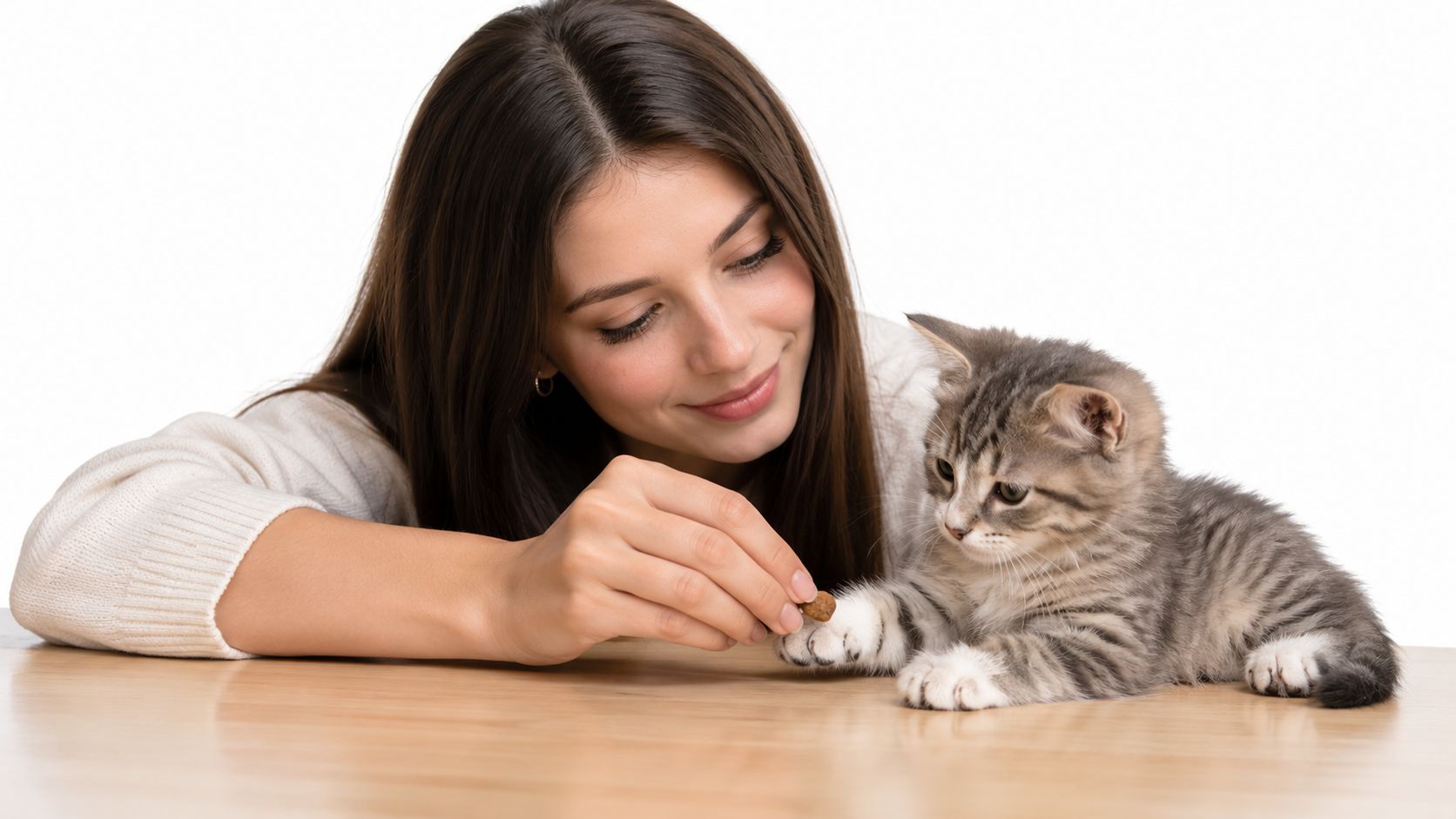
Treats can support a behavior plan by creating a positive association, provided the kitten is old enough and the product is approved. Offer a suitable reward when the kitten remains relaxed at a manageable distance. Don't force the kitten to approach the frightening object in exchange for food.
A short educational video can help you think through the role of environmental and behavioral support:
Know when home support isn't enough
Kittens are an under-discussed use case because much of the available calming-treat information focuses on adult cats. High-quality evidence in cats remains limited, and questions remain about how well individual products work and how reliably cats absorb their active ingredients. A recent veterinary-reviewed source notes that calming treats may help with mild stress, while moderate, severe, or chronic anxiety calls for veterinary evaluation rather than a treat alone. Vet-reviewed information about calming treats for cats provides that distinction.
You might encounter products discussed as alpha-casozepine cat chews, but the ingredient name doesn't remove the need to verify kitten suitability. Likewise, the Joyfull Probiotic Supplement for Dogs - 30 Single-Serving Packets is described as a dog product made with real beef bone broth, veterinarian-formulated probiotic strains, and third-party testing. It isn't a kitten calming product and shouldn't be substituted for one.
When Treats Fall Short and Alternative Approaches Matter
Food is convenient, familiar, and often easy to deliver. That doesn't make it the strongest option for every kitten or every type of stress. A kitten that is too frightened to eat, nauseated, or overwhelmed by handling may not benefit from an ingestible product at the moment you need it.
Pheromone-based products offer a different route because they don't require the kitten to swallow a supplement. Environmental enrichment, hiding spaces, predictable routines, gradual introductions, and play can also reduce pressure without creating questions about ingredients or calories.
Compare the options honestly
Recent market coverage describes a shift toward pheromone-based products, citing randomized trials with stronger efficacy than edible treats, while snacks and treats remain popular for convenience and palatability. The same coverage emphasizes that evidence differs substantially by formulation and that whether a product “works” depends on the behavior being measured. Market coverage of pet calming products and evidence by format offers that comparison.
| Situation | More suitable first response |
|---|---|
| A brief reaction to a carrier | Carrier training, familiar bedding, and a quiet travel setup |
| Fear of a new person | Distance, hiding options, and gradual, voluntary interaction |
| Stress during household noise | A protected room, sound reduction, and predictable routine |
| Persistent or worsening anxiety | Veterinary assessment and a coordinated treatment plan |
Treats may fit as a supporting reward when the kitten can eat, learn, and remain below its stress threshold. They're a poor substitute for a veterinary assessment when fear is chronic, severe, or accompanied by physical changes. Prescription medication may be appropriate in some cases, but only a veterinarian can decide that after considering the kitten's health and behavior.
Making Confident Decisions About Your Kitten's Wellness
Consider a kitten that hides whenever visitors arrive. The first useful step isn't opening a packet. It's recording what happens, giving the kitten a quiet refuge, and preventing visitors from reaching into that refuge. If the kitten gradually watches from a safe distance and resumes normal eating and play, environmental support may be doing the most important work.
If the behavior persists, worsens, or affects eating, elimination, sleep, play, or social contact, contact your veterinarian. Owners often feel uncertain when a young pet becomes ill or distressed, and resources about caring for an ill pet confidently can help you organize observations and questions before an appointment.
Use this decision sequence:
- Describe the stressor. Write down what happened immediately before the behavior.
- Check the age requirement. Don't use a calming product below its stated minimum age or weight.
- Review the ingredients. Confirm feline formulation, transparent amounts, and the absence of ingredients that may be toxic or inappropriate.
- Protect the main diet. Keep approved treats below the recommended calorie limit.
- Change the environment. Give the kitten distance, hiding options, routine, and gradual exposure.
- Monitor the response. Stop and seek veterinary advice if you see vomiting, unusual sleepiness, lethargy, or incoordination.
Calming treats for kittens can have a limited supporting role, but they aren't a shortcut around age restrictions, ingredient screening, or medical care. A careful owner doesn't need to eliminate every possible source of stress. You need to identify the cause, choose the least risky appropriate support, and ask for help when the pattern falls outside ordinary adjustment.
Joyfull offers cat wellness products that include a feline probiotic supplement and prebiotic tuna squeeze treats, but these products should be evaluated for age and purpose rather than assumed to be calming treatments. Visit Joyfull to review the available formulas and choose products with your veterinarian's guidance.
0 comments