


A small amount of ripe plum flesh isn't toxic to dogs, but the pit, stem, leaves, and seeds are dangerous because they contain cyanide and the pit can also cause choking or an intestinal blockage. So if you're asking whether plums are bad for dogs, the safest answer is yes, plums are generally best avoided, even though the flesh itself is lower risk.
If you're here because your dog just grabbed a plum off the floor, stole one from a fruit bowl, or found fallen fruit in the yard, the details matter. A dog that licked a bit of soft fruit is in a very different situation from a dog that swallowed a whole pit or chewed one open.
That's where many owners get tripped up. They hear “plums are toxic” and panic over a tiny bite of flesh, or they hear “the flesh is fine” and underestimate how serious a pit can be. The answer sits in the middle: which part your dog ate changes the risk.
Table of Contents
- A Quick Answer for Worried Pet Owners
- Why Some Parts of a Plum Are Dangerous
- Plum Flesh vs Plum Pit at a Glance
- What to Do Based on What Your Dog Actually Ate
- Warning Signs of Plum Toxicity in Dogs
- Emergency Response and When to Call the Vet
- Safe Fruit Alternatives Dogs Can Enjoy
- The Bottom Line on Plums and Dogs
A Quick Answer for Worried Pet Owners
Your dog snatched a plum, and now the first question is simple: what part got eaten?
The answer changes with the part of the plum involved. A little ripe flesh is usually a lower-risk situation. A whole pit raises concern for choking or a blockage. A chewed pit is more urgent because breaking it open can release toxic compounds. Stems, leaves, and other plant pieces should also be treated as a poisoning concern, as noted earlier.
A plum works less like one food and more like three different problems packed together. The soft fruit is one issue. The hard stone in the middle is another. The plant tissue around it belongs in a separate category too.
That is why two dogs that both “ate a plum” may need very different responses. One may only need monitoring for mild stomach upset. Another may need prompt veterinary advice because the pit was swallowed intact. A third may need urgent help because the pit was crushed with the teeth.
Practical rule: If your dog ate only a small amount of ripe flesh, the risk is usually lower. If your dog swallowed or chewed the pit, or ate stems or leaves, call your vet for guidance.
Here is the fast way to sort it out:
- Only ate ripe flesh: usually lower risk, though some dogs may get an upset stomach
- Swallowed a whole pit: choking or intestinal blockage is the main worry
- Chewed or cracked the pit: possible toxin exposure becomes the bigger concern
- Ate leaves, stems, or plant material: treat it as a poisoning risk and contact your vet
Why Some Parts of a Plum Are Dangerous
A plum causes problems for three different reasons, depending on which part your dog reached first. The soft flesh can irritate the stomach. The pit can get stuck like a small rock in a pipe. The stems, leaves, and seed material raise a poisoning concern because they contain cyanide-related compounds.
That split matters because the body handles each part differently. Fruit flesh moves through the gut like food. A pit may sit there like a foreign object. Plant tissue and a broken seed can expose the dog to chemicals that interfere with how the body uses oxygen.
The ASPCA lists plum as toxic to dogs, cats, and horses, and notes that the stems, leaves, and seeds contain cyanide. Its poison guidance also describes possible signs such as brick-red mucous membranes, dilated pupils, difficulty breathing, panting, and shock (ASPCA plant list for dogs).
The pit is the part that confuses owners most.
A whole pit is often more of a physical hazard than a toxin hazard at first. If it stays intact, the main worries are choking, a damaged tooth, or a blockage in the stomach or intestines. A cracked or chewed pit changes the situation because breaking the hard center exposes the seed inside.
Veterinary poison guidance explains that chewing or crushing the pit can release cyanogenic glycosides such as amygdalin, which can convert to hydrogen cyanide (ASPCA plum toxic and non-toxic plant guidance). In plain language, once the pit is broken open, the risk is no longer just “will this get stuck?” It also becomes “did this release a toxin?”
That is why two dogs can both eat “a plum” and face very different risks. A Labrador that swallows a pit whole may need monitoring and prompt veterinary advice for obstruction. A small dog that crunches the pit with its back teeth may need faster poisoning guidance, even if the amount seems small.
The practical risks break down like this:
- Flesh: may cause stomach upset, especially in dogs with sensitive digestion
- Whole pit: raises choking and blockage concerns
- Chewed or broken pit: raises blockage concerns plus toxin exposure
- Leaves and stems: should be treated as a poisoning concern
If your dog tends to get loose stool after sneaking rich or unusual foods, some owners ask about digestive support afterward. A product like Joyfull Probiotic Supplement for Dogs - 30 Single-Serving Packets is one example of a veterinarian-formulated probiotic supplement with clinically-tested strains, real beef bone broth, and third-party testing for potency and purity. It may help with mild tummy disruption. It does not replace urgent veterinary care if a pit, stem, or leaves were involved.
Plum Flesh vs Plum Pit at a Glance
A plum is not one uniform risk. For dogs, the part they ate matters just as much as the amount.
The flesh and the pit create different problems. A small bite of ripe flesh is usually the least concerning situation. The pit is where owners need to slow down and ask a more specific question: was it swallowed whole, or was it cracked and chewed?
That distinction matters because a whole pit behaves more like a foreign object, similar to a small stone or large seed. A broken pit is different. Once the hard center is crushed, the concern shifts from “could this get stuck?” to “could this release toxins too?”
Where the risk changes
Owners often lump the fruit and the center stone together, but they do not act the same way in a dog's body.
Ripe flesh without the pit is generally the lower-risk part, though it can still irritate the stomach in some dogs. The pit brings a mechanical risk first. It can lodge in the throat, sit in the stomach, or move into the intestines and cause a blockage. If the pit was chewed open, there is also a poisoning concern.
Plum Flesh vs Plum Pit Risk Comparison
| Plum Part | Main Concern | Severity | What makes it more serious |
|---|---|---|---|
| Plum flesh | Stomach upset, diarrhea, vomiting in sensitive dogs | Low | Larger amounts, very ripe fruit, or dogs with sensitive digestion |
| Plum pit swallowed whole | Choking or intestinal blockage | Moderate to high | Small dogs, fast eaters, or any dog with vomiting after swallowing it |
| Plum pit chewed or broken | Blockage plus toxin exposure | High | Visible shell fragments, cracked pit pieces, or sudden illness after chewing |
| Stem, leaves, or fallen plant material | Poisoning concern | High | Any chewing of plant parts, especially from fruit picked up outdoors |
A simple way to frame it is this. Flesh usually causes a digestion problem. A whole pit usually causes an obstruction problem. A chewed pit can cause both.
Real-life examples help. If a dog stole a slice of ripe plum from a plate and you are sure there was no pit attached, you would usually expect mild stomach upset, if any. If the dog gulped the center whole, the bigger worry is whether that hard object can pass. If you heard crunching, saw pit fragments, or found a split stone on the floor, treat it as a higher-risk event.
Dogs that eat plums off the ground under a tree also fall into a different category. In that situation, they may swallow mixed material, fruit, pits, stems, and leaves, which makes the risk harder to judge from the outside.
What to Do Based on What Your Dog Actually Ate
The most useful response starts with a simple question: what part did your dog eat, and how did they eat it?
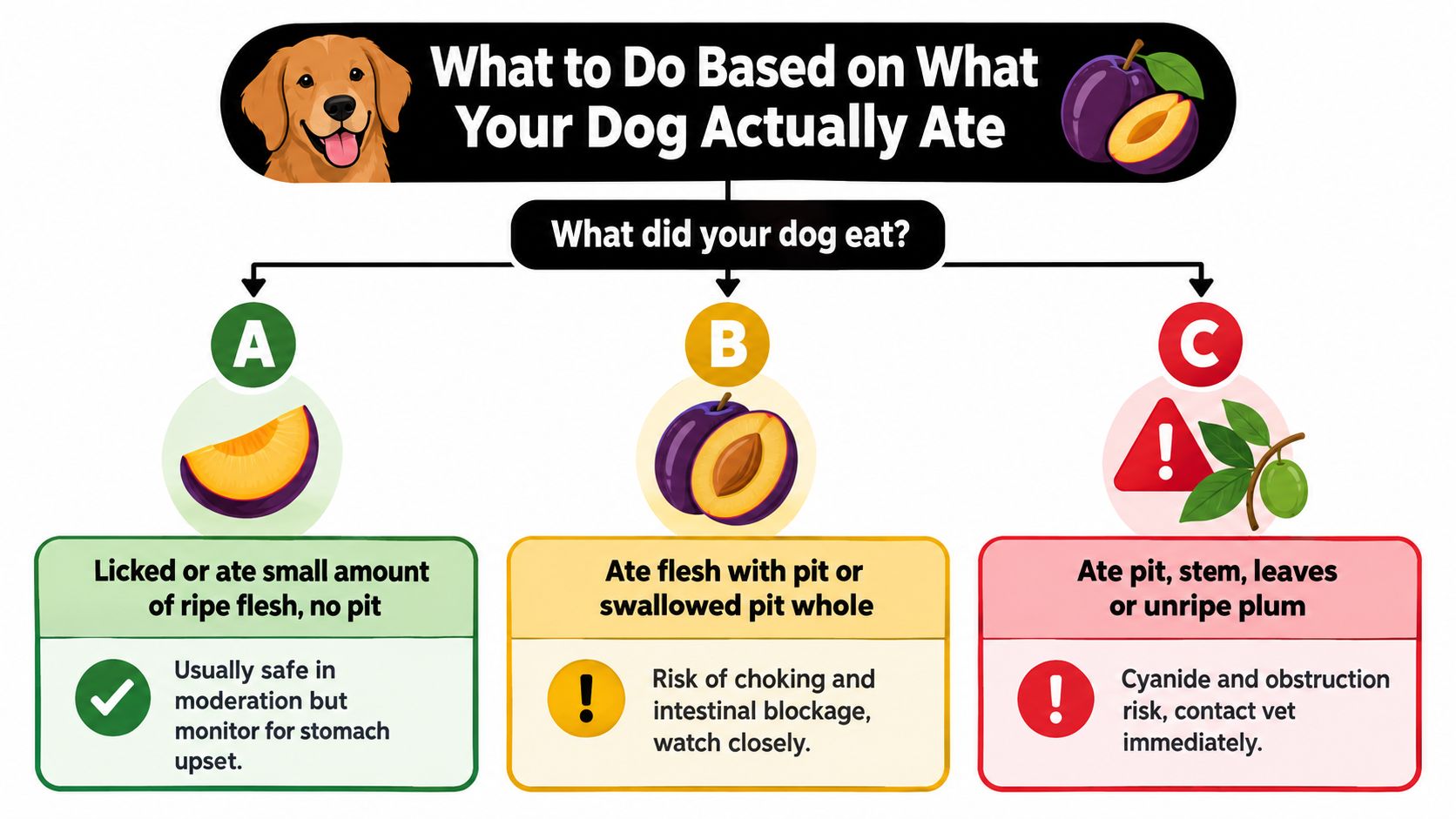
Scenario A: only ripe flesh, no pit
If your dog licked or ate a small amount of ripe flesh only, this is usually the least alarming version. Ripe plum flesh is generally not the toxic part. The main issue is that some dogs get an upset stomach from sweet fruit or from trying something unfamiliar.
Watch for mild digestive changes such as soft stool, a little gassiness, or brief stomach upset. If your dog seems normal otherwise, this is usually a monitor-at-home situation.
A few calm steps help here:
- Remove the rest: make sure no pit or stem is still nearby
- Offer water: let your dog drink normally
- Keep meals simple: avoid adding lots of other treats that day
If your dog has a sensitive stomach in general, learning more about dog gut health can help you choose gentler treat options in the future.
Scenario B: swallowed a whole pit
Many owners assume “poisoning,” but if the pit was swallowed whole and not chewed, the main concern is often a foreign body problem rather than cyanide release. Chewy's educational guidance highlights this distinction: cyanide is released mainly when the stone is broken, while an intact pit is more likely to create a mechanical obstruction (Chewy plum guidance for dog owners).
That doesn't make it safe. It means you should focus on signs that the pit is stuck or not moving through normally.
Your next step is to call your vet for advice, then monitor closely for changes in appetite, vomiting, stool, comfort, and energy.
Scenario C: chewed or crushed the pit, or ate stems or leaves
This is the urgent version.
If your dog chewed the pit, cracked it open, or ate stems or leaves, contact your veterinarian or an animal poison service right away. Don't wait for symptoms to show up first. With cyanide-type exposure, problems can move quickly.
If the pit is broken, assume the risk is higher than it looks from the outside.
One clear next step works best under stress: call immediately and describe exactly what was chewed or swallowed.
Warning Signs of Plum Toxicity in Dogs
A dog that ate plum flesh may end up with a mild stomach upset. A dog that chewed a pit or swallowed one whole can look very different. The signs matter because they point to different problems.
One problem is toxin exposure from a broken pit, stem, or leaves. The other is a hard object getting stuck, irritating the throat, stomach, or intestines. Those are not the same emergency, so it helps to watch for the pattern, not just one symptom.
Signs linked to chewed pit exposure
If your dog cracked the pit with its teeth or ate plant parts, watch closely for signs that fit cyanide-type toxicity, as noted earlier in the article. Cyanide affects the body's ability to use oxygen properly. In plain language, your dog may have oxygen in the bloodstream, but the cells cannot use it the way they should.
That is why breathing changes and gum color changes can show up together.
Use this checklist if the pit was chewed or plant tissue was eaten:
- Gums look unusually bright red
- Pupils appear enlarged
- Breathing seems hard, fast, or strained
- Panting starts suddenly without exercise or heat
- Weakness, wobbliness, collapse, or severe distress appears
These signs call for urgent veterinary help.
Signs linked to a swallowed whole pit
A whole pit usually causes concern for a different reason. It acts more like a small stone than a toxin source. If it hangs up in the gut, the warning signs often appear over hours instead of right away.
Watch for:
- Repeated vomiting
- Loss of appetite
- Abdominal pain or a tense belly
- Trouble passing stool or straining
- Low energy or behavior that seems off
- Gagging, retching, or trouble swallowing if the pit is higher up
A simple way to picture it is this: a chewed pit can create a chemistry problem, while a whole pit often creates a plumbing problem.
If you are sorting out whether your dog has temporary loose stool from eating something unusual or is showing signs of a larger digestive issue, this guide to preventing dog tummy troubles can help you compare common stomach symptoms. If a pit was involved, though, be more cautious than you would be with routine diarrhea.
Plum Toxicity Signs by Cause
| Symptom | Chewed Pit or Plant Tissue | Swallowed Whole Pit |
|---|---|---|
| Bright red gums | More suggestive | Uncommon |
| Dilated pupils | More suggestive | Uncommon |
| Difficulty breathing | More suggestive | Possible if choking occurs |
| Sudden panting | More suggestive | Less typical |
| Collapse or shock | More suggestive | Possible in severe cases |
| Repeated vomiting | Possible | Common concern |
| Loss of appetite | Possible | Common concern |
| Straining or constipation | Less typical | Common concern |
| Abdominal pain | Less typical | Common concern |
Small dogs and puppies have less room for error. The same pit that might pass in a large dog can cause choking or blockage in a smaller one much more easily.
Emergency Response and When to Call the Vet
When owners panic, they often want to “do something” right away. The trick is doing the right things and skipping the risky ones.
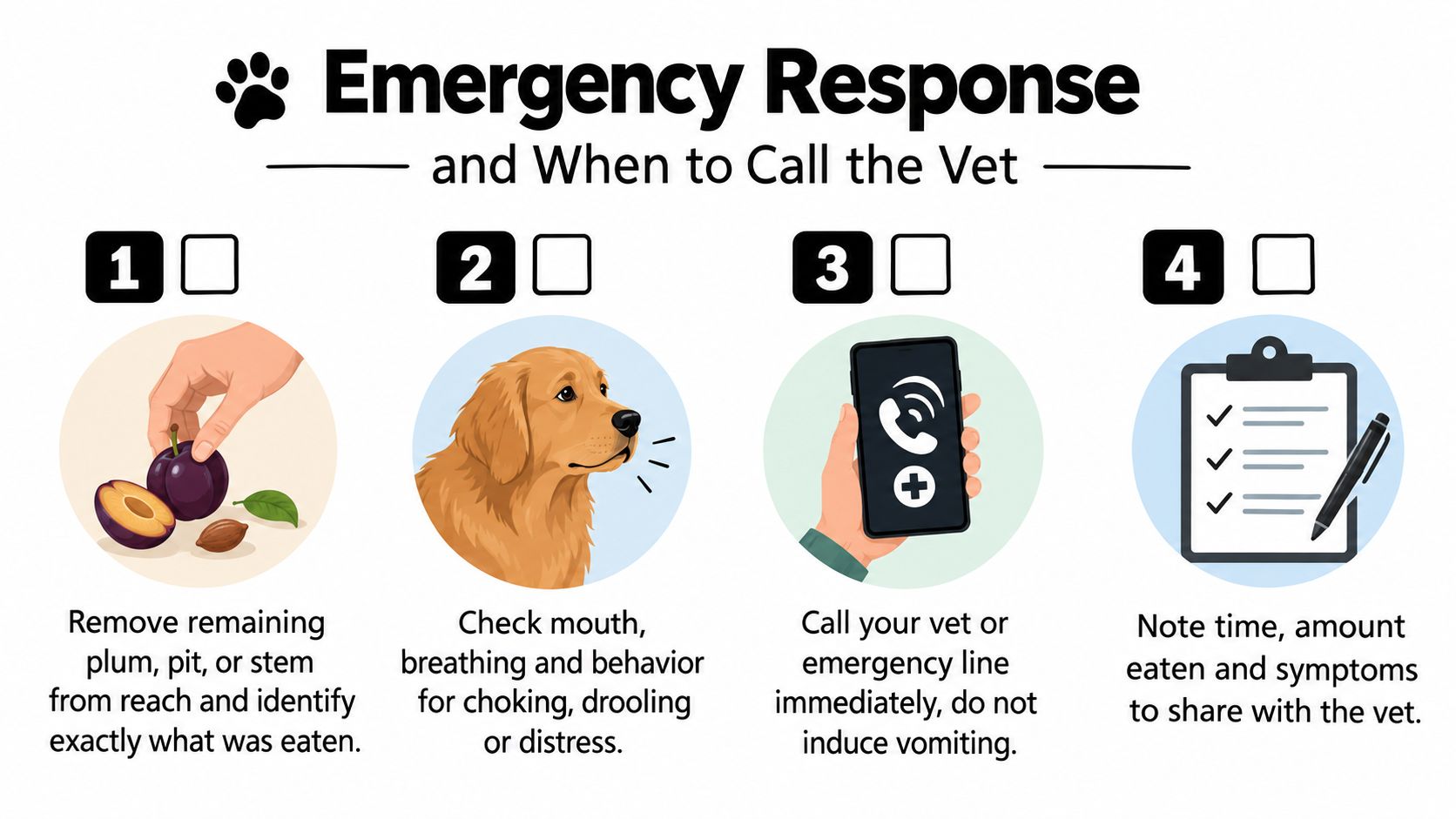
First steps at home
Start with the basics:
- Take away any remaining fruit, pit, stem, or leaves
- Check what was eaten
- Look at your dog's breathing, mouth, and behavior
- Call your veterinarian promptly if the pit, stem, leaves, or a missing pit are involved
Have a few facts ready when you call:
- Your dog's size and breed
- What part of the plum was eaten
- Whether the pit was whole or chewed
- When it happened
- Any symptoms you've noticed
What not to do
Don't try home remedies unless your veterinarian tells you to. In particular, don't induce vomiting on your own when a hard pit may be involved.
A hard object can do more damage coming back up than staying where it is.
The ASPCA Animal Poison Control Center is also a resource if you need immediate toxicology guidance. The phone number is 888-426-4435.
This short video gives a helpful visual overview of emergency response after a dog eats something concerning.
When it becomes urgent
Treat the situation as an immediate emergency if your dog:
- Chewed or crushed the pit
- Has trouble breathing
- Shows brick-red gums
- Collapses or seems weak suddenly
- Is actively choking
If your dog only ate a small amount of flesh and is acting normal, close observation is often enough. If there's any uncertainty about whether the pit was swallowed, assume the situation deserves a veterinary call.
Safe Fruit Alternatives Dogs Can Enjoy
If your dog likes sweet, juicy snacks, you don't need to use plums. There are easier options that don't come with a hard toxic pit in the center.
Better choices for fruit-loving dogs
These fruits are commonly used as occasional dog treats when prepared:
| Fruit | Safe Part to Feed | Prep Required | Serving Note |
|---|---|---|---|
| Blueberries | Whole berry | Wash | Good as small training treats |
| Apple | Flesh only | Remove seeds and core, slice | Offer a piece or two |
| Banana | Soft fruit | Peel | Use small pieces because it's sweet |
| Watermelon | Flesh only | Remove seeds and rind | Good as a hydrating treat |
| Mango | Flesh only | Remove pit and peel | Cut into bite-sized pieces |
| Cantaloupe | Flesh only | Remove rind and seeds | Offer modest portions |
The practical lesson is simple. If a fruit has a large hard center, seeds with known risk, or tough plant parts attached, it usually takes more prep and creates more chances for mistakes.
Fruits to avoid confusing with safe options
Owners sometimes assume all fruit is roughly equal. It isn't. Grapes and raisins remain off-limits, even though they're fruit, and stone fruits create their own pit-related hazards.
If you want a broader shortlist of toxic foods to avoid for dogs, keep one handy in your kitchen. It's much easier to prevent a scare than to sort one out after your dog has already swallowed something questionable.
When in doubt, choose a fruit that doesn't require you to remove a dangerous center before sharing it.
The Bottom Line on Plums and Dogs
The most useful rule to remember is this: ripe plum flesh is lower risk in a small amount, but the pit, seeds, stems, and leaves are never worth the gamble.
That's the answer behind the question, are plums bad for dogs. Not every plum exposure is equally dangerous, but the dangerous parts are serious enough that plums aren't a smart go-to treat. The pit can block the throat or gut. If it's crushed, it can also expose your dog to cyanide-related poisoning risk.
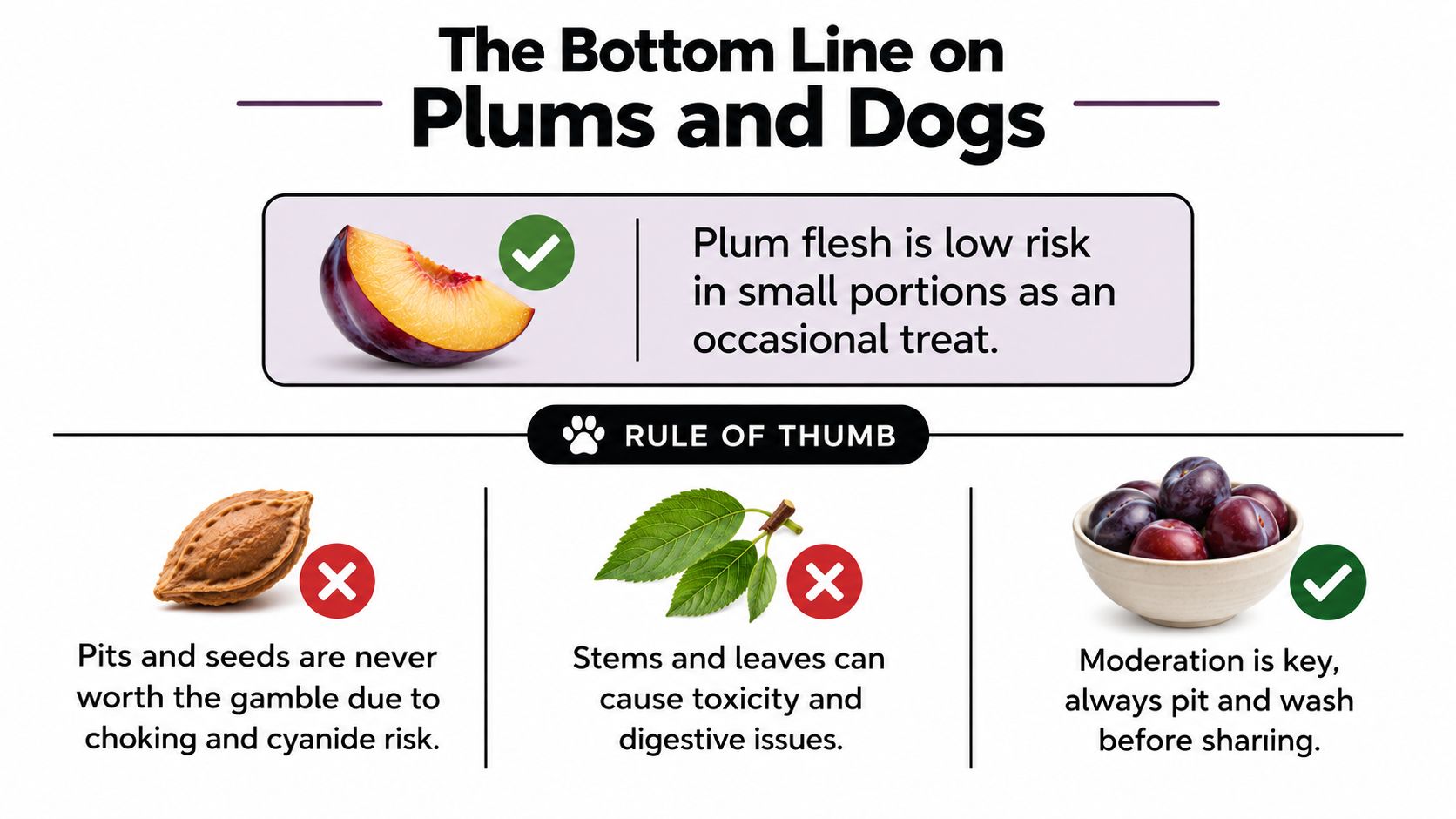
A simple stress checklist
If you're flustered in the moment, ask these questions in order:
- Was it only flesh, or was the pit involved?
- Was the pit swallowed whole or chewed?
- Did my dog also eat stems, leaves, or yard debris from the tree?
- Is my dog breathing normally and acting like themself?
A little flesh without the pit is usually a much softer landing. A missing pit, a cracked pit, or any signs of breathing trouble should move you straight to a vet call.
You don't need to memorize toxicology terms. Just remember the shape of the risk. Soft fruit is the lower concern. Hard center and plant parts are the danger zone. When you aren't sure what your dog got into, it's always reasonable to call your veterinarian or poison support for guidance.
If your dog has a sensitive stomach or you're trying to build a safer routine around treats and digestion, Joyfull offers clean-label pet wellness products designed to support everyday gut health without extra nonsense. For simple options made with pet-friendly ingredients and reviewed with veterinary input, visit Joyfull.
0 comments