


Your dog is parked under the kitchen counter while you slice an apple. One hopeful stare lands on the cutting board, and you pause with a piece in hand: Can dogs eat apples, and are apple dog treats a good idea?
For most dogs, plain apple flesh can fit into a thoughtful snack routine, but preparation and portion size matter. The useful question isn't only whether apples are safe. It's whether the treat suits your dog's size, health needs, daily calorie budget, and tolerance for new foods.
This guide covers the full decision, from removing seeds and cores to measuring servings, reading commercial labels, making simple homemade treats, and recognizing signs of intolerance. It also uses a clean-ingredient lens, similar to the approach behind Joyfull's health-boosting pet treats, where recognizable ingredients and a clear purpose matter more than flashy packaging.
Table of Contents
- Why Apple Treats Deserve a Spot in Your Dog's Routine
- Apple Safety Basics Every Owner Should Know
- Serving Sizes and the 10% Treat Rule
- How to Read the Label on Commercial Apple Dog Treats
- Two Vet-Inspired Homemade Apple Dog Treat Recipes
- Signs of Apple Intolerance and When to Call the Vet
- Apple Treats Versus Other Better-For-You Options
- A Simple Checklist for Better Apple Dog Treats
Why Apple Treats Deserve a Spot in Your Dog's Routine
Apple flesh offers a crisp texture, natural sweetness, and fiber in a relatively light food. Raw apple with skin contains 52 kcal per 100 g, 13.8 g of carbohydrates, 2.4 g of dietary fiber, and 0.2 g of fat, based on USDA FoodData Central information summarized in independent apple nutrition guidance. That makes a small piece useful when you want to reward your dog without automatically reaching for a rich, dense snack.
The fiber can support normal digestion, while the fruit contributes vitamins such as vitamin C and vitamin A, nutrients commonly associated with immune and skin health. Those benefits don't turn apple into a complete supplement, though. Apple is a snack, not a replacement for a complete and balanced canine diet.
The practical advantage: Apple works best as one modest ingredient in a varied treat rotation, not as an unlimited “healthy” food.
A medium apple weighs about 182 g and provides about 95 kcal, with about 4.4 g of fiber, according to the same nutrition guidance. A 20 g apple slice is often compared at roughly 10 kcal, while a Greenies Petite is listed at 54 kcal and a medium Milk-Bone Original at 40 kcal in that comparison. The point isn't that packaged treats are automatically wrong. It's that portioned apple can be a useful option for dogs whose owners are watching calories.
Why texture and fat content matter
Many dogs enjoy the crunch of a fresh slice. That texture can make apple feel satisfying during a training break or after a walk, especially when a dog already likes fresh foods.
Apple is also naturally low in fat and protein. That can make it a practical alternative to richer rewards for some overweight dogs or dogs following restricted diets, provided the dog's veterinarian agrees that fruit fits the plan. Dogs with medical conditions still need individualized guidance, because “low fat” doesn't mean “right for every dog.”
Start with plain flesh, keep the portion small, and treat the fruit as part of the day's overall food budget. That simple habit gives you the upside of a recognizable snack without turning a kitchen handout into an accidental feeding routine.
Apple Safety Basics Every Owner Should Know
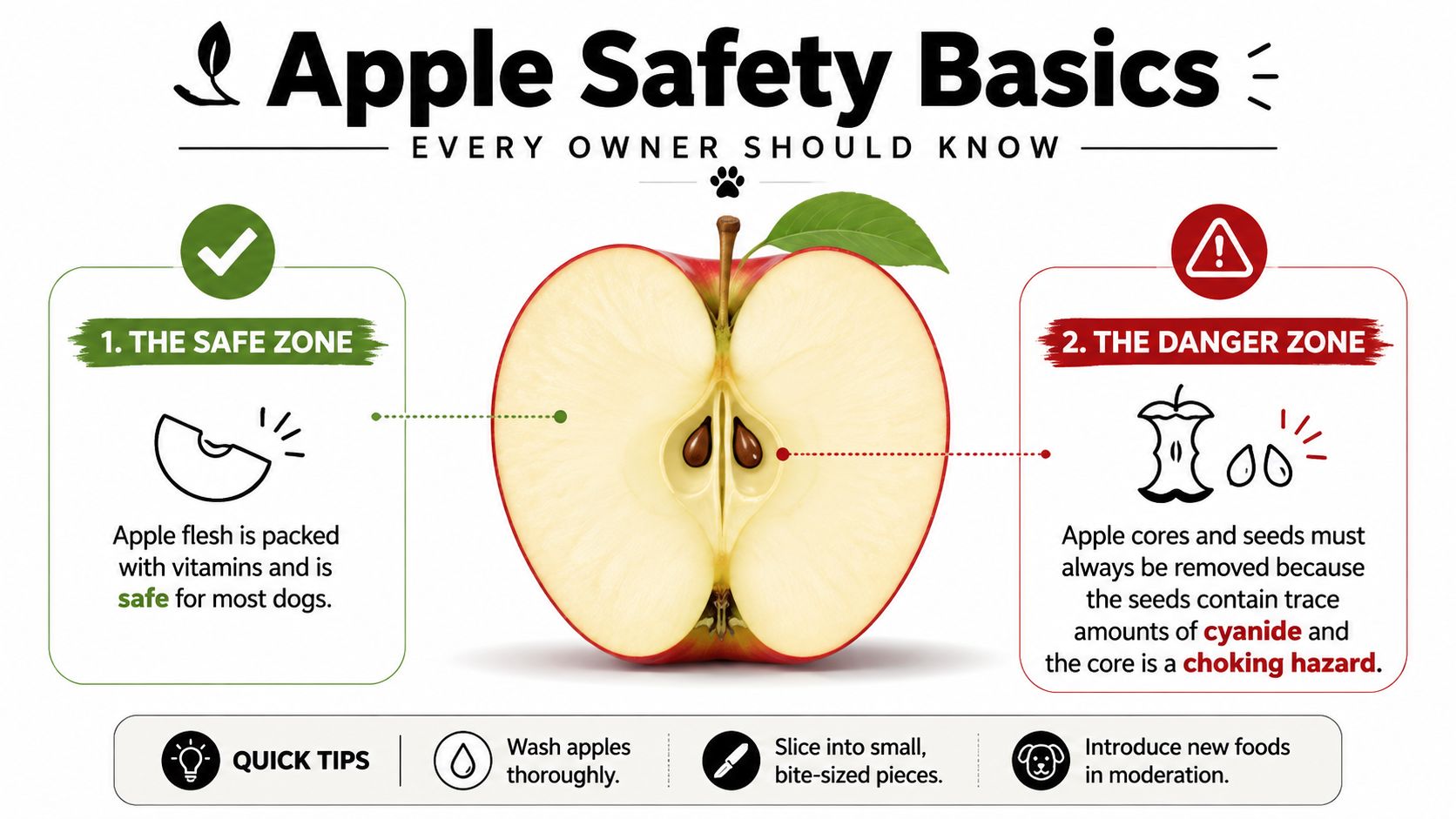
The safe part of an apple is the flesh. Wash the fruit, cut away the core, remove the seeds and stem, and offer only pieces that match your dog's mouth and chewing ability.
Seeds deserve special attention because they contain amygdalin, which can release cyanide when seeds are chewed or digested, as explained in veterinary feeding guidance from Chewy. The core creates a separate problem. It can become a choking hazard or contribute to an obstruction, particularly when a dog swallows large pieces quickly.
A safer preparation routine
Use the same sequence every time:
- Wash the apple. Rinse it thoroughly before cutting to remove dirt and surface residue.
- Quarter the fruit. Smaller sections make the core easier to see.
- Remove the core, seeds, and stem. Don't assume a sliced piece is safe if the center remains attached.
- Cut bite-size pieces. Match the size to your dog's body and eating style.
- Serve plain. Skip syrups, pie filling, spiced desserts, and sweetened toppings.
Apples aren't toxic to dogs in the same way grapes or chocolate are, but that doesn't make every apple product suitable. Sweetened applesauce, baked goods, and flavored snacks can contain ingredients that don't belong in a dog's bowl.
Dogs with diabetes, dogs on weight-management plans, and dogs with sensitive stomachs need extra caution because apple contains natural sugar and fiber. A dog with a known food allergy should also follow the veterinarian's advice rather than testing a new treat casually.
Start smaller than you think: One thin slice gives you a clearer read on tolerance than a handful does.
Serving Sizes and the 10% Treat Rule
Treats should fit inside a calorie budget. Veterinary-facing guidance commonly recommends keeping treats below 10% of a dog's daily calories, with the rest coming from a complete and balanced diet, as summarized by PetMD's apple-feeding guidance. That rule includes fruit, training rewards, dental treats, and anything else offered outside meals.
A useful way to apply it is to think in layers. First, consider your dog's daily food plan. Next, reserve only part of the treat allowance for apple. Finally, adjust for activity, body condition, age, and any medical diet. A serving chart can provide a starting point, but it can't replace the calorie information on your dog's food or a veterinarian's recommendation.
Apple serving sizes by dog weight
| Dog Weight | Serving Size | Approx. Calories | Notes |
|---|---|---|---|
| 2 to 10 pounds | 1 to 2 small pieces | Not specified | Start with one small piece and monitor closely |
| 11 to 20 pounds | 2 to 3 small pieces | Not specified | Keep pieces thin and seed-free |
| 21 to 50 pounds | 3 to 4 small pieces | Not specified | Adjust for the rest of the day's treats |
| 51 to 90 pounds | 4 to 5 small pieces | Not specified | Larger dogs still need portion control |
| 91 pounds and above | 5 to 6 small pieces | Not specified | Individual calorie needs remain the deciding factor |
The chart reflects weight-scaled guidance, not a promise that every dog can eat the maximum amount. A medium apple contains about 95 kcal, while a 20 g slice contains about 10 kcal, according to the nutrition comparison cited earlier. Because a whole apple can consume a meaningful share of a small dog's treat budget, slicing the fruit before serving helps prevent accidental overfeeding.
Too much apple may lead to vomiting, diarrhea, abdominal discomfort, or bloating because the fruit contributes sugar and fiber. If stools soften or your dog seems uncomfortable, stop the apple and return to the familiar diet while you assess what happened.
How to Read the Label on Commercial Apple Dog Treats
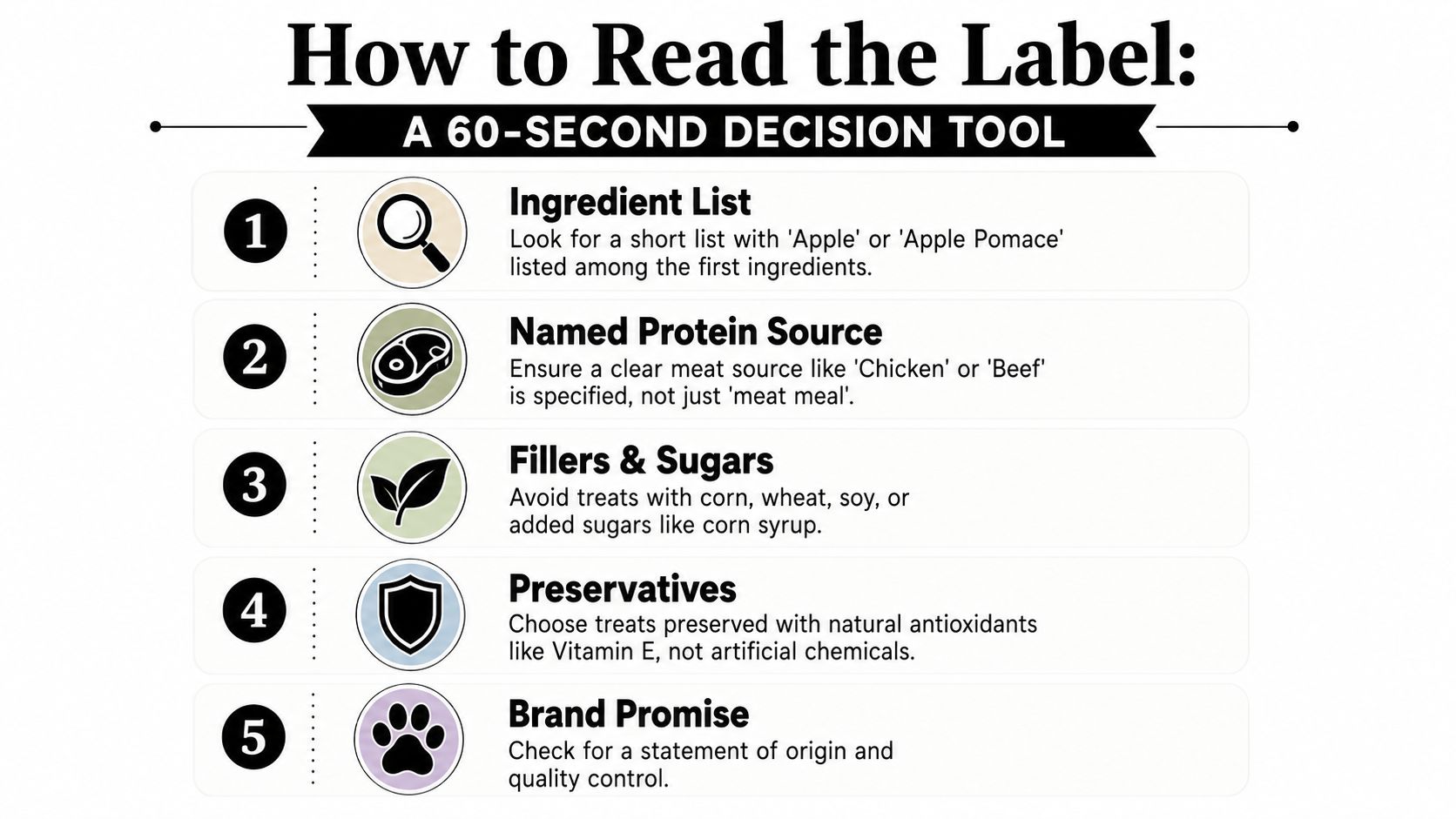
A commercial bag deserves the same attention as the produce aisle. Use the label as a quick filter rather than letting words such as “natural” or “farm fresh” make the decision for you.
Five checkpoints for the bag
1. Read the ingredient list first. Look for a reasonably short list with apple or apple pomace appearing early. A label led by named whole foods is easier to understand than one dominated by vague flavorings, syrups, and processing aids.
2. Find the named protein. “Chicken” or “beef” tells you more than a broad phrase such as “animal ingredients.” The protein should have a clear identity, especially if your dog has dietary sensitivities.
3. Scan for red flags. Corn syrup, propylene glycol, BHA, BHT, ethoxyquin, artificial dyes, and vague “animal digest” language deserve extra scrutiny. Their presence doesn't automatically answer every safety question, but it can make a product less aligned with a simple, recognizable-ingredient approach.
4. Check the guaranteed analysis. Protein and fat percentages help you understand the treat's nutritional profile. They won't tell you everything, but they add context to the ingredient list.
5. Check origin and recall information. Look for the country of manufacture and review the manufacturer's recall history. A clear brand statement and accessible quality information make follow-up easier.
Match the treat to the job
A soft apple-and-protein treat may suit training, while a firmer product may serve enrichment. Don't confuse a pleasant flavor with a nutritional purpose. The same label-reading habit can help you assess human snack products too, including this apple pie flavored protein bar, where ingredient context matters more than the flavor name.
For a deeper walkthrough of ingredient panels, use Joyfull's tips for pet food labels. The clean-ingredient principle is straightforward: favor foods you can identify, understand why they're included, and portion without guesswork.
Two Vet-Inspired Homemade Apple Dog Treat Recipes
Homemade apple dog treats give you control over the fruit, texture, and serving size. They also require careful preparation. Wash the apple, remove every seed and the core, and check peanut butter labels for xylitol, which must not be present.
Fresh apple and peanut butter bites
Ingredients
- Cored apple, finely diced
- Unsweetened peanut butter labeled xylitol-free
- A small splash of water if needed for mixing
Method
Fold the diced apple into the peanut butter. Press the mixture into small silicone molds, place the molds on a baking tray, and bake at 325°F for 20 minutes. Let the bites cool completely before offering them.
These soft pieces suit senior dogs, dogs that prefer tender textures, or training sessions where you can break one portion into smaller rewards. Begin with a small piece, especially if peanut butter is new to your dog. Store fresh bites in the refrigerator for up to one week, or freeze them in an airtight container for up to three months.
Dehydrated apple and oat crisps
Slice cored apples thinly, then toss them with ground oats and a splash of water. Spread the pieces in a single layer and dry them at 170°F for four to five hours, until they reach a leathery texture. For general fruit-drying technique, this guide to dehydrating fruit for baking offers useful preparation context, though dog treats still need seed-free fruit and dog-appropriate portions.
Offer a small crisp at a time. Dried apple is more concentrated than fresh apple. One pet-nutrition source reports that dried apple has roughly 5.5 times the sugar and 3.6 times the fiber per 100 g compared with fresh apple, so a smaller piece can carry more sugar and fiber. Refrigerate these crisps for up to two weeks, or freeze them airtight for up to three months.
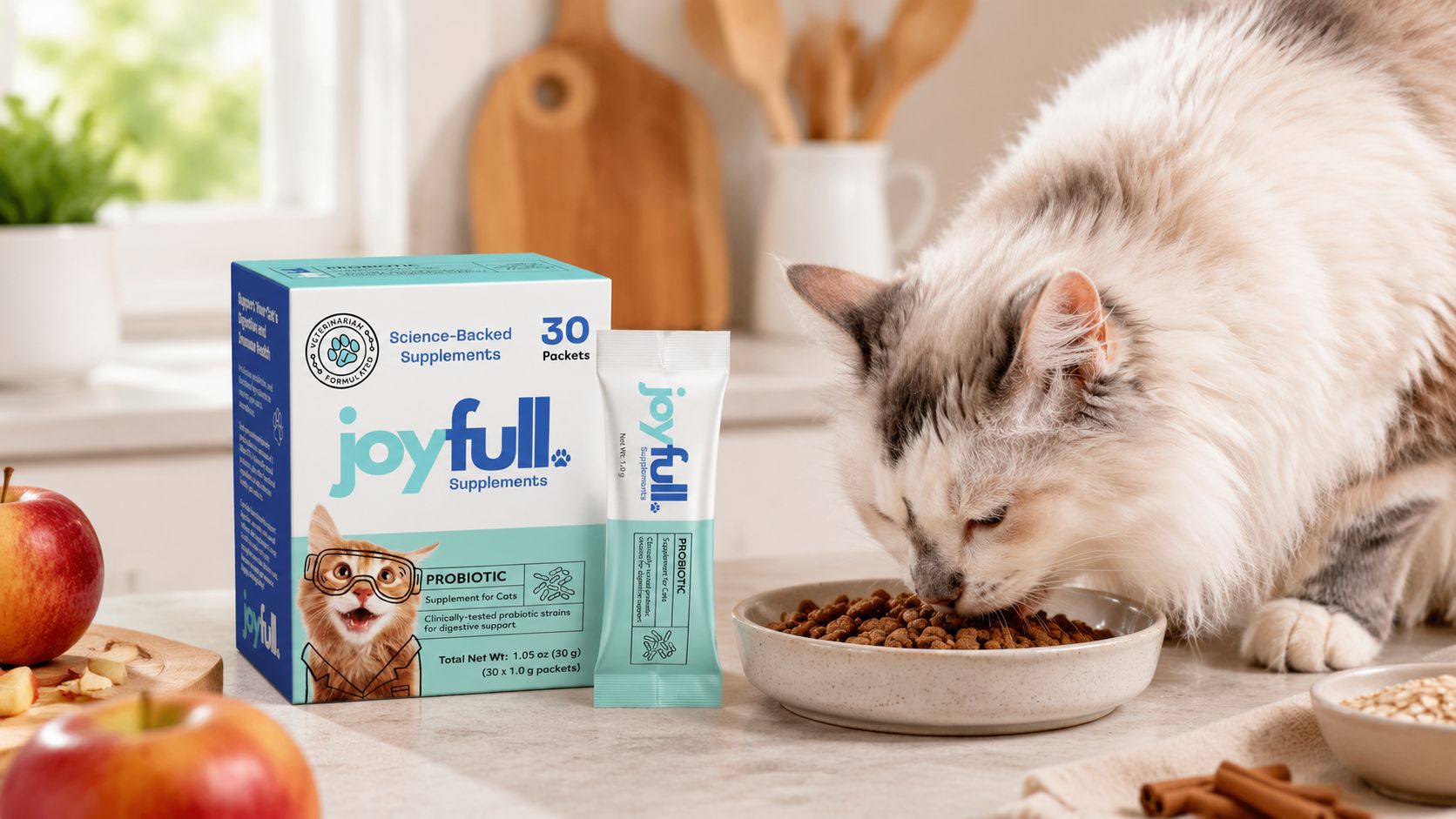
For readers considering digestive products for a different pet, Probiotic Supplement for Cats - 30 Single-Serving Packets is described as a veterinarian-formulated cat supplement made with real beef bone broth, clinically-tested probiotic strains, two complementary prebiotics, and individually sealed servings. It isn't an apple treat or a dog product, so it shouldn't be substituted for canine nutrition guidance.
Signs of Apple Intolerance and When to Call the Vet
You offer your dog one small apple piece, expecting a happy crunch. Over the next day, pay attention to changes rather than assuming every loose stool means an allergy.
Digestive signs can include gas, loose stool, reduced appetite, vomiting, abdominal discomfort, or bloating. These reactions may reflect a sudden increase in sugar or fiber rather than a true allergy, but the distinction isn't something you need to diagnose at home.
What to watch for
Skin and behavior can also provide clues:
- Skin changes: Ear scratching, paw licking, or facial rubbing may signal irritation.
- Behavior shifts: Lethargy, restlessness, or unusual reluctance to eat deserve attention.
- Digestive changes: Loose stool, gas, vomiting, or reduced appetite can follow a new food.
For a new treat, use a four-day solo introduction test. Start with a one-teaspoon portion, keep other new foods out of the picture, and write down the time, amount, stool quality, appetite, skin behavior, and energy level. A simple log gives your clinic a clearer pattern if symptoms appear.
Don't wait for routine observation if your dog vomits blood, develops severe swelling, or collapses. Those are urgent signs that warrant an immediate call to a veterinarian or emergency clinic. Dogs with diabetes, known allergies, or chronic digestive disease should have their treat plan reviewed before you experiment.
Apple Treats Versus Other Better-For-You Options
No single snack wins every job. Apple is recognizable and relatively light, but peanut butter may provide stronger food motivation, pumpkin can fit a soft-food routine, and a commercial dental chew may offer a firmer enrichment experience.
Use the table as a qualitative decision aid. Exact calories vary by product, recipe, and serving size, so check the package or recipe rather than treating any category as automatically low calorie.
Better-for-you dog treat comparison
| Treat | Calories, typical serving | Key nutrients | Sugar load | Training fit |
|---|---|---|---|---|
| Fresh apple | Relatively low, serving-dependent | Fiber, vitamin C, vitamin A | Naturally sweet | Good for light rewards |
| Xylitol-free peanut butter | Varies widely by product and portion | Fat and protein | Usually low in sugar when unsweetened | High-value, use tiny amounts |
| Carrot | Relatively light, serving-dependent | Fiber and plant nutrients | Naturally sweet | Useful for crunchy rewards |
| Plain pumpkin | Serving-dependent | Fiber and moisture | Moderate natural carbohydrate | Soft rewards or food topper |
| Sweet potato | Serving-dependent | Carbohydrates and fiber | Naturally sweet | Soft, satisfying reward |
| Commercial dental chew | Product-dependent | Depends on formulation | Depends on formulation | Better for longer chewing than rapid training |
Choose by purpose
For weight-conscious dogs, fresh apple or carrot can offer a crunchy, recognizable option with less richness than many soft treats. For high-value training, a tiny amount of xylitol-free peanut butter or a protein-based treat may work better, but those foods require tighter portion control.
Pumpkin and sweet potato bring a softer texture, which can help dogs that struggle with hard pieces. Commercial dental chews may fit enrichment, but label quality, size, supervision, and the dog's chewing style all matter.
A product such as dog prebiotic treats may appeal when you want a functional treat format, but the same questions still apply. What are the ingredients? How much does your dog receive? Does the product match the dog's health needs?
The clean-ingredient lens keeps the decision grounded. Favor a short, recognizable list, low added sugar, a portion your dog can handle, and a format that suits the moment. Brand name comes after purpose and fit.
A Simple Checklist for Better Apple Dog Treats
Keep this list near the cutting board or save it with your pet-care notes. It turns a vague “Is this okay?” into a repeatable decision.
Prep
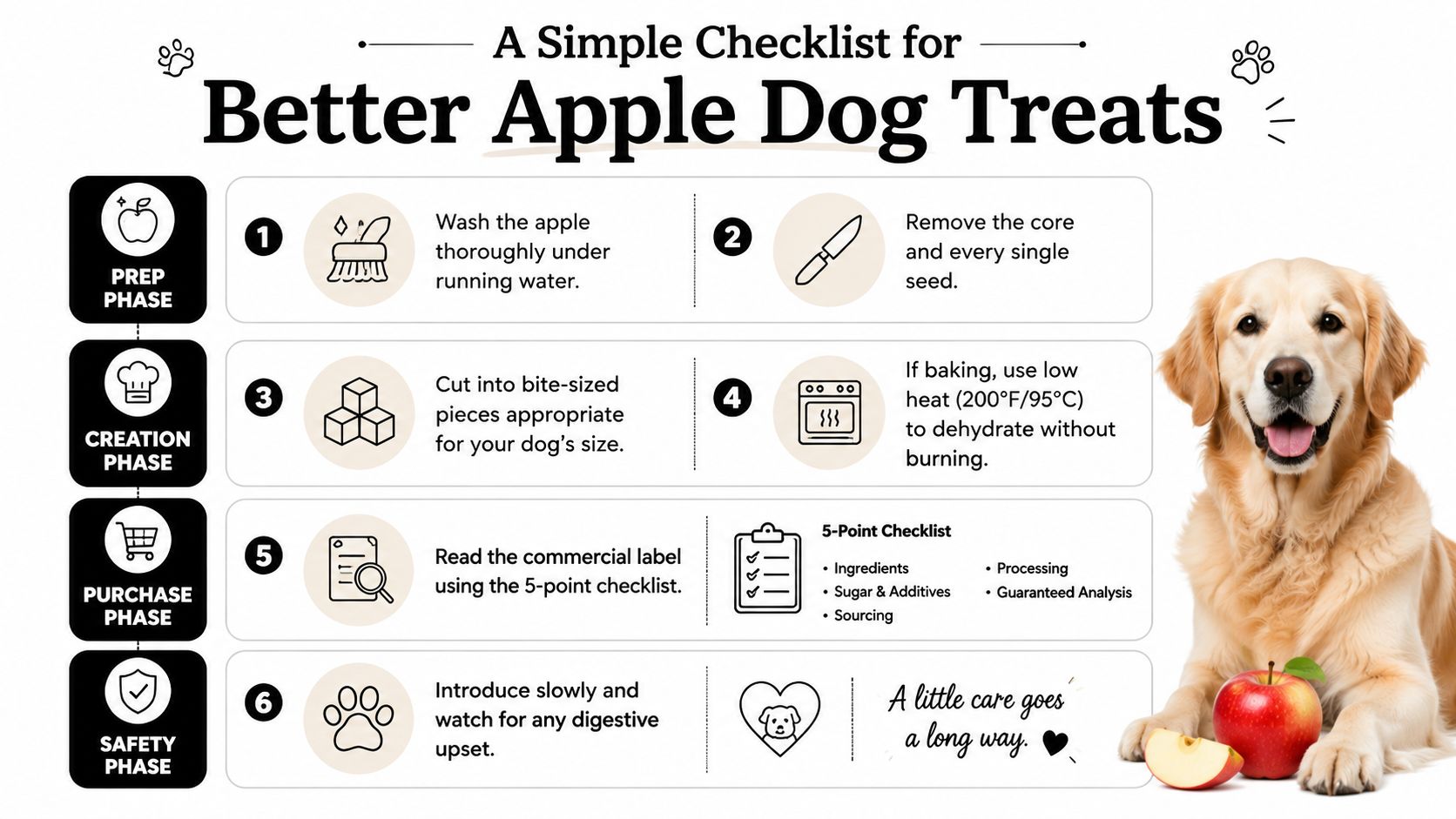
- Wash the fruit: Rinse the apple thoroughly before cutting.
- Remove the danger points: Take out the core, every seed, and the stem.
- Match the size: Cut thin or bite-sized pieces appropriate for your dog's mouth and eating speed.
Portion
- Start modestly: Introduce one small piece or the measured starting portion instead of offering a handful.
- Use the calorie budget: Keep all treats, including apple, within the commonly used 10% daily-calorie limit.
- Account for dried fruit: Dried apple is more concentrated, so serve less than you would serve fresh apple.
Store
Fresh homemade bites belong in the refrigerator. Dried pieces should be kept in a suitable airtight container, and batch-prepped treats can go into the freezer for longer storage. Label the container with the preparation date so you don't have to guess how long a batch has been waiting.
Check the commercial label
Red flags include:
- Vague meat descriptions
- Added sugar or corn syrup
- Artificial dyes
- Preservatives you don't recognize
- No clear manufacturing or quality information
Green flags include:
- A short ingredient list
- Named protein
- Recognizable apple ingredients
- Clear portion guidance
- A transparent brand statement
Watch the dog, not just the recipe
Note digestive changes, itching, appetite shifts, or unusual behavior after a new treat. Stop the food and contact your clinic if vomiting, diarrhea, or itching appears, particularly if symptoms are severe, persistent, or accompanied by swelling or collapse.
The best apple dog treat is safe, plain, portioned, and appropriate for your individual dog. Joyfull offers clean-ingredient pet snacks and functional options developed with high-quality proteins and veterinary review, giving you another label to evaluate alongside homemade fruit treats. Visit Joyfull to explore pet wellness options that keep ingredient decisions simple and purposeful.
0 comments