


Most advice about anti inflammatory dog treats starts with the wrong promise. A treat bag can support wellness, but it does not magically turn into medicine because the front label says “anti-inflammatory.” If your dog has real pain, stiffness, or chronic inflammation, treats belong beside a vet's plan, not in place of one.
Table of Contents
- Why Most Anti Inflammatory Dog Treats Don't Deserve the Label
- What an Anti Inflammatory Dog Treat Is
- Ingredients With Real Evidence Versus Ingredients Built on Hype
- Health Conditions These Treats May Support
- Reading the Label Without Getting Sold
- Store Bought Versus DIY Anti Inflammatory Dog Treats
- Safety, Dosing, and When the Vet Comes First
- Questions Owners Ask After Reading the Guide
Why Most Anti Inflammatory Dog Treats Don't Deserve the Label
The phrase anti inflammatory gets used too loosely in pet food marketing. On a treat bag, it usually signals functional support, not a medical claim. That distinction matters because a dog with arthritis, GI inflammation, or another painful condition needs a real treatment plan, not clever packaging.
Wellness support is not treatment
Veterinary guidance is blunt on this point. True anti-inflammatory therapy for dogs means prescription NSAIDs or other vet-directed care, and there are no FDA-approved over-the-counter NSAIDs for dogs PetMD. So when a brand leans hard on “anti-inflammatory” language, treat it as a nutrition promise, not a cure.
Practical rule: If a treat sounds like it can replace medicine, it is overselling itself.
That does not make all functional treats useless. It means they should be judged by ingredient quality, dose clarity, and how transparently the brand explains the product's role. The best use case is adjunct care, especially for dogs who need daily support and are already under veterinary supervision.
Why owners keep reaching for food-based support
The demand makes sense. Zoetis reports that osteoarthritis may affect about 37% of dogs in a U.S. screening study, and its carprofen product Rimadyl has been used for over 25 years, with more than 3 billion doses dispensed and over 29 million dogs treated PMC. That is a lot of dogs living with long-term discomfort and a lot of owners looking for something gentler to add around the edges.
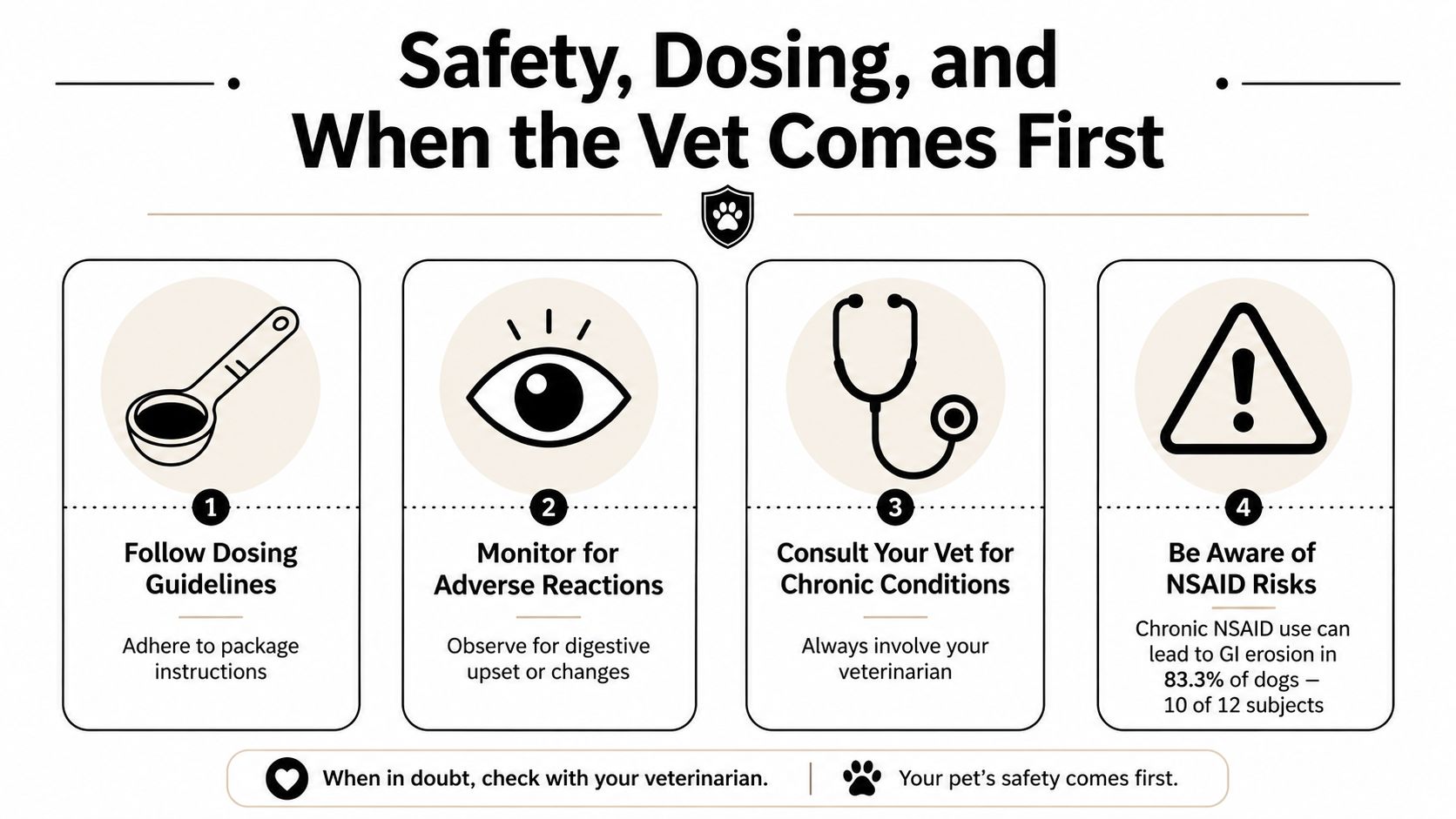
Long-term NSAID use also comes with real trade-offs. In one study of dogs receiving chronic NSAIDs, 10 of 12 dogs (83.3%) had gastric or small-intestinal erosions, compared with 3 of 11 control dogs PMC. That does not mean NSAIDs are bad. It means owners are right to want non-drug support, but they still need to use it intelligently.
What an Anti Inflammatory Dog Treat Is
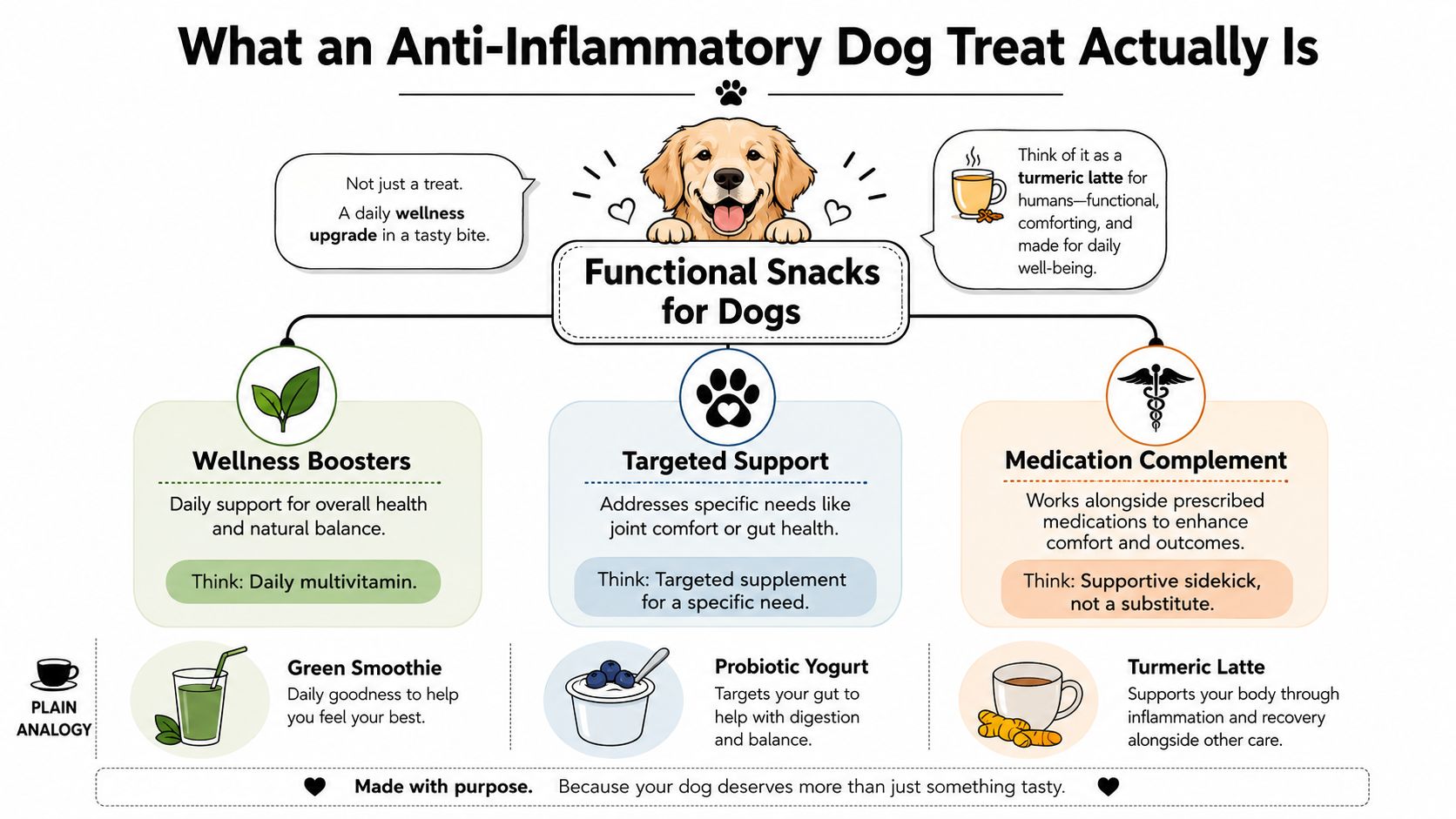
These treats are functional snacks. They sit in the same category as a supplement-bearing chew or a fortified biscuit, not a drug. They deliver a small amount of a targeted ingredient in a form dogs will eat, which makes them useful for routine support and not for replacing treatment.
The three common buckets
Most products fall into three groups. Omega-3-rich treats rely on fish oil or algae-based fats. Botanical treats use curcumin, boswellia, or similar plant compounds. Antioxidant blends combine several ingredients and try to cover more than one pathway at once.
| Ingredient Category | How It Works | Example Sources |
|---|---|---|
| Omega-3 focused | Supports inflammatory balance through enriched nutrition | Fish oil, algae oil |
| Botanical active | Uses plant compounds for targeted support | Turmeric, curcumin, boswellia |
| Antioxidant blend | Combines several wellness ingredients for broad support | Mixed herbs, fruits, seed oils |
Background support is the point
Inflammation is not the same thing as a sudden pain spike. Acute pain calls for medical attention. Background inflammation is slower, quieter, and better suited to a daily feeding strategy that works over time. That is why these treats make more sense as daily support than as flare-up rescue.
The strongest products usually behave like small nutritional tools. They have one active ingredient you can identify, a serving size that makes sense, and a clear reason to exist beyond “natural” on the front of the bag. If the formula is mostly filler with a trendy herb dusting, it is not a functional treat. It is a snack with marketing.
A good shelf test
If you cannot tell which ingredient is doing the work, you are not looking at a serious product. The ingredient panel should make the category obvious. Joint comfort formulas and skin support formulas are not the same thing, and the label should tell you which problem the treat is meant to address.
Ingredients With Real Evidence Versus Ingredients Built on Hype
The honest hierarchy starts with omega-3-based nutrition. In a 2022 systematic review and meta-analysis of enriched diets and nutraceuticals for dogs and cats, omega-3-based nutraceuticals showed the highest mean efficacy score at 3.3 ± 1.9, and omega-3-enriched therapeutic diets showed a meaningful effect size of d = 0.58 PMC. The same review found chondroitin-glucosamine products had 88.9% non-effect and 0% effect in the analyzed studies, and the authors concluded omega-3 products beneficially modulate osteoarthritis pain while chondroitin-glucosamine has no analgesic effect.
What deserves the premium
If you're choosing between ingredient panels, start with the one that has the clearest canine evidence. Omega-3s earn their place first. Curcumin comes next, but only if the formula is specific about dose and delivery. Botanicals without dosing clarity are just decorative.
Curcumin has direct canine data, but it's not magic. In dogs fed curcumin, researchers reported lower leukocytes, neutrophils, lymphocytes, nitric oxide, plasma reactive oxygen species, lipoperoxidation, and protein carbonylation versus controls. The review also notes that 30 mg curcumin per dog per day reduced leukocyte count, which points to a mild anti-inflammatory effect PMC. That is useful, but it's modest and dose-dependent.
Bottom line: Omega-3 first, standardized curcumin second, everything else gets questioned hard.
Where the hype usually hides
Glucosamine-heavy formulas are often sold as if they're foundational. The canine evidence doesn't support that confidence. The same goes for proprietary botanical blends that hide exact doses behind a fairy-dust label. If the brand won't tell you how many milligrams of the active ingredient your dog gets, it's asking for trust without earning it.
For a broader look at how plant-based ingredients get marketed in wellness products, the Shopifarm ancient plant guide is useful because it shows how often tradition gets ahead of evidence. That's exactly the trap in pet treats too, old plant lore sounds impressive, but your dog needs measurable dosing, not mythology.
A helpful example is science-backed omega 3 treats. The important part isn't the branding, it's whether the formula clearly centers on the ingredient with the strongest canine evidence and says how much is inside each serving.
Health Conditions These Treats May Support
A senior Labrador with stiff hips is the clearest example. The dog still wants walks, still gets up for meals, but takes longer to rise from a nap and does not bounce after stairs like he used to. In that case, an anti inflammatory dog treat can fit as one part of a broader plan that includes movement, weight control, and veterinary check-ins. It should not carry the whole job.
Realistic use cases
These treats fit best when the goal is ongoing support, not crisis management. Osteoarthritis, age-related stiffness, mild skin flare-ups, and recovery support after hard exercise in working or sport dogs are the clearest fits. They also make sense when owners want a food-based layer on top of an already managed care plan.
That market pressure is easy to understand. Osteoarthritis affects a large number of dogs, which is why owners keep looking for gentler options PMC. That does not turn treats into treatment, but it explains why this category keeps growing.
A case that makes the logic obvious
A 10-year-old Lab gets a vet exam, a mobility plan, and a sensible exercise routine. The owner adds a daily treat with a measured omega-3 or curcumin dose, then watches how the dog moves over the next month. That is a smart use of the category. Dropping the treat in and skipping the vet visit is lazy, and it is how problems get missed.
Some owners also pair gut support with wellness routines. If a dog's digestive system needs help, a veterinarian-formulated option like Probiotic Supplement for Cats - 30 Single-Serving Packets shows the same principle in a different category, a targeted formula with clear functional intent. The point is the structure, not the species label, use products that are built around a defined function and a measurable serving.
When treats are just window dressing
If your dog has sudden limping, obvious pain, a swollen joint, vomiting, or a flare that changes appetite or mood, the treat is not the answer. That is vet territory. Treats are for support, not for disguising symptoms that need a diagnosis.
Reading the Label Without Getting Sold
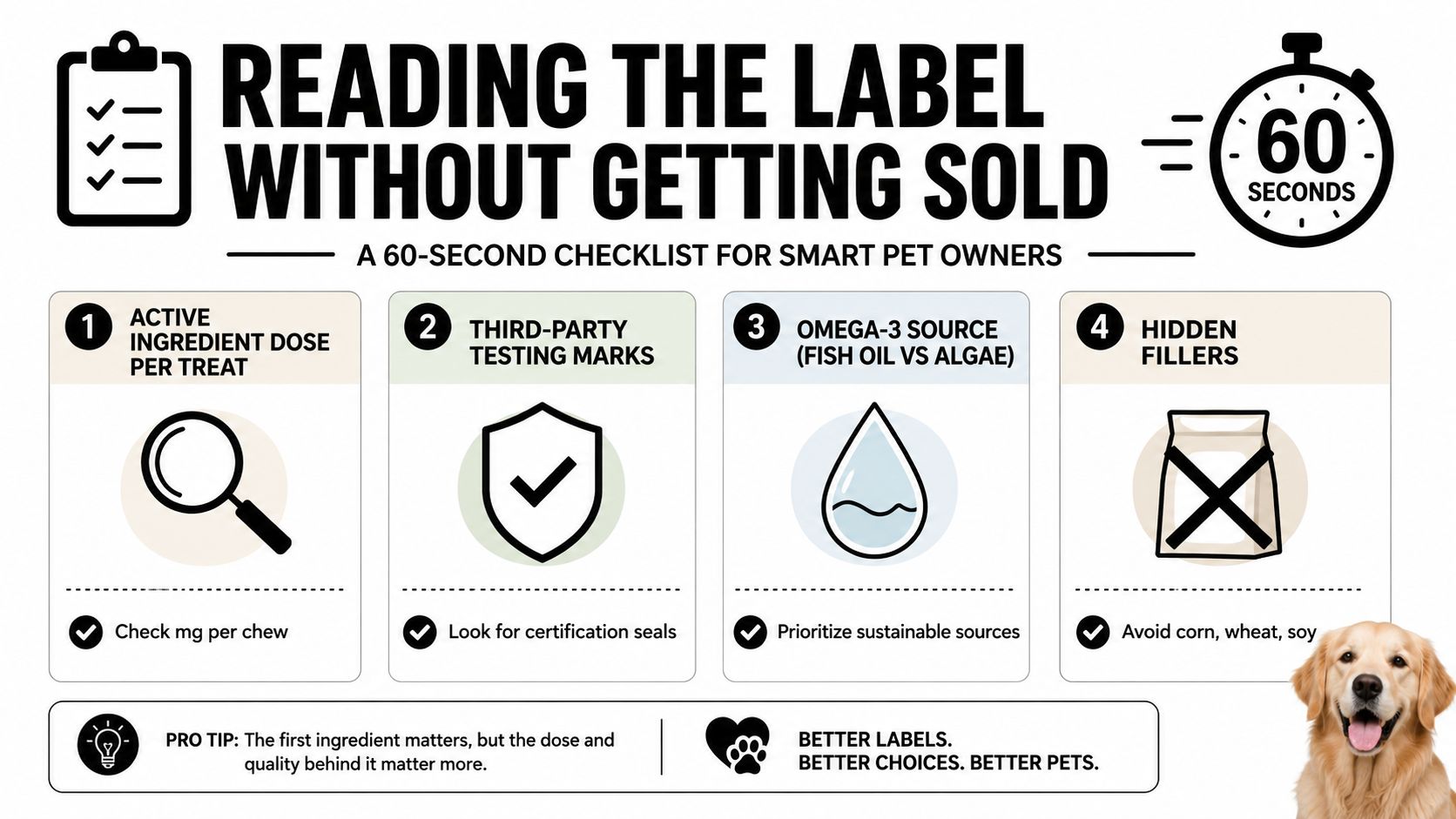
You can size up a bag in under a minute if you know what to look for. Start with the active ingredient, then check the dose per treat, then look for proof of testing. If the label makes you work to find those basics, move on.
The quick label scan
- Active Ingredient Dose per Treat: Check the milligrams per chew, not just the front-of-bag promise.
- Third-Party Testing Marks: Look for a certification seal or a clear quality statement, not vague reassurance.
- Omega-3 Source: Fish oil and algae are the ingredients to prioritize when the formula is built around fatty acids.
- Hidden Fillers: If the active ingredient is buried under corn, wheat, soy, or a mystery blend, the product may be more snack than support.
The curcumin number gives you a concrete benchmark. If a formula claims turmeric support but won't tell you how close it gets to the 30 mg per dog per day level tied to a mild effect, you're guessing PMC. That's not good enough.
Red flags that mean “skip it”
Words like miracle, cure, and proprietary blend without per-ingredient amounts are all bad signs. So are labels that hide the active ingredient under long flavor systems. If the bag reads like an ad instead of a formula, it's not serious enough for me.
Green flags that mean “worth a closer look”
- Clear mg listing: You should know how much active ingredient your dog gets.
- Source clarity: Fish oil, algae oil, or standardized curcumin beats generic “botanical blend.”
- Purpose clarity: Joint support, mobility support, or inflammation support should be stated cleanly, not mashed into one vague wellness cloud.
Store Bought Versus DIY Anti Inflammatory Dog Treats
Store-bought wins on dose precision, batch consistency, and shelf stability. DIY wins on ingredient transparency and, for some owners, cost control. Those are real trade-offs, not marketing talking points.
Where store-bought is smarter
If you want a specific active ingredient in a specific amount, commercial products are easier to trust. That matters with omega-3s and curcumin because the benefit depends on what the dog eats, not what the recipe intended. A tested chew also reduces the odds that one batch is weak and the next one is too strong.
DIY recipes are only as good as the person making them. A home kitchen doesn't give you lab-tested consistency, and that's a problem when you're trying to use a functional ingredient on purpose. It's also easy to add too many “helpful” ingredients and make the treat harder to digest.
When homemade makes sense
A simple, dog-safe base can work if you're treating it as enrichment, not precision therapy. Use a known omega-3 carrier, a measured amount of turmeric or curcumin paste, and enough fat to support absorption. Keep the recipe boring on purpose.
Practical rule: If you can't measure the active ingredient, don't pretend the recipe is therapeutic.
The risk with DIY is dose drift. Small dogs are especially easy to overdo, and dogs with sensitive stomachs can react badly to fatty or botanical-heavy recipes. Dogs on prescription medication need a vet's signoff before you start mixing in herbs or concentrated oils.
If you want a basic starting point, the easy homemade dog treats idea works only as a format, not as a treatment plan. Homemade can be useful. It just doesn't magically solve dosing.
Safety, Dosing, and When the Vet Comes First
Owners ask about functional treats for a simple reason. They want support without piling more medication onto a dog that already needs help. That instinct makes sense, but it does not make a treat a treatment. Gut irritation from chronic NSAID use is a real concern, so the safe move is to treat anti-inflammatory snacks as adjunct wellness, not a substitute for prescribed care.
Use the treat as an add-on, not a replacement
If your dog is already taking a prescribed NSAID or another vet-directed therapy, keep the stack tight. Check with your vet before adding anything that overlaps with joint support, fish oil, turmeric, curcumin, or herbs. The problem is usually not one ingredient by itself. The problem is stacking similar actives until the dog gets more than the body handles well.
Some dogs should stay away from these products unless a vet approves them first. That includes dogs on blood thinners, dogs with liver or kidney disease, pregnant dogs, and dogs with a sensitive GI tract. A functional ingredient can be fine in one dog and a bad idea in another, especially when the dog already has a medical issue or takes other medication.
Use the same standard Joyfull applies in Joyfull's vet-approved joint care guide. Read the active ingredients, check for overlap, and stop assuming that two supportive products are automatically better than one.
Monthly check-in checklist
- Stool: Watch for loose stool, digestive upset, or any clear change in frequency.
- Appetite: A drop in interest in food is a warning sign.
- Energy: If your dog seems quieter or less willing to move, stop and reassess.
- Mobility: Look for easier rises, smoother walks, and fewer hesitation points, not vague guesses.
If any of those signs go backward, pull the treat and call the vet. That is the cleanest system you can run at home. Functional snacks should make things steadier, not blur the picture or hide a real problem.
Questions Owners Ask After Reading the Guide
Can an anti inflammatory dog treat replace a prescribed NSAID? No. It can support the plan, but it can't replace a vetted medical treatment for diagnosed pain or inflammation.
How long should you trial one? Give it 4 to 8 weeks if the ingredient is meant for daily functional support, then look for a real change in mobility, comfort, or recovery. If nothing changes, stop paying for hype.
Which dogs should avoid them? Dogs with medication conflicts, GI sensitivity, liver or kidney disease, pregnancy, or unclear symptoms should get a vet's approval first. Also avoid stacking multiple products that repeat the same active ingredient.
What's the smartest decision this week? Pick one product with a clear active ingredient, a visible dose, and a use case that matches your dog. If the label won't tell you that much, walk away.
Joyfull makes no-BS wellness products with clean ingredients, high-quality proteins, and veterinary review behind the formula. If you want functional pet support that respects the difference between wellness and medicine, visit Joyfull and read the labels with the same eye you'd use on your own food.
0 comments