What to Feed Dogs with Upset Stomach
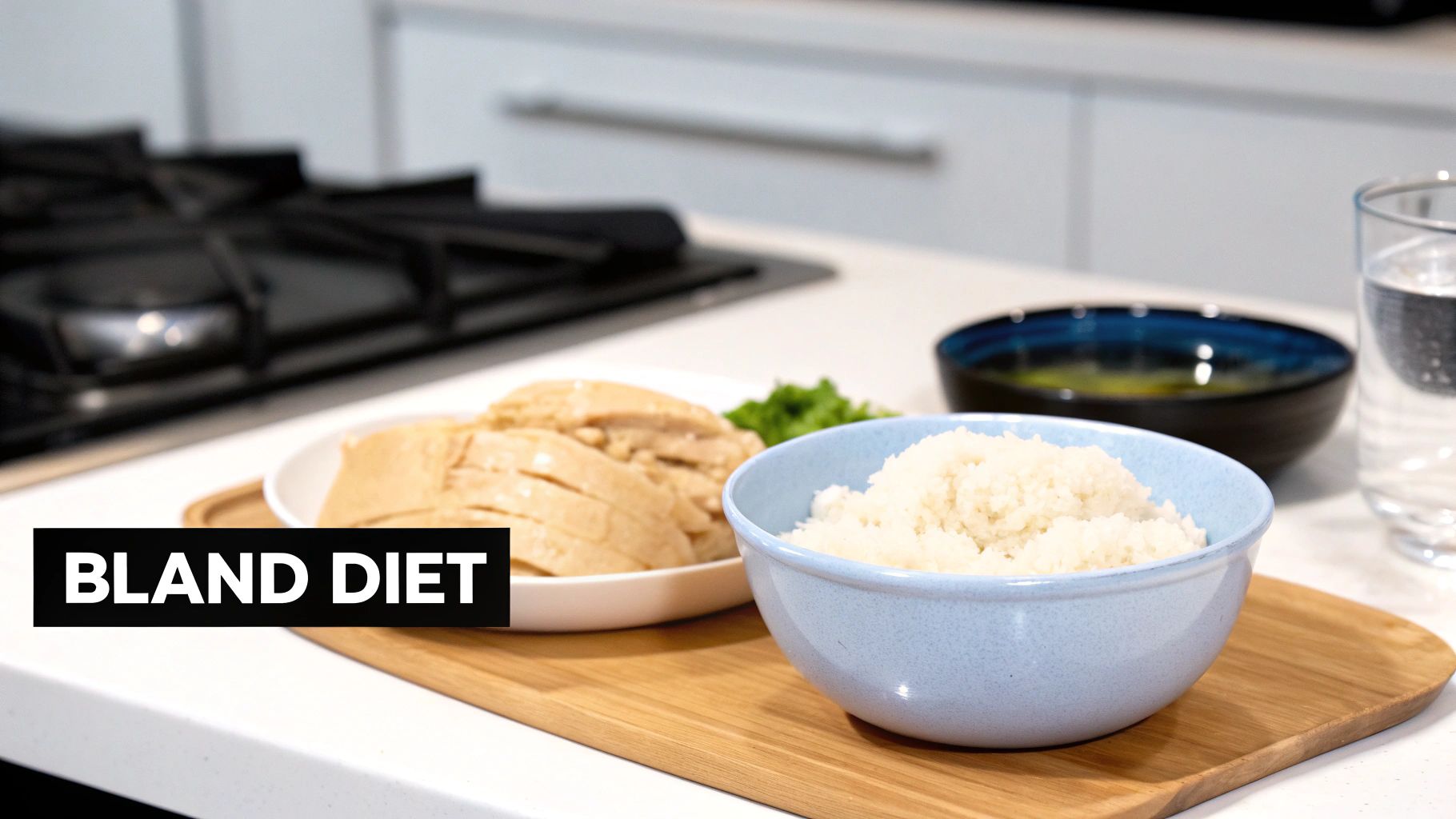
When you're trying to figure out what to feed a dog with an upset stomach, the best place to start is with a simple, bland diet. Think of it as the canine equivalent of toast and tea for us. The classic go-to is plain, boiled chicken and white rice—a combination that's incredibly easy to digest and helps soothe an irritated gut. It’s like hitting a gentle reset button on your dog's entire system.
Your First Steps for a Dog with an Upset Stomach
There’s nothing worse than seeing your best friend feeling sick. When vomiting or diarrhea starts, it's natural to want to fix it right away, but it's easy to feel overwhelmed. The most important thing is to stay calm and follow a few methodical steps to give their digestive system a real chance to recover.
To help you get started, here's a quick-reference table summarizing the immediate actions you should take.
Initial Action Plan for Canine Digestive Upset
| Step | Action Required | Key Consideration |
|---|---|---|
| 1. Fasting | Withhold food for 12-24 hours for adult dogs. | This gives the gut a break. Never fast puppies or very small dogs without vet guidance. |
| 2. Hydration | Provide constant access to fresh, clean water. | If they vomit after drinking, offer ice chips or small sips of water every hour instead. |
| 3. Reintroduction | After the fast, offer a small, bland meal. | Start with a tiny portion (a spoonful or two) to see how they tolerate it. |
| 4. Monitoring | Watch your dog closely for any returning symptoms. | Keep an eye on their energy levels, appetite, and bathroom habits. |
This plan is your first line of defense, designed to stabilize your dog's system before you start reintroducing a more normal diet.
The 24-Hour Gut Reset
Before you even think about food, the first step is often to temporarily hit the pause button on meals. For most adult dogs, a brief fast of 12 to 24 hours can work wonders. This gives their inflamed stomach and intestines a much-needed rest from the hard work of digestion, allowing the irritation and inflammation to calm down.
Fasting, however, never means withholding water. Dehydration is a real and serious risk with vomiting and diarrhea, so making sure your dog has fresh, clean water is non-negotiable. If a full bowl of water makes them vomit, try offering ice chips or just a few sips of water every hour to keep them hydrated without overwhelming their stomach.
When to Introduce a Bland Diet
Once the brief fast is over, it’s time to slowly introduce that bland diet. This isn't just an old wives' tale; it’s a proven strategy that veterinarians rely on to manage acute digestive upset. In fact, dietary changes are a cornerstone of recovery. A 2023 review even showed that over 80% of dogs with acute diarrhea get better within a few days just by switching to a simple diet, often without needing any medication. You can read more about these veterinary findings to see just how powerful the right nutrition can be.
The key to this diet is simplicity. Foods should be prepared with absolutely no oils, fats, or seasonings. You're aiming to provide just enough basic nutrition to support their body without giving their sensitive system anything difficult to process.
Knowing When to Call the Vet
It's absolutely critical to know the difference between a minor tummy ache and something more serious. A single bout of vomiting or a soft stool can usually be managed at home by following these steps.
The real red flags are persistent symptoms. If your dog has been vomiting or has had diarrhea for more than 24 hours, seems lethargic, is in pain, or has blood in their stool or vomit, it’s time to call your veterinarian immediately. These could be signs of a more serious underlying issue that a bland diet alone cannot resolve.
Building the Best Bland Diet for Your Dog
Once the short fasting period is over, it’s time to start reintroducing food. The goal is to build a temporary, soothing menu that won’t overwhelm your dog’s sensitive system. Boiled chicken and white rice are the go-to for a reason, but they aren't your only choices. A good bland diet relies on simple, single-source ingredients that are incredibly easy for a struggling gut to process.
Think of your dog's digestive system like a factory that’s just had a major power surge. You wouldn't fire up the most complicated machinery right away. Instead, you'd bring the simplest systems back online one at a time. That's exactly what we're doing with these plain, unseasoned foods.
We’re providing gentle fuel without asking the gut to do any heavy lifting. This means absolutely no oils, butter, spices, or seasonings of any kind. Everything should be cooked plainly—boiled or steamed is best—until it’s soft and easy to digest. Serve it lukewarm, never hot or cold.
Choosing a Gentle Protein Source
Protein is vital for energy and helping the body repair itself, but rich, fatty proteins are a definite no-go for a recovering tummy. You’ll want to stick to lean, simple options.
- Boiled, Skinless, Boneless Chicken Breast: This is the classic choice for good reason. It’s very low in fat and most dogs find it irresistible.
- Lean Ground Turkey or Beef: If you go this route, make sure you’re buying at least 93% lean meat. After boiling it, I always recommend giving the cooked meat a quick rinse with hot water to wash away any remaining grease.
- White Fish: Mild fish like cod or tilapia are fantastic low-fat alternatives. Just be sure to boil or steam them and double-check for any tiny bones before serving.
- Low-Fat Cottage Cheese: For dogs who you know can handle dairy, plain, low-fat cottage cheese can be a great source of both protein and probiotics.
The key here is to pick just one protein and stick with it. Mixing and matching different proteins makes it much harder to figure out what’s helping and what might be causing more irritation.
Pairing with the Perfect Carbohydrate
Carbohydrates give your dog much-needed energy and can be a huge help in firming up loose stools. Just like with the protein, simplicity is everything.
- White Rice: In this specific situation, white rice is actually better than brown rice. It has less fiber, making it much easier for a sensitive stomach to break down.
- Plain Canned Pumpkin: Be very careful to buy 100% pure pumpkin puree, not the pumpkin pie filling which is loaded with sugar and spices. Pumpkin contains a special type of soluble fiber that does an amazing job of absorbing excess water in the gut, making it a superstar for controlling diarrhea.
- Boiled Sweet Potatoes: Mashed sweet potatoes are not only easy on the stomach but are also packed with vitamins and another great source of digestible fiber.
- Oatmeal: Plain, cooked oatmeal (made with water, not milk) can be very soothing. Just check the label to ensure it has no added sugars or flavorings.
A good starting point for your bland meal is a ratio of about 75% carbohydrate to 25% protein. This mix provides plenty of energy while keeping the protein load light and easy for the digestive system to handle.
Remember, the goal of this diet is short-term recovery, not long-term nutrition. A homemade bland diet is not nutritionally complete and should only be used for a few days until your dog's symptoms resolve.
When to Consider a Prescription Diet
Let's be realistic—cooking homemade meals isn't always practical, especially when you're worried about your sick pup. In other cases, a dog might have more specific dietary needs. This is where veterinary prescription diets are a lifesaver.
Brands like Hill's Prescription Diet i/d or Royal Canin Gastrointestinal are specifically formulated by veterinary nutritionists to be highly digestible and nutritionally complete. They take all the guesswork out of feeding a dog with an upset stomach.
For dogs with ongoing tummy troubles, it's worth talking with your vet about finding a long-term solution. Exploring the best dog food for digestive health can lead you to a diet that keeps their gut happy and healthy for good, moving beyond just the initial recovery phase.
How to Reintroduce Food After an Upset Stomach
Once your dog has made it through the initial fasting period, you can't just jump back into their regular meals. Their digestive system is still incredibly sensitive, and how you reintroduce food is just as important as what you reintroduce.
Think of it like easing back into exercise after a sprained ankle. You wouldn't go straight for a five-mile run, right? The same principle applies here. You need to take it slow to avoid setting back their recovery.
The game plan is to start with a tiny portion—just a spoonful or two of a bland meal. This is your test run. If they keep that down and seem comfortable for a couple of hours, you can offer another small serving. The key here is low quantity, high frequency.
This infographic breaks down the simple recipe for that perfect first meal back.
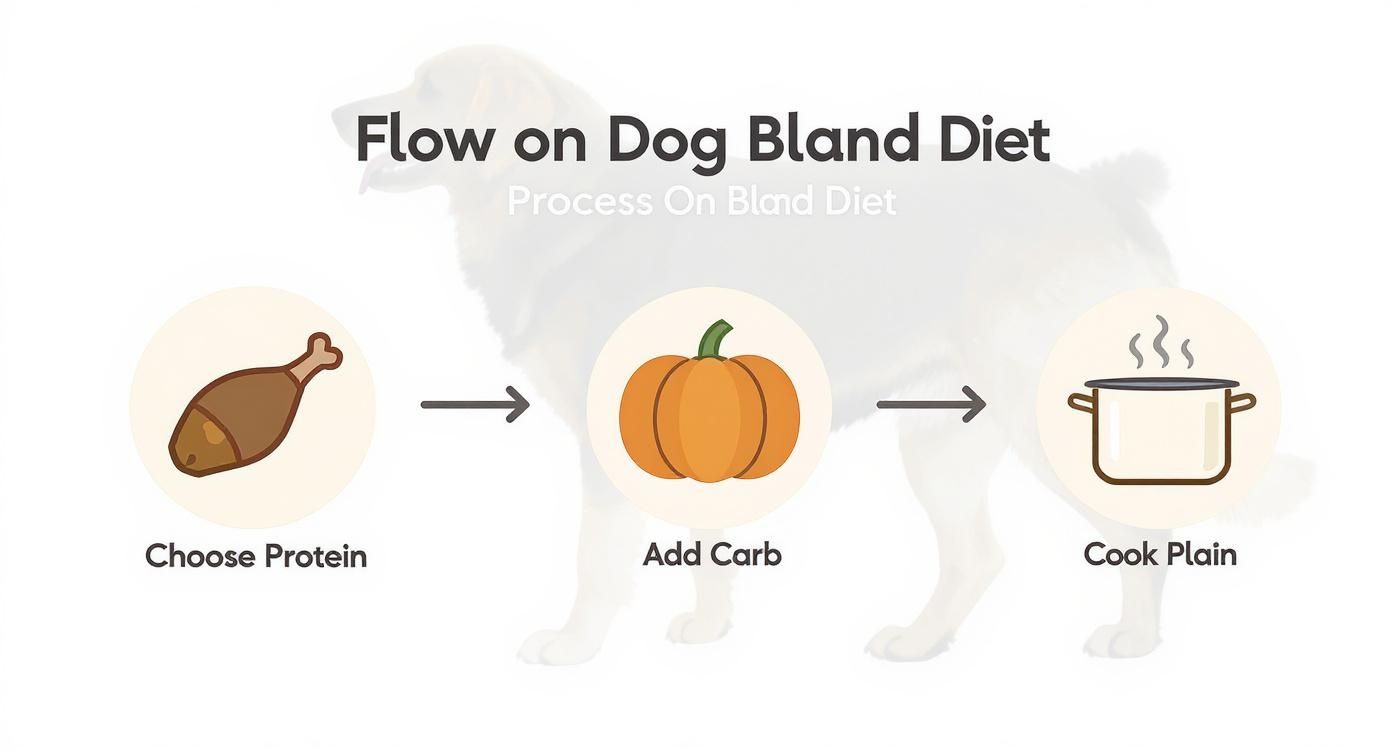
As you can see, the formula is straightforward: pair one lean protein with one simple carbohydrate. Cook everything plain—no oils, no spices, no extras. The goal is to make it as easy as possible for their healing gut to process.
Creating a Transition Timeline
So, your dog is handling the small, frequent bland meals without any problems and their poops are starting to look normal again. That's great news! Now, it's time to slowly reintroduce their regular food. The keyword here is slowly. Rushing this step is a common mistake that can land you right back where you started.
A gradual transition over several days is the safest way to prevent another flare-up. Here’s a sample 5-day plan you can follow:
- Day 1-2: Start with a mix of 75% bland diet and 25% regular food. At this point, you can go back to their usual meal times, like twice a day.
- Day 3-4: If all is going well, shift the ratio to 50% bland diet and 50% regular food. Keep a close eye on their stool for any signs of trouble.
- Day 5: Now, you can try 25% bland diet mixed with 75% regular food. If their system is still happy, they should be ready for 100% of their normal kibble by day six.
The most important thing is to watch your dog, not the calendar. If you notice their stool getting soft at any point, just dial it back to the previous day's ratio for another day or two. Every dog heals at their own pace.
Supporting Gut Health During Recovery
A bout of stomach upset can really throw your dog’s gut microbiome—that delicate ecosystem of good bacteria—out of whack. Getting that internal environment back in balance is a huge part of a full recovery and can help prevent future problems.
This is where a good probiotic can make a world of difference. To learn more, check out this guide on the best probiotics for dogs, which are designed specifically for canine digestive systems. Adding a quality supplement can give their gut the boost it needs to get back on track for good.
Foods You Should Never Give a Sick Dog
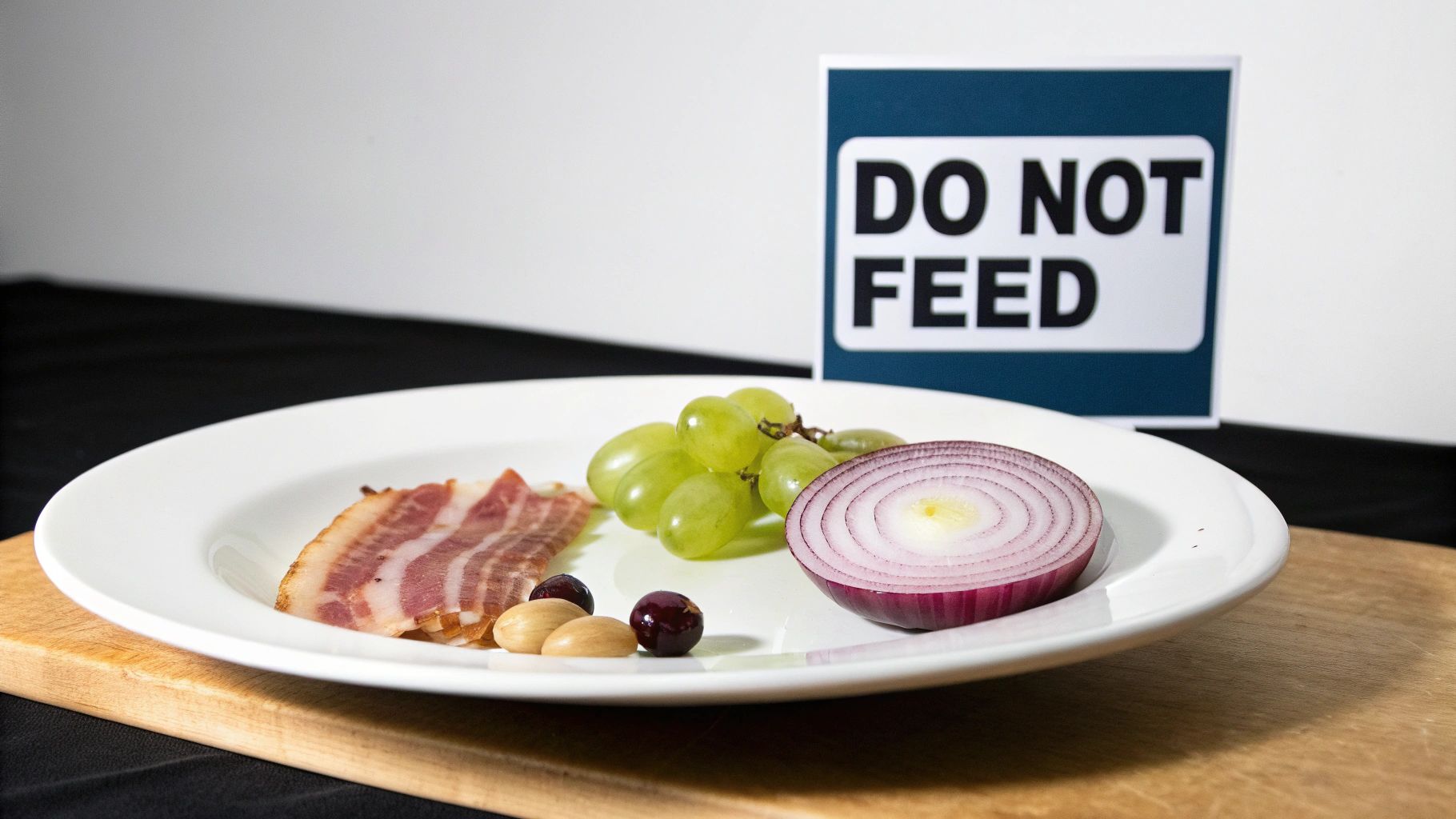
When your dog's stomach is in knots, knowing what not to feed them is just as critical as knowing what to offer. Think of it this way: you wouldn't hand a friend with the flu a greasy cheeseburger. The same logic applies here—your dog's recovering gut needs a break, not a challenge.
Certain foods can act like fuel on a fire, turning a minor tummy ache into a full-blown digestive disaster. The name of the game is simplicity. Your job is to remove anything that could cause a setback and let their system rest.
Steer Clear of Rich and Fatty Foods
High-fat foods are public enemy number one for an upset stomach. When your dog's digestive system is already stressed, asking it to break down heavy fats is like asking someone with a sprained ankle to run a marathon. It's just too much work for a system that's already struggling.
Here's what to keep far away from their bowl:
- Bacon and Sausage: These are loaded with fat and salt, a perfect recipe for irritating the stomach lining.
- Greasy Meats and Trimmings: That strip of fat you trimmed off your steak? It’s a definite no-go.
- Rich Table Scraps: Things like gravy, buttery mashed potatoes, or cheesy casseroles can easily trigger more vomiting or diarrhea.
It's important to understand that even a single, seemingly small high-fat meal can be enough to spark a painful and serious condition called pancreatitis. This inflammation of the pancreas is a veterinary emergency, so it’s best to play it safe.
Expert Tip: A good rule of thumb is to avoid anything that feels greasy to the touch. If it seems heavy and rich to you, it's far too much for your dog's sensitive gut. Stick strictly to the bland diet plan for the fastest and safest road to recovery.
Other Common Household Culprits
Beyond the obviously fatty stuff, a few other common foods can cause real trouble for a sick dog. These items contain ingredients their system simply isn't equipped to handle right now.
Many dogs, for instance, are lactose intolerant. They don't have enough of the enzyme needed to digest the sugar in milk, so feeding them dairy products like milk or most cheeses can lead to a symphony of gas, bloating, and diarrhea. If you’ve ever wondered about this, you can learn more about why a dog might have gas and the dietary culprits behind it.
Heavily seasoned or spicy foods are also off the table. Spices we love, like chili powder or curry, can be major irritants to a dog's digestive tract. And, of course, you should always avoid human foods that are known to be toxic to dogs, including:
- Onions and garlic
- Grapes and raisins
- Chocolate
- Xylitol (a common artificial sweetener)
Even your dog's regular kibble might be too complex and rich for them to handle at first. This is precisely why a temporary switch to a bland diet works so well—it strips everything back to the basics and gives their gut the peaceful environment it needs to heal.
Safe Foods vs. Foods to Avoid
To make it even clearer, here’s a quick comparison of what’s safe for a bland diet versus what you should absolutely avoid.
| Food Category | Safe Options (Plain & Cooked) | Foods to Avoid |
|---|---|---|
| Proteins | Boiled chicken (skinless, boneless), lean ground turkey, scrambled eggs (no butter or oil) | Bacon, sausage, fatty meat trimmings, hot dogs, fried or seasoned meats |
| Carbohydrates | White rice, plain pumpkin purée, boiled sweet potatoes (no skin) | Breads, pasta with sauce, seasoned potatoes, sugary cereals |
| Dairy | Small amount of plain, low-fat cottage cheese (if tolerated) | Milk, cheese, ice cream, yogurt with sweeteners or fruit |
| Human Foods | None other than the approved bland diet items listed | Onions, garlic, grapes, chocolate, gravies, buttery foods, anything spicy or salty |
Ultimately, keeping the menu simple and "boring" is the kindest thing you can do for your dog when they're feeling unwell. It gives their body the best chance to recover quickly without any unnecessary setbacks.
Red Flags That Mean You Should Call the Vet
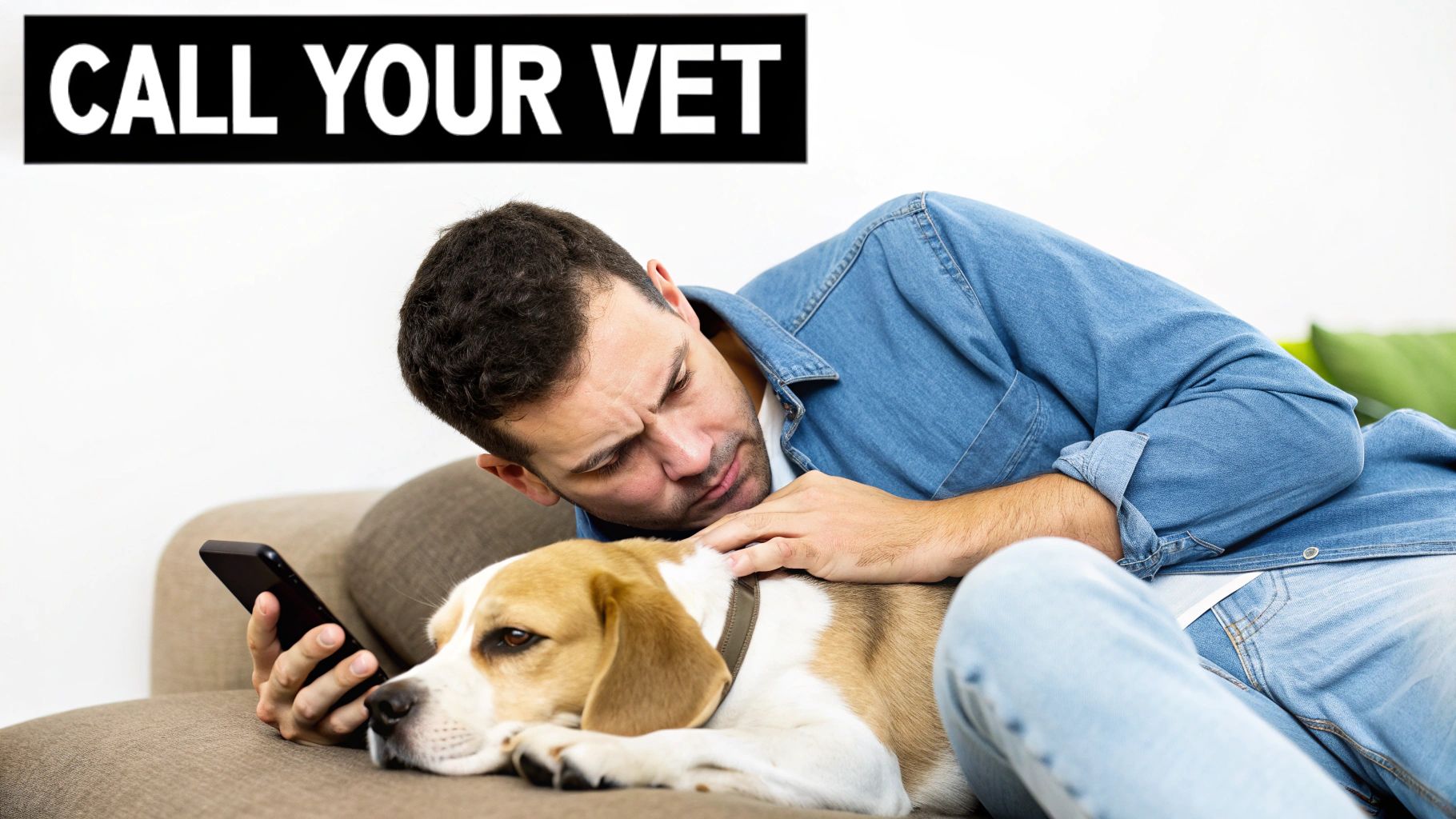
Knowing how to whip up a bland diet for your dog is a fantastic skill, but it's just as important to know when home care isn't going to cut it. While a gentle meal can soothe many minor tummy troubles, some symptoms are less like a quiet complaint and more like a five-alarm fire.
This isn't about creating panic. It's about knowing the difference between a problem you can handle and one that needs an expert. Think of a bland diet as first aid for a simple scrape. A trip to the vet? That’s for when you’re dealing with something that looks more like a deep cut.
When Symptoms Go Beyond Mild
The biggest red flag is time. One bout of vomiting or a single loose stool can often be managed at home, but when these issues drag on for more than 24 to 48 hours, it’s a sign that something more serious is going on. The problem is likely more than just a case of eating something they shouldn't have.
A sudden and dramatic shift in your dog’s behavior is another huge warning sign. Keep an eye out for:
- Extreme Lethargy: Is your normally bouncy dog suddenly listless, barely able to lift their head? That level of exhaustion is a major concern.
- Signs of Pain: Pain can show up in many ways. Your dog might be whining, crying out, or have a tense, bloated belly. Some dogs even stand in a "praying" position (front end down, rear end up) to relieve abdominal pressure.
- Refusal to Drink: It's one thing for a sick dog to lose their appetite for a bit, but refusing water is another story. Dehydration can set in frighteningly fast.
If your dog is showing any of these severe signs, you need to get help from emergency vet services right away.
Concerning Physical Signs
Sometimes, the most urgent warnings are the ones you can physically see. A quick visual check can reveal a lot about how serious your dog's condition is. For instance, look at their gums—if they’re pale or white, it could indicate shock or internal bleeding.
Blood is never normal. Seeing blood is an automatic, non-negotiable reason to call the vet. This goes for bright red blood in their stool or vomit, as well as dark, tarry-looking stools, which suggest digested blood.
While most cases of diarrhea clear up with simple support, certain symptoms require a more direct medical approach. A large 2025 study noted that while over 80% of dogs with diarrhea recovered after a single vet visit, the presence of blood was a key indicator that treatments like antibiotics might be needed. You can discover more about these findings on dog diarrhea.
At the end of the day, you know your dog better than anyone. If your gut is telling you something is seriously wrong, listen to it. It’s always better to be cautious and get a professional opinion than to wait and see. This guide is here to help, but it’s no substitute for your vet's expertise.
Answering Your Questions About Your Dog's Upset Stomach
When your dog is recovering from a tummy ache, a few common questions always seem to pop up. Once you've got the bland diet basics down, you might start wondering about things like bone broth or exactly how long this special feeding routine needs to last. Getting solid answers to these questions will help you navigate their recovery like a pro.
Let's dive into some of the most frequent questions dog owners have when their furry friend's gut is out of sorts.
Can I Give My Dog Bone Broth?
Absolutely. A simple, unsalted bone broth can be a lifesaver for a dog with a sensitive stomach. It works wonders in two ways: it's incredibly hydrating and offers a gentle source of easy-to-digest nutrients. This is especially helpful if your dog isn't too keen on drinking water.
You can offer a small bowl of lukewarm bone broth by itself or pour some over their bland meal to make it more appealing. The key is to make sure it's either a commercial broth made for dogs or a homemade version that contains no onions, garlic, or loads of salt—all of which are no-gos.
How Long Should My Dog Stay on a Bland Diet?
This is where many well-intentioned owners make a mistake: they switch back to normal food way too soon. As a rule of thumb, your dog should stick with the bland diet for about 3 to 5 days after all symptoms like vomiting or diarrhea have completely disappeared. Think of this as giving their GI tract the quiet time it needs to fully heal.
Once that healing period is over, you can slowly start reintroducing their regular food. This transition should be gradual, typically taking another 5 to 7 days. If you rush this part, you risk a relapse, so keep a close eye on their stool quality and don't hesitate to slow things down if needed.
Are Probiotics a Good Idea for an Upset Stomach?
Yes, probiotics can be a huge help in getting your dog's gut back on track. A bout of digestive upset can throw the delicate balance of good bacteria in their intestines completely out of whack. Probiotics work to replenish these tiny helpers, which not only speeds up recovery but can also help build a more resilient gut for the future.
Always go for a probiotic supplement made specifically for dogs. While you might be tempted to offer a dollop of yogurt, dairy can sometimes trigger more irritation in a sensitive tummy. A canine-specific formula is a much safer and more reliable choice.
Is It Okay to Give My Dog Scrambled Eggs?
Plain scrambled eggs can be a great addition to a bland diet. Cooked without any butter, oil, milk, or seasoning, they provide a boost of protein that's incredibly easy for a sensitive gut to digest. Many owners use them as an alternative to boiled chicken.
Just keep in mind that a small number of dogs have an egg sensitivity or allergy. It's always a good idea to test the waters first. Start by mixing just a spoonful into their rice to see how they handle it before serving up a full portion.
For a broader look at your pet's health, you can find more general dog health information.
At Joyfull, we believe your pets deserve the very best, especially when they're not feeling their best. Our commitment to clean ingredients and high-quality proteins ensures that every product supports a healthful life. Explore our better-for-you options at https://joyfullpet.com.