A Guide to Natural Calming Treats for Dogs
It’s a tough thing to see—your dog shaking during a thunderstorm, panting like crazy in the car, or crying the second you walk out the door. As a dog owner, you feel their stress, and it's natural to want to find a gentle way to help them feel safe. That shared feeling is exactly why so many of us are looking for natural calming treats for dogs.
Why Modern Dogs Need Calming Support
Let's face it, our dogs live in a human world, and that can be a lot for them to handle. The constant noise of traffic, the sudden boom of fireworks, or even just a new person coming into the house can send their anxiety levels soaring. Even though they're safe and sound with us, their instincts are still wired to react to anything that feels like a threat.
This isn’t just about spoiling our pets; it's about a bigger shift in how we see them. We're in an era of pet humanization, where our dogs are truly part of the family. We read their food labels just like we read our own, looking for clean ingredients and wellness solutions that we'd feel good about.
The Rise of Natural Wellness for Pets
More and more, dog owners are saying no to weird chemicals and mysterious fillers. We want to know exactly what is in our dog's treats and why it’s there. This demand for transparency is fueling massive growth in the natural pet products space. The global natural dog treats market, valued at USD 6.99 billion, is expected to almost double by 2030 because we're all looking for higher-quality options.
This is why calming aids have become such a key tool for so many of us. They aren't about masking a problem; they’re about improving a dog's quality of life. The right treat can help take the edge off during a stressful event, making it easier for them to feel secure.
A Note on Specific Triggers Situational anxiety is incredibly common. For many dogs, thunderstorms are a major source of fear, combining loud noises, flashes of light, and changes in barometric pressure. Understanding the specific triggers and effective calming tactics for storm anxiety in dogs is essential for providing targeted support.
Ultimately, choosing a natural calming treat is an act of love. It’s about recognizing our dogs have complex emotions and giving them gentle support to navigate a world that can be overwhelming. By opting for high-quality, clean-ingredient solutions, we help them find their calm and live happier, more relaxed lives right alongside us.
How Natural Ingredients Gently Calm Your Dog
It’s easy to be skeptical when you see "natural calming treats" on a label. Do they really work? The short answer is yes, when they contain the right ingredients. The secret isn't magic; it's biology. These treats are formulated with active ingredients that work with your dog’s body, not against it.
Unlike heavy sedatives that just make a dog groggy, these natural compounds help support the body's own systems for managing stress. They gently nudge your dog's brain and body back toward a state of balance.
Think of it like this: an anxious dog's nervous system is a highway during rush hour—total gridlock, with stress signals firing everywhere. Natural calming ingredients act like skilled traffic controllers. They don't shut down the highway; they just ease the congestion, helping everything flow smoothly again.
This map below gives a great overview of the common stressors our modern dogs face and how natural, supportive solutions can be part of a holistic approach to their well-being.
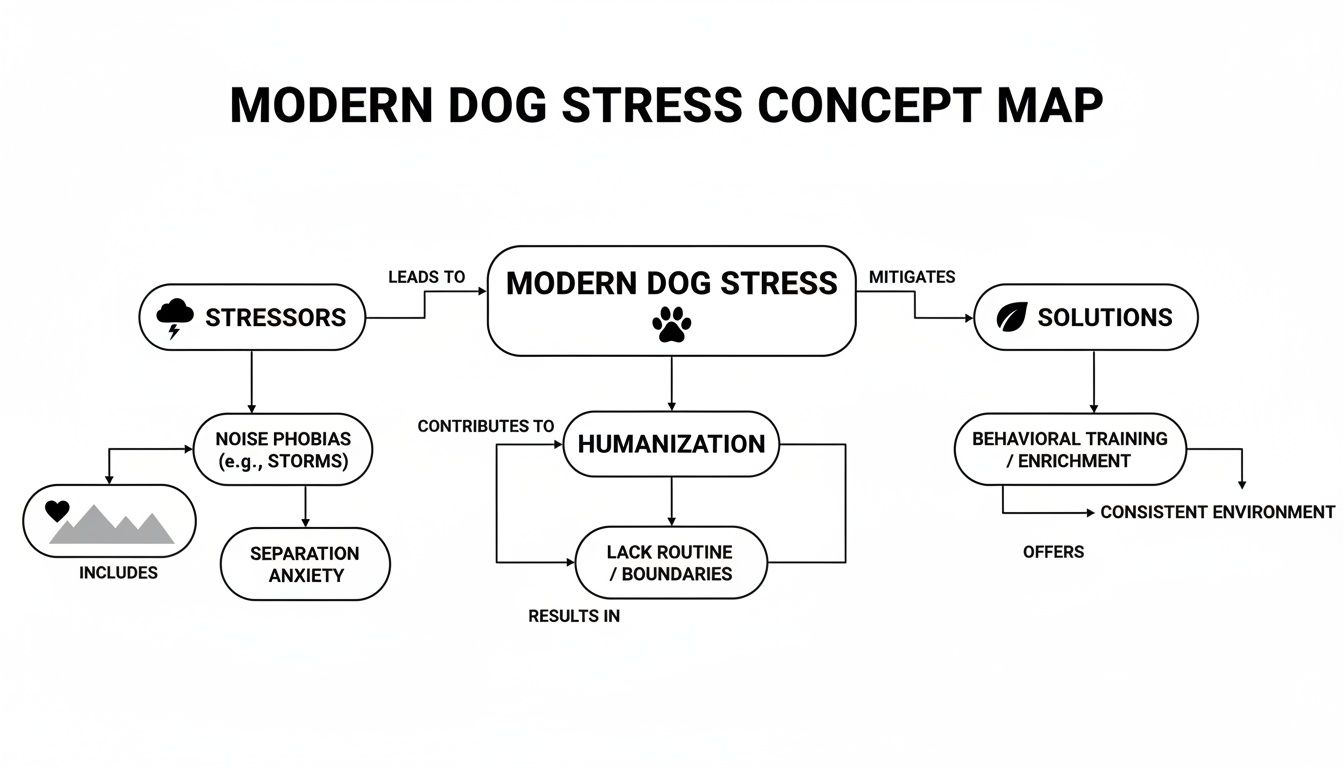
As you can see, our close bond and modern lifestyles can sometimes be a source of stress for our dogs. That’s where these natural solutions come in, forming a key part of a modern pet parent's toolkit.
How The Top Calming Ingredients Actually Work
The power behind these treats comes from a handful of well-researched botanicals and amino acids. Each one has a unique way of helping your dog's brain find its "off" switch without causing drowsiness or other unwanted side effects.
Let's break down the most common and effective ingredients you'll see on a label.
Common Active Ingredients in Natural Calming Treats
| Ingredient | How It Works (Simplified) | Best For (Anxiety Type) |
|---|---|---|
| L-Theanine | Increases "wakeful relaxation" alpha brain waves, much like noise-canceling headphones for the brain. | Situational anxiety (car rides, vet visits), general nervousness. |
| Chamomile | Contains compounds that bind to brain receptors, creating a mild, soothing effect on the nervous system. | General anxiety, mild stress, promoting sleep. |
| Passionflower | Believed to increase GABA levels in the brain, which acts like a brake pedal on an overactive mind. | Hyperactivity, general anxiety, separation anxiety. |
| L-Tryptophan | A direct building block for serotonin (the "feel-good" chemical), helping to regulate mood. | General anxiety, mood stabilization, stress from routine changes. |
Understanding what each of these powerhouse ingredients does helps you look past the marketing and choose a product that truly fits your dog’s needs.
Pet owners are catching on, and it shows. The demand for functional, clean-label treats is a huge reason why the dog treats market is expected to skyrocket from US$31.06 billion to an incredible US$79.93 billion by 2031. This explosive growth points directly to a massive shift in what consumers want: treats with ingredients that offer real, tangible benefits.
The Science of Feeling Good: Tryptophan and Serotonin
Let's zoom in on one of the most important players in this whole process: L-tryptophan. You might have heard of it in relation to Thanksgiving turkey, but its role here is far more significant. This essential amino acid is what scientists call a precursor.
Basically, it's a key building block for something else—in this case, serotonin.
Serotonin is often called the "feel-good" chemical, and for good reason. It's a neurotransmitter that plays a massive part in regulating mood, sleep, and even appetite. When your dog has healthy, balanced serotonin levels, they feel more content, secure, and relaxed.
Think of L-tryptophan as the flour and sugar, and serotonin as the finished cake. By giving the body more of the raw ingredients, you’re helping it bake more of that happy cake, naturally boosting feelings of calm from the inside out.
When a dog is stressed, their body can burn through its serotonin reserves quickly. Supplementing with L-tryptophan gives their system the raw materials needed to restock its supply, which helps stabilize their mood over time. This makes it especially useful for dogs with ongoing general anxiety.
For a deeper dive into how these compounds work together, you can explore our guide on natural supplements for dog anxiety.
By understanding what's happening on a chemical level, you can see that quality calming treats aren't just masking anxiety—they’re working in harmony with your dog's body to help them genuinely feel better. It’s all about restoring equilibrium, not forcing sedation, so your dog's true, joyful personality can shine through.
How to Read a Label and Choose the Best Treats
Stepping into the treat aisle can feel overwhelming. With flashy bags all promising a calmer, happier dog, how do you separate the marketing magic from the stuff that actually works? The secret is learning to be a label detective. All the answers you need are right there on the bag—you just need to know what to look for.
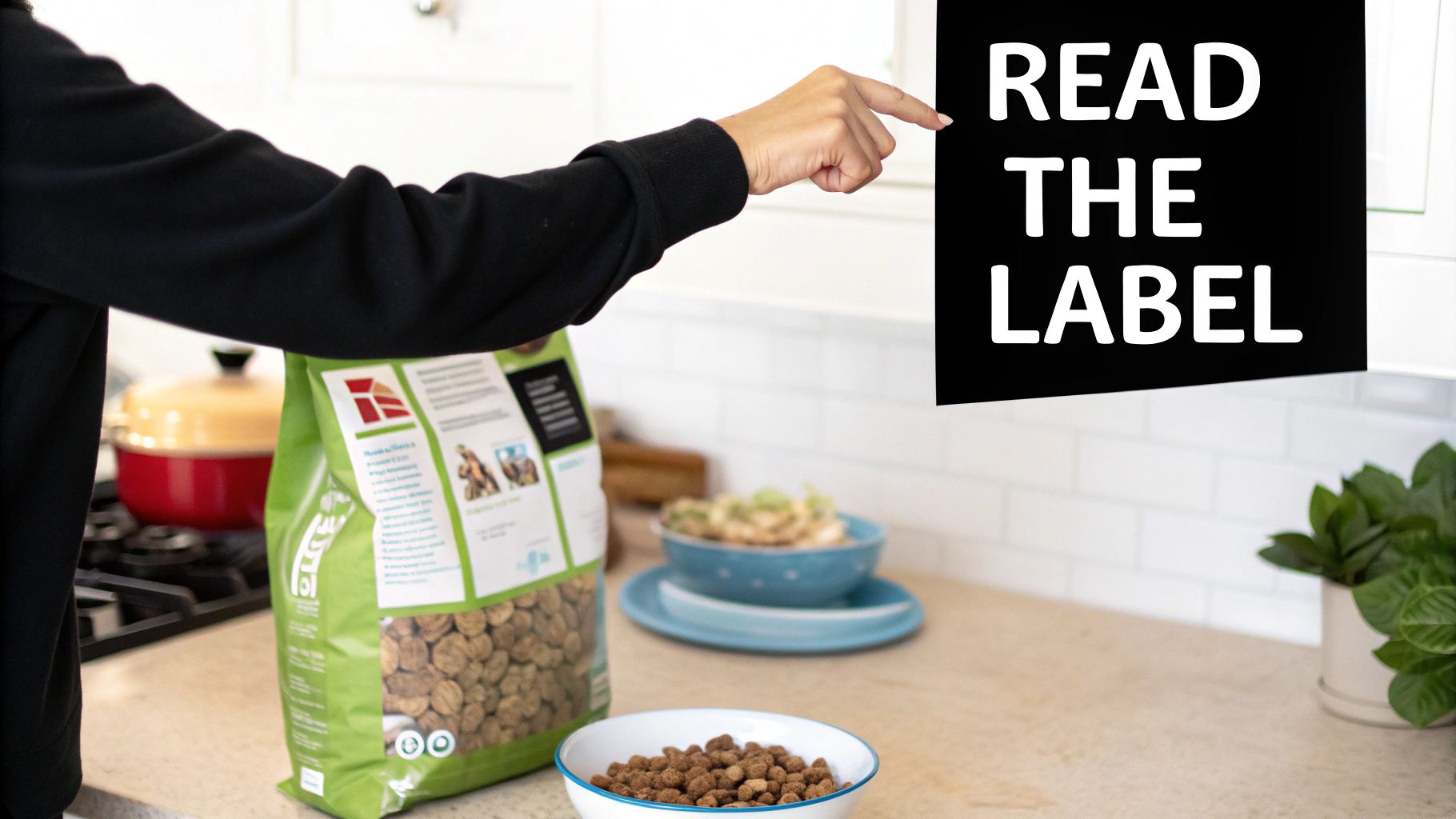
Think of a treat label like a recipe. The ingredients at the top of the list are the most plentiful. A high-quality treat will always lead with real, whole-food ingredients you can actually recognize.
Step 1: Start with the Ingredient List
The first five ingredients tell you almost everything you need to know about a treat's quality. This is where you want to see things like "chicken," "sweet potato," or "oats" right up front. These are clear signs of a well-made, nutritious base for the active calming ingredients.
If the list starts with vague terms like "meat by-products," "corn gluten meal," or some form of sugar, that’s a major red flag. These are cheap fillers that offer little nutritional value and can sometimes even cause digestive upset.
The First-Ingredient Rule Always look for a whole-food protein or vegetable as the number one ingredient. This simple check is the fastest way to weed out low-quality products and focus on treats that prioritize your dog's health from the start.
For example, a premium label might read: "Oats, Peanut Butter, Sweet Potato, L-Tryptophan..." A poor-quality label, on the other hand, could start with: "Wheat Flour, Corn Syrup, Poultry By-Product Meal..." The difference is night and day. If you’re unsure what to look for, our guide on ingredients to avoid in dog treats can help you spot the common offenders.
Step 2: Find the Active Ingredients and Their Dosages
Once you've confirmed the base ingredients are solid, it's time to find the calming components. These are the powerhouse ingredients—L-theanine, chamomile, passionflower—that actually do the heavy lifting. A trustworthy brand won't just list them; it will tell you exactly how much is in each treat.
Look for a "Guaranteed Analysis" or an active ingredients list that specifies the dosage in milligrams (mg).
- Good Label Example: "Active Ingredients per 2 Chews: L-Tryptophan... 50 mg, Chamomile... 40 mg."
- Vague Label Example: "Contains a proprietary blend of chamomile, ginger root, and passionflower."
That second example is a problem. "Proprietary blend" is a marketing term that lets companies hide how little of the important ingredients they've actually included. Without a clear dosage, you have no way of knowing if the treat contains an effective amount or just a tiny sprinkle for show. Transparency is key.
Step 3: Scan for Unwanted Additives
Finally, do a quick scan of the entire ingredient list for red flags hiding near the bottom. This is where you'll find artificial additives that have no business being in a "natural" product.
Here are the top culprits to avoid:
- Artificial Colors: Be on the lookout for names like Red 40, Yellow 5, or Blue 2. These are purely for our human eyes and can be linked to hyperactivity and other health concerns in some dogs.
- Artificial Flavors: Vague terms like "bacon flavor" are often chemically derived. Real treats use real ingredients to taste good.
- Chemical Preservatives: Steer clear of BHA, BHT, and ethoxyquin. These are used to extend shelf life but have been the subject of health debates for years. Natural preservatives like mixed tocopherols (a form of Vitamin E) or rosemary extract are much safer alternatives.
Choosing the best natural calming treats for dogs doesn't have to be complicated. By following this three-step process—checking the first ingredients, verifying active dosages, and scanning for artificial junk—you can confidently pick a product that is safe, effective, and genuinely good for your dog.
Giving Calming Treats: How to Do It Right
So you’ve picked out a high-quality calming treat. That's a great first step! But getting the best results isn't just about what you give, but how you give it. Think of these treats less like a magic wand and more like a supportive hug for your dog's nervous system. To make it work, you need the right timing, the right amount, and a little bit of observation.
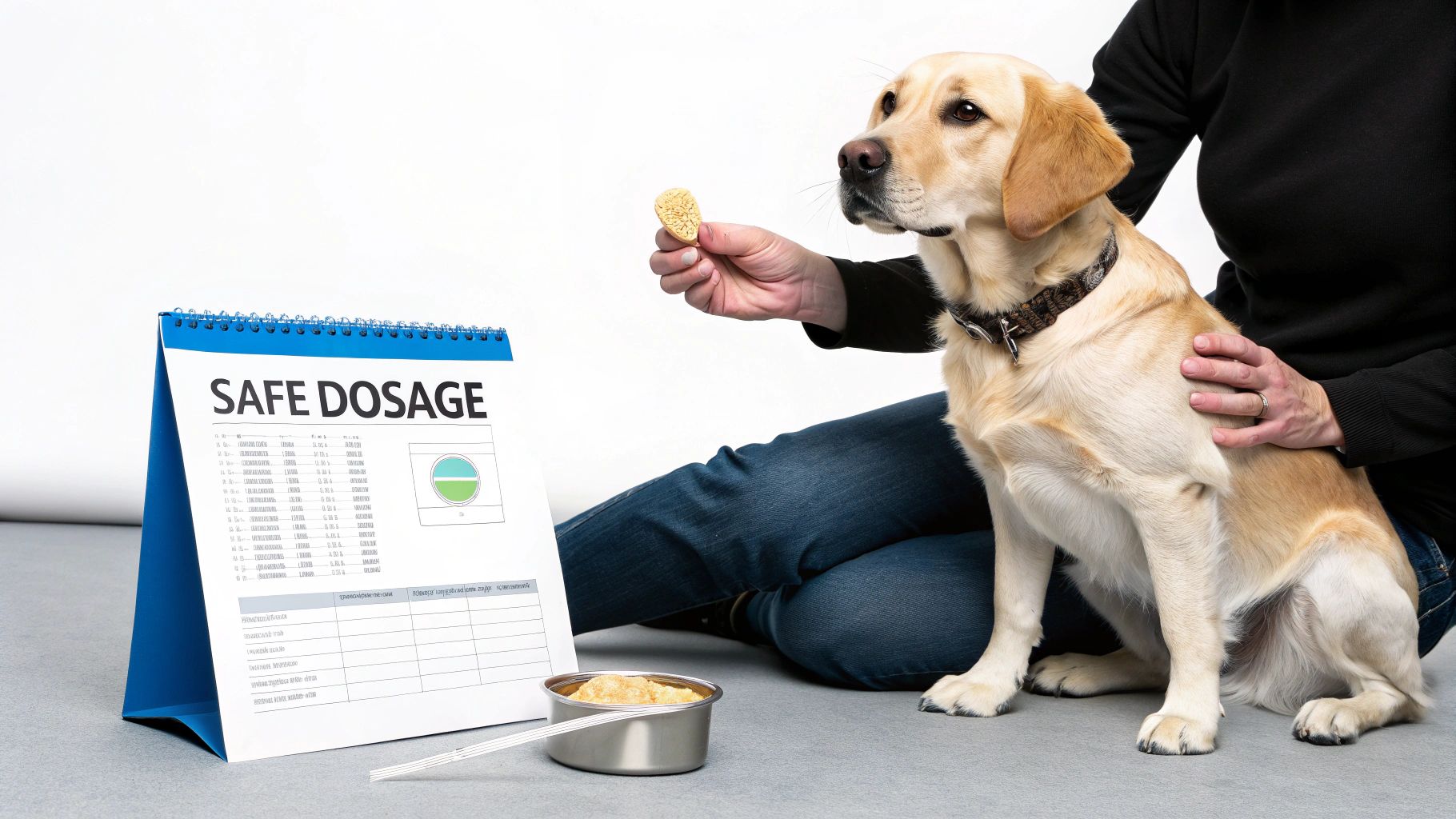
The number one rule is simple: read the package instructions carefully. Any brand worth its salt will give you clear, weight-based guidelines. Sticking to them is key. Too little, and you might not see any change. Too much, and you could end up with a groggy pup or an upset tummy.
Finding Your Dog's Perfect Dose
Just like people, every dog is different. Some are more sensitive to certain ingredients than others. Because of this, I always recommend starting with a dose that’s a little lower than what the package suggests for your dog's weight.
Call it a "test run." Give them half the recommended amount and see how they do during a quiet time at home. This lets you check for any reactions and find that perfect "sweet spot"—the point where they’re relaxed and comfortable, not drowsy or out of it.
The Golden Rule of Dosing Always start low and go slow. This approach helps you figure out your dog’s unique sensitivity and find the smallest amount that works, which is the safest and best way to go.
Timing is another big piece of the puzzle. If you know a stressful event is coming up—like a car ride, a vet appointment, or fireworks—give the treat about 30 to 90 minutes beforehand. This window gives the active ingredients time to get into their system and start working their gentle magic.
When to Bring Your Vet into the Conversation
While natural calming aids are generally very safe, they aren't the right fit for every single dog or situation. This is where your veterinarian becomes your most important partner. A quick chat with them is an absolute must in a few key scenarios.
You should always consult your vet before starting a calming treat if your dog:
- Has an Existing Health Condition: Dogs with liver, kidney, or other chronic issues might process ingredients differently.
- Is on Other Medications: Some natural ingredients can interact with prescription drugs, especially other sedatives or anti-anxiety meds.
- Is Pregnant or Nursing: It's best to steer clear of most supplements during this delicate time unless your vet gives the green light.
- Is a Young Puppy: A puppy's body is still developing, making professional guidance on what's safe an absolute necessity.
Your vet holds the complete picture of your dog's health history. They can give you truly personalized advice, confirm if a formula is a good choice, and help you watch for any side effects. It’s the ultimate peace of mind.
And if you're feeling inspired to make your own simple, wholesome snacks, we have some fantastic ideas in our article on natural dog treat recipes. By putting safety first and working with your vet, you can confidently use calming treats to help your best friend feel a whole lot better.
When to Use Treats and When to Call a Professional
Figuring out the right time to use natural calming treats is everything. They can be a fantastic tool, but they're just one piece of your dog's overall wellness puzzle. Knowing when to reach for a treat versus when to pick up the phone and call an expert is what ensures your dog gets the right kind of support, right when they need it.
Let's think about it this way: imagine your dog's anxiety is like a radio playing loud, staticky music. Natural calming treats for dogs are like a volume knob. They're designed to turn that emotional noise down a few notches, making a stressful situation feel less overwhelming. They aren't meant to switch the radio off completely, but they can make a huge difference.
Good Times to Use Calming Treats
Calming treats are at their best when you can see a specific, short-term stressor coming. Think of those predictable situations where your otherwise happy dog gets a temporary jolt of anxiety. The whole point is to offer a little gentle support to help them ride it out more comfortably.
Here are some perfect scenarios for a calming treat:
- Vet Visits and Grooming: Taking the edge off can make these necessary appointments far less traumatic for your pup (and for you!).
- Car Rides: For dogs who get worked up in the car, a treat before you leave can make for a much smoother journey.
- Thunderstorms or Fireworks: Loud, sudden noises are a classic trigger. A calming aid can provide some much-needed comfort.
- Having Guests Over: A house full of new people and energy can be a lot for some dogs to handle.
- Travel and New Places: Exploring new environments can be stressful. Calming support can make all the difference on a family vacation, especially when you're checking out all the pet friendly beach rentals Florida has to offer.
In these moments, turning down that "emotional volume" does something else powerful. A calmer dog is a more receptive dog. This makes it easier for them to learn from positive training and settle down, even when things are a little chaotic.
When to Seek Professional Help
As helpful as they are, calming treats aren't a magic wand. They are absolutely not a substitute for professional help when you're dealing with severe, deep-seated anxiety or serious behavioral issues. If that anxious "radio" in your dog's head is constantly blasting at full volume, just turning it down a little isn't going to cut it. You'll need an expert to help rewire the system.
It's time to call a professional—like your veterinarian or a certified dog behaviorist—if you're seeing any of these signs:
- Aggression: Any kind of aggression, whether it's growling, snapping, or biting that's tied to fear, needs immediate professional guidance. This is a safety issue, plain and simple.
- Destructive Behavior: If your dog regularly shreds furniture, chews through drywall, or causes other damage when left alone, it points to severe separation anxiety that treats can't fix on their own.
- Constant Pacing or Inability to Settle: A dog who just can't seem to relax, even when everything is quiet and calm, might be struggling with a chronic anxiety disorder.
- Self-Harm: Behaviors like obsessive licking that creates sores (lick granulomas) or chewing on their own tail are serious red flags.
- House Soiling: When a fully house-trained dog starts having accidents inside, it can be a sign of extreme stress. A vet visit is crucial to rule out any underlying medical problems first.
A professional can do a complete evaluation to uncover the root cause of the behavior. They can diagnose medical conditions, prescribe medication if needed, and create a comprehensive behavior modification plan that truly helps your dog.
At the end of the day, it's all about supporting your dog's total well-being. Using natural calming treats for situational stress is a wonderful, proactive way to care for them. But recognizing when a problem is bigger than a treat can handle is just as important. Knowing the difference empowers you to make sure your best friend always gets the exact level of care they need to thrive.
Your Top Questions About Calming Treats, Answered
Even after you've done your homework, it’s completely normal to have a few more questions rattling around. The goal is to feel confident about the choices you make for your dog, so let's tackle the most common questions we hear from pet parents. We'll clear up any lingering doubts so you can move forward with a solid plan.
The market for these functional chews is booming for a good reason. Dogs make up over 68% of the entire pet snacks and treats market, and calming aids are quickly becoming a go-to for many of us. With North America accounting for more than 52% of this market and 70% of U.S. households owning pets, millions of owners are looking for straight answers. You can see the latest pet treat market trends at Precedence Research for a deeper dive.
How Long Do They Take to Kick In?
This is usually the first thing people ask. In most cases, you can expect natural calming treats to start working within 30 to 90 minutes. This timing makes them perfect for predictable events you know will cause stress.
Got a vet appointment at 3:00 PM? Giving your dog a treat around 2:00 PM is a great game plan. That gives the active ingredients, like chamomile or L-theanine, plenty of time to get into their system and start promoting a sense of ease before the car ride even begins.
It’s important to remember these aren't sedatives. The effect is a gentle easing into a calmer state, not a sudden switch. For ingredients like L-tryptophan, which helps with serotonin production, you might find that regular use offers more stable, long-term benefits for a dog with general anxiety, helping to keep their mood balanced day-to-day.
Are These Treats Safe for My Dog to Take Every Day?
That's an excellent and very responsible question. For most high-quality, natural formulas, daily use is generally safe, especially for dogs who live with a constant, low-level hum of anxiety. Ingredients like L-theanine and chamomile are known to be well-tolerated over the long haul, as long as you stick to the recommended serving size.
But here’s the important part: "safe for most" doesn't mean "right for all." Before you start any daily supplement routine, it is absolutely crucial to have a chat with your veterinarian.
Your vet is your best partner here. They can:
- Scan the ingredient list for anything that might conflict with your dog's health history.
- Factor in your dog’s overall health, especially if they have pre-existing conditions like liver or kidney issues.
- Help you decide if daily support is the right path for your dog’s specific needs.
Always, always follow the dosage instructions on the package. Never give more than recommended without your vet’s direct guidance.
Can I Give Calming Treats to My Puppy?
This is where you need to be extra careful. A puppy's body is still a work in progress, and their systems are much more sensitive than an adult dog’s. Because of this, you should always talk to your veterinarian before giving a calming aid to any puppy.
Most products on the market are formulated for the size and metabolism of adult dogs. A vet can first help you figure out if you're dealing with true anxiety or just normal, wild puppy energy. Sometimes what looks like stress is just a classic case of the zoomies!
If your vet agrees that a calming aid is a good idea, they can point you toward a puppy-safe product and give you the correct, much smaller, dosage. But more often than not, the best first step for a nervous pup is positive reinforcement training and fun confidence-building games.
Will These Treats Make My Dog Drowsy or Change Their Personality?
This is a huge—and totally valid—concern. The great news is that high-quality natural calming treats for dogs are designed to ease anxiety, not to sedate. The goal is to dial down the stress so your dog can feel like their normal self again, not to turn them into a sleepy, lethargic zombie.
Think of it this way: A good calming treat doesn't dim your dog's inner light. It just helps clear away the storm clouds of anxiety so their true, happy personality can shine through.
You should still have your playful, engaged, and loving companion—just a less worried version of them. If you ever do notice excessive drowsiness, it's a big red flag that the dose might be too high for your dog. If that happens, scale back the amount or pause use and give your vet a call for advice.
At Joyfull, we’re all about providing that gentle support with clean, simple, and effective formulas. Our treats are made with high-quality proteins and scientifically reviewed ingredients to help your dog find their calm without losing that happy-go-lucky spirit you love.
Explore Joyfull's line of calming treats and give your dog the gift of a more peaceful day.