Is Grain Free Cat Food Better? An Evidence-Based Answer
So, is grain-free cat food actually better? The honest answer is: it depends entirely on your individual cat.
For that tiny fraction of cats with a genuine, diagnosed grain allergy, a grain-free diet isn't a choice—it's a medical necessity. But for the vast majority of our feline friends, the quality of the ingredients and the overall nutritional balance of their food are far more critical than whether it contains grains or not.
Decoding the Grain-Free Cat Food Debate
The question of whether to go grain-free has become one of the hottest topics among cat owners. Walking down the pet food aisle is overwhelming, and marketing claims often add to the confusion rather than clearing it up. Many brands promote grain-free formulas as a more “ancestral” or natural option, playing on the fact that cats are obligate carnivores. The thinking is that a diet without corn, wheat, or rice is closer to what a cat’s wild relatives would eat.
This guide is here to cut through the marketing noise and give you a solid, evidence-based way to make the right choice for your cat. We'll dig into the real science of feline nutrition, bust a few myths, and give you practical tools for judging any cat food.
Core Differences at a Glance
First, let's break down the fundamental differences. This isn't just about presence or absence of grains; it's about the entire nutritional philosophy behind each type of formula.
| Feature | Grain-Free Cat Food | Grain-Inclusive Cat Food |
|---|---|---|
| Primary Carbohydrates | Peas, lentils, potatoes, sweet potatoes | Corn, wheat, rice, barley, oats |
| Common Protein Sources | Often features novel proteins (duck, venison) alongside common ones | Typically uses common proteins like chicken, salmon, and beef |
| Marketing Focus | Promoted as "ancestral," "natural," or ideal for allergies | Often marketed for balanced nutrition, digestibility, and affordability |
| Potential Concerns | FDA investigation into a possible link with DCM; can be high in calories/carbs | True grain allergies are rare; low-quality grains can be used as fillers |
Key Takeaway: The "grain-free" label does not automatically mean "healthier." A high-quality, grain-inclusive food with excellent animal protein sources is nutritionally superior to a poorly formulated grain-free food filled with low-quality starches.
Our goal is to help you find a diet that truly supports your cat's long-term health and well-being. At JoyFull, our focus is on crafting balanced recipes with high-quality, clean ingredients. We make sure every bowl delivers complete nutrition, no matter what carbohydrate source we use. This guide will give you the confidence to look past the flashy packaging and understand what really matters on the ingredient list.
The Rise of the Grain-Free Movement
It wasn't that long ago that "grain-free" was a term you'd only find in the most specialized pet boutiques. Now, it's everywhere. So, how did this idea go from niche to mainstream so fast? It’s a fascinating story that has as much to do with our changing relationship with our pets as it does with nutrition.
The whole movement really took off by tapping into a simple, powerful narrative: cats are carnivores. The marketing painted a compelling picture of our house cats as mini-panthers who should be eating a diet closer to their wild ancestors—one without "filler" grains like corn, wheat, or soy. This idea struck a chord with cat owners who were looking for a more "natural" way to feed their pets.
The Humanization of Pet Food
This didn't happen in a bubble. The grain-free trend perfectly aligned with the rise of "pet humanization," where we've started seeing our cats and dogs less as pets and more as furry family members. As people became more health-conscious about their own diets—reading labels, avoiding processed ingredients, and seeking out whole foods—they naturally started applying those same standards to what they put in their pets' bowls.
This shift made us all more skeptical consumers. We began scrutinizing ingredient lists, questioning why certain things were in our cat's food. Ingredients that sounded more at home on a farm than in a carnivore's diet started to look suspicious. Suddenly, the question "is grain free cat food better" wasn't just for nutrition nerds; it was a common concern for any devoted pet parent.
This growing demand for transparency and high-quality ingredients created the perfect opening for the grain-free philosophy. It offered a simple, intuitive answer: get rid of the grains and stick to what we see as the good stuff—meat.
Market Forces and Consumer Demand
The pet food industry, ever responsive to what we want, jumped on this. Brands rolled out entire lines of grain-free foods, often featuring exotic proteins like venison, duck, or bison to really drive home the "wild diet" appeal. This created a feedback loop: the more grain-free options we saw on shelves, the more we bought them, which led to even more brands entering the space.
The numbers don't lie. All over the world, cat owners started making the switch, worried about potential allergies and wanting to feed a diet that felt more biologically appropriate. You can even see it in search data, where searches for grain-free recipes have skyrocketed past other types of cat food. This change in what we look for has fueled a global pet food market projected to hit USD 314.4 billion. You can learn more about the trends shaping the dry cat food market in recent analyses.
This wasn't just a fleeting fad. The explosive growth of grain-free diets reflected a genuine desire from owners to do right by their pets. The movement successfully positioned itself as the premium, healthier choice, and in doing so, it completely reshaped the pet food aisle. To really understand the debate today, you have to know how it all started.
A Nutritional Comparison of Cat Food Diets
To figure out if grain-free cat food is actually better, we need to look past the marketing slogans and dig into the real nutritional science. Whether a food has grains or not doesn't automatically make it good or bad. What truly matters is the complete nutritional profile and how well it meets the needs of your cat, who is an obligate carnivore.
A huge myth out there is that "grain-free" equals "low-carb." That's rarely the case. Most grain-free foods just swap out traditional grains for other carbohydrate sources like potatoes, sweet potatoes, peas, and lentils. This switch can change the food's makeup in surprising ways.
Macronutrient Profiles: Protein, Fat, and Carbs
For cats, protein is everything. Their bodies are built to get energy from animal protein and fat, not from a bowl full of carbs. No matter if a food is grain-free or grain-inclusive, a high-quality diet will always have a specific animal protein (like chicken, turkey, or fish) as its very first ingredient.
But the type of carbohydrate used does make a difference. Grains like corn and rice are perfectly digestible for most cats when cooked properly, offering a good energy source. On the other hand, some grain-free alternatives, like legumes and potatoes, can sometimes drive the total carbohydrate percentage even higher than a well-made grain-inclusive food.
This chart shows just how popular the grain-free trend became, driven largely by consumer demand.
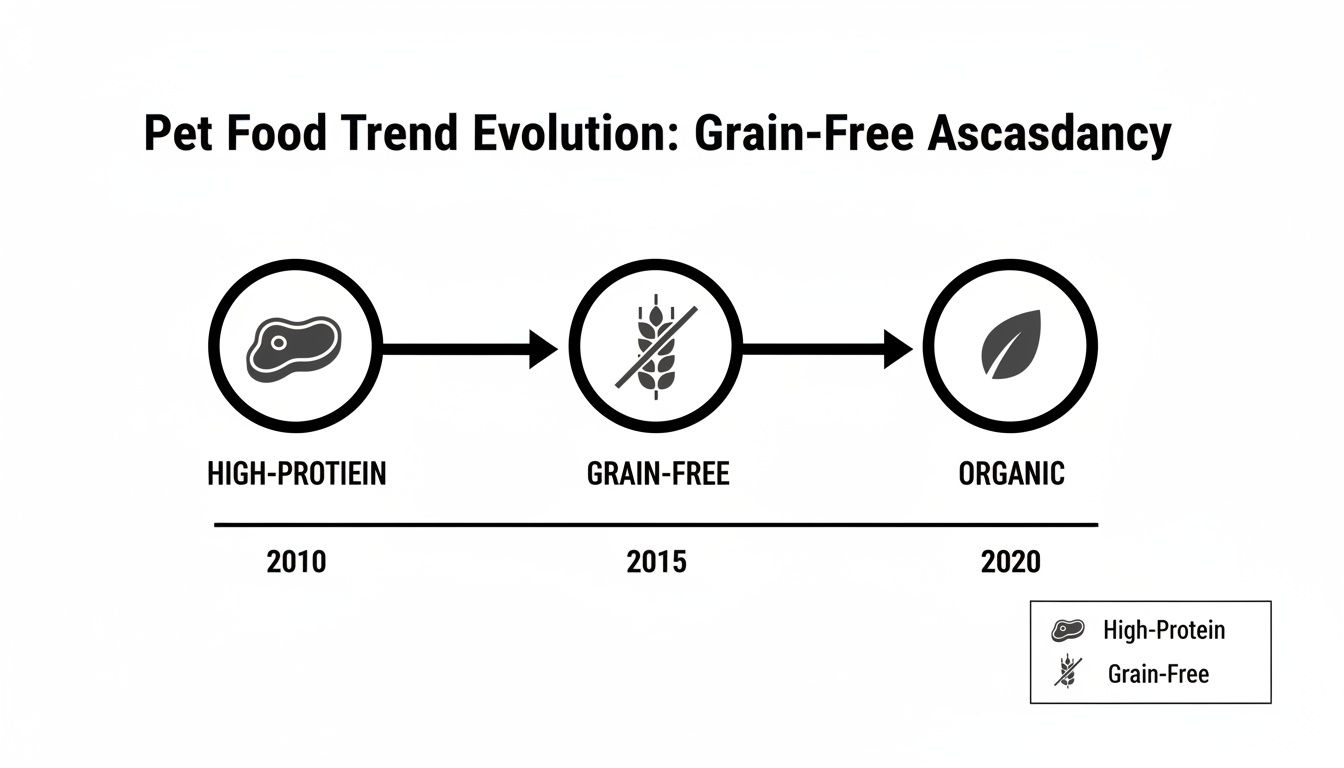
This explosion in popularity makes it even more critical for us as pet parents to look closely at the nutritional facts, not just the front-of-bag claims.
Carbohydrate Sources and Digestibility
The debate over which carbohydrate source is "better" is complex because the answer is: it depends.
- Grains (Corn, Rice, Barley): These aren't just empty fillers. They provide energy, fiber for healthy digestion, and even some essential amino acids. The trick is that they should be a supporting ingredient, not the star of the show, complementing the high-quality animal proteins.
- Legumes and Tubers (Peas, Lentils, Potatoes): These ingredients also offer carbs and fiber. The issue is that some brands use them heavily to inflate the protein percentage on the label. Remember, plant-based proteins are not as useful to your carnivorous cat as animal-based ones.
Crucial Insight: A cat’s digestive system is short and designed for meat. While they can handle some carbohydrates, the total amount should be kept low. A food where 10% or fewer calories come from carbohydrates is often considered the ideal target for feline health.
To truly see the differences, a side-by-side comparison is helpful. It quickly becomes clear that the overall quality of the formula is what counts. In fact, a choice like wet vs. dry cat food can have a much bigger impact on your cat's health, particularly regarding hydration and carb intake, than the grain question alone.
Nutritional Breakdown: Grain-Free vs. Grain-Inclusive Cat Food
The best way to evaluate any cat food is to flip the bag over and really look at the ingredient list and guaranteed analysis. A poorly made grain-free food is definitely not better than a premium, well-balanced grain-inclusive one.
This table breaks down what you can typically expect from each type.
| Nutritional Aspect | Typical Grain-Free Diets | Quality Grain-Inclusive Diets |
|---|---|---|
| Primary Protein Source | Can be high in animal protein, but sometimes relies heavily on plant proteins (peas, lentils). | Puts named animal proteins (e.g., chicken, salmon) first on the ingredient list. |
| Carbohydrate Content | All over the map. Some are low-carb, but many are high due to starchy fillers like potatoes. | Generally contains a moderate, controlled amount of easily digestible grain carbs. |
| Fiber Sources | Often uses fiber from peas, lentils, and beet pulp. | Uses fiber from whole grains like brown rice or oats to support good gut health. |
| Potential Health Impact | Great for cats with a diagnosed grain allergy. High legume content is under investigation. | Provides balanced, time-tested nutrition that’s perfectly healthy for most cats. |
In the end, we need to shift the conversation from a simple "grains vs. no grains" debate to a smarter evaluation of the entire formula.
The gold standard for feline nutrition is a diet high in animal-based protein, moderate in fat, and low in carbohydrates. The great news is that this standard can be met by thoughtfully crafted foods from either category.
Understanding Feline Food Allergies and Grains
One of the biggest reasons cat owners reach for grain-free food is the hope that it will fix a suspected food allergy. You might notice your cat is constantly scratching or has an upset stomach, and the first thing that comes to mind is to cut out grains. But the truth about grains and cat allergies is a lot more complicated—and often misunderstood.
Before we get into the role grains play, it's really important to know the difference between two things that get mixed up all the time: food allergies and food intolerances.
Allergies vs. Intolerances: What's the Difference?
A true food allergy is an immune system problem. Your cat's body incorrectly flags an ingredient—almost always a protein—as a dangerous threat and launches an attack. This immune response is what causes those classic allergy symptoms: relentless itching, inflamed skin, hair loss, and sometimes digestive upset like vomiting or diarrhea.
A food intolerance, however, is all about digestion. It has nothing to do with the immune system. It just means your cat's digestive tract can't properly break down a certain food. This usually leads to symptoms like gas, bloating, or loose stools. While an intolerance is certainly no fun for your cat, it’s not the same as a full-blown allergic reaction.
Getting this distinction right is the first step, because the right diet for an allergy isn't always the same as the right diet for an intolerance. You can learn more about the specific signs of food allergies in cats to help figure out what might be going on.
The Real Culprits Behind Feline Allergies
So, are grains really the villain they're made out to be? Not according to the science. Veterinary research consistently shows that genuine grain allergies in cats are incredibly rare. When you look at the actual diagnostic data collected over the years, a very different picture emerges. The most common food allergens for cats are, by a wide margin, proteins.
Studies have identified the top offenders time and time again:
- Beef
- Fish
- Chicken
These three proteins are far and away the most likely ingredients to trigger an immune reaction in a sensitive cat. Grains like corn, wheat, and soy are way down the list, accounting for a tiny percentage of actual diagnosed food allergies.
The idea that grains are a primary cause of cat allergies is more of a marketing story than a scientific fact. The evidence points overwhelmingly to animal proteins as the most common triggers.
This is a crucial point. If your cat is allergic to chicken, switching to a grain-free food that’s still packed with chicken won't solve anything. In fact, because many grain-free formulas use high concentrations of these common proteins, you could accidentally make the problem worse if you haven't identified the real trigger. While our focus is on felines, insights into managing digestive health in other pets, such as finding the best pet food for intestinal issues, can offer valuable perspectives on dietary considerations.
When Is a Grain-Free Diet Actually the Right Choice?
This doesn't mean grain-free food has no place. For the small number of cats with a diagnosed grain allergy, a grain-free diet is an absolute necessity. It can also be a great option for some cats with sensitive stomachs or simple grain intolerances, helping them have better digestion and firmer stools.
While true allergies are rare, some estimates suggest that 10-20% of cats might have a grain intolerance that improves on a grain-free diet. This consumer demand is a major factor in a pet food market projected to hit nearly USD 271.8 billion by 2034.
The most important takeaway here is not to guess. Trying to diagnose a food allergy on your own can lead you down the wrong path. The only way to know for sure is to work with your veterinarian on an elimination diet. This involves feeding your cat a diet with a "novel" protein—one it has never eaten before—for 8-12 weeks to see if the symptoms clear up. It's a methodical process, but it's the gold standard for pinpointing the exact ingredient causing the issue. From there, you can choose a long-term food based on solid evidence, not just a hunch.
The DCM Dilemma: A Closer Look at Diet and Heart Health
The conversation around grain-free cat food took a serious turn when the U.S. Food and Drug Administration (FDA) began investigating a potential link between certain diets and a heart condition known as Dilated Cardiomyopathy (DCM). This news understandably worried cat owners everywhere, especially those who had chosen grain-free options. Let's break down what we know, calmly and clearly.
DCM is a disease that weakens and enlarges the heart muscle. As the heart struggles to pump blood effectively, it can lead to congestive heart failure. While some breeds have a known genetic predisposition to DCM, the FDA started noticing a spike in cases involving animals not typically considered at risk.
What Did the FDA Investigation Actually Find?
Early on, the reports sounded an alarm because many of the affected pets were on grain-free diets. This immediately made people question whether grain-free was a safe choice. But as researchers dug deeper, the picture became much more complex than a simple "grains vs. no grains" issue.
The FDA’s investigation didn't point the finger at all grain-free foods. Instead, a more specific pattern began to emerge. The diets most frequently cited in DCM reports were those with high concentrations of peas, lentils, other legume seeds, and potatoes as primary ingredients. These became known as "BEG" diets—a term for formulas from Boutique brands, with Exotic meat proteins, that are Grain-free.
A Crucial Distinction: The potential problem wasn't the absence of grain itself. The concern shifted to what was being used in place of grains. The correlation seems to be with diets heavily reliant on legumes and potatoes, which might interfere with how a cat's body processes taurine—an amino acid absolutely vital for heart health.
Remember: Correlation Doesn't Equal Causation
It's so important to understand that the FDA's work has so far identified a potential link, not definitive proof of cause and effect. The research is complex and ongoing, and there could be multiple factors at play, including how ingredients are processed and interact within a specific formula.
So, where does that leave you, the concerned cat owner? It means you need to be a savvy label detective. Don't just stop at the "grain-free" claim on the front of the bag; turn it over and scrutinize the actual ingredient list.
Here are the key takeaways from the DCM investigation so far:
- It's a nuanced issue. The focus has shifted from the simple lack of grain to the heavy use of legumes (peas, lentils) and potatoes as primary protein and carbohydrate sources.
- Animal protein should be king. A good rule of thumb is to look for diets where high-quality, named animal proteins like chicken, turkey, or fish are the first few ingredients.
- The science isn't settled. Researchers are still working to pinpoint the exact mechanism behind this diet-associated DCM.
This whole situation highlights a critical point: a food's complete nutritional profile and the quality of its protein sources are far more important than any single marketing buzzword. At JoyFull, our philosophy is to build recipes with high-quality animal proteins as the foundation, ensuring every meal is balanced to support your cat's long-term wellness, including heart health.
When you're feeling uncertain, the best move is always to have a conversation with your veterinarian about your cat's specific dietary needs.
How to Choose the Right Food for Your Cat
Walking down the pet food aisle can be overwhelming. With so many choices, it's easy to get lost in the marketing noise. But choosing the right food gets a lot easier when you stop focusing on the "grain-free vs. grain-inclusive" debate and start focusing on your cat.
The best diet is always the one that fits your cat's specific needs—their age, how active they are, and their overall health. A rambunctious kitten needs a very different nutritional profile than a senior cat who spends most of the day napping. Likewise, a cat who needs to lose a few pounds has different dietary requirements than one with a sensitive stomach. Your cat is an individual, and their food should reflect that.

Decoding the Pet Food Label
Your most powerful tool is right there on the back of the bag: the ingredient label. Learning how to read it is the key to seeing past the flashy claims on the front and understanding what’s actually in the food.
Here’s a simple, step-by-step way to break down any cat food label:
-
Look at the First Five Ingredients: Ingredients are listed by weight, so the first few make up the majority of the recipe. You want to see named animal proteins, like "deboned chicken," "turkey," or "salmon," right at the top.
-
Watch Out for Vague Language: Be cautious of generic terms like "meat by-products" or "poultry meal." While some named meals (like "chicken meal") can be a great source of concentrated protein, vague descriptions often hide inconsistent, lower-quality ingredients.
-
Check the Guaranteed Analysis: This little box tells you the minimum percentages of crude protein and fat and the maximum fiber and moisture. For cats, a diet high in protein with a moderate amount of fat is what you're looking for.
-
Spot Unnecessary Junk: Scan the list for artificial colors, flavors, and chemical preservatives like BHA or BHT. A truly high-quality food doesn't need them.
If you want to get really good at this, we cover it all in our complete guide on how to choose the best cat food for your furry family member.
Putting It All Together: A Practical Checklist
Making a good decision feels a lot less intimidating with a checklist in hand. Whether you're leaning toward a grain-free or grain-inclusive food, run it through these criteria.
- Protein First: Is a specific animal protein the #1 ingredient?
- Carb Source: Are the carbohydrates coming from digestible sources like whole grains or vegetables, not just cheap fillers?
- Life Stage Match: Is the formula specifically made for your cat’s age (kitten, adult, or senior)?
- AAFCO Statement: Look for the nutritional adequacy statement from the Association of American Feed Control Officials (AAFCO). This is your assurance that the food is complete and balanced for its intended life stage.
The Bottom Line: A well-made grain-inclusive food with high-quality animal protein is always superior to a poorly made grain-free food loaded with starchy fillers and plant proteins.
It’s impossible to ignore the popularity of grain-free options, especially in the dry food market. Dry cat food dominates, holding a 58.27% share of the global market—a segment valued at over USD 26 billion. This sector is expected to keep growing, driven by convenience and multi-cat households. For some cats with true grain sensitivities, certain grain-free formulas have reportedly helped reduce allergy symptoms by up to 20%. You can learn more about the growing cat food market on Fortune Business Insights.
At JoyFull, our philosophy is simple. We build every recipe on a foundation of clean, high-quality animal proteins. We believe the question of whether a food contains grains is less important than its overall nutritional quality. By focusing on biologically appropriate, balanced formulas, we create food that supports your cat's health from the inside out. After all, the best food is the one that helps your cat thrive.
Got Questions? We've Got Answers.
When you're trying to do what's best for your cat, it's easy to get buried in questions. Let's clear up some of the most common myths and concerns that pop up when people are weighing the grain-free option.
Will My Cat Automatically Lose Weight on a Grain-Free Diet?
That's a common hope, but it's not quite how it works. A cat's weight is all about calories in versus calories out—not whether those calories come from grains. Many grain-free foods simply swap out grains for other calorie-dense ingredients like sweet potatoes, peas, or lentils.
In fact, some grain-free recipes can pack more calories per cup than their grain-inclusive counterparts. The only sure way to manage your cat's weight is to look at the calorie content per cup on the bag and stick to the recommended feeding amounts.
Does "Grain-Free" Mean "Low-Carb"?
This is probably the biggest misconception out there. Kibble, by its very nature, needs a starch to hold its shape and provide a source of energy. Grain-free foods just use different sources for those carbohydrates.
A grain-free label is not a guarantee of a low-carb diet. You really have to check the guaranteed analysis on the packaging to see the actual carbohydrate percentage. You might be surprised to find some grain-free formulas are loaded with starches from ingredients like potatoes and peas.
Is Corn Just a Worthless Filler in Cat Food?
Corn gets a bad rap, but it’s not the villain it’s often made out to be. When it's properly cooked and included in the right amounts, whole corn is actually quite digestible and offers more than just empty calories. It provides energy, essential fatty acids that keep a cat's skin and coat healthy, and even some important amino acids.
The real issue is proportion. Problems arise when a manufacturer uses too much corn or other grains as a cheap substitute for the high-quality animal protein your cat truly needs. A quality cat food will always have a named animal protein as the very first ingredient, with any grains playing a supporting nutritional role.
At JoyFull, we build every single recipe with high-quality, clean animal proteins as the star. It's our non-negotiable for creating balanced formulas that support your cat's complete well-being. Explore our commitment to superior nutrition.