


Your dog has just sprinted through the living room, barked at a sound outside, grabbed a cushion, and started mouthing your hands. You've already walked them, played fetch, and tried telling them to settle, yet they're still pacing as if the day hasn't begun. That pattern is exhausting, but it doesn't automatically mean your dog needs even more exercise.
Learning how to calm a hyperactive dog starts with identifying what's driving the arousal. Age, environment, time spent alone, training quality, anxiety, routine gaps, and health can all shape the behavior. A large study of more than 11,500 dogs found that hyperactivity, impulsivity, and inattention were most common in young dogs and were associated with being male and spending more time alone at home. The researchers analyzed cohorts of 11,539 and 11,164 dogs, giving the findings substantial weight for everyday dog management (the canine behavior study).
Table of Contents
- What Hyperactivity in Dogs Really Looks Like
- Build the Right Exercise and Decompression Routine
- Impulse Control Games That Actually Work
- Calming Your Home Environment
- Why More Activity Is Not Always the Answer
- Two Real Dogs, Two Different Calming Plans
- When to Bring in a Vet or Behaviorist
What Hyperactivity in Dogs Really Looks Like
Owners often use “hyperactive” to describe any dog with a strong drive. That's too broad to guide treatment. A healthy working dog may need demanding outlets, while an overaroused dog may have plenty of activity and still lack the ability to switch off.
Start with four questions:
- Is it constant or situational? A dog who settles after visitors leave has a different problem from one who paces through every quiet evening.
- When did it escalate? A sudden change deserves more attention than a long-standing adolescent pattern.
- What happens just before the episode? Door sounds, window activity, leash presentation, boredom, separation, and rough play can all raise arousal.
- What does calm look like? Some dogs lie down, chew slowly, or rest near you. Others need a mat, crate, or quiet room before relaxation becomes visible.
Common signals include pacing, frantic or mouthy play, demand barking, rapid reactions to minor sounds, and an inability to settle for more than a few minutes. Normal breed energy usually has a purpose and a recovery phase. The dog works, plays, sniffs, or trains, then can eat, sleep, and rest. A dog stuck in a high-rev state keeps scanning, reacting, and seeking stimulation even after the activity ends.
Practical rule: Don't ask only, “How can I tire my dog out?” Ask, “Can my dog recover after stimulation?”
Research summarized in a 2020 canine behavior review reported high inattention in about one in five dogs and high hyperactivity or impulsivity in 15%, while earlier studies cited in that review found excessive activity in 12% to 34% of dogs (the 2017 canine behavior thesis). Those figures don't diagnose your individual dog, but they show that this is a common management concern, not a moral failure.
Before assuming training alone will solve it, check for medical changes, long idle periods, excessive trigger exposure, and a lack of predictable rest. The first useful intervention is often observation, not another strenuous game.
Build the Right Exercise and Decompression Routine
Exercise should leave your dog more organized, not just more exhausted. For many overstimulated dogs, a sniff-led walk with loose movement and time to investigate works better than repeatedly throwing a ball until the dog is frantic. Sniffing gives the dog information and choice, while forced repetition can keep the body and brain in a chase cycle.
Match the routine to the dog in front of you:
- Working and sporting breeds: Give them a purposeful job, such as scent searches, controlled retrieving, skill training, or rule-based tug. Rotate demanding activities with quiet recovery.
- Adolescents: Use shorter training blocks, frequent sniffing, and carefully managed social or environmental exposure. Their enthusiasm can exceed their ability to regulate it.
- Seniors: Prioritize comfortable movement, scent exploration, and food-based problem solving. Pain or fatigue can look like irritability or restlessness, so monitor recovery.
- Small companion breeds: Don't assume small means low need. Several brief outings and indoor search games may suit them better than a single intense session.
A useful structure is to make much of the walk about decompression rather than distance. Let your dog choose safe scents, keep the leash loose where possible, and avoid stacking a crowded park, hard fetch session, and busy evening all on the same day. A secure field or long-line outing can offer freedom to explore, provided the location and dog are suitable.
On a high-arousal day, choose one mentally tiring activity, such as a food puzzle, a short flirt-pole session with clear pauses, or tug with “take it” and “drop” rules. Follow it with water, a quiet room, and a rest opportunity. Don't turn every calm moment into another invitation to play.
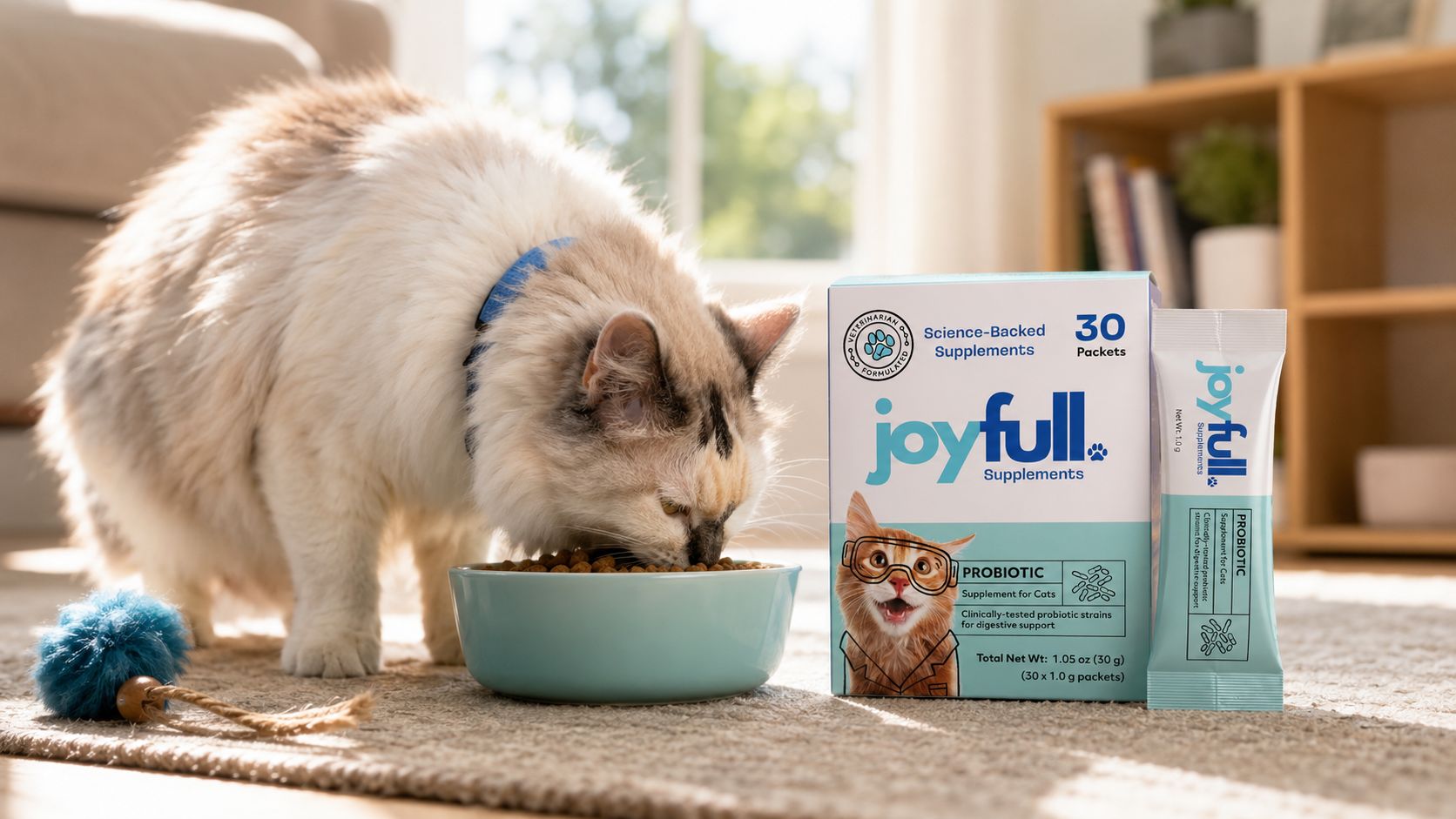
For digestive support, keep health decisions separate from behavior assumptions. Probiotic Supplement for Cats - 30 Single-Serving Packets is a cat product made with real beef bone broth, veterinarian-formulated probiotic strains, and third-party potency and purity testing. It isn't a dog exercise or training product.
A high-drive adolescent may need alternating days of sniff walks, brief skill work, carefully controlled play, and genuine downtime. A medium-energy adult may do better with steady daily walks, a scent game, and a predictable evening settle routine. In both cases, avoid the weekend warrior mistake, where a quiet week is followed by an exhausting outing that leaves the dog wired rather than restored.
Impulse Control Games That Actually Work
Impulse control develops through repetition in ordinary moments. You don't need a long obedience session. You need to reward the instant your dog notices you, pauses, releases an object, or chooses stillness before the reward arrives.
Name response with an automatic return
Say your dog's name once in a quiet room. The moment they turn toward you, mark with “yes” or a click, then deliver a treat beside your body. If they move away after eating, wait for them to look back before rewarding again. Add distance only after the response is reliable, then introduce mild distractions.
The important part is the return of attention, not merely the head turn. You're teaching your dog that checking back with you pays better than launching into the next impulse.
Treat at the nose with a wait
Place a treat in an open palm near your dog's nose. Keep your hand still for about two seconds, then mark and release the treat. If your dog grabs, close your hand without scolding, wait for softness, and try again.
Build duration gradually, then add a small distraction and finally movement around the dog. Use a release word such as “free” so your dog learns that waiting ends through permission, not persistence.
Door boundary sit
Before opening a door, ask for a sit or wait for four paws to remain on the floor. Touch the handle, pause, and reward calm. Open the door slightly, close it if your dog surges, and repeat until the dog can hold position. Give the release cue before moving through.
This game transfers directly to guests, car doors, food bowls, and leash preparation. The door isn't the lesson. The lesson is that access arrives after regulation.
Trade and drop
Offer a low-value toy, then present a better treat near your dog's nose. When they release the toy, mark, reward, and return the toy when safe. Add the cue “drop” just before the release becomes predictable.
Never chase a dog for an object you can safely trade. Chasing turns possession into a game and can create conflict. For daily practice, do two minutes during breakfast preparation, one round before each walk, and a brief release-and-settle sequence at bedtime. A marker is useful only when it lands on the calm choice. Marking frantic movement right before the dog responds teaches speed and intensity, not self-control.
For a portable reward option, dog squeeze treats can be used when the dog can take food calmly and the product suits their diet.
Calming Your Home Environment
Your home can keep a dog activated all day without anyone noticing. Rank changes by impact, then make one adjustment at a time so you can see what helps.
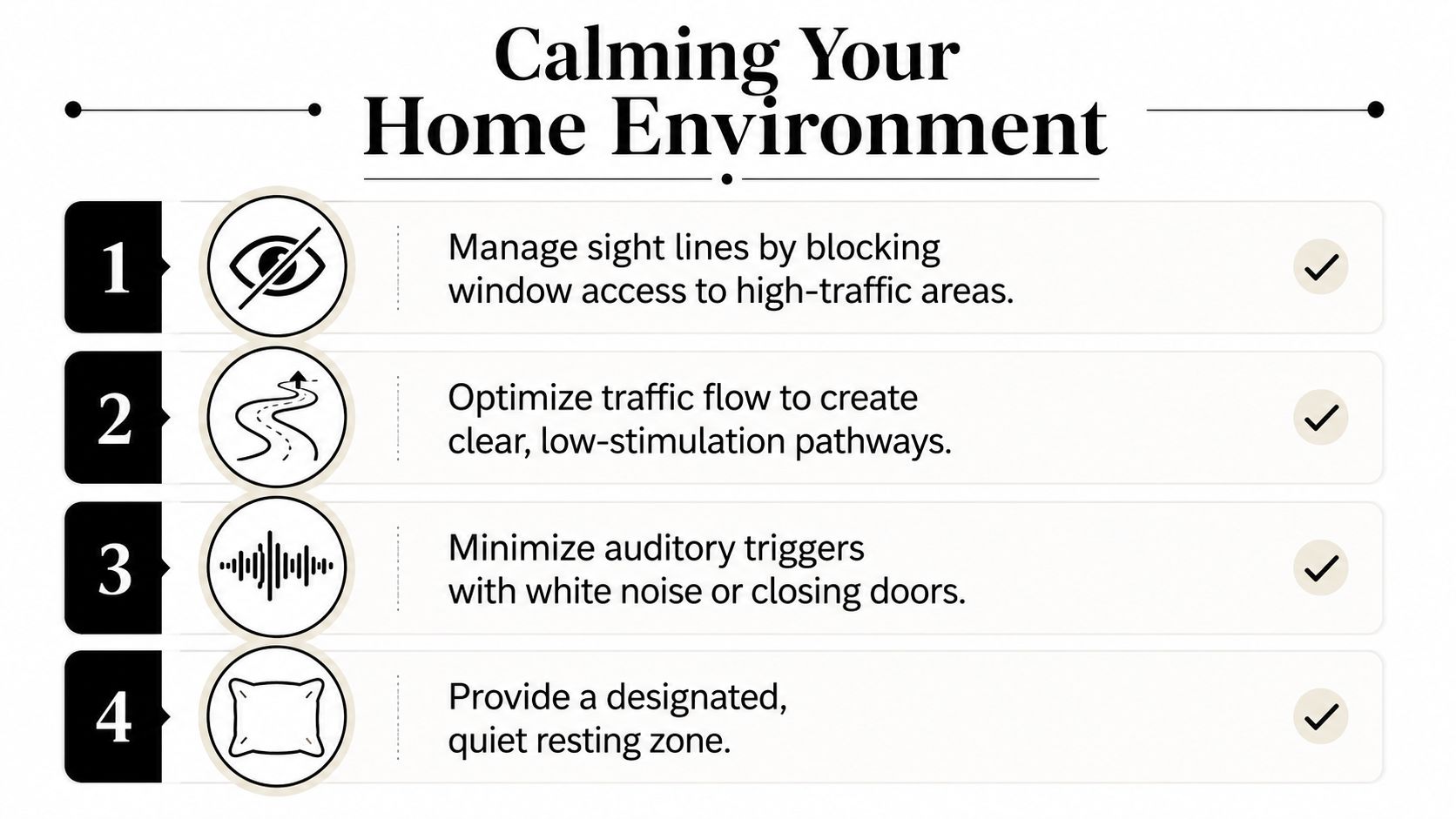
First, create a rest zone. Use a mat, crate, or quiet room with a clear entry cue and a release cue. Feed calm there, offer a safe chew if appropriate, and prevent children or visitors from turning it into a social hotspot. The space should predict reduced demands, not punishment.
Second, control sight lines. If your dog patrols the window, barks at pedestrians, or launches toward the front door, use curtains, window film, furniture placement, or a baby gate. Removing repeated visual triggers often works faster than correcting every reaction after it starts.
Third, manage sound. Close interior doors during deliveries, run steady white noise, and avoid combining loud cooking, excited greetings, and rough play. Predictable background sound can make sudden household noises less prominent.
Fourth, anchor the routine. Keep meals, walks, training, and rest broadly predictable. Your dog doesn't need a rigid timetable, but they do need a reliable pattern that reduces constant anticipation.
Flooring and cleanup can also affect how confidently you manage the space. If a pet has accidents during periods of stress or disruption, the J.G. Carpet Cleaning LLC guide offers practical context on protecting carpet while you work on household routines.
Use the video below as a visual reminder to reduce triggers rather than repeatedly reacting to them.
A calming home isn't silent or restrictive. It gives the dog fewer reasons to rehearse scanning, barking, chasing, and constant movement.
Why More Activity Is Not Always the Answer
A dog can be physically tired and neurologically overexcited at the same time. Overarousal occurs when stimulation and emotional activation keep accumulating faster than the dog can process and recover. Adding another intense walk or prolonged fetch session may increase the very behavior you're trying to reduce.
Watch what happens after activity. Dilated pupils, a mouth that stays open, frantic grabbing, sharp reactivity, repeated barking, and pacing after exercise all suggest that the session may have pushed the dog past a useful threshold. Some dogs become more reactive after a busy park because the environment supplied too many sights, smells, dogs, and social demands.
A successful outing is not the one that produces the most exhaustion. It's the one your dog can recover from.
Replace the “more is better” reflex with a recovery-based plan:
- Lower the intensity: Choose slower sniffing and simple exploration when your dog is already highly stimulated.
- Separate activities: Give the dog quiet time between a walk, training, visitors, and play.
- Use genuine decompression: A secure long-line outing or suitable enclosed space can offer choice without forcing constant interaction.
- Observe the recovery window: Track whether your dog can breathe normally, drink, lie down, and remain settled after the activity.
If your dog keeps pacing, scans the room, or immediately demands another high-energy interaction, stop escalating the workout. The next adjustment may be less stimulation, better trigger control, and more structured rest. Exercise remains important, but it must serve regulation rather than become another source of arousal.
Two Real Dogs, Two Different Calming Plans
Pepper, a 14-month-old border collie mix, lived in an apartment and barked at hallway sounds, grabbed sleeves, and raced between rooms. The label was “hyperactive,” but the pattern pointed to an underused brain combined with weak impulse control. Her first-week plan used sniff-focused walks, decompression outings twice during the week, short place training, and a flirt-pole game that always ended with water and a quiet mat routine.
The owner stopped adding random bursts of play whenever Pepper demanded them. By the end of the week, Pepper still had plenty of drive, but she began returning to the mat after activity instead of immediately searching for another outlet. The owner adjusted the plan when hallway sounds caused a sharp spike, adding earlier sight and sound management rather than more exercise.
Diesel, a 4-year-old rescue with a year of kennel history, looked different. He paced when left alone, followed the owner constantly, and became frantic after fast games. His plan emphasized decompression, scent searches, a secure rest zone during departures, and slower training games with generous pauses.
During the first week, Diesel's owner reduced intense play and recorded what happened after each departure. He settled more readily when the room was quiet and the enrichment task involved searching rather than chasing. The plan changed whenever pacing continued for long periods or food was refused, because those signs suggested anxiety or discomfort rather than a simple need for more activity.
These dogs need different answers because the same visible behavior can come from different causes. Pepper needed better outlets and impulse practice. Diesel needed safety, predictability, and a slower emotional pace.
When to Bring in a Vet or Behaviorist
Start with a veterinary appointment when the behavior is new, extreme, unsafe, or paired with physical changes. Don't wait for training to solve a pattern that might involve pain, illness, medication effects, sensory changes, or neurological problems.
Use this triage checklist:
- Sudden onset: The restlessness appeared without an obvious routine or environment change.
- Sleep disruption: Your dog paces at night, wakes repeatedly, or can't maintain normal rest.
- Body changes: Appetite, skin, drinking, elimination, movement, or touch sensitivity has changed.
- Long recovery: Your dog remains restless for hours after stimulation or cannot settle in a quiet room.
- Unsafe behavior: Biting, destructive escape attempts, dangerous running, or severe distress is escalating.
- Medication connection: The behavior began after a new medication, dose change, illness, or recovery period.
A general veterinarian should be your first medical screen. They can assess pain and consider health, sensory, or neurological contributors before you treat the problem as a training issue. Severe cases may require coordinated behavior care. A retrospective veterinary study of dogs with hypersensitivity-hyperactivity syndrome evaluated fluoxetine at 2 to 4 mg/kg daily, illustrating that medication may be considered alongside behavior management in clinically significant cases, not as a substitute for training (the veterinary behavior research PDF).
Prepare useful information
For two weeks, keep a simple log. Record sleep, meals, alone time, exercise, training, triggers, the first visible sign of arousal, and how long recovery takes. Take short videos of the worst moments from a safe position. Include what happened immediately before the episode, not only the barking or pacing itself.
A certified applied animal behaviorist or veterinary behaviorist can then build the behavior plan. Look for a written protocol, clear owner homework, a follow-up schedule, and goals you can observe, such as settling on a mat, recovering after a trigger, or completing a departure routine with less distress. Be cautious of anyone who offers only punishment, guarantees a quick fix, or sends you away with no management instructions.
If you're considering supplements, speak with your veterinarian first. Joyfull's guide to safe relaxants for dogs and cats can help you prepare questions, but it doesn't replace individualized medical advice.
A practical escalation rule is simple: if you've applied consistent home routines, trigger management, reward-based training, and recovery periods for two weeks, yet your dog still cannot settle in calm contexts, book professional help. Bring your logs and videos so the appointment starts with evidence rather than guesswork.
Joyfull offers pet wellness products developed with clean ingredients and reviewed by an in-house veterinary advisor, including options that can support broader routine-based care alongside training. Visit Joyfull to explore the available formulas and choose supplements with your veterinarian as part of a complete plan for your dog's wellbeing.
0 comments