


You lift a black-and-tan tumbleweed from the sofa, brush fur off your coffee mug, and find another layer along the windowsill. By the door, loose hair has gathered into a small drift. If you're asking how often German Shepherds shed, the honest answer is both simple and easy to misunderstand: they shed throughout the year, with two major seasonal coat-blow periods, one in spring and one in fall.
That means your dog follows two shedding patterns at once. A quiet, ongoing release leaves hair around the home every day, while short seasonal surges send much larger amounts of undercoat onto floors, furniture, and clothing. Once you recognize that rhythm, grooming stops feeling like a losing battle and becomes a routine you can plan.
Table of Contents
- The Morning Fur on the Couch
- Why German Shepherds Shed in the First Place
- The Two Shedding Patterns on the Same Dog
- What Makes One German Shepherd Shed More Than Another
- A Brushing Routine That Actually Keeps Up
- Diet, Baths, and Home Habits That Help
- When Heavy Shedding Is Actually a Warning Sign
- Living With a German Shepherd Without Losing the War on Fur
The Morning Fur on the Couch
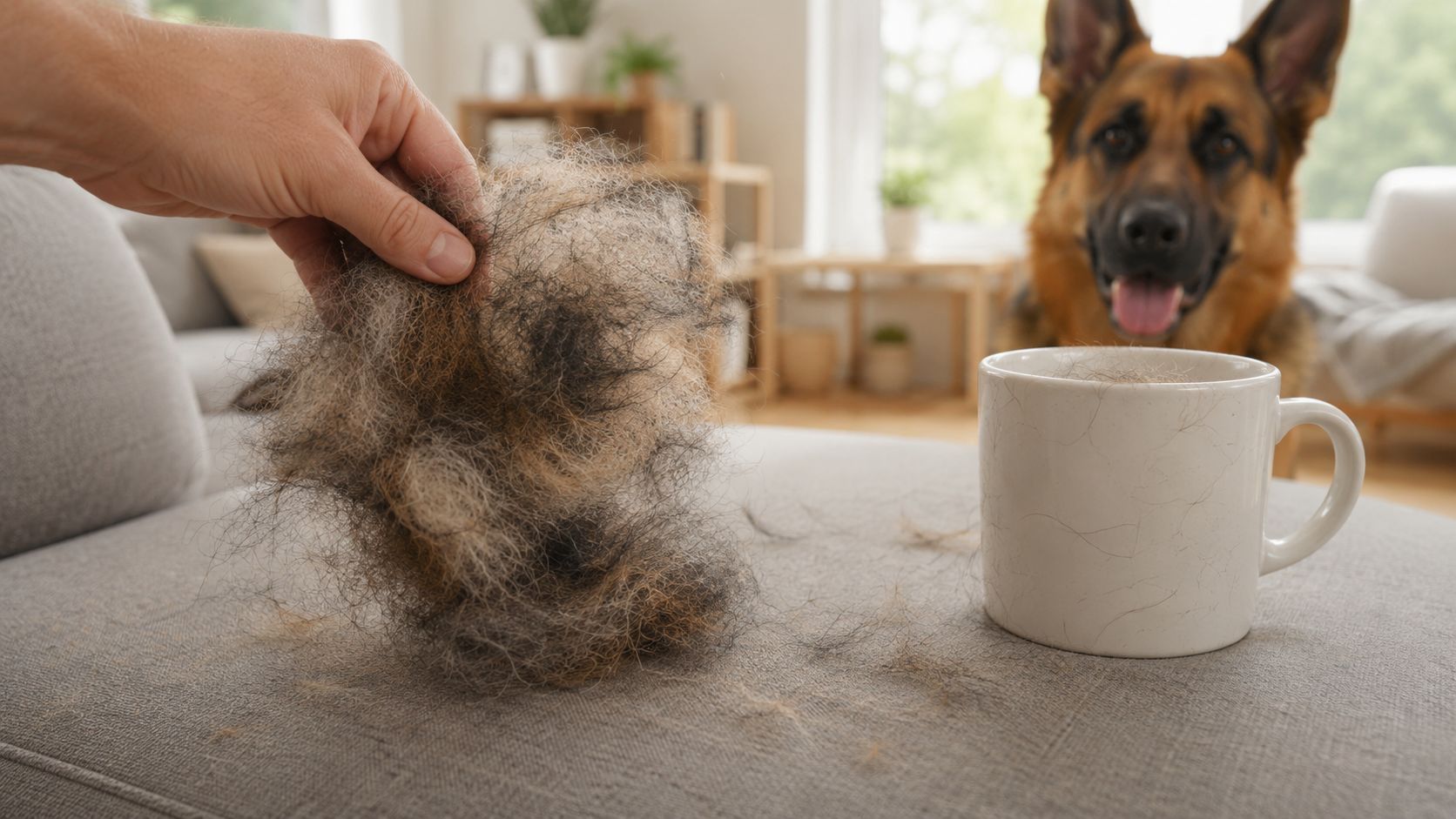
The fur on the couch usually appears before the rest of the house wakes up. You pick up the cushion, shake out a blanket, and discover a soft outline where your German Shepherd slept. The hair isn't proof that anything is wrong. It's often the visible result of a healthy double coat releasing loose strands as part of its normal cycle.
Two rhythms, one dog
German Shepherds shed year-round, but they also typically have two intense seasonal blowouts each year, in spring and fall. Independent breed guidance describes those heavier phases as lasting about two to four weeks, with daily brushing during the peaks and brushing two to three times per week during the rest of the year. German Shepherd shedding guidance supports the practical distinction between everyday shedding and short, demanding coat changes.
During ordinary weeks, you may notice a light coating on dark trousers or a few strands near the dog's bed. During a coat blow, you might pull loose tufts from the dog's sides with your fingers. The amount can feel dramatic because the dense undercoat releases in larger groups instead of appearing as isolated hairs.
Practical rule: Treat daily fur as background maintenance and seasonal blowouts as short grooming projects.
The exact timing varies. Indoor lighting and household temperatures can soften the seasonal pattern, while individual coat type, grooming habits, and health can change how much hair you see. A washable throw or dog-proof couch cover can protect the places where your dog rests, but it won't replace brushing that removes loose undercoat before it reaches the fabric.
Why German Shepherds Shed in the First Place
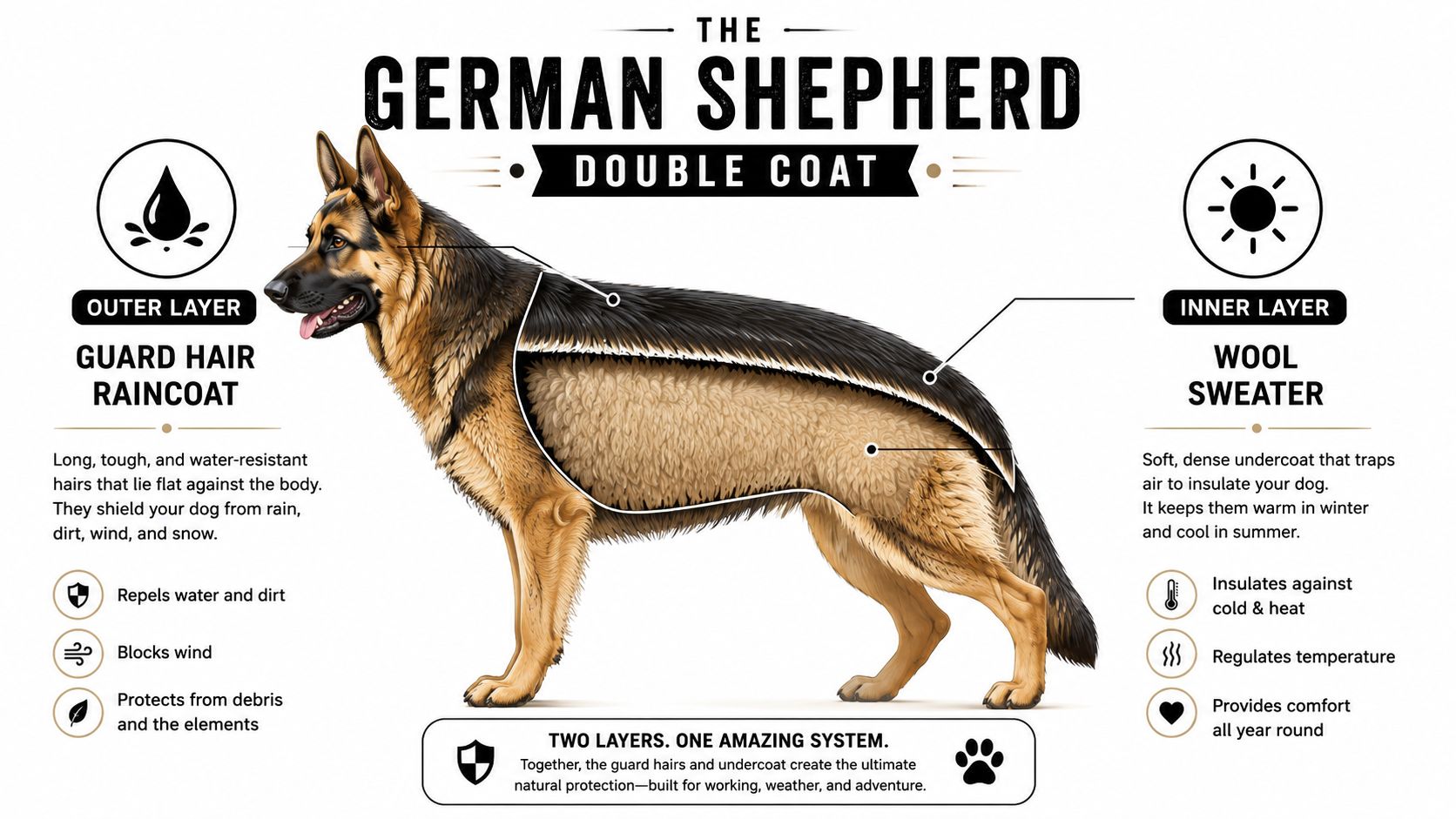
A German Shepherd's coat works like a small weather system. The outer layer is a tough guard-hair raincoat, while the inner layer is a dense, soft wool sweater. Those layers grow and release hair differently because they perform different jobs.
Guard hairs help protect the skin from moisture, dirt, and sunlight. The undercoat traps insulating air, helping the dog handle changing conditions. Because the undercoat is thick and continuously renewed, it creates most of the loose fluff owners find indoors.
Daylight sets the rhythm
Seasonal shedding is tied largely to changing daylight length, also called photoperiod, rather than temperature alone. As daylight shifts, hormonal signals influence whether hair follicles rest, grow, or release older hairs. That's why a dog can begin losing its winter undercoat before warm weather has settled in.
In spring, the dog replaces a heavier winter undercoat with a lighter seasonal covering. In fall, it releases more of the lighter coat as a denser winter undercoat develops. The process is controlled coat replacement, not random hair loss.
The year-round fuzz makes sense within that system. Individual hairs don't all reach the end of their growth cycle together, so some loose guard hairs and undercoat strands detach every day. The spring and fall surges happen when many more undercoat hairs reach their release stage around the same seasonal transition.
This is also why shaving isn't a sensible answer to shedding. Removing the visible coat doesn't change the follicle cycle, and it can interfere with the protective function of the double coat. Regular mechanical removal is safer and more useful because it collects loose hair while leaving the coat's structure intact.
For a visual explanation of the coat's layers and seasonal function, this short grooming video can help:
The Two Shedding Patterns on the Same Dog
The easiest way to understand German Shepherd shedding is to separate the calendar into a baseline pattern and a coat-blow pattern. The baseline never fully disappears. The coat blow arrives in concentrated windows.
Pattern one, the year-round baseline
A German Shepherd continuously loses loose undercoat and cycles its topcoat. The everyday amount is usually low to moderate, but it can still collect on rugs, bedding, and furniture. You may notice only a few hairs at a time, especially if your dog has a darker coat or spends much of the day outdoors.
That baseline is normal follicle turnover. It isn't the same as an abnormal thinning coat, especially when the skin looks healthy and the dog isn't itchy.
Pattern two, the seasonal release
The noticeable “fur everywhere” period occurs during spring and fall transitions. Guidance for the breed commonly places the heavier undercoat release at roughly two to six weeks, depending on the dog and the source of guidance, while other owner-focused guides describe the most intense phase as about two to four weeks. Information on the German Shepherd double-coat cycle explains why house-level shedding can rise sharply during these windows.
| Pattern | What you'll see | What it means |
|---|---|---|
| Year-round baseline | Individual hairs and light accumulation | Ongoing coat turnover |
| Spring coat blow | Tufts and loose undercoat | Release of the winter undercoat |
| Fall coat blow | Increased fluff and clumps | Seasonal replacement before colder conditions |
The important planning insight is that a short peak doesn't mean your dog has suddenly developed a permanent shedding problem. It may be the concentrated part of the cycle. Brushing, laundry, and vacuuming need to become more frequent for a while, then can settle back into maintenance once the loose undercoat has cleared.
What Makes One German Shepherd Shed More Than Another
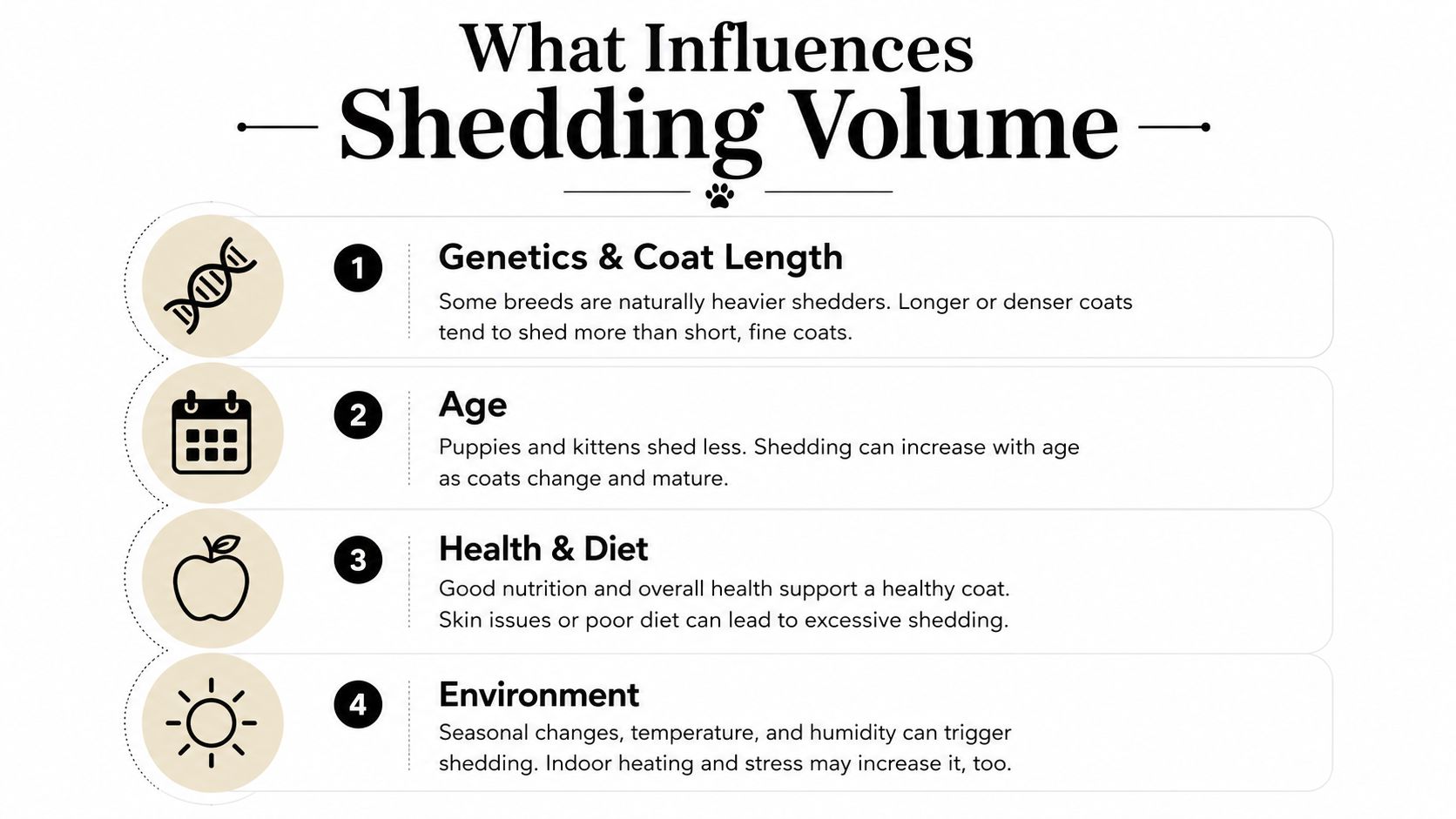
Two German Shepherds can live in the same home and leave very different amounts of fur behind. Coat biology sets the general range, but genetics, coat length, age, health, and environment determine where an individual dog falls within it.
Start with the coat itself
Long-haired German Shepherds often make loose hair more visible because it catches in furnishings and forms larger tufts. Short-haired dogs still have a dense undercoat, so a sleek appearance doesn't mean low shedding. Genetics also influence coat density and how sharply a dog moves from baseline shedding into a seasonal blow.
Age changes the picture too. Puppies transition from a softer juvenile coat into an adult coat, and that change can look different from the predictable adult cycle. Older dogs may also show coat or skin changes that deserve attention rather than automatic blame on seasonal shedding.
Health and surroundings move the dial
Stress can affect normal hair cycling, and hormonal changes can alter when shedding becomes more noticeable. Skin allergies, parasites, illness, and poor coat condition may increase loose hair or cause breakage, but they usually bring other clues, such as itching, redness, odor, or patchy loss.
Home conditions can blur seasonal signals. Artificial lighting, heating, air conditioning, and regional daylight patterns may make shedding less sharply seasonal, so some indoor dogs release hair more evenly across the year.
Think of the variables as a group rather than searching for one magic fix:
- Genetics and coat length: These establish much of the dog's natural shedding range.
- Age and hormonal state: Coat transitions and hormonal changes can alter timing.
- Health and nutrition: Skin condition and follicle support affect the quality of regrowth.
- Environment and stress: Indoor conditions can soften the spring and fall contrast.
If several factors shift at once, the difference can be substantial even when no single change seems important.
A Brushing Routine That Actually Keeps Up
Brushing works because it removes loose hair before the dog deposits it on your sofa. The tool matters, but timing matters just as much. Guidance for German Shepherd grooming commonly recommends brushing several times per week or every other day, with daily sessions during heavy shedding seasons. Professional grooming guidance for German Shepherds emphasizes reaching the undercoat rather than only smoothing the surface.
Match the routine to the coat phase
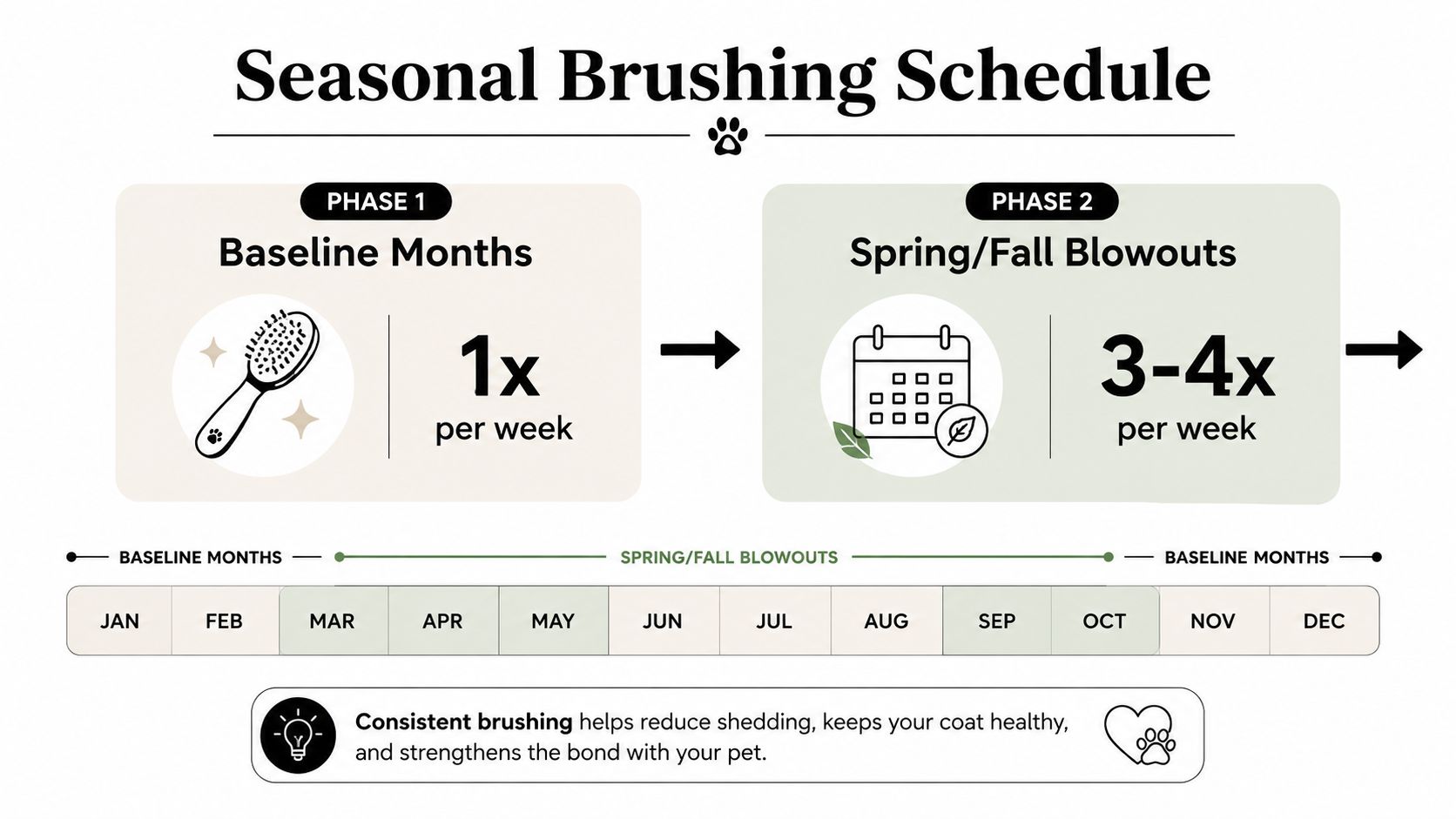
During ordinary parts of the year, brush two to three times per week. During spring and fall blowouts, daily brushing is more effective because the undercoat is releasing quickly. A practical German Shepherd shedding schedule describes the heavy phase as a short, concentrated undercoat release rather than an equally intense condition lasting all year.
The exact schedule should follow what your brush is collecting. If the tool keeps filling with loose undercoat and your dog remains comfortable, continue frequent sessions. When the coat begins releasing less hair, return to maintenance brushing.
Use each tool for a job
A slicker brush lifts surface debris and loose topcoat. An undercoat rake reaches deeper into the soft layer, while a guarded deshedding comb can collect released hair without scraping the skin. A high-velocity dryer, used safely and preferably outdoors or by a professional groomer, can loosen and blow away trapped fur after bathing.
Work in sections rather than dragging a brush randomly over the whole dog. Brush with the direction of growth first, separate the coat with your hand, and use short strokes through the dense areas. Finish with a gentle pass over the outer coat so loosened fur doesn't settle back onto the dog.
Keep sessions calm and stop if the skin becomes pink or your dog shows discomfort. If you want more household strategies, this guide to how to control dog shedding offers additional ideas for managing loose hair.
Diet, Baths, and Home Habits That Help
Brushing removes loose hair mechanically, but nutrition, bathing, and household routines support the coat from different angles. They won't switch off normal shedding. They can help keep the skin comfortable and the hair strong enough to complete its normal cycle without excessive brittleness or breakage.
Support the skin before chasing the fur
Adequate protein supports coat growth and regrowth after an undercoat release. Omega-3 and omega-6 fatty acids, supplied through an appropriate diet or a veterinarian-approved supplement, can support skin and follicle condition. Before adding fish oil or changing food, ask your veterinarian because the right choice depends on the dog's overall diet and health.
You can also review dog gut health as part of a broader wellness conversation, but a supplement shouldn't substitute for diagnosis when the coat changes suddenly.
Bathe with restraint
Use a shampoo made for dogs, lukewarm water, and thorough rinsing. A pre-bath undercoat rinse can help loosen dead hair, while careful drying helps remove fur that would otherwise remain trapped and return to the home later.
Bath frequency should follow the dog's skin, lifestyle, and veterinary advice rather than a rigid universal calendar. Grooming guidance varies, but some professional suggestions place routine grooming around every two to three months, with more frequent appointments during peak shedding. Pet Magasin grooming advice provides another practical perspective on bathing and coat management.
Make the home easier to reset
Washable throws protect favorite furniture, while a vacuum with a HEPA filter can help collect fine hair during regular cleaning. A microfiber cloth works well on windowsills and hard surfaces because it gathers hair instead of scattering it. In dry indoor conditions, discuss humidifier use with your veterinarian and keep the dog's water available.
These habits target the two-pattern rhythm differently. Brushing and drying remove loose undercoat from the dog, while covers and cleaning routines contain the hair that has already escaped.
When Heavy Shedding Is Actually a Warning Sign
A large amount of fur during a normal seasonal blow can be expected. Patchy hair loss, irritated skin, or a sudden change in the coat calls for a closer look, especially if the pattern doesn't settle after the normal peak window.
Separate loose hair from true hair loss
Normal shedding generally leaves a coat that remains evenly covered. Warning signs include:
- Patchy or asymmetric loss: Bare areas on one side, the flanks, or the tail base aren't typical of a uniform coat release.
- Skin irritation: Persistent scratching, hot spots, redness, flakes, odor, or a greasy feel suggest a skin problem.
- Coat quality changes: A dull, brittle coat combined with low energy or other physical changes deserves veterinary attention.
- Behavior or body changes: Appetite, weight, sleep, and energy shifts can add meaning to a sudden shedding increase.
- Timing changes: A sharp increase after a stressful event or hormonal change may need monitoring rather than automatic dismissal.
Possible causes include flea allergy dermatitis, food or environmental sensitivities, parasites, skin infections, hormonal disorders, and chronic stress. Conditions such as hypothyroidism, Cushing disease, mange mites, and ringworm require professional assessment because their treatments differ.
Track before you call
Take clear photographs of the skin and coat in consistent lighting. Note scratching, appetite, energy, stool, sleep, and any new food, medication, household product, or stressful event. Tracking the pattern for two to three weeks can help you and your veterinarian distinguish a short-lived change from a persistent problem, but don't delay an appointment when the dog has painful skin, open sores, rapid loss, or marked behavior changes.
For immediate home comfort while arranging care, these practical dog skin care advice steps may help you avoid worsening irritation. Don't apply human creams or essential oils unless your veterinarian specifically recommends them.
Living With a German Shepherd Without Losing the War on Fur
The goal isn't a fur-free home. A German Shepherd's double coat makes loose hair part of normal life, so the predictable containment goal is realistic. Think of the year as maintenance periods interrupted by two focused coat-blow sprints.
During baseline weeks, brush several times each week and clean the dog's sleeping area regularly. During the spring and fall peaks, increase brushing to daily sessions, wash the designated blankets, and run the vacuum more often. The heavier windows commonly last about two to four weeks, according to German Shepherd coat-shedding guidance, although individual dogs can vary.
Build a simple household rhythm
A workable routine might look like this:
- Baseline grooming: Brush two to three times weekly and check the coat for tangles or skin changes.
- Seasonal response: Brush daily when loose undercoat begins coming away in larger amounts.
- Bath planning: Bathe when the dog is dirty or the coat needs professional help, and dry thoroughly.
- Home containment: Keep washable throws and a designated cuddle blanket in the dog's favorite spots.
- Cleaning reset: Vacuum floors and upholstery, then use microfiber dusting on hard surfaces.
- Tool upkeep: Inspect brush teeth and rake edges regularly so they remain smooth and comfortable.
Keep a note on your phone of when the coat blow starts and eases. Over time, that record can help you prepare supplies and adjust grooming before the couch starts collecting visible clumps. For additional household ideas, explore these tips for removing pet hair.
Fur on the sofa is a small tax on living with a loyal, alert, intelligent companion. A calm plan beats constant cleaning, and a few consistent habits can make the coat cycle feel like a season rather than a crisis.
Joyfull offers thoughtfully formulated pet wellness products, including nutrition-focused options that can fit into a broader healthy-coat routine. Visit Joyfull to explore the available products, then pair any dietary change with regular brushing and guidance from your veterinarian.
0 comments