


When we talk about high-quality protein cat food, we're really talking about food that puts meat first. Think real, easily digestible animal proteins like chicken, turkey, or fish listed right at the top of the ingredients. This is critical because it ensures your cat—a natural carnivore through and through—gets the essential amino acids they need for muscle, energy, and just about everything else.
Why High Quality Protein Is Essential for Your Cat
Here's a simple way to think about it: your cat is basically a tiny, purring sports car. You wouldn't put cheap, low-grade fuel in a high-performance engine and expect it to run well, right? Cats are obligate carnivores, which is a scientific way of saying their bodies are built, from tooth to tail, to get their energy and nutrients almost exclusively from meat.
High-quality protein is their premium fuel. It powers every single system in their body. This is why it’s not just about the amount of protein listed on the bag, but the quality and where that protein actually comes from.
The Building Blocks of Feline Health
Animal-based proteins are "complete," which means they contain all the essential amino acids a cat's body can't make on its own. These are the literal building blocks for almost every function that keeps them healthy and happy.
- Muscle Maintenance: This is what keeps them lean and strong for all that jumping, playing, and pouncing.
- Healthy Skin and Coat: Provides the raw materials for a glossy, thick coat and supple, healthy skin.
- Immune System Support: Helps their body create the antibodies needed to fight off illnesses.
- Energy and Vitality: Fuels their daily zoomies and keeps them active and curious.
This stands in sharp contrast to lower-quality protein sources, especially plant-based fillers like corn, wheat, or soy. While these ingredients can artificially inflate the "crude protein" percentage you see on the label, a cat's digestive system simply wasn't designed to break them down efficiently.
High-quality, bioavailable protein means your cat's body can absorb and use a higher percentage of the nutrients in their food. This efficiency is crucial for long-term health, minimizing digestive waste and maximizing wellness.
To make this clearer, let's break down the common protein sources you'll find on a cat food label.
Quick Guide to Protein Sources
When you're scanning an ingredients list, knowing the difference between a high-value protein and a cheap filler is key. This quick guide will help you spot the good stuff.
| Protein Source Type | Examples | Nutritional Value for Cats |
|---|---|---|
| High-Quality Animal Proteins | Deboned Chicken, Turkey, Salmon, Lamb, Beef, Whole Eggs | Excellent. Highly digestible and contains a complete amino acid profile that cats need to thrive. The gold standard. |
| Animal Protein Meals | Chicken Meal, Fish Meal, Lamb Meal | Very Good. A concentrated source of protein made by rendering animal tissue. A great ingredient, often more protein-dense than whole meat. |
| Animal By-Products | Chicken By-Product Meal, Meat and Bone Meal | Variable to Poor. Can include less digestible parts like necks, feet, and intestines. Quality can be inconsistent. |
| Plant-Based Proteins | Corn Gluten Meal, Soy Protein Isolate, Pea Protein | Poor. Lacks the complete amino acid profile cats require and is much harder for their carnivorous digestive systems to process. |
Ultimately, a food built around those top-tier animal proteins is going to give your cat the nutritional foundation they were biologically designed to have.
The Growing Demand for Better Nutrition
It's clear that cat owners are catching on. More and more of us are looking past the flashy marketing and reading the ingredient labels, demanding better for our pets. This shift in awareness is making waves in the industry.
The global pet food market, which hit USD 121.0 billion in 2021, is on track to reach a staggering USD 186.1 billion by 2028. This incredible growth is being driven by pet owners who are more educated and invested in their pet's health than ever before. You can dive deeper into these pet food statistics and trends to see just how big this movement has become.
Choosing a high-quality protein cat food is one of the most powerful decisions you can make for your cat's long-term well-being. It’s a direct investment in their health, energy, and overall happiness, making sure their biological needs are met with every single meal.
How to Decode Cat Food Labels for Protein Quality
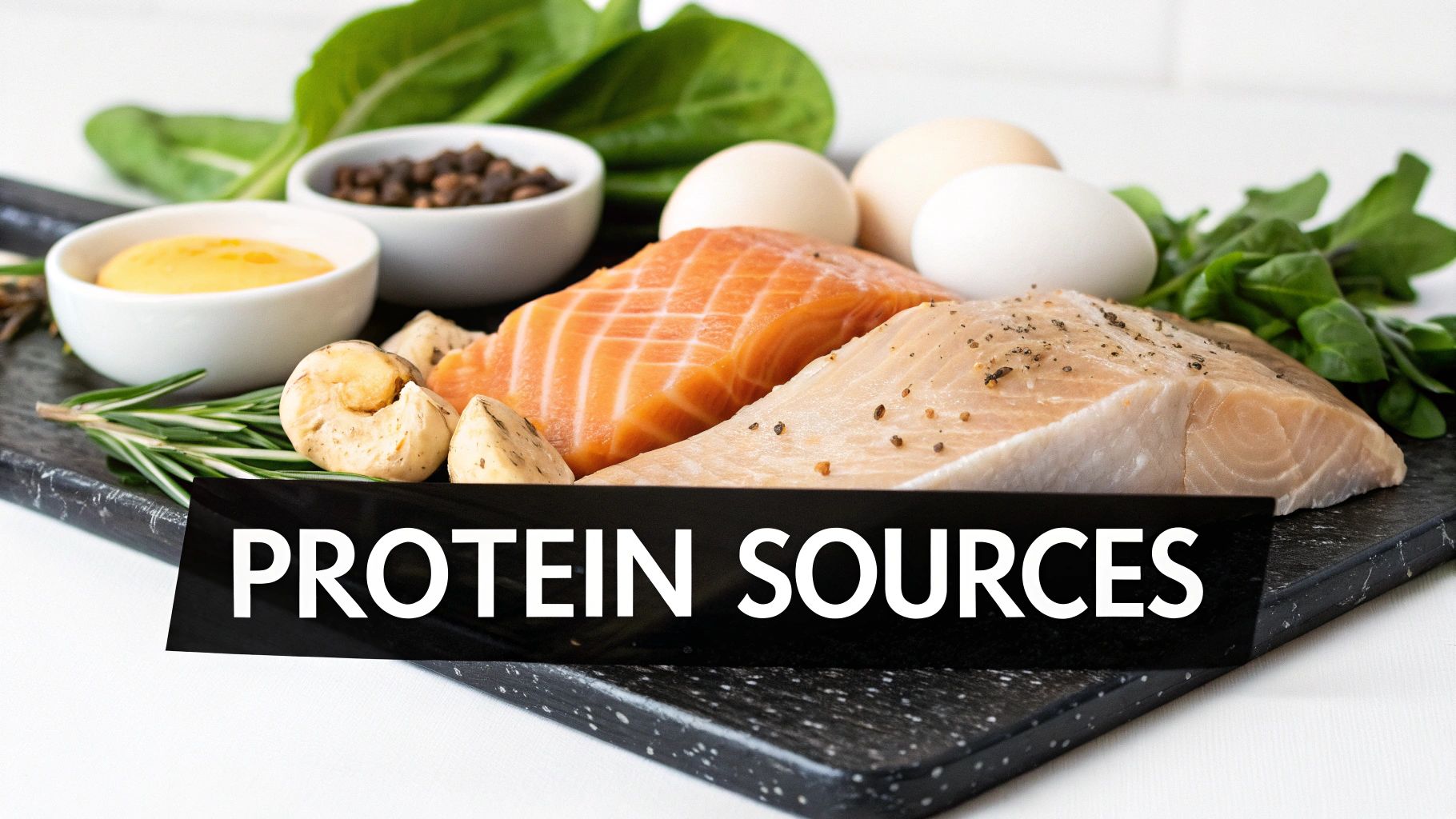
To find a genuinely high-quality protein cat food, you have to learn to look past the flashy marketing on the front of the bag. The real story is always on the back, tucked away in the ingredient list and the guaranteed analysis panel. Think of yourself as a detective for your cat's nutrition.
The first five ingredients listed are the most crucial because they make up the majority of the food by weight. Regulations require ingredients to be listed in descending order, so what you see at the top is what your cat is getting the most of. You want to see a specific, named animal protein right there at number one.
Finding the Best Protein Sources
The difference between a premium food and a cheap filler-heavy one often boils down to how specific the ingredients are. Vague, generic terms are a major red flag, while clear, identifiable sources are a sign that the manufacturer has nothing to hide.
Here’s a quick cheat sheet for what to look for:
- Excellent Sources: Words like "Deboned Chicken," "Turkey," or "Salmon" are your gold standard. This means you're getting whole, high-quality meat.
- Good Sources: "Chicken Meal" or "Turkey Meal" are also fantastic. A "meal" is just the meat with the water and fat rendered out, leaving a highly concentrated, nutrient-dense protein powder.
- Vague Sources: Be very wary of terms like "Meat By-Products" or "Poultry By-Products." This is a mystery mix that can include less digestible parts like feet or intestines, and the quality is wildly inconsistent from batch to batch.
This simple ingredient hierarchy is one of the most reliable ways to size up a cat food at a glance. When you prioritize specific, named meats, you're ensuring the protein is both identifiable and truly beneficial for your cat.
A key takeaway for any pet parent is this: If the first ingredient isn't a specific, named animal protein, you should question the overall quality of the food. It’s a simple rule that can help you quickly filter out subpar options.
Understanding the Guaranteed Analysis
Next, your eyes should go to the "Guaranteed Analysis" section on the label. This is the nutritional blueprint, showing the minimum percentages of crude protein and fat, and the maximum percentages of fiber and moisture.
The term "crude protein" can be a little confusing. It's a measurement of the total nitrogen in the food, which can come from both high-quality animal sources and lower-quality plant sources. This is precisely why you can't just look at this number alone; you have to check it against the ingredient list.
A high crude protein percentage only means something if it's backed by the high-quality animal ingredients we just talked about. A food might boast 34% crude protein, but if a big chunk of that comes from pea protein or corn gluten meal, it won't give your little carnivore the essential amino acids they need to thrive. For a deeper dive, our guide on how to choose cat food breaks this down even further.
By putting these two skills together—scanning the first five ingredients for named meats and then checking the crude protein percentage—you get a much clearer picture of what’s truly inside that bag. This two-step check empowers you to make a choice based on solid nutritional facts, not just clever marketing.
The Best Animal-Based Proteins for Feline Health
Think of yourself as a personal chef for a tiny, carnivorous athlete. When you're picking out a high-protein cat food, not all ingredients are created equal. Some proteins are like lean, grilled chicken—perfect for building and maintaining muscle—while others just don't pack the same punch.
The secret lies in a concept called bioavailability. It’s a fancy term for a simple idea: how easily can your cat’s body actually digest, absorb, and use the protein in their food? For cats, animal-based proteins are the undisputed champions of bioavailability. Their entire digestive system is hardwired to process meat, meaning they get more nutritional horsepower out of every single bite.
Top-Tier Proteins for Your Cat
So, what are these superstar proteins? The best ones are "complete," meaning they contain all the essential amino acids your cat needs but can't make on their own.
When you scan the ingredient list, here are the all-stars you want to see:
- Chicken: A lean, mean, muscle-building machine. It's incredibly easy for cats to digest and a fantastic source of the amino acids they need for energy and strength. Plus, most cats love the taste.
- Turkey: Another fantastic poultry option, very similar to chicken. Turkey is loaded with essential nutrients like niacin and vitamin B6, which are crucial for a healthy nervous system and converting food into energy.
- Fish (In Moderation): Fish like salmon or tuna bring more than just protein to the bowl. They are swimming in beneficial omega-3 fatty acids, which do wonders for your cat's skin, coat, and joint health.
While these are all top-notch choices, remember that variety is key, and every cat is an individual with their own unique needs and potential sensitivities.
This image breaks down just how much a high-protein diet impacts a cat's health, from maintaining lean muscle to fueling their daily zoomies.
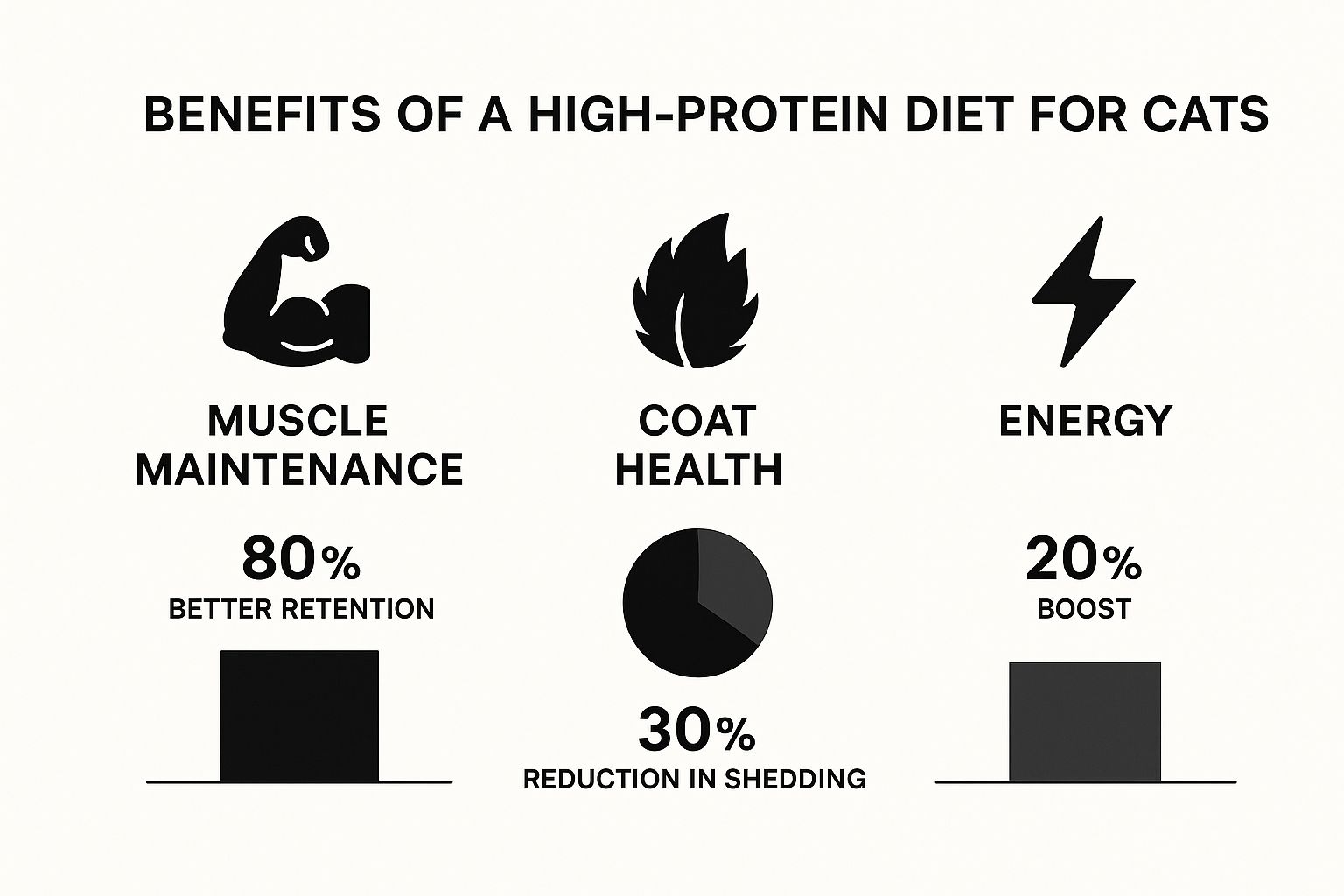
As you can see, focusing on high-quality, bioavailable animal protein delivers real, visible benefits that support everything from a glossy coat to an energetic, playful life.
To help you navigate the different options, here’s a quick comparison of the most common animal proteins found in high-quality cat food.
Comparing Top Animal Protein Sources
| Protein Source | Key Benefits | Common Allergen Potential | Typical Fat Content |
|---|---|---|---|
| Chicken | Highly digestible, lean muscle support, widely palatable | Moderate; a common allergen for some cats | Low to Moderate |
| Turkey | Lean protein, rich in B vitamins and niacin | Low to Moderate | Low |
| Salmon | Excellent source of Omega-3s, supports skin & coat health | Moderate; a common allergen | High (beneficial fats) |
| Duck | Often a "novel protein" good for cats with allergies | Low | Moderate to High |
| Rabbit | Another excellent novel protein, very lean | Very Low | Low |
Each protein brings something unique to the table, which is why rotating between different foods can be a great strategy for a well-rounded diet.
A Few Things to Keep in Mind
Even with the best ingredients, there are a couple of things to watch for. Just like people, cats can develop allergies or sensitivities, and ironically, it's often to the most common proteins.
Believe it or not, some of the most frequent food allergens for cats are chicken and fish. If you notice your cat is constantly scratching or having tummy troubles, the protein source could be the culprit. Switching to a "novel" protein they've never had before, like duck or rabbit, can often solve the problem.
Also, be smart about fish. While those omega-3s are fantastic, a diet made up exclusively of fish can lead to problems down the road, like potential mercury exposure or a thiamine (vitamin B1) deficiency. It’s best to use fish as part of a balanced rotation, not as the main event every single day.
Understanding Plant Proteins and Fillers in Cat Food
If you've ever flipped over a bag of cat food and wondered, "Why are corn, soy, and peas at the top of the list for my little carnivore?" you're not alone. It’s a great question, and it can feel completely counterintuitive to see so many plants in food for a natural meat-eater.
The short answer? Those ingredients are primarily inexpensive fillers and binders. They give kibble its uniform shape and, perhaps more importantly for manufacturers, they can bump up the "crude protein" percentage you see on the label. But that's where the benefits stop and the nutritional compromises begin.
Why Plant Proteins Just Don't Cut It
Imagine you’re building a brick house. You need strong, solid bricks (animal protein) for a sturdy structure. Using plant-based fillers is like swapping out half of those bricks for ones made of compressed sawdust. The house might look the same from a distance, but it lacks the fundamental strength it needs.
That's what's happening inside your cat. Their digestive system is short, acidic, and built for one thing: efficiently breaking down and absorbing nutrients from meat. It simply isn't equipped with the right tools to extract the full value from plant matter.
A diet loaded with plant-based fillers forces your cat's body to work overtime trying to process ingredients it was never designed to handle. This can lead to digestive issues, a lackluster coat, and low energy because they just aren't getting the complete amino acid profile they truly need to thrive.
Reading Between the Lines on the Label
Learning to spot these fillers is one of the most important skills you can develop as a cat owner. Manufacturers often use appealing-sounding names for ingredients that offer very little for an obligate carnivore.
Watch out for these common fillers that provide minimal real nutrition:
- Corn Gluten Meal: A cheap byproduct used to inflate protein numbers on the label without delivering the right kind of amino acids.
- Soy Protein Isolate: Another popular filler that many cats find difficult to digest. It's also a known allergen for some felines.
- Pea Protein: You’ll see this a lot in "grain-free" formulas, but it’s still a protein source that's far less bioavailable for your cat than real meat.
This doesn't mean every single plant ingredient is a red flag. Small amounts of certain vegetables can add beneficial fiber or vitamins. The problem arises when these ingredients dominate the top five spots on the list, as it means they are displacing the high-quality animal protein your cat's health depends on.
For a deeper dive, take a look at our guide on other key cat food ingredients to avoid.
Thankfully, more and more pet owners are demanding meat-first formulas, and the market is responding. The global pet food market is expected to jump from USD 132.4 billion in 2025 to a staggering USD 247.7 billion by 2035, largely because people are actively seeking out premium, high-protein foods for their pets.
Matching Protein Needs to Your Cat's Life Stage
A cat’s nutritional needs aren't static; they evolve dramatically from the time they're a tiny, bouncing kitten to their golden years as a dignified senior. Think about it like human nutrition—a growing teenager and a retiree have vastly different dietary needs, and the same logic applies to our cats.
Picking the right high-protein food isn't a one-size-fits-all deal. It's about matching the right fuel to their specific stage in life to help them thrive for years to come.
Fueling a Kitten's Growth Spurt
Kittens are basically tiny, furry construction zones. They double their size in a matter of weeks, and that explosive growth requires an incredible amount of protein and energy. Their diet has to be the most nutrient-dense of their entire life to build strong bones, lean muscle, and a robust immune system.
When you're shopping for kitten food, look for formulas that are specifically made for them. They'll pack in:
- Higher Protein Levels: You'll want to see 30% or more on a dry matter basis to support all that new tissue development.
- More Fat: Fat is a concentrated energy source, perfect for fueling their non-stop cycle of play, pounce, and sleep.
- Key Nutrients: A good formula will be fortified with things like DHA, which is crucial for healthy brain and eye development.
Think of kitten food as the foundation of a house. If you use cheap materials, you risk compromising the whole structure down the line.
Maintaining an Adult Cat's Prime
Once your cat hits their first birthday, they're officially an adult. The focus of their diet shifts from rapid growth to maintenance. Their energy requirements start to level off, so it's the right time to switch to an adult formula to head off any unhealthy weight gain.
The goal now is simple: preserve lean muscle, support healthy organ function, and keep them at a great body weight. A high-quality, protein-rich diet helps them stay sleek, active, and strong. This is the longest chapter of their life, so think of consistent, top-notch nutrition as your best form of preventative care.
Supporting a Senior Cat's Health
As cats move into their senior years—usually somewhere around age seven to ten—their bodies start to change. Their metabolism slows, and they become less efficient at absorbing nutrients from their food. This is also when we start to see age-related problems like muscle loss (sarcopenia) and kidney issues become more common.
For senior cats, protein quality becomes even more important than quantity. Highly digestible animal proteins provide essential amino acids to fight muscle loss without overtaxing their aging kidneys, a common concern in older felines.
The right food can make all the difference for an older cat. You'll want to look for a senior formula that prioritizes highly digestible protein from sources like chicken or fish. This helps them hold onto that crucial muscle mass while being gentler on their kidneys and digestive system.
Many senior foods also include bonus ingredients like omega-3 fatty acids for joint health and antioxidants for a stronger immune system. It’s all about helping them enjoy their retirement years in comfort and good health.
How Quality Protein Builds a Healthy Cat
When you choose a high-protein cat food, you're doing a lot more than just filling a bowl. It's a fundamental investment in your cat's health, one that pays off in ways you can see and feel every day. Think of it as providing the right fuel for their tiny, carnivorous engine.
A great diet is the cornerstone of a healthy life. Cats are obligate carnivores, meaning their bodies are designed to thrive on animal-based proteins. When they get these highly digestible proteins, their system receives the essential amino acids it needs to build and repair everything from muscles to immune cells.
More Than Just a Meal: Visible Benefits
The difference a high-quality diet makes isn't a secret. It shows up in tangible, reassuring ways, letting you know your cat is getting exactly what their body craves.
A diet packed with the right kind of protein supports:
- A Shiny, Healthy Coat: Protein is the literal building block of hair. Good protein means strong follicles, less shedding, and a coat with a beautiful, glossy sheen.
- Strong, Lean Muscles: Keeping your cat agile and active requires maintaining their muscle mass. The right amino acids are crucial for this, powering everything from pounces to graceful leaps onto the bookshelf.
- A Robust Immune System: The antibodies that fight off illness are made from proteins. A meat-rich diet gives their body the tools it needs to stay resilient against infections.
- Optimal Energy Levels: Better fuel means better performance. A high-quality diet provides sustained energy, keeping your cat playful and engaged rather than sluggish.
Prioritizing excellent nutrition isn't just about feeding your cat—it's about actively promoting their vitality. This single choice is a game-changer for weight management and can help sidestep common health issues later on.
This focus on better pet nutrition isn't just a hunch; it's a worldwide movement. The cat food market was valued at USD 66.6 billion in 2025 and is expected to climb to USD 91.3 billion by 2035. This growth is fueled by owners just like you who are demanding healthier, higher-quality options for their pets. You can discover more about cat food market trends and see how the demand for quality is shaping the industry.
A Few Common Questions About Protein in Cat Food
When you start digging into high-protein cat food, a few questions always pop up. Let's clear the air so you can feel confident you're making the best choice for your cat.
How Much Protein Does My Cat Actually Need?
For a healthy adult cat, the diet should contain at least 26% protein on a dry matter basis. But that's just a starting point. Kittens, nursing mothers, or super active cats often need a lot more fuel to keep up with their growth and energy needs.
The real key isn't just the percentage, though. Always look for a named animal protein, like "chicken" or "salmon," listed as the very first ingredient. That's your first clue to a truly high-quality food.
Is Wet or Dry Food Better for Protein?
Honestly, both can be fantastic options. A good quality wet food often packs a bigger protein punch once you account for all the moisture, and it’s a brilliant way to keep your cat hydrated. At the same time, a premium dry kibble can easily meet—and exceed—their protein requirements.
The best choice really boils down to your cat's personal preference, any specific health needs, and your budget. Many owners find that a mix of both wet and dry food works perfectly.
Sometimes, cats can develop reactions to certain ingredients. If you suspect something is off, it’s helpful to understand the common signs of food allergies in cats so you can pinpoint what might be causing the trouble.
Just remember, the source of the protein matters more than whether it's wet or dry. A food built around real, identifiable meat will always beat one padded out with plant fillers or vague "meat by-products."
At Joyfull, we believe cats deserve the best. That's why we build all our recipes on clean, high-quality animal proteins, giving your cat the kind of nutrition their biology craves. You can see our thoughtfully crafted foods at https://joyfullpet.com.
0 comments