Skip to content

Your cart is empty

Continue shopping

Have an account?

Log in to check out faster.

Your cart

Loading...

Estimated total

$0.00 USD

Taxes, discounts and shipping calculated at checkout.

Free Shipping On Orders $20+!

  • Shop All
  • About Us
  • Our Science
  • Blog
  • FAQ
Log in
  • Facebook
  • Instagram
  • TikTok
Logo of 'joyfull' with orange and yellow text on a clear background
Cart Log in
Latest Blog / Latest Blog

Heartworm 101: What Every Dog Parent Should Know This Summer

By Dr. Natascha Hedegaard June 24, 2026 3 min read
Heartworm 101: What Every Dog Parent Should Know This Summer

Heartworm is serious, but it's also one of the most preventable conditions out there. A quick annual test and a consistent preventative is all it takes.

Dr. Natascha
in-house veterinary advisor

Dr. Natascha

A lifelong animal lover turned licensed veterinarian, Dr. Natascha brings clinical expertise and compassionate care to every product we create. She reviews every ingredient and formulation for efficacy and safety—so you can feel confident in our products. In her free time, you'll find her petting all the street cats and helping her clients' dogs give birth to puppies.

Summer means longer walks, more time outside, and unfortunately, more mosquitoes. And where there are mosquitoes, there's heartworm risk. As JoyFull's veterinary advisor, I want to make sure every dog parent has the information they need to keep their pup safe this season.

So, what exactly is heartworm?

Heartworm is a parasitic infection caused by worms called Dirofilaria immitis. These worms travel through an infected dog's bloodstream and take up residence in the heart and lungs, causing permanent organ damage over time. In severe cases, adult worms can block arteries in the lungs entirely — and without treatment, it can be fatal.

The good news: heartworm has been diagnosed in all 50 states, but it's entirely preventable. The less good news: it's been diagnosed in all 50 states, so no dog is truly off the hook regardless of where you live. Transmission does decrease in colder months, but in urban areas the risk never fully reaches zero.

How does a dog get heartworm?

Only through mosquito bites — your dog cannot catch it directly from another dog. A mosquito bites an infected animal, picks up microscopic heartworm larvae, and then transmits them to your dog on its next bite. From there, the larvae mature into adult worms over the course of about six months.

Cats can also be infected, but they tend to be more resistant and rarely show clinical signs. And while it's technically possible for humans to be infected, it doesn't lead to clinical disease the way it does in dogs.

Featured in this article

Our best sellers

Hand-picked just for this post.

Prebiotic Chicken Squeeze Treats for Dogs - 24 Packets
Sale

Prebiotic Chicken Squeeze Treats for Dogs - 24 Packets

 ✅ Made with real cage-free chicken ✅ Irresistibly lickable + includes prebiotics for gut health ✅...

$32.00$30.00
View →
Prebiotic Tuna Squeeze Treats for Cats
Sale

Prebiotic Tuna Squeeze Treats for Cats

 ✅ Made with real wild-caught tuna   ✅ Includes prebiotics to support gut health  ✅  Free...

$32.00$30.00
View →
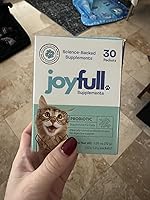
Probiotic Supplement for Cats - 30 Single-Serving Packets
Sale

Probiotic Supplement for Cats - 30 Single-Serving Packets

 ✅ Made with real beef bone broth ✅ Veterinarian-formulated with clinically-tested probiotic strains ✅ Third-party tested...

$35.00$30.00
View →
Joyfull Probiotic Supplement for Dogs - 30 Single-Serving Packets
Sale

Joyfull Probiotic Supplement for Dogs - 30 Single-Serving Packets

 ✅ Made with real beef bone broth ✅ Veterinarian-formulated with clinically-tested probiotic strains ✅ Third-party tested...

$35.00$32.00
View →

What are the signs to watch for?

Early infection often looks completely normal — which is part of what makes heartworm so insidious. As the worm burden increases, you might notice:

  • A persistent cough
  • Your dog tiring more easily during exercise
  • Lethargy or weight loss

In more advanced cases: difficulty breathing, a swollen belly from fluid buildup, collapse, or in the most severe cases, sudden death. If your dog is showing any of these signs, please see your vet right away.

When and how should you test?

The American Heartworm Society recommends annual heartworm testing for all dogs over 7 months of age — and this applies even if your dog is on a preventative. No preventative is 100% effective, and annual testing is the only way to catch an infection before it progresses.

Spring is generally considered the best time to test, since adult worms take at least six months to develop after transmission — meaning spring catches any exposure from the previous fall. That said, if you haven't tested yet this year, now is still a good time.

Your vet will use a blood test to check for both heartworm antigens and microfilaria (microscopic larvae). One test alone isn't enough for a complete picture, which is why the Society recommends both.

What if my dog tests positive?

First: don't panic, but do act quickly. Treatment is available, but it's significant — the full course takes a minimum of 91 days, involves multiple injections, antibiotics, and complete exercise restriction throughout. It's also considerably more expensive than prevention. This is why I always say: prevention isn't just easier, it's genuinely kinder to your dog.

One critical note: never start a heartworm preventative without testing first. Starting prevention on a dog with an active infection can be dangerous. Always test before starting or switching preventatives.

Prevention: the best medicine

Year-round FDA-approved heartworm preventatives (dispensed by your vet) are the gold standard. These medications, called macrocyclic lactones, are highly effective and safe for long-term use. You can also reduce risk by limiting outdoor time during peak mosquito feeding hours and using EPA-registered mosquito repellents.

If your dog isn't currently on a preventative, the first step is a heartworm test — then talk to your vet about the right prevention protocol for your pup.

Heartworm is serious, but it's also one of the most preventable conditions out there. A quick annual test and a consistent preventative is all it takes. Your dog is worth it.


Dr. Natascha Hedegaard is a practicing veterinarian and JoyFull Pet's veterinary advisor. She formulates and reviews every JoyFull product for safety and efficacy, guided by peer-reviewed clinical research.


joyfull white logo

Unlock 10% Off Your First Order!

Receive pet health & wellness tips, plus exclusive offers. We'll never spam you.

  • Your Privacy Choices
  • Privacy Policy
  • Terms of Service
  • Returns
  • Shipping
  • Contact Us
Copyright © 2026. JoyFull Pet. All Rights Reserved.
  • Choosing a selection results in a full page refresh.
  • Opens in a new window.
★ Reviews

Let customers speak for us

175 reviews
Write a review
79%
(139)
18%
(31)
2%
(4)
1%
(1)
0%
(0)
K
Prebiotic Chicken Squeeze Treats for Dogs - 24 Packets
Karen Romeo
Love them

Dog love these!

A
Prebiotic Chicken Squeeze Treats for Dogs - 24 Packets
Anh Luu
Love this good-for-guts treats! Yummy and

Love this good-for-guts treats! Yummy and healthy

G
Prebiotic Tuna Squeeze Treats for Cats
GERALDINE SOUKUP
My picky cat loves this "licky"

My picky cat loves this "licky" treat!

B
Prebiotic Chicken Squeeze Treats for Dogs - 24 Packets
Betsy Gillard
Dog is a fan!

I thought the squeeze packet would get annoying, but it's actually a lot more pleasant than having your hands smell like treats and it's easy for giving tiny bits at a time. My super picky dog will even accept the treats at the vet where she's normally to nervous to have anything at all. Haven't been consistent enough yet to notice the probiotic benefits, but she usually responds really well to them so I'm optimistic.

M
Probiotic Supplement for Cats - 30 Single-Serving Packets
Maestro
Helped Firm Up Stools and Improved Appetite

I started using this probiotic for my adult cat who occasionally experiences loose stools and digestive sensitivity. I mixed one packet into her regular wet food once daily. Within a few days, her stools became more formed and consistent, and she seemed more comfortable overall.

The beef bone broth flavor made a noticeable difference—my cat accepted it easily without hesitation, which is not always the case with supplements. The powder blended smoothly into food without clumping. After about two weeks of consistent use, her digestion appeared more stable, and I haven’t seen the same recurring issues.

This has been a helpful addition to her routine for digestive support.

User picture
123