


When we talk about "healthy dog treats," we're not just talking about a quick snack. We're talking about functional, single-ingredient or limited-ingredient rewards that genuinely contribute to your dog's well-being. Think of them less as junk food and more as bite-sized nutritional boosts made from real, whole foods.
What Actually Makes a Dog Treat Healthy
Ever feel overwhelmed in the pet food aisle? You’re staring at a wall of bags, all screaming "natural," "premium," or "grain-free." It's a common feeling. You just want what's best for your dog, but it's hard to know what these words really mean.
The truth is, many of these are just marketing buzzwords with very little regulation.
To cut through the noise, it helps to change how you think about treats. A truly healthy dog treat isn't empty calories. It's a valuable part of your dog’s daily nutrition, adding something positive to their diet—whether it’s lean protein for muscle, omega fatty acids for a shiny coat, or fiber for a happy gut. The goal is to give them something that works with their body, not against it.
Moving Beyond the Marketing Hype
It all comes down to the ingredients list. A healthy treat is built on a foundation of whole, recognizable foods. You want to see things like "chicken" or "sweet potato," not vague terms like "meat by-products" or a long list of chemical preservatives you can't pronounce.
This idea of simplicity and safety goes beyond the food itself. For instance, if you're making treats at home, even the materials you use matter. Understanding what makes something like food grade silicone safe for your baking molds is part of a bigger picture of ensuring your pet's overall health.
The best treats are simple and transparent. If you can't easily tell what's in it or where it came from, it’s probably not the best choice for your dog.
The Functional Food Philosophy
At the end of the day, a healthy treat should do more than just make your dog’s tail wag. It should serve a purpose. Maybe it helps clean their teeth, supports their joints, or calms their anxiety. It becomes a functional part of their life.
When you start prioritizing treats with clear, tangible benefits, you turn a simple reward into a proactive step toward a longer, happier life for your best friend. To dive deeper, check out our guide on the best ingredients for dog treats. This mindset shift helps you look right past the flashy packaging and pick treats that truly nourish.
How to Decode an Ingredient Label Like a Pro
Flipping over a bag of dog treats to read the ingredient list can feel like you need a Ph.D. in chemistry. But honestly, it's simpler than it looks. Once you know the rules of the game, you can spot a winner in seconds.
The best trick I've ever learned is the "First Five Rule." Ingredients are always listed by weight, from most to least. That means the first five ingredients on the list make up the bulk of what you're feeding your dog. It's the fastest way to see past the flashy marketing on the front and get to the truth of the treat.
Focus on the First Five Ingredients
So, what are you looking for in those top five spots? Simple: a whole protein source right at the top. You want to see real, recognizable words like "chicken," "beef," "salmon," or "lamb."
This tells you the treat is built on a foundation of high-quality protein, which is exactly what our dogs need for strong muscles and sustained energy. It’s the gold standard.
On the flip side, keep an eye out for vague terms like "meat by-products" or "poultry meal." These are the red flags. They often signal lower-quality, processed ingredients that just don't pack the same nutritional punch as whole meat. A clear, named protein as the first ingredient isn't just a preference—it's a must-have for a top-tier treat.
This flowchart breaks down the whole decision-making process, showing how to weigh everything from ingredients to sourcing to find a genuinely healthy option for your pup.
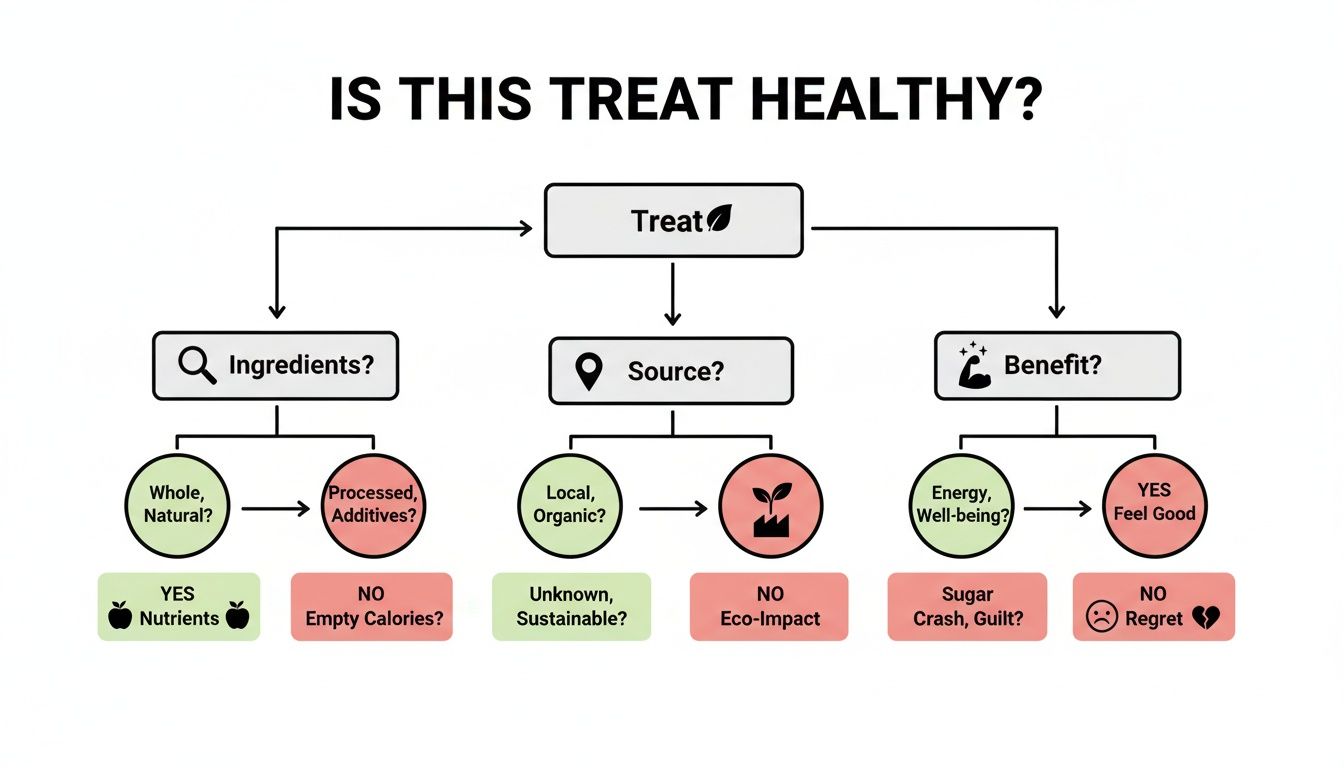
As you can see, a truly "healthy" treat is about more than just one good ingredient; it's about the bigger picture of quality sourcing and the specific benefits it offers your dog.
Spotting Red Flags and Unwanted Additives
Okay, beyond the first five, your job is to spot the bad guys. I'm talking about the cheap fillers and artificial junk that offer nothing but empty calories. Knowing what ingredients to avoid in dog food is just as important as knowing what to look for.
These sneaky additions can lead to an upset stomach, trigger allergies, or even contribute to bigger health problems down the road. Learning to spot them is a skill every dog parent should have. If you really want to get into the weeds, we have a complete guide on https://www.joyfullpet.com/blogs/news/how-to-read-dog-food-labels that goes even deeper.
To make it easy, here's a quick reference guide to keep in your back pocket.
A Pet Parent's Ingredient Cheat Sheet
Think of this table as your at-a-glance guide to telling the good stuff from the junk when you're in the pet aisle.
| What to Look For (The Good Stuff) | What to Avoid (The Red Flags) |
|---|---|
| Named Whole Proteins (e.g., Chicken, Beef, Fish) | Vague "Meat" or "By-Products" (e.g., Meat Meal, Poultry By-Product) |
| Whole Fruits & Vegetables (e.g., Sweet Potato, Blueberries, Carrots) | Cheap Fillers (e.g., Corn, Wheat Gluten, Soy) |
| Natural Preservatives (e.g., Mixed Tocopherols, Vitamin E, Rosemary Extract) | Artificial Preservatives (e.g., BHA, BHT, Ethoxyquin) |
| Natural Sweeteners (e.g., Molasses, Honey in small amounts) | Artificial Sweeteners & Sugars (e.g., Corn Syrup, Xylitol, Sucrose) |
| Simple, Limited Ingredients | Artificial Colors & Dyes (e.g., Red 40, Yellow 5, Blue 2) |
With this cheat sheet, you can cut through the noise and make confident, healthy choices for your dog every time.
Understanding Chemical Preservatives and Colors
Let's be real: artificial additives are there to extend shelf life and make treats look more appealing to us, not our dogs. Your dog could not care less if their biscuit is a vibrant red or shaped like a tiny bone. That's all for the human eye.
Key Takeaway: Chemical preservatives like BHA, BHT, and ethoxyquin have been flagged for potential health concerns. There’s just no need for them when natural alternatives like mixed tocopherols (a form of Vitamin E) or rosemary extract do the same job safely.
It's the same story with artificial colors like Red 40 or Yellow 5. They serve zero nutritional purpose and can be a source of allergies for sensitive pups. A treat's natural color, which comes from its real ingredients, is a sign of honesty. Choosing treats without these synthetic chemicals is one of the easiest and most impactful things you can do for your dog's long-term health.
The Building Blocks of a Nutritious Treat
Now that we’ve covered what to avoid, let's talk about the good stuff. Think of a healthy dog treat like a well-built house—it needs strong, high-quality materials to stand firm. For our dogs, these materials are whole-food ingredients that do more than just taste good; they turn a simple snack into a powerful nutritional boost.
This shift toward clean, beneficial ingredients isn't just a fleeting trend. It’s a reflection of how much we value our pets' health. In fact, the demand for natural dog treats is exploding, with the market expected to hit USD 14.03 billion by 2030. This boom is all thanks to pet parents like us who are searching for organic, simple, and transparently sourced options. You can read more about this pet wellness movement on Grand View Research.
Prioritizing High-Quality Proteins
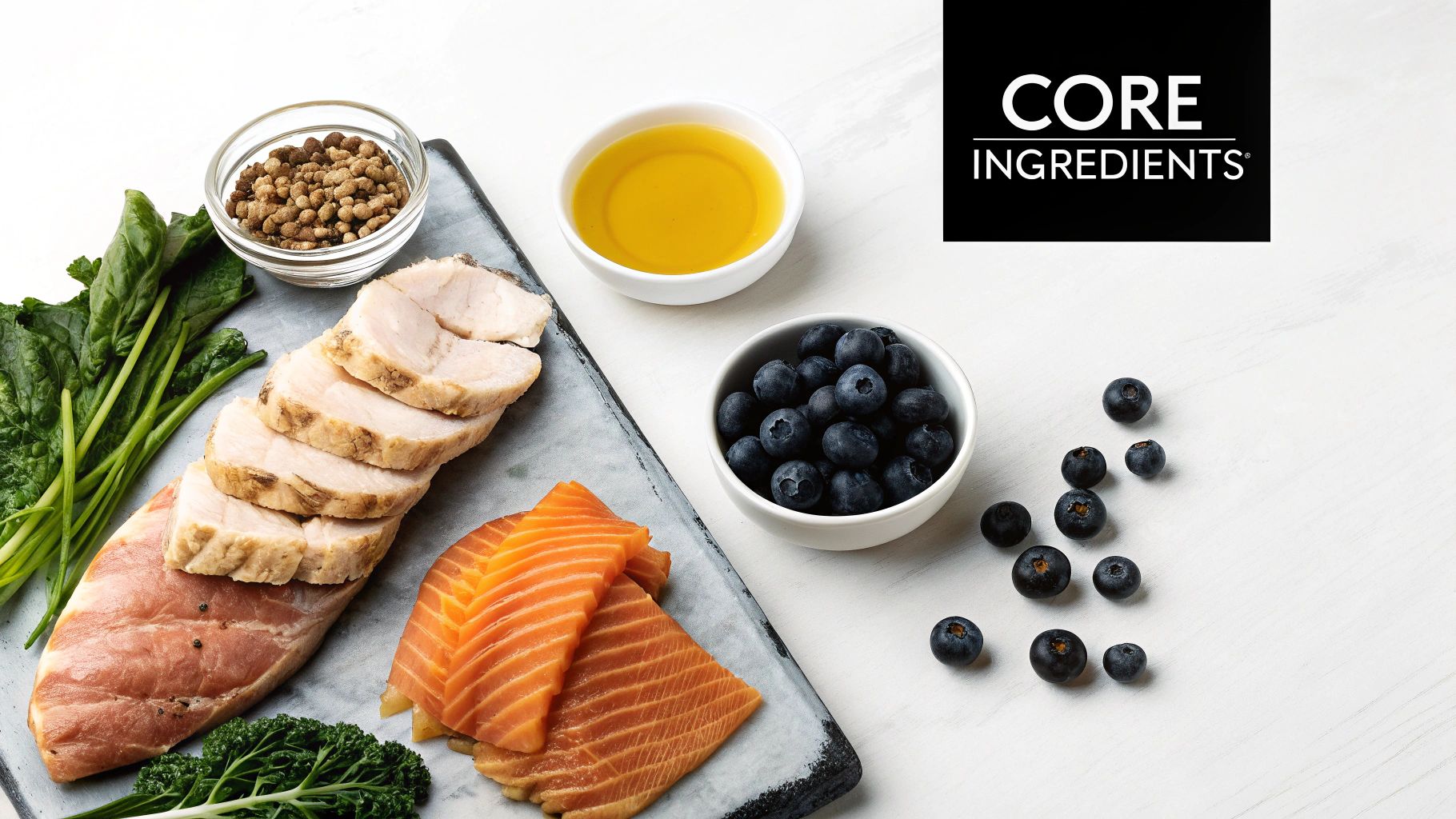
Protein is the absolute cornerstone of your dog’s health. It’s what builds and repairs everything from their muscles to their skin and coat. When you're picking out treats, the very first thing you should look for is a clearly named, high-quality protein source at the top of the ingredient list.
This means finding treats built on real meat, not processed mystery meals or cheap fillers.
- Whole Meats: Look for ingredients like chicken, beef, lamb, or salmon. These provide essential amino acids that are easy for your dog to digest and use to build lean muscle.
- Organ Meats: Don't shy away from liver and heart! They are nutrient-dense superfoods, packed with vital nutrients like iron and B vitamins.
- Fish: Salmon and other oily fish are fantastic not only for their protein but also for the healthy fats they contain.
When you see these specific proteins listed first, you know your dog is getting the right fuel for energy, growth, and overall vitality.
The Power of Healthy Fats and Complex Carbs
Fats often get a bad rap, but for our dogs, the right kind of fat is essential. Think of it as the oil that keeps their engine running smoothly. Healthy fats are a concentrated source of energy and are absolutely vital for absorbing certain vitamins.
The same goes for carbohydrates. Simple carbs from fillers like corn and soy offer very little nutritional value. Complex carbohydrates, on the other hand, are a different beast entirely. They act as a slow-release fuel, giving your dog sustained energy without the sugar rush and subsequent crash.
Key Insight: The goal is to find treats that use fats and carbs to add nutritional value, not just to bulk up the product. Every ingredient should have a purpose.
Keep an eye out for these powerhouse ingredients on the label:
- Omega-3 & Omega-6 Fatty Acids: You'll find these in flaxseed and salmon oil. They’re famous for giving dogs a shiny coat and healthy skin, but they also play a huge role in reducing inflammation and supporting brain function.
- Complex Carbohydrates: Ingredients like sweet potatoes, peas, and chickpeas provide steady energy and dietary fiber, which is fantastic for digestive health.
These components work together to create a treat that truly supports your pup from the inside out.
Functional Ingredients for Targeted Support
Beyond the core nutrients, the best healthy treats often include what we call "functional ingredients." These are specific additions that provide targeted health benefits, almost like a mini-supplement baked right into a delicious snack. This is where you can really start tailoring your treat choices to your dog’s individual needs.
For instance, an older dog might get a lot out of a treat fortified for joint support, while a dog who gets anxious during thunderstorms could benefit from calming botanicals.
Here are a few popular functional ingredients to look for:
- Glucosamine and Chondroitin: These are lifesavers for joint health and mobility. They're perfect for senior dogs or breeds that are prone to hip and joint issues.
- Probiotics and Prebiotics: Ingredients like pumpkin or chicory root help foster a healthy gut, which in turn aids digestion and boosts the immune system.
- Chamomile and L-Theanine: These natural botanicals are well-known for their calming properties and can help take the edge off for stressed or anxious dogs.
- Antioxidants: Found in superfoods like blueberries, cranberries, and spinach, antioxidants help protect your dog's cells from damage and support their overall wellness.
Choosing treats with these kinds of extras turns snack time into a proactive way to enhance your dog's long-term health.
Mastering Portion Control for Healthy Treating
Even the healthiest treat on the shelf can backfire if you're too generous with it. Think of it like this: you can eat the most nutrient-packed salads for your main meals, but if you follow them up with half a cake, you're not exactly hitting your health goals. It's the same logic with our dogs—choosing good ingredients is only half the battle; portion control is the other.
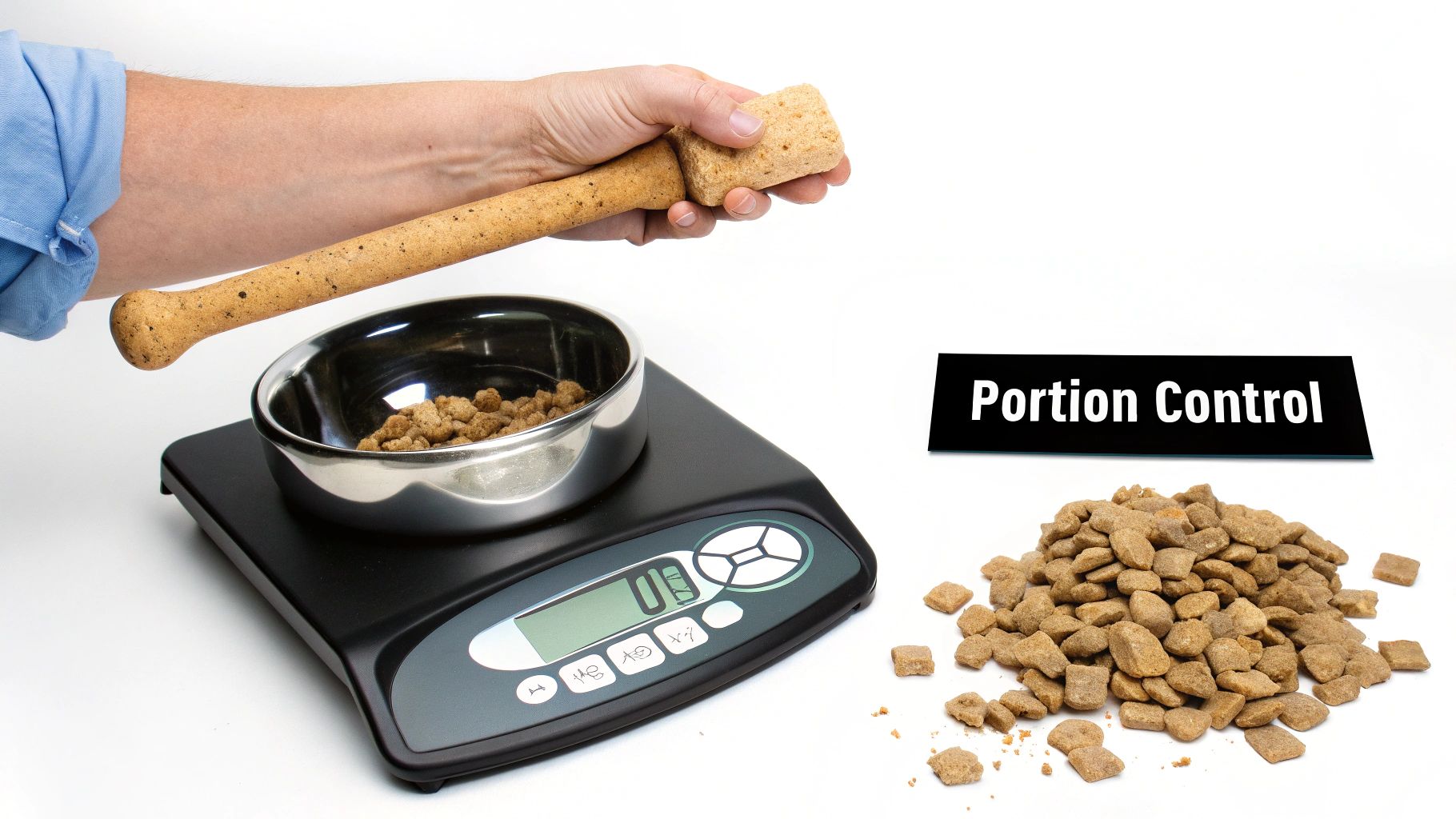
This brings us to a simple but crucial guideline veterinarians swear by: the "10% Rule." This rule of thumb says that treats should make up no more than 10% of your dog's total daily calories. The other 90% needs to come from their complete and balanced dog food. Following this keeps treats in their proper place as a fun bonus, not a meal replacement that can lead to weight gain.
Calculating Your Dog's Treat Allowance
So, how do you actually use the 10% rule without pulling out a calculator every time you reach for the treat jar? It's easier than it sounds. First, figure out roughly how many calories your dog should be eating per day. Your vet is the best source for this, but the feeding guide on your dog's food bag is a great starting point.
Let’s walk through a quick example:
- A moderately active, 30-pound dog might need about 800 calories a day.
- Applying the 10% rule, their treat allowance is 80 calories (10% of 800).
That 80-calorie "budget" can be spent on one or two bigger chews or a handful of tiny, low-calorie rewards for training. Once you know this number, you’re in the driver's seat, able to make smart choices that keep your dog’s diet on track.
Responsible treating is more critical now than ever. With dogs accounting for over 60% of the global pet treat market, it's clear we love to spoil them. But here's the reality check: veterinary surveys show that an alarming 59% of dogs in the US are overweight or obese. This has rightfully pushed 70% of owners to look for healthier treats with benefits, like low-calorie options to help manage their dog's weight. You can see more on these trends from Future Market Insights.
Smart Portioning Strategies
Keeping your dog’s treat intake in check doesn’t mean being stingy. It’s about being smart. The goal is to make them feel rewarded without piling on the calories.
Key Takeaway: For most dogs, the size of the treat is far less important than the simple act of getting one. A tiny morsel can be just as exciting as a giant biscuit, especially when you're training.
Here are a few practical ways to manage portions:
- Break It Down: Got a big biscuit? Snap it into smaller, bite-sized pieces. You can make one treat feel like five, which is perfect for practicing new commands.
- Choose Wisely: Look for treats that are naturally lower in calories to begin with. Single-ingredient snacks like dried sweet potato or lean jerky are fantastic choices. For more great ideas, check out our guide to low-calorie dog treats.
- Adjust for Activity: Did you just get back from a three-mile hike? Your dog can probably handle a slightly bigger treat. Was it a lazy day on the couch? Scale the treats back accordingly.
When you treat your dog responsibly, you're doing more than just giving them something tasty. You're actively contributing to their long-term health and helping them avoid the serious problems that come with obesity.
Navigating the Crowded World of Dog Treats
You’ve got the basics down—how to decipher a label, what ingredients really matter, and how to keep portions in check. Now, let's put it all together so you can walk down that treat aisle with confidence. It can feel like a sensory overload, but once you have a clear framework, you can cut right through the marketing fluff and find the good stuff.
The dog treat market is absolutely booming. It's expected to rocket from US$31,060 million in 2025 to a whopping US$79,930 million by 2031. What’s driving this? Pet owners like you. A recent study found that 68% of owners are actively seeking out natural options for their dogs. This shift is forcing brands to step up their game, creating treats that do more than just taste good—they support everything from clean teeth to healthy joints. If you're curious about these trends, you can see the full report from Infinity Market Research.
The Smart Shopper's Checklist
To keep things simple, here’s a quick mental checklist to run through next time you're shopping. It turns everything we've talked about into a few easy, actionable steps.
- Rule of Five: Flip the bag over and look at the first five ingredients. You want to see a real, named protein like "chicken" or "beef" right at the top.
- Dodge the Junk: Quickly scan for artificial preservatives (like BHA or BHT), synthetic colors (like Red 40), and cheap sweeteners (like corn syrup). A short, clean ingredient list is almost always a good sign.
- Practice Portion Control: Never forget the 10% Rule. Treats are for treating, not for dinner. Smaller, lower-calorie options are your best friend, especially if you do a lot of training.
- Consider Your Dog: Is your dog a senior? A tiny puppy? Do they have a sensitive stomach? Think about their specific needs and look for treats with functional ingredients that offer targeted benefits.
Homemade vs. Store-Bought Treats
This is one of the biggest forks in the road for pet owners. Should you bake them yourself or buy them off the shelf? Honestly, there are great arguments for both, and the best choice really comes down to your lifestyle, your budget, and your dog. There’s no single "right" answer here—just what’s right for you.
The real debate isn't about which is "better," but what genuinely fits your life. The goal is the same either way: giving your dog something safe, nutritious, and delicious.
Let's break down the key differences to help you figure it out.
| Factor | Homemade Treats | Store-Bought Treats |
|---|---|---|
| Ingredient Control | You get 100% control over every last thing that goes in. This is a game-changer for dogs with serious allergies or food sensitivities. | You're trusting the brand and your label-reading skills. That said, great brands offer fantastic, transparently made options. |
| Cost | You can definitely save money, especially buying ingredients in bulk. The main trade-off is your time. | Premium, high-quality treats can be pricier, but the convenience is undeniable. You're paying to save yourself time and effort. |
| Convenience | This is the big one. It takes time to shop, bake, and clean up. It’s just not practical for everyone’s schedule. | Incredibly convenient. You can grab a bag while you're out or have it delivered right to your door. |
| Nutritional Balance | It can be surprisingly tricky to get the nutritional balance right without some expert guidance from a vet or canine nutritionist. | Reputable companies formulate their treats to be nutritionally appropriate, so they've already done the hard work for you. |
| Safety and Shelf Life | Since they're free of preservatives, they have a very short shelf life. You have to store them carefully to keep them from spoiling. | They contain natural or sometimes artificial preservatives, which gives them a stable shelf life and ensures they stay safe to eat. |
At the end of the day, it doesn't matter if you decide to roll up your sleeves and bake or pick out a premium bag from a trusted brand like Joyfull. You now have the knowledge to make a great choice. You can confidently find or create treats that not only make your dog happy but actively support their health for years to come.
Your Questions Answered: A Quick Guide to Healthy Dog Treats
Even when you know what you’re looking for, the pet food aisle can still feel overwhelming. Let's clear up some of the most common questions that pop up when you're trying to pick out the best treats. This is your go-to guide for those last-minute decisions.
Getting these details right builds confidence and makes it that much easier to give your dog the very best, every single time.
Are Grain-Free Treats Always Healthier?
This is a big one, and the short answer is: not always. For a dog with a true grain allergy or a known sensitivity, a grain-free diet is a must. But for most dogs, the "grain-free" label isn't an automatic stamp of health.
Here’s the thing: many brands simply replace grains with other starchy fillers like potato or pea flour, which don't offer much in the way of real nutrition. A thoughtfully made treat that includes high-quality whole grains, like brown rice, can easily be more beneficial than a poorly constructed grain-free one. The real measure of quality is the ingredient list as a whole, not just one popular marketing term. If you think your dog has an allergy, your vet is the only one who can help you figure it out for sure.
How Many Treats Can I Give My Dog Each Day?
A great rule of thumb to live by is the "10% Rule." It’s a simple guideline: treats should never account for more than 10% of your dog’s total daily calories.
So, if your dog needs about 500 calories a day, that means treats should stay under 50 calories. How many treats that actually is depends entirely on what you're giving them. When you're in a training session, it’s best to use tiny, low-calorie bits. Always take a look at the packaging for the recommended serving size and don't be afraid to cut back a little on their main meal to keep their weight in a healthy range.
Are Dental Chews Actually Safe and Effective?
When you choose the right ones, absolutely. A good dental chew helps scrape away plaque and tartar through the simple mechanical action of chewing. If you want a sign of a product that's been proven to work, look for the Veterinary Oral Health Council (VOHC) Seal of Acceptance.
But safety comes first. Always give your dog a chew that's the right size for them to avoid any choking risk, and never, ever leave them alone with it. Steer clear of things that are rock-hard, like antlers or bones—vets see way too many painful, fractured teeth from those.
What Should I Do If My Dog Reacts Badly to a New Treat?
If you notice a mild upset—maybe some gas or a slightly loose stool—after giving a new treat, stop offering it right away. This is exactly why it's a smart habit to introduce any new food slowly and in tiny amounts to begin with.
Now, if you see a serious reaction like repeated vomiting, diarrhea, hives, a swollen face, or if your dog is just completely out of it, call your veterinarian immediately. This is where limited-ingredient treats really shine; when there are fewer ingredients, it’s much simpler to figure out what might have caused the problem.
At Joyfull, we believe in making these decisions simple by using only clean, high-quality proteins and transparent ingredients reviewed by our in-house veterinary advisor. Explore our treats at https://joyfullpet.com and give your pet the healthful life they deserve.
0 comments