Finding the Best Healthy Cat Treat Brands Your Vet Would Approve
Picking a truly healthy cat treat means looking past the slick marketing and getting down to what really matters: functional nutrition. The best treats are more like mini-supplements. They put species-appropriate protein front and center, ditch the nasty fillers, and actually add to your cat's health.
The Modern Definition of a Healthy Cat Treat
Not too long ago, a "healthy" cat treat was usually just a low-calorie biscuit. That's not the case anymore. Today, a healthy treat is a tool for wellness, not just a guilty pleasure. It’s a complete mindset shift—we’ve gone from seeing treats as junk food to viewing them as tiny, targeted nutritional boosts.
This change is part of a bigger movement in how we care for our pets. The global cat food market, which includes treats, hit a staggering USD 45.45 billion in 2025. What's driving that? A huge demand for premium, health-first products. This number proves that owners now see treats as essential for supporting everything from dental hygiene to a happy gut. You can find out more about this growing market for cat wellness products.
More Than Just a Reward
A modern, healthy treat doesn't just have to taste good; it needs to do good. It’s built from a simple list of clean, recognizable ingredients that you can feel confident giving to your cat. Think about it—you wouldn't want to live on a diet of highly processed snacks, so why would we expect our cats to? The right treat brand gets that.
This philosophy rests on a few core pillars that set the truly great options apart from the junk on the bottom shelf. These are the non-negotiables for any treat that genuinely supports your cat’s health for the long haul.
A truly healthy cat treat is an extension of a well-balanced diet. It should complement their main meals with high-quality nutrients and functional benefits, turning a simple moment of connection into a proactive step for their health.
Before we start decoding ingredient labels and marketing claims, let's get on the same page about the foundational principles. This checklist is a great starting point for what every good cat treat should offer.
Healthy Cat Treat Checklist at a Glance
| Key Pillar | What to Look For | Why It Matters for Your Cat |
|---|---|---|
| High-Quality Protein | Named animal sources like chicken, salmon, or duck listed first. | Cats are obligate carnivores; they need animal protein to thrive. |
| No Harmful Additives | Free from artificial colors, flavors, and preservatives like BHA/BHT. | Unnecessary chemicals can cause allergic reactions and long-term issues. |
| Limited, Whole-Food Ingredients | A short, simple ingredient list you can actually understand. | Fewer ingredients mean less chance of fillers and mystery additives. |
| Functional Benefits | Ingredients that support dental health, digestion, or skin & coat. | Treats can do more than just reward; they can actively improve health. |
| Low in Carbohydrates | Minimal grains, starches, and sugars like corn, wheat, or soy. | Cats' bodies aren't designed to process a lot of carbs. |
This table gives you the bird's-eye view, but knowing why these pillars matter is key to making the best choice for your cat. Let's dig into each of these points.
How to Decode an Ingredient Label Like a Nutritionist
Ever feel like you need a secret decoder ring to understand the back of a cat treat package? You’re not alone. But think of that ingredient panel as the brand’s resume—it tells you everything you need to know about their real priorities and the actual quality of what’s inside.
Learning to read this story is the single most powerful tool you have for finding a truly healthy treat.
It’s actually simpler than you think. Ingredients are listed by weight, starting with the heaviest. This means the first five ingredients are the most important, making up the bulk of the treat. If those five are fantastic, you’re on the right track. If they’re vague or full of fillers, it’s a hard pass.
Prioritize Named Animal Proteins
Here’s the thing about cats: they are obligate carnivores. This isn’t a preference; it’s a biological fact. Their entire system is built to run on animal tissue, not plants. They have short, acidic digestive tracts designed specifically to break down protein and fat from meat.
That’s why the very first ingredient on any cat treat label should always be a high-quality, named animal protein. No exceptions.
- What to Look For: Simple, clear terms like "deboned chicken," "wild salmon," "turkey," or "beef liver." You know exactly what you're getting.
- What to Avoid: Vague, anonymous terms like "meat by-products," "animal digest," or "poultry meal." These are catch-all phrases that can hide a mix of less-than-desirable parts and offer zero consistency.
Just by focusing on that first ingredient, you can cut through the noise on the pet store shelf. It’s a quick and easy way to separate the good from the questionable.
This simple decision tree lays it out perfectly.
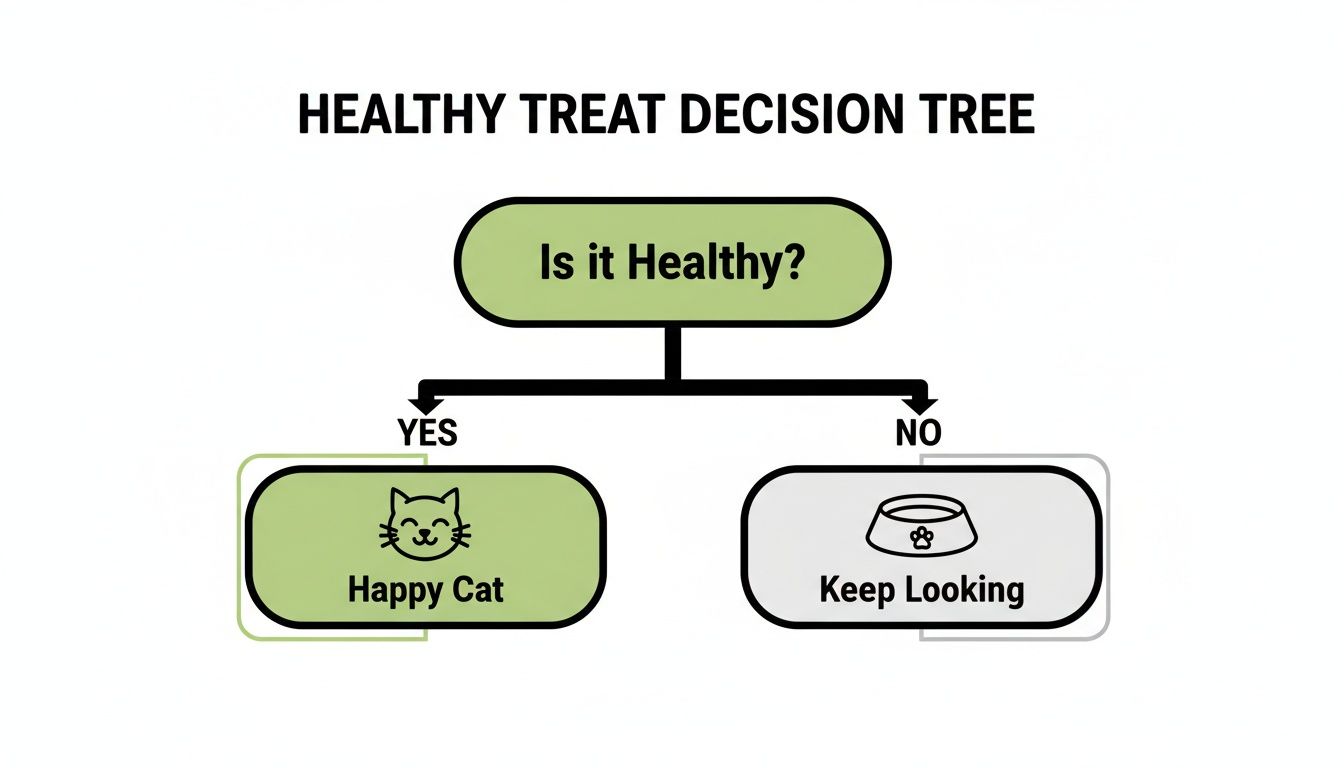
The path to a happy cat is paved with high-quality ingredients, not mystery meat and fillers.
Spotting Unnecessary Carbohydrate Fillers
Since cats are carnivores, they have almost zero dietary need for carbohydrates. But carbs are cheap. So, many mass-market brands load their treats with fillers to bulk them up and cut costs, offering your cat little more than empty calories that can lead to weight gain.
Learning to spot these fillers is your next step. If you want to go deeper on this, our guide on the best cat food ingredients really breaks down the science behind a species-appropriate diet.
Here are the most common fillers to watch out for:
- Corn (in any form): Corn, corn gluten meal, and anything similar are notoriously hard for cats to digest and serve no real nutritional purpose for them.
- Wheat and Soy: These are frequent allergy triggers for cats and, again, offer none of the animal-based nutrients their bodies crave.
- Potatoes and Peas: You’ll see these a lot in "grain-free" products, but they are still high-starch ingredients that don’t belong in a cat's natural diet.
The best cat treats mimic what a cat would eat in the wild: high in protein, moderate in fat, and with virtually no carbohydrates. Anything else is a compromise.
Think of it this way: feeding a cat a treat packed with corn is like trying to feed a lion a salad. Sure, it might fill them up, but it’s not the right kind of fuel for their body. When you choose treats that put meat first and carbs last (or not at all), you’re respecting your cat’s evolutionary design and making every bite count toward their long-term health.
Spotting the Hidden Villains in Your Cat's Treats
Once you’ve confirmed a treat starts with real, high-quality protein, your next job is to play detective and scan for what shouldn't be there. So many mass-market treats are basically junk food for cats, loaded with artificial additives that do nothing for their health.
These hidden villains are often just there to make treats look prettier for us, last longer on the shelf, or mask low-quality ingredients. Think about it: when you're grabbing a snack, you probably steer clear of those neon-colored candies packed with chemical preservatives. We should apply that same common sense to what we offer our cats. The goal is simple: find treats that are as clean and natural as possible.
The Red Flag List of Artificial Additives
Some ingredients are immediate deal-breakers. They bring zero nutritional value to the table and are often tied to health issues, from skin allergies all the way to more serious long-term problems. Getting good at spotting these offenders on an ingredient list is a key skill for any pet parent trying to find a truly healthy cat treat.
Here are some of the worst offenders to keep an eye out for:
- Artificial Colors (e.g., Red 40, Yellow 5, Blue 2): Your cat couldn’t care less if its treat is bright red or shamrock green. These dyes are 100% for human appeal and have been linked to hyperactivity and other bad reactions in sensitive pets.
- Artificial Flavors: If a treat is made from delicious, high-quality meat, it shouldn't need a boost from fake flavors. Seeing this on the label is a huge red flag that the company is probably trying to make cheap ingredients taste better.
- Propylene Glycol: This is a chemical moistening agent that gives soft treats their chewy feel. While it’s generally considered safe in tiny amounts, it’s a synthetic compound with no nutritional benefit.
- Carrageenan: Used as a thickener in many wet foods and some softer treats, carrageenan is a controversial ingredient known to cause gastrointestinal inflammation in some animals.
Spotting any of these on a label is your cue to put that bag right back on the shelf. For a deeper dive, our guide covers more ingredients to avoid in cat food and explains exactly why they're so risky.
Chemical Preservatives vs. Natural Alternatives
Preservatives are a necessary evil—they keep treats from spoiling. But the kind of preservative used makes a world of difference. Many cheaper, mass-produced treats lean on synthetic chemical preservatives that are under a microscope for their potential long-term health effects.
The best brands don't need to use harsh chemicals to keep their products fresh. They rely on natural, vitamin-based preservatives that support your cat's biology instead of working against it.
This is a really important distinction that separates the good from the great. Thankfully, telling the difference is easy once you know what you’re looking for.
To help you spot these ingredients on a label, here's a quick cheat sheet comparing the synthetic stuff to the safe, natural alternatives.
Common Additives to Avoid vs Safe Alternatives
| Ingredient to Avoid | Potential Health Concern | Safer Alternative |
|---|---|---|
| BHA (Butylated Hydroxyanisole) | A synthetic antioxidant linked to potential health risks with long-term exposure. | Mixed Tocopherols (Vitamin E) |
| BHT (Butylated Hydroxytoluene) | Another chemical preservative that has raised health concerns in animal studies. | Rosemary Extract |
| Ethoxyquin | A potent preservative often found in fish meals; its use in pet food is highly controversial. | Ascorbic Acid (Vitamin C) |
When you see phrases like "mixed tocopherols" or "rosemary extract" on an ingredient list, it's a great sign. It shows the brand is committed to keeping its products fresh the right way—naturally and safely.
These natural ingredients don't just stop spoilage; they also provide antioxidant benefits, which means they actually contribute to your cat’s health instead of creating a potential risk. Opting for treats with these natural preservatives is a small but powerful choice for your cat's long-term well-being.
Choosing Functional Treats for Targeted Health Benefits
Cat treats aren't just for spoiling your furry friend anymore. The best brands have moved way beyond simple, tasty morsels and are now crafting functional formulas that do double duty: they’re a reward and a wellness booster.
Think of them as a targeted tool in your cat's health toolkit. Instead of just adding empty calories, you're turning a fun daily ritual into a proactive step for their long-term well-being. By picking treats with specific, beneficial ingredients, you can help manage common cat health issues, one delicious bite at a time.
Promoting Dental Health and Fresh Breath
It's a startling fact: vets estimate that a whopping 70% of cats over three years old have some form of dental disease. That plaque and tartar buildup isn't just cosmetic; it can lead to painful gums, lost teeth, and even bigger health problems down the road. While nothing beats a professional cleaning, the right dental treats can be a fantastic part of your home care routine.
These treats usually have a unique, slightly abrasive texture that helps physically scrub away plaque as your cat crunches down. Many also include active ingredients to fight tartar and freshen that kitty breath. Look for ingredients like sodium hexametaphosphate or natural helpers like kelp and peppermint. It's a booming market for a reason—dental treats grabbed over a third of the pet treat market share in 2024, proving just how much cat owners are focused on oral hygiene. You can discover more insights about this growing trend in pet wellness.
Supporting Healthy Skin and a Lustrous Coat
Your cat's coat is like a window into their overall health. If it's looking dull, flaky, or brittle, it could be a sign that they're not getting enough essential fatty acids. This is where functional treats for skin and coat can make a real difference.
The magic ingredients here are omega-3 and omega-6 fatty acids. These are the good fats that help maintain the skin's natural moisture barrier, calm inflammation that leads to itching, and give their coat that soft, glossy sheen we all love to see.
- Omega-3 Sources: Keep an eye out for salmon oil, fish oil, or flaxseed. These are fantastic for taming inflammation.
- Omega-6 Sources: Ingredients like chicken fat or sunflower oil provide the fatty acids needed to keep skin cells strong and healthy.
A healthy balance of both omegas is what really counts, so look for a brand that clearly understands and formulates for that synergy.
Enhancing Digestion and Gut Health
A happy gut is the foundation of a healthy cat. Their digestive tract is an entire ecosystem of bacteria that affects everything from how well they absorb nutrients to how strong their immune system is. Treats designed for digestive support are all about keeping that delicate system in balance.
These formulas often include probiotics (the good, live bacteria) and prebiotics (the fiber that feeds those good bacteria). Ingredients like psyllium husk or chicory root are excellent sources of prebiotic fiber. These treats can be a game-changer for cats with sensitive tummies or those who just need a little extra digestive help.
Addressing Joint and Urinary Health
As our cats get older, joint stiffness can start to creep in. Functional treats for joint support are designed to help them stay mobile and comfortable. The most effective ones will include ingredients like:
- Glucosamine and Chondroitin Sulfate: These are the natural building blocks of healthy cartilage, helping to cushion their joints.
- Green-Lipped Mussel: A powerful, natural source of anti-inflammatory omega-3s.
Urinary health is another big one for cats, as they can be prone to urinary tract problems. While treats can't cure a medical issue, some are specially formulated to help maintain a healthy urinary environment. If that's on your radar, we've put together a full guide on choosing the right cat treats for urinary health.
When you choose a functional treat, you’re doing more than just giving a reward. You’re delivering a small, targeted dose of wellness. This lets you customize your cat’s care, tackling their specific needs in a way they’ll absolutely love.
Evaluating a Brand's Trust and Transparency
A great ingredient list is a fantastic starting point, but it's only half the story. To truly find the best healthy cat treats, you have to look past the label and at the company itself. Think of it this way: you wouldn't just read a restaurant's menu; you'd want to know the kitchen is spotless and the chef knows what they're doing.
The best brands are proud of how they make their products and are happy to pull back the curtain. They don’t see transparency as a chore—they see it as a promise to you and your cat. This means they make it easy to find out how their treats are made, where their ingredients come from, and who is behind their recipes.
This is more important than ever. With the North American pet treat market expected to be worth a staggering USD 30.69 billion by 2025, the stakes are high. That kind of money attracts all sorts of companies, and you need to be sure you're picking one that puts your cat’s well-being ahead of its bottom line. It's a crowded field, and understanding the trends in the pet treats industry helps show why this level of scrutiny is so necessary.
Who Is Formulating the Treats?
One of the biggest green flags is seeing a qualified expert on the brand’s team. The absolute gold standard here is a board-certified veterinary nutritionist (DACVN). These aren't just vets; they are specialists who have dedicated years of additional training exclusively to animal nutrition.
When a brand brings a veterinary nutritionist on board, they're sending a clear signal. It says they’re committed to creating a treat that’s not just a tasty snack, but also biologically sound and genuinely safe for your cat.
If you don't see a DACVN, the next best thing is a PhD-level animal nutritionist. Their scientific expertise ensures the treats are properly balanced and based on proven research, not just the latest marketing fads. A company that proudly features these experts on its website is one that’s invested in real credibility.
Sourcing and Manufacturing Transparency
Knowing exactly where your cat's food comes from should be non-negotiable. A vague claim like "globally sourced" just doesn't cut it—that's a red flag for a lack of transparency. Instead, look for brands that get specific.
- Country of Origin: Do they tell you where their main ingredients, especially the protein, come from?
- Supplier Standards: What do they say about the quality standards they demand from their farmers and suppliers?
- Traceability: Can they actually trace a batch of treats all the way back to the source ingredients?
This same standard should apply to how the treats are made. Top-tier brands often own their own manufacturing plants, which gives them total control over quality and safety from start to finish. If they use a third-party facility, they should be upfront about it and share details on its certifications, like a Safe Quality Food (SQF) certification.
Cutting Through Marketing Buzzwords
Let's be honest: the pet food aisle is full of slick marketing terms that sound amazing but often mean very little. Words like "premium," "gourmet," and even "natural" have no official legal definition. Any company can print them on a bag.
Instead of getting wooed by these buzzwords, look for things you can actually verify.
| Marketing Buzzword | What to Look for Instead |
|---|---|
| "Premium" or "Gourmet" | A short, simple ingredient list with a named animal protein right at the top. |
| "Human-Grade" | An official statement confirming the treats are made in a human-food facility, following the same strict safety rules. |
| "Natural" | A list that's free of artificial junk—no artificial preservatives, colors, or flavors. Look for natural preservatives like mixed tocopherols. |
By focusing on these tangible details—expert formulators, transparent sourcing, and certified manufacturing—you can learn to spot the truly healthy cat treat brands. It empowers you to make a choice based on facts, not just clever marketing, so you can feel confident that every treat you give is a good one.
Your Questions on Healthy Cat Treats Answered
Trying to pick the right cat treats can feel overwhelming, but it doesn't have to be. Once you know what to look for, you can make treat time a truly healthy and happy part of your cat's day. Let's tackle some of the most common questions cat owners have.
Think of this as your practical guide to making smart, confident choices that work for your cat's specific needs.
How Many Treats Can I Give My Cat Per Day?
This is probably the most important question of all, and the answer comes down to one simple rule. Vets agree that treats should make up no more than 10% of your cat's total daily calories. Following this "10% rule" is the key to preventing weight gain and making sure their main meals are still providing the core nutrition they need.
Even the healthiest treats can throw off that balance if you overdo it. The first step is to look at the package—any good brand will list the calories per treat. Then, chat with your vet to figure out your cat's ideal daily calorie target based on their age, weight, and how active they are.
For instance, if your vet says your cat needs 250 calories a day, a maximum of 25 of those calories should come from treats. On treat days, it's a good idea to cut back their regular food just a tiny bit to stay on track.
Are Grain-Free Cat Treats Automatically Healthier?
Not always. "Grain-free" is a huge marketing buzzword, but whether it's actually better depends entirely on what's used instead of grains. If a treat just swaps out corn or wheat for other starchy fillers like potatoes, tapioca, or peas, you haven't really upgraded. Cats are carnivores, after all.
What truly matters is seeing a high-quality, named animal protein as the very first ingredient. While grain-free is a must for the small number of cats with a genuine grain allergy, a well-made treat with a nutritious whole grain can easily be better than a starchy, grain-free alternative.
The real takeaway? Don't get distracted by a single claim on the bag. Always read the full ingredient list and put high protein content first.
What Is the Difference Between Freeze-Dried and Dehydrated Treats?
Both are fantastic ways to preserve food and lock in nutrients, but they work differently. Knowing the difference can help you pick the perfect texture and nutritional punch for your cat.
- Freeze-Drying: This is a pretty cool process. The raw ingredient is frozen solid and then placed in a powerful vacuum, which pulls all the moisture out. It's incredibly gentle and preserves the food's original structure, flavor, and nutrients, leaving you with a light, airy treat that’s bursting with flavor.
- Dehydrating: This method is simpler, using low, circulating heat over a long time to slowly evaporate the water. It’s still a great option, but the heat can break down some of the more delicate vitamins and enzymes.
Freeze-dried treats are often made from just a single ingredient and are about as close as you can get to the food's raw state. This makes them a phenomenal choice for cats with food sensitivities or for picky eaters who go crazy for that intense, meaty taste.
My Cat Is a Picky Eater. How Can I Find a Healthy Treat They Will Eat?
Ah, the finicky feline—a challenge many of us know well! The secret is to appeal directly to their cat instincts, which means focusing on two things: texture and smell.
First, pay attention to what your cat already likes. Do they love crunchy kibble? Do they prefer soft, chewy bits? Or are they all about lickable, purée-style treats? Matching the treat texture to their known preference is half the battle. Next, think about their favorite protein. If they always devour their salmon wet food but only pick at the chicken, then treats starring salmon are your best bet.
Single-ingredient, freeze-dried treats are often a game-changer for picky cats. The process locks in a powerful, natural aroma and flavor that they find almost impossible to resist. Lastly, look for healthy cat treat brands that sell trial sizes or variety packs. This lets you experiment without getting stuck with a big bag of something your furry critic decides isn't up to their standards.
At JoyFull, we craft our treats with precisely these challenges in mind, using clean, high-quality proteins and simple formulas that even the most selective cats love. Discover the difference that thoughtfully sourced, vet-advised nutrition can make at https://joyfullpet.com.