The Vet-Reviewed Guide to the Healthiest Snacks for Dogs
The healthiest snacks for your dog aren’t complicated. They’re made from simple, whole foods you can actually recognize—think real chicken, vibrant blueberries, or crunchy carrots. The best ones have absolutely no fillers, mystery meats, or chemical preservatives.
What Really Makes a Dog Snack Healthy?
Walking down the pet food aisle can be dizzying. Every bag seems to shout promises of shinier coats, cleaner teeth, or boundless energy. So how do you cut through the noise? The real answer isn't found in flashy marketing—it’s tucked away on the ingredient list.
A truly healthy snack is more than just a quick reward; it’s an extension of your dog's daily diet. Think of it less like junk food and more like a nutrient-packed mini-meal that contributes to their overall wellness. It's about shifting away from empty calories and toward functional, clean ingredients that help your dog thrive.
This change in mindset isn't just happening in our homes; it's reshaping the entire pet food industry. The global pet snacks and treats market was valued at a staggering USD 40.52 billion and is expected to nearly double to USD 79.23 billion by 2030. Dog treats make up the lion's share of that, accounting for 67.3% of all purchases. It's a clear signal that owners everywhere are investing more in their companions' nutrition.
The Building Blocks of a Better Treat
So, what are we actually looking for on that label? At its core, a healthy snack is all about transparency and simplicity. The best choices have short, understandable ingredient lists. A good rule of thumb: if it sounds like it came from a chemistry set, you probably want to skip it.
Leaning into this "less is more" philosophy empowers you to make smarter choices. Here are the key pillars to look for:
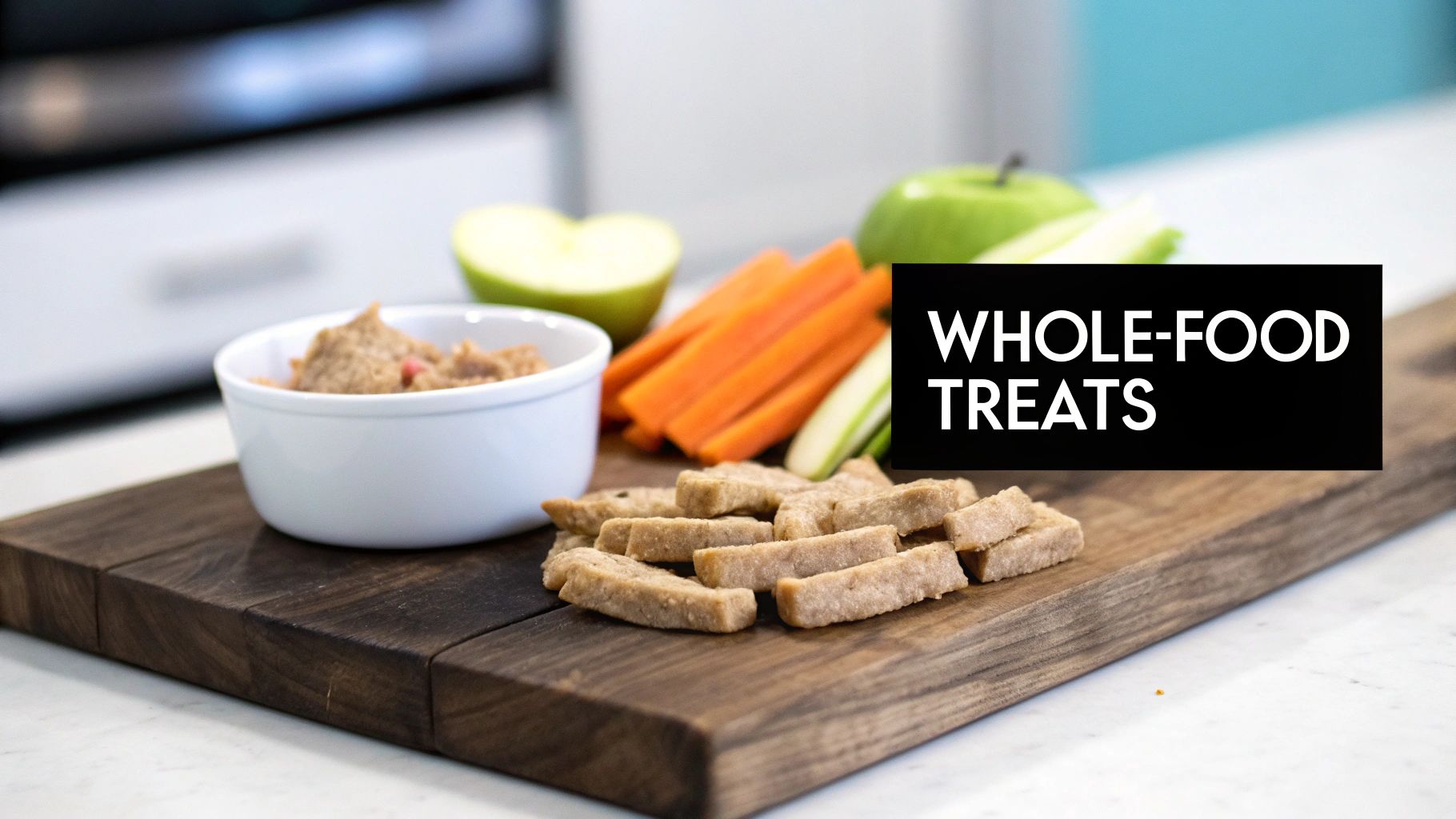
- Whole-Food Ingredients: Prioritize snacks made from real, minimally processed foods like lean meats, fruits, and veggies.
- High-Quality Protein: The first ingredient should be a clearly named protein source, like "chicken," "beef," or "salmon"—not a vague "meat byproduct."
- No Artificial Additives: Steer clear of synthetic preservatives (like BHA or BHT), artificial colors, and fake flavors. They add nothing of value.
- Nutrient Density: The snack should do more than just taste good. It should offer beneficial vitamins, minerals, or fiber instead of just empty calories.
A treat should be more than just a tasty distraction; it should be a purposeful part of your dog's daily nutrition, reinforcing health with every bite.
To make things even easier when you're shopping, here’s a quick checklist you can use to evaluate any snack at a glance.
Healthy Dog Snack Checklist At a Glance
| Nutritional Pillar | What to Look For | Why It Matters |
|---|---|---|
| Protein Source | Named meats (e.g., chicken, lamb) listed first. | High-quality protein is essential for muscle maintenance, energy, and overall health. Vague terms can hide low-quality ingredients. |
| Carbohydrates | Whole grains, vegetables, and fruits (e.g., sweet potato, peas, blueberries). | These provide complex carbs for sustained energy, plus fiber, vitamins, and antioxidants. Simple fillers like corn or wheat can cause digestive upset in some dogs. |
| Fats | Healthy, named sources like fish oil or flaxseed. | Healthy fats support skin and coat health, joint function, and brain development. Avoid generic "animal fat." |
| Additives | Natural preservatives like tocopherols (Vitamin E) or rosemary extract. | Artificial preservatives, colors, and flavors have no nutritional benefit and can be linked to health issues. |
| Calorie Count | Clear calorie information to help with portion control. | Treats should only make up 10% of your dog's daily calorie intake. Knowing the count helps prevent obesity. |
Keeping these simple guidelines in mind transforms you from a consumer into an advocate for your pet's health.
Your Role as Your Dog's Wellness Advocate
Ultimately, choosing healthy snacks is one of the most direct ways you can contribute to your dog's long-term well-being. It’s a proactive step that helps prevent health issues down the road and ensures your best friend feels their best every day.
For personalized guidance tailored to your dog’s specific needs, it’s always a great idea to seek expert veterinary advice. Your vet can help you create the perfect nutritional plan based on your dog's age, breed, and unique health profile.
Decoding the Nutrition in Healthy Dog Snacks
To pick out the best snacks for your dog, it really helps to understand what their bodies need to thrive. Think of it like building a house—each nutrient is a different building material, and every single one has a critical job to do.
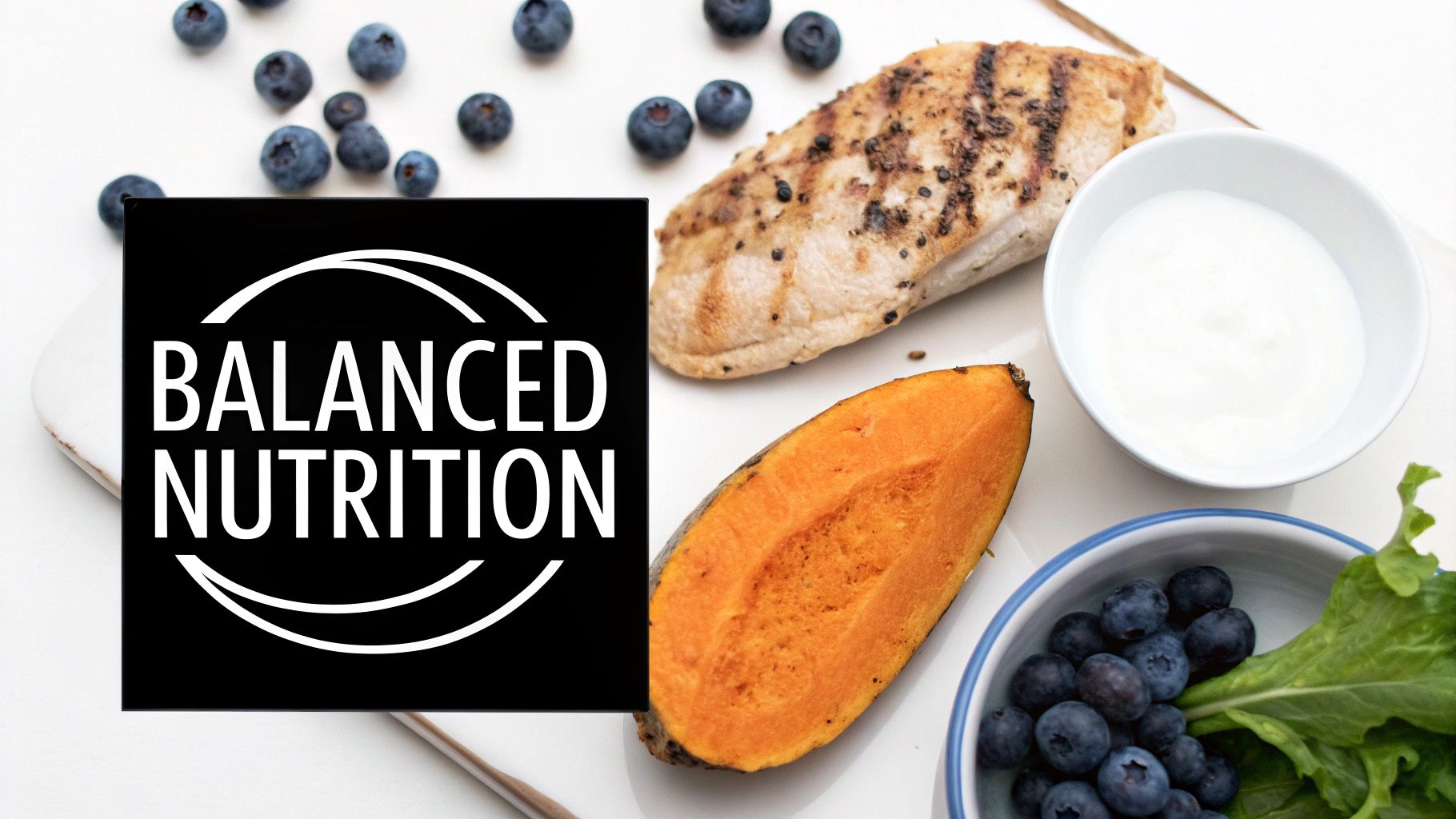
When you glance at a snack's ingredient list, you're looking at the house's blueprints. High-quality proteins are the foundation. Healthy fats are the framework holding it all together. And the right carbohydrates provide the energy that keeps the lights on.
Once you know what to look for, you stop being a passive shopper. You become an informed advocate for your dog's health, able to see right past flashy packaging and get to what really counts: the good stuff inside the bag.
The Power Trio: Macronutrients
Just like us, dogs run on three main fuel sources, or macronutrients: protein, fat, and carbohydrates. What separates a "junk food" treat from a genuinely healthy one is the quality and source of these three key players.
-
Protein: The Foundation: Good protein is absolutely non-negotiable. It delivers the essential amino acids that are the literal building blocks for strong muscles, healthy skin, and a tough immune system. You want to see clearly named animal proteins like chicken, beef, salmon, or lamb right at the top of the ingredient list.
-
Healthy Fats: The Framework: Fats sometimes get a bad rap, but they are essential for dogs. They’re a powerhouse source of energy, and they're crucial for absorbing certain vitamins, keeping a coat shiny, and supporting brain health. We're talking about beneficial fats from sources like fish oil and flaxseed.
-
Complex Carbs: The Energy Source: Not all carbs are created equal. Simple carbs from fillers like corn or soy can cause issues for some dogs. On the other hand, complex carbohydrates from whole foods like sweet potatoes, pumpkin, or peas provide slow, steady energy and a healthy dose of fiber.
Getting familiar with these key ingredients is your first big step. If you want to get really good at breaking down a product label, check out our full guide on how to read dog food labels.
Micronutrients: Supercharging Their Health
Beyond the big three, we have micronutrients—the vitamins and minerals that act like the skilled electricians and plumbers of the body, making sure everything runs perfectly. The healthiest snacks are often boosted with these, or they contain whole-food ingredients that are naturally packed with them.
For instance, a snack with blueberries isn't just a sweet bite; it's also a dose of powerful antioxidants. These little compounds are like a tiny protective shield, helping fight cellular damage and support the immune system with every crunch.
A snack that provides functional benefits does more than just satisfy a craving. It actively contributes to your dog's long-term wellness, supporting everything from their digestion to their immune response.
It's the same with an ingredient like pumpkin. It’s a fantastic, simple source of soluble fiber that can help keep a dog's digestion regular and even soothe an upset stomach. It's a perfect example of a natural ingredient that delivers a real health benefit.
Spotting Beneficial Ingredients on the Label
Becoming a pro at reading labels is all about learning to recognize these nutritional powerhouses. When you scan an ingredient list, look for things that do more than just add flavor or bulk.
Here are a few great examples of ingredients that signal a high-quality snack:
- Antioxidant-Rich Fruits: Look for blueberries, cranberries, or apples (with no seeds!). These add natural vitamins and antioxidants for immune support.
- Fiber-Packed Vegetables: Pumpkin, sweet potatoes, and carrots are excellent sources of fiber for digestive health and are loaded with vitamins.
- Omega-3 Sources: Ingredients like flaxseed or fish oil provide healthy fatty acids known to reduce inflammation and promote a healthy skin and coat.
When you understand what these ingredients do, you can choose snacks with confidence, knowing you're giving your best friend a treat that's also a true health booster.
The Red Flag Ingredients to Avoid in Dog Treats
Knowing what to look for in a healthy dog snack is just one side of the coin. The other, equally important skill is knowing what to avoid. It's time to become a pro at spotting the red flags—those harmful, unnecessary additives hiding in plain sight on so many ingredient lists.
Think of it like being a detective for your dog's diet. The clues are right there on the back of the bag. Learning to read them is one of the most powerful things you can do to protect your best friend from potential harm.
Unfortunately, many popular treats are packed with cheap fillers, chemical preservatives, and artificial junk that offer zero nutritional value. Worse, they can sometimes contribute to long-term health problems. This is your guide to what you should always leave on the shelf.
Artificial Preservatives and Colors
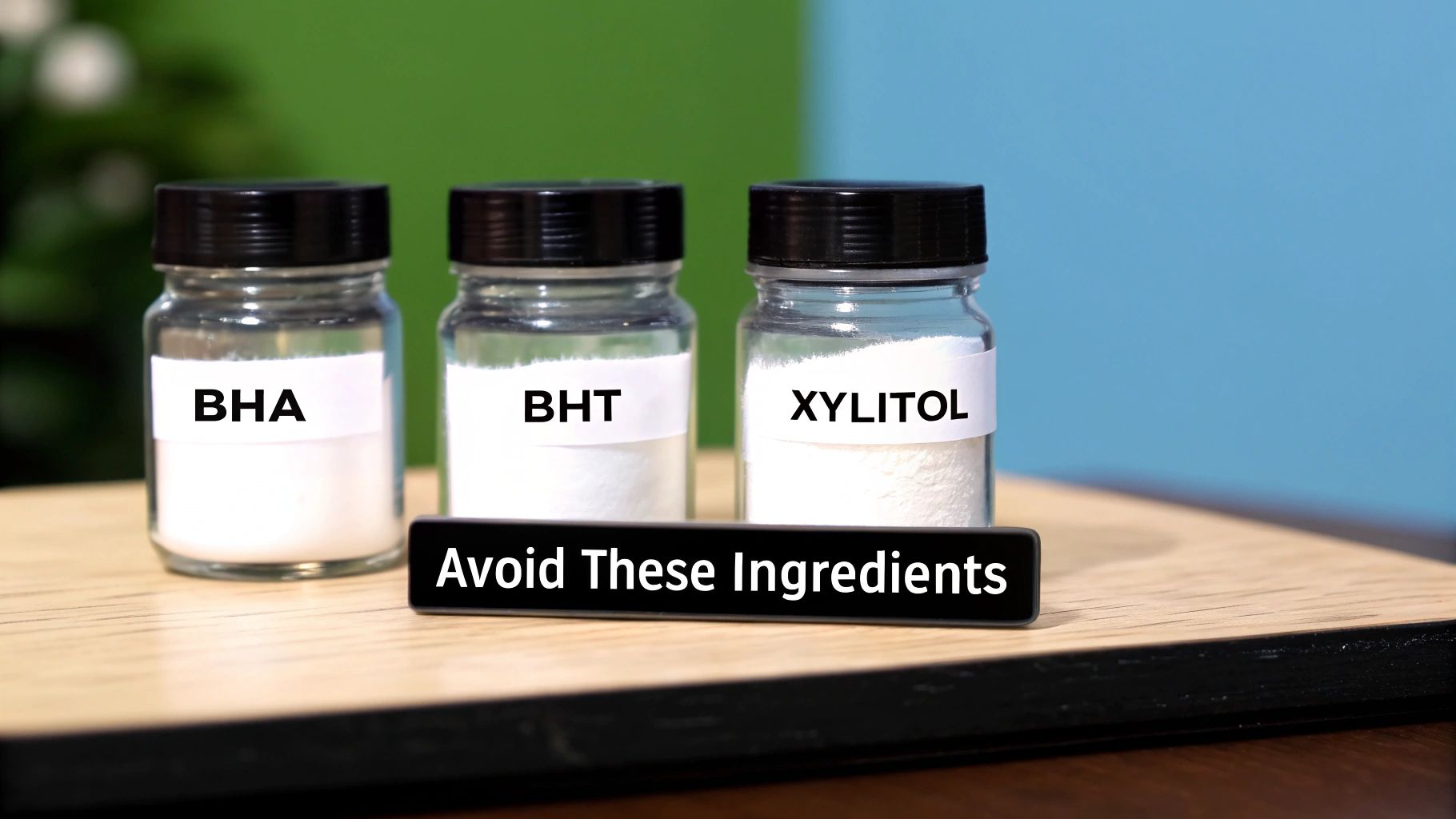
Let's start with some of the biggest offenders: artificial preservatives. You'll often see BHA (butylated hydroxyanisole) and BHT (butylated hydroxytoluene) on labels. These chemicals are thrown in to extend shelf life, but they come with some serious baggage.
Studies in both animals and humans have raised concerns about their long-term health effects. While they prevent a product from going bad, they do nothing good for your dog. It's a classic case of convenience over quality. If you want to get into the details, you can learn more about the differences between synthetic and natural dog food preservatives.
The same goes for artificial colors like Red 40, Yellow 5, and Blue 2. Their only job is to make the treat look more appealing to you. Trust me, your dog doesn't care if their biscuit is neon orange or plain old brown. These dyes are purely for marketing and have been linked to allergic reactions and hyperactivity in some dogs.
When you see an ingredient list full of chemical names and dye numbers, it’s a clear sign the product was made for a long shelf life, not for your dog's long and healthy life.
Choosing treats free from these additives means every single ingredient is there to nourish your dog, not just to sit on a store shelf for months.
Dangerous Sweeteners and Chemical Additives
Another major red flag is any kind of artificial sweetener. The absolute worst is xylitol, which is extremely toxic to dogs. Even a tiny amount can cause a sudden, life-threatening drop in blood sugar (hypoglycemia) and lead to liver failure. It sometimes hides in peanut butters and other "sugar-free" products, making label-reading absolutely critical.
Other sweeteners like corn syrup or sucrose are just empty calories. They contribute to weight gain and dental decay without offering a single nutritional benefit. A little natural sweetness from fruit is perfectly fine, but added sugars are always a no-go.
Beyond sweeteners, keep an eye out for chemical humectants like propylene glycol. This ingredient is used to give semi-moist treats that soft, chewy texture. While it's considered "generally recognized as safe" for dogs, it’s a synthetic chemical derived from petroleum. It’s a shortcut to a texture that can easily be achieved with natural, whole-food ingredients instead.
Harmful vs. Healthy Ingredient Swaps
Spotting these red flags becomes much easier when you know what a good alternative looks like. This simple chart can help you make smarter swaps when you're checking out the healthiest snacks for dogs.
| Avoid This Ingredient | Potential Health Risk | Choose This Healthy Alternative |
|---|---|---|
| BHA, BHT | Potential links to long-term health issues; allergic reactions. | Mixed Tocopherols (Vitamin E), Rosemary Extract |
| Artificial Colors (Red 40, etc.) | Can trigger allergies and hyperactivity; offers no nutritional value. | Natural color from ingredients like beets or turmeric. |
| Xylitol | Highly toxic; can cause hypoglycemia and liver failure. | Natural sweetness from whole fruits like apples or blueberries. |
| Propylene Glycol | Synthetic chemical additive; unnecessary for your dog's diet. | Vegetable glycerin or natural moisture from whole ingredients. |
| Corn Syrup, Sucrose | Adds empty calories; contributes to weight gain and dental issues. | No added sugars; sweetness should come from whole foods. |
When you're armed with this knowledge, shopping for your dog changes completely. You can scan an ingredient list with confidence, knowing you can instantly tell which products are truly made with your dog's health in mind. Every treat becomes a choice for wellness.
Safe Human Foods That Make Great Dog Snacks
It's a classic gesture of love: slipping your dog a little bite from your plate. But before you share, it's so important to know which kitchen staples are safe and which are strictly off-limits. The great news is, many of the healthiest snacks for your dog are probably already in your fridge or pantry.
Think of your kitchen as an extension of their treat jar. So many of the whole foods you eat are bursting with vitamins, minerals, and fiber that can do wonders for your dog's health, from boosting their immune system to keeping their digestion on track. It's all about knowing what to pick and how to prepare it.
This is a mindset more and more pet parents are adopting. Owners are investing heavily in what their dogs eat—the North American pet treat market is massive, valued at USD 21.1 billion in the United States alone, where dogs make up 43% of all pets. You can dig into more insights on the global pet snacks and treats market to see just how big this trend is.
Vet-Approved Vegetables
Lots of vegetables make fantastic, low-calorie snacks that are high in fiber and nutrients. Plus, that satisfying crunch can even help give your dog's teeth a gentle cleaning.
The best way to serve veggies is either raw (chopped into bite-sized pieces to prevent choking) or lightly steamed to make them a bit easier to digest. Always serve them completely plain—no salt, butter, or seasonings needed.
- Carrots: A classic for a reason. They're low-cal, high in fiber, and packed with beta-carotene, which the body converts to Vitamin A for healthy eyes.
- Green Beans: These are a wonderful source of vitamins K and C. Their crunch makes them a perfect low-calorie treat, especially for dogs watching their weight.
- Sweet Potatoes: When cooked and served plain, sweet potatoes offer a dose of Vitamin A and fiber, making them excellent for digestive health.
Pumpkin is another superstar in the veggie world. A spoonful of plain, canned pumpkin (never the sugary pie filling!) is a go-to remedy for calming an upset stomach. If you want to learn more, we have a whole guide on why pumpkin is so good for dogs.
Safe and Sweet Fruits
Fruits can be a wonderful way to give your dog a naturally sweet treat loaded with antioxidants and vitamins. Just remember that moderation is key here because of their natural sugar content.
Proper prep is also non-negotiable. You have to remove any parts that could be toxic or pose a choking hazard.
CRITICAL WARNING: Many common foods are toxic to dogs. Never share the following:
- Grapes and Raisins: Can cause acute kidney failure.
- Onions, Garlic, and Chives: Damage red blood cells, leading to anemia.
- Chocolate: Contains theobromine, which is highly toxic.
- Macadamia Nuts: Can cause weakness, vomiting, and tremors.
- Xylitol: An artificial sweetener found in many products (like some peanut butters) that is extremely dangerous.
Here are a few safe fruit choices your dog will probably love:
- Apples: A great source of vitamins A and C, plus fiber. Just be absolutely sure to remove the core and seeds, as the seeds contain trace amounts of cyanide.
- Blueberries: These little berries are antioxidant powerhouses that support the immune system. Their small size makes them perfect for training rewards.
- Watermelon: Since it's made of 92% water, this is a fantastic way to help your dog hydrate on a hot day. Just be sure to remove the rind and all seeds first.
Protein-Packed Snacks
Beyond fruits and veggies, some simple proteins can also serve as excellent treats. These should always be cooked plain—no oils, spices, or sauces—and given in small amounts. A dollop of plain, unsweetened yogurt can also be a great choice, as it offers probiotics for gut health. When it comes to protein snacks, quality and simplicity are everything.
Choosing the Right Snack for Your Dog's Needs
Think about it: you wouldn't feed a toddler the same meal as a senior citizen, right? The same logic applies to our dogs. A Great Dane puppy's snack needs are a world away from those of a senior Chihuahua. There's really no such thing as a one-size-fits-all "healthy" snack.
The best approach is to match treats to your dog's unique life stage, size, and personal health profile. When you think this way, every treat becomes more than just a quick reward—it's a small but meaningful part of their overall wellness plan.
It turns out, pet parents everywhere are catching on to this personalized approach. The demand for specialized options is causing a massive shift in the pet food industry. The global dog treats market is projected to explode from USD 44.2 billion in 2025 to an incredible USD 336.3 billion by 2035. That’s a growth rate of 22.5% every year, fueled by demand for age-specific formulas and snacks that target unique health needs.
Snacks Tailored to Every Life Stage
A dog's nutritional needs change dramatically as they grow from a clumsy puppy into a wise old senior. Picking snacks that line up with these changes is a simple way to support their long-term health.
-
For Puppies (Growth and Teething): Puppies are little growth machines. Their snacks should be packed with high-quality protein and have a balanced calcium-to-phosphorus ratio to build strong bones. Softer, chewable treats are also a lifesaver for teething, giving those sore gums some much-needed relief.
-
For Adult Dogs (Energy and Maintenance): An active adult dog needs snacks that fuel their adventures without piling on the pounds. The goal here is nutrient-dense, whole-food ingredients that complement their regular meals. Think of these as healthy top-ups for training or just for being a good boy.
-
For Senior Dogs (Joints and Digestion): As dogs get older, their metabolism slows down, and things like stiff joints or sensitive teeth can become a daily reality. The best snacks for seniors are often lower in calories but packed with beneficial extras like glucosamine and chondroitin for joint support. Softer textures are also a must for older mouths.
Addressing Specific Health Concerns
Beyond just age, many dogs have specific health issues that call for a more thoughtful approach to treat time. The right snack can be a helpful tool, while the wrong one could unfortunately make things worse.
If you're ever tempted to share a bite of your own food, this little decision tree can help you figure out if it's a safe choice.
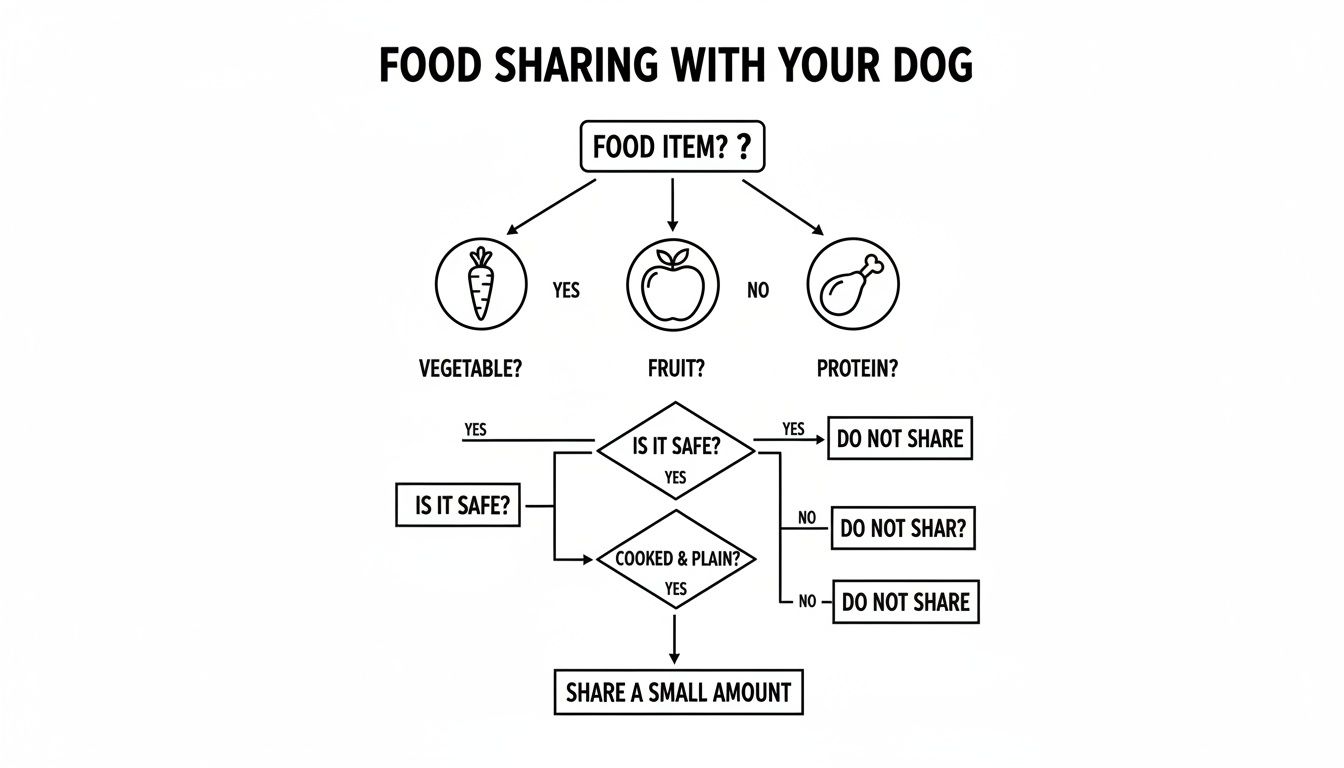
The key takeaway is simple: always double-check that a food is safe for dogs, and if it is, make sure it’s served plain and cooked properly before you share.
Choosing a snack isn't just about avoiding bad ingredients; it's about actively promoting good health. A carefully selected treat can be a powerful ally in managing your dog's specific wellness needs.
For dogs dealing with particular conditions, a targeted snack strategy is essential.
-
Allergies and Sensitivities: If your dog has food allergies, limited-ingredient diet (LID) snacks will be your new best friend. These treats usually feature a single protein source and just a few other simple ingredients, which makes it much easier to avoid common triggers like chicken or grains.
-
Weight Management: For pups who are watching their waistline, high-fiber, low-calorie snacks are the way to go. Ingredients like pumpkin or green beans help them feel full and satisfied without the extra calories that lead to weight gain.
-
Dental Health: Dental chews are a fantastic tool for fighting plaque and tartar. As your dog chews, the treat's abrasive texture works to scrub their teeth clean, giving their oral hygiene a boost between brushings.
-
Joint Issues: For dogs with arthritis or other mobility issues, snacks fortified with joint-supporting ingredients can provide some welcome relief. Understanding options like joint supplements for dogs can help you make even smarter snack choices.
By taking your dog's individual needs into account, you're no longer just grabbing a generic bag of treats. You're making an informed choice that truly benefits their well-being.
Got Questions? We’ve Got Answers.
Even when you know the basics, real-life questions always pop up. Turning that knowledge into a daily routine is how you build healthy habits that last. Let's tackle some of the most common questions we hear from dog parents about healthy snacking.
How Many Snacks Can I Give My Dog Each Day?
This is probably the most-asked question, and for good reason! The golden rule, backed by veterinarians everywhere, is the 10% rule. It’s simple: snacks and other treats should make up no more than 10% of your dog’s total daily calories.
Sticking to this guideline is key to preventing weight gain and making sure their main meals are doing the heavy lifting for their nutrition. To make it work, you'll need a rough idea of your dog's daily calorie needs and the calorie count of the snacks you're using. Check the package, start there, and adjust for your dog's age and how active they are. And remember, those little training rewards can add up fast!
Are Grain-Free Snacks Actually Healthier?
The idea that "grain-free" is always the better choice is one of the biggest myths in dog nutrition. While some dogs genuinely have allergies to specific grains like wheat or corn, most dogs do just fine with healthy whole grains like brown rice or oats. They can actually be a great source of energy and fiber.
What really matters is the quality of the entire ingredient list, not just whether it contains grains. A snack with high-quality protein and beneficial whole grains is a much smarter choice than a grain-free one packed with starchy fillers like potato or pea flour and artificial junk.
Don't get distracted by the "grain-free" label. Look for high-quality proteins and a clean ingredient list first. That's the true measure of a healthy snack.
If you think your dog might have a food sensitivity, the best first step is always a chat with your vet. They can help you pinpoint the real issue and find a diet that works for them.
How Do I Know If a New Snack Is Bothering My Dog?
Whenever you introduce a new snack, think of it as a test run. Start small—give just a little piece and then wait a day or two to see how your dog reacts. This is the safest way to see if it agrees with their system before making it a regular treat.
Keep an eye out for any of these common signs of a bad reaction:
- Itchy Skin: Is your dog suddenly scratching like crazy or constantly licking their paws? Redness and hot spots are also big red flags.
- Ear Troubles: A lot of head shaking or smelly, inflamed ears can point to a food sensitivity.
- Tummy Upset: This is the most obvious one. Watch for vomiting, diarrhea, or more gas than usual.
If you see any of these signs after trying a new snack, stop giving it right away. If the symptoms are serious or don't go away, give your vet a call. They can help you figure out what’s going on and get your pup feeling better.
At JoyFull, we believe a healthy life isn’t just for people. That's why every single snack we make is crafted with clean ingredients, top-tier proteins, and is scientifically reviewed by our in-house veterinary advisor. Explore our better-for-you snacks at https://joyfullpet.com.