


You've found the French Bulldog you can't stop thinking about. The puppy is affectionate, funny, and wonderfully compact, but after spending time together, your eyes start itching and your nose becomes congested. If you or someone in your home has allergies, the question isn't solely whether a Frenchie sheds. It's whether living with that individual dog will expose you to enough allergens to cause symptoms.
The short answer is clear: French Bulldogs aren't considered hypoallergenic. Their short coat may make loose hair less noticeable, but allergy-triggering proteins can come from dander, saliva, and urine, not just fur. That means coat length alone can't predict how your body will respond. The practical question is whether you can reduce exposure enough, with professional medical guidance, to live comfortably with the breed.
Table of Contents
- French Bulldogs and Allergy Concerns
- Understanding Dog Allergens and the Hypoallergenic Myth
- Breed Traits Affecting Allergen Exposure
- Managing Allergies with a French Bulldog
- Choosing a Different Dog Breed for Allergy Relief
- Conclusion and Next Steps for Allergy Sufferers
French Bulldogs and Allergy Concerns
A family may meet a French Bulldog at a shelter or breeder, fall in love within minutes, and assume the breed is a sensible choice because its coat is short and smooth. Later that evening, someone develops sneezing, itchy eyes, or chest tightness. The family then searches for “french bulldogs hypoallergenic” and finds conflicting advice, much of it focused on visible shedding rather than the proteins that trigger reactions.
That confusion matters because a Frenchie can look tidy while still spreading allergens through normal contact. A dog rubs against furniture, licks a hand, sleeps on bedding, and sheds microscopic skin flakes. Saliva can dry on toys, floors, and upholstery, while dander can travel through household dust. The home may not look hairy, yet allergen exposure can still be significant.
The important distinction: low visible shedding isn't the same as low allergen exposure.
Mainstream veterinary and allergy guidance doesn't classify French Bulldogs as hypoallergenic. A veterinary allergy explanation of French Bulldogs notes that no dog breed is completely hypoallergenic and that short-coated dogs can still trigger symptoms because allergens come from more than fur.
This guide focuses on the parts that are easy to miss, especially saliva and skin dander. You'll learn how allergens move through a home, which French Bulldog traits can increase exposure, how to design a realistic cleaning and grooming routine, and how to assess other breeds if a Frenchie remains too risky. You'll also see why meeting an individual dog and consulting an allergist are more useful than trusting a breed label.
Understanding Dog Allergens and the Hypoallergenic Myth
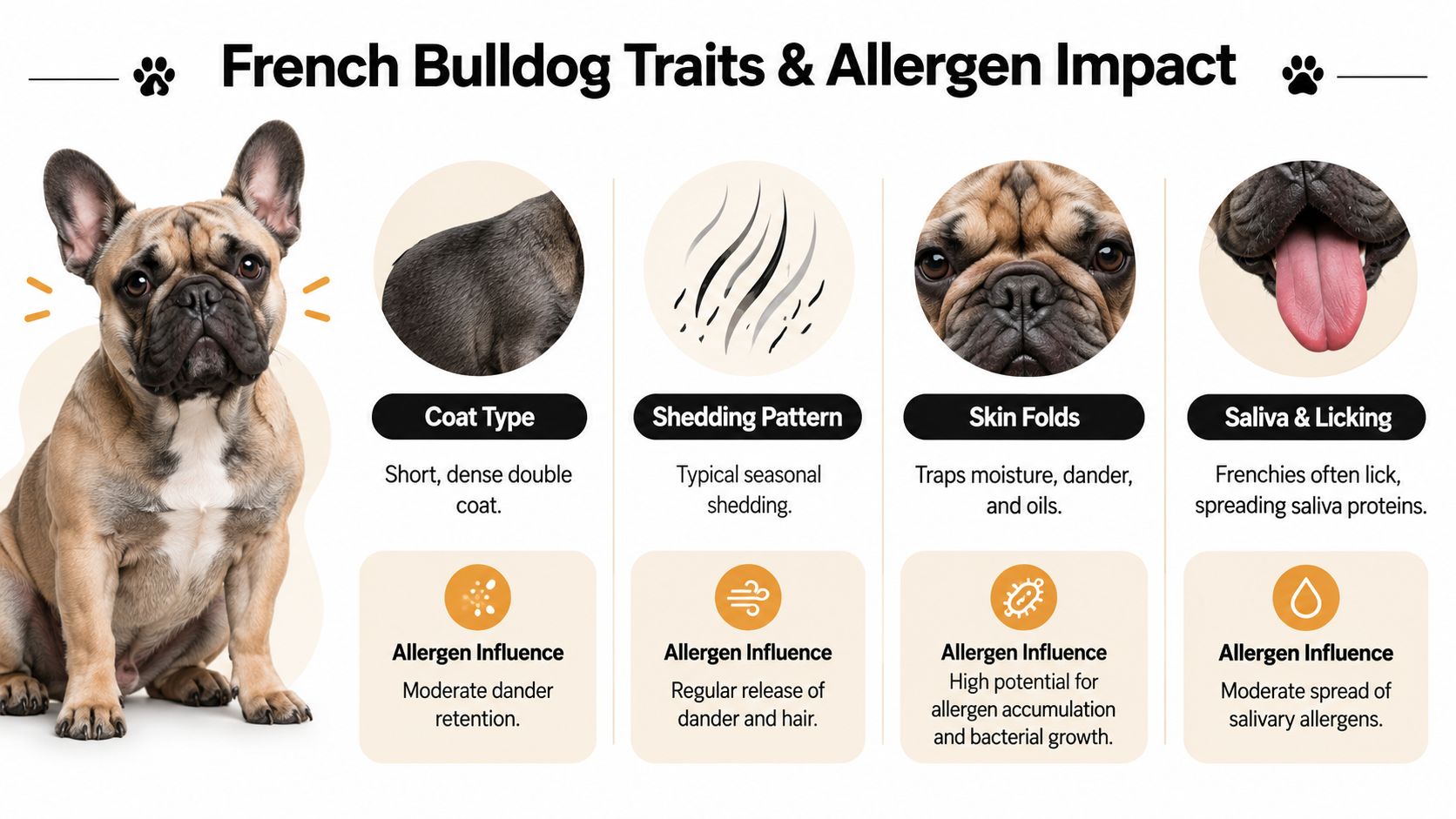
Dog allergies are reactions to proteins, not to hair as a material. These proteins are found mainly in dander, saliva, and urine. Dander consists of tiny flakes from the skin, and saliva can spread when a dog licks its coat, toys, people, or household surfaces. Once these particles dry, they can become part of dust and move around the home.
The major dog allergen commonly discussed in this context is Can f 1. A French Bulldog's short coat doesn't prevent Can f 1 from reaching the environment. Hair can carry saliva and dander, but removing visible hair doesn't remove the proteins already present on skin, furnishings, bedding, or floors.
Why short coats don't solve the problem
A short coat may be easier to brush and may produce less noticeable hair around the room. It still grows from skin, collects skin oils and dander, and becomes part of the household allergen cycle. French Bulldogs also lick themselves and may lick their owners, which creates another route for salivary proteins to reach surfaces and skin.
Reviews of dog allergy evidence conclude that there's no scientific evidence for a completely hypoallergenic dog breed, because allergen exposure is tied to saliva, dander, and urine rather than hair alone. See the review of dog allergen sources and hypoallergenic claims for the veterinary and allergy context.
Why marketing labels can mislead
“Hypoallergenic” generally means less likely to provoke a reaction, not allergen-free. In controlled home-environment research, houses with dogs marketed as hypoallergenic didn't have a significant difference in Can f 1 compared with houses containing dogs considered non-hypoallergenic. The study also found no evidence that those marketed breeds shed allergens differently, as detailed in the controlled Can f 1 home-environment study.
Think of hair as a visible delivery vehicle, not the source of the entire problem. A low-shedding dog may leave fewer hairs on your sweater, but that doesn't guarantee fewer allergenic proteins in the air or on the sofa.
Breed Traits Affecting Allergen Exposure
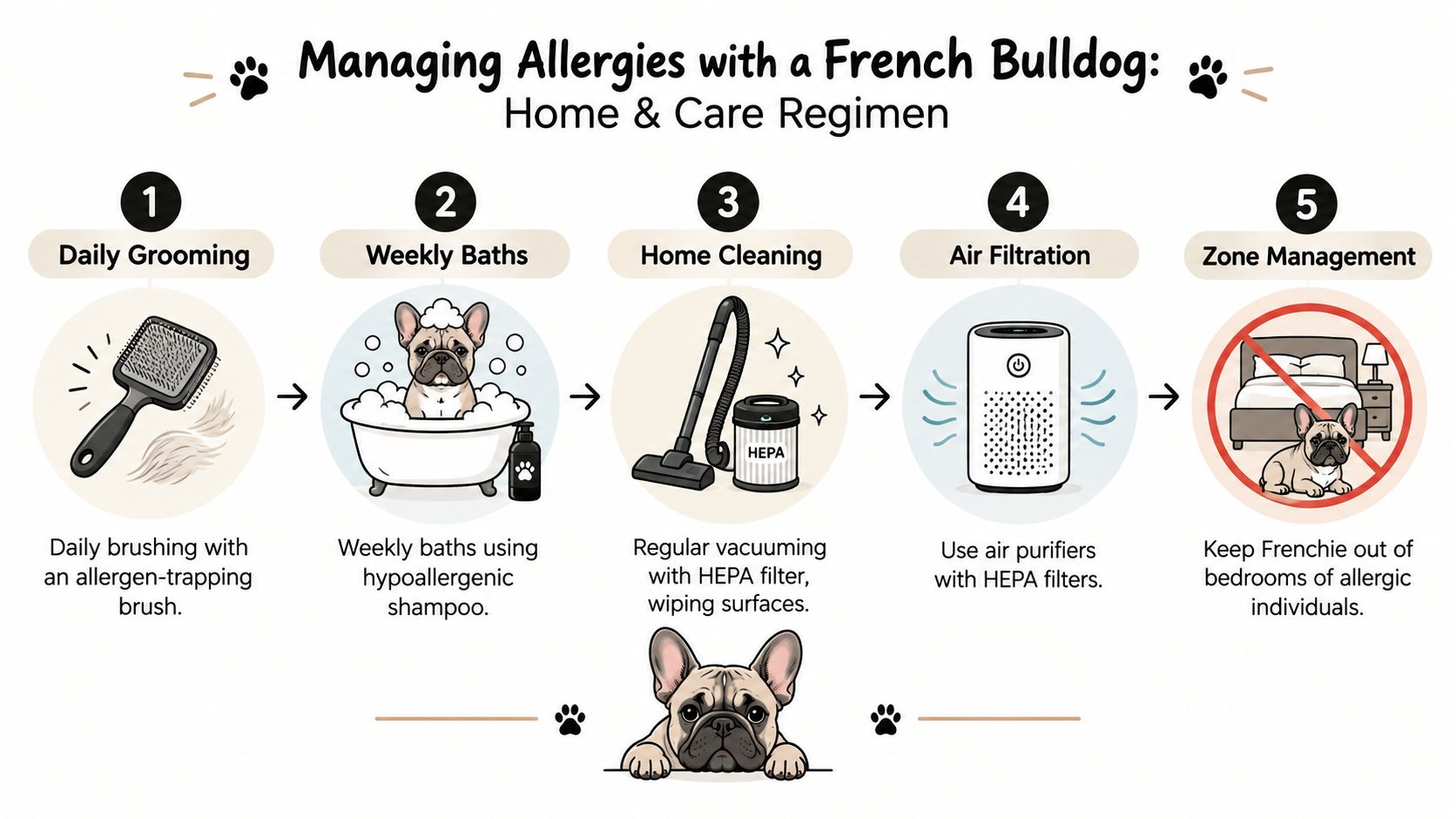
French Bulldogs have a short, smooth coat, but “short” doesn't mean allergen-free. Their coat can still release hair and dander into the home, particularly during periods of increased shedding. Brushing may collect loose material before it spreads, yet it won't eliminate the proteins found in skin flakes or saliva.
Their facial folds deserve special attention. Wrinkles can retain moisture, oils, food residue, and dander, creating a concentrated area for buildup. When a dog rubs its face on bedding or furniture, some of that material can transfer to household surfaces. Fold care is therefore a hygiene issue and an exposure-control measure, although it can't make the breed hypoallergenic.
A French Bulldog health report underscores why owners often discuss this breed in relation to allergic skin disease. The source reports environmental allergies or hypersensitivities in 52% of sampled dogs, as documented in the French Bulldog health study. That figure describes allergy-related problems in the dogs themselves, not the amount of allergen produced for humans, so it shouldn't be misread as a direct measure of owner allergy risk.
What each trait means at home
| French Bulldog trait | Practical allergen implication |
|---|---|
| Short, dense coat | Loose hair and dander can still enter household dust |
| Face and skin folds | Moisture, oils, and debris can collect in creases |
| Licking | Saliva proteins can reach skin, toys, fabric, and furniture |
| Regular shedding | Brushing and surface cleaning remain necessary |
You can use strategies for less dog shedding to control loose hair, but shedding control is only one part of the plan. If your household also includes a cat, Joyfull's Probiotic Supplement for Cats is a separate digestive-support product made with real beef bone broth and veterinarian-formulated probiotic strains. It isn't an allergy treatment and won't reduce dog allergens.
The breed's own skin sensitivity can complicate the picture. An itchy Frenchie may lick more, scratch more, and shed more skin material, which can increase the amount of allergen-containing debris distributed around the home. Ask your veterinarian to investigate persistent itching rather than assuming every flare is caused by food or seasonal pollen.
Managing Allergies with a French Bulldog
Start with a realistic goal. You're not trying to remove every allergen from the house, because no grooming routine can do that. You're trying to lower the amount that reaches the allergic person's eyes, nose, lungs, skin, and bedding.
Build the routine around contact points
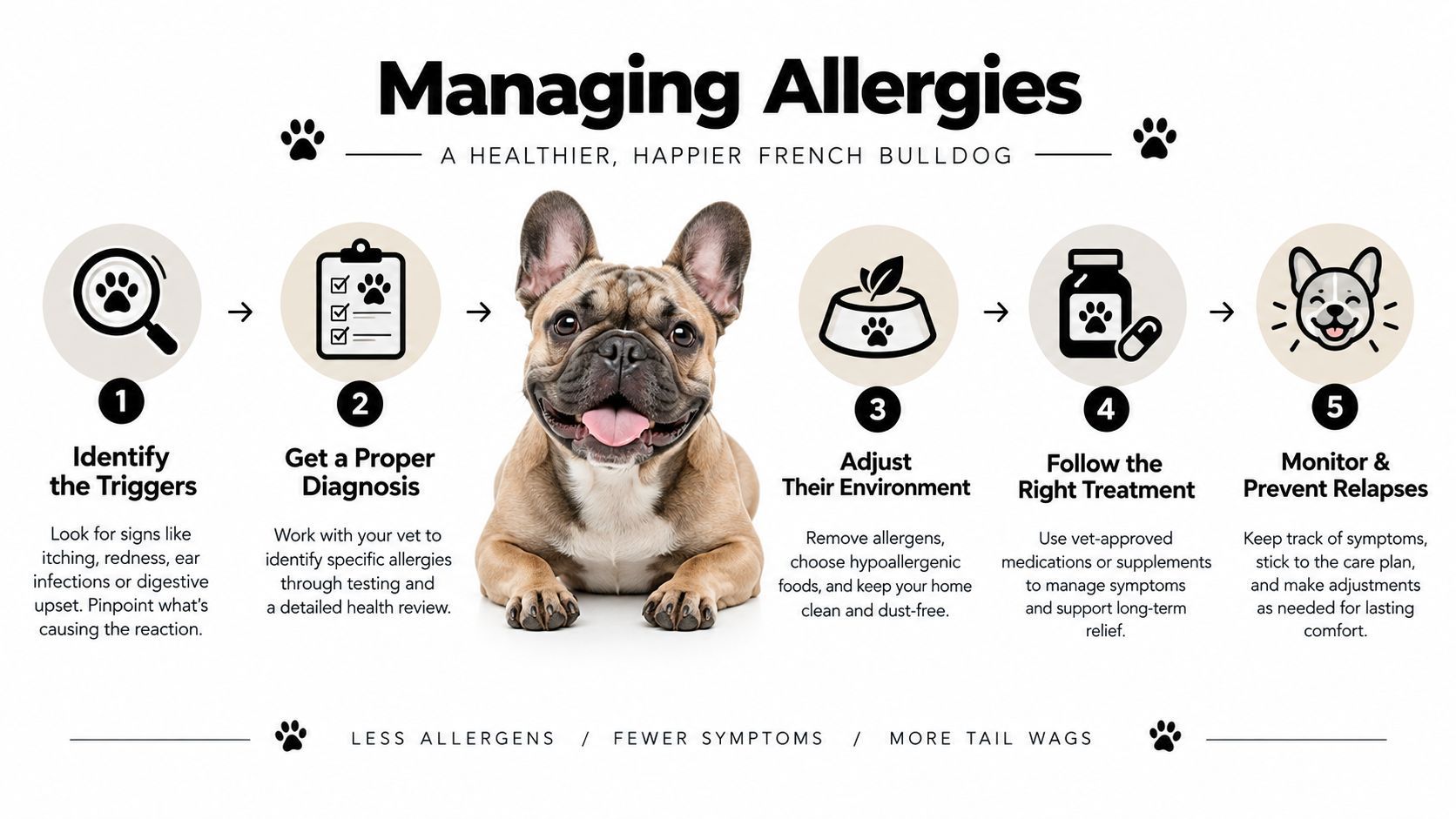
Brush outside or in an easy-to-clean area. Use a grooming glove or brush designed to collect loose hair, and avoid brushing beside the allergic person's bed or sofa. If the dog becomes itchy, stop and ask your veterinarian whether the skin needs treatment.
Clean the folds carefully. Follow your veterinarian's instructions for the product and frequency. The aim is to remove moisture and debris without irritating the skin. Redness, odor, swelling, bumps, or persistent discharge warrants a veterinary examination.
Bathe thoughtfully. A veterinarian can help you choose a mild, hypoallergenic dog shampoo suited to your Frenchie's skin. Don't increase bathing frequency solely because someone sneezes. Overwashing can irritate the skin, and irritated skin may produce more flakes.
Reduce the household reservoir
Use a vacuum with a HEPA filter on floors, rugs, upholstery, and the areas where your dog rests. Wipe hard surfaces with a damp cloth rather than dry dusting, which can move particles back into the air. Wash dog bedding regularly and keep washable throws on favorite furniture.
Place air purifiers in rooms where the allergic person spends the most time, particularly the bedroom or home office. Choose a unit with HEPA filtration, keep it maintained according to the manufacturer's instructions, and avoid treating it as a substitute for cleaning.
Controlled home studies found no significant Can f 1 difference between homes with dogs marketed as hypoallergenic and homes with non-hypoallergenic dogs. That finding supports a household-wide approach, rather than relying on coat type alone.
Bedroom rule: Keeping the French Bulldog out of the allergic person's bedroom creates a lower-exposure sleeping area, even if the rest of the home is shared.
Test rather than guess
An allergist can assess sensitivity to dog allergens and other triggers such as dust mites or pollen. That distinction matters because symptoms may not come from the dog alone. Ask whether testing, medication, or immunotherapy is appropriate, especially if symptoms include wheezing, breathing difficulty, or asthma.
Before adoption, spend meaningful time with the specific dog in more than one setting. A short visit can miss delayed or cumulative symptoms. Fostering may offer more information, but discuss the plan with your allergist first, and don't treat a trial period as medically risk-free.
For owners considering supplements for a dog's general digestive routine, dog probiotics are not a substitute for allergy testing, veterinary skin care, cleaning, or medical treatment. Use any supplement only after discussing the product and the dog's health with a veterinarian.
Choosing a Different Dog Breed for Allergy Relief
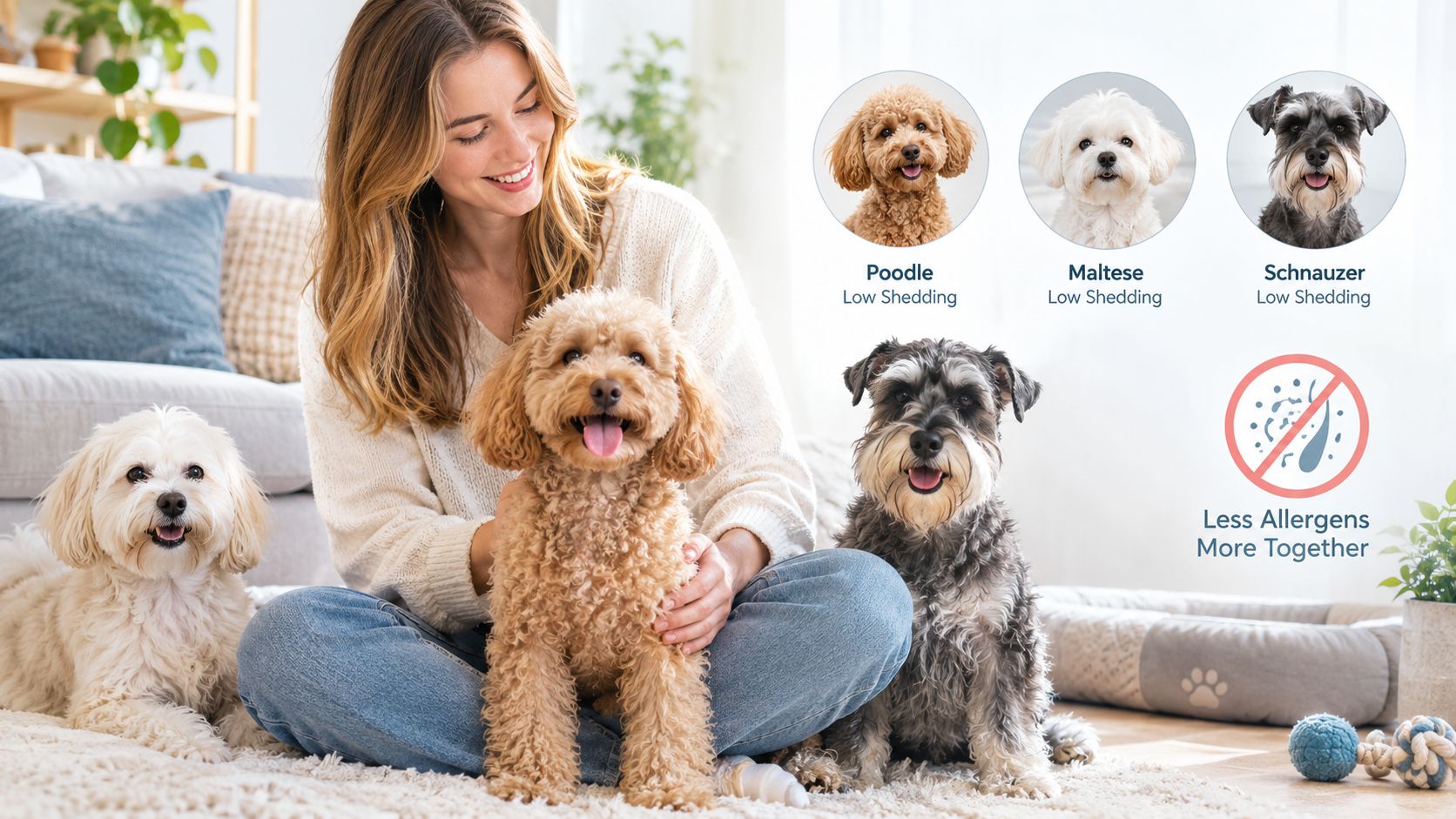
If a French Bulldog repeatedly triggers symptoms, choosing another breed may be kinder and safer than trying to force the match. Poodles, Bichon Frises, and Portuguese Water Dogs are often considered lower-allergen options, but none is guaranteed to suit every allergic person. The individual dog, the household environment, and the person's specific sensitivity all matter.
Poodles generally require substantial coat maintenance and regular professional grooming. Their coat can reduce the amount of loose hair circulating visibly, but grooming itself can disturb dander, so an allergic owner may need another household member or a professional groomer to handle brushing.
Bichon Frises are small, social companions with a coat that needs consistent care to prevent matting. Portuguese Water Dogs are active and often need more exercise and structured engagement than a Frenchie. A breed that fits your allergy profile but clashes with your daily routine may create a different welfare problem.
| Option | Main trade-off | Allergy-related caution |
|---|---|---|
| French Bulldog | Short coat and compact companion style | Not hypoallergenic, with exposure from dander and saliva |
| Poodle | Intensive coat care | Individual reactions still vary |
| Bichon Frise | Regular brushing and grooming | Grooming can disturb dander |
| Portuguese Water Dog | Higher activity demands | Lower shedding doesn't mean allergen-free |
A 2025 Western Romania study summary reports that 43% of dogs elicited significant IgE reactions, and that low-shedding breeds showed no consistent advantage over non-hypoallergenic breeds in allergen testing. The result reinforces a practical rule: meet the dog, test when appropriate, and plan exposure controls instead of trusting a label.
If you're considering a small companion breed, review these vet-reviewed Yorkie allergy facts, then arrange contact with the actual dog before making a commitment. Your best choice may be a breed with greater grooming needs if that trade-off is manageable for your household.
Conclusion and Next Steps for Allergy Sufferers
The answer to “are French Bulldogs hypoallergenic?” is no. A short coat may make grooming easier, yet it does not remove the proteins that trigger allergies. Saliva and dander are the main concerns, while urine can also carry allergens. Facial folds may collect moisture and debris, allowing allergen-containing material to reach hands, fabrics, and household surfaces.
Hair is only the vehicle, much like dust carrying particles through a room. The allergen comes from body proteins, so reduced shedding does not guarantee relief. This does not mean every allergic person must avoid every dog. It means the decision should fit the person's symptoms, home, and ability to control exposure.
Use this process before adoption:
- Speak with an allergist, especially if you have asthma or significant breathing symptoms.
- Meet the specific dog repeatedly and ask whether a controlled foster arrangement is suitable.
- Set exposure boundaries, including keeping the allergic person's bedroom dog-free.
- Prepare HEPA filtration, damp cleaning, bedding care, regular brushing, and veterinary fold care before the dog arrives.
- Reassess the arrangement if symptoms remain difficult to control.
Seek medical care promptly if breathing becomes difficult. A French Bulldog may be a loving companion, but a suitable match protects both the person's health and the dog's long-term home.
Joyfull offers pet wellness products, including veterinarian-reviewed options for everyday digestive care. These products do not treat dog allergies or replace veterinary advice. Visit Joyfull to explore support for pets in your home.
0 comments