


Why do some dogs with long floppy ears need far more care than their charming appearance suggests? Ear length can affect ventilation and moisture management, but it doesn't determine a dog's personality, exercise needs, trainability, or suitability for your home. A small companion spaniel, a scent-driven hound, and a powerful sporting dog may all share the same pendulous outline while requiring completely different daily routines.
The eight breeds below are compared through the same practical lens: size, temperament, lifestyle fit, exercise, grooming, ear checks, and warning signs. Long ear flaps can hold warmth, wax, and moisture near the ear opening, so routine inspection matters, especially after bathing, swimming, or humid-weather exposure. Veterinary evidence supports taking the risk seriously. In a UK VetCompass analysis of 22,333 dogs, pendulous ear carriage was associated with 1.76 times the odds of ear infection, while V-shaped drop ears carried 1.84 times the odds compared with erect ears (Royal Veterinary College research).
Use these profiles as a starting point, not a diagnosis or a substitute for veterinary advice. The best breed choice balances affection and appearance with the time you can realistically devote to exercise, grooming, weight control, and ear care.
Table of Contents
- 1. Cocker Spaniel
- 2. Basset Hound
- 3. Cavalier King Charles Spaniel
- 4. Beagle
- 5. Bloodhound
- 6. Weimaraner
- 7. Springer Spaniel
- 8. Dachshund in Long-Haired Varieties
- 8-Breed Comparison: Dogs with Long Floppy Ears
- Build a Simple Long-Ear Care Routine
1. Cocker Spaniel
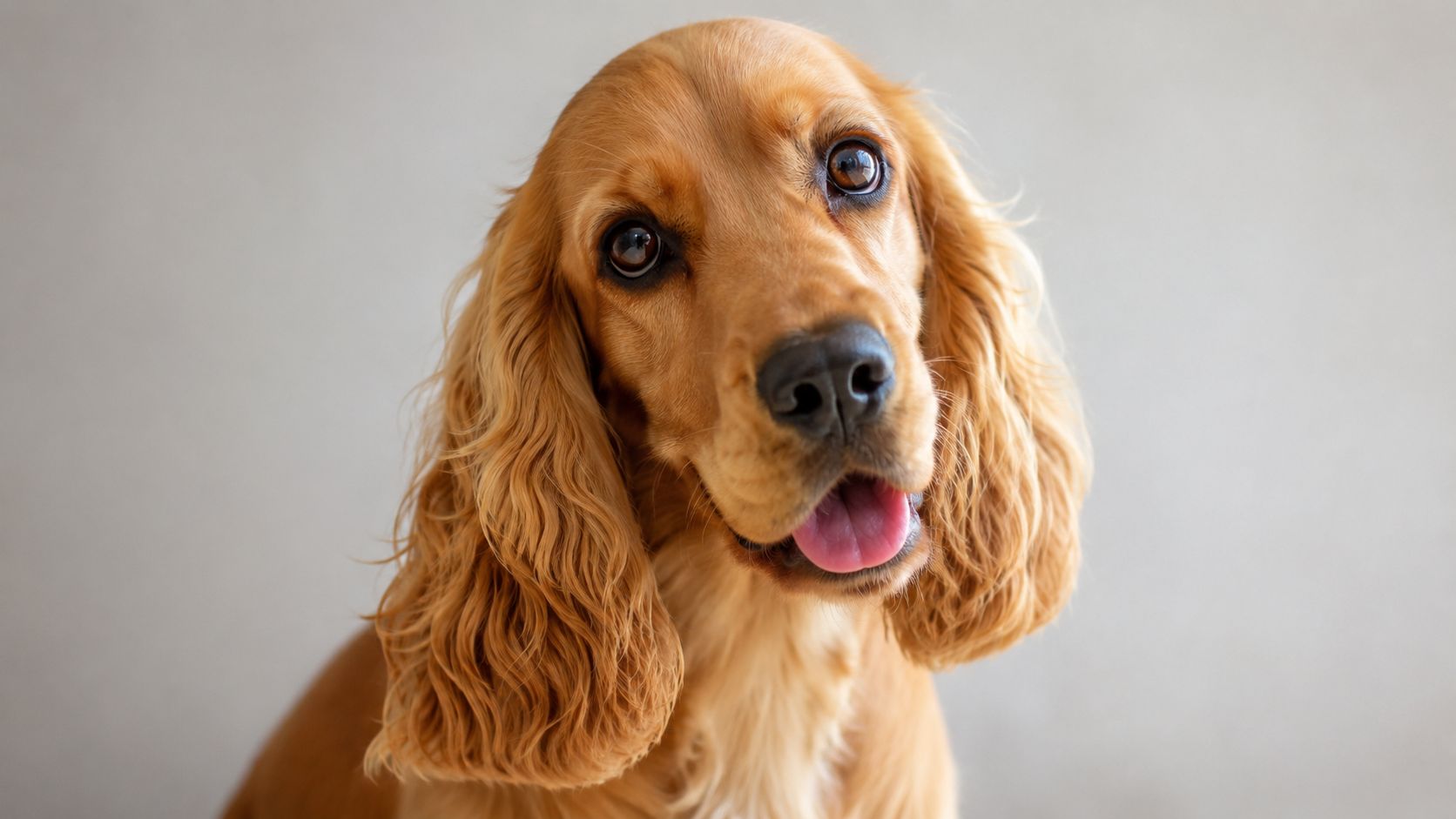
Cocker Spaniels suit owners who want an affectionate, responsive dog with a sporting-dog spark. They're medium-sized, intelligent, and closely bonded to their people. Their silky coats and long, feathered ears create a polished appearance, but that look comes with regular grooming and close observation around the ear opening.
A Cocker Spaniel may thrive in an active household that enjoys walks, retrieving games, training, and time together. Plan for at least 60 minutes of daily exercise as a practical baseline, with additional mental work for dogs that become restless without a job. They're often eager learners, but their sensitivity means calm, reward-based training generally works better than harsh corrections.
Ear and coat priorities
The ear flap should be lifted during routine checks so you can look for redness, unusual wax, swelling, odor, or discharge. A veterinarian-approved cleaner may be appropriate for some dogs, but cleaning frequency should reflect the individual dog's wax production, allergies, swimming habits, and veterinary plan. The long, feathered coat also needs brushing to prevent mats, with professional grooming commonly scheduled every 8 to 12 weeks according to the dog's coat and trim.
Practical rule: Dry the ear leather and surrounding hair carefully after water exposure, but don't push cotton swabs or other objects into the canal.
A balanced diet with appropriate protein supports general condition and coat maintenance. Omega-3 and omega-6 fatty acids may be discussed with your veterinarian, especially if skin or coat concerns are present. Don't assume a supplement will prevent infection. If you're researching broader ownership expenses, review this guide to the total cost of owning a Cocker Spaniel. For owners also caring for cats, the Probiotic Supplement for Cats - 30 Single-Serving Packets is a separate feline product made with real beef bone broth, veterinarian-formulated probiotic strains, two prebiotics, and individually sealed servings. It isn't a dog ear-care product.
If mites are suspected, don't guess from appearance alone. A veterinary examination can distinguish mites from yeast, bacteria, allergy-related inflammation, or debris. You can also review natural solutions for dog ear mites while arranging appropriate professional guidance.
2. Basset Hound
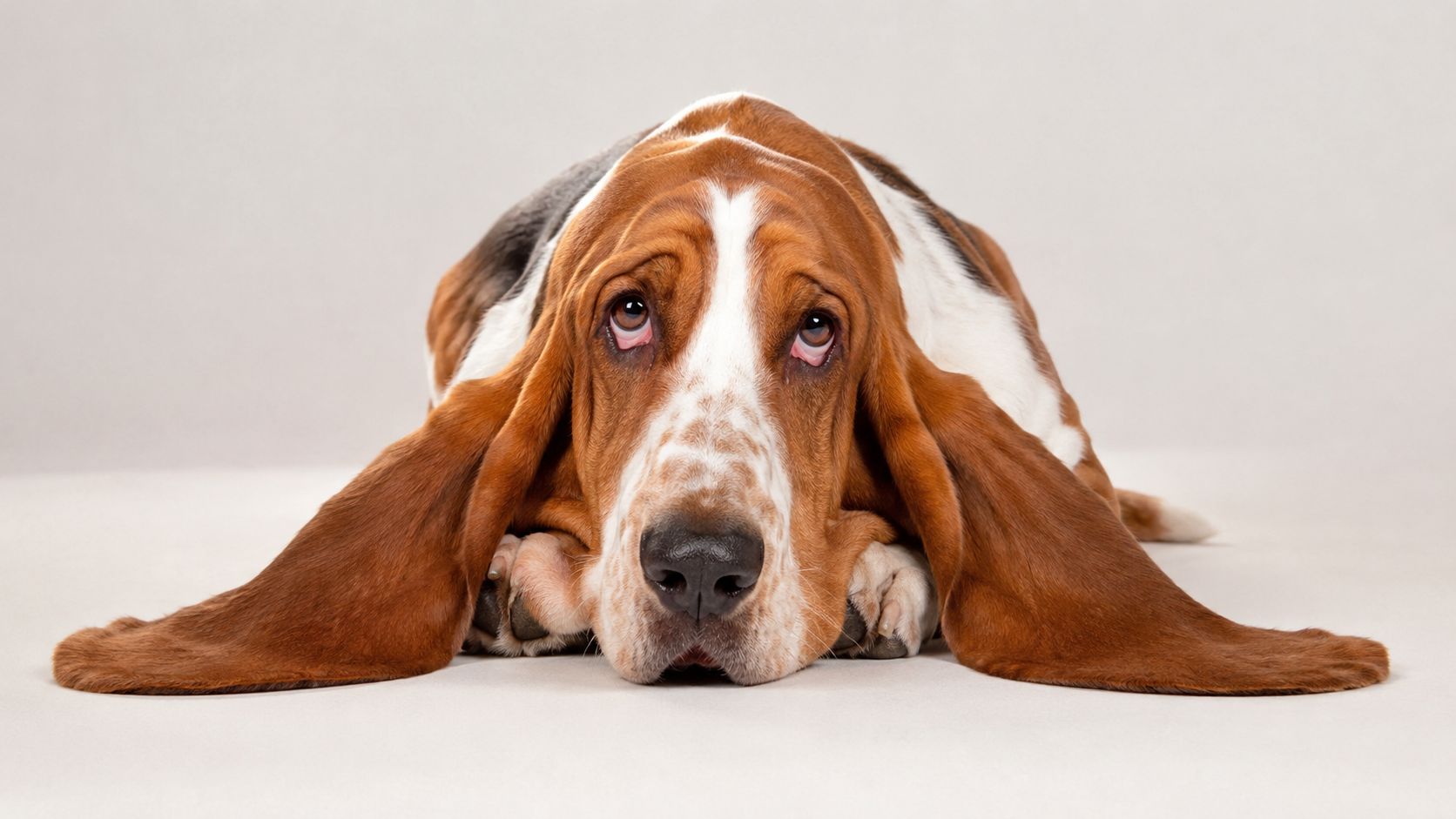
The Basset Hound is a strong match for someone drawn to a calm, affectionate companion with an extraordinary nose and a distinctive low-slung build. This French hunting breed is often more measured indoors than a sporting spaniel, but its scent drive remains powerful. A Basset may happily follow a smell instead of a planned route, so secure outdoor areas and patient leash habits matter.
Its exceptionally long ears demand more than occasional attention. Ear leather can drag near food, water, soil, and vegetation, while the covered opening can retain warmth and moisture. The RVC evidence cited earlier identifies pendulous ear carriage as a meaningful risk factor, but breed, allergies, wax production, and environment still influence the individual dog's needs.
A routine built around inspection
Check the ears several times each week, increasing attention after rain, bathing, or outdoor exploration. Look at both the inner flap and the visible opening. Persistent odor, redness, swelling, discharge, scratching, head shaking, or pain isn't a grooming problem to solve with repeated home cleaning. It needs veterinary assessment.
Bassets also need careful weight management. Their long back and heavy frame make measured meals and portion control especially important. Free-feeding can make it harder to notice gradual weight gain, so use a consistent feeding routine and ask your veterinarian to assess body condition rather than relying only on the scale.
- Protect the back: Limit unnecessary jumping and discuss safe exercise with your veterinary team.
- Keep folds dry: Clean and dry skin folds gently when dirt or moisture collects.
- Use enrichment: Scent games provide mental work without requiring constant high-impact activity.
- Plan grooming: Ear care should be part of the normal grooming appointment, not an emergency response.
A Basset's relaxed expression doesn't mean ear discomfort is mild. Dogs can adapt to chronic irritation without making the problem obvious.
Joint-support products should be selected with veterinary input, particularly if the dog has other health conditions or takes medication. For persistent odor, these ear odor relief tips can help you recognize when cleaning isn't enough and an examination is the safer next step.
3. Cavalier King Charles Spaniel
Cavalier King Charles Spaniels appeal to owners who want a small, gentle companion with a soft temperament and adaptable energy level. Their long, silky ears frame an expressive face, and their affectionate nature often makes them happiest when included in everyday household life. They can suit apartments or quieter homes, provided they receive regular walks, play, training, and companionship.
Their size doesn't eliminate health planning. Cavaliers need routine veterinary oversight, including cardiac discussions and examinations appropriate to the individual dog. Maintaining an ideal body condition also matters because unnecessary weight can make activity and general health harder to manage.
Gentle care for a sensitive companion
Inspect the ears weekly, or more often if your veterinarian recommends it. Run your eyes over the ear flap, check the opening for changes, and notice whether your dog suddenly resists touch. Weekly coat brushing helps prevent mats in the feathering around the ears, with extra care behind the ears where friction can tangle hair.
A Cavalier's exercise needs are usually more moderate than those of a working hound or high-drive sporting dog, but “low intensity” doesn't mean no activity. Short walks, food puzzles, gentle retrieve games, and training provide useful variety. Avoid strenuous exercise during hot weather, and stop if the dog shows unusual fatigue, breathing difficulty, weakness, or distress.
- Choose food deliberately: Feed portions that support a healthy body condition rather than allowing weight to creep upward.
- Discuss supplements first: Omega-3 or cardiovascular products shouldn't replace veterinary evaluation or prescribed care.
- Brush consistently: Regular brushing reduces mats that can hold moisture near the ears.
- Escalate changes early: Odor, discharge, redness, pain, or repeated scratching deserves professional attention.
The breed's affectionate nature can make subtle behavior changes easier to miss because owners may interpret clinginess or withdrawal as mood. Compare your dog's normal behavior with what you see today. A dog that pulls away when you touch an ear may be communicating pain, even without dramatic scratching.
4. Beagle
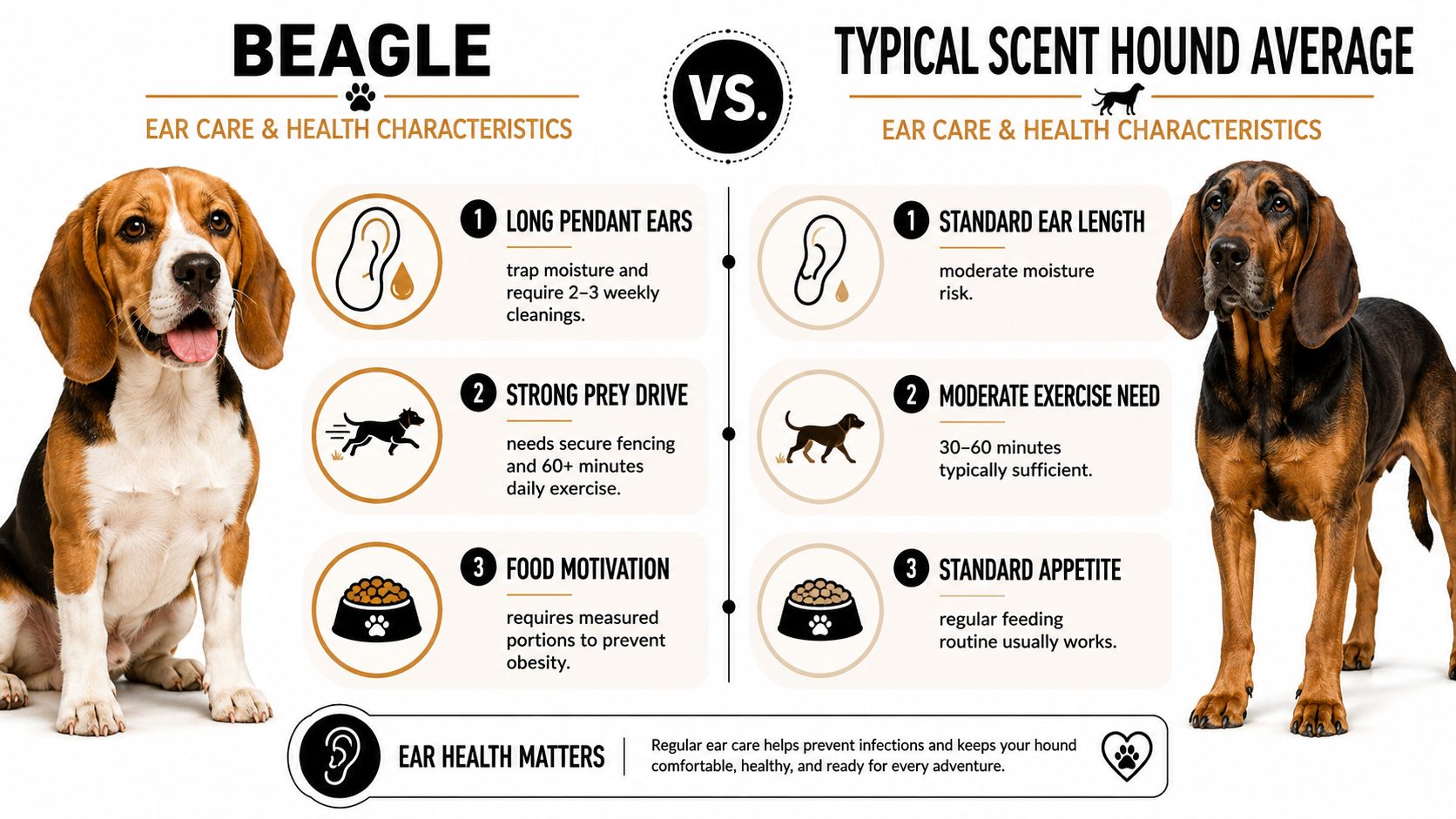
Beagles are compact scent hounds for owners who enjoy a curious, energetic dog with a powerful nose. Their long ears and expressive faces are appealing, but their hunting background shapes daily life. A Beagle may follow an interesting scent with remarkable focus, so secure fencing, reliable identification, and careful leash management are essential.
This is also a breed that benefits from owners who enjoy food-based training without overfeeding. Use measured portions, reserve part of the daily ration for training, and provide puzzle feeders or scent games. A Beagle that receives only physical exercise may still invent its own entertainment through digging, vocalizing, searching, or escaping.
Turning ear care into a normal habit
Check the ears several times weekly. The goal isn't to clean aggressively every time you look. It's to notice a change while the dog is comfortable and before handling becomes associated with pain. If the ear is clean and your veterinarian hasn't recommended a schedule, excessive cleaning can irritate the skin and make future handling more difficult.
Aim for at least 60 minutes of daily exercise or structured activity, adjusted for age, health, weather, and the individual dog. Combine brisk walking with scent trails, recall practice, and short training sessions. High-value rewards can work well, but account for them in the meal plan.
- Secure the environment: Use fencing and supervision because scent-following can override a casual recall.
- Manage food access: Store food securely and measure meals rather than leaving food available all day.
- Check after adventures: Grass, soil, and moisture can collect around the ear flap after outdoor activity.
- Watch body condition: A thickening waistline is a reason to review portions and exercise with your veterinarian.
A Beagle's ear care is most successful when it fits naturally into the routine. Pair a calm ear inspection with brushing or a reward, and stop before the dog becomes distressed. If you find odor, redness, swelling, discharge, or pain, skip home experimentation and arrange a veterinary examination.
5. Bloodhound
Bloodhounds are large scent hounds with extraordinary tracking instincts, prominent ears, and a sensitive, determined temperament. They suit experienced owners who can provide secure space, patient training, structured exercise, and realistic management of a powerful nose. A Bloodhound isn't just a larger Beagle. Its size, skin folds, drool, and tracking drive affect nearly every part of the daily routine.
Ear inspection deserves high priority. Check the ear flap and opening frequently, especially after outdoor work or water exposure. The extreme length can create a sheltered environment where moisture and debris remain unnoticed. Any persistent smell, discharge, swelling, or pain should prompt a veterinary call rather than repeated cleaning.
Supporting a large working body
Provide daily exercise that includes controlled walking and scent work. Bloodhounds need opportunities to use their nose, but strenuous activity should be matched to age, conditioning, heat, and veterinary guidance. Measured meals divided into smaller servings may be appropriate for some large dogs, and your veterinarian can advise on feeding posture and bloat risk for the individual animal.
- Inspect skin folds: Keep folds clean and dry, watching for irritation.
- Protect joints: Maintain a healthy body condition and discuss joint support before adding supplements.
- Train patiently: Scent drive is a feature of the breed, not a behavior flaw.
- Use safe handling: Large dogs need equipment and routines that reduce pulling and accidental injury.
Large, drooping ears can make topical treatment awkward when medication is prescribed. Follow the clinic's instructions precisely, and ask for a demonstration rather than improvising. This guide to how to apply ear ointment for dogs can support your understanding, but it shouldn't replace the prescription label or veterinary demonstration.
The comparison video below offers another visual way to distinguish a compact scent hound from a larger working type.
6. Weimaraner
The Weimaraner is an athletic, intelligent sporting dog with a sleek gray coat and moderately long floppy ears. It may suit runners, hikers, dog-sport participants, or experienced owners who want a demanding partner rather than a low-maintenance companion. Without enough exercise and mental engagement, a Weimaraner can become frustrated, destructive, or excessively demanding.
Plan for substantial daily activity, potentially two or more hours for a healthy adult whose conditioning and veterinary status support that level. The routine should combine vigorous exercise with training, retrieving, scent work, or another structured outlet. Puppies, older dogs, and dogs with orthopedic or cardiac concerns need individualized plans.
Moderate ears, major lifestyle needs
The ears aren't as dramatically long as a Bloodhound's, but they still cover the opening and deserve weekly inspection. Look for odor, redness, wax changes, discharge, swelling, or sensitivity. Dry the ears after bathing or swimming, and ask your veterinarian whether routine cleaning is appropriate for your dog's history.
Weimaraners are large, deep-chested dogs, so feeding and exercise habits should be discussed with a veterinary professional. Measured meals, thoughtful timing around intense activity, and a healthy body condition support safer participation in sport. Avoid using a raised bowl or a supplement as a guaranteed solution to a serious health concern. Ask your veterinarian to tailor the plan.
- Build fitness gradually: Increase distance and intensity in stages.
- Train every day: Short, focused sessions can prevent boredom more effectively than exercise alone.
- Monitor recovery: Persistent stiffness, unusual fatigue, or reluctance to move needs attention.
- Keep checks routine: Ear care works best before discomfort changes the dog's behavior.
This breed rewards consistency. If you want a dog that can settle after a structured day, you need to provide the structured day first. Its ear-care demands are manageable, but its exercise and training requirements can be a poor match for a sedentary household.
7. Springer Spaniel
English Springer Spaniels combine a friendly, eager-to-please temperament with the stamina of a working gundog. They're medium-sized, athletic, and often happiest when they can walk, retrieve, swim, train, or participate in practical activities with their person. A Springer can be an excellent fit for an active family, but its energy may overwhelm a home looking for a quiet, low-exercise dog.
The long, soft ears need special attention after swimming. Water can remain against the ear flap and near the opening, while feathering can stay damp longer than the skin feels wet. Dry the ears thoroughly after swimming and bathing, using only methods your veterinarian approves.
A working coat needs working maintenance
Inspect the ears once or twice weekly, and make the check part of post-adventure care. Look for odor, discharge, redness, swelling, or signs of mites, such as intense irritation and unusual debris. Don't pluck or trim hair inside the canal without veterinary or professional grooming guidance, because unnecessary manipulation can inflame sensitive tissue.
A Springer may need one to two hours of daily exercise or work activities, adjusted to age and health. Swimming can offer low-impact conditioning for suitable dogs, but it increases the importance of drying and monitoring the ears. Grooming around every eight weeks may help maintain a manageable coat, though the exact schedule depends on coat length, outdoor activity, and the owner's brushing routine.
- Combine exercise with training: Retrieving and directional games use both body and brain.
- Brush the feathering: Regular brushing catches mats before they tighten around the ears.
- Check after water exposure: Don't wait for odor or scratching to appear.
- Respect sensitivity: Reward calm handling and avoid forcing an already painful ear.
A Springer is a good reminder that breed fit includes the owner's willingness to maintain a routine. If daily exercise, brushing, drying, and ear checks feel burdensome, a lower-maintenance companion may be a better choice.
8. Dachshund in Long-Haired Varieties
Long-haired Dachshunds bring a small body, courageous personality, and distinctive floppy ears to homes that appreciate an alert, entertaining companion. Their short legs and elongated backs are central to their appearance, but they also shape the care plan. Owners need to manage jumping, stairs, body condition, and rough handling throughout the dog's life.
Long-haired varieties require coat brushing, particularly around the ears and feathering. The ear flap should be checked weekly for odor, redness, discharge, or irritation. Keep the process gentle, because a Dachshund that experiences pain during handling may resist future examinations.
Protect the back while managing food
Weight control is one of the most important everyday responsibilities for this breed. Feed measured portions, account for treats used in training, and ask your veterinarian to assess body condition. Avoid free-feeding if it makes portion control difficult. Ramps or steps can reduce repeated jumping from furniture, and everyone in the household should learn to support the back when lifting.
- Limit high-impact movement: Reduce repeated jumping and uncontrolled stair use.
- Use safe handling: Support the chest and hindquarters when picking the dog up.
- Choose enrichment carefully: Nose work and low-impact games can provide engagement.
- Maintain dental care: Toothbrushing or suitable dental products can support oral hygiene.
The Dachshund's food motivation can make training enjoyable, but treats should remain part of the overall intake. Joint-support products and omega fatty acids may be worth discussing with your veterinarian, especially if the dog has a history of back or joint concerns. No supplement replaces weight management, safe handling, or timely diagnosis.
A long-haired Dachshund may be a good choice for someone wanting a compact companion with personality, but it isn't a maintenance-free small dog. Its ears need routine checks, and its back requires household rules that everyone follows.
8-Breed Comparison: Dogs with Long Floppy Ears
| Breed | Implementation complexity 🔄 | Resource requirements ⚡ | Expected outcomes ⭐📊 | Ideal use cases 💡 | Key advantages ⭐ |
|---|---|---|---|---|---|
| Cocker Spaniel | Moderate, weekly ear care, regular grooming, daily exercise | Moderate, premium diet, grooming, routine vet ear checks | Improved coat & ear health; joint support (⭐⭐⭐⭐) | Active families, sporting households, companion dogs | Affectionate, trainable, strong owner bond |
| Basset Hound | High, frequent ear cleaning, strict portion control, skin-fold care | High, calorie-controlled diet, frequent vet monitoring, grooming | Reduced obesity & ear issues if managed (⭐⭐⭐) | Calm families, scent-work, low-impact activity homes | Gentle, patient, excellent scenting |
| Cavalier King Charles Spaniel | Moderate, cardiac screening, weekly ear care, regular grooming | Moderate, heart-support nutrition, premium food, vet checks | Better cardiac and coat support; risk mitigation (⭐⭐⭐⭐) | Apartments, therapy/emotional support, lap companions | Affectionate, adaptable, excellent companion |
| Beagle | Moderate, secure environment, 60+ min exercise, regular ear checks | Moderate, measured feeding, enrichment, training resources | Improved weight control & ear health (⭐⭐⭐) | Active families, scent work, multi-dog households | Hardy, food-motivated, adaptable |
| Bloodhound | Very high, daily ear care, bloat prevention, large-breed management | High, large-breed formula, space, frequent veterinary care | Strong tracking performance; reduced GI/joint risks (⭐⭐⭐⭐) | Search-and-rescue, law enforcement, homes with space | Exceptional scenting, calm and patient |
| Weimaraner | High, 2+ hrs exercise, cardiac & joint monitoring, ear care | High, athletic diet, supplements, experienced owner time | Enhanced performance and cardiac/joint support (⭐⭐⭐⭐) | Experienced active owners, hunting, dog sports | Athletic, intelligent, highly trainable |
| Springer Spaniel | Moderate, 1–2 hrs exercise, routine grooming, ear maintenance | Moderate, athletic nutrition, regular grooming, joint support | Improved stamina, coat and ear health (⭐⭐⭐⭐) | Working dogs, hunting, active families | Highly trainable, eager worker, social |
| Dachshund (Long‑Haired) | Moderate, strict weight control, spine-safe handling, ear care | Moderate, portion control, joint supplements, grooming | Lower IVDD & obesity risk with management (⭐⭐⭐) | Apartment living, small-game hunting, devoted companions | Loyal, long-lived, adaptable |
Build a Simple Long-Ear Care Routine
Start with observation, not automatic cleaning. Lift the ear flap regularly and inspect the visible skin and opening for changes in color, swelling, wax, discharge, or odor. Healthy ears can vary between dogs, so learn your pet's normal appearance and ask your veterinarian what should trigger a cleaning or examination.
Use only a veterinarian-approved ear cleaner, and follow the product directions or clinic instructions. Never insert cotton swabs, fingers, or other objects deep into the canal. If your dog has pain, heavy debris, a suspected ruptured eardrum, or a history of recurring infections, home cleaning may be unsafe until a veterinarian has examined the ear.
Moisture management matters for dogs with long floppy ears. Dry the outer ear and surrounding hair after bathing or swimming, and give extra attention to dogs whose ear flaps stay close to the opening. The baseline burden is substantial. Veterinary coverage reports that otitis externa affects about 10 to 20% of dogs overall, while one UK population estimate cited in secondary coverage placed annual ear-infection incidence at 7.3% of pet dogs (veterinary ear-infection overview).
Know when routine care isn't enough
Contact your veterinarian if you notice:
- Odor or discharge: A persistent smell or visible material can signal inflammation or infection.
- Redness or swelling: These changes need more than cosmetic cleaning.
- Scratching or head shaking: Repeated behavior suggests discomfort.
- Pain: Pulling away, whining, or guarding the ear warrants prompt attention.
- Balance changes: Head tilting, stumbling, or unusual eye movement can indicate deeper involvement and should be treated urgently.
- Severe symptoms: Marked swelling, severe pain, or neurological changes require urgent veterinary care.
Visible symptoms don't always tell the whole story. A 2026 MRI study of 380 dogs found otitis in 15.7%, including 11.8% with incidental otitis rather than obvious symptom-causing disease (Journal of Veterinary Internal Medicine study). That finding supports a sensible approach to screening when a veterinarian identifies risk, recurring disease, unexplained hearing changes, or other reasons to investigate. It also complicates the simple claim that floppy ears alone cause infections. Ear shape raises risk, but breed-specific biology and other factors can matter more.
Match the dog to your actual routine
Grooming tools can make regular coat and ear-flap care easier, so choose equipment that helps you work gently and consistently, such as the stylish grooming gear for dogs. Grooming doesn't replace medical care, and a product shouldn't be used to mask odor, pain, or discharge.
Nutrition and weight management belong in the same plan. A lean, well-conditioned dog generally handles daily activity better than one carrying excess weight, but feeding needs differ by age, size, work level, and health status. Ask your veterinarian before adding omega fatty acids, joint products, probiotics, or cardiovascular supplements.
How often should you clean a dog's ears? There's no single schedule for every dog. Some need regular cleaning because of wax, allergies, swimming, or previous infections, while others need only inspection. Your veterinarian should set the interval.
Can dogs with long floppy ears swim? Many can, if swimming is appropriate for their health and supervision is safe. Dry the ears thoroughly afterward, and ask your veterinarian whether your dog's history calls for additional precautions.
How can owners prevent ear infections? Focus on regular inspection, appropriate cleaning, moisture control, grooming, allergy management, and early veterinary care. Don't use household liquids or leftover medication.
Which breed is best? Choose based on the whole dog, not ear length. A Cavalier may suit a quieter companion home, a Beagle may suit someone who enjoys scent games, and a Weimaraner or Springer may need far more daily activity. The right choice is the one whose exercise, grooming, training, size, and health-monitoring needs fit your life.
Joyfull offers pet wellness products developed with clean ingredients and reviewed with veterinary input, although its cat probiotic is not a treatment for canine ear disease. Visit Joyfull to explore the brand's approach, then discuss any supplement or ear-care plan with your veterinarian before using it for your pet.
0 comments