Dog Treats with Glucosamine: An Owner's Complete Guide
You notice it in small moments first. Your dog pauses before jumping into the car. They get up a little slower after a nap. The stairs that used to be nothing now get a long look first.
Most owners don't need a dramatic limp to know something has changed. You know your dog's normal rhythm. When that rhythm gets stiff, hesitant, or shorter on walks, it's natural to start looking at joint products. That usually leads to a wall of bags and tubs all saying some version of “hip and joint support.”
That's where people get stuck.
Dog treats with glucosamine can be useful. They can also be little more than ordinary snacks with a wellness halo. The difference usually comes down to one unglamorous detail: dose. Not the front-of-bag claim. Not the word “mobility.” Not the pretty picture of a senior dog trotting across a field. The amount of glucosamine your dog gets each day is what matters.
If your dog is showing signs of stiffness, or you're trying to stay ahead of joint wear in an active or aging dog, this guide will help you separate meaningful support from marketing fluff. If you also want a broader look at functional treats for dog joints, that can be a helpful companion read.
Table of Contents
- Introduction Is Your Dog Slowing Down
- What Glucosamine Is and How It Supports Dog Joints
- The Real Evidence Behind Glucosamine for Dogs
- Glucosamine Treats vs Standalone Supplements
- How to Read a Joint Treat Label Like a Pro
- Calculating the Right Glucosamine Dose for Your Dog
- Partnering With Your Vet for Joint Health
Introduction Is Your Dog Slowing Down
A lot of owners land here after a late-night search that starts with something simple. “My dog seems stiff.” “Are joint treats worth it?” “Should I start glucosamine now?”
That concern makes sense. Joint changes often creep in. A dog may still be happy, playful, and eager to go outside, but they recover more slowly, hesitate on slick floors, or seem uncomfortable after longer activity. Those are the kinds of patterns owners notice before anyone uses the word arthritis.
Glucosamine gets mentioned early because it's one of the most familiar joint-support ingredients in dog products. But familiarity can be misleading. People hear “glucosamine is good for joints” and assume any treat with glucosamine must be useful.
That's not always true.
Bottom line: a dog treat with glucosamine only helps if it delivers enough active ingredient, given consistently, for long enough to matter.
That's the part many labels blur. They lean on the ingredient name, not the serving math. If you've ever stood in a pet store turning a bag over, trying to figure out whether “joint support” means something real, you're asking exactly the right question.
What Glucosamine Is and How It Supports Dog Joints
Glucosamine shows up on a lot of joint labels, so it helps to know what job it is supposed to do.
At the tissue level, glucosamine is a compound involved in cartilage and joint fluid metabolism. Cartilage lines the ends of bones inside a joint. It helps the joint glide and absorb force during movement, much like padding that keeps two hard surfaces from grinding against each other. Joint fluid adds lubrication, so motion stays smoother and less irritating.
That matters because stiffness usually starts with wear inside the joint, not because a dog suddenly needs a stronger treat. Age, repetitive activity, excess body weight, previous injury, and osteoarthritis can all put more stress on cartilage over time. Once that cushioning gets thinner or less resilient, everyday movement can feel rougher.
Glucosamine is used to support that system over time.

This is the part that trips up a lot of owners. Glucosamine does not work like a pain medicine. A pain reliever aims to reduce discomfort directly. Glucosamine is closer to nutritional support for joint tissues. That is why expectations matter. If a bag of treats makes it sound like one chew will have your dog bouncing around by tonight, the label is doing marketing, not teaching.
A better comparison is routine home maintenance. Replacing a worn roof shingle does not change the whole house in an afternoon, but steady upkeep helps the structure hold up better over time. Joint support works in that same slow, cumulative way.
Why glucosamine shows up in treats
Treats are one delivery format. For some dogs, that format is easier to use every day than a tablet, capsule, or powder mixed into food. Compliance matters. A supplement your dog happily takes is more useful than a perfectly designed product that gets spit onto the floor.
But format is not the same thing as function. That is where the dose-makes-the-difference issue starts.
A joint treat can contain glucosamine and still contribute very little if the amount per treat is tiny. In other words, the ingredient name on the front of the bag tells you almost nothing by itself. What matters is how many milligrams are in each serving, how many servings your dog can realistically eat, and whether that total lines up with the amount commonly used for joint support.
That is why lightly dusted joint treats deserve a skeptical look. A snack with a little glucosamine added may be convenient, but convenience does not automatically make it a meaningful supplement.
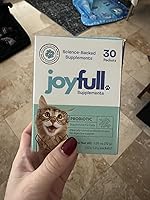
The same label-reading habit applies in other categories too. For example, Probiotic Supplement for Cats - 30 Single-Serving Packets is listed at $30 and currently in_stock. The single-serve format is convenient, but the main question is still the same: what is in each serving, and is it enough to matter? Joint treats deserve that exact level of scrutiny.
The Real Evidence Behind Glucosamine for Dogs
What studies suggest and what they do not
The evidence for glucosamine in dogs is neither magic nor nonsense. It sits in the middle. That's usually where good medical conversations live.
Controlled research shows that glucosamine-based joint products can help, but results depend on the formula, the dose, and how long the dog receives it. In a randomized study of 75 owned pet dogs with hip osteoarthritis, dogs were split into five groups. After 4 weeks, the glucosamine and chondroitin group did not show the same improvement in peak vertical force as some other treatments. The glucosamine group changed by −0.05 ± 6.34, while placebo changed by 0.08 ± 1.90. Other interventions in that study showed significant increases of 3.90 ± 3.52 and 3.08 ± 5.87 (study summary).
That finding matters because it cuts through a common assumption. Not every glucosamine product works equally well, and short-term results may be underwhelming.
At the same time, that doesn't mean glucosamine is useless. It means owners should stop expecting a fast, dramatic turnaround from a lightly dosed treat.
Some joint products beat placebo on measurable outcomes, but the benefit depends on formulation and dose.
Why timing changes expectations
A veterinary review of canine osteoarthritis literature paints a more realistic picture of how glucosamine products tend to perform over time. In dogs treated with glucosamine-chondroitin, statistically significant improvements in pain scores, severity, and weight-bearing were reported by day 70. The same review notes that some trials reported significant reduction in subjectively assessed pain by 90 days, with maximal effects around 150 days, and it also described a good safety profile with no adverse effects in the supplemented dogs studied (canine osteoarthritis review).
This is why owners get confused when one person says, “It did nothing,” and another says, “It helped a lot.” They may be talking about entirely different situations:
- Different products with different active amounts
- Different timelines of use
- Different starting problems, from mild stiffness to established osteoarthritis
- Different expectations, such as immediate pain relief versus gradual support
Glucosamine makes the most sense as a long-horizon mobility support tool. If your dog needs immediate pain control, that's a veterinary conversation. If your goal is to support joint comfort over weeks to months, glucosamine may have a role.
Glucosamine Treats vs Standalone Supplements
Treats and standalone supplements can both deliver glucosamine. They just solve different problems.
A treat solves the compliance problem. Your dog likes it. You remember to give it. It fits into the day without a struggle. A supplement solves the dosing problem. It's often easier to deliver a more concentrated amount without also handing over a pile of extra calories.

Where treats shine
For many families, dog treats with glucosamine are the easiest starting point.
- Daily habit: Owners are more likely to stay consistent when the product feels like part of a normal reward routine.
- Better acceptance: Picky dogs often accept soft chews or jerky-style products more readily than pills.
- Useful for mild support: If the dog is small, early in the stiffness curve, or already getting support from multiple parts of a care plan, a treat may fit nicely.
Treats can also be less emotionally loaded. Some owners resist the idea of “putting my dog on supplements,” but they'll happily use a functional chew each morning.
Where supplements usually win
The main weakness of treats is simple. Many don't carry enough glucosamine per serving to be meaningful, especially for medium to large dogs.
A major challenge for pet owners is that many products are positioned as functional while providing an amount of glucosamine too small to have a measurable effect, especially in larger dogs. That creates a gap between marketing claims of “joint support” and the core question of whether a treat can deliver a meaningful dose compared with evidence-based supplement dosing (product-page discussion of the dosing gap).
That's why a standalone supplement often makes more sense when:
- Your dog is large
- Your vet wants a more exact daily target
- You need a stronger serving without lots of treats
- You're trying to combine glucosamine with a broader plan
If you're comparing formats and want more context on joint products generally, Joyfull's dog joint health guide covers related options in plain language.
Practical rule: If a treat doesn't clearly tell you the glucosamine amount per piece, treat it as a snack first and a joint product second.
How to Read a Joint Treat Label Like a Pro
The front of the package is advertising. The back is where the truth lives.

Start on the back of the package
When you pick up dog treats with glucosamine, don't start with the claims on the front. Flip the bag over and look for the active ingredients section or the amount listed per treat, chew, or serving.
You're looking for an answer to one question: How many milligrams of glucosamine does my dog get in a day if I follow the feeding directions?
If the label says glucosamine is included but doesn't clearly state the amount, that's a problem. You can't do the math without the number. And if you can't do the math, you can't know whether you're buying joint support or branding.
A separate practical question is whether the product is really a supplement vehicle or just one of many flavored dog treats that happens to mention wellness ingredients. Those aren't the same thing.
Look for support ingredients and source clues
Glucosamine is commonly paired with chondroitin or MSM to support cartilage, joint lubrication, and comfort. High-quality sources often include shellfish-derived inputs such as crab, lobster, or shrimp shells, and New Zealand green-lipped mussel, which are concentrated sources (ingredient overview for pet owners).
That doesn't mean every product with those ingredients is automatically good. It means you should see them as clues that the formula is trying to support the joint from more than one angle.
Here's a simple way to read that section:
- Glucosamine amount listed clearly: Good. Now you can check whether the dose is realistic.
- Chondroitin or MSM included: Potentially helpful, because glucosamine is often used alongside companion actives.
- Marine or shellfish source identified: Useful detail. It shows the label is telling you more than a buzzword.
- No active amounts given: That's a red flag.
A quick explainer can help if you want a visual walk-through before comparing products:
A quick label check routine
When you're standing in the aisle or browsing online, use this short checklist:
- Find the glucosamine in mg. Not just “contains glucosamine.”
- Check serving size. Is that amount per treat, per two treats, or per daily serving?
- Count the treats needed. Would your dog need so many that it stops making sense?
- Scan companion ingredients. Chondroitin and MSM can add context.
- Ignore vague language. “Supports mobility” is not the same as quantified dosing.
If a label makes you work hard to find the active amount, I'd be skeptical.
Calculating the Right Glucosamine Dose for Your Dog
Here is the question that cuts through the marketing fast. How much glucosamine does your dog get in a day, and is that amount likely to matter?
Dose is where many joint treats fall apart. A bag can say “supports mobility,” but if the active amount is tiny, you may be buying a snack with a sprinkle of glucosamine instead of a real joint supplement. Cartilage works like the shocks on a car. If those shocks are wearing down, a meaningful dose matters more than a nice-sounding claim on the front of the package.
The simple formula
A common rule of thumb is to estimate a daily target by body weight:
Dog's weight in kilograms × target mg/kg = approximate daily glucosamine goal
You will often see practical targets discussed in the range of 20 to 30 mg/kg for daily glucosamine. For shopping purposes, that gives you a useful way to test a label instead of guessing.
Because many owners think in pounds, here's the same idea in a quick table.
Sample Daily Glucosamine Dosing for Dogs
| Dog's Weight | Approximate Daily Glucosamine Dose |
|---|---|
| 25 lb | about 220 to 340 mg |
| 50 lb | about 450 to 680 mg |
| 75 lb | about 680 to 1,020 mg |
Those numbers are not magic. They are a working range that helps you ask a better question: can this product realistically deliver that amount every day?
Some veterinarians also use a higher starting amount for the first few weeks, then drop to a maintenance amount. If your vet recommends that kind of loading plan, the math matters even more because the number of treats needed can rise quickly.
How to test whether a treat is enough
Use a real-world example.
Say your dog weighs 75 lb and the treat label says 250 mg of glucosamine per treat. If your target is near the top of the range, you are looking at about four treats per day to get close to 1,000 mg.
That is the “fairy dust or real dose” test.
For a small dog, that math may work fine. For a large dog, it often gets clumsy fast. Four treats, six treats, or more can add calories, cost more, and turn a simple supplement plan into a guessing game.
Here's the key point. A treat can be a perfectly good treat and still be a weak delivery system for glucosamine. Those are two different jobs.
A few patterns show up often:
- Small dogs usually have an easier time reaching a useful dose with treats because their daily target is lower.
- Large dogs often need several treats a day before the math starts to look reasonable.
- Loading plans can make treat-based dosing awkward because the temporary target may be much higher than the everyday amount.
If you want a broader consumer-friendly explanation of Glucosamine and chondroitin benefits, that overview can help you understand why these ingredients are often paired when evaluating joint products.
One last reality check helps. If the serving needed to reach a meaningful glucosamine amount feels excessive, the cleaner option is often a dedicated supplement, with treats kept for taste and routine. That does not make the treat dishonest. It means the dose, not the front label, should drive your decision.
Partnering With Your Vet for Joint Health
Even the best label-reading skills don't replace an exam.
When a vet visit matters most
A slowing dog doesn't always have simple age-related stiffness. Pain can come from osteoarthritis, but it can also come from injury, spinal problems, paw pain, muscle strain, or other issues that need a different plan. That's why I always want owners to use glucosamine as part of a bigger conversation, not as a blind substitute for diagnosis.
Your veterinarian can help decide whether glucosamine belongs in the plan, whether a treat format makes sense, and what else should be added. In many dogs, joint support works best alongside weight management, home-surface changes, activity adjustments, and sometimes other treatments.
That kind of plan is much more useful than standing in a pet aisle hoping one bag fixes everything.
Questions worth bringing to the appointment
Bring the product label if you already bought one. Better yet, bring the bag or a photo of the active ingredients panel. Then ask direct questions:
- Is my dog's stiffness likely to be joint-related?
- Is glucosamine reasonable for my dog's age, size, and symptoms?
- What daily amount do you want my dog to get?
- Should I use a maintenance dose or a loading approach?
- Is this treat enough, or should I switch to a dedicated supplement?
- What signs should I track at home? Rising from rest, stairs, jumping, walk length, or recovery after activity can all be useful.
- When should we reassess if I'm not seeing change?
A good joint plan is practical. You should know what you're giving, why you're giving it, and how you'll judge whether it's helping.
If you remember one point from this guide, make it this: glucosamine isn't about the claim on the package. It's about the daily dose your dog receives over time.
If you want pet wellness information that treats owners like adults, Joyfull is built around that same no-BS idea. Clear ingredients, practical education, and products reviewed with real-world use in mind make it easier to choose support that fits your pet and your routine.