


You bought treats labeled “mini,” “toy breed,” or “small dog,” expecting a sensible reward for your Chihuahua or Toy Poodle. Yet your dog is gaining weight, leaving part of dinner untouched, or receiving so many tiny biscuits during training that the treat bag seems to empty by itself. The problem usually isn't the physical size of the treat. It's the calories packed into each piece.
The right approach to dog treats for small dogs starts with three questions: How many calories does each reward provide? What do the ingredients contribute? And how does the format fit the job? A treat that fits in a tiny mouth can still consume a disproportionate share of a toy breed's daily energy budget.
Table of Contents
- The Hidden Calorie Trap in Mini Treats
- Mastering the Ten Percent Rule for Tiny Breeds
- Decoding Clean Ingredients for Small Dogs
- Choosing the Right Format for Training and Enrichment
- Smart Portioning and Safety Strategies
- The Shift Toward Functional Pet Wellness
- Building a Better Treat Routine
The Hidden Calorie Trap in Mini Treats
A Toy Poodle owner follows the packet instructions, chooses a biscuit marked for small breeds, breaks it into pieces, and uses it during walks and obedience practice. Weeks later, the dog feels heavier around the ribs, shows less interest in breakfast, and still expects a reward whenever the leash appears.
The owner has followed a common marketing shortcut: small means physically small. Treat labels often describe shape, diameter, or intended dog size, yet those details reveal little about calorie density. A soft, rich bite and a dry, starchy biscuit can occupy the same space while delivering very different amounts of energy.
Why toy breeds run out of room quickly
A ten-pound dog has limited nutritional room for extras. A handful of treats that barely affects a Golden Retriever's routine can replace a meaningful portion of a toy breed's complete food. If the dog eats less of its regular meal afterward, the owner may blame fussiness instead of recognizing that treats are reducing appetite.
Ingredient quality matters alongside calories. Read the ingredient list for concentrated fats, dense starches, and unnecessary fillers that add energy without improving the dog's complete diet. A tiny treat can still be a poor choice if its size hides a rich formula.
Treat frequency makes the problem easy to miss. Owners may count the reward after a sit but overlook the piece given during grooming, the bite used to coax the dog into its carrier, and the snack shared during an evening film. Each reward feels insignificant. Together, these untracked pieces can become the most calorically important part of the day.
Practical rule: Judge a treat by its calorie density, ingredient list, and serving size, not by the word “mini” on the front of the package.
Demand for small-format products reflects a real shift in pet ownership. Small breeds represented 40.0% of the 2024 value in the global natural dog treats market, while the broader market was projected to grow from USD 6.2 billion in 2025 to USD 10.1 billion by 2030, at a 10.3% CAGR, according to Mordor Intelligence's natural dog treats market analysis. More choice helps owners, but it also creates more labels to assess carefully.
Before buying another bag, turn it over. Find the kcal per treat, then review the ingredients and serving guidance. If one piece's calorie contribution is unclear, portioning becomes guesswork. For lower-calorie options, read Joyfull's dog treat advice. For a small dog, guesswork is a poor feeding strategy.
Mastering the Ten Percent Rule for Tiny Breeds
The basic rule is simple: treats should provide no more than 10% of a dog's daily calories, as outlined in the ASPCA guidance on dog chews and treats. The hard part is applying that rule to a dog whose daily needs may be modest and whose treats often arrive in repeated, untracked pieces.
Start with the daily calorie target supplied by your veterinarian or printed for the dog's complete diet. Multiply that daily figure by 0.10. The result is the maximum treat budget for the day. This isn't a universal feeding calculator, because age, activity, body condition, health status, reproductive status, and the calorie content of the main diet all matter.
Use the label, not the packet illustration
If a treat contains 5 calories per piece and your dog has a 30-calorie treat budget, six pieces would use the entire allowance. If another treat contains 10 calories per piece, only three pieces would fit that same budget. The physical size might be similar, but the practical difference is substantial.
For a ten-pound dog, the daily treat allowance may be only a few dozen calories, so a high-calorie mini biscuit can consume the budget quickly. The ASPCA specifically warns that toy and small breeds have low daily energy needs, meaning a few energy-dense treats can displace complete nutrition.
| Dog weight | Daily calories | Max treat calories (10%) |
|---|---|---|
| Toy or small breed | Individual target set from the dog's diet and veterinary assessment | 10% of that individual target |
| Ten-pound dog | Use the dog's assessed daily calorie target | Often only a few dozen calories |
| Larger dog | Individual target set from the dog's diet and veterinary assessment | 10% of that individual target |
This table is intentionally not a substitute for an individualized calorie calculation. There is no safe universal daily-calorie figure based on weight alone. Ask your veterinary team for the target, then record the treat allowance beside it.
Make the budget work during training
Don't wait until the end of the day to discover that rewards used up the allowance. Measure the day's treats into a separate container each morning. Every reward comes from that container, including snacks used for nail handling, recall practice, medication routines, and enrichment.
You can also reserve part of the dog's regular complete food for training, provided the overall daily ration remains appropriate. That approach keeps the reinforcement habit while reducing the number of extra calories. It also teaches the dog that ordinary food can carry reward value.
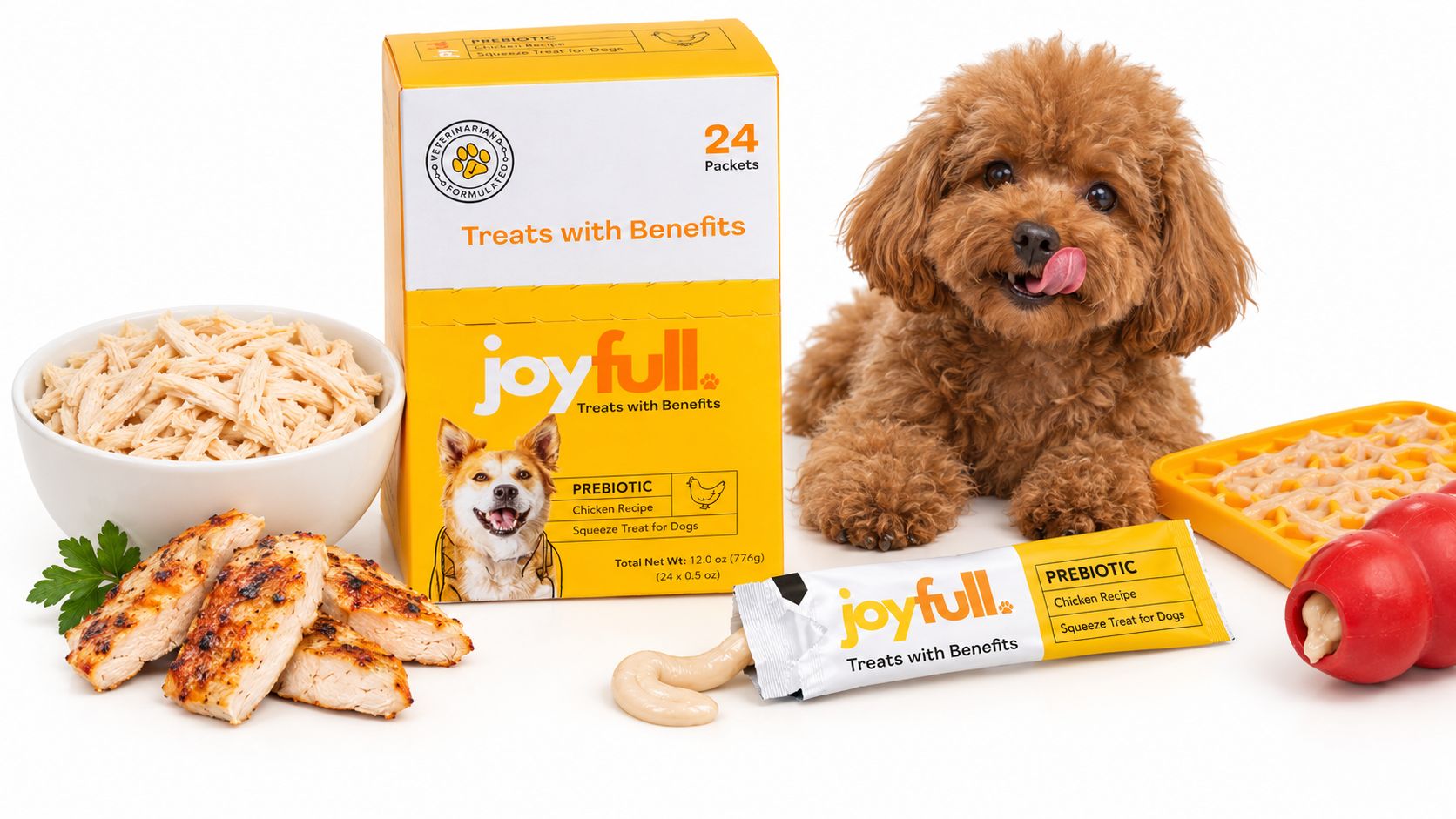
The Prebiotic Chicken Squeeze Treats for Dogs - 24 Packets are one example of a lickable format made with real cage-free chicken, prebiotics, and no artificial colors, preservatives, or flavors. If you use a squeeze treat, count the amount served in the same daily budget. A functional ingredient doesn't make unlimited portions calorie-free.
Decoding Clean Ingredients for Small Dogs
A short ingredient list isn't automatically nutritious, and a long one isn't automatically harmful. The useful question is whether the ingredients have a clear purpose and whether the label helps you control the portion. Small dogs deserve the same scrutiny as larger dogs, with less tolerance for vague serving guidance.
Read the list in a practical order
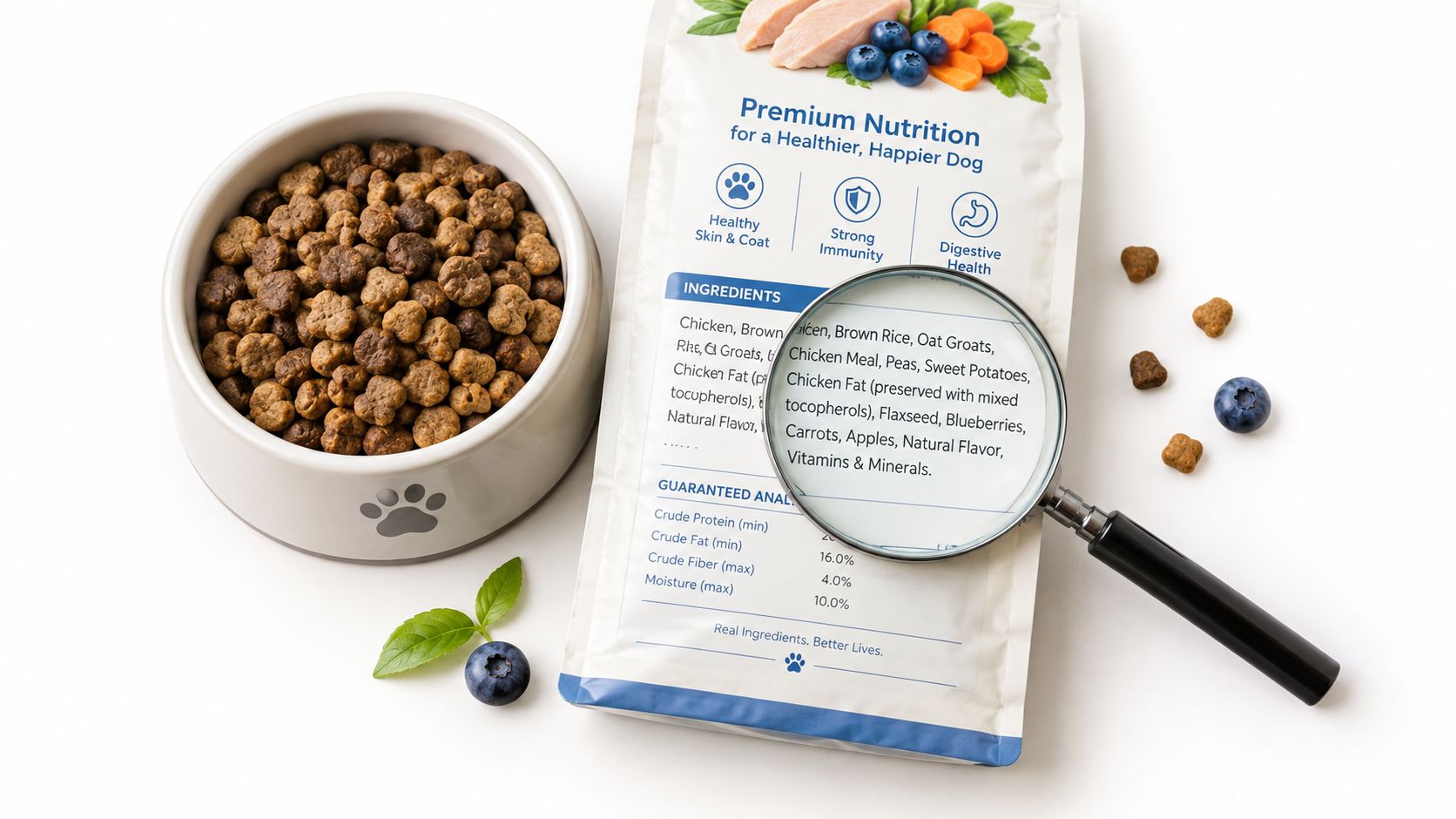
Begin with the named protein source. Chicken, turkey, beef, or fish should be recognizable rather than hidden behind an unclear flavor description. A single-source protein can also make it easier to identify a likely trigger if your dog develops digestive symptoms, although a veterinarian should guide elimination or sensitivity work.
Next, look for ingredients that serve a defined purpose. Fiber sources, prebiotics, or carefully selected carbohydrates may support a specific formulation goal. By contrast, a treat built mainly around inexpensive starches may offer palatability without giving you much nutritional value for the calories. That doesn't make every starch unsafe, but it makes calorie density and portion size even more important.
Check for artificial colors, preservatives, and flavor systems if you want a simpler formula. Don't stop at front-of-pack language such as “natural” or “clean.” Turn the package over and ask:
- Protein clarity: Is the primary animal ingredient named plainly?
- Purpose: Can you explain why the major ingredients are present?
- Calorie disclosure: Does the manufacturer state calories per treat or a measurable serving?
- Tolerance: Does the formula fit known allergies, sensitivities, or veterinary restrictions?
- Portion control: Can you break or measure it consistently?
A product with real wild-caught tuna, prebiotics, and no artificial or “natural” flavors, colors, or preservatives, such as Prebiotic Tuna Squeeze Treats for Cats, illustrates the kind of ingredient transparency pet owners increasingly seek. It's a cat product, not a dog treat, so don't substitute it for a canine formula. The label-reading principle is still useful: identify the protein, the functional addition, and the ingredients deliberately left out.
For owners comparing breed-related care demands before choosing a companion, a resource such as browse small dog breeds by cost can provide broader planning context. It doesn't replace nutritional advice, but it reinforces an important point: small-breed ownership involves recurring decisions about food, health, and daily management.
The following video offers another visual way to think about ingredient and feeding decisions. Use it as general education, not as a replacement for your veterinarian's advice.
Don't assume “premium” means suitable for unlimited use. A clean ingredient list can improve the quality of the choice, but calories still determine how much you can serve.
Choosing the Right Format for Training and Enrichment
A toy-breed puppy can earn dozens of rewards during a busy training session, then receive more during grooming and play. Each piece may look harmless. The key question is how many calories the dog receives and whether the ingredients justify spending that limited daily allowance.
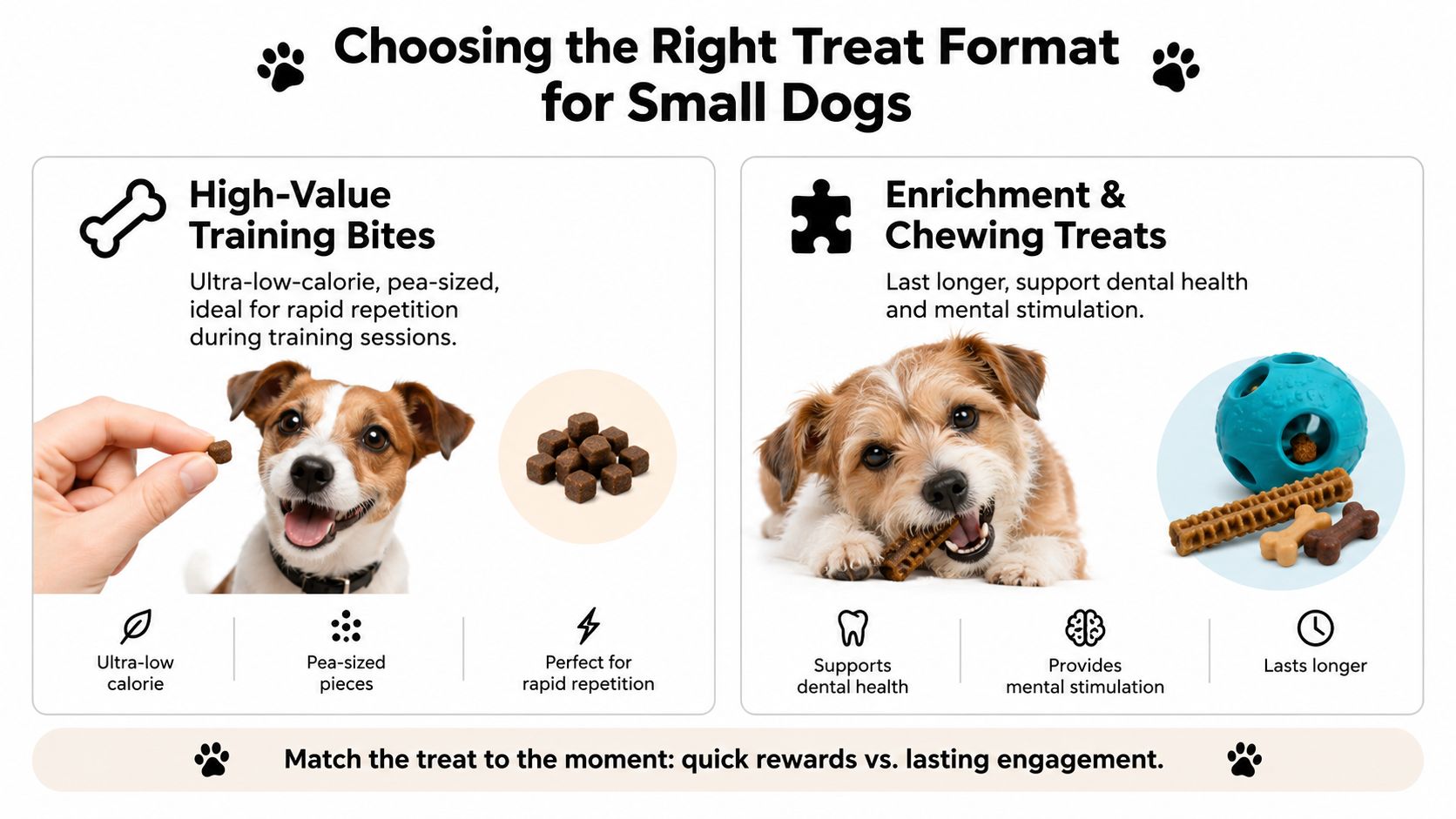
Choose the format according to the job. Rapid-fire training needs a soft, low-calorie reward that the dog can swallow quickly and repeat often. Grooming, settling, or a quiet afternoon may suit a lickable activity that slows eating and occupies the dog for longer.
Treats are a routine part of dog handling. In a survey of 1,833 dog owners, 83% reported using treats regularly, most often for behavior rewards, training, or sports activities. The survey also found that 52% gave two to five treats per day, while 32% gave one treat per day. These findings from the survey published through the University of Milan repository show why the delivery format matters, especially when a small dog has little room in its daily calorie budget.
Match the reward to the task
High-value training bites should be soft, easy to break, and small enough for repeated practice. The reward only needs to mark the correct behavior. Pairing a tiny taste with verbal praise, movement, or access to something the dog wants can make each calorie work harder.
Check the label before choosing a format. A large-looking treat may have a moderate calorie density, while a tiny piece made with concentrated fat, sugar, or several filler ingredients can consume more of the allowance than expected. Keep treats within the dog's daily plan, including the 10% limit for extras, and favor recognizable ingredients with a clearly identified protein source.
Everyday functional treats serve a different purpose. A measured lickable treat spread on a mat, placed in a suitable enrichment toy, or used as a meal topper encourages slower engagement. The dog spends more time working for the food instead of gulping several biscuits. The delivery method extends the activity, but it does not reduce the calories.
Long-lasting chews demand the most care for toy breeds. They may be too hard, too large, too rich, or impossible to divide consistently. A small-dog illustration on the package does not establish suitability. Assess the texture and size, supervise use, and remove the chew before it becomes a swallowing hazard.
A squeeze format helps dogs that reject dry rewards or need a high-interest option during handling. It also allows tighter control over each taste when you measure the serving. Joyfull's guide to training rewards provides further ideas for matching rewards to training situations.
Cats have different nutritional and behavioral needs. Happy Guts Duo for Cats belongs in the feline category, although its pairing of prebiotic tuna squeeze treats with a veterinarian-formulated probiotic supplement demonstrates how enrichment and functional nutrition can work together.
A better strategy keeps several treat types available for different situations. Use a low-calorie, divisible option for repetition, a measured functional option for enrichment, and skip products you cannot portion or supervise confidently.
Smart Portioning and Safety Strategies
Portioning starts before the treat reaches your hand. Read the feeding directions, check the calorie statement, and decide how much belongs in the day's allowance. For very small dogs, use a kitchen scale when the product allows it, or divide soft treats into consistent pieces with a clean knife.
The image URL above contains a mismatch with the required asset path. The exact mandatory asset is:
Serve deliberately
Break larger soft treats into pea-sized portions when that texture permits. A small piece can still deliver taste and reinforcement, while a whole biscuit may exceed what the dog needs for one response. Keep a written tally if several people in the household give rewards.
Use enrichment tools to slow eating. A lick mat, Kong, or Pupsicle can turn a measured portion into a longer activity, but these tools don't erase calories. Spread only the amount you've allocated, then wash the item according to its material and the food used.
Watch the dog while eating, especially with unfamiliar textures. Remove a treat if the dog tries to swallow it whole, breaks off a dangerous-sized fragment, or shows difficulty chewing. Dogs with dental disease, swallowing problems, gastrointestinal disease, or a history of food reactions need individualized guidance from a veterinary professional.
Hard chews and rawhides deserve particular caution. Research summarized in Frontiers in Animal Science found that, when feeding instructions were followed, some rawhides could exceed 25% of maintenance energy requirements in small dogs, while certain chewable sticks reached 16.9% in small dogs. The same research highlights why owners must assess both the caloric and physical risks of a chew.
Use this quick check before serving
- Size: Can your dog manage the piece without gulping?
- Texture: Is it appropriate for the dog's teeth and chewing ability?
- Calories: Have you counted it inside the daily treat allowance?
- Supervision: Will someone watch the dog until the treat is finished?
- Meal balance: Should the regular food portion be adjusted under veterinary guidance on a high-reward day?
Treat safety isn't about removing pleasure from the routine. It's about making every reward deliberate enough that training, enrichment, and nutrition support one another.
The Shift Toward Functional Pet Wellness
A toy dog can finish a tiny-looking reward in seconds and still consume too many calories. Owners should judge treats by caloric density, ingredient quality, and daily total, not by the shape printed on the package. Rewards should remain within the 10% rule, with the rest of the diet coming from complete, balanced food.
Small-dog treats now serve more purposes than occasional biscuits. Owners use them during training, grooming, enrichment, medication routines, and cooperative care. That makes micro-portions, recognizable proteins, and a functional reason for each snack practical requirements, not marketing extras.
The growing range of products demands sharper label reading. Hidden fillers, concentrated fats, sweeteners, and vague flavoring can make a small piece less suitable than its size suggests. A compact treat also does not earn a place in the bowl because its package shows a tiny paw. Check the calories, ingredient list, serving guidance, and texture before buying.
Function should be specific
A prebiotic provides a substrate that beneficial gut bacteria can use. A probiotic supplies selected microorganisms. These functions differ, and neither ingredient makes a treat a complete diet. If you are exploring prebiotics for dogs, read the full label and confirm that the product fits your dog's existing food, sensitivities, and veterinary plan.
Words such as “wellness,” “natural,” and “functional” are starting points for investigation, not evidence of suitability. Ask three direct questions: What does the ingredient do? How much does the dog receive? Are the calories clear enough to count accurately?
Choose a functional treat only when it replaces a less useful reward, supports a defined enrichment activity, or helps you deliver a measured portion consistently. Do not use a wellness claim to justify unlimited extras. Better ingredients matter, but better portioning remains the foundation.
Building a Better Treat Routine
A reliable routine can be simple. Set the dog's daily food and treat plan first, then decide which rewards will be used for training, handling, and enrichment. Measure the day's treat allowance into one container and don't refill it after it's empty.
Use the lowest-calorie option that still works for the behavior. During rapid training, reward with tiny, soft pieces or measured tastes. During enrichment, use a controlled amount in a lick mat or toy so the dog receives longer engagement without receiving more food than planned.
Keep the label checklist close
Calorie information comes first. If you can't determine the calories per piece or serving, you can't manage the allowance accurately.
The ingredient list comes second. Prefer recognizable proteins and purposeful ingredients, especially when your dog has a known sensitivity. Avoid assuming that a short list, a small shape, or a premium package guarantees nutritional suitability.
The format comes third. A training bite should support quick repetition. A lickable snack should support measured enrichment. A chew should be physically appropriate, supervised, and counted as food.
Finally, monitor the dog rather than the marketing claim. Check body condition, appetite for complete food, stool quality, enthusiasm during training, and willingness to chew safely. If weight changes, digestive signs appear, or your dog needs a therapeutic diet, ask your veterinarian to adjust the plan.
Mindful treating doesn't weaken the bond between you and your dog. It makes rewards more meaningful because you know exactly why you're offering them. For small breeds, the best treat is not the smallest-looking one. It's the one you can identify, measure, and use without compromising the rest of the diet.
Joyfull offers dog treats made with clean ingredients, high-quality proteins, and functional formats such as prebiotic squeeze treats that can be measured for training or enrichment. Visit Joyfull to review the available formulas and choose a treat that fits your small dog's calorie budget and daily routine.
0 comments