


You're standing in the pet aisle with your phone's flashlight aimed at a glass jar of bone-shaped biscuits. Three bags promise wholesome ingredients, another says grain-free, and a decorated cookie looks more like a human bakery item than a dog treat. Your dog is waiting for a decision, but the front of the package isn't giving you enough information.
Dog treats cookies deserve a closer look because the shape and label can hide very different purposes. Some are useful for training, some are occasional desserts, and some are little more than rich bakery products in a pet-friendly package. The smart choice starts with understanding what the category is, how it fits into a complete diet, and which details matter after the marketing claims stop.
Table of Contents
- What Dog Treats Cookies Actually Are
- What's Really Inside a Dog Treat Cookie
- Everyday Cookies Versus Celebration Cookies
- How to Read the Label and Spot Better-for-You Options
- Baking Your Own Dog Treat Cookies at Home
- Storage, Freshness, and Feeding Guidelines
- Choosing and Using Dog Treat Cookies With Confidence
What Dog Treats Cookies Actually Are
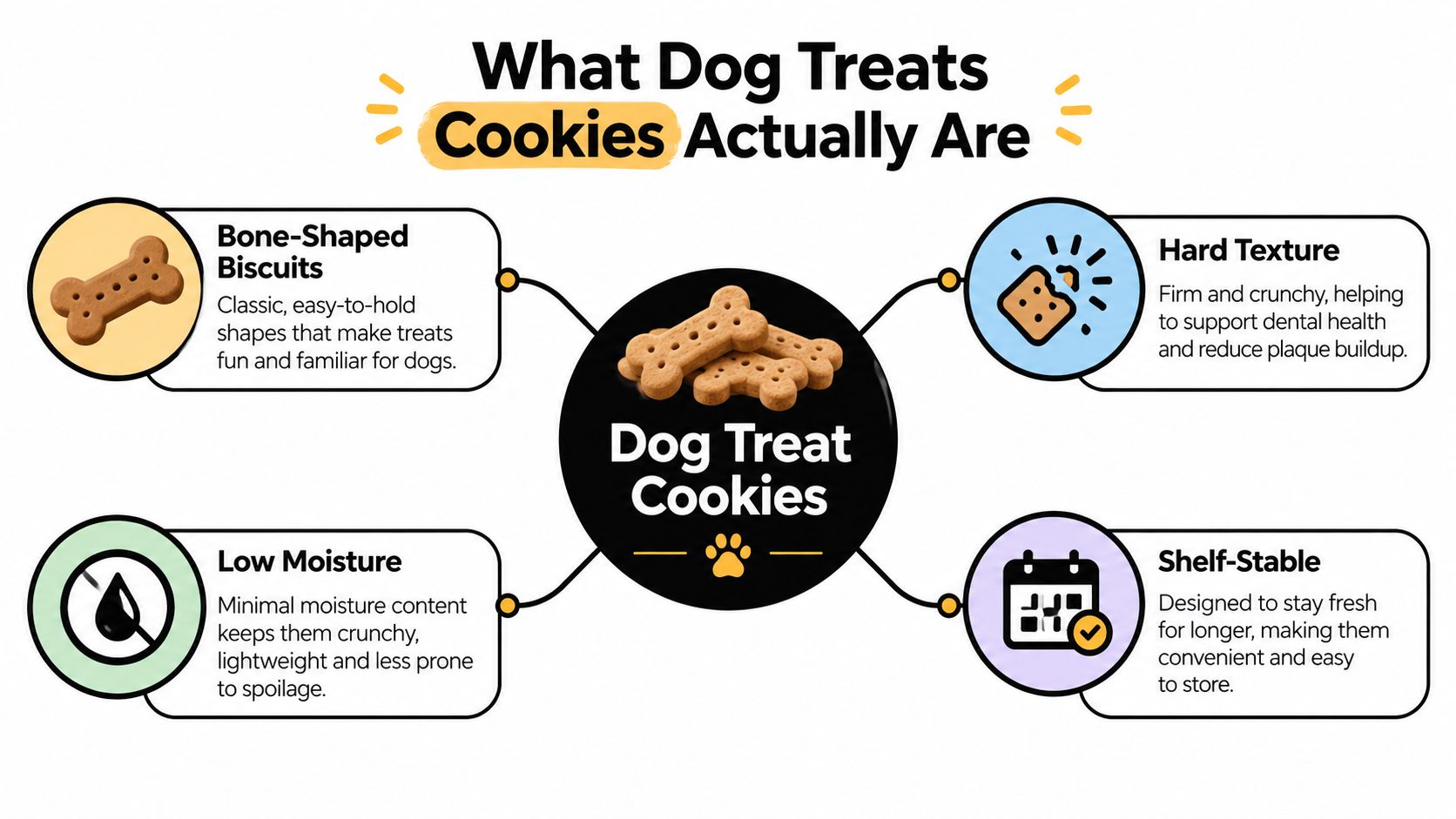
A dog treat cookie is usually a dry, baked, flour-based snack made for dogs. The dough may be rolled and cut, pressed into a shape, or formed into a biscuit. That makes it different from jerky, freeze-dried meat, moist training treats, and lickable products, even though a company may place all of them in the same treat aisle.
The classic cookie is easy to recognize. It often has a firm texture, a bone or seasonal shape, and enough structural strength to travel in a pouch without becoming paste. Low moisture and low water activity help limit microbial growth, which is why baked biscuit formulas can remain shelf-stable when manufactured and packaged correctly. Technical guidance for baked dog biscuits describes formulations with water activity at or below 0.70 and moisture around 5% to 13% by weight, with microbiological guidance including no detectable Salmonella in five 25-gram samples. These controls are discussed in research on dog-treat safety and formulation.
Why the format survived
Commercial dog biscuits have a long history. Historical accounts identify James Spratt's 1860 launch of “Spratt's Patent Meat Fibrine Dog Cakes” in England as a milestone in the development of branded, mass-produced dog treats, while bone-shaped biscuits became common by the early 1900s. The category grew from scraps and hardtack-style feed into a manufactured pet product, as described in this historical overview of dog biscuits.
The format solved practical problems for both sellers and owners. A dry biscuit was easier to transport, portion, and store than fresh food. Its familiar shape also made the product feel purpose-built for a dog, a quality that still influences packaging today.
One word covers many products
“Cookie” may describe a crunchy daily biscuit, a dental chew, a grain-free pressed snack, a mini training reward, or a decorated birthday treat. The word tells you about the format, not automatically about nutritional quality.
A useful working definition is simple: a dog treats cookie is a dough-based, baked or pressed, relatively dry reward that can be portioned separately from the main diet. That category now includes everyday training pieces, food toppers, supplement carriers, and seasonal gifts. The name gets you to the shelf, but the ingredient panel and calorie information tell you whether the cookie belongs in your dog's routine.
What's Really Inside a Dog Treat Cookie
The ingredient list tells a more reliable story than words such as “natural,” “bakery,” or “premium.” Read it from the beginning, then ask what each group contributes to the cookie's flavor, structure, calories, and storage behavior.
Protein gives the cookie its appeal
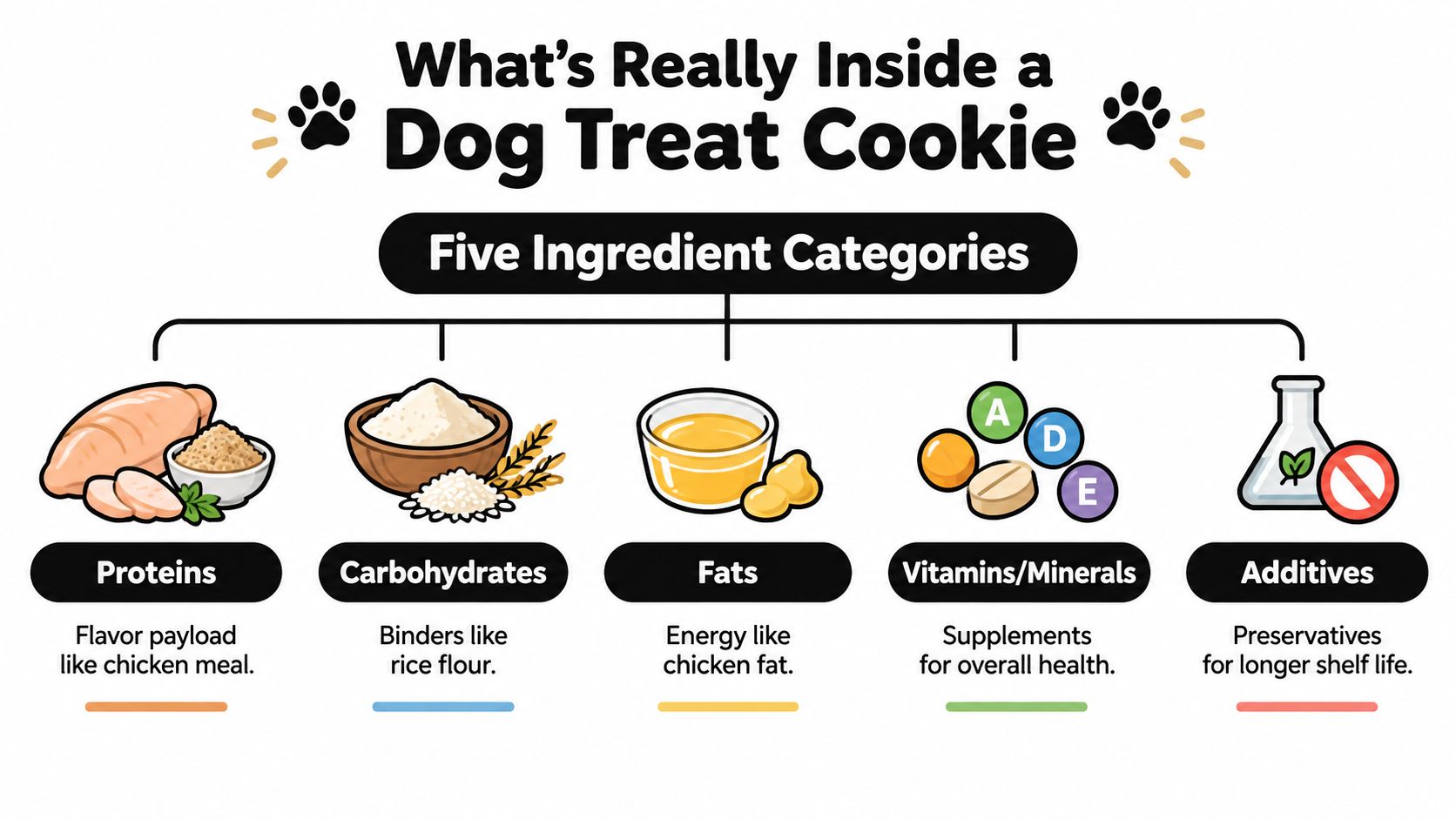
Chicken meal, salmon meal, beef meal, and other named meals are concentrated rendered protein ingredients. Fresh chicken or meat may appear first because it contains substantial water before cooking, while a named meal can contribute more concentrated dry matter after processing. Hydrolyzed proteins are broken into smaller components and may appear in formulas designed for dogs with specific dietary sensitivities.
A named animal protein is easier to evaluate than an undefined “meat” ingredient. It doesn't guarantee that a cookie is appropriate for every dog, but it gives you a clearer starting point for checking allergies and tolerances.
Flour and starch create the structure
Wheat flour, oat flour, brown rice flour, pea flour, chickpea flour, tapioca, and sweet potato all help bind the dough. They also affect texture. A wheat or oat biscuit may bake into a familiar crisp cookie, while tapioca and sweet potato blends can create a different crumb and may be used in grain-free formulas.
“Grain-free” doesn't mean carbohydrate-free or automatically healthier. Pea, chickpea, tapioca, and sweet potato still provide starch, and the overall formula matters more than the absence of wheat or rice.
Fats, sweeteners, and small additives matter
Rendered tallow and poultry fat can add flavor and energy. Salmon or flaxseed oils may contribute omega-3 fats, but oils can also affect freshness and require careful preservation. A cookie with more fat will usually be richer, so it deserves more cautious portioning for dogs that gain weight easily or have a history of fat-related digestive problems.
Molasses, honey, cane molasses, and fruit purees add sweetness. Baking soda, lecithin, natural smoke flavor, mixed tocopherols, and rosemary extract may support texture, taste, or preservation. These ingredients aren't interchangeable, and “natural flavor” or “animal digest” can be legally used while giving the buyer less detail about the source.
Label habit: Ingredient order matters more than the large claim printed on the front of the bag.
A cookie doesn't need a long ingredient list to be useful. For example, the Prebiotic Chicken Squeeze Treats for Dogs uses real cage-free chicken and prebiotics, and is described as free of artificial colors, preservatives, and flavors. It isn't a cookie, but it shows why format and ingredient evaluation should be treated as separate questions.
A product can be a well-made treat without being a complete diet. Most dog treats cookies are complementary foods, so they supplement a complete dog food rather than replace it.
Everyday Cookies Versus Celebration Cookies
An everyday cookie has a job to perform repeatedly. It should be easy to break, simple to portion, and modest enough in calories that several rewards can fit into a training session without crowding out the main diet. A celebration cookie has a different purpose. It replaces a special dessert or marks an event, so richer ingredients and decoration may be reasonable when the serving remains occasional.
The distinction becomes clearer when you compare the products directly.
| Trait | Everyday Cookie | Celebration Cookie |
|---|---|---|
| Primary use | Training, routine rewards, small enrichment | Birthday, holiday, adoption anniversary, or photo opportunity |
| Texture | Firm or slightly soft, easy to break | Often dense, decorated, or cake-like |
| Serving approach | Small pieces, repeated carefully | One planned piece or a small portion |
| Formula | Usually simpler and easier to portion | May include more fat, dairy, honey, or icing |
| Storage | Often designed for routine pantry storage | May need closer attention after opening or decorating |
The common mistake is to treat a celebration cookie like a daily biscuit because both have a dog-friendly shape. A decorated item with peanut butter or yogurt icing may be much richer than a small training piece. Sugar and fat also explain why veterinary guidance considers dog cookies and cupcakes suitable for celebrations but not ideal as regular treats. PetMD's guidance on treats recommends keeping treats to no more than 10% of a dog's daily calories.
Match the cookie to the occasion
Use an everyday cookie when you're reinforcing a recall, rewarding calm behavior, filling a puzzle, or offering a small between-meal reward. Break larger pieces before training begins so you aren't making portion decisions while your dog is already excited.
Reserve the richer cookie for a defined event. A birthday does not need to become a week of dessert, and a festive shape doesn't change the nutritional role of the food.
A cookie can be special without becoming part of every meal.
The category is large and still expanding. Industry reporting projects the global natural dog treats market from USD 6.99 billion in 2024 to USD 14.03 billion by 2030, at a projected 12.3% CAGR, according to this market overview of dog biscuits. That growth creates more choice, but it also makes the everyday-versus-celebration distinction more useful. A prettier package isn't a reason to use a dessert cookie as a routine reward.
How to Read the Label and Spot Better-for-You Options
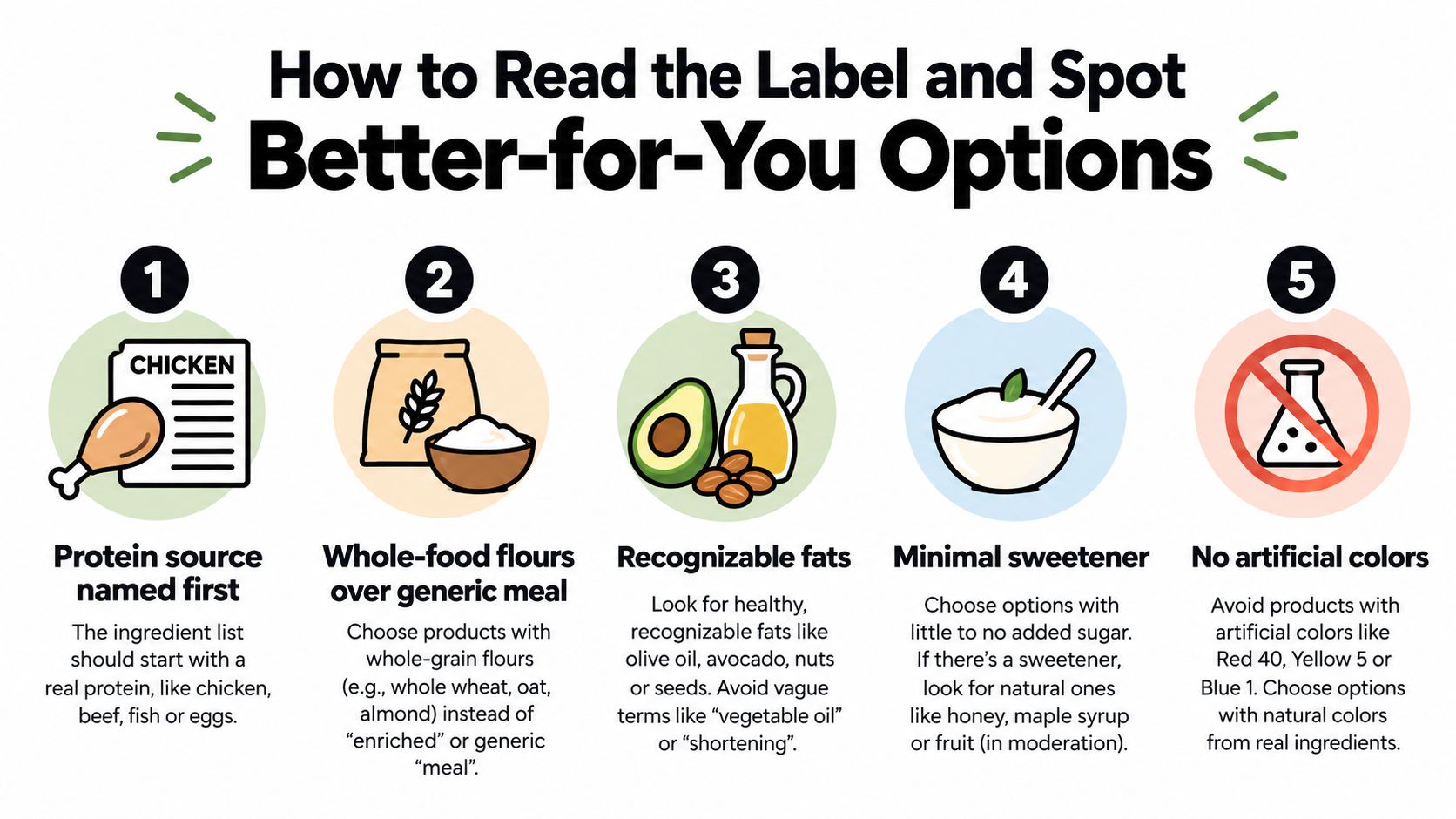
You can screen most dog treats cookies quickly if you read the package in a consistent order. Start with the ingredient list, then check the calorie statement and feeding directions. Front-panel language is useful for identifying the product, but it can't replace those details.
Use five label checkpoints
- Find a named protein. Chicken, salmon, beef, or another specific source gives you information that a vague animal ingredient doesn't.
- Look at the flour or starch. Whole-food flours such as oat, wheat, brown rice, sweet potato, or chickpea may be easier to understand than an unexplained blend.
- Identify the fat. Poultry fat, tallow, salmon oil, and flaxseed oil tell you more than “animal fat.”
- Scan for sweeteners. A little molasses, honey, or fruit puree may be part of a recipe, but a dessert-style formula should be treated as occasional.
- Read the additive line. Preservatives such as mixed tocopherols and rosemary extract have a different role from colors and flavor systems. A short, recognizable list is easier to assess.
A label should also trigger an immediate safety check. Xylitol, chocolate, raisins, macadamia nuts, excessive salt, and artificial colors deserve avoidance or veterinary discussion, depending on the ingredient and situation. If you see “natural flavor” or “animal digest,” don't assume the ingredient is harmful, but recognize that the description is less transparent.
The calorie statement turns a vague “small treat” into a feeding decision. Divide the cookie's listed calories by your dog's daily calorie allowance, then compare the result with the treat budget recommended by your veterinarian. The AAFCO explanation of treats and chews explains that treats generally aren't complete and balanced foods and should be used as rewards rather than as the main diet.
For owners comparing formats, limited ingredient dog treats can be easier to assess when the ingredient list is short and the protein source is clear. A different species and product category, Prebiotic Tuna Squeeze Treats for Cats, is described as using wild-caught tuna, prebiotics, and no artificial or natural flavors, colors, or preservatives. It isn't a dog cookie, but the same label discipline applies.
Baking Your Own Dog Treat Cookies at Home
Homemade dog treats cookies give you control over the flour, protein, fat, and shape. They don't automatically become nutritionally superior, though. You still need a safe ingredient list, a sensible portion, and a storage plan.
A practical base dough can use whole-wheat or oat flour, plain pumpkin puree, xylitol-free peanut butter, egg, and a small amount of unsweetened applesauce. Add flour gradually until the dough can be rolled without becoming sticky. Use plain pumpkin, not pumpkin pie filling, and check peanut butter for xylitol, also called birch sugar.
Build one dough, then vary the flavor
For a chicken-and-sweet-potato training cookie, mix a small amount of cooked, unseasoned chicken and mashed sweet potato into the dough. Keep pieces tiny and bake until firm enough to handle.
For a salmon-and-oat version, use plain cooked salmon or a suitable salmon ingredient with oat flour. Avoid seasoning, onion, garlic, and rich sauces. If your dog has a diagnosed sensitivity, don't use a “healthy” variation that includes the trigger.
For a senior-friendly option, reduce rich ingredients and make the cookies smaller and easier to chew. A softer texture may help some older dogs, but softer homemade treats generally need closer storage attention than dry commercial biscuits.
Bake for texture, not just appearance
Roll the dough evenly, cut small shapes, and bake at a moderate oven temperature, roughly 325°F to 350°F, until the cookies feel firm. Recipes vary by dough thickness and oven, so the visual cue isn't enough. Cool every cookie completely before storing it, because trapped warmth can create condensation inside a container.
Small training pieces around 5 to 8 calories can make repeated rewards easier to manage, but only use that range if your finished recipe supports it. You'll need to calculate the batch's calories from the ingredients and divide by the final number of cookies.
A veterinary-reviewed thick and chewy cookie recipe can help with general dough technique, but human cookie methods don't transfer automatically to dog treats. Sugar substitutes are especially dangerous, almond flour can change the fat and calorie profile, and dairy may not suit every dog. For more dog-specific ideas, use these healthy dog treat recipes as a starting point, then adapt only ingredients your veterinarian considers appropriate.
Storage, Freshness, and Feeding Guidelines
A crunchy cookie lasts because its available water is low, not because the word “biscuit” guarantees safety. Low moisture and controlled water activity make it harder for many microbes to grow. Homemade cookies usually contain more residual moisture and lack the commercial packaging controls that help manufactured products remain stable.
For a homemade batch, the practical storage guidance is about five days at room temperature, two weeks refrigerated, and up to three months frozen, based on the veterinary-reviewed pumpkin treat guidance from ToeGrips. Commercial shelf life varies by recipe, packaging, and the manufacturer's testing, so follow the package rather than transferring homemade assumptions to a store-bought bag.
| Cookie Type | Shelf Life, Room Temperature | Shelf Life, Frozen | Calories per Cookie | Maximum Share of Daily Diet |
|---|---|---|---|---|
| Homemade dry cookie | About 5 days | Up to 3 months | Calculate from the recipe | Treats kept within 10% of daily calories |
| Homemade softer cookie | Shorter and more variable | Up to 3 months when properly sealed | Calculate from the recipe | Treats kept within 10% of daily calories |
| Commercial baked biscuit | Follow package directions | Follow package directions | Use the package value | Treats kept within 10% of daily calories |
Make the feeding math practical
The 10% ceiling applies to total treats, not to each cookie. A dog may receive biscuits during training, a topper at breakfast, and a celebration piece later, so count all of them together. Your veterinarian can help set the dog's daily calorie target, especially when weight management, growth, illness, or a restricted diet is involved.
Keep fresh water available, offer treats away from the main meal when that helps preserve appetite, and adjust the number of rewards if your dog's body condition changes. A cookie's size should suit the dog, but the calorie statement remains more useful than shape alone.
Discard stored cookies if they smell rancid, show mold, feel unexpectedly damp, develop discoloration, or attract insects. Don't taste-test a questionable treat on your dog. A sealed container, clean hands, and a written date on homemade batches make freshness easier to monitor.
Choosing and Using Dog Treat Cookies With Confidence
The right cookie isn't the one with the most attractive packaging. It's the one that matches your dog's size, diet, sensitivities, and the reason you're offering it.
Use this short decision filter:
- For repeated training: Choose a small, easy-to-break cookie with a clearly stated calorie value.
- For a routine reward: Favor a recognizable protein, understandable starch, moderate richness, and a label you can explain.
- For a special event: Choose a celebration cookie as a planned indulgence, not as a replacement for a balanced meal.
- For a sensitive dog: Introduce one unfamiliar ingredient at a time and ask your veterinarian about diagnosed allergies or medical conditions.
- For homemade baking: Calculate the batch, make pieces consistent, cool them fully, and store them according to their moisture level.
A useful household system is to measure the day's treats into a small container each morning. Include training rewards, toppers, and special bites in that portion. When the container is empty, the treat budget is finished. This approach works better than estimating from a jar because repeated “tiny” rewards still count.
The wider category is moving beyond plain indulgence. Industry reporting projects the global pet-treats market from USD 38.40 billion in 2026 to USD 58.71 billion by 2031, with clean-label ingredients, functional nutrition, dental products, alternative proteins, and sustainable packaging among the cited drivers in this pet-treats market report. More choices can help, but “functional” still requires the same questions: What is the ingredient, how much is in the serving, and does the dog need it?
A confident choice is repeatable. If you can explain the cookie's purpose, ingredients, portion, and storage, you're making a decision rather than responding to packaging.
Audit your current cookie jar this week. Check the first ingredients, identify the calories, remove any questionable safety ingredient, and choose one improvement, such as smaller pieces or a simpler formula. Keep a veterinarian-approved homemade recipe available for the occasions when baking makes sense, and use the dog treats collection as one place to compare dog-specific options by format and ingredient information.
Joyfull offers pet treats made with clearly described ingredients, including a prebiotic chicken squeeze format that can be used for enrichment or as a meal topper rather than a cookie. Visit Joyfull to compare convenient options and build a treat routine that fits your dog's everyday diet.
0 comments