


You've found the perfect-looking parcel for your friend's dog. The box has a festive sleeve, a few glossy photos, and enough treats to make any Labrador sit up straight. Then you remember the dog has a sensitive stomach, gulps chews whole, and may already be on a restricted diet. Suddenly, the cutest dog treat gift box on the shelf looks like a risky purchase.
That's the right instinct. A good box starts with the recipient dog's needs, not the occasion, ribbon, or Instagram appeal. Check allergies, age, chewing habits, texture preferences, and feeding restrictions first. Presentation comes second.
Table of Contents
- Why Dog Treat Gift Boxes Are Booming Right Now
- What a Dog Treat Gift Box Actually Includes
- Ingredient and Safety Checklist Before You Buy
- Matching the Box to the Occasion and the Dog
- Building a DIY Dog Treat Gift Box at Home
- Packaging, Freshness, and Shipping the Box Safely
- Choosing and Gifting the Right Dog Treat Gift Box
Why Dog Treat Gift Boxes Are Booming Right Now
A dog treat gift box used to feel like a novelty. Now it sits inside a large, expanding treats economy. In North America, the pet treats market is projected to grow from USD 12.35 billion in 2025 to USD 13.28 billion in 2026, then reach USD 19.11 billion by 2031, with a projected 7.56% CAGR from 2026 through 2031, according to market data on the pet subscription box market. Globally, the same source projects growth from USD 38.40 billion in 2026 to USD 58.71 billion by 2031, at an 8.9% CAGR.
That context matters. A box isn't a separate little novelty category floating outside pet care. It's a premium presentation of treats people already buy, with more variety, stronger occasion appeal, and a format that works well for subscriptions and direct shipping. The U.S. pet industry spent USD 158 billion in 2024, with food and treats representing a major component of that spending, as reported in the same market reference.
The buying habit has changed, too. Many owners now treat dogs as household members, so a birthday, adoption anniversary, holiday, or welcome-home moment gets its own shopping decision. Small bakeries and specialist treat makers have made unusual proteins, decorated biscuits, and carefully portioned training rewards easier to find. Subscription commerce has made recurring discovery feel normal rather than indulgent.
From one bag to a curated bundle
The old approach was simple. Buy one bag of biscuits, add a toy if you remember, and hand it over. A modern box might contain a hero protein, a training treat, a long-lasting chew, and an enrichment item, all arranged as a complete experience.
That structure gives the buyer more ways to match the dog. A food-driven adult may enjoy variety. A puppy may need small, soft pieces. A determined chewer may ignore the biscuits and go straight for the toughest item. The box works when those choices are intentional.
The commercial history behind the format is older than the gifting trend. James Spratt is widely credited with creating a mass-produced dog biscuit in England around 1860. By 1890, his biscuits were being produced in an American factory, and in 1908, Carleton Ellis developed a dog-biscuit shape that became recognizable in modern treat culture, as outlined in this history of packaged pet treats.
A box can be charming, but it's still food and a set of chew products. Treat it as a serious purchase. The right question isn't, “Does this look generous?” It's, “Can this particular dog safely and happily use what's inside?”
What a Dog Treat Gift Box Actually Includes
A proper dog treat gift box is a curated multi-item bundle, not a single resealable bag placed inside a cardboard carton. The outer container creates the gifting moment. The sealed pouches, tins, and individual wrappers protect the contents.
Start by identifying the box's main food item. This is usually a strong-smelling hero protein such as salmon jerky, chicken strips, beef bites, or another clearly named meat. It gives the dog an immediate reward and sets the flavor direction for the rest of the collection.
Then look for supporting treats. Baked biscuits and small training rewards add crunch and make the box useful beyond one exciting snack. A long-lasting chew, such as a yak cheese puck or bully stick, changes the pace and gives the dog a more absorbing activity. An enrichment item, such as a lick mat or puzzle toy, makes the gift less dependent on constant treat consumption.
The anatomy of a useful box
A well-built set usually includes:
- A hero protein: The most aromatic or distinctive treat, often offered in a larger pouch.
- Training-sized pieces: Small rewards that owners can portion throughout the day.
- A chew: Something that matches the dog's bite strength and chewing supervision needs.
- An enrichment tool: A lick mat, puzzle, or treat-dispensing toy that turns food into an activity.
- A presentation container: A reusable tin, sturdy box, or another container that can hold treats after opening.
- Information for the owner: Ingredient cards, feeding notes, expiry dates, and any allergy warnings.
A small dog shouldn't receive the same physical format as a senior dog with worn teeth. For a small breed, choose tiny pieces, modest quantities, and a chew that can't become an awkward oversized mouthful. For a senior, prioritize softer textures and clear feeding guidance instead of filling the box with hard, dense chews.
The outer look also has a practical role. Tissue paper, crinkle paper, a name tag, and a handwritten note make the parcel feel personal, while a box style such as Printed Pillow Boxes, Printed Pillow Packs UK can suit a compact, polished presentation. Just keep loose decorative material away from the dog during unboxing.
If you're choosing a lickable option for enrichment, dog treats can work differently from dry biscuits because the owner can spread or portion them. Keep that format separate from a cat product such as Happy Guts Duo for Cats, which combines prebiotic tuna squeeze treats with a probiotic supplement and is formulated for cats, not dogs.
The best box makes its contents easy to understand. If the recipient has to guess what each pouch contains, how hard a chew is, or which item should be used first, the presentation has outrun the product.
Ingredient and Safety Checklist Before You Buy
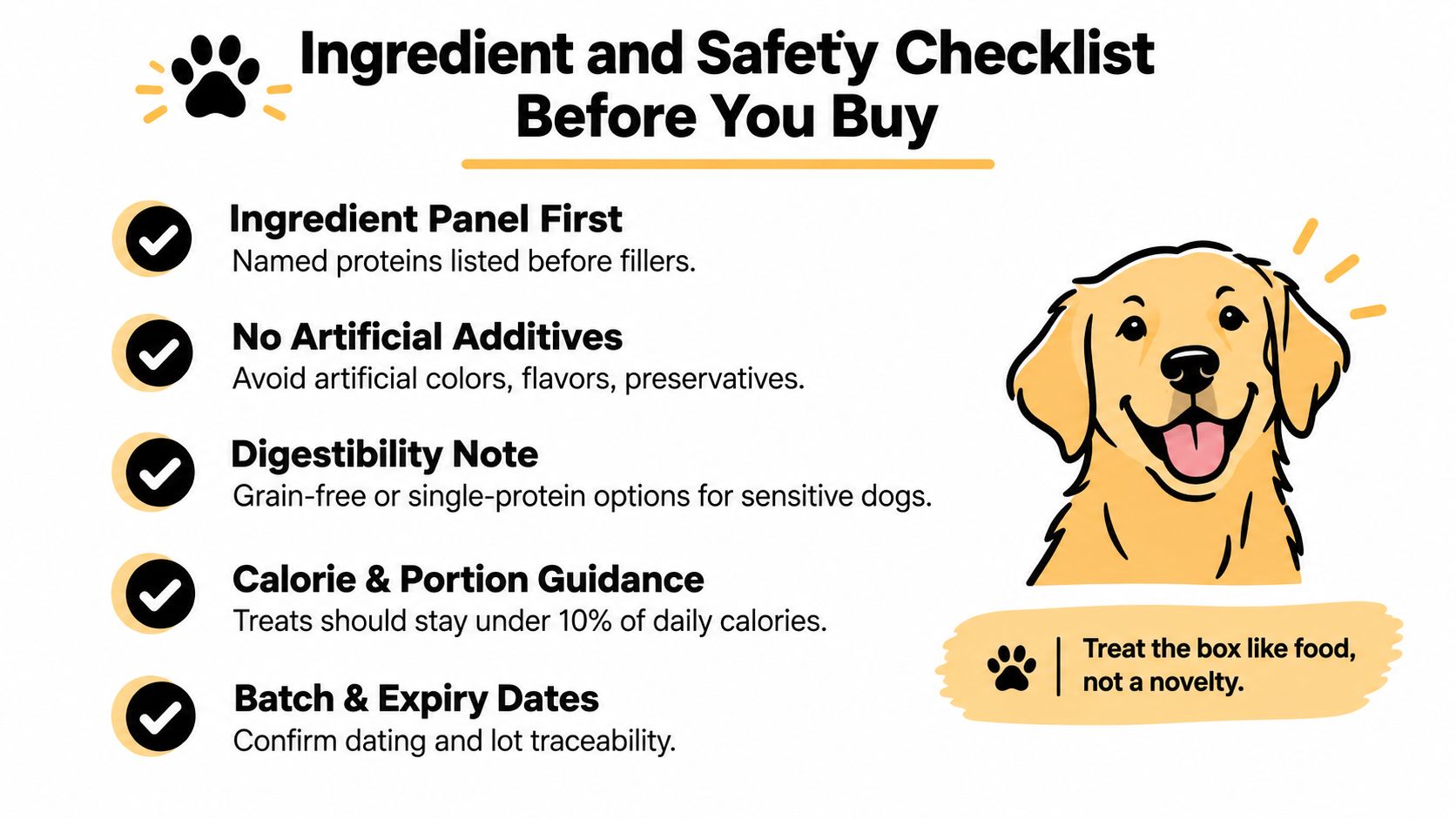
Read the label before you admire the box. Decorative packaging can hide the fact that the food inside contains a protein the dog can't tolerate, treats with unclear sourcing, or chews that don't suit the dog's eating behavior.
The ingredient panel deserves your first look. Focus on the opening part of the list because it tells you what the recipe is built around. Named proteins such as chicken, beef, salmon, or turkey are easier to evaluate than vague terms such as meat by-product, animal digest, or unnamed animal fat.
A treat doesn't replace a complete meal, but the label should still make portion decisions possible. Look for calorie information per piece, strip, chew, or serving, especially if the recipient is overweight, diabetic, or following a controlled diet. If the brand provides an AAFCO nutritional adequacy statement, read it carefully. A treat may be suitable as a supplemental reward without being designed as a complete and balanced food.
A practical label pass
Use this order when checking a box:
- Confirm the protein: Look for named animal sources and compare them with the dog's known allergies.
- Scan for additives: Flag artificial colors, artificial flavors, preservatives, propylene glycol, xylitol, and added sugar.
- Question vague fats: An unnamed fat makes it harder to assess sensitivities and recipe quality.
- Find feeding guidance: Check serving information and calorie details where provided.
- Check traceability: Every sealed pouch should have a lot or batch code and a best-by date.
- Read the formulation statement: Prefer products that explain veterinary review or nutritional oversight.
The dangerous fillers in dog treats deserve particular attention when you're comparing attractive variety boxes. Don't assume a premium price or handmade appearance guarantees a simple formula.
A box for a dog with food sensitivities should contain either familiar ingredients or clearly disclosed single-protein items. Don't gift a sampler with several novel proteins when you don't know the dog's history. The owner may need to introduce each item separately, and a mixed box makes it harder to identify the cause of a reaction.
Practical rule: Treat the box like food, not a novelty. Keep the ingredient list, feeding instructions, and expiry information with the gift.
For a lickable, enrichment-friendly option, Prebiotic Chicken Squeeze Treats for Dogs, 24 Packets are described as containing real cage-free chicken, prebiotics, and no artificial colors, preservatives, or flavors. The product can be spread on a lick mat, placed inside a Kong or Pupsicle, or used as a meal topper. Those uses may suit a dog that prefers soft food, but the recipient's owner should still review the full label and portion guidance.
Pet treats are labeled products, not anonymous snacks. New York pet food rules require treat packages to carry labels and, in some cases, to be registered before sale, which reinforces the basic buying rule: ingredient transparency and compliance are part of safety, not optional polish. Neutral holiday gift guidance also recommends keeping labels with the gift and checking the contents against the dog's age, eating behavior, and veterinary restrictions, as explained in this dog food gift safety guidance.
Matching the Box to the Occasion and the Dog
Start with the dog, then choose the occasion. Age, body size, chewing intensity, eating speed, and known sensitivities determine what belongs in the box.
A puppy usually needs small, softer pieces that can be delivered quickly during training. An active adult may handle a wider range of textures and get more use from a combination of jerky, biscuits, and enrichment. A senior or sensitive dog needs more restraint. Choose gentle textures, familiar proteins, and any supplements only when the owner already knows they're appropriate.
Heavy chewers need durable formats and supervision. Small breeds need portion control and treats sized for their mouths. A dog that gulps food shouldn't receive a dense chew just because it looks impressive in the packaging.
Match the occasion after the safety check
| Occasion | Puppy or Small Breed | Active Adult | Senior or Sensitive |
|---|---|---|---|
| Welcome home | Small training pieces, familiar protein, soft toy | Mixed textures, practical chew, durable toy | Gentle biscuits, familiar treats, comfort item |
| Birthday or gotcha day | Bite-size treats, enrichment toy, name tag | Novel but clearly labeled treats, plush, bandana | Soft treats, calm enrichment, easy-open packaging |
| Holiday | Seasonal presentation with safe, small treats | Themed biscuits, jerky, chew, and toy | Avoid unnecessary novelty, choose familiar flavors |
| Get-well gift | Only owner-approved items | Bland, familiar treats and no rich surprises | Vet-friendly choices, soft textures, no new proteins |
A birthday box can carry more novelty because the presentation is part of the celebration. A welcome-home box should be practical and shelf-stable. A get-well box should be conservative. Skip rich new proteins and anything that could interfere with a veterinary diet.
For digestive support, the Joyfull Probiotic Supplement for Dogs, 30 Single-Serving Packets is described as containing real beef bone broth, veterinarian-formulated probiotic strains, prebiotics, and individual serving packets. It's still a supplement, not a universal gift item. Include it only when the owner is comfortable adding it to the dog's routine.
Use restraint with sensitive recipients
Ask the dog's owner three quick questions before sending a box:
- What can the dog not eat?
- Does the dog chew carefully or swallow quickly?
- Are treats or supplements restricted right now?
Those answers matter more than whether the box matches the wrapping paper. A thoughtful gift may be a small set of familiar treats plus a toy, rather than a large assortment that forces the owner to discard half the contents.
Building a DIY Dog Treat Gift Box at Home
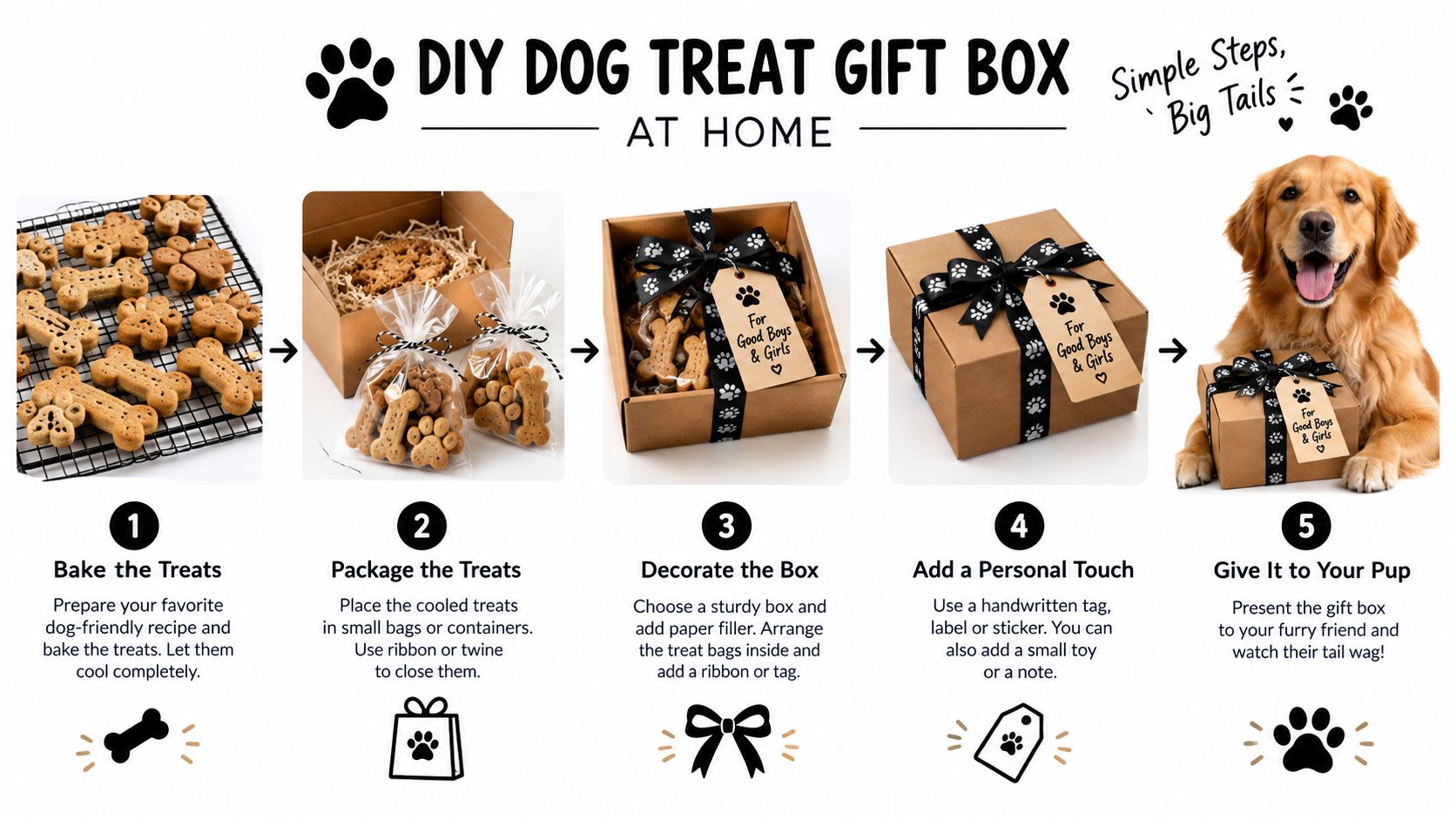
A DIY box gives you control over the ingredients, portions, textures, and presentation. It's the better choice when you know the dog well or when a pre-made assortment contains too many unknowns.
1. Choose treats with different jobs
Select three to five items, but don't choose five versions of the same biscuit. Build contrast into the set:
- Crunchy baked biscuits for an everyday reward.
- Chewy jerky for a higher-value snack.
- Soft training bites for quick repetitions.
- One supervised long-lasting chew for a focused activity.
- One enrichment filling for a lick mat or food toy.
Check every ingredient before placing it in the box. If the dog has a restricted diet, reduce the assortment rather than trying to create variety with unfamiliar foods.
2. Pick a container that fits
A sturdy kraft box suits a simple, handmade gift. A wooden crate feels more substantial and can be reused for storage. A reusable tin works well for small treats and protects biscuits from being crushed.
The container shouldn't leave fragile items rattling around. It should also be easy for the owner to open without dropping loose treats onto the floor.
3. Add one non-food anchor
A rope toy, silicone lick mat, snuffle mat, or durable food toy makes the box more than a snack delivery. Choose based on the dog's play style. A fabric toy may suit a gentle carrier, while a strong chewer needs a sturdier option and close supervision.
Don't add decorative ribbons, small bells, loose buttons, or plastic pieces that could be swallowed. Let the owner control the unboxing if the dog tends to eat wrapping materials.
4. Cushion and arrange deliberately
Use food-safe paper shred, tissue, or a washable cloth bandana as filler. Put heavier items at the base, medium pouches in the middle, and fragile biscuits near the top. Keep food sealed so the filler doesn't transfer dust or scent onto the treats.
A short handwritten tag adds more value than excessive decoration. Write the dog's name, list the proteins, include feeding guidance, and note any item that requires supervision.
5. Bake one simple homemade item
For a basic peanut butter and pumpkin bite, combine plain pumpkin with xylitol-free peanut butter and a suitable flour, form small portions, and bake at 170°C for 18 to 20 minutes. Let the bites cool fully before sealing them, and tell the recipient what's in them.
Homemade treats don't belong in a box without a date. Mark the preparation date, store them according to their moisture level, and make clear that the owner should inspect them before serving.
Packaging, Freshness, and Shipping the Box Safely
The outer box is for presentation. The inner pouch does the preservation work. Oxygen and moisture drive rancidity, staling, and texture loss, especially in baked or meat-based treats.
Standard polyethylene film can allow roughly 3,000 to 5,000 cm³ of oxygen per square metre per day, while a multilayer film containing EVOH can reduce oxygen transmission to below 1 cm³ per square metre per day, according to this technical guide to airtight dog treat packaging. That difference helps protect aroma, flavor, and crunch by slowing fat oxidation.
Build protection inside the presentation
Use individually sealed pouches or a food-grade liner inside the gift box. Separate strongly scented items, such as fish or jerky, from dry biscuits. This reduces moisture transfer and keeps oil from one product from spreading across the rest of the assortment.
Put the ingredient list, net weight, best-by date, and feeding guidance on the outer box or on an enclosed card. The recipient shouldn't need to hunt for the original product page to identify what they've received.
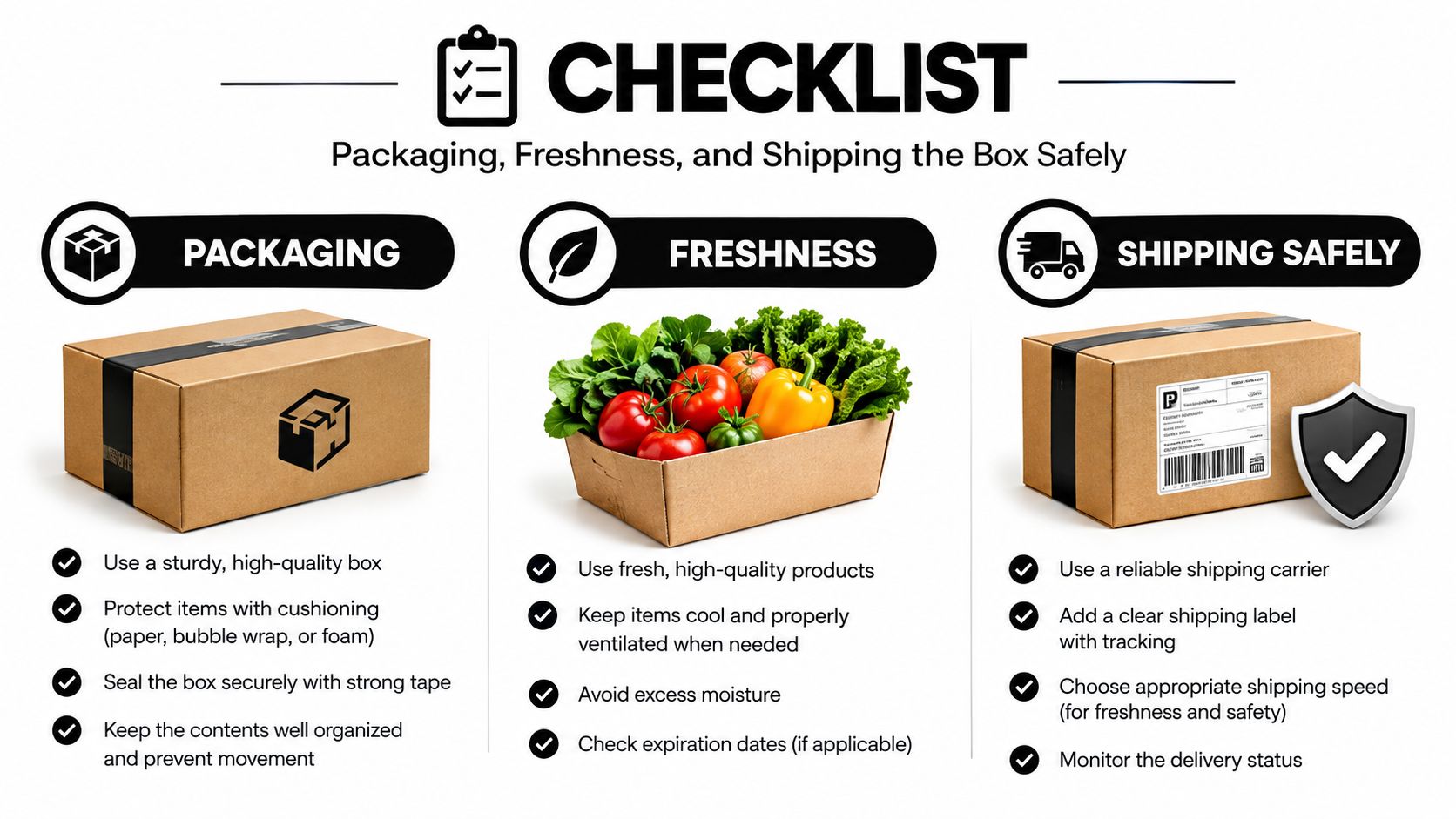
Shipping conditions depend on the contents. Dry biscuits and sealed jerky usually need cushioning and a mail-safe outer carton. Fresh or refrigerated items, such as frozen bone broth cubes, call for insulated liners and cold packs. Don't add cold packs by default, because condensation can damage packaging and presentation.
Prevent predictable shipping failures
- Cushion fragile products: Keep jars and brittle biscuits from shifting.
- Double-box glass: Use an inner container with padding and a separate outer carton.
- Plan delivery timing: Avoid sending temperature-sensitive items before a weekend or during extreme heat.
- Protect soft treats: Seal moist products properly and include storage instructions.
- Tell the recipient what to do: Ask them to check seals and refrigerate soft treats within a week of opening when the label requires it.
For broader dry food freshness tips, focus on the same habits: close opened packaging securely, keep food away from heat and humidity, and follow the product's storage directions rather than guessing.
A short note can prevent waste: “Check each seal before serving, refrigerate soft items after opening if directed, and introduce unfamiliar treats gradually.” That sentence is more useful than another layer of decorative paper.
Choosing and Gifting the Right Dog Treat Gift Box
Use a 30-second filter before you buy:
- Confirm the dog's allergy profile and any veterinary restrictions.
- Match the chew hardness and treat size to the dog's mouth and eating behavior.
- Choose the food format, including dry, soft, lickable, or long-lasting.
- Add the occasion and presentation details.
- Include clear instructions for storage and serving.
That order prevents the most common mistake, buying for the human recipient's taste while ignoring the dog's actual needs. A beautiful box filled with unsuitable food isn't a thoughtful present.
Pick your buying lane
Convenience buyers should choose a pre-made box with a complete ingredient list, visible dates, clear portion guidance, and a stated approach to veterinary or nutritional review. Don't buy a sealed mystery assortment.
Value builders may prefer a subscription because recurring boxes can provide regular variety. Before signing up, confirm whether the contents change, whether the owner can manage allergies, and whether the household can use the volume before it loses freshness.
Hands-on givers should assemble a custom set. This is the safest route when you know the dog's favorite protein, preferred texture, and chewing habits. It also lets you replace a questionable chew with an enrichment tool or a familiar snack.
For ideas beyond food, a guide to gifts for dog lovers can help you add practical items for the owner without stuffing the dog's box with unnecessary treats. A washable blanket, toy, or personalized accessory may extend the gift without increasing dietary risk.
Before handing over the parcel, include a personal note, a spare bag or tin for opened treats, and a warning about any novel protein. Tell the owner which items require supervision. If you're unsure whether a treat fits the dog's diet, ask first and wrap later.
There isn't one perfect dog treat gift box. There's only the best fit for that dog, that household, and that moment. Needs first, food second, presentation third is the rule that keeps the gift enjoyable instead of creating a problem.
Joyfull offers dog treats and supplements built around clearly identified ingredients, high-quality proteins, and veterinary review, including options that work for lick mats, enrichment, and everyday routines. Review the available products at Joyfull, then choose an option that matches the recipient dog's diet and chewing style before you build the box.
0 comments