Why Is My Dog Throwing Up Undigested Food?
When you see your dog bring up their dinner completely whole, it's natural to think they've just vomited. But more often than not, what you're actually seeing is something called regurgitation.
This isn't just a fancy word for throwing up. It's a completely different physical process, and figuring out which one is happening is the first, most important step to helping your dog.
The Critical Difference Between Vomiting and Regurgitation
It’s easy to lump it all together as "getting sick," but where the food comes from—the esophagus or the stomach—points to very different health issues. One is often a minor digestive hiccup, while the other can signal a more serious problem.
Think of it this way: vomiting is an active, forceful eviction from the stomach. You'll see and hear the effort—heaving, gagging, and strong belly contractions. It’s the body actively deciding something needs to go.
Regurgitation, on the other hand, is passive. The food never made it to the stomach. It’s like a logjam in the esophagus that simply spills back out, often without any warning at all.
What Does Regurgitation Look Like?
Regurgitation can be surprisingly quiet and sudden. One minute your dog is standing there, and the next, there's a pile of food on the floor.
- It’s Effortless: There’s no heaving or retching. The food just seems to fall out of their mouth.
- It’s Fast: This usually happens within minutes of eating, sometimes seconds.
- The Food is Whole: The kibble looks pretty much the same as it did in the bowl. It's often covered in slimy saliva and might even be shaped like a tube.
This visual guide breaks down the key differences between the two, showing what happens inside your dog's body.
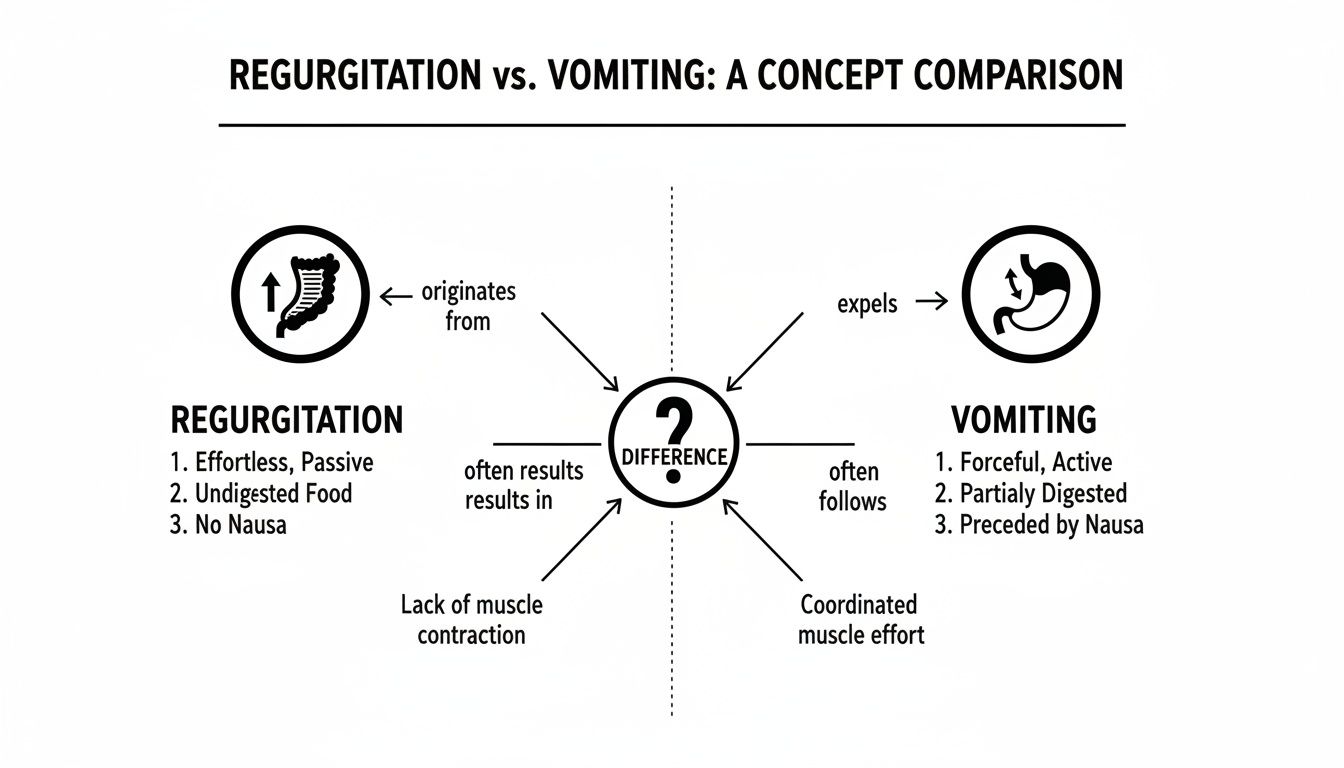
As you can see, the forceful muscle contractions of vomiting are a world away from the passive backflow of regurgitation.
To quickly tell them apart, this side-by-side comparison is a great tool. It's the first step in understanding what's happening and how urgent the situation might be.
Regurgitation vs Vomiting Quick Comparison
| Symptom | Regurgitation (Esophagus Issue) | Vomiting (Stomach Issue) |
|---|---|---|
| Warning Signs | None; it's sudden and quiet. | Obvious distress: drooling, lip-licking, pacing. |
| Physical Action | Passive; food seems to "fall out." | Active; involves forceful heaving and belly contractions. |
| Timing | Typically right after eating or drinking. | Can happen anytime, often long after a meal. |
| Appearance of Food | Undigested, may be tube-shaped, covered in saliva. | Partially digested, smells sour, contains yellow bile. |
| Your Dog's Behavior | Acts normal immediately after, may try to re-eat it. | Often acts lethargic, anxious, or unwell after. |
Knowing the difference helps you give your vet the right information, which is crucial for a fast and accurate diagnosis.
Why It Matters
While a one-off event of a dog throwing up undigested food might just mean they ate too fast, chronic regurgitation is a major red flag. Vets take this symptom seriously because it means something is wrong with the esophagus.
One of the biggest dangers is aspiration pneumonia. This is a life-threatening lung infection that can happen if your dog accidentally inhales food particles during a regurgitation episode.
"Regurgitation is a passive process where undigested food comes back up from the esophagus without the same force as vomiting. It typically happens shortly after eating and doesn’t involve the abdominal contractions seen with vomiting."
Telling your vet "My dog regurgitated" instead of "My dog vomited" immediately changes their diagnostic path. It helps them focus on potential esophageal problems from the start. To get a better sense of how things should work, you can explore our guide on how long dog digestion takes.
So, Why Is My Dog Throwing Up Undigested Food?
It's a sight that can stop any dog owner in their tracks: your dog’s last meal, looking almost the same as it did going in. You've already figured out if it's true vomiting or the less dramatic act of regurgitation. Now, let's get to the bottom of why it's happening. The reasons can be as simple as your dog's dinnertime habits or, in some cases, a sign that something more serious is going on.
Often, the answer lies in how your dog eats, not an underlying illness. These behavioral quirks are usually the easiest to spot and fix, bringing quick relief to both you and your pup.
The usual suspects: Habits and Behaviors
Before jumping to worst-case scenarios, let's look at the simple stuff. If your dog seems perfectly happy and energetic after the incident, the cause is probably related to their mealtime routine.
Eating Too Fast
Does your dog inhale their food in five seconds flat? This is incredibly common, especially in multi-dog homes or with rescues who've had to compete for meals. When they eat this quickly, they aren't chewing properly and are swallowing a ton of air along with their kibble. This can distend the stomach so fast that it triggers a reflex to get everything out before digestion has a chance to start.
Post-Meal Zoomies
We've all been told not to swim right after eating. The same logic applies to our dogs. A vigorous game of fetch or a run around the yard right after a meal can jostle the stomach, interrupting the digestive process and sending that food right back up. A calm "rest and digest" period of at least 30-60 minutes after eating is a simple but effective fix.
When Food Is the Problem
If you’ve ruled out speed-eating and post-dinner play sessions, it's time to look at what's in the bowl. The food itself—or how your dog’s system reacts to it—can be a major cause of gastrointestinal upset.
A sudden diet change is a classic trigger. Switching your dog's food cold turkey can shock their digestive system, leading to a quick rejection of the new meal.
Food intolerances or full-blown allergies can also be the culprit. An immune response to common proteins like chicken and beef or fillers such as wheat can cause inflammation and lead to vomiting. If you suspect this might be the issue, it’s worth learning more about what causes food allergies in dogs.
According to pet health experts, rapid eating is a major cause of regurgitation because dogs gulp air, which can bloat the intestines and prevent them from processing food efficiently. In some cases, processed kibble can be a chronic trigger. One British study observed that vomiting occurred in 14.9-18.9% of dogs over a two-week period. While diet changes or home-cooked meals were linked to higher risks in the study, the sample was dominated by dogs on commercial foods, suggesting that ingredient quality plays a significant role. You can explore more about these findings on how your dog's eating habits affect their digestion.
Looking Deeper: Underlying Medical Conditions
If the problem keeps happening and isn't tied to behavior or a recent diet change, it's time to consider that there may be a medical issue at play. These conditions almost always require a trip to the vet for a proper diagnosis and treatment plan.
Here are a few possibilities:
- Esophageal Issues (Megaesophagus): This condition occurs when the esophagus loses its muscle tone. Instead of pushing food down to the stomach, it becomes a floppy pouch where food just sits until it comes back up, often hours later.
- Gastrointestinal Obstruction: This is a scary one. If your dog swallows something they shouldn't—a sock, a piece of a toy, a rock—it can create a blockage. Food has nowhere to go but back up. This is a medical emergency that often requires surgery.
- Gastritis: Simply put, this is an inflamed stomach lining. It can be caused by anything from eating spoiled food to ingesting toxins or having a bad reaction to medication. An irritated stomach can't do its job properly, so it expels its contents.
By understanding these potential causes, you become a better detective for your dog's health. You can connect the dots between their symptoms and the root cause, helping you decide whether the solution is a slow-feeder bowl or a call to your vet.
What to Do Right After Your Dog Throws Up
It’s always a little jarring when your dog throws up, especially when you see their dinner come back up almost completely whole. The natural first reaction is to panic, but the best thing you can do for your dog is to stay calm. Your immediate job is to play detective and make your pet comfortable.
Take a breath. Right now, it's less about figuring out why it happened and more about managing the situation. Look at your dog—are they panicked and distressed, or are they acting like nothing happened and maybe even trying to eat the evidence? Their behavior tells you a lot.
Of course, you’ll also have a mess to deal with. Finding a good professional carpet cleaning solution for pets can help you handle any stains or smells, letting you focus completely on your dog.
Step 1: Assess the Scene and Your Dog
Before you grab the paper towels, put on your detective hat. What your dog threw up can offer some serious clues about what's going on.
Get a good, if slightly gross, look at the contents. You’re searching for anything that seems out of place.
- Foreign Objects: Do you spot bits of a toy, pieces of a sock, or flecks of plastic? This is a huge red flag for a potential blockage.
- Blood: Is the blood bright red (meaning it's fresh) or dark and clumpy like coffee grounds (meaning it's been partially digested)? Either one warrants an immediate call to the vet.
- Color and Consistency: Is it just kibble, or is there yellow bile or white, foamy liquid mixed in? Bile often points to an issue that started in the stomach, not just a simple case of eating too fast.
Next, turn your attention to your dog's body language. Are they pacing, whining, or hunching over like their belly hurts? A hard, swollen abdomen is an unmistakable sign of bloat, which is a life-threatening emergency.
Step 2: Create a Calm Recovery Space
If you've ruled out an immediate, life-threatening emergency, the next move is to give your dog's digestive system a break. Think of it as hitting the reset button on their gut.
Hold off on food for about 12 hours. I know, it feels mean, especially when they hit you with those sad puppy-dog eyes. But it’s crucial. This gives their stomach a chance to settle down and stops the cycle of irritation that can lead to more vomiting.
For a one-off vomiting incident where your dog seems perfectly fine otherwise, this short fast is standard first-aid. It lets any inflammation in the stomach lining calm down before you ask it to start digesting again.
But don't take away their water unless your vet specifically tells you to. Vomiting leads to fluid loss, and dehydration is a real risk. The trick is to prevent them from guzzling a whole bowl at once. Just offer small, frequent sips to keep them hydrated without overwhelming their sensitive stomach.
Step 3: Reintroduce Food and Water Slowly
After that 12-hour fast, if your dog has been fine and has kept down those small sips of water, you can cautiously reintroduce food. The golden rule here is start small and bland.
- Offer a Bland Diet: Boil some plain, unseasoned chicken breast and mix it with plain white rice. It's the go-to for a reason—it’s super gentle and easy to digest.
- Serve a Tiny Portion: Start with just a spoonful or two. Don't give in to the temptation to fill their bowl, no matter how hungry they seem.
- Wait and Watch: Give it a couple of hours after that first small meal. If everything stays down and they seem happy, you can offer another small portion.
If the vomiting starts up again at any point, stop feeding them right away and get on the phone with your vet. This slow, deliberate process is the safest way to handle a minor upset while also quickly flagging a problem that needs a professional’s help.
Recognizing Red Flags and When to Call the Vet
It can be startling when your dog throws up a barely-touched meal, but a single episode isn't always a cause for panic. More often than not, it's a minor hiccup. But as a pet owner, you're the first line of defense. Knowing how to tell the difference between a simple upset stomach and a real medical emergency is one of the most important jobs you have.
Think of yourself as a detective. A dog who throws up once after gobbling down dinner too fast and then immediately wants to play is telling a very different story than one who is sick multiple times and hiding under the bed. Your job is to spot the clues that point to something more serious going on under the surface.
Critical Symptoms That Demand an Immediate Vet Call
If you see any of the following signs along with the regurgitation or vomiting, the "wait and see" approach is over. It's time to call your vet or an emergency clinic right away. These are serious red flags.
-
Repeated Vomiting: A one-off event is one thing. But if your dog throws up more than twice in a 24-hour period, it signals a more persistent problem that needs a professional diagnosis. Each episode also dramatically increases their risk of dehydration.
-
Obvious Pain or Discomfort: Is your dog whining, panting heavily for no reason, or hunching over? A tense, hard belly or adopting the "prayer position"—front end down, back end in the air—are classic signs of significant abdominal pain.
-
Blood in the Vomit: This is always a reason to worry. Bright red blood is a sign of active bleeding somewhere in the esophagus or stomach. If it looks dark and grainy like coffee grounds, that’s partially digested blood, meaning the problem could be deeper in the GI tract. Both are emergencies.
-
Extreme Lethargy or Weakness: If your dog seems completely wiped out, weak, or unresponsive after being sick, take it seriously. A sudden lack of energy can point to a systemic issue like a bad infection, severe dehydration, or intense pain.
-
You Suspect They Swallowed Something: If there’s even a small chance your dog got into the trash or swallowed part of a toy, a sock, or a bone, treat it as an emergency. An internal blockage is incredibly dangerous and often requires surgery to fix.
Symptom Severity Guide: When to Worry
It's easy to overreact (or underreact) when you're worried. To help you make a quick, level-headed assessment, I've put together this simple guide. It breaks down what's happening and what you should do next.
| Symptom | What It Looks Like | Action Required |
|---|---|---|
| Mild | A single episode, your dog acts completely normal afterward, and there are no other symptoms. | Monitor at home. Temporarily withhold the next meal to let their stomach settle. |
| Moderate | Two episodes within a day, your dog seems a little tired or "off" but is still responsive. | Call your vet for advice. They might suggest you come in or give you instructions for home care. |
| Severe | Multiple episodes, any blood in the vomit, clear signs of pain, extreme weakness, or collapse. | Go to an emergency vet immediately. Do not wait. |
This chart is a great starting point, but it doesn't replace professional medical advice.
When in doubt, always err on the side of caution. A quick phone call to your vet clinic can give you peace of mind or confirm that your dog needs to be seen. It's always better to be told it's nothing to worry about than to wish you had called sooner.
Proactive Strategies for Preventing Future Episodes
Alright, you've handled the immediate situation and made sure your dog isn't in any danger. Now, your mind naturally turns to the next big question: "How do I stop this from happening again?" This shift from reactive care to proactive prevention is where you can make a real difference in your dog's long-term digestive health.
The good news is that many of the most powerful strategies are simple tweaks to your dog's daily life. By focusing on how they eat and what they eat, you can build a solid foundation for a happy gut and dramatically reduce the odds of seeing that undigested meal make a reappearance.
Fine-Tuning Your Dog's Mealtime Habits
More often than not, the reason a dog throws up its food isn't some complex medical issue—it's just bad table manners. Dogs, especially those who grew up with littermates or live in a multi-pet household, can develop eating habits that put a ton of strain on their digestive system. Fixing these behaviors is your first, and often most effective, line of defense.
The number one culprit? Eating way too fast. When a dog practically inhales their food, they gulp down a lot of air along with it and barely chew a single kibble. This can trigger an almost instant expulsion of the meal before their stomach even knows what hit it.
Luckily, you can pump the brakes on a speed-eater with a few easy changes:
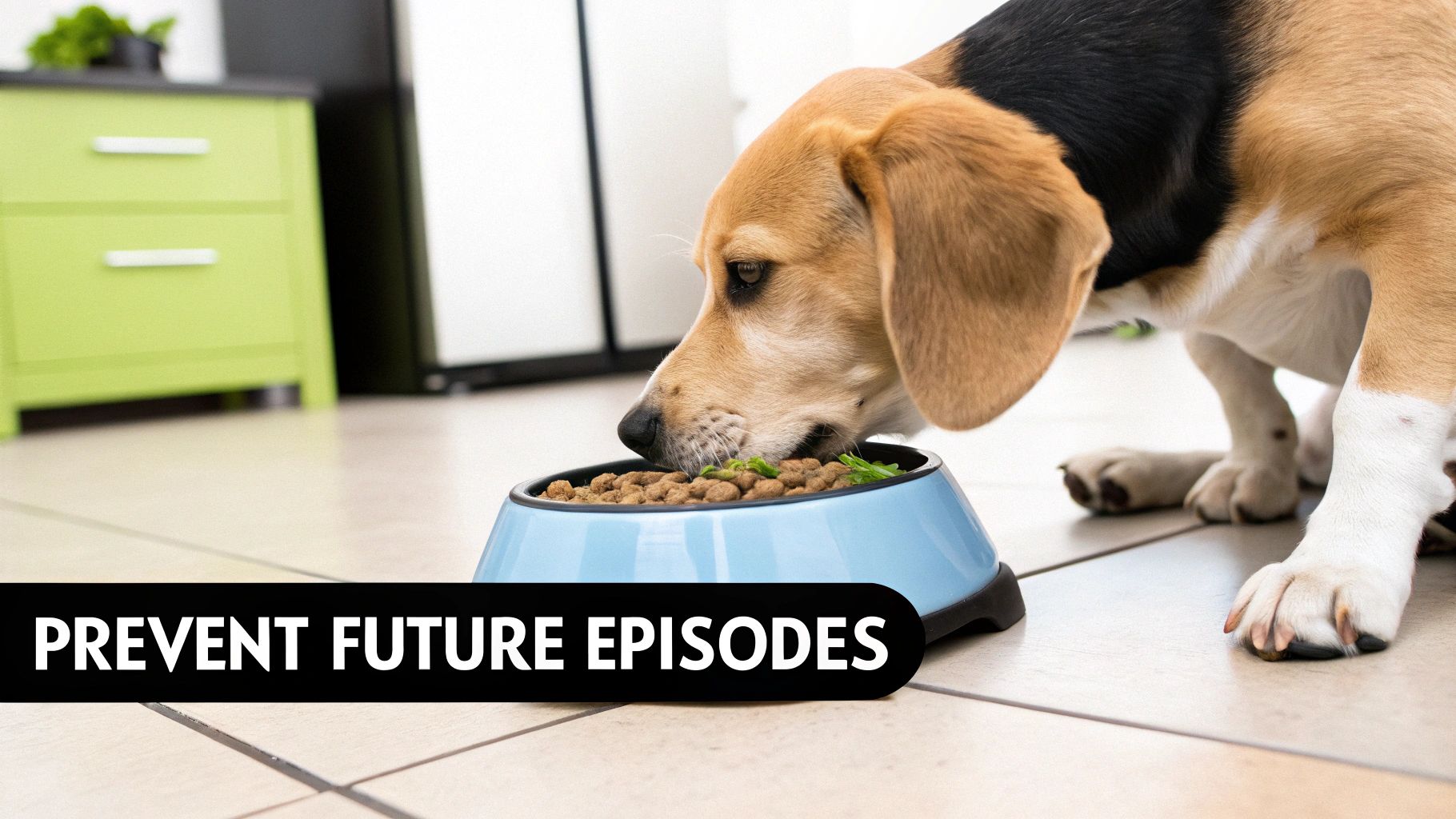
- Use a Slow-Feeder Bowl: These bowls are designed with built-in mazes and obstacles that turn mealtime into a bit of a game. They force your dog to slow down and work for their food, a simple fix that can single-handedly solve many cases of regurgitation.
- Serve Smaller, More Frequent Meals: Instead of one or two giant meals a day, try splitting their daily portion into three or four smaller ones. This keeps their stomach from getting overwhelmed.
- Create a Calm Eating Environment: If you have more than one pet, feeding them in separate areas can dial down the competitive "food anxiety" that leads to frantic eating. A relaxed dog is a slower eater.
By turning mealtime from a 30-second race into a more mindful activity, you give their digestive system a fighting chance to do its job properly.
The Power of a Post-Meal Cool-Down
What your dog does right after eating is just as critical as the meal itself. Any kind of vigorous activity—we're talking running, jumping, or a frantic game of fetch—on a full stomach can easily lead to that food coming right back up.
Think of it like a person deciding to go for a hard run immediately after Thanksgiving dinner. It's just a recipe for disaster. Your dog's body needs to direct its energy toward digestion, not chasing a squirrel.
A simple but non-negotiable house rule should be a mandatory "cool-down" period of at least 30 to 60 minutes after every single meal. This means no intense play, no zoomies around the living room, and no long, strenuous walks. It’s the perfect time for calm activities, like a nap, a cuddle on the couch, or working on a gentle chew toy.
Choosing the Right Fuel for Their System
Beyond how they eat, what they eat plays a massive role in preventing a dog throwing up undigested food. A diet built on high-quality, easily digestible ingredients is the cornerstone of good gut health.
When you're looking at dog food labels, keep an eye out for:
- A High-Quality Protein Source: Real, whole proteins like chicken, lamb, or fish should be the very first ingredient on the list.
- Minimal Fillers: Common fillers like corn, wheat, and soy can be tough for some dogs to digest and might even trigger food sensitivities.
- Simple, Recognizable Ingredients: As a general rule, the shorter and more understandable the ingredient list, the better.
If you have a hunch that a food intolerance might be the issue, your vet could suggest a food trial with a "novel" protein—something new to your dog's system, like duck or venison—to see if their symptoms clear up. To really dig into this, you can learn more about how to improve your dog’s gut health with smart nutrition.
Of course, holistic care goes beyond just food. A calm and secure environment reduces stress, which in turn benefits overall health. Making sure your dog has a comfortable, properly sized space is part of that puzzle; you can find helpful dog kennel size recommendations to ensure their den is a true sanctuary. Ultimately, combining smart feeding habits with a high-quality diet creates a powerful, two-pronged approach to keeping your dog's digestive system running smoothly.
Frequently Asked Questions From Pet Owners
Even with a solid game plan, you're bound to have specific questions when your dog throws up a barely-touched meal. It's completely normal to want clear answers for what's happening with your dog. Here, we'll tackle the most common questions we hear from concerned pet owners, offering direct, expert-backed advice to help you feel more in control.
We'll cover everything from how long to wait before offering food again to whether a puppy's sensitive stomach is something to worry about. These are the practical insights you need to navigate these tricky moments with confidence.
How Long Should I Wait to Feed My Dog After They Throw Up?
This is easily one of the most important questions people ask. After a single, minor incident where your dog seems perfectly fine otherwise, the general rule is to withhold food for about 12 hours. This short fasting period gives their irritated stomach a chance to settle down and recover.
During this time, it's crucial to offer small, frequent sips of water to keep them hydrated. Letting them gulp down a whole bowl can easily trigger more vomiting, so slow and steady is the way to go.
After the 12-hour rest, don't just go back to their regular food. Start with a tiny portion of something bland, like plain boiled chicken and white rice. If they keep that down for a few hours, you can try another small meal. However, if the vomiting was severe, happened more than once, or your dog just isn't acting right, you must contact your vet for specific instructions before offering any food at all.
Can Switching My Dog’s Food Too Quickly Cause This Problem?
Absolutely. A sudden diet change is one of the most common culprits behind digestive upset and can easily lead to your dog throwing up undigested food. Think of their gut as a delicate ecosystem—it needs time to adapt to new ingredients and different protein or fiber levels.
When you switch foods without a transition, it can shock their system. The best approach is to introduce the new food gradually over 7 to 10 days. This slow-and-steady method gives the good bacteria in their gut time to adjust, preventing an upset stomach.
Here’s a simple schedule to follow:
- Days 1-3: 75% old food, 25% new food
- Days 4-6: 50% old food, 50% new food
- Days 7-9: 25% old food, 75% new food
- Day 10: 100% new food
This simple process makes all the difference for a smooth, comfortable switch.
Is It Normal for a Puppy to Throw Up Undigested Food?
While it’s true that puppies have sensitive stomachs and a talent for eating things they shouldn't, frequent vomiting or regurgitation is never normal. Puppies are naturally curious and are at a much higher risk of swallowing foreign objects—like pieces of a toy or a stray sock—that can cause a dangerous intestinal blockage.
What's more, puppies get dehydrated far more quickly than adult dogs. Even a small amount of fluid loss from vomiting can have a serious impact on their little bodies.
Because the stakes are so much higher for puppies, you should always consult your vet if your puppy throws up more than once. It’s also crucial to call if they show other signs of illness like lethargy, diarrhea, or a loss of appetite. When it comes to puppies, it is always better to be safe than sorry.
Could Stress and Anxiety Be Making My Dog Throw Up?
Yes, psychological stress can definitely show up in physical ways, and an upset stomach is a classic example. Just like with people, anxiety in dogs can trigger a physiological response that leads to vomiting.
Often, this is tied to specific situations that make them nervous or fearful. Some anxious dogs also develop a habit of eating way too fast, which is a direct cause of regurgitation.
Common anxiety triggers include:
- Separation anxiety when you leave the house
- Loud noises like thunderstorms or fireworks
- Car rides or other stressful travel
- Changes in their routine or moving to a new home
If you notice the vomiting always seems to happen after a stressful event, getting to the root of their anxiety is the best long-term solution. This could involve behavior modification, creating a calmer environment, or talking to your vet about calming aids.
At Joyfull, we believe a healthy gut is the foundation of a happy life for your pet. Our formulas are crafted with clean, high-quality ingredients and scientifically reviewed to ensure they support optimal digestive wellness. If you're looking to provide your furry family member with nutrition that's as beneficial as it is delicious, explore our better-for-you snacks and meals at https://joyfullpet.com.