


When you pick a dog food "without artificial preservatives," you're not just avoiding a few chemicals. You're choosing a whole philosophy for your dog's nutrition—one that's cleaner, simpler, and way more transparent. It’s about being able to look at the ingredient list and know exactly what you’re putting in their bowl.
Why Pet Parents Are Demanding Cleaner Dog Food
The journey to your dog’s food bowl starts long before you scoop it out. For so many of us now, it begins right in the store aisle, turning over bags and scrutinizing labels. This isn't just some passing trend. It's a fundamental shift in how we see our dogs: they're not just pets, they're family. And they deserve the same quality of food we'd want for ourselves.
This idea has a name—pet humanization—and it's completely changing the game. We've spent years learning to check our own food for weird additives and unpronounceable chemicals. It only makes sense we'd start doing the same for our four-legged family members. The question is no longer just, "What should I feed my dog?" It's become, "What shouldn't I be feeding my dog?"
The Focus on What Is Left Out
Choosing a dog food without artificial preservatives is really an act of intentional exclusion. Think about it like cooking dinner for someone you love. You wouldn't toss in a bunch of synthetic chemicals just to make it last longer on the shelf, right? It's the same logic. What’s left out of the bag is often just as important as what’s put in.
This demand for cleaner, more honest ingredients is sending ripples through the entire pet food industry. We're seeing huge growth in the natural pet food market, all because owners like us are voting with our wallets for better, more transparent options.
The global natural pet food market hit an incredible USD 15,276.8 million in 2025, and dog food made up a whopping 53.1% of that. Experts predict it will soar to USD 23,052 million by 2035. This isn't just a niche market anymore; it's a clear signal that clean nutrition is what pet parents want. You can dive deeper into the natural pet food market growth data from Future Market Insights.
This whole movement is built on one simple, powerful truth: better ingredients lead to better health. When you steer clear of synthetic preservatives, you’re taking a real, proactive step to support your dog's long-term wellness. You're making sure every single bite is packed with pure, wholesome nutrition. It's a simple act of love, shown through the daily choice of what fills their bowl.
What Do Preservatives Actually Do in Dog Food?
Preservatives are a non-negotiable part of your dog’s food, but the kind of preservative used makes all the difference. Think of it like this: to keep bread from molding, you could use common kitchen sense and store it in a cool, dry place, or you could add a cocktail of synthetic chemicals to make it last for weeks on the shelf. Both methods prevent spoilage, but they are worlds apart in their approach.
In dog food, the main job of a preservative is to stop the fats and oils from going rancid. This is a big deal. Rancid fats don't just taste awful; they also lose their nutritional value, robbing your dog of essential fatty acids and vitamins. Without any preservatives, a bag of kibble would become unsafe and unappetizing in just a few days. This is where the crucial distinction between artificial and natural preservatives comes into play.
At the heart of the "clean eating" movement for pets is a simple idea: our dogs are family, and they deserve food made with ingredients we can actually recognize and trust.
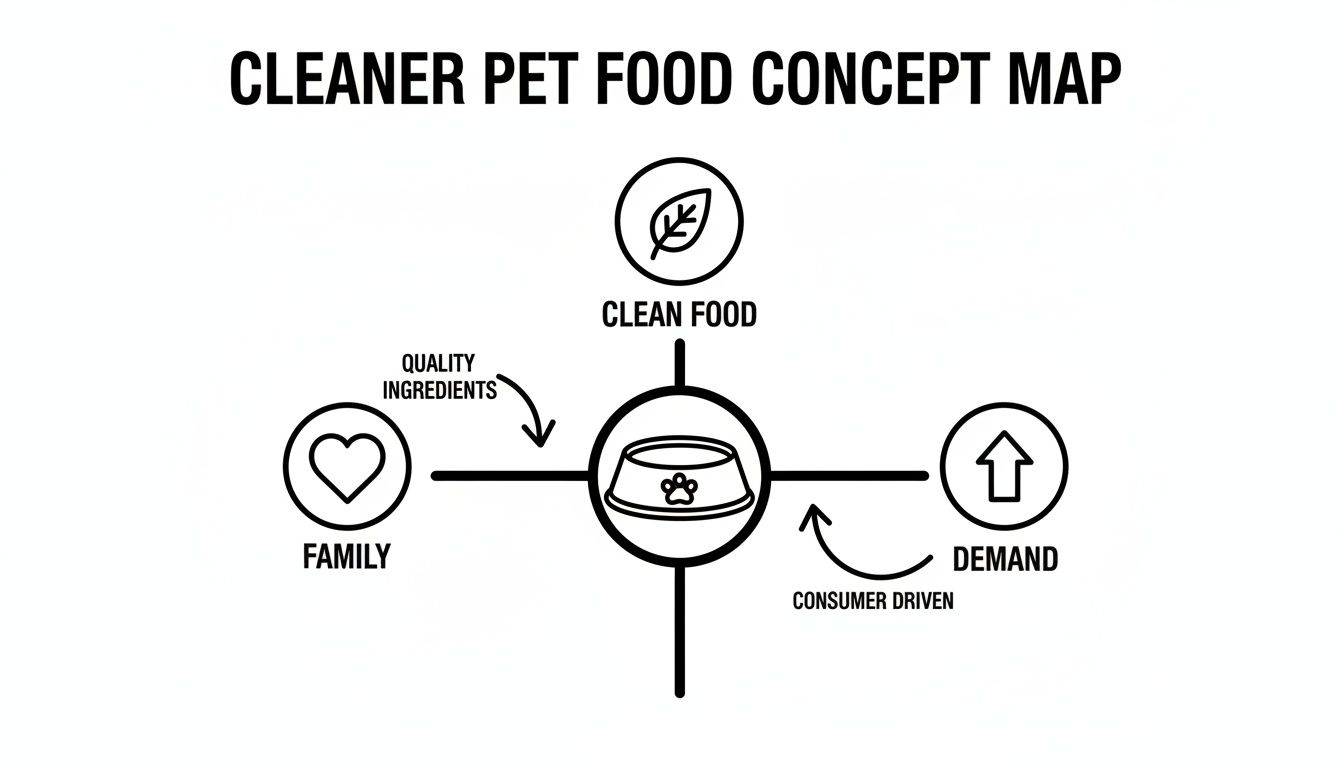
This growing perspective is what's driving so many of us to look more closely at ingredient labels and demand better for our dogs.
Artificial Vs Natural Preservatives in Dog Food
To help you spot the good from the questionable, here’s a straightforward comparison between the common artificial preservatives you should avoid and the safer, natural alternatives used in high-quality dog foods.
| Preservative Type | Common Examples | Primary Function | Potential Concerns |
|---|---|---|---|
| Artificial | BHA, BHT, Ethoxyquin, Propyl Gallate | Fat & oil preservation | Linked to health issues; synthetic and unnatural for a dog's diet. |
| Natural | Mixed Tocopherols (Vitamin E), Rosemary Extract, Ascorbic Acid (Vitamin C) | Fat & oil preservation | None; often add nutritional benefits like antioxidant support. |
As you can see, the choice is pretty clear. Natural preservatives not only do the job effectively but also contribute to your dog's overall health, while artificial ones come with a list of potential red flags.
Artificial Preservatives To Watch For
So, what are these synthetic additives we're talking about? When a bag of dog food proudly states it's made "without artificial preservatives," it's specifically calling out the man-made chemicals that some manufacturers use to give their products an unnaturally long shelf life. While effective, some have raised serious questions among vets and pet owners for their potential health risks.
Keep an eye out for these on any ingredient panel:
- Butylated Hydroxyanisole (BHA): A lab-created antioxidant used to keep fats from spoiling.
- Butylated Hydroxytoluene (BHT): Works much like BHA and is often used right alongside it to preserve fats.
- Ethoxyquin: A particularly potent preservative that has fallen out of favor due to major consumer backlash, but it can still be found, especially in fish meals used by some brands.
- Propyl Gallate: Another synthetic antioxidant, frequently combined with BHA and BHT to boost their effects.
Regulatory bodies might consider these safe in small doses, but many of us prefer not to take the risk. Choosing a food that leaves these out is one of the easiest ways to clean up your dog’s bowl. It's helpful to remember that many high-quality products are made without any of these common chemical stabilisers at all.
The Natural Alternatives Keeping Food Fresh
Thankfully, we don’t need labs to keep dog food safe. Nature has already provided everything we need. Natural preservatives are fantastic because they protect against oxidation—the chemical reaction that makes fats go bad—without adding anything synthetic to your dog’s diet.
The best brands rely on powerful, food-derived antioxidants to do the heavy lifting.
The top-tier natural preservatives you'll see in high-quality dog food are:
- Mixed Tocopherols (Vitamin E): This is the undisputed champion of natural preservation. Tocopherols are a family of vitamin E compounds that are incredibly effective at shielding fats from damage. If you see "mixed tocopherols" on a label, you're looking at a good sign.
- Rosemary Extract: This isn't just a fragrant herb; it's a potent antioxidant that works beautifully with mixed tocopherols, creating a powerful defense against spoilage.
- Ascorbic Acid (Vitamin C): Another excellent antioxidant, vitamin C is often used with other natural preservatives to help maintain the food's freshness and integrity.
The best part? These ingredients pull double duty. They don't just preserve the food; they also provide real nutritional benefits. Vitamin E, for example, is vital for your dog’s immune system, skin, and coat. By choosing foods preserved this way, you’re picking a method that supports your dog’s body, not one that works against it. To dive deeper into how these ingredients work, check out our guide to natural dog food preservatives.
The Real Health Benefits of a Preservative-Free Diet
Picking a dog food without artificial preservatives isn't just about dodging a few questionable ingredients. It’s about giving your dog a chance to truly thrive. When you replace synthetic chemicals with clean, whole-food nutrition, the positive changes can be remarkable, affecting everything from their skin to their energy levels.
Think of it this way: your dog’s body is a finely tuned machine. Artificial preservatives are like sludge in the engine, forcing it to work overtime and eventually gumming up the works. By removing them, you take a huge load off their liver and kidneys—the body’s natural filtration system. This lets their system get back to its real job: absorbing nutrients, building strong muscles, and keeping them full of life.
Noticeable Improvements in Skin and Coat
One of the first things many pet parents notice is a dramatic change in their dog's skin and coat. A diet free from artificial preservatives often helps calm irritated skin, leading to less scratching, fewer hot spots, and a happier pup.
This inner health shines through on the outside. Without synthetic additives getting in the way, their body can better absorb the natural oils and fatty acids from their food. The result? A coat that’s not just shiny, but genuinely healthy, soft, and vibrant.
Enhanced Digestion and Gut Health
If your dog constantly struggles with an upset stomach, a cleaner diet could be the key to relief. Artificial preservatives can sometimes throw off the delicate balance of good bacteria in the gut, which can lead to gas, bloating, and unpredictable potty breaks.
Switching to a food that’s preserved naturally helps support a healthy gut microbiome. You'll likely see:
- More consistent, solid stools (which makes cleanup a lot easier!).
- Less gas and bloating, meaning a more comfortable and happy companion.
- Better nutrient absorption, so they get the full value out of every single bite.
A healthy gut is the cornerstone of overall wellness, impacting everything from their immune response to their mood.
More Consistent Energy and Vitality
Ever feel like your dog is either bouncing off the walls or completely zonked out? A diet full of artificial ingredients can contribute to those wild energy swings. Clean nutrition, on the other hand, provides a steady, reliable source of fuel.
When a dog’s body isn’t working hard to process and filter out unnecessary chemicals, it can use that energy for the fun stuff—like fetch, long walks, and learning new tricks. Many owners report that their dogs seem brighter, more engaged, and have better stamina after making the switch. It's the kind of pure, sustained energy that comes from wholesome food.
The concept is simple and applies to us, too. Just like humans benefit when they detox naturally, dogs flourish when we remove artificial compounds from their diet. By taking out what doesn't belong, you allow the body to function at its best.
This isn't just a trend; it's a movement. Pet parents are connecting the dots between clean ingredients and better health, and the market reflects that. The global organic pet food market was valued at USD 27.82 billion in 2024 and is projected to skyrocket to USD 48.53 billion by 2032. This explosive growth is driven by owners looking for real solutions to allergies, digestive issues, and a desire to give their dogs the best.
Choosing a food free from artificial preservatives is one of the most powerful things you can do for your dog’s long-term health. You're not just buying dog food; you're investing in a happier, more vibrant life together.
How to Read Dog Food Labels with Confidence
Walking down the pet food aisle can feel totally overwhelming. Bright packaging and bold claims are all yelling for your attention, but the most important part—the ingredient label—often gets ignored. This small panel is where the real story of your dog’s food is told. Learning to read it is the single most powerful skill you can have as a pet parent.
It’s your secret weapon for cutting through all the marketing fluff to find a genuinely high-quality dog food without artificial preservatives. You don't need a degree in nutrition to get it right. You just need to know what to look for. Think of it as decoding a map that leads directly to your dog's best health.
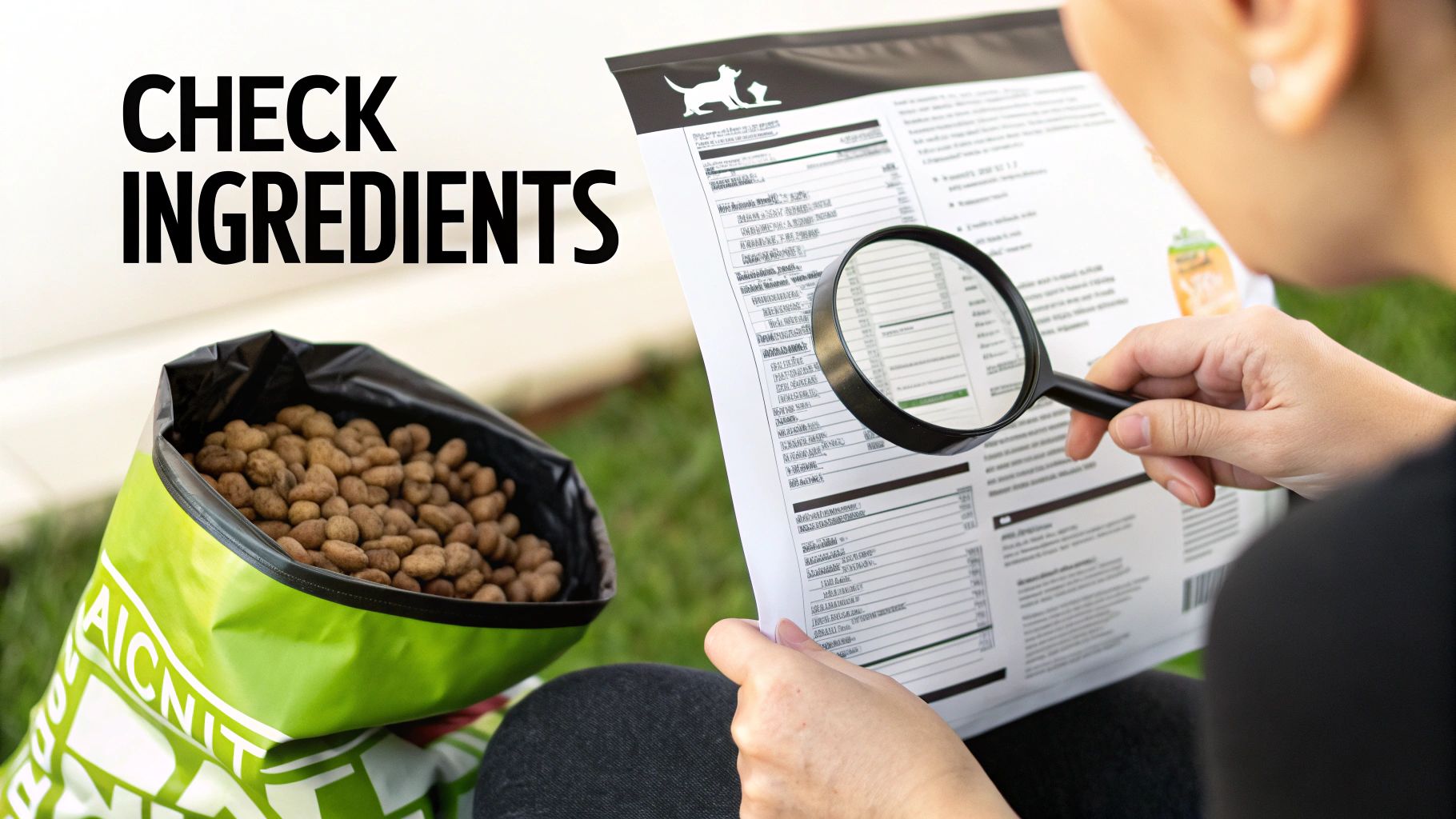
Let's turn that confusing block of text into a simple checklist you can use with confidence.
Start with the First Five Ingredients
Here’s the first rule of label reading: ingredients are listed by weight, from most to least. This is a huge clue. The first five ingredients make up the bulk of the recipe and give you a clear snapshot of its nutritional backbone.
What you're looking for are high-quality, whole-food ingredients right at the top of the list. You want to see things you can actually recognize.
- Named Animal Proteins: Look for "deboned chicken," "lamb meal," or "salmon" as the very first ingredient. And don't let "meal" scare you; it just means the water has been removed, creating a more concentrated source of protein. It's a good thing.
- Whole Grains and Vegetables: Ingredients like brown rice, sweet potatoes, peas, and barley are fantastic sources of the complex carbs and nutrients your dog needs to thrive.
If the list kicks off with vague terms like "meat by-products" or cheap fillers like corn and wheat gluten, that’s a pretty good sign the food’s quality isn’t where it should be.
Scan for Preservative Names
Once you’ve sized up the main ingredients, your next mission is to play detective and find the preservatives. This is how you confirm if a "natural" claim on the front of the bag is actually true. You'll usually spot them toward the bottom of the ingredient list since they're used in smaller amounts.
Pro Tip: Don't just take the bag's word for it when it says "no artificial preservatives." You need to scrutinize the ingredient list for the specific names. Real transparency is in the details, not just the marketing slogans.
A quality food will be proud to list its natural preservatives. Look for these green flags:
- Mixed Tocopherols (a source of Vitamin E)
- Rosemary Extract
- Ascorbic Acid (Vitamin C)
On the flip side, if you spot BHA, BHT, or ethoxyquin, you know the food contains artificial preservatives, no matter what the pretty picture on the front suggests. This simple check is your best defense against misleading marketing. If you're ready to become a true pro, our deep dive into how to read dog food labels offers even more great tips.
Your Quick Label-Reading Checklist
Feeling a bit overwhelmed? Don't be. Just keep it simple. The next time you're in the store, run through this quick mental checklist. It will help you make a fast, informed decision.
- Check the Top 5: Is a named meat source the #1 ingredient? Are the first few ingredients recognizable whole foods?
- Hunt for Preservatives: Scan the bottom of the list. Do you see "mixed tocopherols" or "rosemary extract"?
- Spot the Red Flags: Are there any artificial colors (like Blue 2 or Red 40), vague "meat by-products," or fillers like corn gluten meal?
- Ignore the Front-of-Bag Hype: Your focus should be on the guaranteed analysis and the ingredient list—not the flashy pictures or buzzwords like "gourmet" or "premium."
By following these simple steps, you go from being a confused shopper to a confident advocate for your dog's health. You’ll be able to quickly separate the truly natural products from the ones just pretending to be, making sure every meal you serve is as clean and wholesome as possible.
Keeping Natural Dog Food Fresh and Safe at Home
So, you've done your homework. You’ve sifted through ingredient lists and finally picked out a fantastic bag of dog food without artificial preservatives. But the job doesn't end at the checkout counter. Because these foods rely on natural methods to stay fresh, how you store them at home is a massive part of keeping them safe and nutritious.
Think about it like this: you wouldn't leave a fresh-picked apple on the counter for a month, but a packaged snack cake could probably survive the apocalypse. The same idea applies to your dog's food. Naturally preserved kibble has a shorter, healthier lifespan, and a few smart storage habits will ensure the last scoop is just as good as the first.
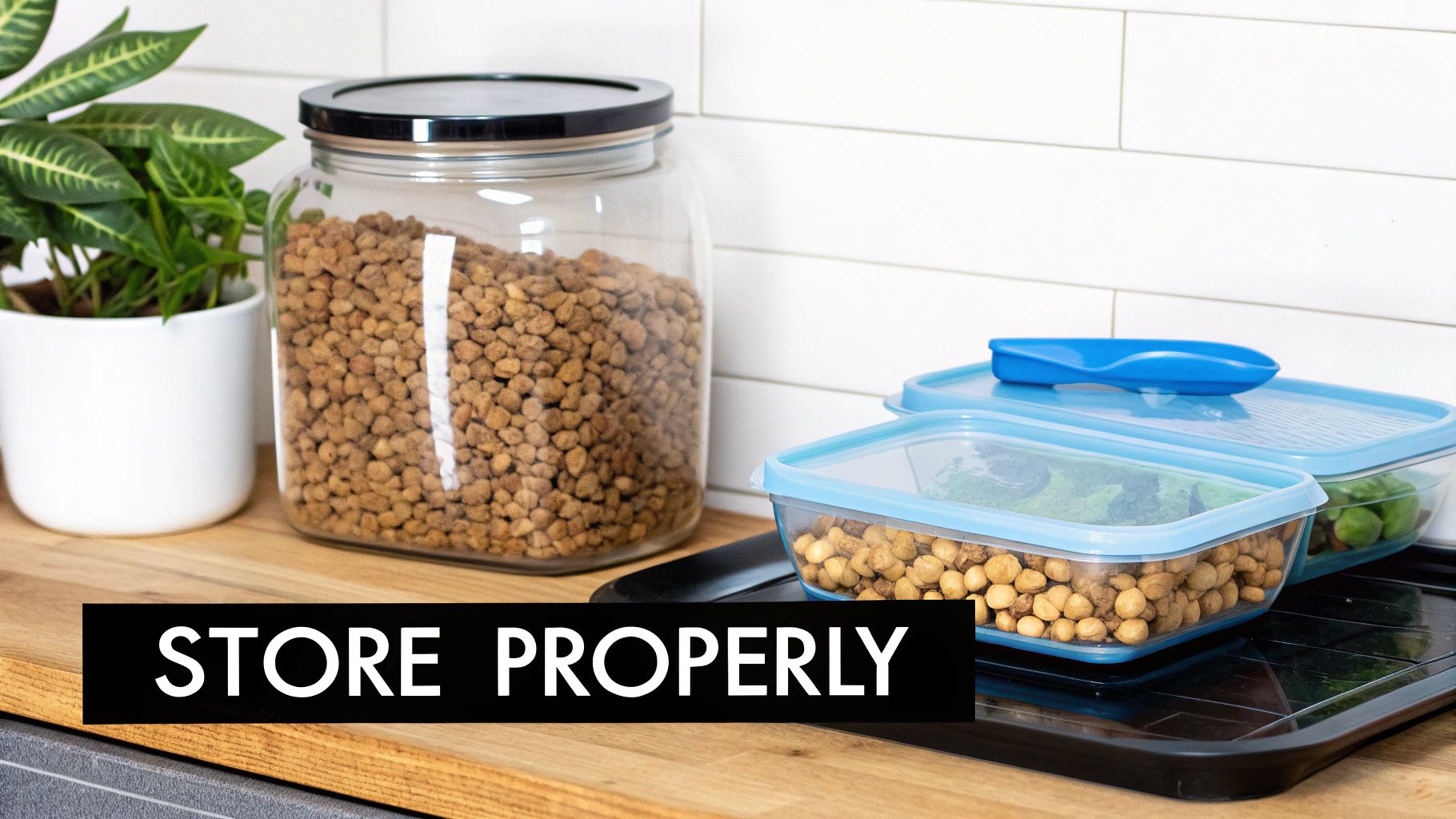
Best Practices for Storing Natural Kibble
You might be surprised to learn that dumping kibble into a big plastic bin is one of the worst things you can do. The fats and oils that make the food so nutritious can turn rancid when they're repeatedly exposed to air and light. Worse yet, plastic containers can absorb these rancid oils over time, contaminating every new bag you pour in.
The absolute best way to store kibble is to keep it in its original bag. Those bags are engineered with special liners to block out moisture, air, and light. Just roll the top down tightly after you scoop out a meal and use a clip to seal it shut. If you really love the convenience of a container, go for it—but place the entire bag inside your airtight bin. This gives you the bag's protection and the container's solid seal.
Storing your dog’s food correctly isn’t just about freshness; it's about safety. Proper storage prevents the growth of mold or bacteria and protects the delicate vitamins and antioxidants, like mixed tocopherols, from degrading.
Handling Wet, Fresh, or Raw Foods
If your dog dines on canned, fresh, or raw foods, the rules are pretty much the same as for your own perishable groceries. Once you open it, it needs to be refrigerated right away.
Here are a few simple guidelines to keep it safe:
- Cover It Up: Pop a reusable silicone lid on top or use plastic wrap to get a tight seal on the can or container before it goes in the fridge.
- Watch the Clock: Most fresh or wet foods are only good for about 2-3 days after opening. Always double-check the packaging for specific recommendations.
- Serve and Store: Don’t let wet food sit out in your dog’s bowl for more than an hour or two. It’s a perfect breeding ground for bacteria.
For an even deeper dive, our guide on how to store pet food properly has tons of extra tips to maximize freshness.
Making a Smooth Transition to a New Food
Switching your dog to a healthier, cleaner diet is a great move, but jumping in too fast can cause an upset stomach. A slow, gradual transition gives their digestive system plenty of time to get used to the new ingredients.
Just follow this easy 7-day plan for a happy tummy:
- Days 1-2: Start with a mix of 75% old food and 25% new food.
- Days 3-4: Move to a 50/50 split of old and new food.
- Days 5-6: Now, shift to 25% old food and 75% new food.
- Day 7: You’re there! Transition to 100% new food.
Keep an eye on your dog’s stool throughout the week. As long as it stays firm, you know the transition is going smoothly. By taking it slow, you’re setting your dog up for success and making the move to a preservative-free diet a happy experience for both of you.
Our Thinking on Clean Pet Nutrition
We get it. Figuring out what to feed your dog feels like a huge responsibility, because it is. It's not just about filling their bowl; it's about making choices that reflect how much you care. That simple idea is the heart of our entire philosophy.
We started with a straightforward belief: our dogs are family, and they deserve real food. No synthetic shortcuts, no complicated chemical names. Just simple, clean, and honest nutrition.
Our approach is grounded in a deep respect for the animals we serve and is guided by proven nutritional science. We work hand-in-hand with veterinary experts who believe, just as we do, that every single ingredient should have a clear purpose. What we decide to leave out of our recipes is just as critical as what we put in.
A Promise of Quality You Can See
This shift toward clean, transparent nutrition isn't just a niche trend—it's a movement. As pet parents learn more, they're starting to demand better for their best friends, and that means saying no to artificial additives.
The proof is in the numbers. The U.S. organic and natural pet food market was valued at USD 8.1 billion in 2024 and is on track to more than double to USD 16.4 billion by 2033. This surge is fueled by pet owners who are rightfully concerned about the long-term effects of chemical preservatives. It’s a clear sign that quality is no longer negotiable. You can dig deeper into this incredible market growth by reading the full research on the natural pet food market.
At its core, our philosophy is a promise. It’s a promise to provide nutrition you can trust, with transparency you can see right on the ingredient panel. We believe in creating food that not only meets but exceeds the expectations of dedicated pet owners like you.
It all boils down to one simple truth: our pets are at their best when they eat real, wholesome food. By focusing on high-quality proteins, nutrient-dense ingredients, and natural ways to keep food fresh, our goal is to help you give your best friend a long, vibrant, and joyful life.
Common Questions About Natural Dog Food
Deciding to go with a dog food without artificial preservatives is a great move, but it's totally normal to have a few questions pop up. After all, you want to be sure you're making the best choice for your dog's health and your own peace of mind. Let's tackle some of the most common concerns pet parents have when cleaning up their dog's diet.
We'll walk through these questions with straightforward answers to help you feel confident and make the switch a breeze for both of you.
Is Natural Dog Food Always More Expensive?
This is usually the first thing people ask, and for good reason. When you see the price on a bag of high-quality, naturally preserved food, it can look a bit higher than what you're used to. But it's important to look at the bigger picture—the long-term value, not just the upfront cost.
Think of it this way: foods with natural preservatives are usually far more nutrient-dense. They pack more high-quality protein and essential nutrients into every single kibble. Because the food is so concentrated with the good stuff, you often find you need to feed smaller portions. That "expensive" bag might just last a lot longer than a cheaper one bulked up with fillers, making the cost-per-meal surprisingly competitive.
It's an investment in preventative care. When you factor in the potential for fewer vet bills down the road—thanks to better digestion, healthier skin, and a stronger immune system—the "cost" starts to look very different.
How Long Does Naturally Preserved Food Last Once Opened?
This is a key difference. Without synthetic chemicals to give it an unnaturally long shelf life, you’ll want to pay a bit more attention to freshness. An unopened bag of naturally preserved kibble is typically good for about 12 to 18 months from the date it was made. You'll always find a "best by" date on the bag to guide you.
Once you break that seal, the clock starts ticking. A good rule of thumb is to use the entire bag within 4 to 6 weeks. This ensures your dog is getting the freshest, most flavorful, and nutritionally complete food possible. Proper storage is everything here—keep the kibble in its original bag and seal it tightly after every meal.
Can I Switch a Dog with a Sensitive Stomach to This Food?
Absolutely! In fact, many dogs with sensitive stomachs do remarkably well on a diet free from artificial preservatives and other synthetic junk. Often, those mystery chemicals are the hidden triggers for digestive upset, itchy skin, and other sensitivities. By cutting them out, you’re giving your dog’s system a break and making their food easier to digest.
The trick to a smooth switch, especially for a sensitive pup, is to go slow. A gradual transition over 7 to 10 days is the gold standard.
Here’s a simple schedule that almost always prevents tummy troubles:
- Days 1-3: Mix 25% new food with 75% old food.
- Days 4-6: Move to a 50/50 split.
- Days 7-9: Increase to 75% new food and 25% old food.
- Day 10: You're there! 100% new food.
This slow-and-steady approach gives your dog's gut microbiome time to adjust, setting them up for a happy digestive system and a love for their new, cleaner food.
At Joyfull, we think clean, honest nutrition should be simple. Our recipes are built around high-quality proteins and are always made without artificial preservatives. We believe a healthy life isn’t just for people—our pets deserve it, too. You can learn more about our commitment to better pet food.
0 comments