


When it comes to your dog's health, a feeding schedule isn't just a matter of convenience—it's one of the cornerstones of their well-being. A growing puppy's needs are wildly different from a senior dog's; puppies require small, frequent meals to fuel their rapid development, while older dogs often do better with smaller portions that match a slower metabolism.
By creating a consistent routine, you're giving them one of the best tools to thrive at every stage of life.
Why a Consistent Feeding Schedule Is a Game Changer
Think of mealtime as more than just filling a bowl. A structured dog feeding schedule by age is one of the most powerful and simple ways you can be proactive about your dog's health. Just like people, dogs' bodies function better with a predictable rhythm.
This consistency gets their digestive system on a regular clock, which means more predictable potty breaks—a lifesaver during house training! It also helps you avoid the "all-day buffet" of free-feeding, a major culprit behind canine obesity. With more than 50% of dogs in the U.S. now considered overweight, scheduled meals are a simple, first-line defense.
The Behavioral Perks of a Routine
The benefits go far beyond the physical. A set schedule provides a huge sense of security and stability for your dog. For dogs who are naturally a bit anxious, knowing exactly when to expect their food can work wonders, calming their nerves and reducing stress-related behaviors.
A consistent feeding schedule does more than manage weight; it reinforces the bond between you and your dog, establishing you as the reliable provider of comfort and nourishment. This daily ritual becomes a cornerstone of your relationship.
Understanding the nitty-gritty of canine nutrition is key. As professionals learn in veterinary nurse courses, this knowledge allows you to tailor a diet not just for age, but also for your dog's specific activity level, breed, and health status.
Building a Foundation for Every Life Stage
At its core, a feeding schedule sets your dog up for a lifetime of success. It makes you a more observant owner, as you’ll quickly notice if their appetite changes—often the first clue that something isn't right.
The principles we’ll cover aren't rigid, unbreakable rules. Think of them as a flexible framework you can adapt to build a healthy, happy life for your best friend. This guide will walk you through what your dog needs, from their clumsy puppy days all the way to their golden years.
The Puppy Years: Fueling Rapid Growth
Bringing a new puppy home is an incredible experience. They’re tiny, adorable, and packed with an almost unbelievable amount of energy. Their little bodies are working overtime, building everything from strong bones and muscles to a healthy brain.
To power all that development, their metabolism is in high gear. The catch? Their stomachs are tiny and can't hold much food at once. This is precisely why a consistent feeding schedule is one of the most important things you can establish for your new companion. Unlike an adult dog, a puppy absolutely needs several small, nutrient-rich meals throughout the day to keep them going.
This visual guide breaks down how a dog's nutritional needs change as they grow, moving from the constant refueling of puppyhood to the more settled routines of their adult and senior years.
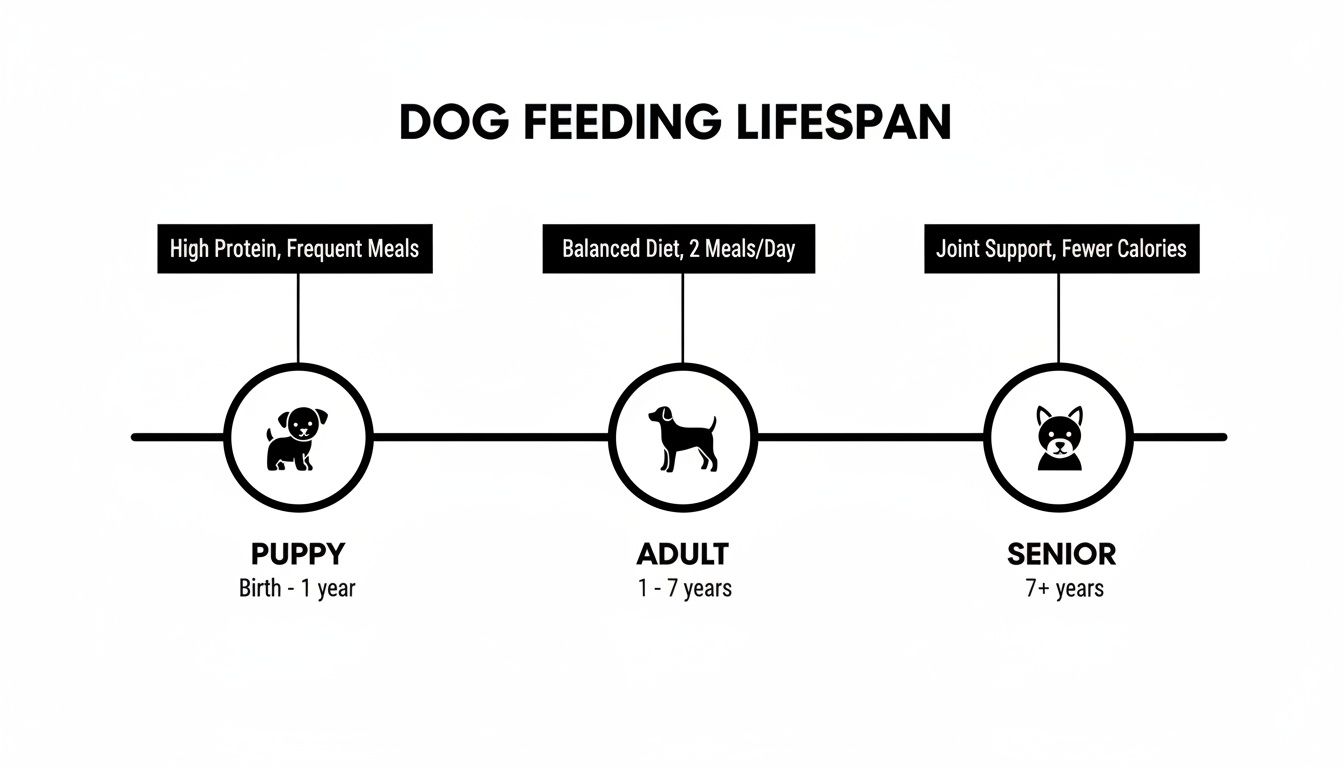
The name of the game is adaptation. As your dog gets older, you’ll adjust their feeding frequency to make sure they're always getting the right nutrition for their current stage in life.
Why Do Puppies Need So Many Meals?
Think about an 8-week-old puppy—they’re a whirlwind of activity, but that little tummy can only process a small amount of food at a time. This is why veterinarians are united in their recommendation: puppies under 4 months old need three to four meals a day. For tiny toy breeds, that can even be four to five small meals to start.
Their metabolism burns through calories at a blistering pace. Frequent meals are essential to prevent hypoglycemia, a dangerous drop in blood sugar that can affect up to 10-15% of young puppies if they aren't fed often enough.
Without these consistent "pit stops" for fuel, a puppy’s blood sugar can crash, leading to weakness, lethargy, and in serious situations, even seizures. A reliable schedule isn't just about convenience; it's a critical part of keeping them safe and healthy.
What Does a Good Puppy Schedule Look Like?
To give you a better idea of how to structure your puppy's day, here's a quick-reference table. It shows common feeding frequencies and sample meal times for puppies of different sizes and ages.
Sample Puppy Feeding Schedule By Age and Size
| Puppy Age | Toy/Small Breeds (e.g., Chihuahua) | Medium/Large Breeds (e.g., Labrador) |
|---|---|---|
| 8–12 Weeks | 4-5 meals (e.g., 7 AM, 11 AM, 3 PM, 7 PM, 10 PM) | 3-4 meals (e.g., 7 AM, 12 PM, 5 PM, 9 PM) |
| 3–6 Months | 3-4 meals (e.g., 7 AM, 12 PM, 5 PM, 9 PM) | 3 meals (e.g., 7 AM, 1 PM, 7 PM) |
| 6–12 Months | 2-3 meals (e.g., 8 AM, 6 PM, small snack) | 2 meals (e.g., 8 AM, 6 PM) |
Remember, this is just a starting point. The real goal is to space meals out evenly to keep your puppy’s energy levels from dipping. A predictable feeding schedule also leads to a more predictable potty schedule, which makes house-training a whole lot easier for everyone involved.
Key Takeaway: Consistency is king. A puppy's feeding schedule is less about hitting an exact time on the clock and more about providing evenly spaced meals to support their growth, energy, and potty training.
Transitioning To Fewer Meals
As your puppy gets bigger, so does their stomach. Their metabolism also starts to slow down a bit from that frantic puppy pace. This is when you can begin to reduce the number of meals they get each day. There isn't a magic date for this transition; you have to watch your pup for clues.
Signs your puppy is ready to drop a meal:
- They seem less interested: You might notice them just picking at their midday meal or walking away with food still in the bowl.
- They have more stamina: They can go longer between meals without getting tired, cranky, or desperately hungry.
- They hit an age milestone: For most puppies, somewhere around 6 months of age is a great time to start the transition from three meals down to two.
To make the switch smoothly, slowly reduce the amount of food in the midday meal while adding a little extra to their breakfast and dinner. Spread this change out over a week or so to give their digestive system time to adjust. Getting the total daily amount right is still critical, and a good https://joyfullpet.com/blogs/news/dog-food-portion-calculator can be a huge help here.
Of course, great care goes beyond just feeding. Staying on top of their preventative health, like the recommended rabies vaccination schedule by age, is just as vital. By managing their nutrition and their healthcare together, you're setting them up for a long, happy, and healthy life with you.
Feeding Your Adult Dog for Lifelong Health
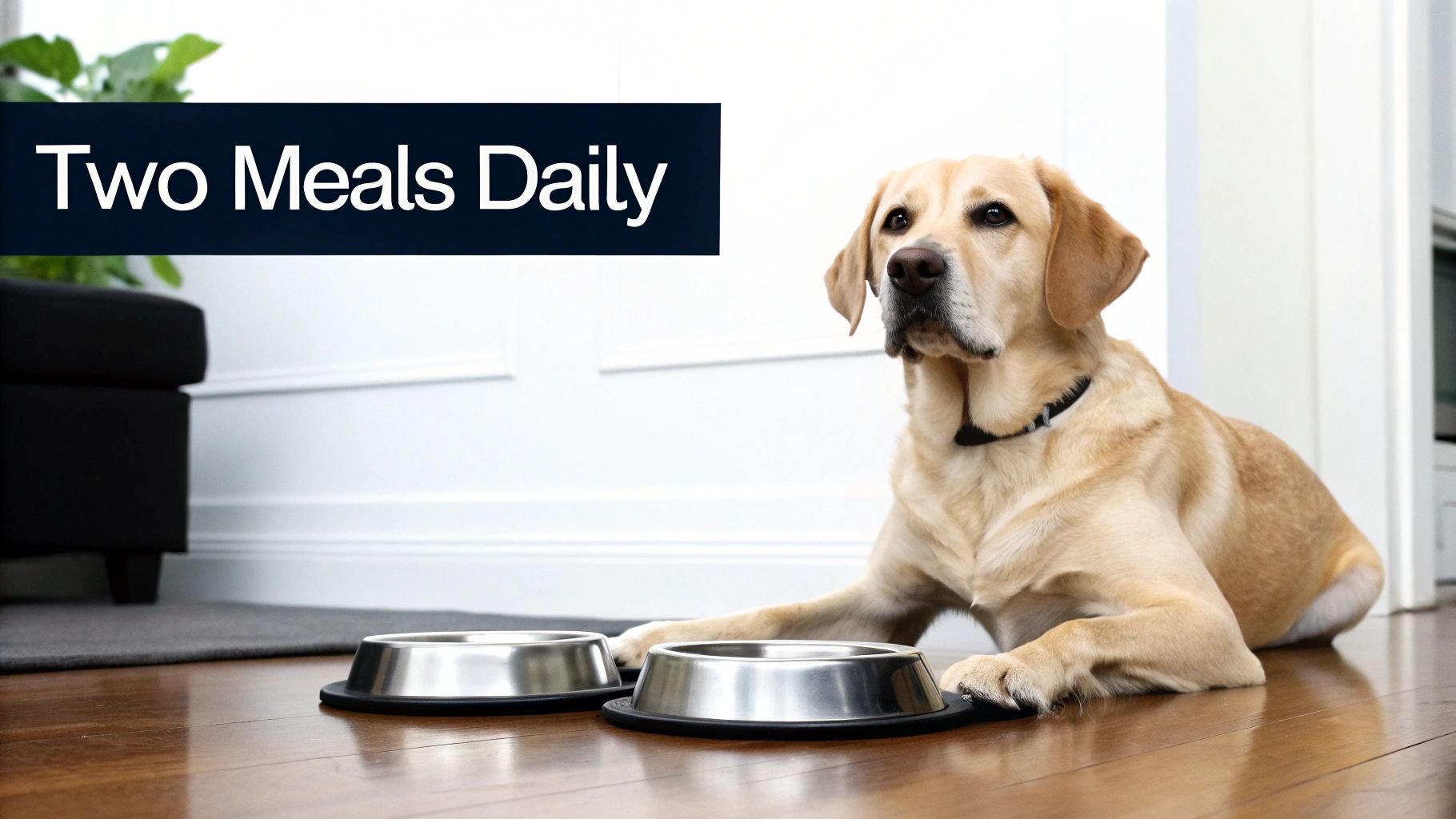
Once your dog leaves the chaotic energy of puppyhood behind, their body settles into a more predictable rhythm. Adulthood is the longest stretch of their life, and nailing down a consistent feeding schedule is one of the best things you can do for their long-term health. For most adult dogs, that sweet spot is two well-portioned meals a day.
This isn't just an arbitrary rule. A twice-daily schedule works with your dog's natural digestive clock, keeping their energy levels steady throughout the day. It also helps curb that frantic hunger that can lead to begging, counter-surfing, or other scavenging habits. Plus, it gives them a reliable structure to their day, reinforcing that you are their trusted provider.
Why Two Meals a Day Works Best
Imagine giving a child an all-access pass to a candy store. That’s essentially what you’re doing when you leave a full bowl of food out all day. This practice, known as free-feeding, is a huge contributor to canine obesity, a serious problem affecting an astonishing 59% of dogs in the United States.
When you serve distinct meals, you have complete control over their portions. It also makes it much easier to spot a change in appetite, which is often one of the very first clues that a health issue might be brewing.
The Emerging Science of Once-Daily Feeding
While two meals a day has long been the gold standard, some fascinating new research is starting to explore a different path. A large-scale 2022 study from the Dog Aging Project uncovered some surprising links between once-daily feeding and better health outcomes. The findings suggested dogs fed just once a day showed lower risks for a whole host of issues—from gastrointestinal and dental problems to orthopedic and even cognitive conditions. You can dive into the details in this great Dogster article on feeding schedules.
It’s crucial to remember this is still an emerging field of study. A once-a-day schedule isn't a fit for every dog, particularly small breeds that can be prone to hypoglycemia or dogs with certain medical conditions. Before you consider making such a big change, have a conversation with your vet.
Calculating the Perfect Portion Size
"So, how much should I actually be feeding my dog?" It's the question every dog owner asks, and the answer isn't one-size-fits-all. It’s a custom calculation that depends on a few key things.
- Weight and Breed: A 10-pound Dachshund’s fuel requirements are worlds away from an 80-pound Golden Retriever’s. The feeding guidelines on your dog food bag are a good starting point, but they are based on your dog's ideal weight, not necessarily their current one.
- Activity Level: Is your dog more of a couch cuddler or your 5-mile running buddy? A really active dog might burn through 20-40% more calories than a sedentary dog of the same size.
- Metabolism: Dogs are individuals, just like us. Some just naturally have a faster metabolism. You'll need to watch your dog's body condition and adjust if they start gaining or losing weight on the recommended amount.
Pro Tip: Always use a proper measuring cup. "Eyeballing" it is one of the easiest ways to accidentally overfeed your dog, leading to slow, creeping weight gain over time.
The Impact of Spaying or Neutering
One of the most critical times to re-evaluate your dog’s food intake is right after they’ve been spayed or neutered. This common procedure triggers hormonal shifts that can slow down their metabolism, making them much more prone to packing on extra pounds.
In fact, it's not unusual for a dog's daily calorie needs to drop by up to 30% post-surgery. If you keep feeding them the same amount, you're setting them up for obesity. Keep a close eye on their body shape in the months following the procedure and be ready to cut back their portions to maintain a healthy, lean physique. This simple adjustment is a powerful way to keep your adult dog happy, active, and healthy for years to come.
Adjusting Meals for Your Senior Dog
As your dog moves into their golden years, you'll notice their world starts to slow down a bit. That boundless energy they had as an adult matures into a more relaxed, gentle pace. This natural shift means their metabolism and activity levels change, and—you guessed it—their dietary needs change right along with them.
Think of it like a retired athlete adjusting their diet after they've stopped competing. A senior dog simply doesn't need the same high-calorie fuel they once burned through. If you keep feeding them the same adult-sized portions, the pounds can creep on, putting extra strain on their aging joints. That’s why the dog feeding schedule by age must adapt to support their health and keep them comfortable.
Addressing Senior-Specific Challenges
Feeding a senior dog isn't just about cutting back on calories; it's about navigating the unique challenges that come with age. Their bodies are different now, and their needs are far more specific. Spotting these changes early is the first step in creating a feeding routine that truly helps them.
Here are a few common issues you might need to work around:
- Dental Sensitivities: After years of chomping on toys and treats, their teeth and gums can become sensitive. That hard, crunchy kibble they used to love might now be difficult or even painful to eat.
- Diminished Appetite: It's not uncommon for older dogs to lose interest in food. This can happen because their sense of smell and taste isn't as sharp, or it could be a sign of an underlying health issue.
- Slower Digestion: An older dog's digestive system can become less efficient, making large meals harder to process and sometimes leading to an upset stomach.
Adapting the Mealtime Routine
To help your senior companion feel their best, you may need to adjust both what and how you feed them. The goal is to make mealtime easier, more appealing, and perfectly suited to their current health.
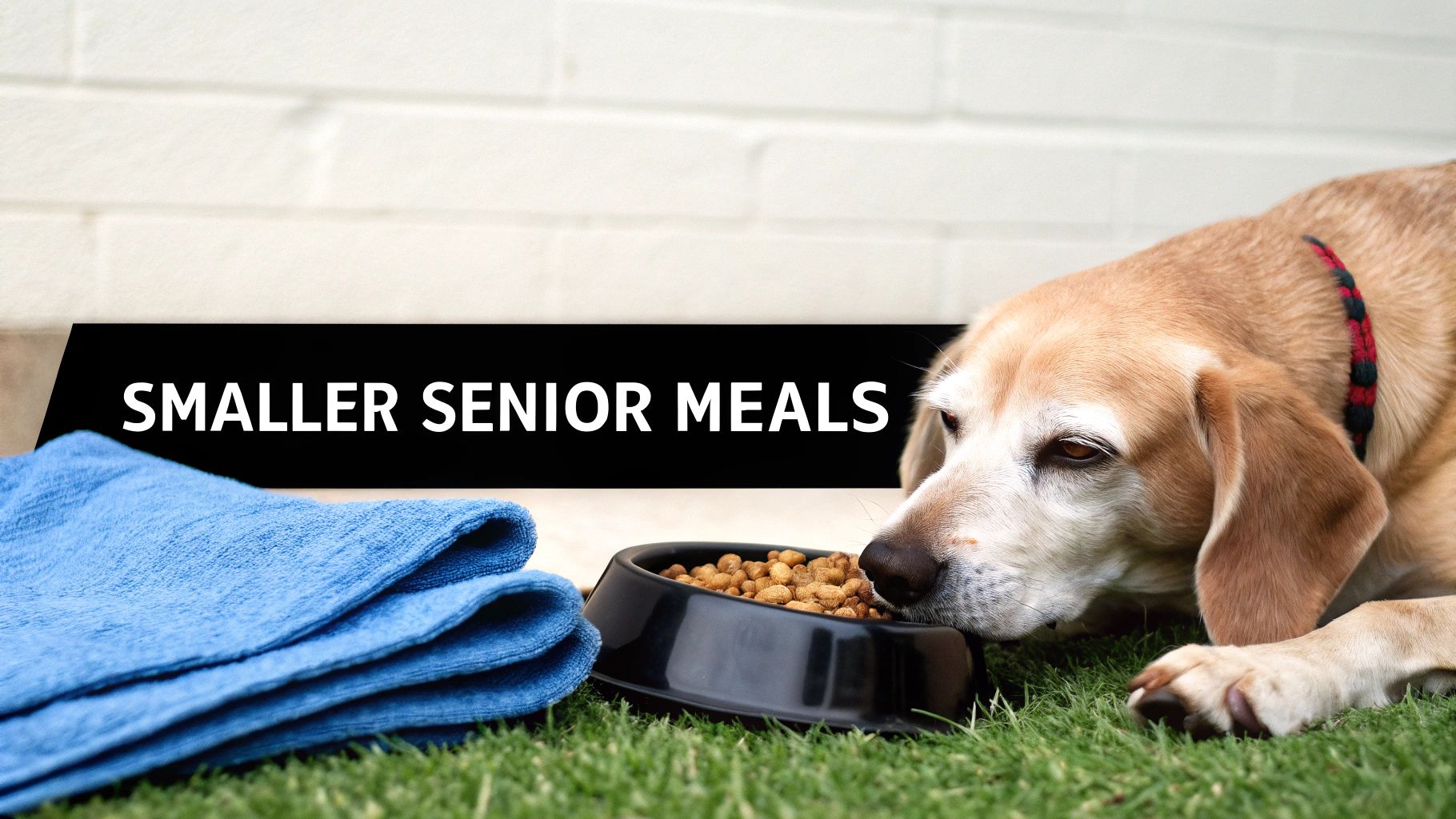
If your senior dog has a picky appetite, try breaking their daily food into smaller, more frequent meals. Instead of two big meals, consider offering three or even four mini-meals throughout the day. This can feel less daunting to a dog who isn't very hungry and also helps keep their energy levels steady.
A healthy weight is absolutely crucial for senior dogs. Those extra pounds can make conditions like arthritis much worse, so a well-managed feeding schedule directly protects their joints and improves their overall quality of life.
Another fantastic trick is to simply change the food's texture. Adding a splash of warm water or low-sodium chicken broth can soften their kibble, making it much easier to chew for a dog with a sore mouth. This also has the added benefit of releasing the food’s aroma, which can be just the thing to tempt a dog with a weaker sense of smell.
Supporting Their Overall Wellness
Great nutrition is the cornerstone of senior dog care, but it’s most effective as part of a complete wellness plan. As their bodies age, certain nutrients become vital for maintaining good mobility and sharp cognitive function. You can learn more about how to boost their health with the best vitamins for senior dogs in our comprehensive guide.
At the end of the day, adjusting the dog feeding schedule by age for your senior is an act of love. By paying close attention and being willing to adapt, you give them the comfort and care they need to enjoy their golden years to the absolute fullest.
How to Transition Your Dog to a New Food or Schedule
Whether you're switching to a new puppy food or just adjusting meal times, any change to your dog's routine needs to be handled with care. A dog's digestive system loves predictability, and abrupt changes are one of the most common reasons for tummy troubles like diarrhea and vomiting.
Think about it like this: you wouldn't want to suddenly change your entire diet overnight. You'd feel it! The same goes for your dog. A gradual transition is the secret to helping their body adapt without causing any unnecessary stress or discomfort.
The Slow Switch Food Transition Plan
When introducing a new brand or formula of food, the golden rule is to go slow. We're talking about a 7 to 10-day process. This gives their gut bacteria and digestive enzymes enough time to get acquainted with the new ingredients and nutrient breakdown. Rushing it is just asking for a mess.
A simple, day-by-day plan makes this process painless. You're basically easing the old food out while slowly bringing the new one in, which dramatically reduces the chances of an upset stomach.
Here’s a tried-and-true schedule to follow:
- Days 1–2: Begin with a mix of 75% old food and 25% new food. This is just a little introduction, giving their system a small taste of what's to come.
- Days 3–4: Shift to a 50/50 mix. By now, you should be keeping an eye on their potty breaks to make sure everything looks normal.
- Days 5–6: Bump it up to 75% new food and just 25% old food. You're almost there, and your dog’s digestive system should be adjusting nicely.
- Day 7 Onward: If all signs are good, you can officially make the switch to 100% new food.
This gentle approach is your best bet for a successful diet change. For more in-depth advice, check out our complete guide on how to transition your dog to a new food.
Adjusting the Feeding Schedule
Changing when you feed your dog also requires a bit of strategy. Let's say you need to move dinner from 6 PM to 7 PM. Don't just make the jump all at once. Your dog has a surprisingly accurate internal clock, and they'll be anxiously waiting for their meal at the old time.
Instead, push the mealtime back in 15-minute increments each day. This tiny, gradual shift is something your dog will barely notice, but it effectively resets their internal clock over a few days without causing any stress.
Key Takeaway: Always watch your dog's bathroom habits and energy levels during a transition. Firm stools and a happy, energetic pup are green lights. Diarrhea or sluggishness are signals to slow down and give their body more time.
Watching for Warning Signs
Pay attention, because your dog will tell you how the transition is going. A smooth switch means their energy is consistent, their appetite is strong, and their poop is normal.
But you need to be on the lookout for red flags that indicate their system is struggling.
- Loose stools or diarrhea
- Vomiting or spitting up
- Noticeably more gas than usual
- Refusing to eat
- Lethargy or acting unusually tired
If you see any of these signs, it's a clear signal to pump the brakes. Go back to the previous food ratio where they were doing fine and hold there for a day or two before trying to move forward again. When it comes to your dog's gut, patience really is a virtue.
Common Feeding Mistakes to Avoid
Even with the best intentions, it's easy to fall into a few common feeding traps. You can craft the perfect dog feeding schedule by age, but sidestepping these simple mistakes is just as crucial for your dog's health down the road. The good news? Once you know what to look for, they're easy to avoid.
One of the most common slip-ups is "free-feeding"—leaving a full bowl of kibble out for your dog to graze on all day. It might seem convenient, but this all-day buffet makes it impossible to know how much your dog is truly eating. It's also a fast track to obesity, a serious health issue affecting more than half of all dogs in the U.S.
The Pitfall of Too Many Treats
We all love spoiling our dogs, and it’s so tempting to show that love with treats. But those little morsels have calories, and they add up faster than you think. Many owners don't realize that a few extra biscuits here and there can completely unbalance a carefully planned diet, leading to a slow but steady creep on the scale.
A great rule of thumb, recommended by vets everywhere, is the 10% rule.
The 10% Rule: Treats and other yummy extras should account for no more than 10% of your dog’s total daily calories. The other 90% needs to come from their complete and balanced dog food.
Following this simple guideline helps keep treats in their proper place as a fun reward, not a diet-wrecker. Using small, low-calorie training treats is also a smart move, letting you reward good behavior without going overboard.
Forgetting to Adjust for Life's Changes
A dog's dietary needs aren't set in stone; they evolve over time. A huge mistake is sticking to the same feeding plan year after year without making adjustments. The amount of food that was perfect for your super-active one-year-old is probably way too much for that same dog as a mellow seven-year-old.
Always take a moment to re-evaluate their food portions after big life events.
- After Spaying or Neutering: This procedure causes hormonal shifts that can slow down their metabolism. You might need to cut back their calories by as much as 30% to prevent them from gaining weight.
- A Shift in Activity: Has your long daily hike been replaced by shorter walks around the block? If your dog is burning fewer calories, their food intake should shrink to match.
- Getting Older: Senior dogs naturally slow down. Feeding them the same adult-sized portions is a recipe for weight gain, which puts a lot of unnecessary stress on their aging joints.
Ignoring the Dog in Front of You
Think of the feeding chart on your dog's food bag as a suggestion, not a command. Every dog is an individual with their own unique metabolism. The biggest mistake is blindly following the bag's instructions without ever really looking at your dog.
Get in the habit of checking your dog's body condition. Run your hands along their sides—you should be able to feel their ribs under a light layer of tissue, not a thick pad of fat. When you look at them from above, you should see a defined, tucked-in waist. If you notice their shape starting to get a little rounder, that's your cue to adjust their portions. It's the most reliable way to know if your feeding plan is actually working for them.
A Few Common Questions About Your Dog's Feeding Schedule
Even with the best plan in place, you're bound to have questions. It's totally normal to wonder about the little details when you're trying to get your dog's routine just right. Here are some quick, no-nonsense answers to the things we hear most often from fellow dog owners.
Think of this as the final check-in to make sure you're feeling completely confident about your dog's mealtimes. Nailing these details brings a lot of peace of mind and keeps your pup happy and healthy.
How Long Should I Wait to Walk My Dog After They Eat?
This is a big one, and it's especially important for anyone with a deep-chested breed like a Great Dane, German Shepherd, or Weimaraner. These dogs are more susceptible to bloat (Gastric Dilatation-Volvulus), a dangerous condition that can be set off by hard exercise right after a meal.
As a solid rule of thumb, wait at least 30 minutes to an hour after your dog has finished their food before doing anything too active. A calm, leisurely potty walk around the block is probably fine after 30 minutes. But for a run, a game of fetch, or a romp at the dog park, it’s much safer to wait the full hour, or even a little longer. This gives their stomach a chance to start the digestion process without being jostled around.
Is It Really Okay to Feed My Dog Only Once a Day?
You might have heard about this lately. While the standard two-meals-a-day schedule works great for most adult dogs, some research suggests that once-a-day feeding might have benefits for certain dogs. But, and this is a big but, it's definitely not for everyone.
A once-a-day schedule is almost never a good idea for:
- Puppies: They're growing like weeds and need those smaller, more frequent meals to keep their energy and blood sugar levels steady.
- Small and Toy Breeds: Their little bodies burn through energy fast, and going too long between meals can put them at risk for hypoglycemia (low blood sugar).
- Dogs with Medical Issues: If your dog has something like diabetes or a sensitive stomach, they'll likely need a more structured, frequent feeding plan to stay healthy.
This is one of those changes you should absolutely talk to your vet about before trying. They can tell you if it’s a safe option for your specific dog.
How Do I Know if I'm Feeding My Dog the Right Amount?
The feeding chart on the back of your dog food bag is a good starting point, but that's all it is—a start. The absolute best way to know if you're feeding the right amount is to get your hands on your dog and check their body condition.
You should be able to feel their ribs easily under a thin layer of fat, but they shouldn't be sticking out. When you look down at your dog from above, you should see a nice, defined waist that tucks in behind their ribcage.
If your dog is starting to look more like a sausage and that waist is disappearing, it's a sign to cut back on the portions just a little. On the flip side, if their ribs are very easy to see and feel, you might need to bump up the amount. This simple, hands-on check is far more accurate than any chart and is the key to customizing any dog feeding schedule by age perfectly for your pup.
At Joyfull, we believe a healthy life is built on clean ingredients and high-quality proteins. That's why every single one of our formulas is backed by a scientific review from our in-house veterinary advisor. Explore our better-for-you pet wellness products at the official Joyfull Pet website.
0 comments