


When you're on the hunt for the best clean dog food brands, you're really looking for something simple: food made from whole, recognizable ingredients. Think of it like grocery shopping for yourself—you prioritize fresh, real food over heavily processed snacks. The same logic applies here. We want to see named meats like chicken or lamb, whole veggies, and zero artificial junk.
How We Evaluated Clean Dog Food Brands
Before comparing specific formulas, I established a repeatable scoring framework so every brand was judged against the same standard rather than marketing copy. Each brand below was evaluated across five weighted criteria:
- Protein specificity (30%): Does the ingredient panel lead with a named animal protein (e.g., "deboned chicken," "salmon") rather than a generic term like "meat meal" or "animal by-products"?
- Preservation method (20%): Are fats and proteins preserved with mixed tocopherols or rosemary extract, or does the formula rely on BHA, BHT, or ethoxyquin?
- AAFCO adequacy statement (20%): Is there a clear nutritional adequacy statement confirming the food meets AAFCO nutrient profiles for the intended life stage?
- Sourcing and manufacturing transparency (15%): Does the company publicly disclose where ingredients are sourced and whether the food is manufactured in human-grade or feed-grade facilities?
- Expert formulation (15%): Were the recipes developed or reviewed by a board-certified veterinary nutritionist (DACVN) or an animal nutrition Ph.D.?
Any brand that uses artificial colors, artificial flavors, or unnamed meat sources in its first three ingredients is automatically disqualified. I checked these claims directly against physical product labels and official brand websites. If a brand claimed "human-grade" processing but could not point to USDA-inspected kitchen documentation, I scored it as feed-grade. This methodology ensures the comparison reflects verifiable label data, not just packaging aesthetics.
What Does Clean Dog Food Actually Mean?
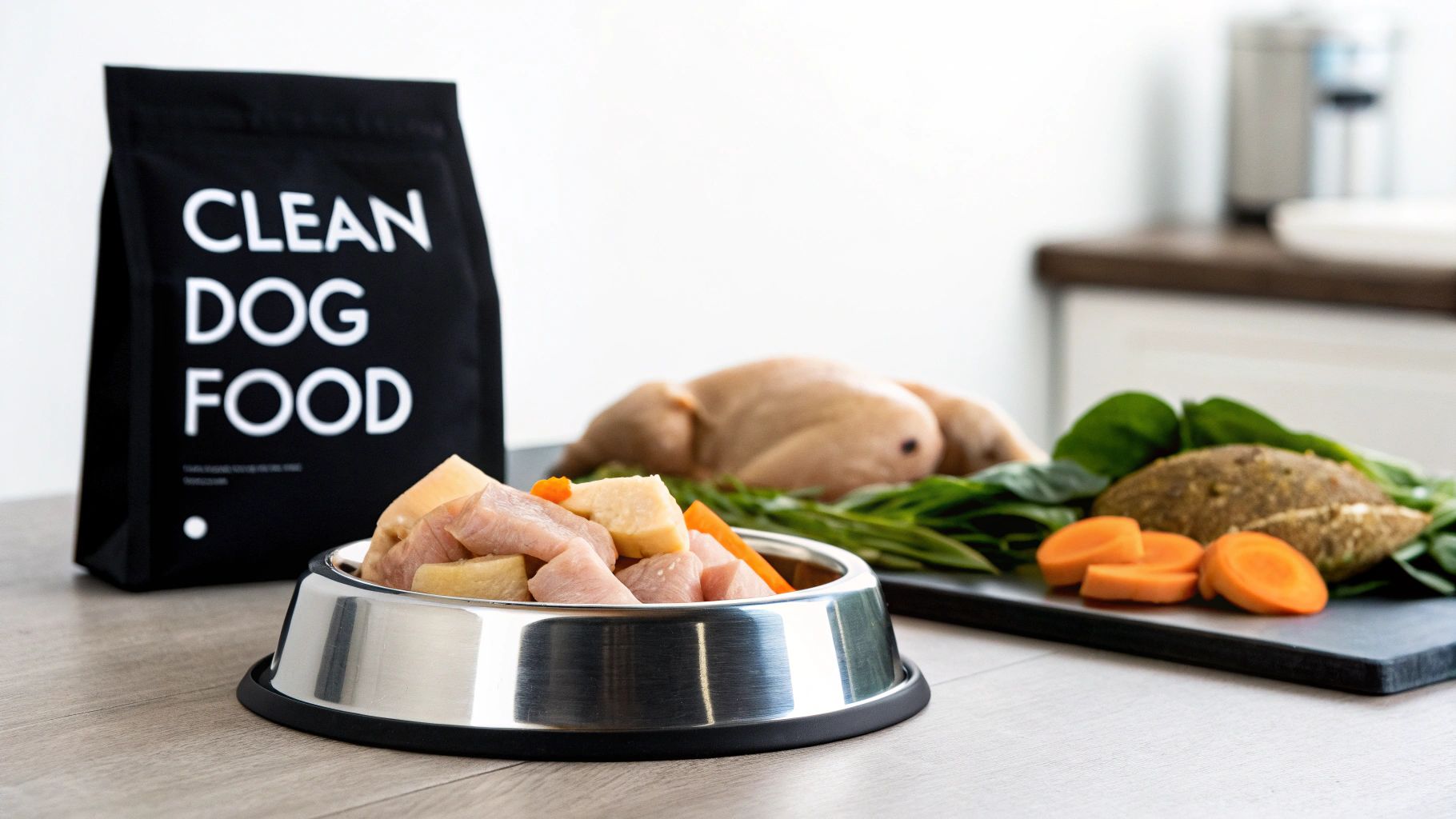
Stroll down any pet food aisle, and you’ll get hit with a tidal wave of buzzwords like "natural" and "premium." "Clean" has recently joined that list, but it's important to know what it isn't. Unlike "organic," "clean" isn't an official term regulated by the AAFCO (Association of American Feed Control Officials).
Instead, "clean" functions as a practical evaluation standard based on ingredient transparency and order. In the United States, FDA and AAFCO rules require animal-food ingredients to be identified by their common or usual names and listed in descending order of predominance by weight. Because moisture is included in this ordering, a fresh meat ingredient can appear first partly because it contains substantial water weight. A clean ingredient list accounts for this reality by featuring named animal proteins at the top, avoiding vague by-products, specifying transparent fat sources, excluding artificial preservatives and colors, carrying a clear AAFCO adequacy statement, and disclosing sourcing and manufacturing details.
This demand for transparency is reshaping the industry financially. One market estimate valued the global dog-food industry at USD 48.1 billion in 2025 and projected growth to USD 71.5 billion by 2033, equivalent to a 5.1% compound annual growth rate from 2026 through 2033, while the broader global pet-food market reached USD 128.94 billion in 2025. These figures illustrate why ingredient transparency has become commercially critical across major markets.
The Foundation of a Clean Diet
So, what does this philosophy look like in your dog's bowl? A clean diet is built on a few core principles that you can spot right on the ingredient list.
- Whole, Recognizable Ingredients: The first few ingredients should read like a shopping list, not a science experiment. Look for things like deboned chicken, sweet potatoes, blueberries, and spinach.
- No Artificial Additives: This is a big one. It means a total ban on artificial colors, flavors, and preservatives. Common culprits to avoid include BHA, BHT, and ethoxyquin, which are added to extend shelf life but do nothing for your dog’s health.
- Minimal Processing: Clean food is often gently cooked, freeze-dried, or air-dried. These methods help preserve the natural nutrients in the ingredients. In contrast, traditional kibble is often made using extreme heat, which can destroy sensitive vitamins and minerals.
The idea of "clean" eating naturally ties into a holistic view of pet wellness, where you consider every aspect of your dog’s health. Our detailed guide explains what is holistic dog food and how it all fits together for a happier, healthier pup.
Quick Guide to Identifying Clean Dog Food
To make things even clearer, here’s a quick comparison to help you spot the difference between clean and conventional dog foods at a glance.
| Attribute | What to Look For (Clean Food) | What to Avoid (Conventional Food) |
|---|---|---|
| Protein Source | Named meats (e.g., deboned chicken, grass-fed beef) | Vague terms (e.g., "meat by-products," "poultry meal") |
| Carbohydrates | Whole grains, vegetables, and legumes | Corn, wheat, soy, and fractionated grains |
| Preservatives | Natural options like Vitamin E (tocopherols) | Artificial preservatives (e.g., BHA, BHT, ethoxyquin) |
| Additives | Functional supplements like probiotics and antioxidants | Artificial colors, flavors, and sweeteners |
| Processing | Gently cooked, baked, freeze-dried, or raw | High-heat extrusion (most common for kibble) |
| Sourcing | Transparent sourcing information, often from local farms | Undisclosed or international sources of unknown quality |
This table serves as a great starting point, giving you a solid framework for quickly sizing up a bag of dog food on the shelf.
Ultimately, choosing a clean dog food brand is a conscious decision to nourish your pet with high-quality, safe, and nutrient-dense ingredients. And remember, the 'clean' lifestyle goes beyond the food bowl. It also means creating a safe environment with things like pet-safe cleaning products to support their overall well-being.
A 5-Point Checklist for Finding Genuinely Clean Dog Food
When you're trying to cut through the marketing noise, it helps to have a reliable framework. Think of this as a five-point inspection for your dog's food, where each point matters for performance and safety. By running a brand through these five pillars, you can sort high-quality options from well-marketed ones.
This method gives you a repeatable process, turning what feels like a confusing gamble into a clear, confident choice. Let’s break down exactly what to look for in each category.
1. Ingredient Quality and Sourcing
The entire foundation of a clean dog food rests on the quality of its raw ingredients. The best brands aren't just using "good" stuff; they're using exceptional ingredients and are proud to tell you where they come from. It's the difference between a generic chain steakhouse and a farm-to-table restaurant that can name the exact farm where the cattle were raised.
Here’s how that plays out in everyday settings:
- Human-Grade Ingredients: This is a big one. It means the ingredients meet FDA standards for human consumption, a massive leap from "feed-grade" materials, which can legally include parts from diseased or dying animals.
- Whole-Food Proteins: The label should be specific. Look for named proteins like "deboned chicken" or "grass-fed beef," not murky, generic terms like "meat and bone meal."
- Non-GMO Produce: Top-tier brands often go the extra mile to use non-genetically modified fruits and vegetables, keeping the ingredients as close to their natural state as possible.
2. Nutritional Philosophy
A brand’s nutritional philosophy is its core belief system about what dogs need to thrive. Clean brands don’t just fill a bag with cheap calories; they build their recipes around a species-appropriate diet that respects a dog's biology.
The philosophy of a truly clean brand is simple: create food that nourishes, not just fills. Every single ingredient should have a purpose, from antioxidant-rich blueberries to fiber-packed sweet potatoes, all contributing directly to your dog's health.
This commitment to purposeful nutrition is a dead giveaway that a brand puts health ahead of profits. They formulate recipes based on what a dog's body is designed to digest and use for energy, muscle repair, and a strong immune system.
3. Manufacturing and Safety
How the food is made is just as important as what's in it. Even the best ingredients can be ruined by harsh, high-heat processing. Clean dog food brands are meticulous about their manufacturing, focusing on methods that preserve nutrients and guarantee safety.
Look for these markers of quality control:
- Small-Batch Cooking: Making food in smaller quantities allows for much better temperature control and consistency. This simple step helps preserve the integrity of fragile vitamins and minerals that would otherwise be destroyed.
- Gentle Cooking Methods: You’ll often see techniques like slow baking, freeze-drying, or air-drying. These are all designed to maintain the bioavailability of the nutrients.
- Safety Certifications: Reputable brands often make their food in facilities with serious certifications, like SQF (Safe Quality Food), or in kitchens that meet strict USDA standards.
This level of care during production is what separates the best from the rest.
4. Company Transparency
In this industry, transparency is the ultimate currency of trust. A brand that’s open and honest about its practices clearly has nothing to hide. This pillar is all about a company's willingness to pull back the curtain and show you the journey from farm to your dog’s bowl.
This is especially important for clean dog food brands. You should be able to find clear answers to these questions with minimal digging:
- Sourcing Locations: Where, specifically, do they get their chicken, beef, or kale? Honest brands will tell you.
- Recall History: Has the brand ever had a recall? If so, they should be upfront about it and explain the concrete steps they took to prevent it from ever happening again.
- Customer Service: Is it easy to contact them? When you do, can you get a clear, knowledgeable answer from a real person?
5. Expert Formulation
Finally, the best clean dog food brands are built on science and expertise, not just good intentions. A beautiful list of ingredients is only helpful if it's properly balanced to meet a dog's complex nutritional needs.
That's where the professionals come in. Look for recipes that were developed or at least reviewed by a qualified expert, like a board-certified veterinary nutritionist (DACVN) or a Ph.D. in animal nutrition. Their involvement ensures the food meets AAFCO's standards for a "complete and balanced" diet, providing everything your dog needs to thrive.
This commitment to expert oversight is a powerful sign that a company is serious about animal health. And it's something pet owners are paying more attention to than ever. One study found that 43.6% of over 2,100 owners prioritize their pet's food health even over their own. You can dive deeper into what drives these decisions by reviewing the complete market analysis from Mordor Intelligence.
How to Read a Dog Food Label Like a Pro
Forget the flashy marketing on the front of the bag. Your dog’s food story is told on the back, in the ingredient panel and guaranteed analysis. Learning how to evaluate a dog food ingredient list requires a systematic approach rather than a casual glance.
Follow this numbered process every time you pick up a new bag:
- Read the first five ingredients by weight. Because ingredients are listed in descending order of predominance before cooking, the first five items constitute the bulk of the recipe. Verify that at least two of these are named animal proteins.
- Identify named versus vague proteins. Distinguish between "chicken meal" (a named, concentrated protein source) and "meat meal" or "poultry by-product meal" (vague terms that obscure the animal origin). Product naming rules offer a numerical benchmark here: under U.S. labeling guidance, when a food is named for two or more ingredients, those named ingredients together must account for at least 95% of the product’s weight, excluding added water, helping consumers distinguish a prominent ingredient from a minor marketing component, as outlined in U.S. pet product labeling requirements.
- Check the preservation method. Scan the fat sources (like chicken fat or fish oil) to see how they are stabilized. Acceptable preservatives include mixed tocopherols and rosemary extract. Disqualify the food if you see BHA, BHT, or ethoxyquin.
- Review the AAFCO adequacy statement. Locate the nutritional adequacy statement on the packaging. It must explicitly state whether the food meets nutrient profiles via formulation or animal feeding trials, and for which life stage (growth, adult maintenance, or all life stages).
- Compare dry-matter nutrients last. Only after a food passes the first four ingredient-quality checks should you convert the guaranteed analysis to a dry-matter basis to compare protein and fat percentages accurately across different moisture levels.
This quick flowchart can help you size up a food at a glance, hitting the big three: ingredient quality, sourcing ethics, and processing methods.
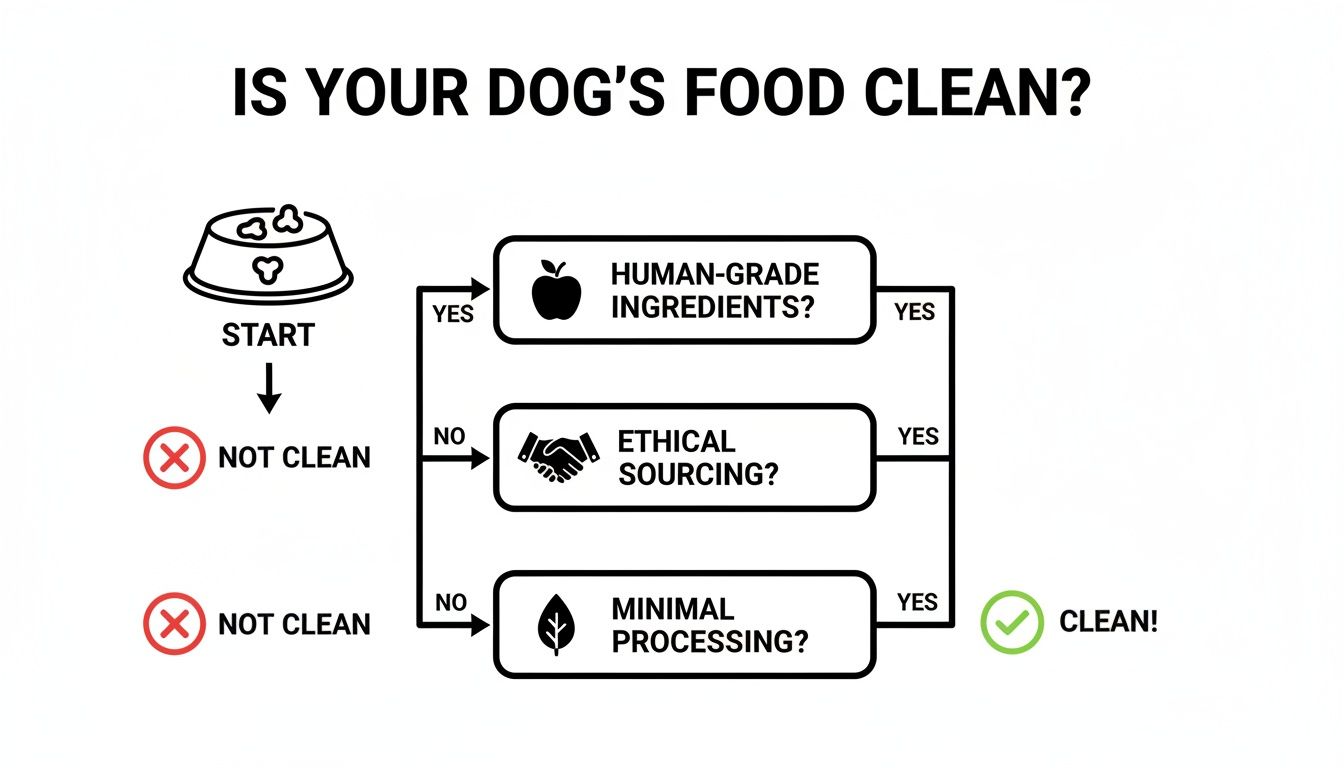
As the chart shows, a great food isn’t just about one thing. It's about a commitment to quality from the farm all the way to your dog's bowl.
Spotting the Red Flags on the Ingredient List
Knowing what you don't want to see is just as important as knowing what you do. So many conventional dog foods are packed with cheap fillers and vaguely named ingredients to keep costs down. Your job is to spot these red flags and move on.
Here's what I always watch out for:
- Vague Meat Descriptions: Terms like "meat meal," "animal by-products," or "poultry meal" are intentionally mysterious. You have no idea what animal it came from, which is a huge red flag for quality control. Stick with named sources, like "chicken meal" or "beef."
- Cheap Fillers: Corn, wheat, and soy are classic fillers. They bulk up the food and add calories, but they offer little nutritional value and are common culprits behind allergies and digestive upset. Look for nutrient-rich carbs like sweet potatoes, peas, or brown rice instead.
- Artificial Preservatives: If you see BHA, BHT, or ethoxyquin on the label, put the bag down. These chemical preservatives are used to give the food an unnaturally long shelf life but have been tied to health issues. Clean brands use natural alternatives like mixed tocopherols, which is just a form of Vitamin E.
Looking for these red flags helps separate the good from the bad. The table below breaks down some of the most common offenders and shows what a healthier swap looks like on an ingredient panel.
Common Red Flag Ingredients and Their Healthier Alternatives
| Red Flag Ingredient | Potential Concern | Healthier Alternative |
|---|---|---|
| Corn, Wheat, or Soy | Common allergens, low nutritional value | Sweet potatoes, peas, quinoa, brown rice |
| Meat and Bone Meal | Vague, low-quality, mystery protein source | Named protein meal (e.g., "Chicken Meal") or whole meats |
| Animal By-Products | Can include undesirable parts of an animal | Whole meats, organ meats (e.g., "Chicken Liver") |
| BHA, BHT, Ethoxyquin | Artificial preservatives linked to health risks | Mixed tocopherols (Vitamin E), rosemary extract |
| Artificial Colors (Red 40) | Unnecessary additive, can cause sensitivity | No added colors needed |
| Artificial Flavors | Used to make low-quality food more palatable | Natural flavor derived from real food sources |
By keeping an eye out for these swaps, you can quickly tell if a brand is prioritizing your dog's health or their own bottom line. A clean label should read like a recipe, not a science experiment.
Making Sense of the Guaranteed Analysis
Next to the ingredients, you'll find the Guaranteed Analysis. This is the nutrition facts box for dog food, and it's required by the Association of American Feed Control Officials (AAFCO). It lists the minimum percentage of protein and fat, and the maximum percentage of fiber and moisture.
Here’s the catch: you can't compare foods directly using these numbers alone. A dry kibble with 10% moisture has very different nutrient concentrations than a fresh food with 75% moisture. A "30% protein" kibble is not the same as a "30% protein" canned food.
To get a true, apples-to-apples comparison, you have to convert the nutrients to a "dry matter basis," which removes the water from the equation. It's a bit of math, but it's the only way to really know what you're looking at. We walk you through how to do this in our detailed guide on how to read dog food labels.
A Tale of Two Labels: A Worked Example
Let's apply the five-step evaluation method to two hypothetical ingredient panels to see how they score under our criteria.
Label A (Clean & High-Quality): Deboned Chicken, Chicken Meal, Sweet Potatoes, Peas, Blueberries, Flaxseed, Chicken Fat (preserved with Mixed Tocopherols), Natural Flavor, Fish Oil...
- Step 1 & 2: The first two ingredients are named animal proteins (deboned chicken, chicken meal). Score: Pass.
- Step 3: Chicken fat is explicitly preserved with mixed tocopherols. Score: Pass.
- Step 4: Assume the packaging carries an AAFCO statement for all life stages. Score: Pass.
- Step 5: Dry-matter calculation is now valid because the ingredient quality passed.
Label B (Low-Quality): Corn, Meat and Bone Meal, Soybean Meal, Animal Fat (preserved with BHA), Wheat Middlings, Artificial Beef Flavor, Red 40...
- Step 1 & 2: The first ingredient is corn, and the primary protein is "Meat and Bone Meal" (unnamed). Score: Fail.
- Step 3: Animal fat is preserved with BHA, an artificial preservative. Score: Automatic disqualification.
I have reviewed hundreds of ingredient panels over the years, and the most common failure point is Step 3: brands will use excellent named proteins but then stabilize the added fats with cheap synthetic preservatives to extend warehouse shelf life. Label A represents the standard you should hold every bag to.
Spotting Clean Dog Food Brands in the Real World
Applying the five-point evaluation framework consistently reveals which dog food brands with clean ingredient lists deliver on their packaging promises. Rather than offering a vague endorsement list, the following comparison evaluates several widely available brands using the exact criteria established earlier: protein specificity, preservation method, AAFCO compliance, transparency, and expert formulation.
The pet food aisle is an interesting place. While giants like Mars Petcare and Nestlé Purina still dominate, the most exciting stuff is happening with smaller, independent companies. In fact, the fastest-growing part of the market belongs to these clean-label newcomers. The big players have noticed, and they're now scrambling to acquire or copy them to get a piece of the action. You can learn more about the top pet food company dynamics and what it means for consumers.
The Farmer's Dog
- First Ingredients: Recipes typically lead with named whole proteins like turkey, beef, or pork, followed immediately by whole vegetables (e.g., chickpeas, carrots, spinach).
- Grade Standard: All formulas use human-grade ingredients prepared in USDA-inspected kitchens, meaning the raw materials meet FDA standards for human consumption before cooking.
- Preservation and Processing: Meals are gently cooked at low temperatures and flash-frozen for shipping, eliminating the need for synthetic preservatives entirely.
- Transparency Evidence: The company publishes its kitchen standards and relies on direct-to-consumer shipping, which shortens the supply chain and reduces warehouse storage time.
- Limitations: The subscription-only model and frozen storage requirement make it impractical for owners who prefer buying off the shelf or lack consistent freezer space.
Open Farm
- First Ingredients: Kibble and wet lines lead with named proteins (e.g., "deboned turkey," "salmon meal") and avoid generic by-products.
- Grade Standard: Primarily feed-grade manufacturing, though the company enforces strict animal welfare and sustainable fishing certifications for its suppliers.
- Preservation and Processing: Uses mixed tocopherols and rosemary extract to preserve fats. Kibble is produced via standard extrusion, but the brand offsets this by sourcing higher-quality raw inputs.
- Transparency Evidence: On their website, you can punch in a lot code from your bag of food and trace its ingredients back to the exact farms they came from. During my review of their site, this lot-tracing tool worked seamlessly for recent batches, providing actual farm names rather than generic country-of-origin statements.
- Limitations: Because it relies on extrusion for its dry lines, heat-sensitive nutrients may degrade more than in gently cooked or freeze-dried alternatives.
Nom Nom (by Mars Petcare)
- First Ingredients: Ground named meats (e.g., ground turkey, diced beef) serve as the primary ingredient, paired with whole vegetables like russet potatoes and carrots.
- Grade Standard: Human-grade ingredients prepared in company-owned, human-grade kitchens.
- Preservation and Processing: Gently cooked in small batches and refrigerated or frozen; no artificial preservatives are used.
- Transparency Evidence: Recipes are formulated by full-time board-certified veterinary nutritionists, and the company publishes the credentials of its scientific team.
- Limitations: Following its acquisition by Mars Petcare, some owners question whether its independent operational standards will remain identical long-term, though current manufacturing protocols remain unchanged.
Ollie
- First Ingredients: Named whole meats (e.g., chicken, lamb) lead the panel, followed by organ meats like chicken liver for nutrient density, and whole produce.
- Grade Standard: Human-grade ingredients cooked in small batches at USDA-regulated facilities.
- Preservation and Processing: Slow-cooked at low temperatures to preserve amino acid integrity, then frozen for delivery.
- Transparency Evidence: The brand provides detailed breakdowns of its nutritional philosophy and employs veterinary nutritionists to validate its recipes against AAFCO profiles.
- Limitations: Like other fresh subscriptions, the cost per serving is significantly higher than premium kibble, and the food requires thawing time before feeding.
Canidae PURE
- First Ingredients: Designed as a limited ingredient diet, formulas lead with a single named protein (e.g., salmon, lamb) and restrict the total ingredient count to ten or fewer recognizable items.
- Grade Standard: Feed-grade kibble.
- Preservation and Processing: Preserved with mixed tocopherols. Manufactured via extrusion, but the limited ingredient list reduces the number of potential allergen triggers.
- Transparency Evidence: Canidae clearly lists its formulation parameters and avoids proprietary blends, making it easy to verify the absence of fillers.
- Limitations: As a kibble product, it lacks the moisture content and gentle processing of fresh or freeze-dried options, which may matter for dogs with specific digestive sensitivities.
By applying the same five criteria to each option, you can see exactly why certain formulas rank higher for ingredient transparency and processing quality. Use this comparative lens whenever you evaluate a new entry to the market.
Transitioning Your Dog to a New Food Without Drama
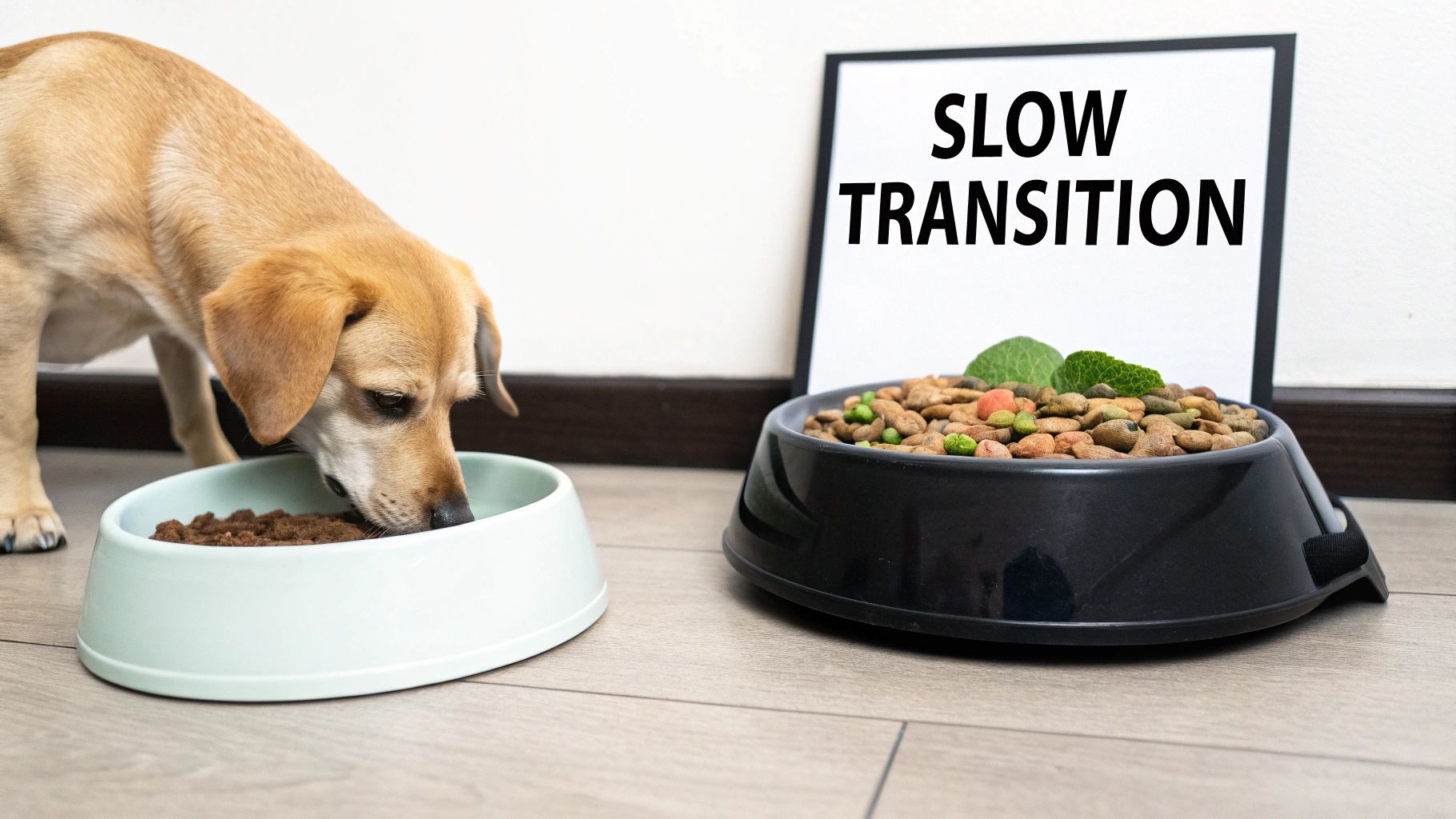
You’ve put in the work, sifted through the options, and finally picked out one of the best clean dog food brands. Now for the last—and most important—step: making the switch.
Just swapping out the old food for the new one is a recipe for disaster. Think of it like this: your dog’s gut is a finely-tuned ecosystem of bacteria that’s perfectly adapted to their current diet. A sudden change throws that whole system into chaos, often leading to an upset stomach, diarrhea, and a miserable pup.
That’s why a slow, steady transition matters. It gives their digestive tract time to adjust, produce the right enzymes, and get used to the new ingredients.
The 7-10 Day Transition Plan
Patience is your best friend here. A gradual switch over 7-10 days is the gold standard for preventing digestive drama. While every dog is unique, this schedule is a great roadmap for most healthy adult dogs.
Here’s how to do it:
- Days 1-3: Start small. Mix 75% of the old food with just 25% of the new food. This is just an introduction, letting their system get a small taste of what's to come.
- Days 4-6: If the first few days went smoothly, it’s time to move to a 50/50 split of old and new food. You're halfway there!
- Days 7-9: Now, you can tip the scales. Increase the new food to 75% while keeping the old food at 25%. This is the home stretch.
- Day 10 and Beyond: If your dog’s poop is firm and they seem happy, you can officially make the full switch to 100% new food. Success!
Remember, this is a guideline, not a hard-and-fast rule. If you know your dog has a sensitive stomach, don't be afraid to stretch each stage out for a few extra days. The goal is a happy gut, not a race to the finish line.
Monitoring Your Dog During the Switch
During this transition, you’ll need to put on your detective hat. Keep a close eye on your dog for any signs that the change isn't sitting well with them.
The best indicator of a successful transition is your dog’s poop. It should stay firm and well-formed. A little softness can be normal as they adjust, but persistent, watery diarrhea is a clear sign to slow things down.
A few other things to watch for:
- Vomiting or Gas: An unusual amount of gas or any vomiting means you should pull back.
- Appetite and Energy: Is your dog still excited to eat? Are they as playful as usual?
- Itchiness: Keep an eye out for any new scratching, skin redness, or irritation.
If you spot any of these red flags, drop back to the previous ratio for a couple more days before trying to move forward again. For a deeper dive, check out our complete guide on how to transition dog to new food. And of course, if any issues continue, it’s always best to give your vet a call.
Your Final Checklist for Choosing the Best Food
I know the world of dog food can feel like a maze, but you're now armed with the right information to make a great decision. Let's boil it all down into a quick checklist you can use while you're shopping. It'll help you cut through the marketing fluff and get right to what matters.
Think of this as your five-point inspection before you put anything in your cart. If a food can tick all these boxes, you can be confident you're looking at a high-quality option.
The Clean Food Quick Check
Use this simple list to spot clean food in just a few seconds.
- Check the First 5 Ingredients: The very first things on the list should be whole, named proteins. Look for "deboned chicken" or "grass-fed beef," not vague terms like "meat meal" or "poultry by-products."
- Scan for Artificial Additives: A quick scan of the ingredient list should show a complete absence of artificial colors, flavors, or chemical preservatives. Red flags include things like BHA, BHT, or ethoxyquin. Quality brands use natural preservatives like mixed tocopherols, which is just a form of Vitamin E.
- Look for Company Transparency: Hop on the brand’s website. Is it easy to find out where they get their ingredients? Good companies are proud of their sourcing and don't hide it.
- Find the AAFCO Statement: Every bag should have a nutritional adequacy statement. You want to see the words, "formulated to meet the nutritional levels established by the AAFCO Dog Food Nutrient Profiles." This is your baseline for a complete and balanced meal.
- Confirm Expert Formulation: Does the brand mention that its recipes were developed with veterinary nutritionists or PhDs in animal nutrition? This is a huge sign that they're committed to science-backed formulas.
A truly holistic approach to your dog's health extends beyond the bowl. Your final checklist should also include ensuring their outdoor spaces are safe, perhaps by consulting a comprehensive pet-safe lawn care guide.
By keeping these key points in mind, you’re ready to look past the slick packaging and choose the best, cleanest food for your dog.
Frequently Asked Questions
What is the cleanest brand of dog food?
There is no single "cleanest" brand, because the ideal formula depends on your dog's age, breed, and health status. However, brands that consistently score highest under strict evaluation criteria share specific traits: they use human-grade named proteins as their first ingredients, preserve fats exclusively with mixed tocopherols or rosemary extract, manufacture in USDA-inspected kitchens, and employ board-certified veterinary nutritionists. Fresh food services like The Farmer's Dog and Ollie frequently meet all these benchmarks simultaneously.
What is considered the healthiest dog food brand?
Veterinary nutritionists generally define the healthiest diets as those that are complete and balanced according to AAFCO nutrient profiles, formulated by credentialed experts, and made from highly bioavailable ingredients. A brand's health value is determined less by marketing terms like "superfood" and more by verifiable factors: named animal proteins leading the ingredient panel, appropriate caloric density for the dog's life stage, and a documented history of rigorous safety testing. Always consult your veterinarian to match a specific brand to your dog's metabolic needs.
What dog food is completely free of chemicals?
Every physical substance, including water and essential vitamins, is technically a chemical. When owners ask this, they usually mean food free of synthetic additives. To avoid artificial chemicals, select formulas that exclude BHA, BHT, ethoxyquin, artificial dyes (like Red 40), and synthetic flavor enhancers. Instead, look for foods preserved naturally with mixed tocopherols (Vitamin E) or ascorbic acid (Vitamin C), and colored only by the natural pigments of the whole-food ingredients themselves.
What is the best dog food with all natural ingredients?
Under AAFCO definitions, "natural" means ingredients derived solely from plant, animal, or mined sources that have not been subjected to chemically synthetic processes, though they may contain added synthetic vitamins and minerals required for nutritional balance. The best natural formulas pair this designation with high transparency. Look for brands that specify the exact animal source of every protein and fat, avoid generic terms like "animal digest," and provide third-party verification of their supply chain.
Are grain-free diets automatically cleaner?
Not at all. This is one of the biggest misconceptions out there. Just because a food is grain-free doesn't mean it's high-quality. A grain-free formula can still be packed with cheap fillers like potato starch, questionable "meat meals," and a laundry list of artificial preservatives.
A clean diet is all about the quality and sourcing of every single ingredient, not just cutting out one category. A food made with wholesome, intact grains like brown rice or quinoa is a far cleaner choice than a grain-free recipe filled with junk.
Always check the full ingredient list carefully. Grain-free diets aren't right for every dog. The FDA has explored potential links between certain grain-free diets, specifically those heavy in peas, lentils, and potatoes, and canine dilated cardiomyopathy (DCM), as noted in veterinary cardiology literature regarding diet-associated DCM. Talk with your vet before making a switch.
How much more does clean dog food really cost?
Let's be honest—you're going to see a higher price tag. Clean dog food brands almost always cost more than the mass-produced kibble you see stacked high in grocery stores. You're paying for better ingredients (often human-grade), ethical sourcing practices, safer manufacturing, and the expertise that goes into formulating the food.
The price jump can be anywhere from a modest 20-30% to more than double the cost, particularly for fresh-cooked or raw food subscriptions.
Many dog owners see it as an investment in their dog's future. A highly nutritious, clean diet can help head off common health problems, which could mean fewer vet bills and more happy, healthy years together.
Can I just make my own clean dog food at home?
While it might sound like the purest path, DIY dog food is difficult to get right. Formulating a meal that is "complete and balanced" according to AAFCO standards is a complex science. It's dangerously easy to create nutritional deficiencies or excesses that can cause serious health problems over time.
If you’re determined to go this route, it is absolutely essential that you work with a board-certified veterinary nutritionist. They have the specialized training to help you create a safe, balanced recipe suited to your dog's specific needs.
For the vast majority of us, choosing a reputable commercial clean dog food is a much safer and more practical way to go.
At Joyfull, we take the guesswork out of finding clean, high-quality nutrition for your pets. Every formula is made with transparently sourced ingredients and is rigorously reviewed by our veterinary advisors. Discover the difference clean ingredients can make at https://joyfullpet.com.
0 comments