Cat Treats for Joint Health: A Vet-Informed Guide
Your cat still eats well. She still purrs. She still uses the litter box. But she doesn't leap onto the windowsill in one smooth motion anymore. She pauses before jumping. She sleeps a little more. Maybe she grooms her back less, or seems slightly grumpy when you pick her up.
A lot of owners assume that's “just aging.” Sometimes it is aging. But sometimes it's joint discomfort, and cats are very good at hiding pain.
That's why cat treats for joint health can feel so confusing. The bag says “mobility support.” The ingredient panel lists fish oil, glucosamine, green-lipped mussel, or collagen. But the core question is simpler: Is this treat delivering anything meaningful, or is it mostly marketing wrapped around a snack?
If you're trying to make a smart choice for a cat who may be getting stiff, this guide will help you sort the useful from the fluffy claims and focus on what matters.
Table of Contents
- Is Your Cat Slowing Down? Recognizing the Need for Joint Support
- Understanding Feline Arthritis and Joint Discomfort
- Decoding Joint-Support Ingredients in Cat Treats
- How to Choose an Effective Joint Health Treat
- Administering Treats Safely and Effectively
- Beyond Treats A Multi-Modal Plan for Joint Health
- Frequently Asked Questions About Cat Joint Health
Is Your Cat Slowing Down? Recognizing the Need for Joint Support
Many cats don't limp dramatically or cry out when they hurt. They adapt. They take lower routes through the house, avoid high surfaces, and move less. Owners often notice a “quieter” cat before they realize they may be seeing pain.
That concern is valid. Osteoarthritis affects up to 90% of older cats, and the signs often go unnoticed because feline pain behavior is subtle, as noted by Sploot Vets on joint supplements for cats. In plain English, joint wear is extremely common in senior cats, and many families don't spot it early.
A treat can be one useful tool because it's easy to give and often easier than pills. But it only helps if it contains an ingredient with real value and enough of it to matter. That's the part many labels gloss over.
Cats rarely announce joint pain. They show it by changing routines you've seen for years.
If your cat seems slower, less willing to jump, or less engaged with daily habits, it's worth taking a closer look. It's also a good time to support your senior cat's health in broader ways, including nutrition, comfort, and a conversation with your veterinarian.
Understanding Feline Arthritis and Joint Discomfort
Arthritis sounds abstract until you picture the joint itself. A healthy joint works like a well-cushioned hinge. The surfaces glide smoothly, and the tissues around them help movement stay comfortable. When arthritis develops, that smooth motion becomes rougher. The cushioning wears down, inflammation builds, and ordinary movement can start to hurt.
For cats, this creates a problem owners don't always recognize. Cats are built to conserve energy and hide weakness. So instead of making pain obvious, they often reduce effort and change habits.

What arthritis actually does inside a joint
A simple way to think about it is a rusty door hinge. The hinge still opens, but it takes more effort and doesn't move smoothly. Arthritic joints can feel similar. The cat may still jump, climb, or crouch, but each motion can become less comfortable.
That discomfort doesn't always stay in one body part. A cat with sore hips may hesitate before using the stairs. A cat with back or elbow discomfort may stop jumping onto the bed. A cat with generalized stiffness may start choosing easier resting places.
Subtle signs owners often miss
Owners often expect obvious limping. Cats often give you smaller clues than that.
Common patterns include:
- Hesitation before jumping: Your cat still jumps, but pauses first or chooses a lower surface.
- Less grooming: The coat may look less tidy, especially around hard-to-reach areas.
- Changes in litter box habits: High sides or awkward entry can become harder to manage.
- Reduced play: A cat that used to chase toys may watch instead of joining in.
- Irritability with handling: Pain can make some cats less tolerant of touch, especially around the hips or back.
Practical rule: If your cat's habits changed gradually, don't dismiss it as personality or age without considering discomfort.
Joint support products make more sense when you see them this way. They aren't “anti-aging snacks.” They're an attempt to support comfort and mobility in a species that often suffers in silence.
Decoding Joint-Support Ingredients in Cat Treats
Labels often get slippery. A package can mention a trendy ingredient and still tell you almost nothing useful. What matters isn't whether an ingredient appears in tiny print. What matters is whether that ingredient has meaningful support for feline joint pain and whether the product gives enough of it.

Which ingredients have the strongest support
The clearest evidence points to omega-3 fatty acids, especially EPA and DHA. A 2022 systematic review and meta-analysis on osteoarthritis in dogs and cats concluded that omega-3-enriched diets and supplements beneficially modulate osteoarthritis in cats, while chondroitin-glucosamine has no proven analgesic effect.
That finding matters because many joint treats still lean heavily on glucosamine and chondroitin in their marketing. Those ingredients are familiar, and that familiarity sells. But “common” and “effective for pain relief” are not the same thing.
Green-lipped mussel is more nuanced. It often appears in products aimed at joint support, and some veterinary discussions connect it with omega-3 content and cartilage-supportive compounds. That makes it reasonable to consider as part of a formula. Still, I'd put the strongest practical emphasis on omega-3 delivery when you're choosing among treats.
MSM and collagen are even murkier in most over-the-counter treats. They may sound promising, but labels often use them more as halo ingredients than as clearly quantified, decision-making information.
| Ingredient | Proposed Function | Evidence for Feline Arthritis |
|---|---|---|
| Omega-3s including EPA and DHA | Help modulate inflammation linked to osteoarthritis | Strongest support in this article. Clinical review found benefit for omega-3-enriched diets and supplements in cats |
| Glucosamine | Marketed for cartilage support | No proven analgesic effect in the cited review |
| Chondroitin | Marketed for joint cushioning | No proven analgesic effect in the cited review |
| Green-lipped mussel | Source of omega-3s and joint-supportive compounds | Potentially useful, especially when part of a broader formula, but evaluate the actual active content |
| MSM | Marketed for joint comfort | Often included, but labels rarely make it easy to judge meaningful impact |
| Collagen | Marketed for connective tissue support | Can sound appealing, but treat labels often don't show whether the amount is relevant |
Why label language can be misleading
A label can say “with salmon oil” or “contains green-lipped mussel” and still deliver very little active material. That's why I'd rather see quantified EPA and DHA than vague ingredient storytelling.
For comparison shopping, it can help to look at broader consumer education on best joint pain supplements, then come back to the cat-specific question: does this product identify the active ingredient in a way that lets you judge it?
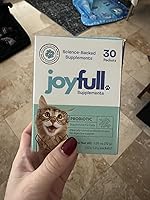
The same skeptical reading applies across pet supplements, not just joint products. For example, Probiotic Supplement for Cats - 30 Single-Serving Packets is a digestive support product, not a joint treat, but it shows the kind of label details that matter in any supplement category: veterinarian-formulated, third-party tested for potency and purity, and a clearly stated minimum of 1 billion CFU per serving. That's the kind of specificity owners should want more often.
If a treat promises “joint support” but doesn't clearly show what active compounds you're getting, you may be buying reassurance more than support.
How to Choose an Effective Joint Health Treat
The biggest mistake owners make is trusting the front of the package. The front is advertising. The useful information is usually on the back, and sometimes it's missing altogether.
Veterinary guidance recommends 4 to 6 mg of EPA+DHA per pound of body weight daily for arthritis support, yet many treat products provide negligible amounts per serving, according to Ask a Vet's arthritis nutrition guide for cats. That's the gap owners need to understand. A treat can contain the right ingredient and still fail the dose question.

Start with the active ingredient, not the front of the bag
Don't start by asking, “Does this say mobility?” Start by asking, “What exactly is in this, and how much?”
If the product highlights fish oil, salmon oil, marine oils, or green-lipped mussel, look for the actual EPA and DHA amount per serving. If that information isn't easy to find, that's not a small issue. It usually means you can't tell whether the treat is likely to contribute meaningfully.
A lot of pet wellness categories have the same problem. Marketing often outpaces clarity. That's one reason cross-checking how health claims are framed in other product categories, such as this Vet-Conscious Guide to CBD Dog Chews, can be useful. Different species, different product type, same consumer lesson: ingredients and dosing details matter more than trendy wording.
A practical label-reading checklist
Use this checklist when you compare cat treats for joint health:
-
Look for omega-3 specifics.
Fish oil sounds good, but EPA and DHA amounts are what you need to evaluate. -
Treat glucosamine and chondroitin claims carefully.
They may still appear in formulas, but don't assume they'll provide pain relief just because the label emphasizes them. -
Check serving guidance.
If the suggested number of treats is tiny and the active amount per treat is unclear, the product may be more snack than supplement. -
Prefer brands that show testing or formulation standards.
Third-party testing, veterinarian formulation, and straightforward labeling are useful signs that a company expects scrutiny. -
Read the full ingredient list.
A joint-support angle doesn't cancel out low-quality fillers, heavy flavoring, or a generally poor formula. -
Think about the whole diet.
Treats shouldn't crowd out balanced meals just to chase one ingredient.
Label check: Presence is not potency. A sprinkle of a good ingredient is still a sprinkle.
If you want broader context on how to judge treat quality beyond joint claims, Joyfull's complete guide to cat treats is a useful companion read.
Administering Treats Safely and Effectively
Even a well-chosen product won't help if your cat won't eat it consistently. Cats are creatures of habit, and many are suspicious of anything new, especially if it smells strongly of fish or shellfish.

Start small. Offer a tiny amount rather than a full serving. Let your cat investigate it without pressure. Some cats will take a new treat immediately. Others need repeated, low-stress exposure.
How to introduce a new treat to a suspicious cat
A simple approach works best:
- Begin with a crumb-sized taste: This lowers the chance that your cat rejects the flavor outright.
- Offer it during a calm routine: Try a familiar time, such as after play or before a usual meal.
- Avoid force or trickery: Hiding a strong-smelling treat in food can backfire if your cat then distrusts the meal too.
- Give it time: Acceptance sometimes comes from repetition, not enthusiasm on day one.
Consistency matters more than drama. A cat who eats a modest daily amount for weeks is in a better position than a cat who gets a large serving once in a while and then refuses it.
This short video can help you think through cat handling and routine-building around daily care:
When to keep going and when to call your vet
Mild hesitation with a new treat is normal. Vomiting, diarrhea, sudden food refusal, or a noticeable change in behavior is not something to brush off. Stop the product and talk with your veterinarian if you see those reactions.
Also call your vet if your cat's mobility seems to worsen, if jumping becomes much harder, or if litter box use changes. Owners sometimes keep rotating treats when the underlying issue is untreated pain.
The safest approach is simple: follow the package directions, make changes gradually, and let your vet know about any supplement or treat you're giving regularly.
Beyond Treats A Multi-Modal Plan for Joint Health
Treats can support a plan. They can't be the whole plan.
That matters because joint pain in cats often needs attention from multiple angles at once. According to VCA Hospitals' overview of nutraceuticals for feline osteoarthritis, nutraceuticals can reduce inflammation and support cartilage, but there are no conclusive clinical trials in cats showing that treats alone can replace vet-prescribed pain medication. In other words, they are adjunctive, not a replacement.

What else helps sore joints
A comfortable arthritic cat usually benefits from everyday changes that reduce effort.
- Weight control: Extra body weight adds stress to sore joints.
- Home setup: Ramps, steps, low-entry litter boxes, and easy-access resting spots can make a real difference.
- Traction: Rugs or mats can help cats feel steadier on slick floors.
- Soft resting areas: Supportive bedding encourages rest without awkward climbing or hard surfaces.
These changes don't sound glamorous, but they often improve daily comfort in ways owners can see quickly. A cat that can reach the sofa with one low step may start using family spaces again instead of isolating.
Where treats fit in
Think of cat treats for joint health as one small lever inside a broader care strategy. A good treat may help support nutrition goals and make daily supplementation easier. It does not diagnose arthritis, eliminate pain on its own, or replace medications when a cat needs them.
That broader perspective is why many owners benefit from looking at curated resources rather than shopping by package claims alone. If you're comparing supportive options, Joyfull's cat wellness solutions can be one place to gather ideas and questions to bring to your veterinarian.
Frequently Asked Questions About Cat Joint Health
How long does it take to notice whether a joint treat is helping?
Think in terms of gradual change, not overnight results. Owners usually do best when they watch for practical signs such as easier jumping, better grooming, more willingness to play, or less hesitation during daily movement. Keep notes if you're unsure. Small changes are easier to spot when you write them down.
Can I use dog joint treats for my cat?
That's not a good shortcut. Dogs and cats differ in size, ingredient tolerance, flavoring acceptability, and dosing needs. A product made for dogs may be poorly suited to cats even if the label sounds similar.
Are soft chews better than crunchy treats?
Not necessarily. The right format is the one your cat will eat consistently and that lets you judge the active ingredients clearly. For some cats, soft options are easier to accept. For others, freeze-dried or crunchy formats work better.
If a treat contains fish oil, is that enough?
Not necessarily. The key issue is whether the label tells you how much EPA and DHA the cat gets per serving. Without that, you can't tell whether the product is offering meaningful support or just borrowing the language of effective ingredients.
Should I ask my vet before starting a joint treat?
Yes, especially if your cat already has diagnosed arthritis, takes medication, has digestive sensitivity, or has other health conditions. A veterinarian can help you decide whether a treat makes sense, whether a different supplement form would be more useful, and whether your cat needs a fuller pain-management plan.
If you want a simpler way to shop for pet wellness products without wading through vague labels and inflated claims, Joyfull is built around that exact problem. The focus is practical, clean-label support with veterinary review, so you can spend less time decoding marketing and more time helping your cat feel comfortable.