


Yes, dogs can usually have plain blueberry kefir in small amounts, and blueberries themselves are light enough that ¼ cup is about 20 kcal with about 0.8 g of fiber. The catch is simple: safety depends on the kefir base being plain and unsweetened, not on the blueberries.
That's the part most advice gets backwards. Owners fixate on the berry and ignore the bottle. In real life, can dogs have blueberry kefir is rarely a blueberry question. It's a label-reading question.
A few whole blueberries added to plain kefir is one thing. A commercial “blueberry kefir” drink with sweeteners, flavorings, or extra sugar is a different food entirely. If you want the blunt answer, here it is: plain kefir plus fresh blueberries is usually the safer move.
Table of Contents
- Why Blueberry Kefir Is a Label Question, Not a Fruit Question
- What Kefir and Blueberries Bring to the Bowl
- Real Benefits Worth Knowing About
- Real Risks and Which Dogs Should Skip It
- Serving Sizes and a Slow-Start Plan
- Choosing or Making a Dog-Safe Version
- Putting It Together and When to Call the Vet
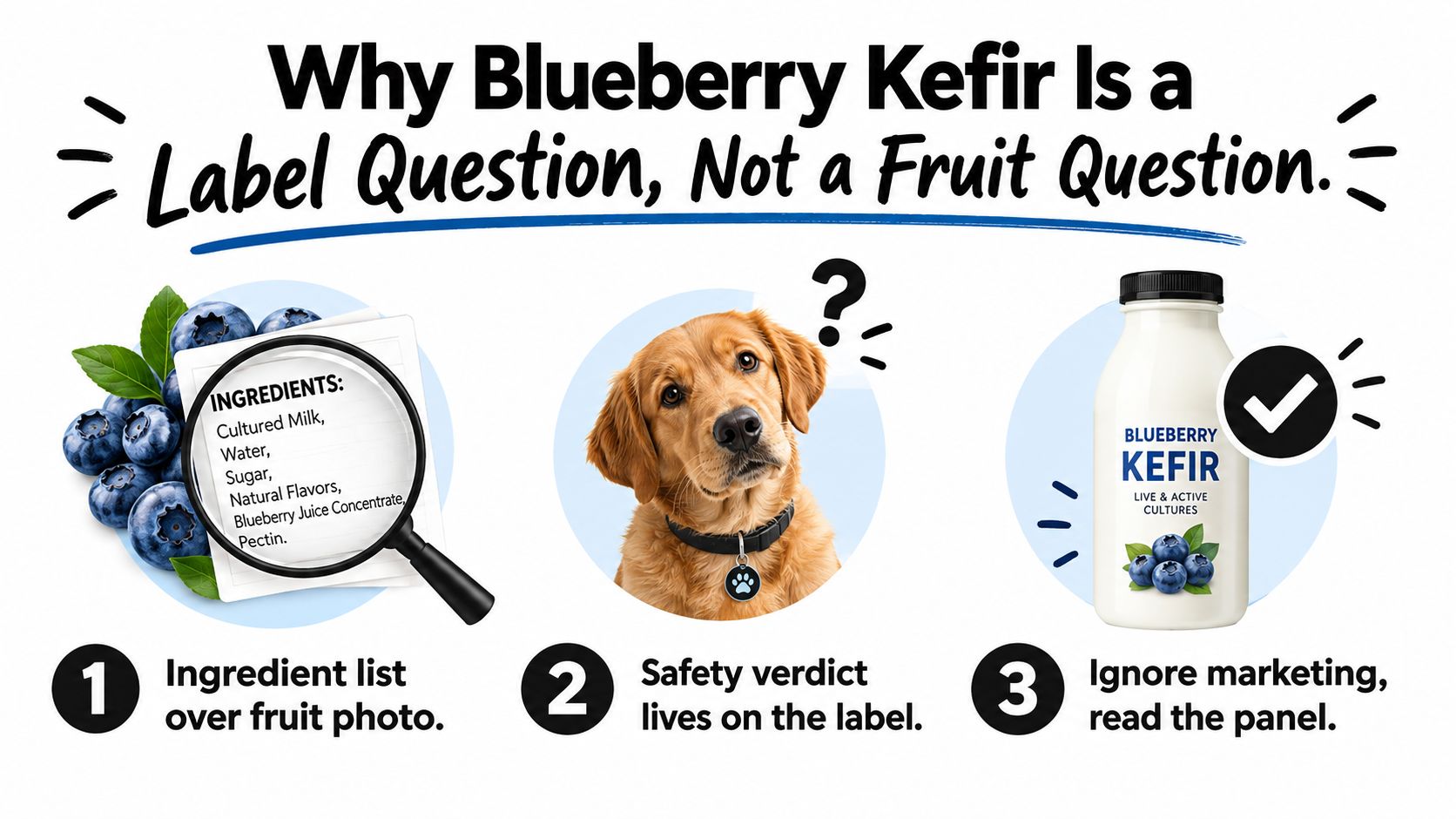
Why Blueberry Kefir Is a Label Question, Not a Fruit Question
Most dogs don't get into trouble because of blueberries. They get into trouble because owners see “blueberry” on the front of a package and assume the whole product is healthy.
Blueberries are generally a straightforward dog treat. They're widely regarded as safe for dogs and are relatively low calorie compared with many commercial treats. USDA-linked summaries report about 57 kcal per 100 g, about 84 kcal per cup (148 g), and about 2.4 g of fiber per 100 g along with vitamin C, vitamin K, and anthocyanins in the fruit itself, as summarized in this blueberries for dogs nutrition guide. That's the easy part.
The harder part is the kefir product wrapped around them.
The four things that actually decide safety
When you pick up a blueberry kefir product, ignore the fruit photo and check these:
- Base ingredient: Cow milk kefir, goat milk kefir, coconut-based kefir, and water kefir are not the same thing. Dogs react to the base, especially if dairy sensitivity is already an issue.
- Added sugar: Flavored products often sneak in sweeteners that add digestive load without giving your dog anything useful.
- Sweetener type: If you see xylitol, put it back immediately. No debate.
- Fermentation style: “Cultured” sounds nice, but it doesn't tell you whether the final product is simple and dog-safe.
What the front label usually hides
“Blueberry” on the front often signals processing, not nutrition. It may mean fruit puree, juice concentrate, “natural flavors,” sweetened fruit prep, or a blend designed for people, not dogs.
Practical rule: Judge blueberry kefir by the ingredient panel first and the flavor second.
A plain, unsweetened kefir with real blueberries mixed in at home is clear and controllable. A store-bought blueberry drink usually gives you less control, more guesswork, and more reasons for your dog's stomach to push back.
What Kefir and Blueberries Bring to the Bowl
Blueberry kefir gets treated like one ingredient. It is not. It is a fermented base plus a fruit add-in, and those two parts do different jobs. If you want to know whether a product belongs in your dog's bowl, separate them.
What kefir is
Kefir is a cultured drink made with bacteria and yeasts. It is thinner than yogurt, more acidic, and often easier for some dogs to handle than regular milk because fermentation lowers the lactose load.
A canine study found that kefir changed the gut microbiota in dogs without clinically evident adverse effects, and the same research summary notes that fermentation can reduce lactose while kefir may contain a wide range of live microbes, according to this canine kefir microbiota study on PubMed.
That is the useful part of kefir. It is a fermented food topper with some digestive upside for some dogs. It is not special because a label says blueberry.
What blueberries add
Blueberries bring fiber, moisture, and plant compounds. They are a simple fruit add-in that can make a bland topper more appealing without adding much fat.
They also stay easy to portion. A few crushed berries mixed into plain kefir gives you the fruit benefits without handing control over to a flavored product formula.
The formats dogs encounter
Owners tend to blur three very different products together, and that causes bad choices.
| Format | What it gives you | Main drawback |
|---|---|---|
| Plain kefir plus fresh blueberries | Clear ingredient control, simple nutrition, easy portioning | Still a dairy food, so sensitive dogs may react |
| Commercial blueberry kefir | Convenience | Often includes sweeteners, flavoring agents, fruit prep, or other extras dogs do not need |
| Water kefir or non-dairy blueberry kefir | Different base for dogs that do poorly with dairy | Base ingredients vary widely and can still be a poor fit |
Here is the plain truth. Blueberries are rarely the problem. The base product and the rest of the ingredient panel decide whether the bowl is smart or sloppy.
The three product types owners confuse
-
Plain kefir with fresh blueberries stirred in
This is the format I recommend first. You control the base, the fruit, and the serving size. -
Commercial blueberry-flavored kefir
Owners can be misled by front-label health language. It may be fine, or it may be packed with ingredients that turn a simple topper into a digestive gamble. -
Water kefir or non-dairy fruit kefir
These are not automatic upgrades. Some skip dairy but add other things that make even less sense for dogs.
Blueberry does not make kefir safer. A short, boring ingredient list does.
Real Benefits Worth Knowing About
Blueberry kefir gets oversold. Upside is more modest and more useful.
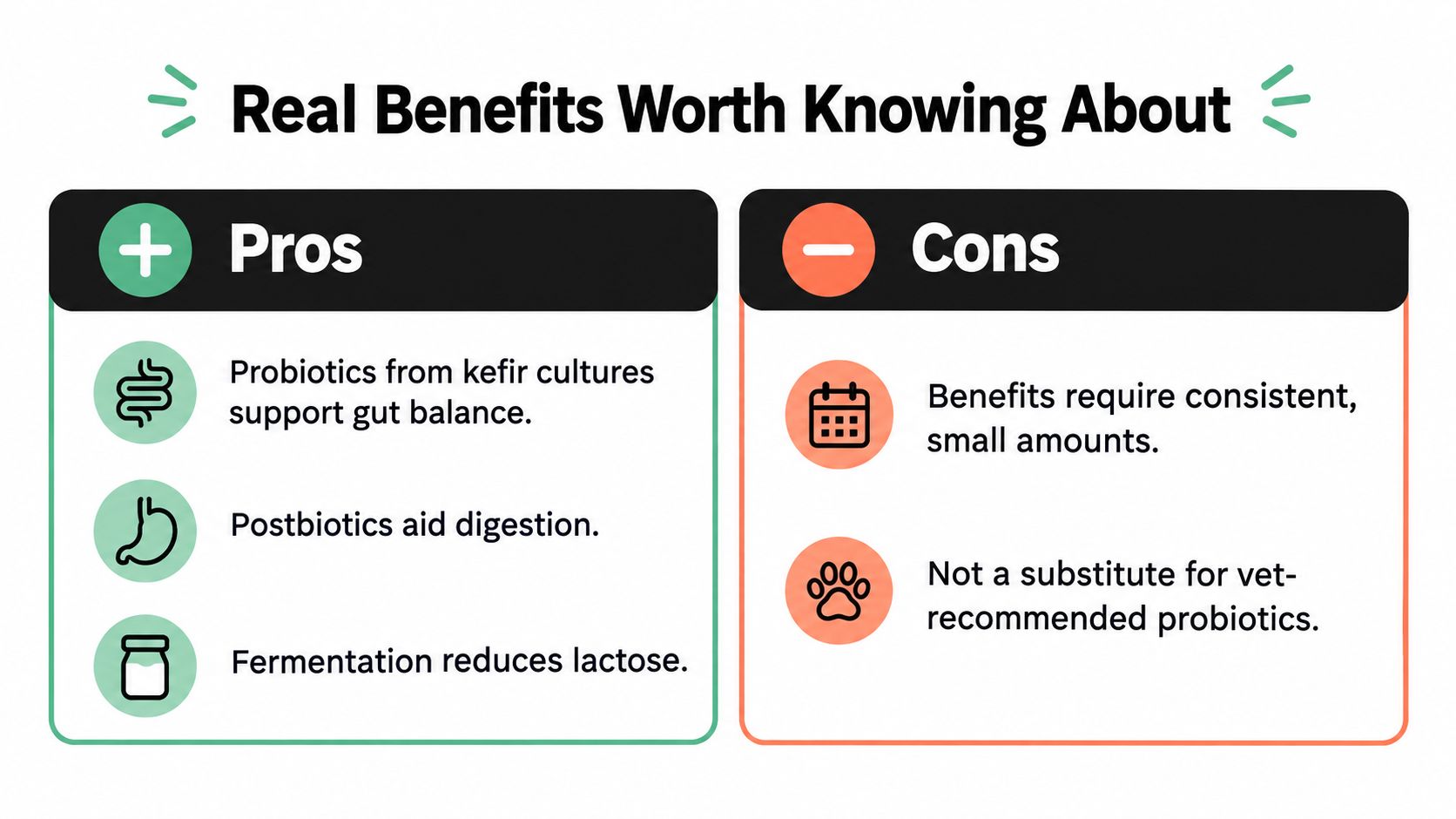
What kefir can reasonably do
The best evidence-backed point is that kefir is a fermented food that can influence the gut environment in dogs. Another review of companion-animal kefir products notes that plain, unsweetened kefir can be tolerated by many dogs, but it also warns that commercial products often overstate viable counts at opening by at least 1 log, which is why kefir shouldn't be treated like a standardized therapeutic probiotic in this companion-animal kefir review.
That means kefir may be a useful food topper. It does not mean every bottle is delivering a precise clinical dose.
What blueberries contribute without the hype
Blueberries give you a clean flavor add-in with fiber and antioxidants. That's useful for owners who want a small topper that feels more like food than candy. What they don't do is magically cancel out a bad kefir base.
If your goal is to add a little variety and moisture to a meal, blueberry kefir can help. If your goal is serious digestive support, a food product isn't always the most precise tool.
For owners who want food-based support, you can also look at prebiotics for dogs as a separate category from fermented dairy. And if you need a more standardized option than a flavored kefir drink, Joyfull Probiotic Supplement for Dogs - 30 Single-Serving Packets is a veterinarian-formulated supplement with clinically-tested probiotic strains, third-party testing for potency and purity, and individually sealed servings.
Here's a quick visual on where kefir can fit.
Benefits worth counting and benefits worth ignoring
Keep the list short:
- Gut support: Kefir may help support microbiota balance as part of a normal diet.
- Palatability: The tangy, moist texture can make food more appealing.
- Low-fat fruit add-in: Blueberries add flavor without much fat.
Skip the bigger promises. “Immune boosting,” “brain support,” and miracle gut healing claims are mostly extrapolation in this context.
Real Risks and Which Dogs Should Skip It
The risk isn't mysterious. It's dairy, sugar, sweeteners, and product design.
The actual problem ingredients
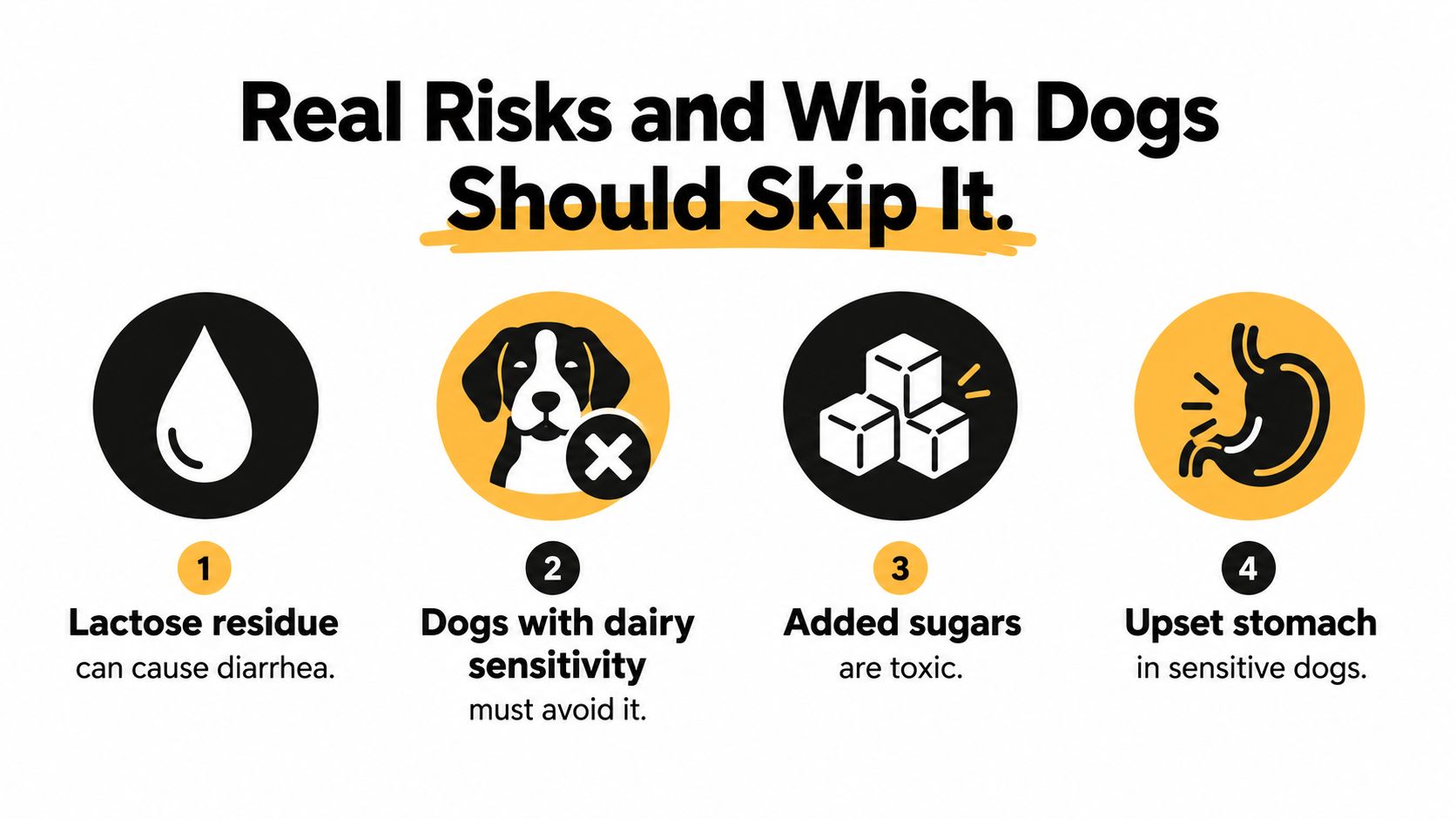
Dogs can still react to kefir because fermentation lowers lactose. It doesn't erase it. Expert guidance for dogs consistently recommends plain kefir only, in small portions, because sensitive dogs may still develop gas, bloating, or diarrhea. It also advises choosing plain kefir and adding whole blueberries separately, then monitoring stool quality over 24 to 48 hours, as outlined in this plain kefir guidance for dogs.
That's the sane approach.
What tends to go wrong in real homes
- Residual lactose: Some dogs get gas, loose stool, bloating, or itchy flare-ups from even small dairy exposures.
- Added sugar: Fruit-flavored kefir often carries extra sweetness your dog doesn't need.
- Sweeteners: Xylitol is an immediate no. If it's on the label, the product is off the menu.
- Higher GI load: Blueberry flavoring can make owners serve more than they should because the product looks harmless.
A lot of owners also miss the broader pattern. Processed fruit products are where risk tends to climb. If you want another example of how fruit itself and fruit products aren't the same thing, read these pomegranate risks for dogs according to Global. The lesson carries over cleanly: whole food is one question, packaged fruit product is another.
Dogs that should skip it
Some dogs shouldn't get blueberry kefir at all, or should only get it with veterinary guidance.
- Dogs with known dairy intolerance: Don't test their limits for the sake of a trendy topper.
- Dogs with active GI disease: A touchy gut doesn't need a fermented experiment.
- Dogs with pancreatitis risk or fat-sensitive digestion: Even “healthy” extras can backfire.
- Diabetic dogs: Flavored products raise too many questions.
- Dogs recovering from digestive instability: Keep inputs simple.
- Very young puppies: Their digestive system is still settling, and this isn't essential.
If you need a broader framework on dairy in general, the Joyfull dog dairy guide is worth reading before you bring kefir into the routine.
Stop focusing on whether blueberries are safe. Start asking whether this specific container belongs anywhere near your dog's bowl.
Serving Sizes and a Slow-Start Plan
You don't need a complicated protocol. You need restraint.
Blueberry kefir should be a topper, not a meal and not a free-pour snack. Keep it small, keep it boring, and keep notes if your dog has a sensitive stomach.
Blueberry kefir serving size by dog weight
| Dog Size | Weight Range | Starting Dose | Max Daily Amount | Notes |
|---|---|---|---|---|
| Toy | Under 10 lb | 1 teaspoon | 1 teaspoon | Best for testing tolerance only |
| Small | 10 to 25 lb | 1 to 2 teaspoons | 2 teaspoons | Use plain, unsweetened kefir with a little mashed blueberry |
| Medium | 25 to 50 lb | 1 tablespoon | 1 tablespoon | Good as an occasional topper |
| Large | 50 to 80 lb | 1 tablespoon | 1 to 2 tablespoons | Split between meals if needed |
| Giant | Over 80 lb | 1 tablespoon | About 2 tablespoons | Bigger dog, same rule: don't overdo dairy |
A simple slow-start plan
Use a gradual build instead of guessing.
-
Days 1 and 2
Give about a quarter of the target amount. -
Days 3 and 4
Move to about half if stool stays normal. -
Days 5 and 6
Increase to about three-quarters. -
Day 7
Give the full portion only if appetite, stool, and comfort are unchanged.
Signs to pull back immediately
Watch the dog, not the trend.
- Watery stool
- Mucus in stool
- Noticeable gassiness
- Refusing regular food
- Vomiting or obvious abdominal discomfort
If any of that shows up, stop the kefir experiment.
One side note for multi-pet homes: don't assume a dog feeding plan automatically fits your cat. Products like Probiotic Supplement for Cats - 30 Single-Serving Packets are formulated separately, which is a reminder that species-specific gut support makes more sense than sharing random fridge foods across pets.
Choosing or Making a Dog-Safe Version
If you remember one thing, remember this: plain kefir plus real blueberries beats “blueberry kefir” marketing almost every time.
What to buy
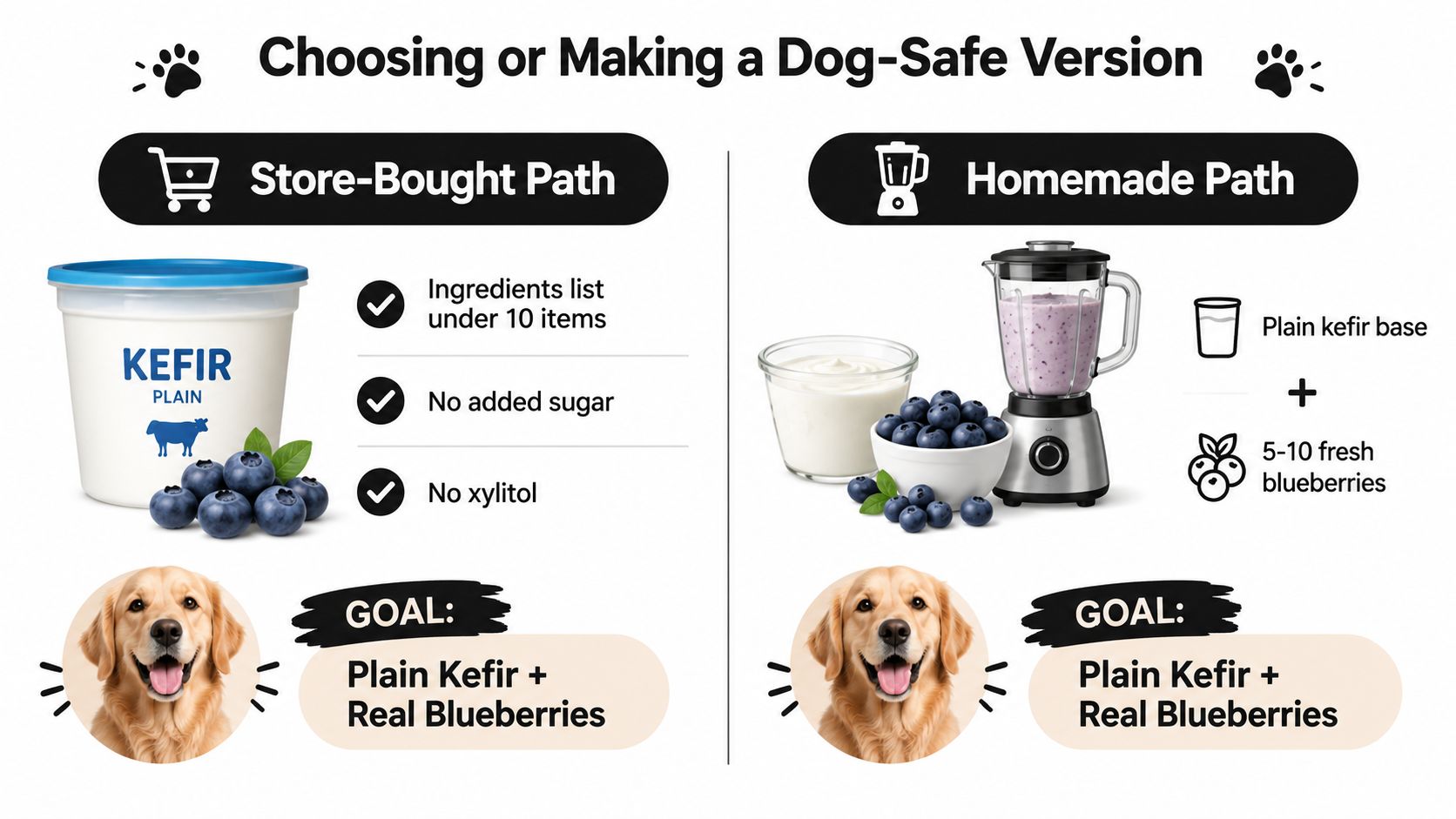
The safest store-bought version is usually not blueberry kefir at all. It's plain, unsweetened kefir that you doctor yourself.
Use this checklist:
- Short ingredient list: Fewer moving parts usually means fewer surprises.
- Plain base: Look for plain cultured milk or another simple unsweetened base.
- No added sugar: If sweeteners show up, move on.
- No xylitol or other sugar alcohols: Hard stop.
- No vanilla or dessert-style flavoring: Those products are built for people, not dogs.
- Real fruit only if used: “Natural flavors” tells you less than actual blueberries.
What to make at home
Homemade is easier than people think.
Take plain unsweetened kefir and stir in a small amount of fresh or thawed blueberries. Lightly mash the berries if your dog prefers a smoother texture. Serve a small amount and refrigerate the rest briefly if needed, but don't treat it like a long-life prep food.
This route gives you total control over the sugar load, the fruit amount, and the ingredient list. That's why I prefer it.
If you want the probiotic angle, choose precision. If you want the treat angle, choose simplicity.
Which path wins
Here's the honest trade-off:
- Store-bought flavored blueberry kefir: More convenient, less transparent
- Plain kefir plus berries at home: Slightly more work, much better control
If your dog needs more structured digestive support than a fridge topper can provide, look at dog probiotics instead of trying to squeeze a clinical result out of a flavored dairy drink.
Putting It Together and When to Call the Vet
So, can dogs have blueberry kefir? Usually yes, but only when the product is plain, unsweetened, and served in a small amount that matches the dog in front of you.
The green-light version
This is the best-case scenario:
- Healthy adult dog
- No known dairy sensitivity
- Plain unsweetened kefir
- A few real blueberries mixed in
- Small topper-sized serving
- Normal stool after introduction
That's a reasonable use case.
The yellow-light version
Use caution if your dog has a touchy stomach, inconsistent stools, or a history of reacting to rich extras. In those dogs, blueberry kefir may be tolerated, but it may also create noise you didn't need.
Pet-health guidance on this topic keeps landing on the same point: blueberries are generally safe, but processed blueberry foods can add sugar or xylitol risk, and kefir is typically best only when it's plain and unsweetened, as noted in this PetMD overview on blueberries for dogs and mixed product risk.
The red-light version
Skip blueberry kefir if your dog has:
- Known dairy intolerance
- A pancreatitis history
- Diabetes
- Kidney disease
- Ongoing GI disease
- A medication or treatment plan where your vet wants diet kept tight
Another point worth keeping in mind: current commentary around “natural probiotics” for dogs has become more cautious and individualized, with more emphasis on label transparency, gradual introduction, and the fact that probiotic foods may be more hype than help for some dogs, as discussed in this overview of natural probiotics for dogs.
What to ask your vet
If your dog sits in the gray zone, ask direct questions:
- Is dairy a problem for my dog specifically?
- Does my dog's current medication change whether fermented foods make sense?
- If I want gut support, should I use food, a supplement, or neither?
- Does soft stool after introduction mean “stop,” or just “reduce”?
Plain kefir with fresh blueberries is usually the better default. It gives you control, and control is what keeps “healthy treat” ideas from turning into avoidable stomach upset.
Blueberry kefir is not automatically safer or more functional than plain kefir with fresh blueberries. Most of the time, the label is the decision point. Not the fruit.
If you want gut support without the guesswork of sweetened dairy drinks, Joyfull offers cleaner, more targeted options for pets with ingredient-conscious owners. For practical, no-BS products and guidance built around what belongs in your pet's bowl, visit Joyfull.
0 comments