


Yes, dogs can absolutely eat cranberries, but how you serve them is what really matters. These tart little berries are non-toxic and can offer some nice health perks when given in moderation. The key thing to remember is that the sugary, processed cranberry sauces and juices you see on holiday tables are a definite no-go for your pup.
The Simple Answer to Feeding Your Dog Cranberries
If you've ever been prepping for a holiday meal, dropped a cranberry, and watched your dog gobble it up before you could react, don't panic. Plain, unsweetened cranberries—whether they're fresh, frozen, or dried—are perfectly safe.
Think of them less like a daily supplement and more like a healthy, occasional treat. The big difference between a beneficial snack and a recipe for an upset stomach comes down to two simple things: the form of the cranberry and the quantity you're offering.
Cranberries are packed with antioxidants and vitamins that can give your dog's immune system a little boost. Perhaps their most well-known benefit is their role in promoting urinary tract health. But that signature tartness comes from a high acid content, which can easily lead to digestive issues if your dog has too many.
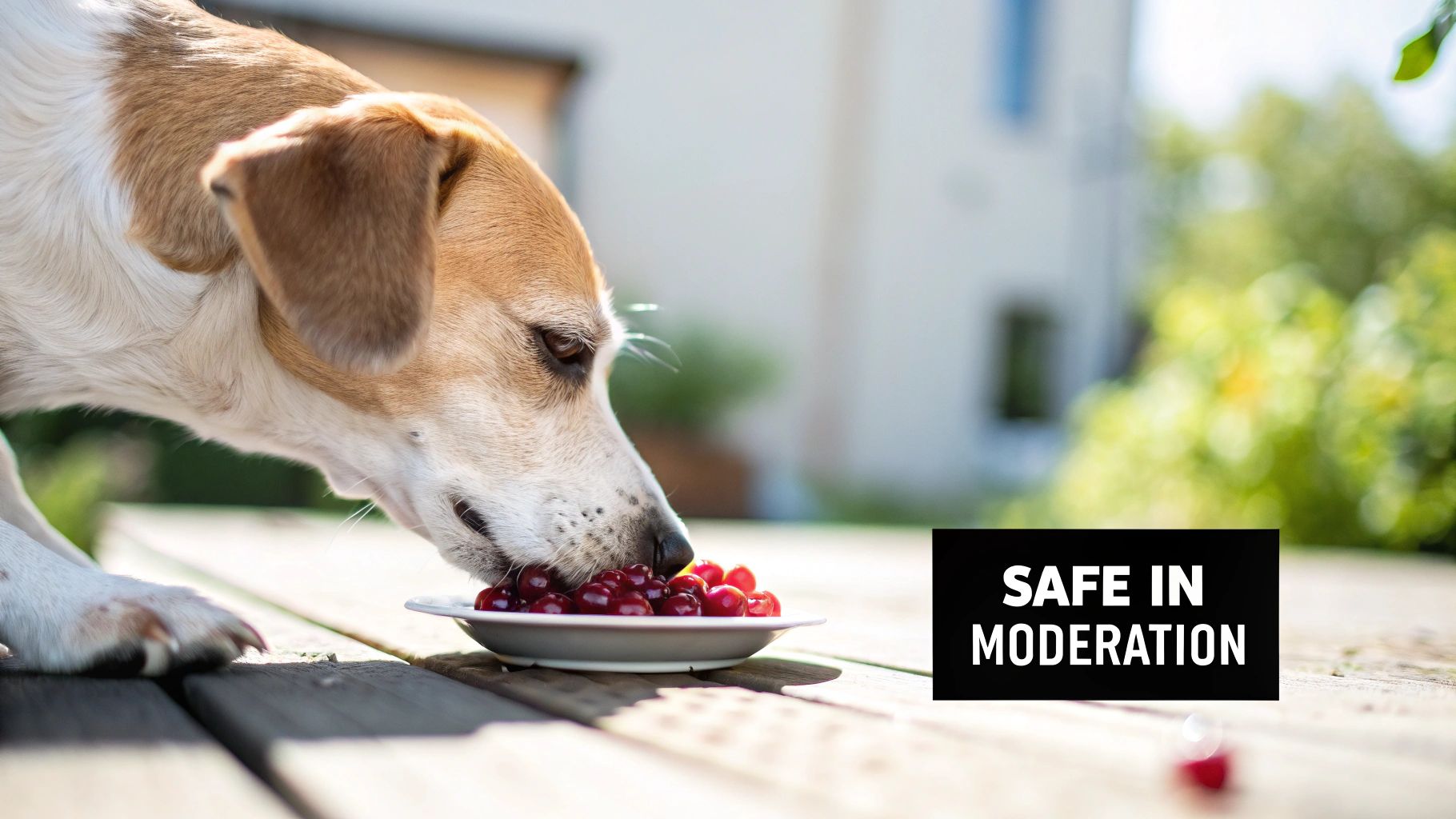
Why Moderation Is Everything
For generations, curious pet owners have wondered about sharing a few cranberries, especially around the holidays. The good news is that veterinary experts agree they're safe. The trick is to tailor the portion size to your dog. For an extra-small dog under 20 pounds, just 1-2 berries is plenty. For an extra-large breed over 91 pounds, you could offer up to 10-15 berries.
Following these serving guidelines helps you avoid the main drawback: an upset stomach caused by their natural acidity. You can find more details on safe cranberry portions for dogs on PetMD.
The core principle is simple: Treat cranberries like a garnish, not a meal. A few berries here and there can offer benefits without the risks.
So, can dogs eat cranberries? The answer is a definite yes, as long as you stick to a few important rules.
To make it even clearer, here’s a quick rundown of what you need to know.
Cranberry Safety At A Glance
| Category | Safe for Dogs (Yes/No) | Important Notes |
|---|---|---|
| Fresh/Frozen Cranberries | Yes | The best and safest option. Serve them raw, cooked, or frozen. |
| Dried Cranberries | Yes (with caution) | Must be unsweetened. Check ingredients for added sugars like xylitol, which is toxic. |
| Cranberry Sauce | No | Almost always contains high amounts of sugar, and sometimes other harmful ingredients. |
| Cranberry Juice | No | Typically loaded with sugar. Stick to plain water for your dog's hydration. |
| Trail Mixes | No | Often contain raisins or nuts that are toxic to dogs, like macadamia nuts. |
Sticking to these simple guidelines means you can safely share this festive fruit with your four-legged friend without any worry.
Surprising Health Benefits of Cranberries for Dogs
You might just think of cranberries as a holiday side dish, but for our dogs, these little red berries are a genuine superfruit. They're packed with some serious nutrients that can give your pup’s overall wellness a real boost.
One of their standout features is a special group of antioxidants called proanthocyanidins, or PACs. The best way to think of PACs is as a non-stick coating for your dog's bladder. They work by preventing harmful bacteria like E. coli from latching onto the urinary tract walls, which is a major step in warding off pesky urinary tract infections (UTIs).
It’s no wonder so many pet parents ask "can dogs eat cranberries" when exploring natural ways to support urinary health. This whole idea gained a ton of traction after human studies showed just how effective PACs could be, and the pet world quickly took notice.
Bolstering a Healthy Immune System
Cranberries are also brimming with other powerful antioxidants, especially vitamin C and vitamin E. These are absolute essentials for keeping your dog's immune system in top fighting shape.
Think of antioxidants as your dog’s personal security detail at a cellular level. They hunt down and neutralize unstable molecules called free radicals, which can wreak havoc on cells, proteins, and even DNA over time.
By keeping these free radicals in check, cranberries help lower oxidative stress—a major factor in aging and many chronic health problems. A diet rich in antioxidants helps ensure your dog’s immune system is primed and ready to go.
By helping to neutralize free radicals, the antioxidants in cranberries support everything from healthy skin to robust organ function, contributing to your dog's long-term vitality.
Digestive and Anti-Inflammatory Support
The good news doesn't stop there. Cranberries also deliver a healthy dose of natural fiber, which is a cornerstone of a well-functioning digestive system.
Fiber is fantastic for keeping bowel movements regular and feeding the good bacteria in your dog's gut. A happy gut means better nutrient absorption and a more comfortable pup all around.
Plus, those same hard-working antioxidants also have anti-inflammatory properties. This can be a real game-changer for older dogs or those dealing with joint stiffness, where chronic inflammation often plays a role in their discomfort. It’s not a magic cure, of course, but adding anti-inflammatory foods is a smart part of a holistic wellness plan.
The buzz around cranberries for pets isn't just hype; it's backed by some solid science. Their value became undeniable once research in humans highlighted their effectiveness, paving the way for pet-focused applications. Considering that UTIs can affect as many as one in ten dogs, adding a few berries to their diet—say, 5-6 for a medium-sized dog—could be a simple way to help sidestep a costly vet visit. You can dive deeper into the data behind cranberries' benefits for dogs on RaisedRightPets.com.
Understanding the Risks and Potential Side Effects
While cranberries pack a healthy punch, they aren't a free-for-all treat. It’s important to know the potential downsides, especially when you’re not careful about how you serve them. Just like with any new food you introduce to your dog's bowl, moderation is everything. Too much of a good thing can quickly turn a beneficial snack into a problem.
The most frequent issue we see is simple gastrointestinal upset. Cranberries are quite acidic—that’s what gives them that signature tartness. For some dogs, particularly those with a sensitive stomach, this acidity can be a bit much. If they eat too many, it can easily lead to vomiting, diarrhea, or a general bellyache.
Think of it like a person going overboard on sour candy. It's fun for a minute, but too much will likely leave you with an unhappy stomach. Your dog's digestive system works in a similar way. The easiest fix? Stick to small, sensible portions.
More Serious Long-Term Concerns
Beyond a temporary tummy ache, there's a more serious risk if you're feeding your dog a lot of cranberries over a long time: the formation of calcium oxalate bladder stones. This is a particularly big deal for certain breeds that are already prone to them.
Here's how it happens: cranberries contain natural compounds called oxalates. When a dog gets too many oxalates in their diet, these compounds can bind with calcium in the urine and form tiny, sharp crystals. Over time, these crystals can clump together into painful bladder stones that might require a trip to the vet or even surgery to remove.
A single cranberry here and there is no cause for alarm. The real danger lies in consistently feeding large amounts, which can contribute to stone formation, especially in dogs with a history of urinary issues or in susceptible breeds.
The pet wellness boom has put cranberry treats on every shelf, but it’s also brought this risk to light. While most over-snacking just leads to a bit of digestive distress that resolves on its own, the potential for bladder stones is real. For instance, high cranberry intake is linked to stone formation in 3-5% of predisposed breeds like Dalmatians. You can learn more about how overfeeding fruit can affect pets on Raised Right Pets. If your dog has ever had urinary health problems, it's always smart to check with your vet first.
The Simple Choking Hazard
Finally, let's not forget a basic physical risk: choking. Whole, raw cranberries are small, hard, and perfectly round, which can pose a hazard for a few types of dogs:
- Small Breeds: A whole berry can easily get stuck in their smaller throats.
- Puppies: Youngsters are still figuring out how to chew properly and often just try to swallow things whole.
- Fast Eaters: Some dogs inhale their food without a second thought, putting them at a much higher risk.
To sidestep this danger completely, just chop fresh cranberries into smaller, safer pieces before offering them. It’s a tiny step that makes all the difference. It's also worth noting that true cranberry allergies are rare, but if you're concerned about a reaction, you can check out our guide on what causes food allergies in dogs.
How to Safely Prepare and Serve Cranberries
So, you're on board with the benefits and aware of the risks. Great. Now for the fun part: actually giving this little superfruit to your dog. It's really simple once you know what to look for and what to leave on the shelf. The whole point is to give them the good stuff without any of the junk.
When in doubt, stick with fresh or frozen cranberries. They are pure, unsweetened, and you can easily control how many your dog gets. You can offer them whole if you have a careful chewer, but chopping them up is always the safest move. This minimizes any choking risk, especially for smaller pups or those who inhale their food.
Choosing the Right Cranberry Form
Not all cranberry products are dog-friendly. Some are perfect, while others are a hard pass.
- Fresh Cranberries: This is the gold standard. You can serve them raw or give them a quick, light cook.
- Frozen Cranberries: Just as healthy as fresh ones. They make for a fantastic crunchy, cool treat on a hot day.
- Dried Cranberries: These are tricky. They must be 100% cranberry with zero added sugars or oils. You'll need to be a label detective.
- Pure Cranberry Puree: A solid choice for mixing into your dog's food, as long as it's completely unsweetened.
Dried cranberries have become a popular pet treat, probably because they're a staple in our own trail mixes. But this is where you have to be extra vigilant. While plain, unsweetened dried cranberries are perfectly fine in moderation, a staggering 70% of store-bought bags mix them with raisins, which are highly toxic to dogs. Always, always read the ingredient list.
What to Absolutely Avoid
Knowing what not to give your dog is just as crucial as knowing what's safe. Many cranberry products are loaded with ingredients that can make your dog sick.
Keep it simple. Stay far away from anything with added sugar, artificial sweeteners like xylitol, or other fruits mixed in.
Here’s your "never feed this to my dog" list:
- Cranberry Sauce: That Thanksgiving staple is a sugar bomb. Worse, it can contain xylitol, which is extremely poisonous to dogs.
- Cranberry Juice: It's far too sugary and acidic for a dog's digestive system to handle.
- Trail Mixes: These are a minefield. They often contain raisins, currants, and even nuts that are toxic to dogs, like macadamias.
The flowchart below breaks down the biggest risks you run into when feeding cranberries improperly.
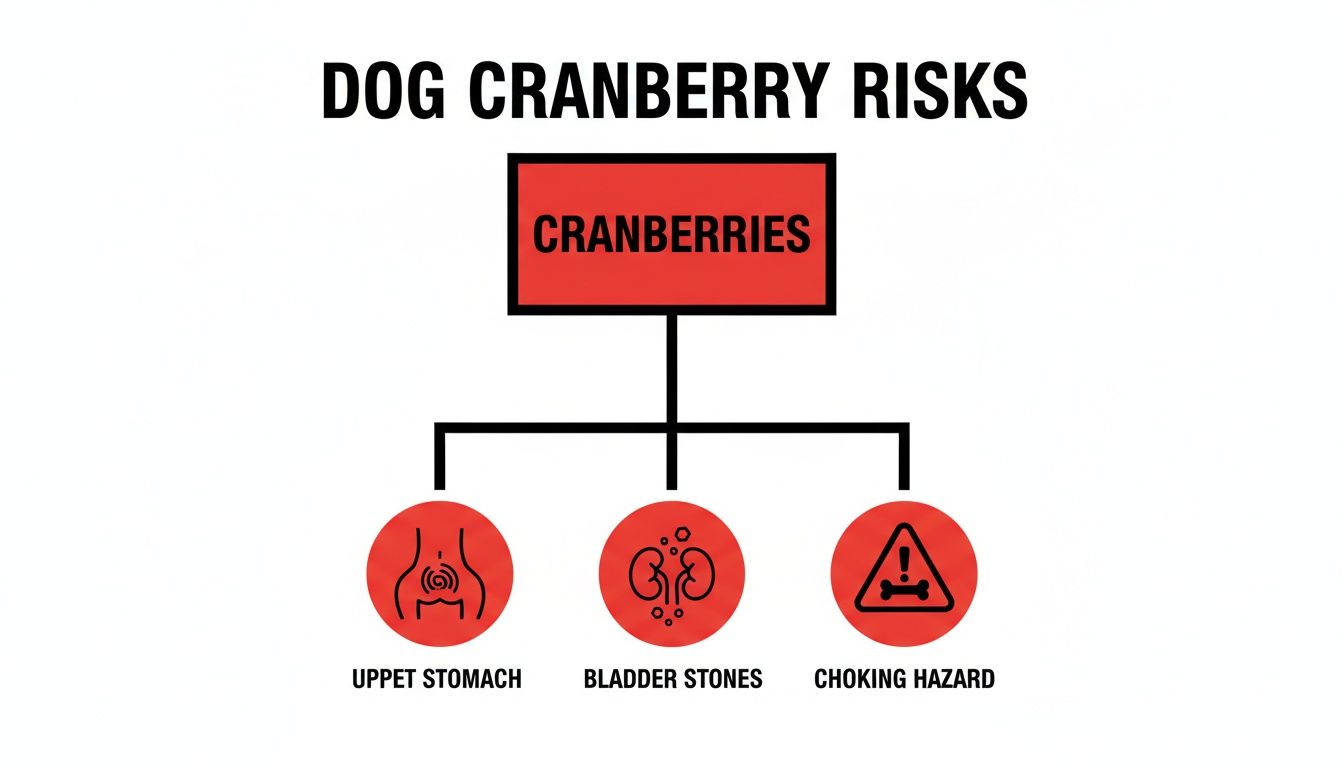
As you can see, even a good thing can cause problems like an upset stomach if you overdo it. Long-term, giving too many can contribute to more serious issues like bladder stones.
Cranberry Serving Guide By Dog Weight
Figuring out the right amount can feel like guesswork, so I've put together this simple guide. These recommendations are for plain, unsweetened cranberries and are meant as a starting point. Always introduce new foods slowly!
| Dog Size & Weight | Fresh/Frozen Berries | Unsweetened Dried Berries | Pure Cranberry Puree |
|---|---|---|---|
| Toy (Under 10 lbs) | 1-2 berries | 1-2 berries | 1/4 teaspoon |
| Small (11-25 lbs) | 2-4 berries | 2-3 berries | 1/2 teaspoon |
| Medium (26-50 lbs) | 4-6 berries | 4-5 berries | 1 teaspoon |
| Large (51-90 lbs) | 6-10 berries | 6-8 berries | 1-2 teaspoons |
| Giant (Over 90 lbs) | Up to a small handful (12+) | 8-10 berries | Up to 1 tablespoon |
Remember, these are daily maximums, and treats should never make up more than 10% of your dog's daily calorie intake. When in doubt, start with less.
Creative and Safe Serving Ideas
Ready to add a little cranberry flair to your dog’s bowl? It doesn’t have to be complicated.
- Simple Food Topper: Finely chop a few fresh or dried cranberries and sprinkle them over your dog's regular meal for a pop of flavor and antioxidants.
- Frozen Pupsicles: Blend a small amount of fresh cranberries with plain water and freeze the mixture in an ice cube tray. Perfect for a hot day.
- Tiny Training Treats: A single, small, unsweetened dried cranberry can be a fantastic high-value reward during training drills.
With these simple tips, you can feel confident adding this nutritious berry to your dog's diet. If you're looking for more fun ways to treat your pup, check out our guide on healthy dog treat recipes you can whip up right in your own kitchen.
Finding Cranberries in Commercial Dog Food and Treats
Prepping fresh cranberries for your dog is one way to go, but let's be honest, most of us appreciate the convenience of a well-made commercial dog food or treat. If you've noticed cranberries popping up on ingredient lists more often, you're not wrong. High-quality pet food brands are including them for a very specific reason: to provide targeted health benefits without any of the guesswork.
When you see "cranberry" or "cranberry extract" on a dog food label, it’s almost always there to support your dog’s urinary tract health. These formulas deliver a precise, safe amount of the fruit's beneficial compounds. This gives your dog all the perks without the risks of an upset stomach or other issues that can come from feeding too many fresh ones.
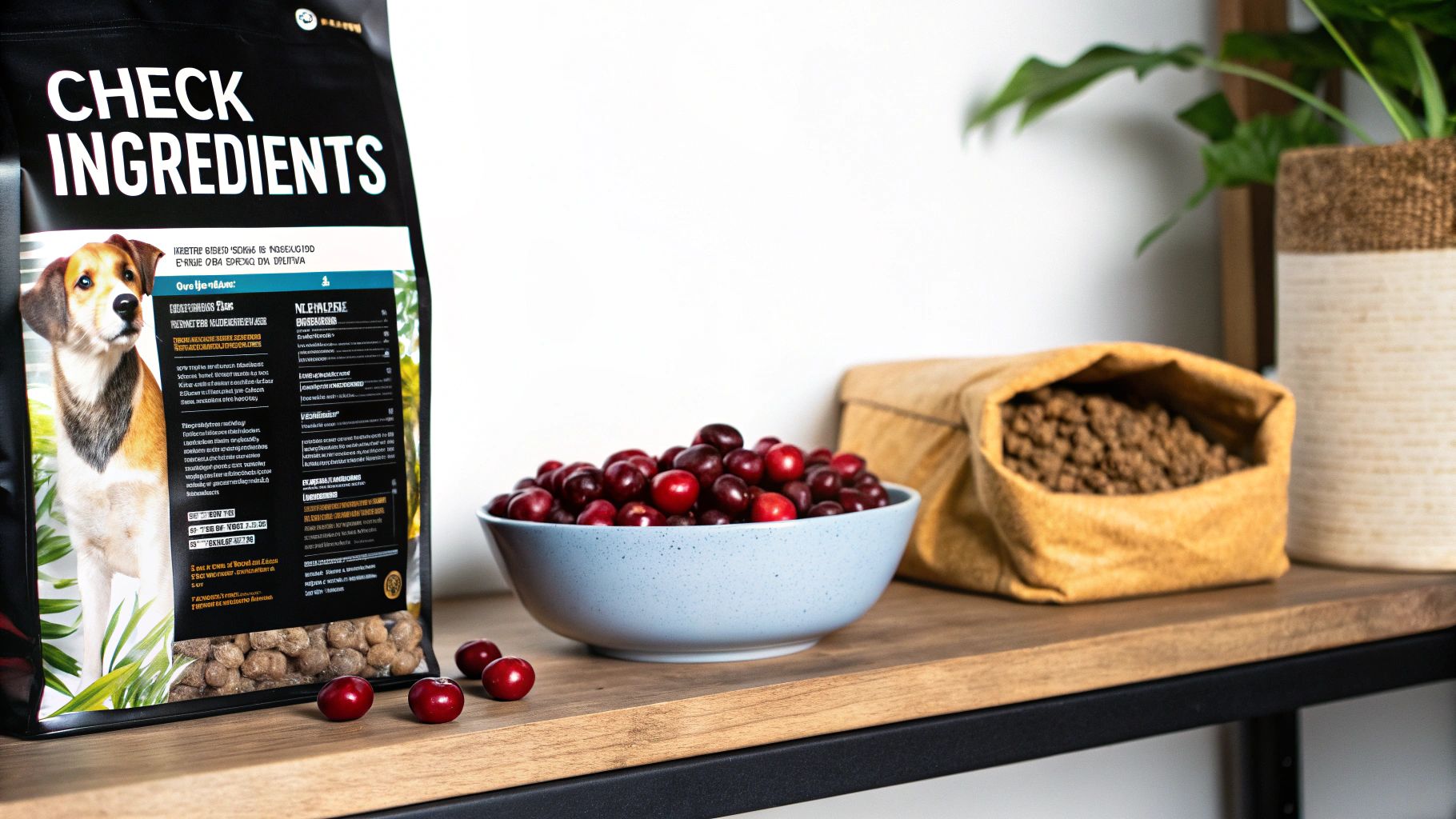
Reading the Ingredient Label
The best way to know if a food is actually good for your dog is to become a savvy label reader. The ingredient list never lies.
- Look for "cranberries," "dried cranberries," or "cranberry extract" listed near the top. Ingredients are listed by weight, so a higher placement means a more meaningful amount.
- Watch out for vague descriptions like "fruit blend," which doesn't tell you how much, if any, cranberry is included.
- Avoid added sugars at all costs. Things like corn syrup or sucrose completely cancel out the health benefits and just add empty calories.
Learning to spot these things helps you pick foods that contribute to your dog's well-being. If you want to get really good at this, our guide on how to read dog food labels is a great place to start.
The rise of cranberries in pet food is part of a bigger shift toward ingredients that do more than just provide calories. In the US, where cranberry production can top 700 million pounds a year, it's no surprise they've found their way into pet wellness products. Studies have shown these little red berries can reduce bacterial attachment in a dog's bladder by 30-50%, a major reason for their popularity. You can learn more about these findings and the benefits of cranberries for dogs at AKC.org.
What to Look For in a Quality Product
When you're comparing products, look beyond just the fact that it has cranberries. A truly great food or treat is about the whole package, not just one star ingredient.
A product's value isn't just in a single star ingredient but in how all the components work together. Seek out formulas with high-quality proteins, no artificial fillers, and a clear commitment to clean, beneficial ingredients.
Ultimately, picking a food that includes cranberries is an investment in your dog’s proactive health. By choosing a professionally formulated, vet-approved product, you’re giving them a safe and reliable way to get those antioxidant and urinary benefits every single day.
Common Questions About Dogs and Cranberries
Even when you know the basics, real-life situations with your dog can be tricky. Let's tackle some of the most common questions that pop up about dogs and cranberries, so you can feel confident sharing this superfruit with your best friend. Think of this as your quick-reference guide for everything from holiday table scraps to puppy-specific rules.
Getting these common scenarios straight helps reinforce the most important rule: moderation is key. It’s all about knowing which forms of cranberry are a "yes" and which are a definite "no" for your dog's gut.
Can My Dog Eat Cranberry Sauce from Thanksgiving Dinner?
That’s going to be a hard no. It's best to keep the Thanksgiving cranberry sauce well out of your dog's reach. While a tiny, accidental lick probably won't cause a disaster, it's a risky habit to even start.
Why the strict rule? Most cranberry sauces, whether canned or homemade, are loaded with sugar. That much sugar isn't just unhealthy for dogs—it can lead to weight gain and almost certainly an upset stomach.
The bigger worry, though, is the other ingredients hiding in the sauce. Some recipes use artificial sweeteners like xylitol, which is extremely dangerous and can be life-threatening to dogs even in tiny amounts. Others might toss in raisins or a bit of alcohol, both of which are also toxic to your pup.
Our advice? Just avoid sharing any prepared cranberry dishes. If you want to give your dog a festive treat, a few plain, fresh, or unsweetened dried cranberries are a much safer bet.
Are Dried Cranberries Like Craisins Safe for My Dog?
They can be, but you have to become a bit of a detective. Plain, unsweetened dried cranberries are a perfectly fine and convenient treat, but there’s a big "if" attached. You absolutely must check the ingredients list before sharing.
The problem with most commercial dried cranberries is that they're often sold in mixes with other things that are toxic to dogs. Trail mixes, for example, frequently contain raisins and currants, which can cause sudden kidney failure in dogs.
On top of that, many brands douse their dried cranberries in sugar or juice concentrates to cut the tartness. All that added sugar pretty much cancels out the health benefits and just piles on empty calories. Always flip the package over and scan the label. You're looking for one thing and one thing only: 100% pure, unsweetened cranberries.
How Many Cranberries Can My Puppy Eat?
Puppies are a whole different ballgame. Their digestive systems are still under construction and are far more sensitive than an adult dog's. So, when it comes to cranberries, you need to be extra cautious. For a small breed puppy, just one or two fresh cranberries is plenty to start with.
The golden rule for any new food is to introduce it slowly and in a very small amount. After they have their first taste, watch them for the next 24 hours. You're looking for any signs of an upset stomach, like diarrhea or vomiting.
Most importantly, never toss a whole cranberry to a puppy. Their small size and tendency to gulp food down without chewing creates a serious choking hazard. Always chop the berries into tiny, manageable bits first.
Will Cranberries Cure My Dog's UTI?
This is a really important point to get right: cranberries can help prevent UTIs, but they cannot cure an active infection. The compounds in cranberries, known as proanthocyanidins (PACs), work by making the bladder lining slick, which helps stop bacteria from sticking around and starting an infection.
But if your dog is already showing UTI symptoms—like peeing more often, straining to go, having accidents, or you see blood in their urine—you're dealing with a medical problem that needs a vet. Now.
A urinary tract infection is painful and requires a course of antibiotics from your veterinarian to resolve. Think of cranberry supplements as a great tool for supporting your dog's long-term urinary health, not as a replacement for professional medical treatment when something is wrong.
At Joyfull, we believe that taking care of our pets should be simple and effective. That's why we create vet-approved foods and treats with clean, purposeful ingredients you can trust. Explore our commitment to no-BS pet wellness at https://joyfullpet.com.
0 comments