Finding the Best Natural Treats for Dogs a Complete Guide
The best dog treats are the simple ones—made from real, whole foods like meat, fruit, and vegetables. When you choose a natural treat, you're skipping all the artificial junk, fillers, and chemical preservatives, turning snack time into a genuinely healthy boost for your dog.
Why Natural Dog Treats Matter More Than Ever
Choosing a treat for your dog used to be pretty straightforward. Now, we're all a lot more savvy. We're not just looking for a quick reward; we want something that actually contributes to our dog's health and happiness.
This shift has completely changed the pet food aisle. "Natural" isn't just a trendy label anymore—for many of us, it's a non-negotiable. We've started treating our pets' nutrition with the same care and attention we give our own.
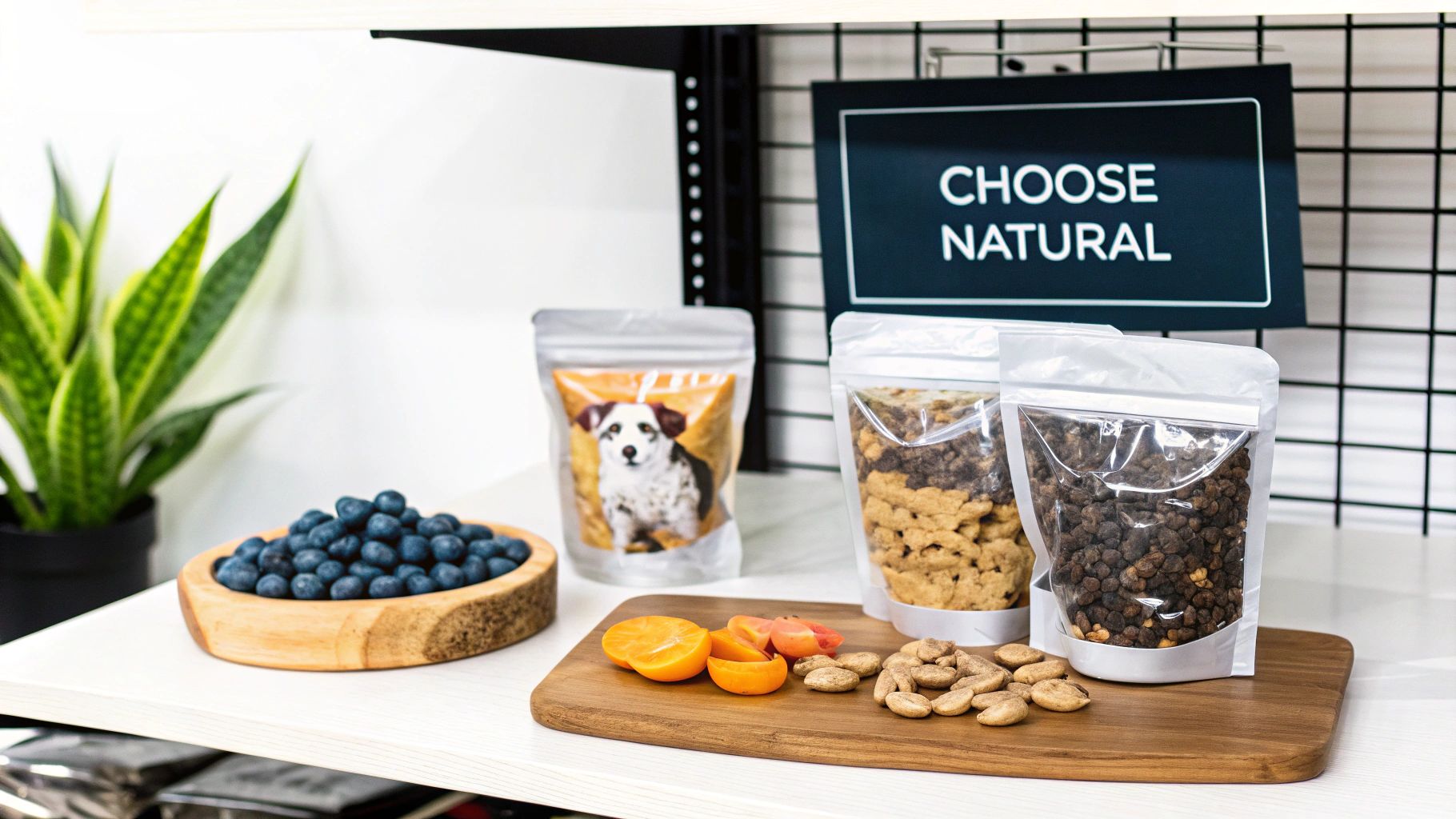
The numbers back this up. The global dog treats market is on track to explode from US$31,060 million in 2025 to an incredible US$79,930 million by 2031. This boom is driven by people just like you—and just like Joyfull's founder—who are flipping over packages, reading ingredient lists, and demanding better for their furry family members. You can explore more about this market trend to see how our choices are reshaping the entire industry.
But what does "natural" really mean when it comes to dog treats? It's more than just a marketing claim. It signals a commitment to using ingredients you can actually recognize and trust. Let’s look at what separates a genuinely natural treat from a conventional one.
Natural vs Conventional Dog Treats at a Glance
Sometimes a quick side-by-side comparison is the easiest way to see the difference. This table breaks down what you're really getting when you choose natural over conventional treats.
| Feature | Natural Treats | Conventional Treats |
|---|---|---|
| Main Ingredients | Whole foods like real meat, fruits, and vegetables. | Often contains fillers like corn, wheat, soy, and meat by-products. |
| Preservatives | Natural sources like Vitamin E or rosemary extract. | Chemical preservatives like BHA, BHT, or ethoxyquin. |
| Nutritional Value | High in protein, vitamins, and minerals. | Can be high in empty calories and low in nutritional density. |
| Digestibility | Generally easy to digest due to high-quality ingredients. | May cause digestive upset due to fillers and artificial additives. |
Ultimately, it comes down to a simple philosophy: feed your dog real food. The ingredient list tells the whole story, and natural treats are all about keeping that story short, simple, and healthy.
What "Natural" Really Means on a Dog Treat Label
Walking down the pet food aisle can feel a bit like cracking a code. You see the word "natural" everywhere, but what does it actually guarantee? Let's break it down with a simple analogy. A fresh, whole apple is natural. An apple-flavored candy loaded with corn syrup and artificial green dye? Not so much. The best natural treats for our dogs follow that same simple logic—they begin with real, identifiable ingredients.
Thankfully, "natural" isn't just a marketing buzzword. It has an official definition from the Association of American Feed Control Officials (AAFCO). AAFCO states that for an ingredient to be "natural", it has to come from a plant, animal, or mined source. It can be in its original unprocessed state or processed, but only through methods that don't involve synthetic chemicals.
This is a huge help for pet parents. It means truly natural treats won't have artificial preservatives like BHA and BHT, synthetic colors, or fake flavors. Instead, they’ll use nature's own solutions, like using Vitamin E (often listed as tocopherols) to keep things fresh.
Decoding Ingredient Lists
So, how do you use this information in the real world? It all comes down to becoming a bit of a label detective. The ingredient list is your best friend for figuring out what's really in that bag. You'll find that the best brands are proud to list specific, whole-food ingredients right at the top.
Here’s a quick cheat sheet for what to look for and what to skip:
- Green Flags: You want to see clear, single-source proteins listed, like "chicken," "beef," or "salmon." These are specific and tell you exactly what you're getting.
- Red Flags: Steer clear of vague terms like "meat by-products" or "animal digest." These generic phrases can be a catch-all for a mix of low-quality, inconsistent parts you’d rather not feed your dog.
Your goal is to find treats where the ingredient list reads more like a grocery list than a chemistry experiment. If you can't pronounce it, or if it sounds like it belongs in a lab, it’s probably not the wholesome choice you're looking for.
The Growing Demand for Clean Labels
If you're looking for cleaner options, you're in good company. The demand for genuinely natural pet treats is skyrocketing as more owners, just like you, focus on simple, high-quality nutrition. In fact, the global natural dog treats market was valued at USD 6.99 billion in 2024 and is projected to hit USD 14.03 billion by 2030. That massive growth shows a real shift in how we think about feeding our pets—as true members of the family.
Getting comfortable reading labels is one of the best skills you can develop for your dog's long-term health. To dive deeper, you can check out our guide on how to read dog food labels. It breaks everything down, step-by-step, so you can feel confident you're making the best choice for your furry friend.
Spotting Quality Ingredients in Natural Dog Treats
When you're trying to find the best natural treats for your dog, the ingredient list is your best friend. It’s a lot like reading food labels for yourself—the simplest, most understandable ingredient lists usually point to the healthiest option. The best treats are built around ingredients that pack a real nutritional punch, not just empty calories.
At the heart of any genuinely good dog treat is a high-quality protein. This is the main event, the ingredient that delivers the essential amino acids your dog needs for building strong muscles, keeping their energy up, and maintaining a healthy coat. When you flip over the bag, you want to see specific, named proteins right at the top of that list.
The Good Stuff: What to Look For
You’re looking for things like single-source chicken, beef, or salmon. What you want to avoid are vague, generic terms like "meat meal" or "animal by-products." Single-source proteins are a great choice because they're often easier for dogs to digest, and they make life a whole lot simpler if you're trying to pinpoint an allergy for a dog with a sensitive stomach.
Beyond the protein, the truly great natural treats will mix in beneficial fruits and vegetables. These aren't just tossed in as fillers; they're included for the vitamins, minerals, and antioxidants they bring to the table.
- Pumpkin Puree: This is a digestive superhero. It’s packed with fiber that can help soothe an upset tummy, whether your dog is dealing with constipation or diarrhea.
- Blueberries: Think of these as tiny immune-boosters, loaded with antioxidants and vitamins C and K that support your dog's overall health.
- Sweet Potatoes: A fantastic grain-free source of carbs for energy, and they're rich in beta-carotene and other essential vitamins.
- Carrots: These provide a healthy dose of Vitamin A, which is important for your dog's vision. Plus, that satisfying crunch can help scrape a little plaque off their teeth.
A truly natural treat is about more than just a reward. It’s about using every ingredient to actively contribute to your dog's well-being with every single bite.
The Bad Stuff: What to Avoid
Knowing what to look for is half the battle; knowing what to leave on the shelf is the other half. So many mass-market treats are packed with ingredients that do nothing for your dog's health and can sometimes even be harmful in the long run. The biggest offenders are usually artificial additives and cheap fillers.
Keep your eyes peeled for these red flags on the label:
- Artificial Preservatives: Chemicals like BHA, BHT, and ethoxyquin are often used to give products a ridiculously long shelf life, but they’ve been linked to some serious health concerns. A good natural treat will use safer preservatives like Vitamin E (often listed as tocopherols) or rosemary extract.
- Synthetic Colors and Flavors: Let's be honest, your dog doesn't care if their treat is bright red or shaped like a tiny steak. Dyes like Red 40, Yellow 5, and Blue 2 are only there to appeal to you, the human buyer, and they can trigger allergic reactions in some dogs.
- Empty Fillers: Ingredients like corn, wheat, and soy are commonly used to add bulk to treats without adding much cost. While they aren't toxic, they provide very little nutritional value compared to whole foods and happen to be some of the most common allergens for dogs.
Learning to tell the heroes from the villains on an ingredient list empowers you to make choices that truly support your dog's health. If you want to dive even deeper, check out our complete guide on the best ingredients for dog treats and become the savviest shopper in the pet aisle.
Matching Natural Treats to Your Dog's Unique Needs
Picking the right natural treat for your dog isn't a one-size-fits-all deal. It's more like choosing the right meal for a person—you wouldn't feed a growing toddler the same thing you'd give a professional athlete. Your dog's age, size, and any health quirks they have all play a huge role in what makes a treat truly beneficial.
Think about it: every life stage has its own unique nutritional demands. Puppies are little construction zones, building brains and bodies from the ground up. Treats with DHA, a key omega-3 fatty acid, are fantastic for their cognitive development. For your go-go-go adult dog, high-quality protein is king for maintaining muscle and energy. And when they reach their golden years, senior dogs need support for their joints, so treats with natural glucosamine and chondroitin are a smart pick.
Tailoring Treats for Specific Health Concerns
Beyond just age, lots of dogs have specific health issues that need a careful eye on the treat jar. Food sensitivities are a massive one, often showing up as itchy skin or an upset stomach. If your pup is constantly scratching or seems to have digestive troubles, a treat with a very short ingredient list might be your solution.
These "limited ingredient" recipes often use what's called a novel protein. This is simply a protein your dog hasn't tried before, like duck or venison, making it much less likely to cause an allergic reaction. It’s a great way to figure out what’s bugging them while still giving them a tasty reward. For dogs dealing with stress or anxiety, you can even find specially formulated natural calming treats for dogs designed to help them relax.
This little flowchart can help you make smart choices when you're scanning the treat aisle.
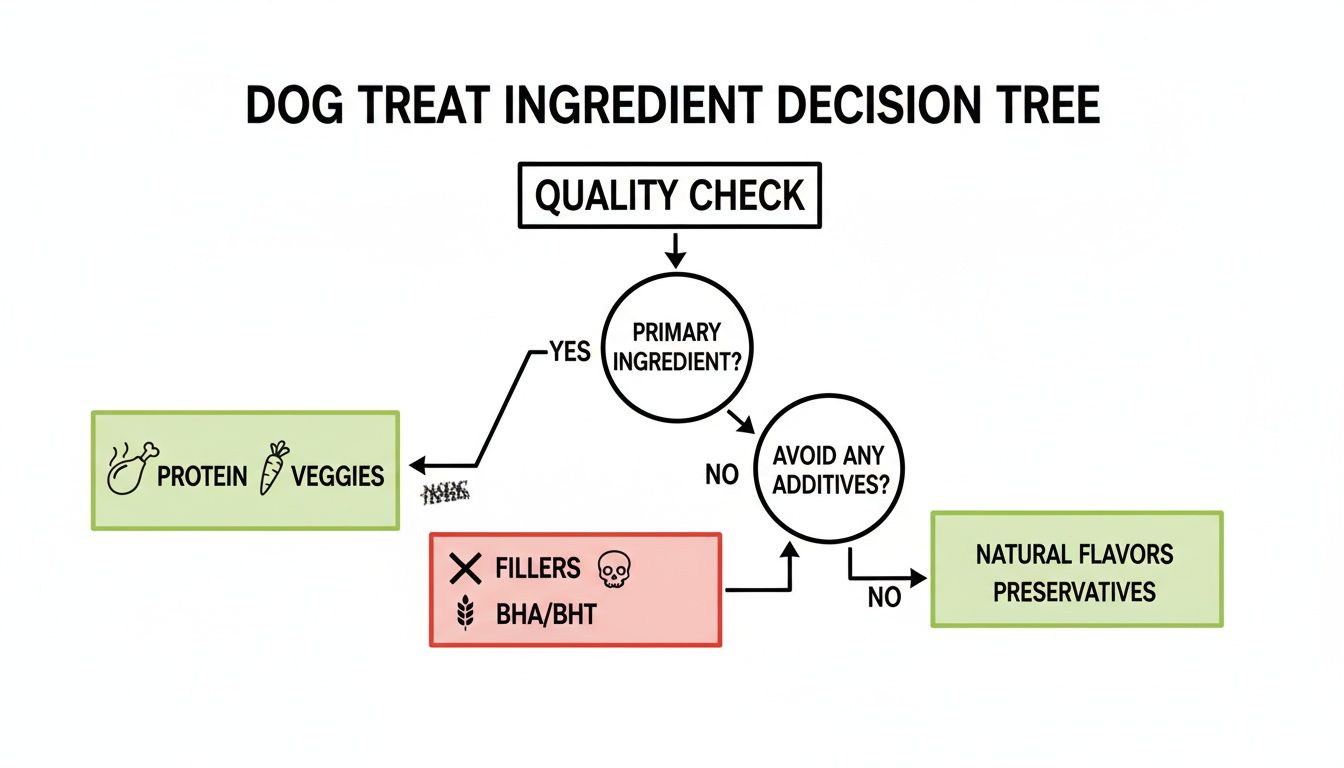
It’s a great visual reminder to stick with real, whole foods and steer clear of all that unnecessary junk.
The Growing Trend of Personalized Pet Nutrition
This whole idea of tailoring nutrition isn't just a fad; it's a major shift in how we care for our pets. Dog owners are more tuned in to their companions' health than ever before, and that's fueling a huge demand for clean, functional snacks.
The numbers don't lie. A whopping 60% of the pet treat market is dedicated to dogs, with natural and grain-free treats leading the pack. We’re treating our dogs more like family, and that's reflected in our spending—projected to hit $65.8 billion in the US in 2024 for food and treats alone. For us dog parents, this is great news. It means more high-quality options that can lead to fewer allergies, better digestion, and ultimately, healthier and happier dogs.
The Joyfull Promise: How We Make Treats You Can Trust
Let's be honest: navigating the dog treat aisle can be a real headache. That's actually where the story of Joyfull begins. Our founder was standing right where you've probably been, turning over bag after bag, getting more and more frustrated with the long lists of confusing ingredients and vague promises.
That moment of frustration sparked a simple question: "Why is it so hard to find dog treats made with the same quality and clarity I look for in my own food?"
That question became our mission. We set out to create a solution for pet parents who were tired of the guesswork and just wanted something genuinely good for their dogs.
From a Pet Parent's Problem to Our Core Philosophy
We started by obsessively reading labels, just like you. But we didn't stop there. We dove deep into the science of canine nutrition to build our treats from the ground up, starting with ingredients you can actually picture in your head. No artificial preservatives, no weird synthetic dyes, and definitely no cheap fillers like corn or soy that just bulk things up.
Instead, we decided to focus only on what works:
- Real, Single-Source Proteins: We use high-quality proteins like real chicken or beef. This helps support strong muscles and gives our treats a taste dogs go crazy for.
- Ingredients with a Purpose: Every single thing in our treats is there for a reason, whether it's antioxidant-rich blueberries for cellular health or pumpkin for a little extra fiber.
- Guidance from the Experts: Our recipes aren't just thrown together. They're thoughtfully developed and then rigorously reviewed by veterinary professionals to make sure they're safe, balanced, and truly beneficial.
A healthy life isn’t just for humans. Our pets deserve it, too. That’s why we obsess over every detail—from where we get our ingredients to how we perfect our recipes—so you never have to second-guess what you're giving your best friend.
When you choose Joyfull, you can stop playing detective in the pet store. We've already done the homework for you. Our commitment is to give you a treat that’s as wholesome as it is delicious, made with the care and standards of a fellow pet parent.
Easy and Safe Homemade Natural Dog Treats
There's something uniquely satisfying about baking for your dog. For pet parents who love a hands-on approach, making treats at home gives you ultimate control over every single ingredient that goes into your pup's body.
It’s a fantastic way to guarantee quality, and you probably already have everything you need. The best, vet-approved recipes often call for simple pantry staples like pure pumpkin puree, xylitol-free peanut butter, and whole oats.
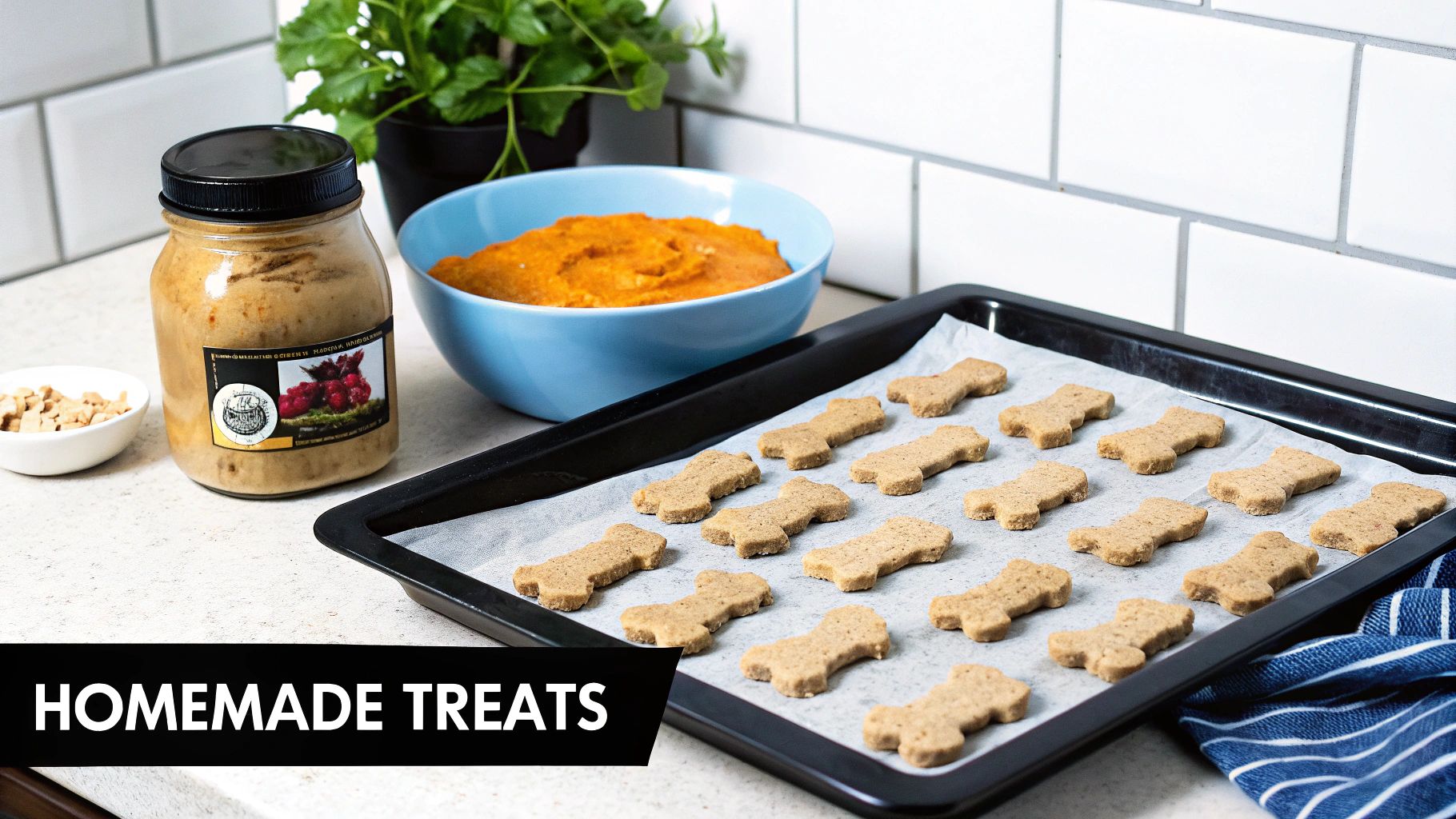
Once you've baked up a batch of goodies, proper storage is your next step to keeping them fresh and safe. Most homemade treats will stay good in an airtight container in the fridge for about a week. You can also freeze them for a few months.
And of course, remember that treats are treats! Even the healthiest homemade snacks add to your dog’s daily calorie count, so moderation is key. If you're looking for some inspiration to get started, check out our complete guide on homemade dog treats recipes.
Ingredients to Always Avoid
While your kitchen is full of dog-friendly foods, it’s also home to some serious hazards. Knowing what to steer clear of is absolutely critical for keeping your best friend safe.
Your dog's safety is the number one priority. Never assume an ingredient is safe without first verifying it. When in doubt, always leave it out.
Here’s a list of common foods that should never find their way into your dog's treat jar:
- Xylitol: This artificial sweetener is a huge danger. It's often hiding in sugar-free products, certain peanut butters, and even some yogurts.
- Grapes and Raisins: Even a small amount of these can lead to sudden kidney failure in dogs.
- Onions, Garlic, and Chives: Anything in the allium family is toxic to dogs, as it can cause serious damage to their red blood cells.
- Chocolate and Macadamia Nuts: These are two of the most well-known toxins for dogs and can cause severe illness.
A safe home for your pet extends beyond the kitchen, too. Things like adopting pet-safe lawn care practices help ensure their outdoor environment is just as healthy and free from harmful chemicals.
Common Questions About Natural Dog Treats
Even with a good grasp of the basics, a few questions always seem to pop up when it's time to pick out natural dog treats. Let's dig into some of the most common ones so you can feel totally confident in what you're bringing home for your furry friend.
How Many Treats Can My Dog Have a Day?
The best guideline to follow is the 10% rule. In short, treats should never account for more than 10% of your dog’s total daily calories. It helps to think of them as dessert—a wonderful bonus, but not the main course.
Giving too many treats can easily lead to weight gain or throw their carefully balanced diet out of whack. If you're not sure about your dog's daily calorie needs, your veterinarian is the perfect person to ask. They can give you a specific number based on your dog's age, weight, and how active they are.
Are Grain-Free Treats Always Better?
This is a big one, and the answer is: not always. For dogs that have a genuine grain allergy or sensitivity confirmed by a vet, grain-free treats are an absolute necessity. But for the average dog, healthy whole grains are perfectly fine and can even be beneficial. Grains like oats, for example, are a great source of fiber.
What really matters isn't whether grains are present, but the overall quality of every single ingredient. A treat packed with high-quality, whole foods will always be superior to a grain-free one stuffed with cheap fillers and artificial additives.
The conversation shouldn't be "grain-free" vs. "grain-inclusive." It should be "high-quality" vs. "low-quality." Prioritize simple, recognizable ingredients every time.
How Do I Know If a New Treat Is Upsetting My Dog's Stomach?
Whenever you introduce a new food, it's always best to start small and pay close attention. Your dog can't exactly tell you their tummy hurts, but their body will definitely send you signals.
Be on the lookout for any of these tell-tale signs:
- Changes in Stool: Diarrhea or constipation are often the first clues.
- Vomiting: This is a pretty clear sign that the new treat isn't sitting well.
- Gas or Lethargy: If your dog is suddenly extra gassy or seems sluggish and tired, their new snack could be the culprit.
If you spot any of these symptoms, it's best to stop giving the treat. If the issues don't clear up quickly, a call to your vet is a good idea. This simple approach ensures treat time stays fun and safe.
At Joyfull, we believe finding wholesome, delicious snacks shouldn't be confusing. We craft our treats with clean ingredients and high-quality proteins so you can feel good about rewarding your best friend. You can see our full range of treats at https://joyfullpet.com.