The Best Food for Overweight Cats A Practical Guide
When it comes to the best food for overweight cats, the gold standard is usually a high-protein, low-carbohydrate wet food that’s carefully controlled for calories. This kind of diet helps your cat shed fat without losing precious muscle, and the extra moisture in wet food helps them feel satisfied and full.
Your Cat's Weight Loss Journey Starts Now

If you've noticed your feline friend is looking a bit on the pudgy side, you're definitely not alone. Feline obesity is a massive problem, but the good news is that it’s completely manageable with the right plan. Think of this guide as your personal roadmap to getting your cat back to a healthier, more active life.
This isn't just about appearances or helping them lose a few pounds. It’s about giving them back their quality of life. Extra weight puts a huge strain on a cat's body and opens the door to a whole host of serious health issues. Taking control of their diet is one of the most loving and impactful things you can do for them.
The Importance of a Healthy Weight
It’s easy to underestimate what a few extra pounds mean for a small animal like a cat, but it can make a world of difference. This goes far beyond looks—it's a critical health marker.
Here’s a quick rundown of why it’s so important:
- Disease Prevention: Overweight cats have a much higher risk of developing diabetes, painful arthritis, and urinary tract diseases.
- A Longer, Happier Life: Studies consistently show that leaner cats tend to live longer and more comfortable lives.
- More Zoomies, Less Aches: At a healthy weight, your cat can jump, pounce, and play like they’re meant to, free from the joint pain and low energy that comes with carrying extra weight.
This isn't a minor issue. In 2022, an eye-watering 61% of cats in the United States were classified as overweight or obese. A properly managed diet can help a cat safely lose 1-2% of their body weight per week, which dramatically lowers their health risks. For instance, overweight cats are up to 3-4 times more likely to develop diabetes than their lean counterparts. You can read the full research on feline weight management.
This journey is about more than just switching out a bag of food; it's about building a complete nutritional strategy. As you start, it’s also good to know about resources like a specialized veterinary compounding pet pharmacy, which can be a lifesaver for creating tailored health solutions if your cat has other specific needs.
Understanding Feline Weight Gain and How to Spot It
Before we can pick the right food for a chubby cat, we need to get a handle on how they got there in the first place. At its simplest, weight gain is a matter of energy balance. When a cat takes in more calories than they burn, the body stores the extra energy as fat. It’s a bit like over-filling a car's gas tank—the surplus fuel has to spill over somewhere.
This energy surplus usually happens for a few common reasons. Many of us, with the best intentions, practice free-feeding, where a bowl of kibble is available 24/7. This all-day buffet makes it incredibly easy for a cat to overeat, especially if they lead a pretty relaxed indoor life. Unlike their wild cousins, our house cats don't need to hunt or patrol a large territory, which means they burn far fewer calories.
Why Do Cats Gain Weight So Easily?
A few key factors can create a perfect storm for packing on the pounds if a cat's diet isn't watched closely.
- Indoor Living: A cozy life inside means fewer chances to run, jump, climb, and burn off energy. It's safe, but it's also sedentary.
- Spaying and Neutering: While a crucial part of responsible pet ownership, this procedure changes a cat's hormonal balance and can slow their metabolism. Their energy requirements can drop by up to 30%, yet their appetite often goes up!
- Age: Just like us, cats naturally slow down as they get older. Senior cats are less active and have a lower metabolic rate, making them prone to weight gain on the same amount of food they ate as a younger adult.
Of course, sometimes medical issues are at play. There can be various underlying causes of weight gain like hormone imbalance, and if your cat's weight gain seems sudden or you can't figure out why, a trip to the vet is definitely in order.
Is My Cat Overweight? A Hands-On Check
The number on the scale only tells part of the story. A far better tool is the Body Condition Score (BCS), which is what vets use to assess a cat's body fat. The good news is, it’s a simple system you can easily use at home.
The Feel Test: You should be able to feel your cat’s ribs with a gentle but firm touch, much like the feeling of the knuckles on the back of your hand. If you have to press hard to find them, your cat is likely carrying too much fat.
To get a clear picture, you’ll want to check your cat from a few different angles.
- Rib Check: Gently run your hands along your cat's sides. On a healthy cat, the ribs should feel like pencils under a light blanket—you can feel them easily, but they aren't sharp or bony.
- Overhead View: Look down at your cat while they're standing. You should see a gentle, inward curve—a "waist"—between their ribcage and hips. If their body looks more like an oval or a tube, they're probably overweight.
- Side View: Get down to your cat’s level and look at them from the side. Their belly should tuck up from the ribs towards their hind legs. A belly that hangs low or sags is a tell-tale sign of excess fat.
This hands-on method is so much more reliable than just eyeballing it. In fact, studies show that nearly a third of owners with overweight pets think their animal is at a perfectly healthy weight. Using the BCS keeps you objective and helps you catch a problem early, before it can turn into something more serious.
Simple At-Home Body Condition Score Checklist
Use this checklist to assess your cat's body condition. Check the box that best describes your cat's physique.
| Physical Check | Underweight (BCS 1-3) | Ideal Weight (BCS 4-5) | Overweight (BCS 6-9) |
|---|---|---|---|
| Ribs | Ribs, spine, and hip bones are easily seen and felt; very little muscle mass. | Ribs are easily felt with a light touch, like pencils under a thin blanket. | Ribs are hard to feel; you have to press firmly through a thick layer of fat. |
| Waist (from above) | Severe, exaggerated hourglass shape. | A clear, noticeable waist is visible behind the ribs. | Body is broad and oval-shaped; no visible waist. |
| Belly (from side) | Abdomen is severely tucked up. | A slight upward tuck of the abdomen is visible. | Abdomen is straight or sags downward; a large fat pad is present. |
This simple check gives you a concrete way to track your cat's physical condition over time. It empowers you to notice small changes and adjust their care plan accordingly, ensuring they stay in that "ideal weight" column for a long and healthy life.
What a Cat's Body Needs to Lose Weight
Before we can pick the right food, we have to get inside a cat’s head—or more accurately, its digestive system. Unlike us, cats are obligate carnivores. That’s just a scientific way of saying they are built, from tooth to tail, to run on a diet of meat.
Their entire biology is fine-tuned to get energy from animal protein and fat, not from carbohydrates. This is the single most important fact to remember. A successful weight loss plan isn't just about feeding less; it's about feeding right for their carnivorous nature.
The Blueprint for a Lean Cat
Think of your cat's diet like the blueprint for a house. Each component has a critical job, and if the ratios are off, the whole structure becomes weak and cluttered.
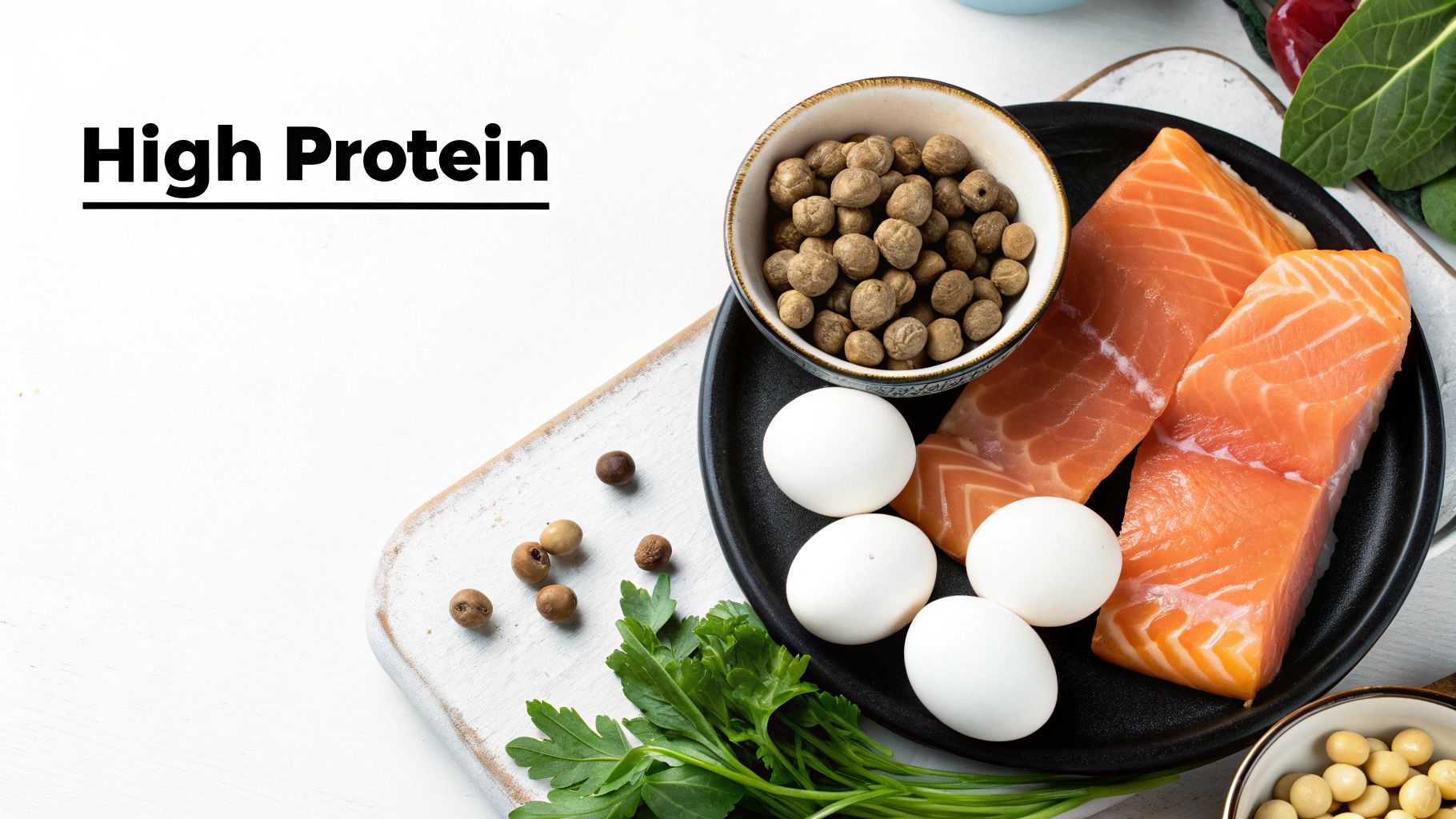
- High-Quality Protein is the Frame: This is the non-negotiable foundation. Protein supplies the building blocks (amino acids) to maintain strong, lean muscles. When a cat loses weight, we want them shedding fat, not muscle. A high-protein diet is the only way to ensure that happens.
- Healthy Fats are the Wiring: Fat is not the enemy! It's a fantastic, concentrated energy source. It also delivers essential fatty acids like omega-3s and -6s, which are vital for healthy skin, a shiny coat, and keeping inflammation in check. The key is moderation, not elimination.
- Carbohydrates are the Clutter: For a carnivore, carbs are basically just filler. A wild cat would eat almost none. In pet food, they're often used to bulk up the product cheaply, but they provide empty calories that a cat’s body quickly turns into stored fat. It’s like filling a house with junk you don't need.
When you focus on a diet that follows this blueprint—high in protein, moderate in healthy fats, and super low in carbs—you're working with your cat's metabolism. You give their body what it's designed to use, which encourages it to start burning through its fat reserves for fuel.
The Secret Weapon: Keeping Them Full and Happy
One of the biggest wins with a high-protein diet is how full it makes your cat feel. This is called satiety. Protein satisfies a cat’s hunger for far longer than the same number of calories from carbs.
This is a complete game-changer when your cat is on a diet. A cat that feels full is a cat that isn't constantly begging for more food, which makes life less stressful for both of you. They can feel content even while eating fewer calories.
Why Protein Protects Muscle: When you cut calories, a cat's body starts looking for energy. If there isn't enough protein coming in through their food, the body will resort to breaking down its own muscle tissue for fuel. A high-protein diet sends a clear signal: "Hands off the muscle, burn the fat instead!"
This isn't just theory; it's proven science. The therapeutic diets vets prescribe for feline obesity are built on this exact principle. The gold standard for overweight cats is a diet where protein accounts for 40-50% of the calories and fat is under 15%. This approach now drives 89% of the $9.1 billion pet obesity market for good reason. These foods are designed for a safe weight loss of 1-2% per week, which is crucial since carrying extra weight can increase a cat's risk of osteoarthritis by two to three times and sends their diabetes risk skyrocketing. You can read more about these veterinary-approved weight loss protocols.
Key Ingredients That Give a Helping Hand
Beyond the main macronutrients, a few special ingredients can really boost a weight management formula. When you're scanning labels, keep an eye out for these.
1. L-Carnitine
Think of L-carnitine as a tiny taxi service inside your cat's cells. This compound grabs onto fatty acids and shuttles them into the mitochondria—the cell's "engine"—to be burned for energy. Adding it to a diet helps the body get much more efficient at turning stored fat into power.
2. Increased Fiber
Fiber is a carbohydrate, but it's one cats can't digest. That means it adds bulk without adding calories, which is perfect for a weight-loss diet. It helps in two key ways:
- Promotes Fullness: Soluble fiber soaks up water and forms a gel in the stomach, which slows down digestion and helps your cat feel satisfied for much longer.
- Supports Digestive Health: Insoluble fiber adds bulk to your cat's stool, which promotes regularity and keeps their gut healthy, especially during a food transition.
By understanding this nutritional blueprint, you can stop guessing and start making informed choices. You're now ready to pick a food that aligns with your cat's biology, setting them up for a successful and healthy return to their ideal weight.
Wet Food Versus Dry Food for Weight Management
When it comes to your cat's weight, the classic "wet food vs. dry food" debate gets a lot more interesting. This is one of the biggest conversations cat owners have, and for good reason. Each food type has its own set of pros and cons that can genuinely make or break your cat's weight loss success.
So, let's get into what really matters when choosing the right food for your chunky but charming feline.
The Case for Wet Food: Hydration and Fullness
The single biggest superpower of wet food is its incredibly high moisture content. We're talking 60-80% water in a typical can or pouch. This is a massive win for cats.
All that extra water does two fantastic things. First, it helps support their kidney function, which is always a plus. Second, and this is the key for weight management, it makes them feel full. Think about it: a belly full of broth-rich, meaty goodness is far more satisfying than a small pile of dry biscuits, even if the calorie count is the same. It's the difference between a hearty stew and a handful of crackers.
Because of all that water, wet food is naturally less dense in calories. Your cat gets to enjoy a satisfying, decent-sized meal without you having to worry about them packing in too many calories. It’s a huge psychological boost for a cat who's used to a full bowl.
Protein Power and Carnivore-Friendly Formulas
Wet food also tends to get the nutritional blueprint right for our little carnivores. Most formulas are higher in protein and lower in carbohydrates compared to kibble.
Why? Dry food needs a certain amount of starch to be pressed into those little crunchy shapes. Wet food doesn't have that limitation, so formulators can pack it with more of what a cat is designed to eat: animal protein. This high-protein, low-carb profile is perfect for a weight loss plan, as it helps your cat hang onto vital lean muscle while they shed unwanted fat.
For a deeper dive into this topic, you can explore the nuances of wet vs. dry cat food in our detailed guide.
The Case for Dry Food: Convenience and Cost
Now, let's talk about kibble. Its main appeal is impossible to ignore: convenience and cost-effectiveness. It's easy to buy in bulk, a breeze to store, and it won't go bad if you leave it out for a bit—though that last point is often how the trouble starts.
The convenience of dry food, however, comes with a major catch for an overweight cat. Kibble is extremely calorie-dense. A tiny scoop can contain a shocking number of calories, which makes it frighteningly easy to overfeed your cat if you're not measuring precisely. Just 10 extra calories a day can lead to a one-pound weight gain over a year!
Calorie Density Analogy: Think of a small box of raisins versus a big bowl of grapes. The raisins (like kibble) are a concentrated source of calories in a tiny package. The grapes (like wet food) offer more volume, water, and fiber for fewer calories, leaving you feeling much fuller.
This is exactly why "free-feeding"—leaving a full bowl of kibble out all day—is one of the biggest culprits behind the feline obesity epidemic. It’s an all-you-can-eat buffet that most indoor cats simply don't have the activity level to handle.
Wet Food vs. Dry Food for Cat Weight Loss
So, how do you decide? Seeing the key features side-by-side can make the choice a lot clearer. This table breaks down what you need to know.
| Feature | Wet Food (Canned/Pouch) | Dry Food (Kibble) |
|---|---|---|
| Moisture Content | Very high (60-80%), promoting hydration and fullness. | Very low (~10%), which can contribute to chronic mild dehydration. |
| Calorie Density | Low, making it harder to overfeed and helping cats feel satisfied. | High, making it very easy to overfeed and lead to weight gain. |
| Carbohydrate Level | Typically lower, aligning better with a cat's carnivorous needs. | Higher due to starches needed for kibble formation. |
| Protein Content | Generally higher in animal-based protein. | Varies, but can contain more plant-based proteins and fillers. |
| Convenience | Less convenient; requires refrigeration after opening. | Highly convenient, easy to store, and suitable for automatic feeders. |
| Cost | Generally more expensive per calorie. | More cost-effective. |
Ultimately, while dry food wins on convenience and price, wet food's nutritional profile is almost always superior for helping an overweight cat slim down safely.
The Best of Both Worlds: Mixed Feeding
Feeling torn? You don't have to pick just one. A mixed-feeding approach is a fantastic compromise that gives you the benefits of both.
You could serve a small, measured portion of kibble in the morning (maybe in a puzzle feeder to make them work for it!) and a serving of wet food for their evening meal. This way, your cat gets the hydration and satisfying protein from the wet food, while you still get some of the convenience and cost savings of kibble.
Just remember the golden rule: portion control is still absolutely essential, no matter what you're feeding.
How to Read a Pet Food Label Like an Expert
Ever feel overwhelmed in the pet food aisle? All those brightly colored bags with pictures of sleek, happy cats promise the world. But the real story isn't on the front—it's tucked away in the fine print on the back.
Learning to decode a pet food label is probably the single most important skill you can have when you’re trying to help your cat lose weight. It lets you cut through the marketing fluff and see what’s really in the bag. Think of it as a secret code, and once you crack it, you’re in complete control.
First Stop: The Ingredient List
Your first and most important clue is the ingredient list. By law, ingredients have to be listed in order by weight, with the heaviest one first. This gives you an instant snapshot of what the food is mostly made of.
For a cat on a diet, this part is non-negotiable: you absolutely must see a high-quality, named animal protein as the very first ingredient. I'm talking about specific things like "deboned chicken," "salmon," "turkey," or "beef." These are the protein powerhouses that will help your cat keep their muscle while they're shedding fat.
Here's a quick cheat sheet for what to look for and what to run from:
- Green Flags: Seeing "Chicken," "Turkey Meal," or "Deboned Salmon" right at the top of the list is a great sign. Don't be scared by the word "meal"—it just means the water has been removed, leaving a more concentrated source of protein.
- Red Flags: Vague terms like "meat by-products" or "poultry by-product meal" should give you pause. While not necessarily dangerous, they're undefined, lower-quality sources. You deserve to know exactly what your cat is eating.
Another huge red flag is finding a carbohydrate like corn, wheat, or soy in the top three ingredients. These are often just cheap fillers that add calories without much nutritional value for a carnivore, and they can easily contribute to weight gain.
Decoding the Guaranteed Analysis
Right next to the ingredient list, you'll spot a box called the "Guaranteed Analysis." This table gives you the minimum percentages of crude protein and fat, plus the maximums for fiber and moisture.
I know, it looks a bit technical, but this is your key to the food's nutritional blueprint. The word "crude" doesn't mean the nutrient is low-quality; it just refers to the lab method used to measure it.
A Quick Tip for Comparison: Comparing wet and dry food using these numbers can be tricky because of the huge difference in moisture. To get a true side-by-side view, you'd need to calculate the "dry matter basis." That can get complicated, but as a rule of thumb, just look for a food that is high in protein and relatively low in fat.
For a really deep dive into reading these labels, this guide on what to look for in cat food is a fantastic resource that covers even more detail.
Beyond the Basics: What Else to Look For
Once you've found a food with a great protein source and the right numbers in the guaranteed analysis, a few other details can help you seal the deal. Scan the full ingredient list for a few bonus items that support a healthy metabolism.
These "helpers" can really make a difference:
- L-Carnitine: This is an amino acid that helps your cat's body turn fat into energy. Super useful!
- Omega Fatty Acids: Look for "flaxseed" or "fish oil." These are great for skin, coat, and even creaky joints.
- Fiber Sources: Things like "pumpkin," "beet pulp," or "psyllium husk" help your cat feel full and keep their digestive system running smoothly.
- Antioxidants: Vitamins E and C are fantastic for supporting the immune system, which is especially important when your cat's body is undergoing changes during weight loss.
At the same time, keep an eye out for things you don't want to see. High-quality food doesn't need artificial colors, flavors, or chemical preservatives like BHA, BHT, or ethoxyquin to be appealing to your cat.
By getting comfortable with reading the label, you can walk into any pet store and confidently pick out the perfect food to get your cat on the path to a healthier, happier life.
Building a Sustainable Feline Feeding Plan
Knowing what your cat should eat is one thing, but putting that knowledge into practice every day is the real challenge. This is where we move from theory to action, creating a solid plan that works for both you and your cat, setting the stage for long-term health. A good plan isn't just about cutting calories; it's about building a whole new, healthier lifestyle.
The foundation of any successful weight loss journey is calorie control. A good rule of thumb is that an average adult cat needs about 20 calories per pound of their ideal body weight each day. But remember, that’s just a starting point. Your vet is your best resource here, as they can pinpoint a precise daily calorie goal based on your cat’s unique metabolism, age, and how much (or how little) they move around.
From All-Day Buffet to Scheduled Meals
One of the biggest changes you can make, and honestly one of the most effective, is to close the 24/7 kibble buffet. Leaving a full bowl of food out all the time is a major culprit behind feline obesity. Switching to scheduled meals puts you back in the driver's seat, giving you total control over how much your cat eats and tapping into their natural instinct to eat distinct meals, just like they would in the wild.
Most adult cats thrive on two measured meals per day, spaced about 12 hours apart. This simple routine helps get their metabolism on a regular schedule and stops them from munching out of boredom. It also has a bonus benefit: you'll quickly notice if their appetite changes, which is a key signal of their overall health.
If there's one secret to success, it's this: measure every single meal. Use a proper measuring cup or, even better, a digital kitchen scale. Eyeballing portions is where so many well-intentioned plans fall apart. An extra 10 calories a day might seem like nothing, but for a cat, that can add up to a full pound of weight gain over a year.
Getting the meal plan right starts with choosing the right food. This visual guide breaks down how to decode a pet food label so you can feel confident in your choice.
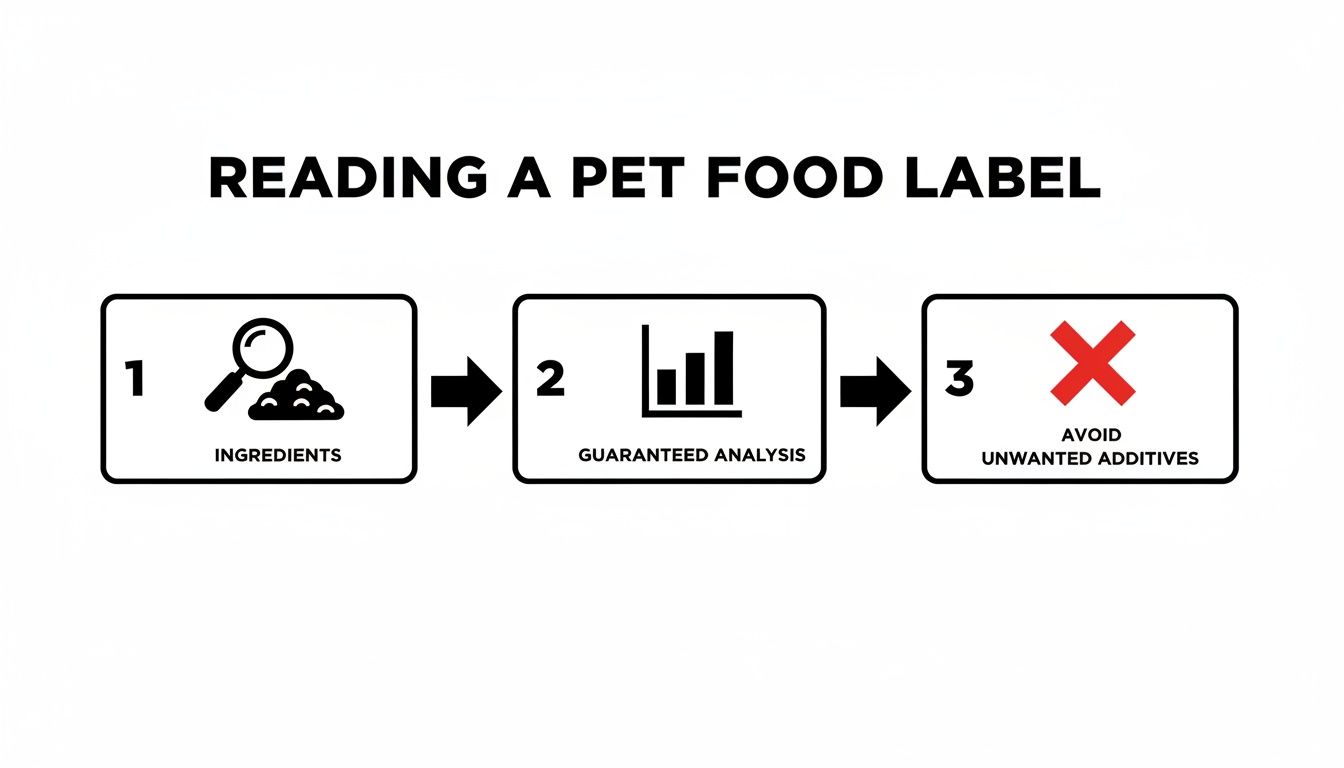
As you can see, it's all about starting with quality protein, verifying the nutrient levels are right for a less active cat, and avoiding junky fillers that just add empty calories.
Smart Strategies for Treats and Food Transitions
Don't worry, treats can absolutely stay on the menu! You just have to be smart about them. A great guideline is the 10% rule: treats should never make up more than 10% of your cat’s total daily calories. You can find some great low-calorie, high-protein commercial options, or simply offer a tiny piece of cooked chicken for a wholesome reward.
When you're ready to introduce a new weight management food, slow and steady wins the race. A sudden switch is a recipe for an upset stomach. To keep their digestion happy, follow this simple schedule:
- Days 1-3: Mix 25% new food with 75% old food.
- Days 4-6: Go for a 50/50 mix of new and old.
- Days 7-9: Increase to 75% new food and just 25% old.
- Day 10: You're all set to serve 100% of the new food.
If your cat is particularly fussy, you might need a little more help. Our guide on how to transition cat food has extra tips for winning over even the pickiest eaters.
Finally, think about making mealtime more fun. Puzzle feeders and food-dispensing toys are fantastic tools that turn eating into a stimulating game. They force your cat to "work" for their food, which naturally slows them down and gives their brain a much-needed workout. It’s a win-win that helps with weight management while making their indoor life far more interesting.
Got Questions About Your Cat's Weight Loss?
It’s totally normal for questions to come up as you get started on this journey. Let’s tackle some of the big ones I hear from cat owners all the time.
How Fast Should My Cat Lose Weight?
Slow and steady is the name of the game here. A healthy, sustainable rate is a loss of about 1-2% of their total body weight per week.
Any faster than that, and you risk serious health complications, like a dangerous liver condition called hepatic lipidosis. Think of it as a marathon, not a sprint. The goal is safe, lasting change, and your vet is your best partner in setting that pace.
Can't I Just Feed Them Less of Their Regular Food?
That seems like the obvious solution, right? But it's actually a risky move. Simply cutting back on their current food can lead to them missing out on vital nutrients. You might reduce the calories, but you're also reducing essential proteins, vitamins, and minerals they need to stay healthy.
This is why specially formulated weight management foods are so important. They're designed to be lower in calories while still being packed with all the good stuff.
Think of it this way: A weight loss diet isn't about starving your cat. It's about giving them smarter, more efficient nutrition that keeps them full and healthy while they slim down.
What If I Have a Really Picky Eater on My Hands?
Ah, the fussy feline. We’ve all been there. The key with a picky eater is patience and a super slow transition. Don't just swap the food overnight—that's a recipe for a hunger strike.
Start by mixing just a tiny spoonful of the new food into their old favorite. Over the next 7-10 days, gradually increase the amount of new food while decreasing the old. For cats who love wet food, try gently warming it up for a few seconds. This brings out the aroma and can make it much more tempting.