Finding the Best Dog Food for Puppies a Complete Guide
When you bring a new puppy home, it’s one of life’s most exciting moments. One of the first, and most important, decisions you'll make for your new family member is choosing the best dog food for puppies. The right food isn't just about filling their belly; it's about providing the fundamental building blocks for a long, healthy life. It needs more protein, essential fats like DHA, and a carefully calibrated mix of calcium and phosphorus to build a strong body and a sharp mind.
Laying the Foundation for a Healthy Life
That first year is a whirlwind of growth. Your tiny pup is developing at a truly incredible rate—they aren't just getting bigger. Their bones, brain, and immune system are all being constructed from the ground up.
Think of their food as the raw material for building a healthy adult dog. This is precisely why your puppy can't just eat a smaller portion of an adult dog's food. Their nutritional needs are in a league of their own.
Puppies burn through a staggering amount of energy, so their food needs to be calorie-dense to fuel all that playing, exploring, and growing. But it's not just about the calories. The quality and source of those nutrients are what really count.
The Nutritional Must-Haves for Puppies
A top-tier puppy food is much more than just a mix of ingredients. It's a precise formula where every component has a job to do. Just as important as what's in the food is what's left out.
Here are the non-negotiables for excellent puppy nutrition:
- Higher Protein: Protein is the workhorse nutrient for building muscle, organs, and tissues. You should always look for a high-quality, named animal protein source (like chicken or beef) as the very first ingredient.
- Essential Fatty Acids (DHA): Ever wonder how puppies learn so fast? Docosahexaenoic acid (DHA), an omega-3 fatty acid, is a game-changer for brain and eye development. It helps them piece together their world and learn those first crucial commands.
- Balanced Calcium and Phosphorus: These two minerals are the dynamic duo for building strong bones and teeth. The ratio between them is critical—getting it wrong can lead to serious skeletal issues, especially for puppies of larger breeds.
A great way to remember these essentials is with a quick-reference table.
Core Nutrients for a Thriving Puppy
This table breaks down the key nutritional components that every puppy food should deliver for healthy development from nose to tail.
| Nutrient | Why It's Essential for Puppies | What to Look for on the Food Label |
|---|---|---|
| High-Quality Protein | Builds strong muscles, tissues, and supports the immune system during rapid growth phases. | A named animal source (e.g., "deboned chicken," "beef meal") listed as the first ingredient. |
| DHA (Omega-3 Fatty Acid) | Crucial for the development of the brain and retinas, supporting cognitive function and vision. | Sources like "fish oil," "salmon oil," or ingredients naturally rich in omega-3s. |
| Calcium & Phosphorus | Work together in a specific ratio to build strong bones and teeth, preventing skeletal problems. | A statement confirming the food is formulated for "growth" or "all life stages," ensuring balance. |
| Healthy Fats | Provide a concentrated source of energy for active puppies and support skin and coat health. | Named fat sources like "chicken fat" or "sunflower oil." |
Seeing these elements on an ingredient list gives you the confidence that the formula is built specifically for a growing puppy's needs.
The philosophy behind the best puppy food is "purposeful nutrition." Every ingredient should have a specific role, whether it's building muscle or strengthening the immune system. There's simply no room for artificial junk or empty fillers.
At the end of the day, picking the right food is an investment in your puppy’s future. When you understand what they truly need, you can look past the flashy marketing and focus on what matters. To get even more granular, you can learn more about choosing the right dog food in our comprehensive guide. This knowledge will help you give your new best friend the healthiest, happiest start possible.
How to Read a Puppy Food Label Like a Pro
Ever feel lost in the pet food aisle? It’s a maze of bright bags, big promises, and marketing buzzwords. It’s easy to get overwhelmed. But the secret to finding the best dog food for puppies isn’t on the front of the bag—it’s tucked away on the back, in the ingredient list and guaranteed analysis panel.
Learning to decode these labels is like getting a superpower. Suddenly, you can see right through the flashy packaging and understand what’s really fueling your new best friend. This one skill turns you from a confused shopper into a confident pet parent who knows exactly how to choose the best for their puppy.
The dog food market is massive—it's projected to climb from $39.61 billion in 2024 to $56.88 billion in 2029. With that much competition, brands will say almost anything to get your attention. But the ingredient list? That’s where the truth lies.
This map breaks down how the right nutrients build the foundation for a healthy, thriving puppy.
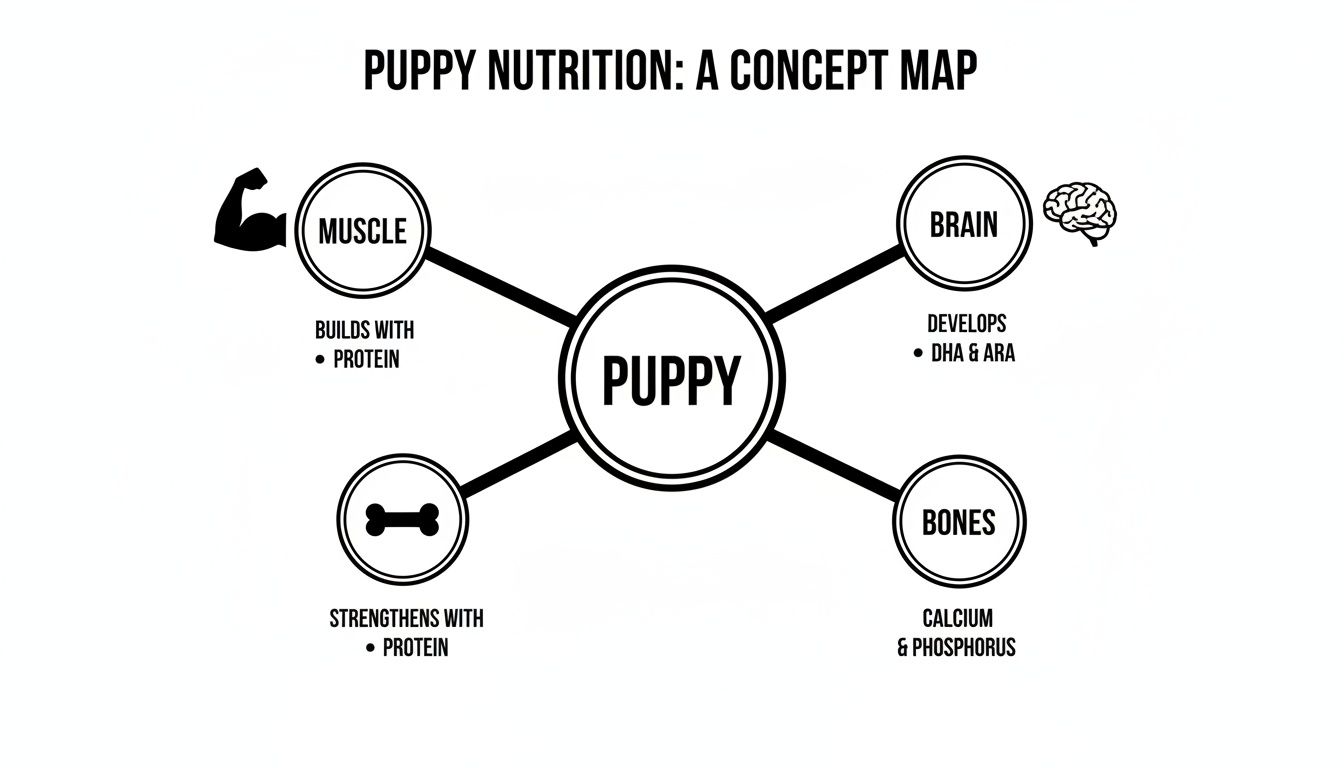
As you can see, every high-quality ingredient has a specific job, from building strong muscles with protein to fueling brain development with DHA. Nothing is wasted.
Cracking the Code: The Ingredient Panel
The ingredient panel is where you'll find the real story. Ingredients are listed by weight before cooking, so the first few items on the list make up the majority of the food. These are the ones that matter most.
Think of it just like reading a label for your own food. If the first ingredient is sugar, you know it’s not the healthiest choice. It's the exact same for your puppy. You want to see real, whole-food ingredients right at the top.
Puppy Food Ingredient Scorecard
To make it even easier, think of the ingredient list as a scorecard. You're looking for a recipe packed with "green flags" and free of "red flags." Here’s a quick checklist to help you tell the good from the bad.
| Ingredient Category | Green Flags (Look For These) | Red Flags (Avoid These) |
|---|---|---|
| Protein Source | Named animal proteins like "deboned chicken," "lamb meal," or "beef." | Vague terms like "meat meal," "animal by-product meal," or "poultry by-products." |
| Fats | Named fats like "chicken fat" or nutrient-rich oils like "salmon oil" (a great source of DHA). | Unnamed "animal fat," tallow, or vegetable oil (which lacks key fatty acids). |
| Carbohydrates | Wholesome, complex carbs like sweet potatoes, brown rice, peas, and carrots. | Cheap fillers like corn, wheat gluten, soy, or "grain fragments." |
| Preservatives & Additives | Natural preservatives like mixed tocopherols (Vitamin E) or rosemary extract. | Artificial preservatives (BHA, BHT, ethoxyquin) and artificial colors (Red 40, Yellow 5). |
Remember, a high-quality puppy food reads like a recipe for a healthy meal you'd make yourself. A low-quality one looks more like a science experiment full of cheap fillers.
What to Look for vs. What to Avoid
Let's zoom in on those green and red flags. Knowing what to spot can make all the difference in just a few seconds of scanning a label.
Green Flags: The Good Stuff
These are the ingredients that tell you a brand has invested in quality nutrition for your growing pup:
- Named Animal Proteins: Clear and specific is always best. Look for "deboned chicken," "beef," or "salmon." These are the building blocks for strong muscles.
- Healthy Fats: Fats are crucial for energy and development. You want to see named sources like "chicken fat" or powerhouse oils like "salmon oil," which is loaded with DHA for brain and eye health.
- Whole-Food Carbs: Good carbs provide steady energy. Things like sweet potatoes, brown rice, peas, and carrots also offer essential fiber for healthy digestion.
A great puppy food is like a thoughtfully prepared meal made from whole ingredients. A low-quality food is the kibble equivalent of junk food—full of empty calories, fillers, and additives.
Red Flags: The Ingredients to Skip
On the flip side, some ingredients are immediate red flags. They often signal that a company is cutting costs at the expense of your puppy’s nutrition:
- Mysterious "Meat": Vague terms like "meat and bone meal" or "poultry by-product meal" are major red flags. If they can’t tell you what animal it is, you don’t want it in your puppy’s bowl.
- Artificial Additives: There’s no need for chemical preservatives like BHA, BHT, or ethoxyquin in modern dog food. The same goes for artificial colors like Red 40 or Blue 2—your dog doesn't care what color their food is!
- Cheap Fillers: Ingredients like corn, wheat gluten, and soy are often used to bulk up food cheaply. They provide minimal nutritional value and can sometimes trigger allergies in sensitive pups.
Once you know how to spot these green and red flags, you’re in control. To go even deeper, be sure to check out our guide on what to look for in dog food. This knowledge is the best tool you have to give your puppy the incredible start they deserve.
Matching Nutrition to Your Puppy's Breed Size
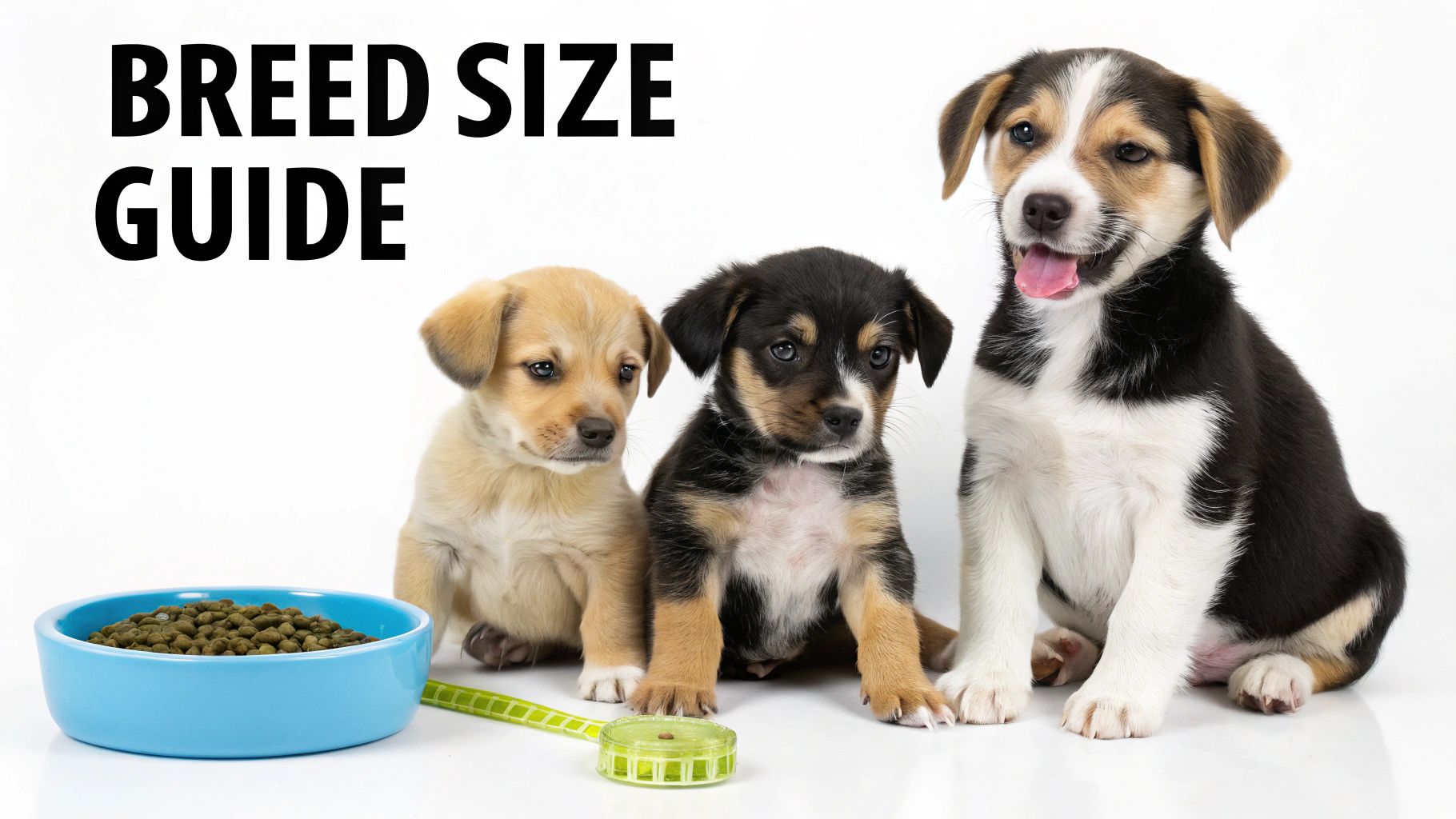
It’s easy to see the difference between a tiny Chihuahua puppy and a lanky Great Dane pup. While they both have that boundless puppy energy, their nutritional roadmaps are completely different. Their genetic blueprints call for vastly different growth rates and skeletal development, meaning a one-size-fits-all food just won't cut it.
Choosing the best dog food for puppies means looking past a generic "puppy" label. You need a formula that’s built for their projected adult size. This kind of targeted nutrition is what helps manage their growth properly and sets them up for a long, healthy life.
Large and Giant Breed Puppies
When you're raising a large or giant breed—think German Shepherds, Labs, or Mastiffs—the name of the game is slow, steady growth. It might seem counterintuitive, but growing too fast puts a ton of strain on their developing bones and joints. This can lead to serious and painful orthopedic issues down the road, like hip and elbow dysplasia.
The right food acts as the brakes, ensuring they don't grow too quickly. Large breed puppy formulas are specifically designed with:
- Lower Calorie Density: This prevents them from gaining weight too rapidly, which takes a lot of stress off their joints.
- Controlled Calcium and Phosphorus Levels: These minerals are vital for building strong bones, but too much calcium can actually speed up bone growth to an unsafe rate. A precise, balanced ratio is critical.
A common mistake owners make is trying to "bulk up" their large breed puppy by overfeeding them. The best thing you can do is the exact opposite: aim for controlled, moderate growth with a breed-size-specific formula to build a strong, resilient frame for life.
Think of it like building a skyscraper. You'd never rush the foundation. You'd let the concrete cure properly at every stage to guarantee the whole structure is sound. The same principle applies to your puppy’s skeleton.
Small and Toy Breed Puppies
On the other end of the spectrum, you have the small and toy breeds like Yorkies, Pugs, and French Bulldogs. These little dynamos face a completely different set of nutritional challenges. Their metabolisms are like tiny furnaces, burning through energy at an incredible pace.
The problem is, their stomachs are tiny, so they can't eat big meals. This combination of a fast metabolism and a small tummy puts them at risk for hypoglycemia—a dangerous drop in blood sugar that can happen if they go too long between meals.
The best food for these little pups accounts for their unique needs with:
- Calorie-Dense Formulas: Every single bite is packed with the energy they need to keep their engines running and their blood sugar stable.
- Smaller Kibble Size: It sounds simple, but tiny mouths need tiny kibble. A smaller size makes it easier to chew and swallow, preventing choking and ensuring they can actually eat enough to meet their needs.
- Nutrient-Rich Ingredients: With less room in their bellies, every ingredient has to pull its weight. High-quality proteins and fats are essential to pack all that growth support into a compact meal.
These little guys reach adulthood much faster than larger dogs, often in just 9 to 12 months. Their food needs to provide concentrated nutrition to fuel that accelerated timeline. Giving a Yorkie a formula designed for a Labrador would leave them tired and nutrient-deficient, which is exactly why size-specific food is so important.
Creating a Healthy Feeding Routine
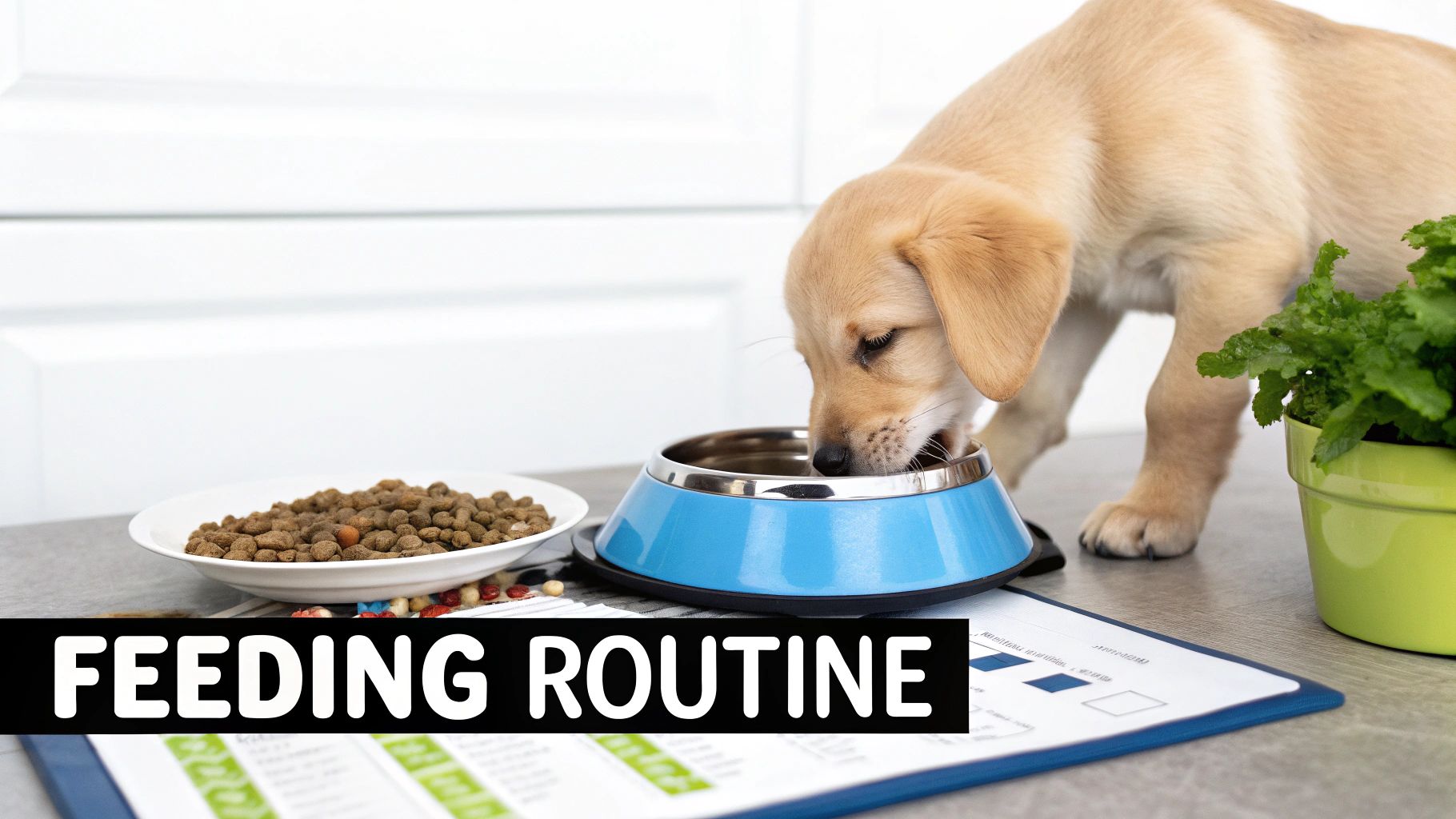
Choosing the perfect food is a huge victory, but your job isn't quite done. Now it's time to build a healthy feeding routine that turns those top-notch ingredients into real-world benefits for your growing pup. How you serve the food is just as important as the food itself.
For puppies, consistency is king. Sticking to a predictable meal schedule helps regulate their digestive system, makes house training so much easier, and gives them a comforting sense of security in their new home.
Portion Control Is Not a Suggestion
The feeding chart on the back of a dog food bag is a great starting point, but it’s just that—a start. Think of it as a well-researched guess based on an "average" puppy. Your puppy, of course, is anything but average.
Their actual calorie needs will depend on their unique metabolism, how much they zoom around the yard, and even their breed. The real key is to keep an eye on your puppy’s body condition. You should be able to feel their ribs without them sticking out, and they should have a visible waistline when you look down at them. Adjust their portions up or down a little to keep them in that sweet spot.
A common mistake is "free-feeding," which means leaving a full bowl of food out all day. This practice often leads to overeating and can contribute to obesity. Plus, it makes it impossible to know if your puppy has lost their appetite—often the very first sign that something is wrong. Structured mealtimes build healthy habits for life.
The Slow Transition Plan
A puppy’s digestive system is surprisingly sensitive. If you switch to a new food too quickly, you're asking for an upset stomach, which can mean diarrhea, vomiting, or gas. The secret to a happy tummy is a slow, gradual transition over 7 to 10 days. This gives their gut bacteria plenty of time to adapt to the new ingredients.
Here’s a simple, step-by-step plan for a smooth switch:
- Days 1-2: Start with 75% old food mixed with just 25% new food.
- Days 3-4: Move to a 50/50 mix of old and new.
- Days 5-6: Now it's 25% old food and 75% new food.
- Day 7+: You're ready to serve 100% of their fantastic new food!
Pay close attention to their stool quality during this period. If things get a little loose, don't panic. Just slow down the transition, holding steady at the current ratio for an extra day or two before moving on. Finding the best dog food for puppies is only half the battle; making sure they can digest it properly is the other half.
For a more detailed breakdown, you might be interested in our guide to creating a complete dog feeding schedule by age. This careful approach ensures your pup gets all the benefits of their new diet without any digestive drama.
Why Premium Ingredients Are a Game-Changer for Your Puppy
Picking the right food for your puppy isn't just about filling their belly for the day. Think of it as laying the foundation for their entire life. Every single meal contributes to building a strong body, a sharp mind, and an immune system that’s ready for anything. It’s truly preventative care, served up in a bowl.
This isn’t just a fad. The move toward high-quality, human-grade ingredients comes from a real shift in how we see our pets. We now understand that what goes into their bodies has a direct line to their long-term health and happiness. When a recipe is crafted with intention, every ingredient has a job to do.
The Real Building Blocks for a Healthy Life
So, what makes a "premium" ingredient so much better? It all comes down to a concept called bioavailability. In simple terms, this is how well your puppy's body can actually absorb and use the nutrients in their food.
- Better Proteins for Stronger Bodies: When you see a specific protein like deboned chicken or beef on the label, it's a world away from vague "meat by-products." These high-quality proteins are packed with the essential amino acids your growing pup needs for everything from building muscle to repairing tissue.
- Smarter Fats for Brains and a Shiny Coat: Healthy fats, especially omega-3s like DHA found in salmon oil, are non-negotiable for a puppy's brain and eye development. They also work from the inside out to give your pup that healthy, glossy coat that just screams "I'm feeling great!"
- Antioxidants as Tiny Bodyguards: Antioxidants from whole foods like blueberries, carrots, and spinach act like a personal security team for your puppy’s cells. They help strengthen that still-developing immune system and protect it from the daily grind of environmental stress.
This careful, ingredient-focused approach is becoming the new standard for a reason. Pet parents are rightfully demanding more, looking for the same quality in their dog’s food that they expect for themselves.
Nutrition as Preventative Care
Starting your puppy on a clean, scientifically-backed diet from the get-go can make a massive difference down the road. This is about more than just skipping fillers; it’s about actively giving their body what it needs to flourish. You’re supporting healthy organs, strong joints, and a resilient immune system for the long haul.
This demand for higher quality is making waves in the pet food world. Premium foods, especially those designed for a puppy's unique needs, are now a major force in the market. In fact, industry analysis shows a clear trend: owners want clean labels, evidence-based nutrition, and diets that mirror the standards of human food. You can learn more about this shift and discover the rising demand for specialized pet foods in this detailed report.
Choosing a food with vetted, premium ingredients is one of the most powerful decisions you can make for your puppy. It's a commitment to their longevity and quality of life, ensuring they don't just survive their puppyhood—they thrive through it and well beyond.
By putting great nutrition first, you’re giving your new best friend the ultimate head start. It’s a choice that pays off in countless ways—fewer vet visits, more energy for play, and many more happy, healthy years together. The link between a stellar ingredient list and a lifetime of wellness is clear, making your puppy food choice a true act of love.
Partnering with Your Vet for the Perfect Puppy Diet
Think of this guide as your roadmap, but your veterinarian is the expert local guide who knows all the shortcuts and tricky terrain. They are, without a doubt, your most important partner in raising a healthy pup. They can take all this general advice and fine-tune it into a personalized plan that’s just right for your dog.
Choosing the best food is a team effort. Even with a fantastic, high-quality diet, every puppy is an individual, and some situations just need a professional's touch to keep them thriving.
When to Pick Up the Phone
Sometimes, your puppy will give you clear signals that it's time to call the vet. Don't try to guess your way through these issues; they often need an expert eye to solve.
Keep an eye out for these specific red flags:
- Stubborn Tummy Troubles: A soft stool here and there is normal, especially when you're switching foods. But if your puppy has chronic diarrhea, is vomiting frequently, or seems unusually gassy, something in their diet isn't sitting right.
- Constant Itching and Scratching: Does your puppy seem to be scratching all the time? Are they licking their paws raw or getting one ear infection after another? These are classic signs of a food sensitivity or allergy that your vet needs to diagnose.
- Weight Worries: If your puppy is either looking a little too lean or getting chubby despite you following the feeding chart on the bag, it's time for a check-in. Your vet can figure out if there's an underlying issue and help you get their calorie intake just right.
Your veterinarian is the only person qualified to diagnose a health problem. They can tell the difference between a simple food issue and something more serious, making sure your pup gets the right help from the start.
Why Prescription and Vet-Formulated Foods Matter
For some pups, a regular off-the-shelf food won't cut it. They might need a special prescription diet formulated to manage a specific health problem, like kidney disease, severe allergies, or a sensitive digestive tract. These are powerful nutritional tools that should only ever be used under a veterinarian's care.
This is also where a brand's commitment to science really shines. When a company like Joyfull works directly with veterinary nutritionists to develop their recipes, it adds a crucial layer of trust. It tells you they’re not just focused on clean ingredients, but on creating formulas that are backed by real science. This partnership between smart, thoughtful formulation and professional expertise is what truly gives your puppy the best possible start for a long, happy, and healthy life.
Your Top Puppy Nutrition Questions, Answered
Bringing a new puppy home is an incredible experience, but it definitely comes with its fair share of questions. Getting their nutrition right from the start is one of the most important things you can do, so let's clear up a few common concerns to help you feel confident.
How Long Should My Puppy Stay on Puppy Food?
The simple rule of thumb is to keep your puppy on a puppy-specific formula until they’ve reached about 90% of their expected adult size. Think of it like this: puppy food is the high-octane fuel needed for rapid construction. Once the major building is complete, they can switch over to an adult formula designed for maintenance.
- Small to Medium Breeds: These little guys usually hit this mark around 9 to 12 months old.
- Large and Giant Breeds: Their growth spurt is more of a marathon, lasting anywhere from 18 to 24 months. It's critical not to switch them to adult food too soon, as they need the precise calcium and phosphorus balance in puppy food to support their developing joints.
When in doubt, your vet is your best resource. They can give you a personalized recommendation based on your pup’s specific growth rate.
Is Grain-Free the Best Option for My Puppy?
Not automatically. The grain-free movement has been a huge marketing success, but it doesn't mean it's inherently better for every dog. In reality, most puppies do wonderfully with healthy, whole grains like brown rice, oats, or barley, which are fantastic sources of energy and fiber.
A grain-free diet is really only essential for the rare pup that has a diagnosed grain allergy or a true sensitivity. The true mark of a quality puppy food isn’t whether it contains grains, but the quality of its protein and fat sources and its overall nutritional profile.
Is It Okay to Give My Puppy Table Scraps?
This is one of those areas where it’s better to be safe than sorry. A lot of our favorite foods are actually toxic to dogs—think onions, garlic, grapes, chocolate, and anything with the artificial sweetener xylitol. Even food that seems safe can be far too rich or fatty for a puppy's delicate digestive system.
A tiny, plain tidbit of a dog-safe food, like a bite of carrot or unseasoned cooked chicken, is fine now and then. But these treats should never account for more than 10% of your puppy's daily calories. Going over that limit can throw off the balanced nutrition in their puppy food and lead to unhealthy weight gain. Your safest bet is to stick with treats specifically formulated for puppies. For dogs with common protein sensitivities, finding treats and foods that work for them is key. You can find more information in this guide to chicken free dog food.
At Joyfull, we’re passionate about giving puppies the best possible start. We believe the greatest gift you can give your new companion is a foundation of scientifically formulated, high-quality nutrition. Take a look at our recipes, built on clean ingredients and vetted formulas, to set your best friend up for a lifetime of health. Learn more at https://joyfullpet.com.