The Best Dog Food for Active Dogs
If you've got a dog that lives for a good run, a long hike, or a spirited game of fetch, you know their energy seems boundless. But that high-octane lifestyle needs the right kind of fuel. The best food for an active dog is packed with high-quality calories, featuring at least 25% protein from real animal sources and around 20% healthy fats to power their muscles and help them recover.
You'll want to look for formulas built on whole-food ingredients and steer clear of cheap fillers like corn, wheat, and soy. Your canine athlete needs every bite to count, and empty calories just won't cut it. This isn't just about feeding them more; it's about feeding them smarter.
What Active Dogs Truly Need for Fuel
Feeding a dog who’s always on the move is completely different than feeding a couch potato companion. It’s less about just filling their bowl and more about strategically fueling their body for performance, endurance, and quick recovery.
Think of your dog as a dedicated athlete. Just as a marathon runner wouldn't carb-load with junk food, a high-energy dog requires a diet where every single ingredient serves a distinct purpose. This approach is often called performance nutrition, and it’s all about giving their body the precise building blocks it needs to handle intense physical activity day in and day out.
The Pillars of Performance Nutrition
So, what does that look like in their food bowl? A high-performance diet really comes down to three key pillars. Each one plays a critical, interconnected role in keeping your dog running, jumping, and bouncing back for more.
A balanced diet for a truly active dog must include:
- High-Quality, Digestible Proteins: Exercise naturally breaks down muscle tissue. Animal-based proteins from sources like chicken, beef, or salmon are essential for repairing and rebuilding that lean muscle.
- Energy-Dense Fats: For long-lasting energy, fat is a dog's most efficient fuel source. Healthy fats don't just power endurance; they also support a healthy coat and help the body absorb key nutrients.
- Purposeful Carbohydrates: Easily digestible carbs are great for providing the quick bursts of energy needed for sprinting or agility work. They also play a role in replenishing glycogen stores in the muscles after a workout.
This growing understanding of canine needs is shaking up the pet food industry. In fact, the global dog food market is expected to jump from roughly USD 51.27 billion in 2025 to USD 91.82 billion by 2035. This boom shows a huge shift in how we think about feeding our dogs, with more and more owners seeking out specialized formulas. You can explore more about the trends shaping the future of dog food on futuremarketinsights.com.
An active dog's diet isn’t just about more food; it's about the right kind of fuel. The goal is to provide dense, efficient calories that support muscle function and rapid recovery, not just fill their stomach.
Active Dog Nutritional Needs at a Glance
To really see the difference, it helps to compare the needs of a typical house pet to those of a highly active dog. This quick table highlights why a one-size-fits-all approach to feeding just doesn’t work for our canine athletes.
| Nutritional Component | Average Adult Dog | Active/Working Dog | Why It's Different |
|---|---|---|---|
| Protein | 18% - 22% | 25% - 35% | Higher protein is crucial for repairing muscle tissue that breaks down during intense exercise and for building lean muscle mass. |
| Fat | 10% - 15% | 20% - 30% | Fat is the primary, most concentrated source of energy for endurance activities, providing sustained fuel for long hikes or runs. |
| Calories | Standard | 20% - 60% Higher | Active dogs burn significantly more calories. Their food must be calorically dense to meet these energy demands without requiring huge meal volumes. |
| Carbohydrates | Variable | Purpose-Driven | While not a primary fuel, digestible carbs help replenish glycogen stores quickly after short bursts of intense activity. |
For a dog that’s always ready for the next adventure, every meal is an opportunity to optimize their health and performance. Getting their nutrition right ensures they have everything they need to feel their best.
How to Decode a Dog Food Label
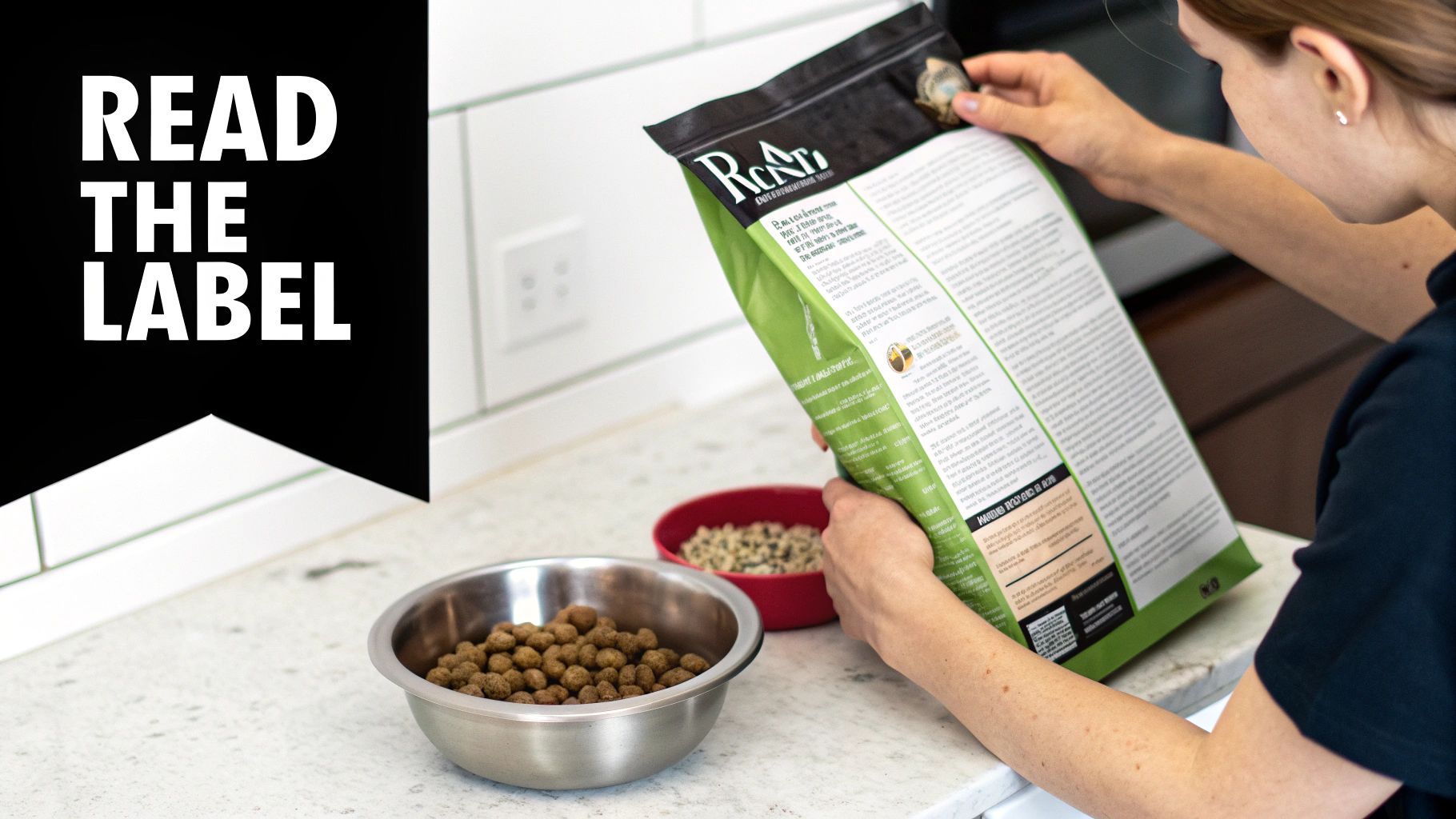
Walking down the dog food aisle can feel pretty overwhelming. You're hit with a wall of brightly colored bags, all showing happy, athletic dogs and promising peak performance. But the real story isn't on the front—it's written in the fine print on the back.
Learning how to read a dog food label is the single most important skill you can have in finding the right fuel for your active dog.
Think of the front of the bag as the flashy book cover. It’s pure marketing, designed to grab your attention. The real chapters are the ingredient list and the guaranteed analysis. This is where you cut through the noise and see what’s actually going into your dog’s bowl.
The key thing to remember is that ingredients are listed by weight before cooking. That means the first few items on the list make up the bulk of the food, so they deserve the most scrutiny.
Start with the Ingredient List
The ingredient list is your roadmap. For a high-performance dog, that first ingredient is non-negotiable—it has to be a nutritional powerhouse.
You want to see a high-quality, named animal protein right at the top. Look for specifics like ‘deboned chicken,’ ‘beef,’ ‘salmon,’ or ‘lamb.’ These whole-food proteins deliver the essential amino acids needed for building strong muscle and repairing it after a long run or a hard day of play.
What you want to steer clear of are vague, generic terms. Be skeptical if the list starts with things like:
- ‘Meat by-products’: This is a murky mix of slaughterhouse leftovers that’s far less digestible than whole meat.
- ‘Meat and bone meal’: The animal source is a mystery, making it impossible to know the quality you're getting.
- ‘Poultry by-product meal’: Similar to the others, this just doesn't have the quality of a specified source like ‘chicken meal.’
Now, a high-quality named meat meal (like ‘chicken meal’) is actually a fantastic, concentrated protein source. It’s the ambiguous terms that should be a red flag. For a deeper dive into this, check out our complete guide on how to read dog food labels.
The first ingredient on the label sets the tone for the entire formula. If it's not a high-quality, named animal protein, the food likely won't meet the demanding needs of a canine athlete.
Analyze the Fats and Carbohydrates
Once you've confirmed a solid protein foundation, your next stop is the fat sources. Fat is your dog's most efficient fuel for endurance, so its quality is just as crucial as its quantity.
Look for high-value, named animal fats like chicken fat or powerhouse oils like salmon oil and flaxseed oil. These are packed with the essential omega-3 and omega-6 fatty acids that support joint health, keep inflammation in check, and give them a healthy, shiny coat. Generic terms like ‘vegetable oil’ or ‘animal fat’ are less desirable because their nutritional value can be all over the place.
Carbohydrates are all about quick energy, but not all carbs are created equal. Active dogs thrive on complex, slow-release carbs that provide sustained energy. Good sources include:
- Sweet potatoes
- Peas
- Whole brown rice
- Oatmeal
These ingredients fuel your dog without the sugar crash. On the other hand, low-quality fillers like corn, wheat, and soy offer empty calories. They're often used to bulk up cheaper foods but do very little to support a true athlete.
Understand the Guaranteed Analysis
The Guaranteed Analysis is that little box on the label that gives you the hard numbers: the minimum percentages of crude protein and fat, and the maximums for fiber and moisture. This is your tool for making a direct, apples-to-apples comparison between different brands.
For a dog that’s always on the move, you should be looking for a profile that reflects their higher needs:
| Nutrient | Ideal Minimum for Active Dogs |
|---|---|
| Crude Protein | 25% - 35% |
| Crude Fat | 20% - 30% |
| Crude Fiber | Below 5% (to ensure high digestibility) |
These numbers tell you if the food can actually back up its marketing claims. A bag that promises high performance needs the protein and fat percentages to prove it. When you combine this analysis with a good look at the ingredient quality, you’ll have everything you need to know if a food is truly built for an active life.
The Macronutrient Blueprint for Peak Performance
To really get what makes a great dog food for an active dog, you have to look under the hood. Think of it like a high-performance fuel blend for a race car. The three core components—protein, fat, and carbohydrates—are the macronutrients that need to be in perfect harmony to unlock your dog's full potential.
It’s not as simple as just dumping more calories into their bowl. It’s about getting the right kind of calories in there. A diet with the wrong macronutrient mix can leave your dog feeling sluggish, slow down their recovery after a long run, and even raise the risk of injury over time.
Protein: The Muscle Repair Crew
Every time your dog sprints, jumps, and plays hard, they’re creating tiny micro-tears in their muscle fibers. That’s a totally normal part of getting stronger, but the repair process demands very specific building blocks. That’s where protein comes in—it’s the essential repair crew.
But here’s the thing: not all protein is created equal. The percentage you see on the bag is only part of the story. The real key is protein quality and bioavailability—basically, how easily your dog’s body can actually absorb and use it. High-quality animal proteins from sources like chicken, salmon, and beef give them the complete amino acid profile they need for efficient muscle synthesis and repair. You can learn more about why this matters in our guide to the benefits of a high-protein diet for dogs.
It's the quality, not just the quantity, of protein that defines a superior performance food. A formula with 30% protein from a source like chicken meal is far more effective for muscle recovery than one with the same percentage from less digestible plant or by-product sources.
Fat: The Premium Endurance Fuel
While protein is busy rebuilding, fat is providing the long-lasting, steady energy your active dog needs to keep going. For anything that lasts more than a few minutes, like a long hike or a focused training session, fat is their body’s most efficient and preferred fuel source.
This is a huge reason why the best foods for active dogs will always have a higher fat content, usually 20% or more. This energy-dense macronutrient provides more than double the energy per gram compared to protein or carbs.
Keep an eye out for high-quality, named animal fats on the label, like chicken fat or fish oil. These don't just fuel performance; they also deliver essential omega-3 and omega-6 fatty acids that help reduce inflammation, support joint health, and keep their skin and coat looking great.
To give you a clearer picture, here’s how the ideal protein and fat ratios shift based on how active a dog is.
Ideal Macronutrient Ratios for Dog Activity Levels
| Activity Level | Recommended Protein Range (% Dry Matter) | Recommended Fat Range (% Dry Matter) | Primary Energy Source Focus |
|---|---|---|---|
| Low Activity (Companion Pet) | 18% - 25% | 10% - 15% | Balanced Energy |
| Moderate Activity (Weekend Hikes) | 25% - 30% | 15% - 20% | Protein for Repair, Fat for Stamina |
| High Activity (Working/Sporting Dog) | 30% - 38% | 20% - 25%+ | Fat for Sustained Endurance |
This table is a great starting point for figuring out what to look for on a food label based on your dog's daily routine.
Carbohydrates: The Quick Energy Source
Carbohydrates sometimes get a bad rap, but in a performance diet, they play a really important role as a source of quick, accessible energy. Think of carbs as the rocket fuel for short bursts of intense activity, like an all-out sprint for a ball or a run through an agility course.
The secret is choosing the right kind. Simple grains and cheap fillers like corn or wheat can cause frustrating energy spikes and crashes. Instead, a premium formula will use complex carbohydrates from sources like:
- Sweet potatoes
- Peas
- Oatmeal
- Brown rice
These are digested more slowly, giving your dog a sustained release of energy that helps restock muscle glycogen stores after a workout, all without the blood sugar roller coaster.
This more strategic approach to nutrition is catching on, with more owners looking for solutions that fit their dog's specific needs. The global personalized dog food market, valued at USD 143 million in 2024, is expected to hit USD 282 million by 2031, which shows just how much people want better, customized diets. You can see more on the rise of personalized pet nutrition at valuates.com.
At the end of the day, it’s the synergy between these three macronutrients that truly fuels a canine athlete. Protein repairs, fat endures, and carbohydrates energize. A formula that nails this balance gives your active dog everything they need to perform their best, recover faster, and stay healthy for years of adventures together.
The Supporting Cast: Essential Nutrients Beyond Protein and Fat
While protein and fat get most of the attention in a performance dog food, a truly complete formula relies on a powerful supporting cast of micronutrients. These essential vitamins, minerals, and supplements are what take a food from good to great, giving an active dog the specialized support needed for long-term health and resilience.
Think of it like this: protein and fat are the engine and fuel, but micronutrients are the high-performance oil and coolant keeping the whole system running smoothly under pressure. They protect against wear and tear, reduce internal stress, and ensure every part of your dog’s body can handle an athletic lifestyle. Without them, you're missing a huge piece of the performance puzzle.
This visual shows how the core macronutrients work together. Protein builds muscle, fat provides sustained energy, and carbs offer a quick power boost.
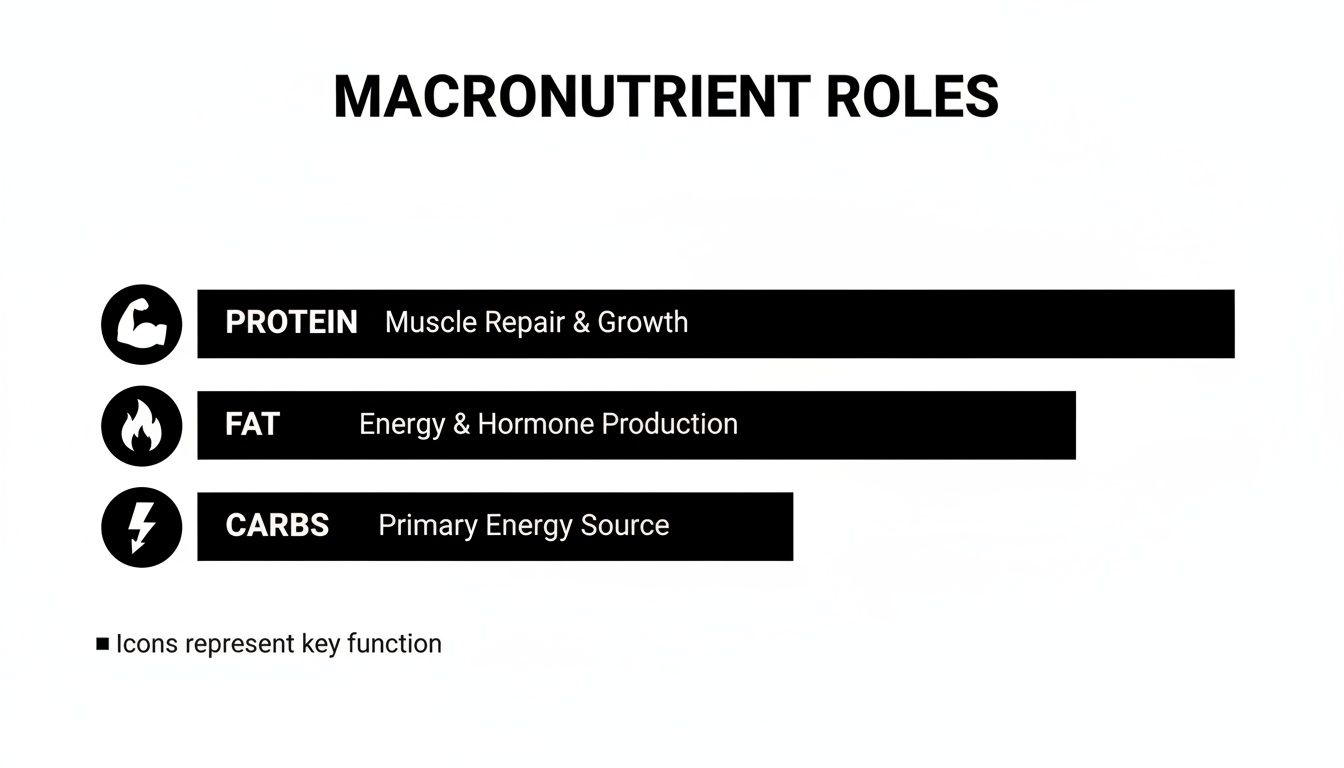
It’s easy to see why a balance of all three is non-negotiable for a well-rounded diet.
Antioxidants: Your Dog's Cellular Defense Team
Intense physical activity is a double-edged sword. It builds a strong body, but it also creates oxidative stress—a natural process that produces unstable molecules called free radicals. These little troublemakers can damage cells, leading to inflammation and much slower recovery times.
This is where antioxidants step in. They are your dog’s personal cellular defense team, neutralizing free radicals before they can do any harm. For a dog that’s always on the move, a higher intake of key antioxidants is vital.
Look for formulas fortified with:
- Vitamin E: A powerful antioxidant that helps shield cell membranes from damage.
- Vitamin C: Supports the immune system and helps recharge other antioxidants, like Vitamin E.
- Selenium: A crucial mineral that works hand-in-hand with Vitamin E to protect cells.
These ingredients help reduce that post-hike muscle soreness and support a faster, more efficient recovery, getting your dog ready for the next day's adventure.
Building Blocks for Resilient Joints
An active dog's joints are under constant strain. Every jump, pivot, and sprint puts pressure on the cartilage cushioning their bones. Over time, this can lead to wear and tear, stiffness, and mobility problems down the road.
The best dog foods for active dogs build proactive joint support right into the formula. These ingredients work to preserve cartilage and maintain fluid movement, acting as a preventative measure for long-term joint health.
For a high-impact canine athlete, joint support isn’t a luxury—it’s a necessity. Ingredients like glucosamine and chondroitin provide the fundamental building blocks to help maintain cartilage integrity and support lifelong mobility.
Key joint-supporting compounds to look for are:
- Glucosamine: A natural compound found in cartilage that helps stimulate its growth and repair.
- Chondroitin Sulfate: Works to block the enzymes that break down cartilage and helps it retain water, keeping it lubricated and spongy.
Finding a food that already includes these ingredients means your dog is getting daily support to keep their joints healthy and strong for years of activity.
Omega Fatty Acids: The Anti-Inflammatory Powerhouse
Chronic inflammation is the silent enemy of any athlete, whether they have two legs or four. It can worsen joint pain, slow down recovery, and impact overall health. Omega-3 fatty acids are one of the most effective natural tools we have for managing it.
Sources like fish oil (from salmon or pollock) and flaxseed are packed with omega-3s, especially EPA and DHA. These powerful fatty acids do more than just fight inflammation; they also support brain health, promote a healthy skin and coat, and contribute to cardiovascular wellness. We dive deeper into their benefits in our guide on fatty acids for dogs.
This focus on premium, science-backed ingredients is becoming a global trend. While North America is currently the largest dog food market, the Asia-Pacific region is the fastest-growing as of 2024, showing a worldwide demand for higher-quality nutrition. A holistic formula that combines powerful macronutrients with these vital micronutrients is what offers the comprehensive support your active dog truly deserves.
Practical Feeding Strategies for Your Canine Athlete
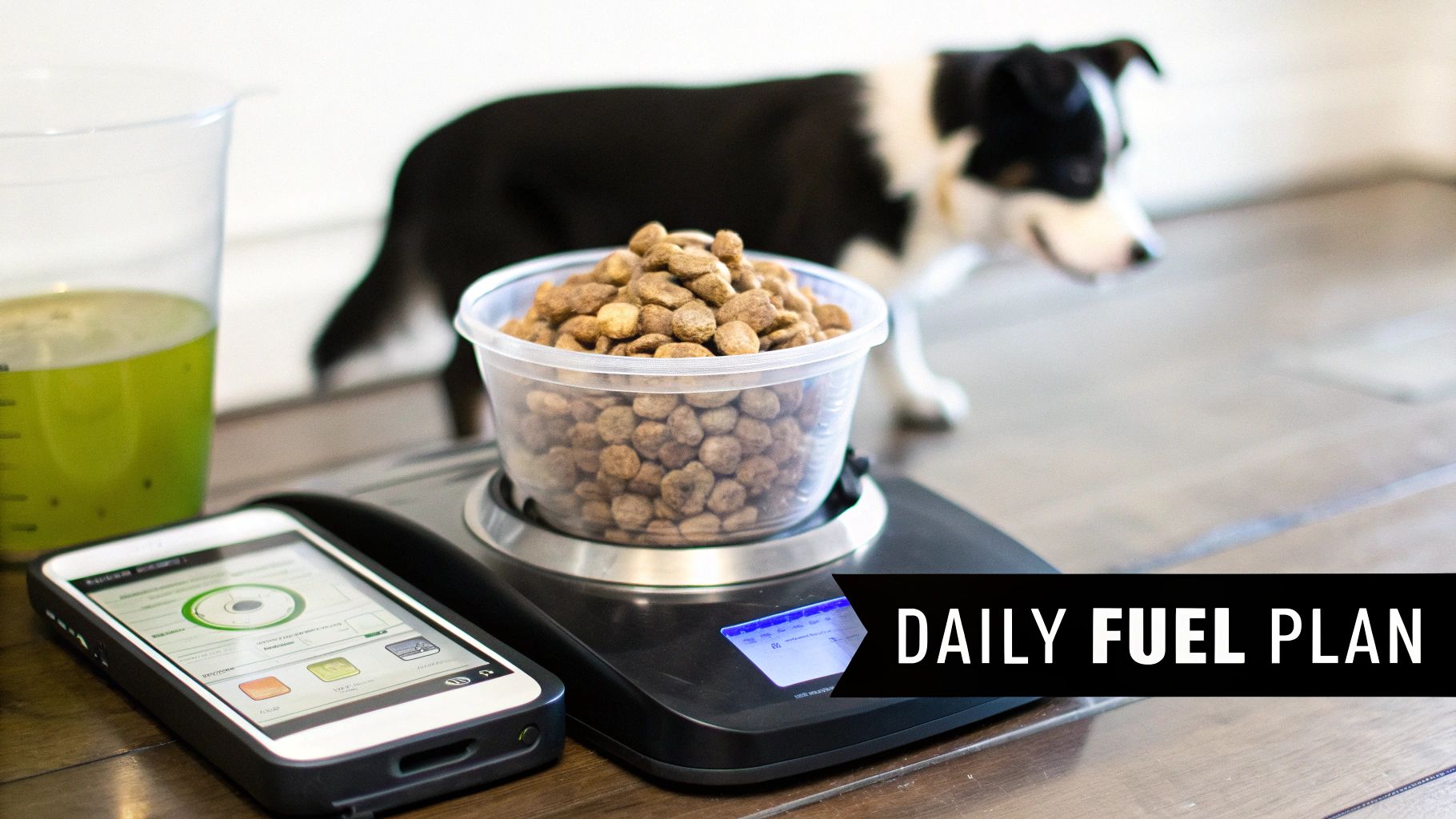
Knowing the science behind high-performance dog food is one thing. Actually putting it into practice in your dog’s bowl is where the magic happens. A solid feeding strategy turns that carefully chosen food from a simple meal into a powerful tool that fuels their energy, speeds up recovery, and elevates their overall well-being. This isn't about getting bogged down in complicated formulas; it’s about building smart, consistent habits.
The real goal is to create a predictable routine that you can easily adjust as their activity levels change. Think of yourself as your dog's personal nutritionist—you're the one making the small tweaks that keep them performing at their very best.
Calculating Your Dog's Daily Calorie Needs
So, how much fuel does your canine athlete really need? The feeding chart on the back of the bag is a decent starting point, but it’s just a general guideline. For a more accurate picture, you can estimate your dog’s daily needs by looking at their Resting Energy Requirement (RER) and then multiplying it based on their lifestyle.
Here’s a simple way to get a baseline:
- Find their RER: For dogs over 5 kg, a common formula is 30 x (your dog's weight in kg) + 70. For a 25 kg (55 lb) dog, that’s (30 x 25) + 70 = 820 calories per day, just to cover basic bodily functions.
- Add an Activity Multiplier: This is where their athletic life comes into play. A very active dog might need anywhere from 3 to 5 times their RER.
- Get the Total: Our 25 kg dog, if they're always on the go, could need 820 x 4 = 3,280 calories every day.
This number gives you a personalized starting point. From there, you can adjust up or down based on how your dog looks, feels, and performs.
Adjusting Portions for On-Season and Off-Season
Your dog's energy needs aren't set in stone. A hunting dog has completely different fuel requirements in the fall than they do in the middle of summer. Likewise, your hiking buddy will burn far more calories during a busy adventure season than during a quiet winter. It’s crucial to adjust their food intake to match.
During their most active seasons, you might need to increase their daily food portion by 20-40% to keep up with the extra calorie burn. When things slow down in the off-season, scaling back their food is essential for maintaining a healthy weight and avoiding unwanted pounds.
A dog’s ideal weight is a moving target that shifts with their activity level. Proactively adjusting their food portions is the best way to keep their body condition score optimal year-round, preventing the health risks associated with being over or underweight.
The Importance of Meal Timing
When you feed your dog can be just as critical as what you feed them. A big meal right before a tough workout can cause cramping, digestive upset, or even increase the risk for serious conditions like bloat. Smart meal timing ensures their body has the energy it needs, right when it needs it.
For peak performance, try to stick to these simple timing rules:
- Avoid big meals before exercise: Feed them their main meal at least 2-3 hours before any intense activity.
- Think about a small pre-workout snack: A small, easy-to-digest snack about 30-60 minutes before you head out can provide a quick burst of energy.
- Refuel after the workout: A meal within 30-60 minutes after exercise is perfect for replenishing their energy stores and kicking off muscle repair.
- Split their meals: Instead of one giant meal, feeding two or three smaller portions throughout the day provides more consistent energy and is much easier on their digestive system.
Ultimately, your dog gives you the best feedback. Keep an eye on their body condition, energy levels, and even their stool quality—these are the signs that will tell you if your feeding strategy is on the right track. And of course, a happy, active life goes beyond the food bowl. Finding great places to explore, like the top hiking trails in Gatlinburg, is just as important. By pairing smart nutrition with amazing adventures, you empower your dog to live their most joyful life.
Common Questions About Feeding Active Dogs
Figuring out the best way to feed your high-energy dog can feel like a maze. Even when you're trying your best, it's easy to second-guess your choices or get lost in conflicting advice. Let's clear things up by tackling some of the most common questions we hear from owners of active dogs.
This is your go-to spot for those nagging "what if" questions. We'll cut through the clutter and give you practical, expert-backed answers you can use right away.
How Soon Should I See a Difference After Switching Foods?
Every dog is different, so a little patience goes a long way. That said, you can usually spot the first positive changes within 2 to 4 weeks of switching to a new performance food. This might look like a bit more stamina on your daily run or extra enthusiasm during a game of fetch.
Stick with it, and more significant improvements will start to appear. Between 4 to 8 weeks, you'll likely see a healthier, shinier coat, improved muscle tone, and more predictable, firm stools. The best signs are always your dog's energy levels, body condition, and overall happiness—those are the real indicators that the new food is working.
Is Grain-Free Food Always Better for Active Dogs?
Not necessarily, and this is a big point of confusion for many owners. The grain-free movement made waves, but the conversation should have always been about the quality and digestibility of the carbohydrates, not just whether they're grains. An active dog absolutely needs carbs for quick energy to refuel their muscles after a good workout.
The trick is to look for nutrient-rich, complex carbs like sweet potatoes or peas, or even quality whole grains like brown rice and oatmeal. What you really want to avoid are cheap fillers like corn, wheat, and soy that don't offer much nutritional bang for their buck. So, don't get too hung up on the "grain-free" label. Focus on the quality of the entire ingredient list and the protein-to-fat ratio.
The best performance diets put high-quality protein and fat front and center, using digestible carbohydrates for fast-acting fuel. Whether those carbs come from grains or veggies is far less important than their overall nutritional value.
Can I Feed Performance Food to My Less Active Dog?
This is a great question, but the short answer is that it's not recommended. Performance dog foods are calorie-dense by design, packed with high levels of fat to meet the incredible energy demands of a true canine athlete. They're built for dogs who burn through calories like a furnace.
If you feed that same high-octane fuel to a dog who spends most of their day on the couch, it can quickly lead to unwanted weight gain. That extra weight puts a huge strain on their joints and heart. It's all about matching the food to the lifestyle—always choose a formula that aligns with your dog's actual activity level.
How Important Is Water for an Active Dog?
Water is, hands down, the single most critical nutrient for any dog, but it's especially vital for an active one. Staying hydrated is key to everything from regulating body temperature to moving nutrients through the body. Active dogs lose a ton of water through panting alone, and dehydration can creep up faster than most people realize.
Make sure your dog always has access to fresh, clean water, especially before, during, and after any physical activity. It can make or break their performance and, more importantly, their safety. Keeping up with nutrition and hydration on the go can be tricky, so for more guidance, check out these helpful pet travel safety tips.
At Joyfull, we believe your pet’s food should work just as hard as they play. Our formulas are built on a foundation of clean ingredients, high-quality proteins, and solid science to give your dog the fuel they need for a lifetime of adventure.
Discover the Joyfull difference and find the perfect formula for your canine athlete.